Born 27 Jun 1940; died 30 Apr 2011 at age 70.
American mathematician who was awarded the Fields Medal in 1978 for contribution of geometric and topological techniques to the study of algebraic K-theory.
American mathematician who was awarded the Fields Medal in 1978 for contribution of geometric and topological techniques to the study of algebraic K-theory.
Born 27 Jun 1901; died 20 May 1982 at age 80. quotes
American research physicist and geophysicist who (with Gregory Breit) made the first use pulsed radio waves to explore the ionosphere. He devised the necessary detecting equipment to measure the time between receiving a direct radio pulse and a second pulse reflected from the ionosphere. The observations he made provided the theoretical foundation for the development of radar. Tuve, with Lawrence R. Hafstad and Norman P. Heydenburg, made the first and definitive measurements of the nuclear force between proton-proton force at nuclear distances. During WW II he developed the proximity fuse. Following the war, he made important contributions to experimental seismology, radio astronomy, and optical astronomy.«
American research physicist and geophysicist who (with Gregory Breit) made the first use pulsed radio waves to explore the ionosphere. He devised the necessary detecting equipment to measure the time between receiving a direct radio pulse and a second pulse reflected from the ionosphere. The observations he made provided the theoretical foundation for the development of radar. Tuve, with Lawrence R. Hafstad and Norman P. Heydenburg, made the first and definitive measurements of the nuclear force between proton-proton force at nuclear distances. During WW II he developed the proximity fuse. Following the war, he made important contributions to experimental seismology, radio astronomy, and optical astronomy.«
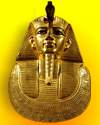
Psusennes I Mask
French Egyptologist whose career began with digs of Phoenician temples and royal tombs in Byblos, Syria (1921-24). By the 1930s, he focused on Egypt and uncovered the royal necropolis at Tanis, in the eastern Nile Delta. There he found the intact tombs of Pharaohs Psusennes I, Amenemope, and Shoshenq II, filled with magnificent treasures of gold, silver, and jewelry. These finds were among the most important since Tutankhamun, offering unique insight into burial practices, artistry, and political life of the Third Intermediate Period. Montet’s scholarly publications, especially La Nécropole royale de Tanis, cemented his reputation as one of the foremost Egyptologists of his generation.«
Everyday Life in Egypt in the Days of Ramesses the Great, by Pierre Montet. - book suggestion.
Born 27 Jun 1872; died 9 Jan 1942 at age 69. quotes
Heber Doust Curtis was an American astronomer who is famed for debating Harlow Shapley on 26 Apr 1920 before the National academy of Sciences. He spoke for “island universes”—whereby spiral nebulae were composed of stars, and represented galaxies far outside the Milky Way. Shapley disagreed, believing that our galaxy was 300,000 light-years in diameter and included the spiral nebulae. By the end of 1924, Curtis was shown to be correct, when a paper from Edwin Hubble was read to the American Astronomical Society on 1 Jan 1925. Curtis had joined Lick Observatory after completing his Ph.D. in 1902. After his early work measuring radial velocities of the brighter stars, but in 1910 he became active in nebular photography, trying to find evidence of their nature as isolated independent star systems.«
Heber Doust Curtis was an American astronomer who is famed for debating Harlow Shapley on 26 Apr 1920 before the National academy of Sciences. He spoke for “island universes”—whereby spiral nebulae were composed of stars, and represented galaxies far outside the Milky Way. Shapley disagreed, believing that our galaxy was 300,000 light-years in diameter and included the spiral nebulae. By the end of 1924, Curtis was shown to be correct, when a paper from Edwin Hubble was read to the American Astronomical Society on 1 Jan 1925. Curtis had joined Lick Observatory after completing his Ph.D. in 1902. After his early work measuring radial velocities of the brighter stars, but in 1910 he became active in nebular photography, trying to find evidence of their nature as isolated independent star systems.«
The Day We Found the Universe, by Marcia Bartusiak. - book suggestion.
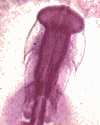
Born 27 Jun 1870; died 5 Nov 1947 at age 77.
American zoologist and embryologist, known for his discoveries concerning the fertilization of the egg (ovum) and the role of hormones in sex determination. In 1914, Lillie hypothesized the existence of a substance, fertilizin, in the jelly coat of eggs which causes sperm cells to clump together. In 1916, he demonstrated the role of sex hormones in freemartinism. His embryological investigations reached into all aspects of cellular and embryonic development. He is best known for his dedicated efforts in shaping the Marine Biological Laboratory and the Oceanographic Institute at Woods Hole, Mass. He wrote The Development of the Chick (1908), a leading embryology text, and The Woods Hole Marine Biological Laboratory (1944).Image: 28-hour chick embryo.
American zoologist and embryologist, known for his discoveries concerning the fertilization of the egg (ovum) and the role of hormones in sex determination. In 1914, Lillie hypothesized the existence of a substance, fertilizin, in the jelly coat of eggs which causes sperm cells to clump together. In 1916, he demonstrated the role of sex hormones in freemartinism. His embryological investigations reached into all aspects of cellular and embryonic development. He is best known for his dedicated efforts in shaping the Marine Biological Laboratory and the Oceanographic Institute at Woods Hole, Mass. He wrote The Development of the Chick (1908), a leading embryology text, and The Woods Hole Marine Biological Laboratory (1944).Image: 28-hour chick embryo.
Born 27 Jun 1869; died 12 Sep 1941 at age 72.
German embryologist who was awarded the Nobel Prize for Physiology and Medicine (1935) for his discovery of embryonic induction, an effect involving several parts of the embryo in directing the development of the early group of cells into specific tissues and organs. Working extensively on the early development of the newt, he showed that the in the earliest stage, tissues may be transplanted to different areas of the embryo, and it then develops based on the new location and not from where it came. For example, early tissue cut from an area of nervous tissue might be moved to an area of skin tissue where it then grows into the same form as the surrounding skin.
German embryologist who was awarded the Nobel Prize for Physiology and Medicine (1935) for his discovery of embryonic induction, an effect involving several parts of the embryo in directing the development of the early group of cells into specific tissues and organs. Working extensively on the early development of the newt, he showed that the in the earliest stage, tissues may be transplanted to different areas of the embryo, and it then develops based on the new location and not from where it came. For example, early tissue cut from an area of nervous tissue might be moved to an area of skin tissue where it then grows into the same form as the surrounding skin.
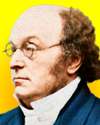
Born 27 Jun 1806; died 18 Mar 1871 at age 64. quotes
English mathematician and logician who did important work in abstract symbolic logic, the theory of relations, and formulated De Morgan's laws: one is “NOT (A AND B) = (NOT A) or (NOT B)” and the other is “NOT (A OR B) = (NOT A) AND (NOT B)”. These laws continue to be applied in modern proof theory and for software programming. When he defined and introduced the term “mathematical induction” (1838), he gave the process a rigorous basis and clarity that it had previously lacked. He originated the use of the slash to represent fractions, as in 1/5 or 3/7. In Trigonometry and Double Algebra (1849) he gave a geometric interpretation of complex numbers.«[Born in India, De Morgan (according to Macfarlane) De Morgan considered himself to be British, without being specifically English, Scottish, Welsh or Irish.]
English mathematician and logician who did important work in abstract symbolic logic, the theory of relations, and formulated De Morgan's laws: one is “NOT (A AND B) = (NOT A) or (NOT B)” and the other is “NOT (A OR B) = (NOT A) AND (NOT B)”. These laws continue to be applied in modern proof theory and for software programming. When he defined and introduced the term “mathematical induction” (1838), he gave the process a rigorous basis and clarity that it had previously lacked. He originated the use of the slash to represent fractions, as in 1/5 or 3/7. In Trigonometry and Double Algebra (1849) he gave a geometric interpretation of complex numbers.«[Born in India, De Morgan (according to Macfarlane) De Morgan considered himself to be British, without being specifically English, Scottish, Welsh or Irish.]
Memoir of Augustus De Morgan, by Sophia Elizabeth (Frend) De Morgan. - book suggestion.
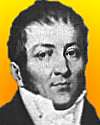
Born 27 Jun 1767; died 7 Jun 1843 at age 75.
French astronomer who was the director of the Paris Observatory, and is noted for discovering eight comets and writing Tables astronomiques of Jupiter and Saturn (1808) and of Uranus (1821). Bouvard's tables accurately predicted orbital locations of Jupiter and Saturn, but his tables for Uranus failed, leading him to hypothesize that irregularities were caused by an unknown perturbing body. This spurred observations leading to the discovery of Neptune by Adams and Leverrier.
French astronomer who was the director of the Paris Observatory, and is noted for discovering eight comets and writing Tables astronomiques of Jupiter and Saturn (1808) and of Uranus (1821). Bouvard's tables accurately predicted orbital locations of Jupiter and Saturn, but his tables for Uranus failed, leading him to hypothesize that irregularities were caused by an unknown perturbing body. This spurred observations leading to the discovery of Neptune by Adams and Leverrier.

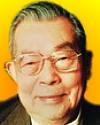
Died 27 Jun 1998 at age 91 (born 18 Nov 1906).
Chinese ornithologist (a.k.a. Tso-Hsin Cheng) who is considered the founder of modern Chinese ornithology, who was internationally renowned for his scientific study of birds. His love of nature and the colorful forest birds began in his childhood, when he learned to identify many birds by their calls. He did graduate work in the U.S. leading to a doctorate in Jun 1930, then returned to China. He spent 60 years doing field work and research in ornithology and conservation. In 1934 he co-founded the China Zoological Society. He was the deputy-director of Beijing Museum of Natural History. His 30 books, including the first checklist of Chinese birds. In 1987, his book A Synopsis of the Avifauna of China was published in English translation.«
Chinese ornithologist (a.k.a. Tso-Hsin Cheng) who is considered the founder of modern Chinese ornithology, who was internationally renowned for his scientific study of birds. His love of nature and the colorful forest birds began in his childhood, when he learned to identify many birds by their calls. He did graduate work in the U.S. leading to a doctorate in Jun 1930, then returned to China. He spent 60 years doing field work and research in ornithology and conservation. In 1934 he co-founded the China Zoological Society. He was the deputy-director of Beijing Museum of Natural History. His 30 books, including the first checklist of Chinese birds. In 1987, his book A Synopsis of the Avifauna of China was published in English translation.«
A Synopsis of the Avifauna of China, by Zheng Zuoxin. - book suggestion.
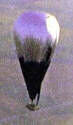
Double Eagle II
Died 27 Jun 1983 at age 48 (born 10 Sep 1934).
Maxie Leroy "Max" Anderson was an American balloonist who, (with fellow Albuquerque, NM, residents Ben Abruzzo and Larry Newman), made the first transatlantic balloon flight aboard their Double Eagle II balloon, 3108 miles from Presque Isle, Maine to Miserey, France. After a dozen failed attempts, their successful crossing of the Atlantic Ocean by gas balloon was achieved 11-16 August 1978, (landing 17 Aug), setting a new duration record with a flight time of 137 hours. Two years later, 12-18 May 1980, with his son Kristian, he made the first nonstop balloon flight across North America. This record helium balloon flight aboard the Kitty Hawk began at San Francisco, California, lasted four days and ended near Matane, Quebec, Canada, 3,100 miles from their launch site. His later round-the-world attempts failed. He was killed in 1983 when refused permission to fly across the East German border and a faulty release clamp used at landing caused them to crash.
Maxie Leroy "Max" Anderson was an American balloonist who, (with fellow Albuquerque, NM, residents Ben Abruzzo and Larry Newman), made the first transatlantic balloon flight aboard their Double Eagle II balloon, 3108 miles from Presque Isle, Maine to Miserey, France. After a dozen failed attempts, their successful crossing of the Atlantic Ocean by gas balloon was achieved 11-16 August 1978, (landing 17 Aug), setting a new duration record with a flight time of 137 hours. Two years later, 12-18 May 1980, with his son Kristian, he made the first nonstop balloon flight across North America. This record helium balloon flight aboard the Kitty Hawk began at San Francisco, California, lasted four days and ended near Matane, Quebec, Canada, 3,100 miles from their launch site. His later round-the-world attempts failed. He was killed in 1983 when refused permission to fly across the East German border and a faulty release clamp used at landing caused them to crash.
Double Eagle, by Charles McCarry. - book suggestion.
Died 27 Jun 1980 at age 84 (born 6 Sep 1895).
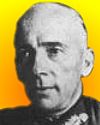
German-American engineer who successfully a series of designs of rockets culminating in becoming commander of the entire Nazi guided missile program aand responsible for the manufacture of the V2 flying bombs. In 1944-45, 1,500 of these 46-foot 14-ton rockets were armed with explosive warheads and launched against Britain. Another 2,000 were fired into Antwerp, Belgium. After the Allied victory, he was held as a prisoner of war in England for three years (1945-47), then was moved to the U.S. to act as a civilian consultant to the American air force. From 1950, he worked for Bell Aircraft Corporation on their Rascal air-to-surface missile, and the Dyna-Soar manned Space Glider programme. His book, V2 (1952) tells of his contributions to the development of jet propulsion.«
German-American engineer who successfully a series of designs of rockets culminating in becoming commander of the entire Nazi guided missile program aand responsible for the manufacture of the V2 flying bombs. In 1944-45, 1,500 of these 46-foot 14-ton rockets were armed with explosive warheads and launched against Britain. Another 2,000 were fired into Antwerp, Belgium. After the Allied victory, he was held as a prisoner of war in England for three years (1945-47), then was moved to the U.S. to act as a civilian consultant to the American air force. From 1950, he worked for Bell Aircraft Corporation on their Rascal air-to-surface missile, and the Dyna-Soar manned Space Glider programme. His book, V2 (1952) tells of his contributions to the development of jet propulsion.«
Died 27 Jun 1932 at age 64 (born 30 Oct 1867).
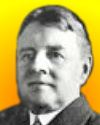
American physicist known for research on long-range radio transmissions. In 1904 he began work on radio transmissions for the U.S. Bureau of Standards. In 1908 Austin became head of a naval radiotelegraphy laboratory (later to become the Naval Research Laboratory) and became chief of the bureau's laboratory for special radio transmission research (1923-32). His work involved long-range transmission experiments, most notably a study (1910) that tested radio contact between ships travelling between the US and Liberia. Austin and collaborator Louis Cohen developed the Austin-Cohen formula for predicting the strength of radio signals at long distances. Austin's later work centred on the study of radio atmospheric disturbances, i.e., "static."
American physicist known for research on long-range radio transmissions. In 1904 he began work on radio transmissions for the U.S. Bureau of Standards. In 1908 Austin became head of a naval radiotelegraphy laboratory (later to become the Naval Research Laboratory) and became chief of the bureau's laboratory for special radio transmission research (1923-32). His work involved long-range transmission experiments, most notably a study (1910) that tested radio contact between ships travelling between the US and Liberia. Austin and collaborator Louis Cohen developed the Austin-Cohen formula for predicting the strength of radio signals at long distances. Austin's later work centred on the study of radio atmospheric disturbances, i.e., "static."
Died 27 Jun 1907 at age 84 (born 5 Dec 1822).
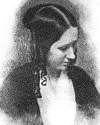
American naturalist and educator (née Cary) who was the first president of Radcliffe College, Cambridge, Mass. She married the Swiss naturalist, Louis Agassiz, in 1850. They traveled together on scientific expeditions, and founded the Anderson school of Natural History, a Marine laboratory, located on Penikese Island in Buzzard's Bay, Mass. When her husband died in1873, Elizabeth became interested in the idea of college for women to be taught by the “Harvard Annex” in Cambridge. In 1894 the Annex became Radcliffe College. She served as president until 1899, then honorary president until 1903. Her books include A First Lesson in Natural History (1859), A Journey in Brazil (1867)
American naturalist and educator (née Cary) who was the first president of Radcliffe College, Cambridge, Mass. She married the Swiss naturalist, Louis Agassiz, in 1850. They traveled together on scientific expeditions, and founded the Anderson school of Natural History, a Marine laboratory, located on Penikese Island in Buzzard's Bay, Mass. When her husband died in1873, Elizabeth became interested in the idea of college for women to be taught by the “Harvard Annex” in Cambridge. In 1894 the Annex became Radcliffe College. She served as president until 1899, then honorary president until 1903. Her books include A First Lesson in Natural History (1859), A Journey in Brazil (1867)
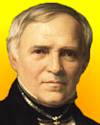
Died 27 Jun 1876 at age 81 (born 19 Apr 1795).
German biologist, microscopist, explorer and micropaleontologist who has been called the founder of micropaleontology (the study of fossil microorganisms). He held that animals, of any size down to the tiniest, have organ systems in common, including muscles, reproductive organs, and stomachs. (Such ideas of such complete organisms were overturned by Félix Dujardin.) Ehrenberg's microscopical research was the first to treat in a scientific way that mass of minute beings that had formerly been vaguely known as the “infusoria,” both living or fossils. He revealed that certain forms of rock, especially chalk, were composed of minute forms of animals or plants, among which were forms he was first to discover and characterize. Ehrenberg also did extensive work on diatoms and the foraminifera. He proved the origin of fungi from spores, which was still a debated question in his time.« more
German biologist, microscopist, explorer and micropaleontologist who has been called the founder of micropaleontology (the study of fossil microorganisms). He held that animals, of any size down to the tiniest, have organ systems in common, including muscles, reproductive organs, and stomachs. (Such ideas of such complete organisms were overturned by Félix Dujardin.) Ehrenberg's microscopical research was the first to treat in a scientific way that mass of minute beings that had formerly been vaguely known as the “infusoria,” both living or fossils. He revealed that certain forms of rock, especially chalk, were composed of minute forms of animals or plants, among which were forms he was first to discover and characterize. Ehrenberg also did extensive work on diatoms and the foraminifera. He proved the origin of fungi from spores, which was still a debated question in his time.« more
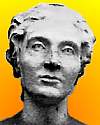
Died 27 Jun 1831 at age 55 (born 1 Apr 1776). quotes
French mathematician who is known for her work in number theory and contributions to the applied mathematics of acoustics and elasticity. Germain was self-taught from books, and from lecture notes supplied by male friends attending the Ecole Polytechnique which she, as a woman, was not permitted to attend. Using a male pseudonym, M. LeBlanc, she corresponded with Lagrange who recognised her skill, and subsequently sponsored her work. She accomplished a limited proof of Fermat's last theorem, for any prime under 100 where certain conditions were met. In 1816, she won a prize sponsored by Napoleon for a mathematical explanation of Chladni figures, the vibration of elastic plates. She died at age 55, from breast cancer.« more
French mathematician who is known for her work in number theory and contributions to the applied mathematics of acoustics and elasticity. Germain was self-taught from books, and from lecture notes supplied by male friends attending the Ecole Polytechnique which she, as a woman, was not permitted to attend. Using a male pseudonym, M. LeBlanc, she corresponded with Lagrange who recognised her skill, and subsequently sponsored her work. She accomplished a limited proof of Fermat's last theorem, for any prime under 100 where certain conditions were met. In 1816, she won a prize sponsored by Napoleon for a mathematical explanation of Chladni figures, the vibration of elastic plates. She died at age 55, from breast cancer.« more
Sophie Germain: An Essay in the History of the Theory of Elasticity, by L.L. Bucciarelli, N. Dworsky. - book suggestion.
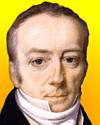
Died 27 Jun 1829 (born 1765). quotes
English mineralogist, chemist and patron who bequeathed substantial funds to establish the Smithsonian Institution, in Washington, D.C., “for the increase and diffusion of knowledge.” Smithson was a chemist and mineralogist who published 27 scientific papers. The mineral smithsonite (carbonate of zinc) was named for him. After the unexpected death of his only heir, his nephew in 1835, his inherited fortune was then directed by Smithson’s will to the United States (where he had never visited). A charitable trust was set up by Congress, founding what became the world’s largest museum and research complex. His reasons for his bequest remain unknown. He died and was buried in Genoa, Italy (1829), but was re-interred at the Smithsonian Institution in 1904.« more
English mineralogist, chemist and patron who bequeathed substantial funds to establish the Smithsonian Institution, in Washington, D.C., “for the increase and diffusion of knowledge.” Smithson was a chemist and mineralogist who published 27 scientific papers. The mineral smithsonite (carbonate of zinc) was named for him. After the unexpected death of his only heir, his nephew in 1835, his inherited fortune was then directed by Smithson’s will to the United States (where he had never visited). A charitable trust was set up by Congress, founding what became the world’s largest museum and research complex. His reasons for his bequest remain unknown. He died and was buried in Genoa, Italy (1829), but was re-interred at the Smithsonian Institution in 1904.« more
The Lost World of James Smithson, by Heather Eqing. - book suggestion.
In 1997, The Near Earth Asteroid Rendezvous (NEAR) spacecraftpassed within 1,200 km (750 mi) of asteroid Mathilde and took many multispectral images. It was on course to the asteroid Eros, which it was to orbit in 1999 and study for approximately a year.
In 1978, Seasat, an experimental U.S. ocean surveillance satellite was launched. Each day, Seasat made 14 orbits of the Earth, and in a period of 36 hours was able to monitor nearly 96% of the oceanic surface. The measurement equipment on board was able to penetrate cloud cover and report measurements such as wave height, water temperature, currents, winds, icebergs, and coastal characteristics. Although it operated for only 99 days before a power failure, it had already shown the viability of the use of a satellite for collecting oceanic data. The information collected was shared with scientists and was used to aid transoceanic travel by ships and aircraft.
In 1978, the Soviets put a Polish astronomer in orbit on Salyut 6.
In 1978, the first pen with truly erasable ink, the Gillette Eraser Mate, was invented.
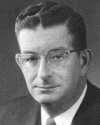
In 1960, chlorophyll “a” was first synthesized by Robert Burns Woodward. Chlorophyll is the green pigment responsible for photosynthesis in plants. This molecule consists of 55 carbon atoms linked with 72 hydrogen atoms, 5 atoms of oxygen and 1 atom of magnesium. The research was performed at the Converse Memorial Laboratory of Harvard University, Cambridge, Mass.
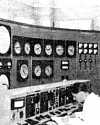
In 1954, the world's first grid-connected atomic power station began producing electricity in Obninsk, U.S.S.R., a small town 60 miles south of Moscow. The plant used a small, graphite moderated, water-cooled reactor, and could produce 5 megawatts. The reactor was used for both civilan power needs and also military purposes, such as research into the possibility of propelling submarines with nuclear power. It generated electricity until 1968, but continued in use for experiments and to warm the town’s centrally distributed hot water supply. Final shutdown took place in 2002 for reason of being unprofitable.«[Image (click to enlarge ): Control room in the Obninsk nuclear power plant.] more
In 1932, in Britain, the Baird Laboratories exhibited a range of domestic TV sets. The screen size was 9 inches by 4 inches.*
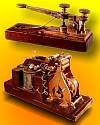
In 1847, New York and Boston were linked by telegraph wires. This enabled the New York newspapers to receive foreign news brought by Cunard's steamers to the Boston port about 190 miles away. When the Cambria next arrived in Boston, three New York Newspapers on 18 Jul 1846 carried identical brief first-day telegraphic summaries of the Cambia's news*. This telegraph link opened three years after the first U.S. telegraph line was opened on 24 May 1844 with a message sent by Samuel Morse 80 miles from Washington D.C. and Baltimore, Md.«[Image: The elegraph key and receiver used by Morse on 24 May 1844.]
Lightning Man: The Accursed Life of Samuel F. B. Morse, by Kenneth Silverman. - book suggestion.




