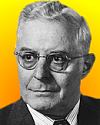
Born 25 Jun 1911; died 2 Feb 1980 at age 68.
William Howard Stein was an American biochemist who (with Stanford Moore and Christian B. Anfinsen) was a cowinner of the Nobel Prize for Chemistry in 1972 for their studies of the pancreatic enzyme ribonuclease. Stein, with Moore, investigated the connection between its chemical structure and the catalytic activity of the active centre of the ribonuclease molecule. Between 1949 and 1963, they developed methods for the analysis of amino acids and peptides obtained from proteins, determined the structure of ribonuclease, and it catalyzes the digestion of food. By 1972, they had also worked out the complete sequence of deoxyribonuclease, a molecule twice as complex as ribonuclease.
William Howard Stein was an American biochemist who (with Stanford Moore and Christian B. Anfinsen) was a cowinner of the Nobel Prize for Chemistry in 1972 for their studies of the pancreatic enzyme ribonuclease. Stein, with Moore, investigated the connection between its chemical structure and the catalytic activity of the active centre of the ribonuclease molecule. Between 1949 and 1963, they developed methods for the analysis of amino acids and peptides obtained from proteins, determined the structure of ribonuclease, and it catalyzes the digestion of food. By 1972, they had also worked out the complete sequence of deoxyribonuclease, a molecule twice as complex as ribonuclease.
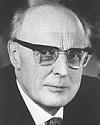
Born 25 Jun 1907; died 11 Feb 1973 at age 65.
Johannes Hans Daniel Jensen was a German physicist who proposed the shell theory of nuclear structure of nucleons - protons and neutrons - grouped in onion-like layers of concentric shells. He suggested that the nucleons spun on their own axis while they moved in an orbit within their shell and that certain patterns in the number of nucleons per shell made the nucleus more stable. Scientists already knew that the electrons orbiting the nucleus were arranged in different shells. For his model of the nucleus, Jensen shared the 1963 Nobel Prize in physics (with Maria Goeppert-Mayer, who arrived at the same hypothesis independently in the U.S.; and Eugene P. Wigner for unrelated work.) Through the 1950s, Jensen worked on radioactivity.
Johannes Hans Daniel Jensen was a German physicist who proposed the shell theory of nuclear structure of nucleons - protons and neutrons - grouped in onion-like layers of concentric shells. He suggested that the nucleons spun on their own axis while they moved in an orbit within their shell and that certain patterns in the number of nucleons per shell made the nucleus more stable. Scientists already knew that the electrons orbiting the nucleus were arranged in different shells. For his model of the nucleus, Jensen shared the 1963 Nobel Prize in physics (with Maria Goeppert-Mayer, who arrived at the same hypothesis independently in the U.S.; and Eugene P. Wigner for unrelated work.) Through the 1950s, Jensen worked on radioactivity.
Born 25 Jun 1907; died 11 Feb 1973 at age 65.
Johannes Hans Daniel Jensen was a German physicist who devised the shell nuclear model (1949).
Johannes Hans Daniel Jensen was a German physicist who devised the shell nuclear model (1949).
Born 25 Jun 1905; died 9 Jan 1976 at age 70.
German-American astronomer who studied atmospheres of planets. He identified (1932) certain absorption bands (observed by Slipher) in the spectra of Jupiter and the outer planets as indicative of ammonia and methane as minor components of these planets which are primarily composed of hydrogen and helium. He speculated (1937) that droplets of formaldehyde formed the clouds of Venus, since water was not detected. (In fact, surface water is absent on Venus, but the clouds do contain water with sulphur and sulphuric acid.) In 1939, he realized the importance of the negative hydrogen ion for stellar opacity. By the 1940s, he proposed the greenhouse theory to explain how atmospheric gases produced unexpectedly high temperatures of Venus.
German-American astronomer who studied atmospheres of planets. He identified (1932) certain absorption bands (observed by Slipher) in the spectra of Jupiter and the outer planets as indicative of ammonia and methane as minor components of these planets which are primarily composed of hydrogen and helium. He speculated (1937) that droplets of formaldehyde formed the clouds of Venus, since water was not detected. (In fact, surface water is absent on Venus, but the clouds do contain water with sulphur and sulphuric acid.) In 1939, he realized the importance of the negative hydrogen ion for stellar opacity. By the 1940s, he proposed the greenhouse theory to explain how atmospheric gases produced unexpectedly high temperatures of Venus.
1950s
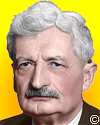
Born 25 Jun 1894; died 29 Dec 1989 at age 95. quotes
Hermann Julius Oberth was an Austro-German rocket engineer was a German scientist who was one of three founders of space flight (with Tsiolkovsky and Goddard). After injury in WWI, he drafted a proposal for a long-range, liquid-propellant rocket, which the War Ministry dismissed as fanciful. Even his Ph.D. dissertation on his rocket design was rejected by the University of Heidelberg. When he published it as Die Rakete zu den Planetenräumen (1923; “The Rocket into Interplanetary Space”) he gained recognition for its mathematical analysis of the rocket speed that would allow it to escape Earth's gravitational pull. He received a Romanian patent in 1931 for a liquid-propellant rocket design. His first such rocket was launched 7 May 1931, near Berlin.«
Hermann Julius Oberth was an Austro-German rocket engineer was a German scientist who was one of three founders of space flight (with Tsiolkovsky and Goddard). After injury in WWI, he drafted a proposal for a long-range, liquid-propellant rocket, which the War Ministry dismissed as fanciful. Even his Ph.D. dissertation on his rocket design was rejected by the University of Heidelberg. When he published it as Die Rakete zu den Planetenräumen (1923; “The Rocket into Interplanetary Space”) he gained recognition for its mathematical analysis of the rocket speed that would allow it to escape Earth's gravitational pull. He received a Romanian patent in 1931 for a liquid-propellant rocket design. His first such rocket was launched 7 May 1931, near Berlin.«
Hermann Oberth: The Father of Space Flight, by Boris V. Rauschenbach. - book suggestion.
Born 25 Jun 1864; died 18 Nov 1941 at age 77. quotes
German physical chemist who was one of the founders of modern physical chemistry. In 1889, he devised his theory of electric potential and conduction of electrolytic solutions (the Nernst Equation) and introduced the solubility product to explain precipitation reactions. In 1906, Nernst showed that it is possible to determine the equilibrium constant for a chemical reaction from thermal data, and in so doing he formulated what he himself called the third law of thermodynamics. This states that the entropy, (a thermodynamic measure of disorder in a system), approaches zero as the temperature goes towards absolute zero. For this, he was awarded the 1920 Nobel Prize in Chemistry. In 1918, he explained the H2-Cl2 explosion on exposure to light as an atom chain reaction.
German physical chemist who was one of the founders of modern physical chemistry. In 1889, he devised his theory of electric potential and conduction of electrolytic solutions (the Nernst Equation) and introduced the solubility product to explain precipitation reactions. In 1906, Nernst showed that it is possible to determine the equilibrium constant for a chemical reaction from thermal data, and in so doing he formulated what he himself called the third law of thermodynamics. This states that the entropy, (a thermodynamic measure of disorder in a system), approaches zero as the temperature goes towards absolute zero. For this, he was awarded the 1920 Nobel Prize in Chemistry. In 1918, he explained the H2-Cl2 explosion on exposure to light as an atom chain reaction.
Walther Nernst and the Transition to Modern Physical Science, by Diana Kormos Barkan. - book suggestion.
Born 25 Jun 1814; died 29 May 1896 at age 81.
French geochemist and a pioneer in the application of experimental methods to the study of diverse geologic phenomena. His appointment as professor of geology and mineralogy at Strasburg furnished him with a laboratory suitable for his experimental work in synthetic geology, begun in 1849. He studied the artificial production of minerals, the geological action of superheated aqueous vapour, the effect of mutual abrasion, the influence of pressure and strain in mountain-making, etc. During the years 1857-61 he made a detailed study of the hot springs of Plombières, observing at the same time the chemical action of thermal waters. Daubréelite (CrS), a grayish granular mineral found in meteoric iron, was named after him.
French geochemist and a pioneer in the application of experimental methods to the study of diverse geologic phenomena. His appointment as professor of geology and mineralogy at Strasburg furnished him with a laboratory suitable for his experimental work in synthetic geology, begun in 1849. He studied the artificial production of minerals, the geological action of superheated aqueous vapour, the effect of mutual abrasion, the influence of pressure and strain in mountain-making, etc. During the years 1857-61 he made a detailed study of the hot springs of Plombières, observing at the same time the chemical action of thermal waters. Daubréelite (CrS), a grayish granular mineral found in meteoric iron, was named after him.
Born 25 Jun 1799; died 12 Jul 1834 at age 35. quotes
Scottish botanist who was one of the most successful of the great 19th century plant collectors. He established about 240 species of plants in Britain. His first foreign plant-hunting expedition (1824) was made throughout the Pacific Northwest of the U.S. The Douglas fir, which he cultivated from 1827, is named after him. He introduced other conifers including the Sitka spruce, now commercially important to the timber industry, and numerous garden plants and shrubs, including the lupin, California poppy and the flowering currant. At age 35, he died in by accident in Hawaii, when he fell into a pit dug by the islanders to trap wild cattle where he was trapped with a bull that also fell into the pit. He was gored to death by the bull.« more
Scottish botanist who was one of the most successful of the great 19th century plant collectors. He established about 240 species of plants in Britain. His first foreign plant-hunting expedition (1824) was made throughout the Pacific Northwest of the U.S. The Douglas fir, which he cultivated from 1827, is named after him. He introduced other conifers including the Sitka spruce, now commercially important to the timber industry, and numerous garden plants and shrubs, including the lupin, California poppy and the flowering currant. At age 35, he died in by accident in Hawaii, when he fell into a pit dug by the islanders to trap wild cattle where he was trapped with a bull that also fell into the pit. He was gored to death by the bull.« more
Traveler in a Vanished Landscape, The Life & Times of David Douglas, by William Moorwood. - book suggestion.

Died 25 Jun 1997 at age 87 (born 11 Jun 1910). quotes
French naval officer, oceanographer, marine biologist and ocean explorer, known for his extensive underseas investigations. He was co-inventor of the aqualung which made SCUBA diving possible (1943). Cousteau the developed the Conshelf series of manned habitats, the Diving Saucer, a process of underwater television and numerous other platforms and specialized instruments of ocean science. In 1945 he founded the French Navy's Undersea Research Group. He modified a WWII wooden hull minesweeper into the research vessel Calypso, in 1950. An observation dome added to the foot of Calypso's bow was found to increase the ship's stability, speed and fuel efficiency.
French naval officer, oceanographer, marine biologist and ocean explorer, known for his extensive underseas investigations. He was co-inventor of the aqualung which made SCUBA diving possible (1943). Cousteau the developed the Conshelf series of manned habitats, the Diving Saucer, a process of underwater television and numerous other platforms and specialized instruments of ocean science. In 1945 he founded the French Navy's Undersea Research Group. He modified a WWII wooden hull minesweeper into the research vessel Calypso, in 1950. An observation dome added to the foot of Calypso's bow was found to increase the ship's stability, speed and fuel efficiency.
Jacques Cousteau's Calypso, by Jacques Yves Cousteau. - book suggestion.
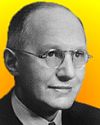
Died 25 Jun 1995 at age 91 (born 6 Oct 1903).
Ernest Thomas Sinton Walton was an Irish physicist who was corecipient, with Sir John Douglas Cockcroft of England, of the 1951 Nobel Prize for Physics for the development of the first nuclear particle accelerator, known as the Cockcroft-Walton generator. The accelerator was built in a disused room in the Cavendish Laboratory, and supplied with several hundred kilovolts from a voltage multiplier circuit designed and built by Cockroft and Walton. On 14 Apr 1932 Walton turned the proton beam on to a lithium target. Despite all the odds against them, they succeeded in being the first to split the atom, and Walton was the first to see the reaction taking place. They identified the disintegration products as alpha particles (helium nuclei).
Ernest Thomas Sinton Walton was an Irish physicist who was corecipient, with Sir John Douglas Cockcroft of England, of the 1951 Nobel Prize for Physics for the development of the first nuclear particle accelerator, known as the Cockcroft-Walton generator. The accelerator was built in a disused room in the Cavendish Laboratory, and supplied with several hundred kilovolts from a voltage multiplier circuit designed and built by Cockroft and Walton. On 14 Apr 1932 Walton turned the proton beam on to a lithium target. Despite all the odds against them, they succeeded in being the first to split the atom, and Walton was the first to see the reaction taking place. They identified the disintegration products as alpha particles (helium nuclei).
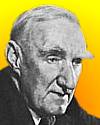
Died 25 Jun 1971 at age 90 (born 23 Sep 1880).
Scottish physician, biologist and politician who was an authority on nutrition and winner of the Nobel Prize for Peace in 1949 for his efforts to eliminate world hunger. In 1936, he published a report, Food, Health and Income, a dietary survey by income groups made during 1935. It showed that the cost of a diet fulfilling basic nutritional requirements was beyond the means of half the British population and that 10 percent of the population was undernourished. This and other reports conducted by the Rowett Research Institute formed the basis of the British food-rationing system during WW II. He was director general of the United Nations Food and Agriculture Organization (1945-48).
Scottish physician, biologist and politician who was an authority on nutrition and winner of the Nobel Prize for Peace in 1949 for his efforts to eliminate world hunger. In 1936, he published a report, Food, Health and Income, a dietary survey by income groups made during 1935. It showed that the cost of a diet fulfilling basic nutritional requirements was beyond the means of half the British population and that 10 percent of the population was undernourished. This and other reports conducted by the Rowett Research Institute formed the basis of the British food-rationing system during WW II. He was director general of the United Nations Food and Agriculture Organization (1945-48).
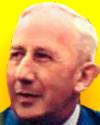
Died 25 Jun 1960 at age 67 (born 24 Mar 1893). quotes
German-American astronomer who, with Fritz Zwicky, proposed that supernovae could produce cosmic rays and neutron stars (1934), and Baade made extensive studies of the Crab Nebula and its central star. During WW II blackouts of the Los Angeles area Baade used the 100-inch Hooker telescope to resolve stars in the central region of the Andromeda Galaxy for the first time. This led to his definition of two stellar populations, to the realization that there were two kinds of Cepheid variable stars, and from there to a doubling of the assumed scale of the universe. Baade and Rudolph Minkowski identified and took spectrograms of optical counterparts of many of the first-discovered radio sources, including Cygnus A and Cassiopeia A.
German-American astronomer who, with Fritz Zwicky, proposed that supernovae could produce cosmic rays and neutron stars (1934), and Baade made extensive studies of the Crab Nebula and its central star. During WW II blackouts of the Los Angeles area Baade used the 100-inch Hooker telescope to resolve stars in the central region of the Andromeda Galaxy for the first time. This led to his definition of two stellar populations, to the realization that there were two kinds of Cepheid variable stars, and from there to a doubling of the assumed scale of the universe. Baade and Rudolph Minkowski identified and took spectrograms of optical counterparts of many of the first-discovered radio sources, including Cygnus A and Cassiopeia A.
Walter Baade: A Life in Astrophysics, by Donald E. Osterbrock. - book suggestion.
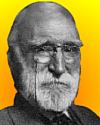
Died 25 Jun 1918 at age 80 (born 4 Nov 1837).
Canadian-American metallurgist, mining engineer and philanthropist who developed the copper mining industry in the U.S. Southwest. He was co-inventor of the Hunt-Douglas process for copper extraction, which brought him to the attention of the Phelps-Dodge Corp. In 1881, he examined copper ore deposits in Arizona for the company which then from 1885 operated the Copper Queen Mine, at Bisbee, Arizona. Under Douglas, it became one of the top copper producing mines in the U.S. He grew wealthy, and became the president of Phelps-Dodge 1908-18. The company built the El Paso and Southwestern Railroad (from 1887) to transport its ore. He founded a huge smelting centre at the town of Douglas, Ariz., named for him.«
Canadian-American metallurgist, mining engineer and philanthropist who developed the copper mining industry in the U.S. Southwest. He was co-inventor of the Hunt-Douglas process for copper extraction, which brought him to the attention of the Phelps-Dodge Corp. In 1881, he examined copper ore deposits in Arizona for the company which then from 1885 operated the Copper Queen Mine, at Bisbee, Arizona. Under Douglas, it became one of the top copper producing mines in the U.S. He grew wealthy, and became the president of Phelps-Dodge 1908-18. The company built the El Paso and Southwestern Railroad (from 1887) to transport its ore. He founded a huge smelting centre at the town of Douglas, Ariz., named for him.«
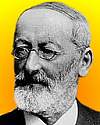
Died 25 Jun 1898 at age 70 (born 24 Jan 1828).
Ferdinand (Julius) Cohn was a German naturalist and botanist who is considered one of the founders of bacteriology and known for his studies of algae, bacteria, and fungi, insect epidemics and plant diseases. From his early studies of microscopic life he developed theories of the bacterial causes of infectious disease and recognized bacteria as plants. He showed that the protoplasm was almost identical in plant and animal cells. He founded the science of bacteriology with a three volume treatise published in 1872 which classified bacteria into genera and species. Cohn gave Robert Koch a position in his lab and aided him in preparing Koch's famous work on anthrax.
Ferdinand (Julius) Cohn was a German naturalist and botanist who is considered one of the founders of bacteriology and known for his studies of algae, bacteria, and fungi, insect epidemics and plant diseases. From his early studies of microscopic life he developed theories of the bacterial causes of infectious disease and recognized bacteria as plants. He showed that the protoplasm was almost identical in plant and animal cells. He founded the science of bacteriology with a three volume treatise published in 1872 which classified bacteria into genera and species. Cohn gave Robert Koch a position in his lab and aided him in preparing Koch's famous work on anthrax.
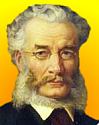
Died 25 Jun 1879 at age 73 (born 4 May 1806).
English inventor who worked with Charles Wheatstone in developing electric telegraphy. Of the pair, Cooke contributed a superior business ability, whereas Wheatstone is generally considered the more important of the two in the history of the telegraph. After Cooke attended a demonstration of the use of wire in transmitting messages, he began his own experiments with telegraphy (1836) and formed a partnership with Wheatstone. Their first patent (1837) was impractical because of cost. They demonstrated their five-needle telegraph on 24 July 1837 when they ran a telegraph line along the railway track from Euston to Camden Town able to transmit and successfully receive a message. In 1845, they patented a single-needle electric telegraph.
English inventor who worked with Charles Wheatstone in developing electric telegraphy. Of the pair, Cooke contributed a superior business ability, whereas Wheatstone is generally considered the more important of the two in the history of the telegraph. After Cooke attended a demonstration of the use of wire in transmitting messages, he began his own experiments with telegraphy (1836) and formed a partnership with Wheatstone. Their first patent (1837) was impractical because of cost. They demonstrated their five-needle telegraph on 24 July 1837 when they ran a telegraph line along the railway track from Euston to Camden Town able to transmit and successfully receive a message. In 1845, they patented a single-needle electric telegraph.
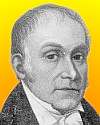
Died 25 Jun 1830 at age 58 (born 11 Nov 1771).
American physician who was a pioneer in abdominal surgery. On 13 Dec 1809, he diagnosed a patient (who had at first thought she was pregnant with twins) as having a huge ovarian tumour needing surgical removal. Thus, he performed the first ovariotomy in the U.S. a few days later, on 25 Dec 1809, when she was transported 60 miles to his Danville practice. In this era there were no anaesthetics, but he successfully removed a 22-pound tumor. The patient recovered and lived to age 78. McDowell is also remembered for his chartitable work, including as a founder of Centre College in Danville, Kentucky. In the National Statuary Hall Collection in the Capitol, Washington, D.C., which includes two contributions from each state, he is honored as one of the statues from Kentucky.«
American physician who was a pioneer in abdominal surgery. On 13 Dec 1809, he diagnosed a patient (who had at first thought she was pregnant with twins) as having a huge ovarian tumour needing surgical removal. Thus, he performed the first ovariotomy in the U.S. a few days later, on 25 Dec 1809, when she was transported 60 miles to his Danville practice. In this era there were no anaesthetics, but he successfully removed a 22-pound tumor. The patient recovered and lived to age 78. McDowell is also remembered for his chartitable work, including as a founder of Centre College in Danville, Kentucky. In the National Statuary Hall Collection in the Capitol, Washington, D.C., which includes two contributions from each state, he is honored as one of the statues from Kentucky.«
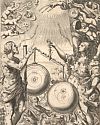
Died 25 Jun 1671 at age 73 (born 17 Apr 1598).
Giovanni Battista Riccioli was an Italian astronomer who was the first to observe (1650) a double star (two stars so close together that they appear to be one) - Mizar in Ursa Major, the middle star in the handle of the Big Dipper. He also discovered satellite shadows on Jupiter. In 1651, he assigned the majority of the lunar feature names in current use. He named the more prominent features after famous astronomers, scientists and philosophers, while the large dark and smooth areas he called "seas" or "maria". The lunar seas were named after moods (Seas of Tranquillity, Serenity) or terrestrial phenomena (Sea of Rains, Ocean or Storms) His map was published in Almagestum Novum in1651.[Image: Frontispiece from Riccioli's Almagestum novum, 1651] more
Giovanni Battista Riccioli was an Italian astronomer who was the first to observe (1650) a double star (two stars so close together that they appear to be one) - Mizar in Ursa Major, the middle star in the handle of the Big Dipper. He also discovered satellite shadows on Jupiter. In 1651, he assigned the majority of the lunar feature names in current use. He named the more prominent features after famous astronomers, scientists and philosophers, while the large dark and smooth areas he called "seas" or "maria". The lunar seas were named after moods (Seas of Tranquillity, Serenity) or terrestrial phenomena (Sea of Rains, Ocean or Storms) His map was published in Almagestum Novum in1651.[Image: Frontispiece from Riccioli's Almagestum novum, 1651] more
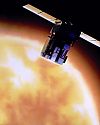
In 1998, contact was lost with the Solar and Heliospheric Observatory (SOHO). It was positioned in a "halo" orbit around L-1, a gravitational balance point between Earth and the Sun about 1.5 million km (930,000 mi) away from Earth. Fortunately, a major blow to the field of Solar studied was avoided. Contact was reestablished 16 Sep 1998, and by mid-October scientists were reactivating the science instruments. Since its launch on 2 Dec 1995, SOHO gave solar science a new ability to observe simultaneously the interior and atmosphere of the Sun, and particles in the solar wind and the heliosphere. Observation of eruptions of hot, electrically charged gas, provided early warning of interactions that could affect the Earth.
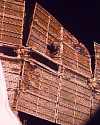
In 1997, the space-station Mir suffered a near-fatal mishap when a Progress ferry being docked via remote control by Russian cosmonaut Vasily Tsibliyev accidentally rammed into the Spektr science module, putting a hole in the pressure vessel and damaging its solar arrays beyond use. To salvage the station, which consisted of a core, a connecting node, and five science modules, crew members severed electrical and data connections between Spektr and the rest of the station and then sealed off the module. They saved the station but lost about half of their electrical power.eb
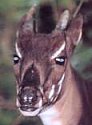
In 1994, the capture of the first live specimen of the Vu Quang ox in Vietnam, a previously unknown species of mammal, was reported in the London newspaper The Times. Its existence was first discovered during May 1992 from remains in hunters' villages, including several skulls with horns. This was the first discovery of new large mammal species since the Okapi (Okapia johnstoni) in 1910. The captured calf was held in an enclosure at the Vietnam's Forest Inventory and Planning Institute. The species was named Pseudoryx nghetinhensis. It is presently thought to be restricted to an area of approximately 4,000 sq. km along the Vietnam-Laos border within the Vu Quang Nature Reserve.

In 1951, at 4:35 pm, the Columbia Broadcasting System (CBS) televised the one-hour premiere of commercial colour television with a program named Premiere. It was transmitted, using the CBS Field Sequential System (not Compatible Color), from New York to four other cities: Boston, Philadelphia, Baltimore, and Washington, D.C. The show included entertainment by leading personalities such as Arthur Godfrey, Faye Emerson, Sam Levenson, Robert Alda, Ed Sullivan, Isabel Bigley and Garry Moore, and statements by CBS executives William S. Paley and Dr. Frank Stanton. This system was not compatible with existing black-and-white TV sets and failed commercially; CBS colour broadcasts ended on 20 Oct 1951.
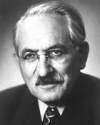
Waksman
In 1949, scientists in New York announced that the anti-tuberculosis drug Neomycin had been fully tested on animals. It was first isolated by the American microbiologist Selman Waksman from a strain of the bacterial species Streptomyces fradiae which produces it naturally. It is now used mainly topically (because of renal toxicity) in the treatment of skin and mucous membrane infections, wounds, and burns. He received the Nobel Prize in Physiology or Medicine 1952 for his earlier isolation and development of the antibiotic Streptomycin. The term "antibiotic" in the medical context was defined by Waksman, and he discovered an impressive number of them.Ref.: Waksman SA, Lechvalier HA. Neomycin, a new antibiotic active against streptomycin resistant bacteria, including tuberculosis organisms. Science. 1949:19:305.
The antibiotic era: A history of the antibiotics..., by Selman Abraham Waksman. - book suggestion.
In 1924, tuberculosis vaccine was developed by Prof Albert Calmette and Alphonse Guerin.
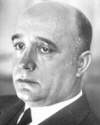
In 1921, German chemist, Friedrich Karl Bergius invented a way to convert coal dust and hydrogen directly into gasoline and lubricating oils without isolating intermediate products, In Stuttgart, Bergius succeeded in distillating coal while forcing hydrogen under high pressure to combine chemically with the coal, transforming more carbon from the coal into oils than is possible with conventional distillation. To solve heat distribution and temperature regulation problems, Bergius invented treating a mixture of pulverized coal in oil with the gas under high pressure. For his work in developing the chemical high pressure hydrogenation method necessary for this process he shared the 1931 Nobel Prize for Chemistry with German, Carl Bosch.
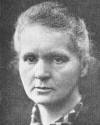
In 1903, Marie Curie went before the examination committee for her Ph.D. Later in this same year she was awarded a Nobel Prize for her research.
Madame Curie: A Biography, by Eve Curie. - book suggestion.
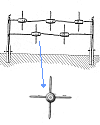
(USPTO)
In 1867, barbed wire was patented by Lucien B. Smith of Kent, Ohio (U.S. No. 66,182). His simple idea that was an artificial "thorn hedge" consisting of wire with short metal spikes twisted on by hand at regular intervals. For prairie farmers and cattlemen natural fencing materials were scarce, so the invention met the need to keep their cattle safely away from crops. The barbs were set on spools threaded on and spaced along the fence-wire. Four projecting nail-like points radiatiated from the spools of the at right angles to each other and the fence-wire. The spools were spaced 2 to 3 feet apart, and could revolve loosely on the wire. It is not known if this variety of barbed wire was actually manufactured; simpler twisted wire forms followed.
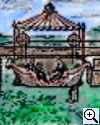
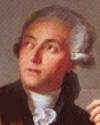
In 1783, Antonie Lavoisier announced to the French Academy of Sciences that water was the product formed by the combination of hydrogen and oxygen. However, this discovery had been made earlier by the English chemist Henry Cavendish.
In 1731, fourteen men met in Trinity College to form the “Dublin Society for improving Husbandry, Manufactures and other Useful Arts.” Two weeks later, 8 Jul 1731, the designation “and Sciences” was added to the end of its name. From 1821, it was known as the Royal Dublin Society when George IV became patron of the Society. In 1766-1806, the Society's afforestation initiative resulted in over 55 million trees planted in Ireland including commercial species, parkland, ornamental and fruit trees. A mineralogist was appointed in 1786 to conduct research into Irish mineral deposits in Ireland. The Society opened its Botanic Gardens in 1795. In 1853, the Society held Ireland's first International Exhibition of Manufactures.«




