Born 1 Jun 1919; died 2 Oct 2006 at age 87. quotes
George Adelbert "Bart" Bartholomew was an American biologist who helped establish the modern fields of comparative animal physiological ecology and behavioral physiology, and gained international renown. He strongly advocated that studies of organisms should be made both with field investigations as well as in the laboratory. Bartholomew was a pioneer in the study of desert organisms.
George Adelbert "Bart" Bartholomew was an American biologist who helped establish the modern fields of comparative animal physiological ecology and behavioral physiology, and gained international renown. He strongly advocated that studies of organisms should be made both with field investigations as well as in the laboratory. Bartholomew was a pioneer in the study of desert organisms.
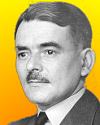
Born 1 Jun 1907; died 8 Aug 1996 at age 89.
English aviation engineer and pilot who was a pioneer in the field of jet propulsion, which he used to develop aircraft that could fly at faster speeds and higher altitudes than piston-engine propeller airplanes of the 1920s. While he was at Cranwell, still only 21 years of age, Whittle began to consider the possibilities of jet propulsion as applied to aircraft. By 1930, he had designed and patented a jet aircraft engine. After 11 years, Whittle's engine, tested and modified, successfully powered a Gloster-Whittle E.28/39, on a historic 17-min flight on 15 May 1941. Design work continued, and by the end of WW II, the Gloster Meteor became the RAF's first jet fighter that would fly 200-mph faster than the RAF's Spitfires and Hurricanes.
English aviation engineer and pilot who was a pioneer in the field of jet propulsion, which he used to develop aircraft that could fly at faster speeds and higher altitudes than piston-engine propeller airplanes of the 1920s. While he was at Cranwell, still only 21 years of age, Whittle began to consider the possibilities of jet propulsion as applied to aircraft. By 1930, he had designed and patented a jet aircraft engine. After 11 years, Whittle's engine, tested and modified, successfully powered a Gloster-Whittle E.28/39, on a historic 17-min flight on 15 May 1941. Design work continued, and by the end of WW II, the Gloster Meteor became the RAF's first jet fighter that would fly 200-mph faster than the RAF's Spitfires and Hurricanes.
Genesis of the Jet: Frank Whittle and the Invention of the Jet Engine, by John Golley. - book suggestion.
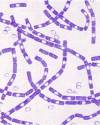
B. anthracis
Born 1 Jun 1905; died 26 Feb 1997 at age 91.
Italian research veterinarian who developed an effective, safe, and reproducible vaccine against anthrax that succeeded in virtually eliminating the disease. Bacillus anthracis is a very large, Gram positive, sporeforming rod. The Sterne Strain of Bacillus anthracis produces sublethal amounts of the toxin that induce formation of protective antibody.
Italian research veterinarian who developed an effective, safe, and reproducible vaccine against anthrax that succeeded in virtually eliminating the disease. Bacillus anthracis is a very large, Gram positive, sporeforming rod. The Sterne Strain of Bacillus anthracis produces sublethal amounts of the toxin that induce formation of protective antibody.
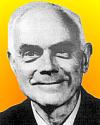
Born 1 Jun 1899; died 18 Jan 1963 at age 63. quotes
English mathematician whose contributions to analysis placed him in the forefront of his profession. His contributions helped resolve the differences between the general theory of quantum mechanics and the methods used to solve particular problems in quantum theory. All Titchmarsh's work is in analysis. His early studies were on Fourier series, Fourier integrals, functions of a complex variable, integral equations and the Riemann zeta function. From 1939, Titchmarsh concentrated on the theory of series expansions of eigenfunctions of differential equations, work which helped to resolve problems in quantum mechanics. His work on this topic occupied him for the last 25 years of his life.
English mathematician whose contributions to analysis placed him in the forefront of his profession. His contributions helped resolve the differences between the general theory of quantum mechanics and the methods used to solve particular problems in quantum theory. All Titchmarsh's work is in analysis. His early studies were on Fourier series, Fourier integrals, functions of a complex variable, integral equations and the Riemann zeta function. From 1939, Titchmarsh concentrated on the theory of series expansions of eigenfunctions of differential equations, work which helped to resolve problems in quantum mechanics. His work on this topic occupied him for the last 25 years of his life.
Theory of Functions, by Edward Charles Titchmarsh. - book suggestion.
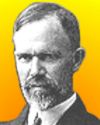
Born 1 Jun 1866; died 18 Feb 1944 at age 77.
American zoologist who contributed substantially to the study of eugenics (the improvement of populations through breeding) and heredity and who pioneered the use of statistical techniques in biological research. Partly as a result of breeding experiments with chickens and canaries, he was one of the first, soon after 1902, to recognize the validity of the newly discovered Mendelian theory of heredity. In Heredity in Relation to Eugenics (1911), he compiled evidence concerning the inheritance of human traits, on the basis of which he argued that the application of genetic principles would improve the human race. These data were at the heart of his lifelong promotion of eugenics, though he muddled science with social philosophy.
American zoologist who contributed substantially to the study of eugenics (the improvement of populations through breeding) and heredity and who pioneered the use of statistical techniques in biological research. Partly as a result of breeding experiments with chickens and canaries, he was one of the first, soon after 1902, to recognize the validity of the newly discovered Mendelian theory of heredity. In Heredity in Relation to Eugenics (1911), he compiled evidence concerning the inheritance of human traits, on the basis of which he argued that the application of genetic principles would improve the human race. These data were at the heart of his lifelong promotion of eugenics, though he muddled science with social philosophy.
Statistical Methods in Biology, Medicine and Psychology, by Charles Benedict Davenport. - book suggestion.
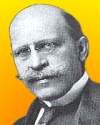
Born 1 Jun 1863; died 16 Dec 1916 at age 53.
German-American psychologist and philosopher who was interested in the applications of psychology to law, business, industry, medicine, teaching, and sociology. He was a forerunner in the field of behaviorism: in theoretical psychology, his “action theory” defined attention in terms of the openness of the nerve paths to the muscles of adjustment. His work in industrial/organizational (I/O) psychology was extremely experimentally based. He looked at problems with monotony, attention and fatigue, physical and social influences on the working power, the effects of advertising, and the future development of economic psychology. He also looked at the reliability of eye witness testimonies.
German-American psychologist and philosopher who was interested in the applications of psychology to law, business, industry, medicine, teaching, and sociology. He was a forerunner in the field of behaviorism: in theoretical psychology, his “action theory” defined attention in terms of the openness of the nerve paths to the muscles of adjustment. His work in industrial/organizational (I/O) psychology was extremely experimentally based. He looked at problems with monotony, attention and fatigue, physical and social influences on the working power, the effects of advertising, and the future development of economic psychology. He also looked at the reliability of eye witness testimonies.
Psychology and Industrial Efficiency, by Hugo Münsterberg. - book suggestion.
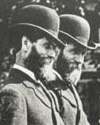
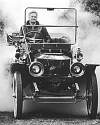
American inventor who, with his twin brother Freeman, were the most famous manufacturers of steam-driven automobiles. Francis previously had invented a photographic dry-plate process (1883), and as the Stanley Dry Plate Company the brothers had engaged in the manufacturing of the plates. They sold the company to Eastman Kodak in 1905, as their interest had turned to steam-powered automobiles. They began working on steam powered cars in 1897, and built thousands of them them until the 1920's as the Stanley Motor Company. At racing events, they often competed successfully against gasoline powered cars (1902-09). They set a world record in 1906 for fastest mile in 28.2 seconds (127 mph or 205 kph).[Image right: 1910 Stanley Model 71]
The Stanley Steamer: America's Legendary Steam Car, by Kit Foster. - book suggestion.
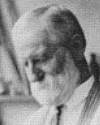
American inventor who, with his twin brother Francis, were the most famous manufacturers of steam-driven automobiles. Francis previously had invented a photographic dry-plate process (1883), and as the Stanley Dry Plate Company the brothers had engaged in the manufacturing of the plates. They sold the company to Eastman Kodak in 1905, as their interest had turned to steam-powered automobiles. They began working on steam powered cars in 1897, and built thousands of them them until the 1920's as the Stanley Motor Company. At racing events, they often competed successfully against gasoline powered cars (1902-09). They set a world record in 1906 for fastest mile in 28.2 seconds (127 mph or 205 kph).[Image right: 1910 Stanley Model 71]
The Stanley Steamer: America's Legendary Steam Car, by Kit Foster. - book suggestion.
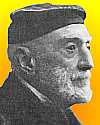
Born 1 Jun 1843; died 19 Mar 1930 at age 86.
Scottish physician who, from 1873, became a missionary in Japan, where he worked as a surgeon superintendent at a Tokyo hospital, taught at the local univeristy, and founded the Tokyo Institute for the Blind. In the late 1870s, his attention was drawn to fingerprints of ancient potters remaining on their work that he helped unearth at an archaeological dig site in Japan. He commenced a study of fingerprints, and became convinced that each individual had a unique pattern. He corresponded on the subject with Charles Darwin, and published a paper about his ideas in Nature (28 Oct 1880). When he returned to Britain in 1886, he unsuccessfully offered his fingerprinting identification scheme for forensic uses to Scotland Yard. Undeserved confusion on priority for the discovery with Francis Galton and Sir William J. Herschel lasted until 1917.«
Scottish physician who, from 1873, became a missionary in Japan, where he worked as a surgeon superintendent at a Tokyo hospital, taught at the local univeristy, and founded the Tokyo Institute for the Blind. In the late 1870s, his attention was drawn to fingerprints of ancient potters remaining on their work that he helped unearth at an archaeological dig site in Japan. He commenced a study of fingerprints, and became convinced that each individual had a unique pattern. He corresponded on the subject with Charles Darwin, and published a paper about his ideas in Nature (28 Oct 1880). When he returned to Britain in 1886, he unsuccessfully offered his fingerprinting identification scheme for forensic uses to Scotland Yard. Undeserved confusion on priority for the discovery with Francis Galton and Sir William J. Herschel lasted until 1917.«
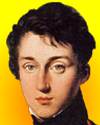
Age 17
Born 1 Jun 1796; died 24 Aug 1832 at age 36. quotes
Nicolas-Lèonard-Sadi Carnot was a French engineer and physicist became a captain of engineers in the army, and spent much of his life investigating the design of steam engines. His book Reflections on the Motive Power of Heat (1824) contained a theorem which says that a maximum efficiency of heat engine can be obtained by a reversible engine, and that efficiency depends only on the temperatures of the hot and the cool sources of the engine. This theorem played an essential role for the subsequent development of thermodynamics. It was written to promote the construction of steam engines and other heat engines in France, whose industrial development was lagging behind England's.
Nicolas-Lèonard-Sadi Carnot was a French engineer and physicist became a captain of engineers in the army, and spent much of his life investigating the design of steam engines. His book Reflections on the Motive Power of Heat (1824) contained a theorem which says that a maximum efficiency of heat engine can be obtained by a reversible engine, and that efficiency depends only on the temperatures of the hot and the cool sources of the engine. This theorem played an essential role for the subsequent development of thermodynamics. It was written to promote the construction of steam engines and other heat engines in France, whose industrial development was lagging behind England's.
Reflections on the Motive Power of Fire, by Sadi Carnot. - book suggestion.
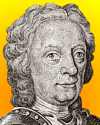
Born 1 Jun 1675; died 11 Feb 1755 at age 79.
(marquess) Italian dramatist and archaeologist whose studies made from 1718 of the archaeology of his native town were published in his four-volume Verona illustrata (1731-32). From 1732, he spent four years pursuing archaeological research in France and also travelled through England, Holland and Germany. He built a museum to house his valuable collection, which he bequeathed to his native city. The Museo Lapidario holds many precious stone relics with runic Latin, Greek, Arabic, Egyptian, Persian and Hebrew inscriptions. He also was interested in physics and astronomy, and built his own observatory to study the movements of the stars. His hometown celebrated him with a statue in the Piazza de Signori.«
(marquess) Italian dramatist and archaeologist whose studies made from 1718 of the archaeology of his native town were published in his four-volume Verona illustrata (1731-32). From 1732, he spent four years pursuing archaeological research in France and also travelled through England, Holland and Germany. He built a museum to house his valuable collection, which he bequeathed to his native city. The Museo Lapidario holds many precious stone relics with runic Latin, Greek, Arabic, Egyptian, Persian and Hebrew inscriptions. He also was interested in physics and astronomy, and built his own observatory to study the movements of the stars. His hometown celebrated him with a statue in the Piazza de Signori.«

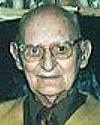
Died 1 Jun 1999 at age 88 (born 4 Jun 1910). quotes
English inventor of the hovercraft. He was an electronics engineer with the Marconi Company (1935-50) where he worked on airborne navigational equipment and on radar. Then he began a boat-hire business. Considering the water drag on the hull of a boat, he had the idea of raising the boat on a cushion of air. In 1954, he performed a crucial experiment using kitchen scales, tin cans, and a vacuum cleaner to show that a stream of air could produce the required lift. The next year he built a working balsa wood model with a model-aircraft engine. The first full-scale prototype, SR-N1, weighed 7 tons and was capable of 60 knots. It crossed the English Channel in 1959 (with Cockerell aboard). Hovercraft entered regular cross-channel service in 1968.
English inventor of the hovercraft. He was an electronics engineer with the Marconi Company (1935-50) where he worked on airborne navigational equipment and on radar. Then he began a boat-hire business. Considering the water drag on the hull of a boat, he had the idea of raising the boat on a cushion of air. In 1954, he performed a crucial experiment using kitchen scales, tin cans, and a vacuum cleaner to show that a stream of air could produce the required lift. The next year he built a working balsa wood model with a model-aircraft engine. The first full-scale prototype, SR-N1, weighed 7 tons and was capable of 60 knots. It crossed the English Channel in 1959 (with Cockerell aboard). Hovercraft entered regular cross-channel service in 1968.
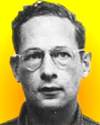
c.1943
Died 1 Jun 1997 at age 88 (born 14 Mar 1909). quotes
American physicist who gave lectures (5-14 Apr 1943) at Los Alamos, on the design and construction of atomic bombs as background for the Manhattan Project. Notes were typed and mimeographed as The Los Alamos Primer, technical report LA-1, given to scientists newly arriving at the top-secret laboratory. Serber coined the code-names of the three bomb designs: “Little Boy” (uranium gun), “Thin Man” (plutonium gun), and “Fat Man” (plutonium implosion). He helped assemble atomic bombs on Tinian Island that were dropped on Japan. He was part of the first American team visiting to assess their damage at Hiroshima and Nagasaki. After WW II, he returned to academia, and by 1951 was a professor of physics at Columbia University.«
American physicist who gave lectures (5-14 Apr 1943) at Los Alamos, on the design and construction of atomic bombs as background for the Manhattan Project. Notes were typed and mimeographed as The Los Alamos Primer, technical report LA-1, given to scientists newly arriving at the top-secret laboratory. Serber coined the code-names of the three bomb designs: “Little Boy” (uranium gun), “Thin Man” (plutonium gun), and “Fat Man” (plutonium implosion). He helped assemble atomic bombs on Tinian Island that were dropped on Japan. He was part of the first American team visiting to assess their damage at Hiroshima and Nagasaki. After WW II, he returned to academia, and by 1951 was a professor of physics at Columbia University.«
The Los Alamos Primer: The First Lectures on How To Build an Atomic Bomb, by Robert Serber and Richard Rhodes (ed.). - book suggestion.
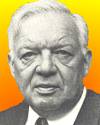

German surgeon who shared (with André F. Cournand and Dickinson W. Richards) the Nobel Prize for Physiology or Medicine in 1956 for the development of cardiac catheterization. This is a procedure in which a tube is inserted into a vein at the elbow and passed through the vein into the right atrium of the heart. Drugs can thus be passed into the heart. In 1929, while a young surgical resident in a small German hospital in Eberswalde, Forssmann proposed introducing a catheter as an alternative to avoid dangers with the direct injection of drugs into the heart frequently demanded in an emergency. It was believed at the time that any entry into the heart would be fatal. Nevertheless, after practice on cadavers, Forssman experimented on himself. He anesthetized his own elbow, inserted a 65-cm catheter in his antecubital vein. Then walked with catheter dangling from his arm, along several flights of stairs to the x-ray department where he calmly documented the position of the tip of the catheter in the right atrium of his heart. Without pain or discomfort, he had proved that a catheter could be inserted safely into a human heart.Various biographical sources (including the Nobel Prize) give date of birth as 29 Aug; Enc. Brit. gives 20 Aug.
Mavericks, Miracles, and Medicine: The Pioneers Who Risked Their Lives to Bring Medicine into the Modern Age, by Julie M. Fenster. - book suggestion.
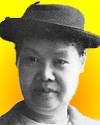
Died 1 Jun 1969 at age 80 (born 17 Sep 1888).
Japanese agricultural scientist and biochemist who did rigorous research on the substances derived from green tea. In 1920, at a time when Hokkaido Imperial University would not accept a female student, she worked as an unpaid laboratory assistant in the university’s Food Nutritional Laboratory. By Oct 1923, she was accepted as a research student at the Institute of Physical and Chemical Research. There, in 1924, Tsujimura and colleague Seitaro Miura found that green tea was a natural source of vitamin C. From green tea, Tsujimura also isolated the bitter flavonoid catechin (1929), tannin (1930), and gallocatechin (1934) She went on to be the first woman in Japan to earn a Ph.D. in agriculture (1932). She became a professor in 1949.«
Japanese agricultural scientist and biochemist who did rigorous research on the substances derived from green tea. In 1920, at a time when Hokkaido Imperial University would not accept a female student, she worked as an unpaid laboratory assistant in the university’s Food Nutritional Laboratory. By Oct 1923, she was accepted as a research student at the Institute of Physical and Chemical Research. There, in 1924, Tsujimura and colleague Seitaro Miura found that green tea was a natural source of vitamin C. From green tea, Tsujimura also isolated the bitter flavonoid catechin (1929), tannin (1930), and gallocatechin (1934) She went on to be the first woman in Japan to earn a Ph.D. in agriculture (1932). She became a professor in 1949.«
Died 1 Jun 1945 at age 63 (born 5 May 1882). quotes
Spanish neuroscientist who discovered the microglia cells of the brain, which he pinpointed by creating a new method of staining tissue samples with silver carbonate (1919-1921). Microglia are the cells resident in the central nervous system functioning as an immune cell. He was a student of the Spanish histologist Santiago Ramón y Cajal, (who discovered neurons, the nerve cells that link up to form up the nervous system). Hortega coined the name oligodendroglia, for the cells discovered using the same staining system by Wilder Penfield who worked in his lab for five months in 1924. At the outbreak of the Spanish Civil War, he moved to Paris, then Oxford and finally in 1940 to Buenos Aires, Argentina.«
Spanish neuroscientist who discovered the microglia cells of the brain, which he pinpointed by creating a new method of staining tissue samples with silver carbonate (1919-1921). Microglia are the cells resident in the central nervous system functioning as an immune cell. He was a student of the Spanish histologist Santiago Ramón y Cajal, (who discovered neurons, the nerve cells that link up to form up the nervous system). Hortega coined the name oligodendroglia, for the cells discovered using the same staining system by Wilder Penfield who worked in his lab for five months in 1924. At the outbreak of the Spanish Civil War, he moved to Paris, then Oxford and finally in 1940 to Buenos Aires, Argentina.«
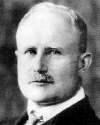
Died 1 Jun 1941 at age 68 (born 21 May 1873).
German psychiatrist who recorded the first human electroencephalogram (EEG). In 1929, he devised a system of electrodes which he attached to his son's skull, and connected to an oscillograph. This gave a recording of brain waves - the rhythmic changes in electric potentials. The most prominent of these rhythms he labelled "alpha waves" and "beta waves."
German psychiatrist who recorded the first human electroencephalogram (EEG). In 1929, he devised a system of electrodes which he attached to his son's skull, and connected to an oscillograph. This gave a recording of brain waves - the rhythmic changes in electric potentials. The most prominent of these rhythms he labelled "alpha waves" and "beta waves."
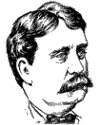
Died 1 Jun 1912 at age 65 (born 4 Sep 1846). quotes
Daniel Hudson Burnham was an American architect, raised and educated in Chicago, who gained his early architectural experience with William Le Baron Jenney, the so-called "father of the skyscraper". With John Root (1850-91), he pioneered the construction methods which made modern skyscrapers possible. He designed the dramatic Flatiron Building in New York City. Burnham also gained his reputation as a city planner. In 1909, Burnham and his assistant Edward H. Bennett prepared The Plan for Chicago, which is considered the nation's first example of a comprehensive planning document.
Daniel Hudson Burnham was an American architect, raised and educated in Chicago, who gained his early architectural experience with William Le Baron Jenney, the so-called "father of the skyscraper". With John Root (1850-91), he pioneered the construction methods which made modern skyscrapers possible. He designed the dramatic Flatiron Building in New York City. Burnham also gained his reputation as a city planner. In 1909, Burnham and his assistant Edward H. Bennett prepared The Plan for Chicago, which is considered the nation's first example of a comprehensive planning document.
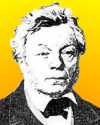
Died 1 Jun 1867 at age 69 (born 24 Jan 1798).
German mathematician who developed the first complete theory of imaginary points, lines, and planes in projective geometry. His early work was on determining the orbit of a comet and, based on this work, he received his doctorate. He showed how to construct a regular inscribed polygon of 17 sides using only compasses. He turned to projective geometry and Bernoulli numbers (discovered by Jacob Bernoulli). An important work on projective geometry, Geometrie der Lage was published in 1847. It was the first work to completely free projective geometry from any metrical basis. He also gave a geometric solution to quadratic equations.
German mathematician who developed the first complete theory of imaginary points, lines, and planes in projective geometry. His early work was on determining the orbit of a comet and, based on this work, he received his doctorate. He showed how to construct a regular inscribed polygon of 17 sides using only compasses. He turned to projective geometry and Bernoulli numbers (discovered by Jacob Bernoulli). An important work on projective geometry, Geometrie der Lage was published in 1847. It was the first work to completely free projective geometry from any metrical basis. He also gave a geometric solution to quadratic equations.
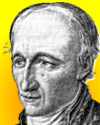
Died 1 Jun 1822 at age 79 (born 28 Feb 1743). quotes
French mineralogist who was the founder of the science of crystallography through his discovery of the geometrical law of crystallization. In 1781, he saw an accidentally dropped calcite crystal broke into rhombohedral pieces. Deliberately breaking various forms of calcite, he found the same result. He concluded that all the molecules of calcite have the same form and it is only how they are joined together that produces different gross structures. Hence, he suggested that other minerals should show different basic forms. He thought that there were, in fact, six different primitive forms from which all crystals could be derived by being linked in different ways. His theory was able to predict in many cases the correct angles of a crystal face.
French mineralogist who was the founder of the science of crystallography through his discovery of the geometrical law of crystallization. In 1781, he saw an accidentally dropped calcite crystal broke into rhombohedral pieces. Deliberately breaking various forms of calcite, he found the same result. He concluded that all the molecules of calcite have the same form and it is only how they are joined together that produces different gross structures. Hence, he suggested that other minerals should show different basic forms. He thought that there were, in fact, six different primitive forms from which all crystals could be derived by being linked in different ways. His theory was able to predict in many cases the correct angles of a crystal face.
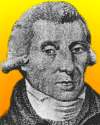
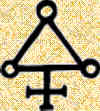
Irish chemist whose Elements of Mineralogy (1784), was the first English systematic treatment of the subject. He did valuable work on chemical affinity and the combining proportions of acids and bases forming salts. Previously a staunch defender of phlogiston theory, in 1791, Kirwan conceded that the experimental evidence was to the contrary. He was president of the Royal Irish Academy and the Royal Dublin Society. He challenged Antoine Lavoisier's discoveries and the revolutionary views of the Scottish geologist James Hutton. He was also a great eccentric; one of his pet hates was flies. He always dined alone, because of dysphagia; he was unable to swallow food without convulsive movements, which was distressing for others to view.[Image right: sign for phlogiston in eighteenth-century (source) ]

In 2002, the first national law prohibiting "light pollution" went into effect. The Czech Republic became the first nation to outlaw excess outdoor light. All outdoor light fixtures in the country must be shielded to ensure light goes only in the direction intended, and not above the horizontal. Czech astronomers had lobbied for the legislation. Light from street and road signs bounces off molecules in the atmosphere, making skies less dark. This light pollution is a particular problem for astronomers since even low levels of man-made light from distant cities can obscure their view of faint objects far away in space. Better designed, non-polluting light fixtures should give everyone better more energy efficiency and reduce glare on roads and in residential areas.[Image: Skyglow 120km north of Adelaide, Australia.]
Light Pollution, by Bob Mizon. - book suggestion.

Genura
In 1992, the E-Lamp, an electronic electrodeless 20-year lightbulb, was announced by Pierre Villere. The E-Lamp is illuminated when radio waves excite a phosphor coating, an efficient process that can save as much as 75% of lighting costs. The E-lamp technology was licensed from Diablo Research Corporation that developed it in the late 1980s. However, they were not approved for residential use in the U.S. In Apr 1994, General Electric (G.E.) Lighting announced that "the world's first practical compact high-tech induction reflector lamp" would be on the market in Europe within weeks using the tradename Genura. It is smaller than the incandescent reflector lamp it replaces.
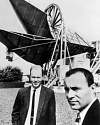
In 1965, Arno Penzias and Robert Woodrow Wilson detected a 3 degree kelvin primordial background radiation using a horn reflector antenna built for radio astronomy. The Big Bang description of the origin of the universe took place 15 to 20 billion years ago in an explosion from a hot dense state. The high energy radiation produced when the universe was very young and very hot would have been absorbed and degraded as the universe expanded and cooled. The microwave background radiation first observed by Penzias and Wilson is thought to be a relic of this very early state, when the universe was only about a million years old. The uniformity of microwave background indicates that the universe was homogeneous until it was a few million years old.
In 1961, regular FM stereo radio broadcasting with a multiplexed signal began in the U.S. In Schenectady, NY, WGFM (owned by G.E.) was first on the air, at 12:01 a.m. Eastern time. Zenith's WEFM in Chicago, IL, followed and KMLA in Los Angeles, CA, where midnight local time arrived relatively one or three hours later due to time zone differences. Each scheduled a few hours of stereo broadcasts. Federal Communications Commission (FCC) approval specified the starting day. Experiments with stereo radio began with AM in the 1920s. Field tests for stereo FM began in Mar 1959 to evaluate various competing systems. On 19 Apr 1961, the FCC adopted a stereo FM broadcasting standard, a hybrid of similar methods invented by G.E. and Carl G. Eilers of Zenith, compatible with existing AM radio receivers.«
In 1955, a solar energy battery was first shipped from an American commercial factory, National Fabricated Products, Inc., Chicago, Ill. The battery was disc shaped, about the size of a half-dollar, with two terminals. It was hermetically sealed, and provided about half of a volt of electricity.
In 1951, a titanium plant was opened in Henderson, Nev. which was the first fully self-contained and integrated facility in the U.S. It converted titanium ore into titanium sponge, which was melted down and formed into ingots of titanium metal.
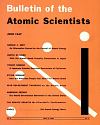
In 1947, the Doomsday Clock appeared for the first time, as the fourth quadrant of a clock face with its hands at 7 min. to midnight. It was the background image on the cover of the June issue of the Bulletin of the Atomic Scientists. From then to the present, the Doomsday Clock image has been on the cover of the Bulletin, though the hands over the years have been shown moving forward or back to conveyy how close humanity is to catastrophic destruction. Midnight represents Doomsday. The closest approach, two minutes to midnight began on the Sep 1953 cover. Russia's first hydrogen bomb test the previous month (12 Aug 1953) within nine months of an American H-bomb test (1 Nov 1952). In Dec 1991, the clock was set at 17 min. to midnight marking the Strategic Arms Reduction Treaty.«[An actual publication date of 27 May 1947 might be deduced from a New York Times article on that date which referred to a report that “will appear today in The Bulletin of the Atomic Scientists.”
In 1947, the development of photosensitive glass was announced publicly in Corning, N.Y. It had first been made by the Corning Glass Works in Nov 1937. The glass is crystal clear, but exposure to ultraviolet light followed by heat treatment forms submicroscopic metal particles creating an image within the glass. This is believed to be the most durable form of photographic medium, and to be as permanent as the glass itself.

1946
In 1946, television licences were first issued in Britain costing £2 and included radio (radio-only licences then cost £1) and were sold at Post Offices. Television services had been suspended during WW II. A Mickey Mouse cartoon was being shown when TV service was suddenly blacked out for defence reasons on 1 Sep 1939. That same cartoon was shown on 8 Jun 1946 when television re-opened to cover the Victory Parade. The first radio licence fee began in Nov 1922 and cost 10 shillings (50p). The BBC's domestic radio and TV services are financed by the television licence fee, which continues to the present time. The licence fees as of 1 Apr 2002 are £112.00 for colour and £37.50 for black and white.
In 1920, Thomas A. Edison received a patent for "Composition of Matter for Sound-Records or the Like and Process" (U.S. No. 1,342,326).
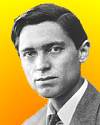
In 1909, Swedish chemist Theodor Svedberg filed to patent his method of producing colloidal sols or gels, simultaneously in Great Britain, Germany, Denmark and Switzerland. By 1926, he received the Nobel Prize in Chemistry for his work with disperse systems. In colloidal systems, extremely fine particles are dispersed in a continuous medium, in which they remain suspended indefinitely. In molecular-disperse systems, the particles are large molecules like proteins or haemoglobin. Svedberg invented an ultracentrifuge to investigate them. At 40,000 revolutions/min, the particles were redistributed towards the periphery of the motion. Analysis of photographs of the distribution yielded the molecular weight of the particles.«
more
In 1909, Thomas A. Edison received a patent for “Shaft-Coupling” (U.S. No. 923,633).
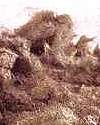
In 1897, a rock wool factory in the U.S., the Crystal Chemical Works, was opened in Alexandria, Ind. Mineral wool had previously been made from blast furnace slag, but the new factory used local limestone rock in a process discovered by Charles Corydon Hall to create a sulphur-free product. The limestone was melted in a specially designed water-jacketed cupola, blown by steam pressure then allowed to cool to form fine threads. Its light, fibrous form resembled freshly-sheared sheep's wool. Being both insectproof and fireproof, rock wool was useful as a filtering material and as an insulating material for such uses as packing walls or for covering steam boilers. In 1929, the works became part of Johns Manville Corp.«
more
In 1886, black American inventor W.H. Richardson was issued a patent for a "Cotton Chopper" (U.S. No. 343,140).
The Inventive Spirit of African Americans: Patented Ingenuity, by Patricia Carter Sluby. - book suggestion.
In 1886, Thomas A. Edison was issued a patent for a "System of Electrical Distribution" (U.S. No. 343,017).
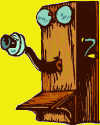
In 1880, the first pay telephone service in the United States, for public use went into service. The toll was given to an attendant. It was installed by the Connecticut Telephone Co. in their office at Yale Bank Building at State and Chapel Streets in New Haven, CT. After its founding on 28 Jan 1878, the New Haven exchange grew quickly. Within a few years, the company pursued expansion and interconnection of distant towns. By 1880 they had the right to build exchanges in any part of Connecticut and western Massachusetts and, more important, they had the right to interconnect their exchanges. Early toll lines from Bridgeport to New Haven to Hartford brought a good return, and toll lines were built and promoted everywhere.*
In 1880, Thomas A. Edison was issued a patent on a design for a “Magnetic Ore-Separator” (U.S. No. 228,329).
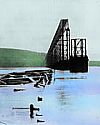
In 1878, the original Tay Bridge was officially opened by Queen Victoria. It carried a single rail line across the Forth of Tay on the east coast of Scotland. At almost 2 miles in overall length, it was for its time the world's longest bridge. The engineer was Thomas Bouch, who supervised construction, and was knighted for his work. Sadly, the structure was inadequate in both design and quality to withstand gale force winds, and on 28 Dec 1879, its cast iron piers collapsed as a train crossed the high navigation spans. The engine and carriages fell into the water taking over 75 passengers to their deaths. An official inquiry found Bouch at fault, and that poor maintenance procedures weakened the piers and contributed to the failure.«[Image: collapsed span in water beside broken columns after the collapse of the Tay Bridge.] more
Beautiful Railway Bridge of the Silvery Tay: Reinvestigating the Tay Bridge Disaster, by Peter R. Lewis. - book suggestion.
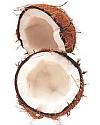
In 1875, black American inventor Alexander P. Ashbourne received a patent for a "Process Preparing Cocoa-nut for Domestic Use" (U.S. No. 163,962). The patent describes the process by taking any quantity of coconuts and pare them. The meat is then grated or otherwise pulverized, and is then passed through fine sieves, hot boiling water being added at the same time. The meat is then cooked with hot steam for 3 to 4 hours, then pressed dry. Sugar is added in the ratio of one pound of sugar to three pounds of coconut, plus a small quantity of fine stick cinnamon to preserve the flavour. The compound is dried gradually and packed.
The Inventive Spirit of African Americans: Patented Ingenuity, by Patricia Carter Sluby. - book suggestion.
(USPTO)
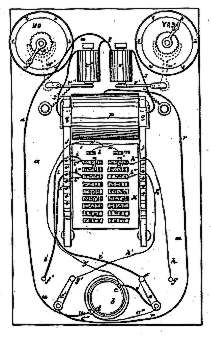
In 1869, Thomas Edison of Boston, Mass., received his first patent. It was for an "electrographic vote recorder." The device was the first of its kind, and would enable a legislator to register a vote either for or against an issue by turning a switch to the right or left. His application was executed on 13 Nov 1868 and submitted to the U.S. Patent Office on 28 Nov 1868 (No. 90646).
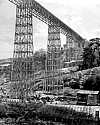
In 1857, the Crumlin Viaduct in South Wales, then the highest railway viaduct in Great Britain was opened. It was built to carry coal from the area's mines on the Taff Vale Extension of the Newport, Abergavenny, and Hereford Railway over the river Ebbw and smaller Kendon valley. The viaduct was one of the most important engineering wonders of its era. The designer, Thomas Kennard, used his modification of the Warren Truss. Its overall length of 1658-ft used an estimated 2,550 tons of wrought and cast iron. Being 200-ft high at the highest point above the valley floor, it was the highest railway viaduct in Britain until demolished in 1965. After the last passenger train passed over it on 13 Jun 1964, the line was closed.«
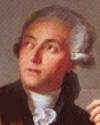
In 1768, Antoine-Laurent de Lavoisier sat for the first time at the Royal Academy of Sciences. Lavoisier had been on the list of candidates for two years. The death of Théodore Baron had liberated a place at the Academy for a chemist and supported by his father's friends, Maraldi and Duhamel du Monceau as well as by Bernard de Jussieu, Macquer and Joseph Jérome Le François de Lalande (1732-1807), he was elected. His first papers were reports on analysis: studies of gypsum, the diamond, meteorites, charcoal, lead and mineral waters.





