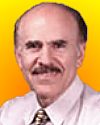
Born 31 May 1941.
American pharmacologist who, along with Robert F. Furchgott and Ferid Murad, was co-awarded the 1998 Nobel Prize in Physiology or Medicine for the discovery that nitric oxide (NO) acts as a signaling molecule in the cardiovascular system, an entirely new mechanism by which blood vessels in the body relax and widen. At first, major professional journals refused to publish his contention that a substance that is basic to nitroglycerin and part of the chemistry of smog is also crucial to the life process. But over the years, others repeated his work and confirmed his discovery that nitric oxide is a neurotransmitter that is, says Ignarro, "perhaps the most widespread signaling molecule that allows a variety of different cell types to communicate with one another."
American pharmacologist who, along with Robert F. Furchgott and Ferid Murad, was co-awarded the 1998 Nobel Prize in Physiology or Medicine for the discovery that nitric oxide (NO) acts as a signaling molecule in the cardiovascular system, an entirely new mechanism by which blood vessels in the body relax and widen. At first, major professional journals refused to publish his contention that a substance that is basic to nitroglycerin and part of the chemistry of smog is also crucial to the life process. But over the years, others repeated his work and confirmed his discovery that nitric oxide is a neurotransmitter that is, says Ignarro, "perhaps the most widespread signaling molecule that allows a variety of different cell types to communicate with one another."
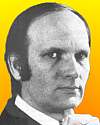
Born 31 May 1931.
John Robert Schrieffer is an American physicist who shared (with John Bardeen and Leon N. Cooper) the 1972 Nobel Prize for Physics for developing the BCS theory (for their initials), the first successful microscopic theory of superconductivity. Although first described by Kamerlingh Onnes (1911), no theoretical explanation had been accepted. It explains how certain metals and alloys lose all resistance to electrical current at extremely low temperatures. The insight of the BCS theory is that at very low temperatures, under certain conditions, electrons can form bound pairs (Cooper pairs). This pair of electrons acts as a single particle in superconductivity. Schrieffer continued to focus his research on particle physics, metal impurities, spin fluctuations, and chemisorption.
John Robert Schrieffer is an American physicist who shared (with John Bardeen and Leon N. Cooper) the 1972 Nobel Prize for Physics for developing the BCS theory (for their initials), the first successful microscopic theory of superconductivity. Although first described by Kamerlingh Onnes (1911), no theoretical explanation had been accepted. It explains how certain metals and alloys lose all resistance to electrical current at extremely low temperatures. The insight of the BCS theory is that at very low temperatures, under certain conditions, electrons can form bound pairs (Cooper pairs). This pair of electrons acts as a single particle in superconductivity. Schrieffer continued to focus his research on particle physics, metal impurities, spin fluctuations, and chemisorption.
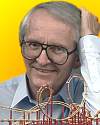
Born 31 May 1930; died 26 Sep 2011 at age 81.
Ronald Valentine Toomer was an American engineer who was a legendary creator of steel roller coasters. His early career, was in the aerospace industry, where he helped design the heat shield for Apollo spacecraft and was also involved with NASA's first satellite launches. In 1965, he joined the Arrow Development Company to apply tubular steel technology to the design the Runaway Mine Ride, the world’s first all-steel roller coaster. It opened the following year at Six Flags over Texas. By 1975, he designed the Roaring 20s Corkscrew for Knott’s Berry Farm, introducing first 360° looping rolls, in fact two of them. Later, his design included seven inversions in the Shockwave roller coaster for Six Flags Great America. He produced over 80 roller coasters before retiring in 1998.«
Ronald Valentine Toomer was an American engineer who was a legendary creator of steel roller coasters. His early career, was in the aerospace industry, where he helped design the heat shield for Apollo spacecraft and was also involved with NASA's first satellite launches. In 1965, he joined the Arrow Development Company to apply tubular steel technology to the design the Runaway Mine Ride, the world’s first all-steel roller coaster. It opened the following year at Six Flags over Texas. By 1975, he designed the Roaring 20s Corkscrew for Knott’s Berry Farm, introducing first 360° looping rolls, in fact two of them. Later, his design included seven inversions in the Shockwave roller coaster for Six Flags Great America. He produced over 80 roller coasters before retiring in 1998.«
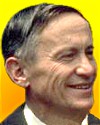
Born 31 May 1912; died 10 Apr 1997 at age 84.
German-American astronomer who worked on stellar structure and evolution, including pulsating stars and differential solar rotation, the helium flash and the ages of star clusters. He traced the post-main sequence evolutionary tracks on the Hertzprung-Russel diagram, indicating how stars become red giants. The computer techniques he used to make stellar models were taken up by subsequent astrophysicists. In 1957, he initiated the Stratoscope projects, using hot-air balloons to carry scientific and photographic instruments to unprescedented stratospheric heights. Using that stable platform he obtained, high-resolution observations of the turbulence in the photosphere of the sun, free from ground-based atmospheric effects. His is the son of German astrophysicist Karl Schwarzschild. In 1936, Martin fled the Nazi regime and moved to America.«
German-American astronomer who worked on stellar structure and evolution, including pulsating stars and differential solar rotation, the helium flash and the ages of star clusters. He traced the post-main sequence evolutionary tracks on the Hertzprung-Russel diagram, indicating how stars become red giants. The computer techniques he used to make stellar models were taken up by subsequent astrophysicists. In 1957, he initiated the Stratoscope projects, using hot-air balloons to carry scientific and photographic instruments to unprescedented stratospheric heights. Using that stable platform he obtained, high-resolution observations of the turbulence in the photosphere of the sun, free from ground-based atmospheric effects. His is the son of German astrophysicist Karl Schwarzschild. In 1936, Martin fled the Nazi regime and moved to America.«
Born 31 May 1872; died 17 Dec 1973 at age 101. quotes
Charles Greeley Abbot was an American astrophysicist who is thought to have been the first scientist to suspect that the radiation of the Sun might vary over time. In 1906, Abbot became director of the Smithsonian Astrophysical Observatory and, in 1928, fifth Secretary of the Smithsonian. To study the Sun, SAO established a network of solar radiation observatories around the world—usually at remote and desolate spots chosen primarily for their high percentage of sunny days. Beginning in May 1905 and continuing over decades, his studies of solar radiation led him to discover, in 1953, a connection between solar variations and weather on Earth, allowing general weather patterns to be predicted up to 50 years ahead.
Charles Greeley Abbot was an American astrophysicist who is thought to have been the first scientist to suspect that the radiation of the Sun might vary over time. In 1906, Abbot became director of the Smithsonian Astrophysical Observatory and, in 1928, fifth Secretary of the Smithsonian. To study the Sun, SAO established a network of solar radiation observatories around the world—usually at remote and desolate spots chosen primarily for their high percentage of sunny days. Beginning in May 1905 and continuing over decades, his studies of solar radiation led him to discover, in 1953, a connection between solar variations and weather on Earth, allowing general weather patterns to be predicted up to 50 years ahead.
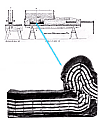
U.S. geologist known for his structural and geomorphological analysis of the Appalachian Mountains and Mount Ranier. His interests were primarily in the broader aspects of physical and dynamic geology, in the formation and origin of rock structures. His work included studies of denudation (a form of erosion) chronology in North and South America and Africa, model experiments of folding and deformation, paleogeographic mapping of North America, and theories of the differentiation of the Earth's crust. He was interested in California geology, especially in faulting, seismology, and earthquake hazards. His concern over earthquakes led him to study the engineering hazards of the Golden Gate Bridge and to fight for a more stringent municipal building code.[Image (right): Willis' experiment on folding of rock layers] more
Born 31 May 1852; died 20 Dec 1921 at age 69.
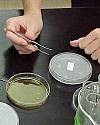
German physician and bacteriologist, remembered for his name given to the Petri dish. This is a shallow, cylindrical dish made of plastic or glass with a cover, used for tissue cultures and to hold solid media for culturing and sub-culturing bacteria. Petri developed it for a technique for cloning bacterial strains using an agar slope and sub-culturing onto his dish, recognizing different bacterial colonies and again sub-culturing. He was in his later days a rather vain, overweight man, who dressed in the uniform of chief army doctor whenever the opportunity presented itself. One observer remarked that the sash around his protuberant abdomen reminded him of the equator around the globe.«
German physician and bacteriologist, remembered for his name given to the Petri dish. This is a shallow, cylindrical dish made of plastic or glass with a cover, used for tissue cultures and to hold solid media for culturing and sub-culturing bacteria. Petri developed it for a technique for cloning bacterial strains using an agar slope and sub-culturing onto his dish, recognizing different bacterial colonies and again sub-culturing. He was in his later days a rather vain, overweight man, who dressed in the uniform of chief army doctor whenever the opportunity presented itself. One observer remarked that the sash around his protuberant abdomen reminded him of the equator around the globe.«
Born 31 May 1845; died 15 Feb 1940 at age 94.
British engineer and inventor who, as a young man, made a steam road engine (1860) and worked on other steam road haulage projects. When his interests turned to electric lighting, importing then manufacturing arc lamps of his own improved design, he began a career pioneering in the electrical industry, establishing the Crompton Company. By 1883, he had provided public lighting for large buildings, markets and railway stations. His company expanded, making domestic electric appliances (such as for heating and cooking). He was the first important British manufacturer of generators and advocated electrical standardisation. His Kensington Court power station in London was one of the first in the city.« more
British engineer and inventor who, as a young man, made a steam road engine (1860) and worked on other steam road haulage projects. When his interests turned to electric lighting, importing then manufacturing arc lamps of his own improved design, he began a career pioneering in the electrical industry, establishing the Crompton Company. By 1883, he had provided public lighting for large buildings, markets and railway stations. His company expanded, making domestic electric appliances (such as for heating and cooking). He was the first important British manufacturer of generators and advocated electrical standardisation. His Kensington Court power station in London was one of the first in the city.« more
Children of Light: How Electrification Changed Britain Forever, by Gavin Weightman. - book suggestion.
Born 31 May 1744; died 13 Jun 1817 at age 73.
English-Irish inventor of mechanical innovations including an attempt at telegraphic communication (possibly the first), the creation of various sailing carriages, a velocipede (cycle), a “perambulator” (landmeasuring machine), a turnip cutter, improved agricultural machinery, and made discoveries in the field of electricity. In the late 1790s, he proposed the tellograph for “conveying secret and swift intelligence” using 30 tall towers spaced between Dublin and Galway (130 miles). Relayed from tower to tower using large triangular pointers, encoded messages could reach Dublin in just eight minutes. Unfortunately, poor visibility due to the weather doomed the idea. Edgeworth was also an educationalist.
English-Irish inventor of mechanical innovations including an attempt at telegraphic communication (possibly the first), the creation of various sailing carriages, a velocipede (cycle), a “perambulator” (landmeasuring machine), a turnip cutter, improved agricultural machinery, and made discoveries in the field of electricity. In the late 1790s, he proposed the tellograph for “conveying secret and swift intelligence” using 30 tall towers spaced between Dublin and Galway (130 miles). Relayed from tower to tower using large triangular pointers, encoded messages could reach Dublin in just eight minutes. Unfortunately, poor visibility due to the weather doomed the idea. Edgeworth was also an educationalist.

Died 31 May 1986 at age 68 (born 9 Dec 1917).
(Leo) James Rainwater was an American physicist who won a share of the Nobel Prize for Physics in 1975 for his part in determining the asymmetrical shapes of certain atomic nuclei. During WW II, Rainwater worked on the Manhattan Project to develop the atomic bomb. In 1949 he began formulating a theory that not all atomic nuclei are spherical, as was then generally believed. The theory was tested experimentally and confirmed by Danish physicists Aage N. Bohr and Ben R. Mottelson. For their work the three scientists were awarded jointly the 1975 Nobel Prize for Physics. He also conducted valuable research on X rays and took part in Atomic Energy Commission and naval research projects.
(Leo) James Rainwater was an American physicist who won a share of the Nobel Prize for Physics in 1975 for his part in determining the asymmetrical shapes of certain atomic nuclei. During WW II, Rainwater worked on the Manhattan Project to develop the atomic bomb. In 1949 he began formulating a theory that not all atomic nuclei are spherical, as was then generally believed. The theory was tested experimentally and confirmed by Danish physicists Aage N. Bohr and Ben R. Mottelson. For their work the three scientists were awarded jointly the 1975 Nobel Prize for Physics. He also conducted valuable research on X rays and took part in Atomic Energy Commission and naval research projects.
1976
Died 31 May 1976 at age 66 (born 9 Feb 1910). quotes
Jacques Lucien Monod was a French biochemist who, with François Jacob, investigated how genes regulate cell metabolism by directing the biosynthesis of enzymes. The pair shared (with André Lwoff) the 1965 Nobel Prize for Physiology or Medicine. Monod discovered the operon system that controls gene action in bacteria. In 1931, Monod joined the Pasteur Institute, and in 1971, he became its director.
Jacques Lucien Monod was a French biochemist who, with François Jacob, investigated how genes regulate cell metabolism by directing the biosynthesis of enzymes. The pair shared (with André Lwoff) the 1965 Nobel Prize for Physiology or Medicine. Monod discovered the operon system that controls gene action in bacteria. In 1931, Monod joined the Pasteur Institute, and in 1971, he became its director.
Origins of Molecular Biology: A Tribute to Jacques Monod, by Agnes Ullmann (ed.). - book suggestion.
Died 31 May 1915 at age 80 (born 2 Jun 1834).
Sir Arthur Herbert Church was an English chemist and mineralogist who was a leading authority in the chemistry of painting, and gave valuable assistance in the work of preserving the paintings in the Houses of Parliament. He discovered turacin, an animal pigment containing copper, and of several minerals, including the only British cerium mineral. In addition to publishing many books on agricultural chemistry, Church also wrote on earthenware and precious stones. His Laboratory Guide for Agricultural Students had eight editions in his lifetime. He also did research on vegetable albinism colein, and aluminium in vascular cryptogams. Church served three years as president of the Mineralogical Society.« more
Sir Arthur Herbert Church was an English chemist and mineralogist who was a leading authority in the chemistry of painting, and gave valuable assistance in the work of preserving the paintings in the Houses of Parliament. He discovered turacin, an animal pigment containing copper, and of several minerals, including the only British cerium mineral. In addition to publishing many books on agricultural chemistry, Church also wrote on earthenware and precious stones. His Laboratory Guide for Agricultural Students had eight editions in his lifetime. He also did research on vegetable albinism colein, and aluminium in vascular cryptogams. Church served three years as president of the Mineralogical Society.« more
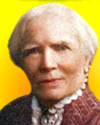
Died 31 May 1910 at age 89 (born 3 Feb 1821). quotes
English-American physician who is considered the first female doctor of medicine in modern times. She was the first woman to gain the M.D. degree from a medical school in the United States. Many 19th century physicians, including a few women, practiced without a degree, but Blackwell wished desired professional status. While rejected by all the major medical schools in the nation because of her sex, her application to Geneva Medical School (now Hobart & William Smith Colleges in Geneva, New York) was referred to the student body. They accepted with great hilarity thinking it was a spoof from a rival school. Working with quiet determination, she turned aside the hostility of the professors, students, and townspeople. She earned her medical degree in 1849. more
English-American physician who is considered the first female doctor of medicine in modern times. She was the first woman to gain the M.D. degree from a medical school in the United States. Many 19th century physicians, including a few women, practiced without a degree, but Blackwell wished desired professional status. While rejected by all the major medical schools in the nation because of her sex, her application to Geneva Medical School (now Hobart & William Smith Colleges in Geneva, New York) was referred to the student body. They accepted with great hilarity thinking it was a spoof from a rival school. Working with quiet determination, she turned aside the hostility of the professors, students, and townspeople. She earned her medical degree in 1849. more
Elizabeth Blackwell: First Woman Physician, by Tristan Boyer Binns. - book suggestion.
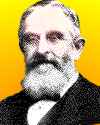
Died 31 May 1908 at age 84 (born 17 Nov 1823).
British antiquarian, numismatist, and a founder of prehistoric archaeology. In about 1860, he began his searches for relics of early man in Britain. He garnered a notable collection of prehistoric stone and bronze implements. Evans found humanly made stone axes in the same layers as the bones of extinct European animals like hippopotamus, elephant, and saber-toothed tiger. In 1859, from such evidence, he announced that humans had lived much earlier than 6,000 years ago. This was much older than the long accepted Biblical chronology implied. Evans also collected coins of the ancient Britons, Romans and Anglo-Saxons. His son Sir Arthur (John) Evans followed his interests as an archaeologist.
British antiquarian, numismatist, and a founder of prehistoric archaeology. In about 1860, he began his searches for relics of early man in Britain. He garnered a notable collection of prehistoric stone and bronze implements. Evans found humanly made stone axes in the same layers as the bones of extinct European animals like hippopotamus, elephant, and saber-toothed tiger. In 1859, from such evidence, he announced that humans had lived much earlier than 6,000 years ago. This was much older than the long accepted Biblical chronology implied. Evans also collected coins of the ancient Britons, Romans and Anglo-Saxons. His son Sir Arthur (John) Evans followed his interests as an archaeologist.
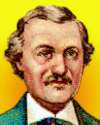
Died 31 May 1880 at age 62 (born 24 Oct 1817).
French inventor of margerine who began his science career at age 16 as a chemist's assistant. By the 1840s he had improved the syphilis drug, Copahin. He recieved various patents, including tanning, effervescent tablets, paper paste and sugar extraction. By the 1850s he had turned to food research and developed a health chocolate with his calcium phosphate protein. He also developed a method that gained 14% more white bread from a given quantity of wheat, for which he was awarded two gold medals. After 1862, he concentrated his research on fats. His margerine process was based on the cold saponifiation of milk in fat emulsions (French patent No. 86489, 15 Jul 1869). Another patent he held was for canned meat (1875)*.
French inventor of margerine who began his science career at age 16 as a chemist's assistant. By the 1840s he had improved the syphilis drug, Copahin. He recieved various patents, including tanning, effervescent tablets, paper paste and sugar extraction. By the 1850s he had turned to food research and developed a health chocolate with his calcium phosphate protein. He also developed a method that gained 14% more white bread from a given quantity of wheat, for which he was awarded two gold medals. After 1862, he concentrated his research on fats. His margerine process was based on the cold saponifiation of milk in fat emulsions (French patent No. 86489, 15 Jul 1869). Another patent he held was for canned meat (1875)*.
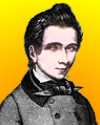
Died 31 May 1832 at age 20 (born 25 Oct 1811). quotes
French mathematician famous for his contributions to the part of higher algebra known as group theory. His theory solved many long-standing unanswered questions, including the impossibility of trisecting the angle and squaring the circle. Galois died, at age 20, the day after being fatally shot in a duel with Perscheux d'Herbinville on 30 May 1832. The reasons for the duel remain enigmatic, though speculated to be related to a love affair. The night before the duel, anticipating his death, Galois wrote his will and notes on his thoughts on mathematics he wanted to leave for others to pursue. His funeral (2 Jun 1832) became the focus for a Republican rally, followed by several days of riots. There are hints that Galois had begun to develop the theory of algebraic functions, which had to wait another 40 years for the German mathematician Bernhard Riemann to complete. He was commemorated as a revolutionary and geometrician on a French postal stamp issued on 10 Nov 1984.
French mathematician famous for his contributions to the part of higher algebra known as group theory. His theory solved many long-standing unanswered questions, including the impossibility of trisecting the angle and squaring the circle. Galois died, at age 20, the day after being fatally shot in a duel with Perscheux d'Herbinville on 30 May 1832. The reasons for the duel remain enigmatic, though speculated to be related to a love affair. The night before the duel, anticipating his death, Galois wrote his will and notes on his thoughts on mathematics he wanted to leave for others to pursue. His funeral (2 Jun 1832) became the focus for a Republican rally, followed by several days of riots. There are hints that Galois had begun to develop the theory of algebraic functions, which had to wait another 40 years for the German mathematician Bernhard Riemann to complete. He was commemorated as a revolutionary and geometrician on a French postal stamp issued on 10 Nov 1984.
Died 31 May 1831 at age 74 (born 11 Jan 1757).
British engineer, naval architect, and navy official in Russia (1780-91) and England (from 1795) who was an early advocate of explosive-shell weapons for warships. In 1780, he was sent by the Admiralty to visit dockyards in Northern Europe. In Russia he improved management of Prince Potemkin's factories. While he was in Russia he built and equipped a flotilla of ships and distinguished himself in a victorious naval battle with the Turks. Using special guns that he had built and mounted in the ships, shells were fired for the first time in naval warfare. There also, he began his ideas for machines which worked by unskilled labour, could produce the same results as skilled workmen.
British engineer, naval architect, and navy official in Russia (1780-91) and England (from 1795) who was an early advocate of explosive-shell weapons for warships. In 1780, he was sent by the Admiralty to visit dockyards in Northern Europe. In Russia he improved management of Prince Potemkin's factories. While he was in Russia he built and equipped a flotilla of ships and distinguished himself in a victorious naval battle with the Turks. Using special guns that he had built and mounted in the ships, shells were fired for the first time in naval warfare. There also, he began his ideas for machines which worked by unskilled labour, could produce the same results as skilled workmen.
Died 31 May 1791 at age 73 (born 5 Jun 1717). quotes
English naturalist, conchologist and collector who as clerk (hired 1763) to the Royal Society embezzled membership funds to indulge his reckless penchant for collecting. When caught in Dec 1767, the treasury was short by £1500—a substantial amount in those years. He confessed, his collections were auctioned to make restitution, but was still imprisoned for five years in debtor’s prison. He published A Natural History of Fossils in 1757. After release from prison, he scraped by, with lecturing about fossils, translating, and trading in mineral, fossil and shell specimens. He wrote two books on shells (1776, 1778). He was perhaps the first to coin the word conchology, that he used in the titles. Still impoverished, he died in penury.«[Also spelled Mendez.]
English naturalist, conchologist and collector who as clerk (hired 1763) to the Royal Society embezzled membership funds to indulge his reckless penchant for collecting. When caught in Dec 1767, the treasury was short by £1500—a substantial amount in those years. He confessed, his collections were auctioned to make restitution, but was still imprisoned for five years in debtor’s prison. He published A Natural History of Fossils in 1757. After release from prison, he scraped by, with lecturing about fossils, translating, and trading in mineral, fossil and shell specimens. He wrote two books on shells (1776, 1778). He was perhaps the first to coin the word conchology, that he used in the titles. Still impoverished, he died in penury.«[Also spelled Mendez.]
A Natural History of Fossils, by Emanuel Mendes da Costa. - book suggestion.
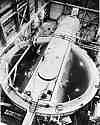
In 1953, the land-based Mark I prototype submarine power plant began to produce power in significant amounts. (Note, this was less than 8 years after the atomic bomb was dropped on Hiroshima, Japan, on 6 Aug 1945.) This was an experimental unit, built in Arco, Idaho, to gain experience for operating the Mark II unit in the world's first nuclear submarine, the Nautilus, launched 21 Jan 1954. Each reactor generated heat from fission of uranium-235, transferred through a heat exchanger to generate steam that drove turbines to provide mechanical propulsion. The Mark I remained useful for experimental purposes. A third power plant was built at Arco to generate electricity for the city, which became the world's first atomic-powered community on 17 Jul 1955. All were built by the Westinghouse Company.«
U.S. Submarines Since 1945: An Illustrated Design History, by Norman Friedman. - book suggestion.
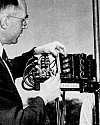
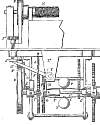
In 1898, Thomas A. Edison was issued a patent for a “Governor for Motors” (No. 604,740) which he described as a “means for adjusting the governor for any desired speed, and with the means, such as centrifugal governor-balls, for regulating the friction members to maintain a constant speed.”
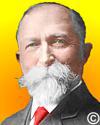
In 1884, a patent for “flaked cereal” was applied for by Dr. John Harvey Kellogg. He was trying to improve the vegetarian diet of his hospital patients, by searching for a digestible bread-substitute by the process of boiling wheat. Kellogg accidentally left a pot of boiled wheat to stand and become tempered. When it was put through a rolling process, each grain of wheat emerged as a large, thin flake. When the flakes were baked, they became crisp and light, creating an easy to prepare breakfast when milk was added. His brother Will Keith Kellogg (W.K.) began his cereal-making career in the 1890’s when he assisted his brother, then saw the potential, and on 19 Feb 1906, he created the Battle Creek Toasted Corn Flake Co.
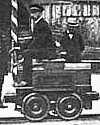
In 1879, the first electric railway opened at the Berlin Trades Exposition in Germany. It was the size of what today would be called a passenger-carrying miniature railway. The electric locomotive had a motor with about 3 horsepower, that was capable of hauling three small cars around a belt line 300 m (983 feet) long at up to 7 km (4.2 miles) per hour. Power at 150 volts was taken from a third rail between the running rails, which were bonded to serve for the return circuit. By 30 Sep 1879, it carried 86,398 passengers. The wooden covering over the motor provided a seat for the motorman. Gearing provided the ability to change direction of travel. Werner von Siemans and his firm of Siemens & Haslke was next able to build a line in Gross Lichterfelde, near Berlin, which opened for public use on 16 May 1881.«
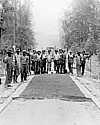
In 1870, Professor Edward J. de Smedt, was granted a U.S. patent for laying sheet asphalt pavement (U.S. Nos. 103,581 and -2). It was known as French asphalt pavement (where it was first laid in Paris in 1854). Mixing sand with natural asphalt is too stiff to work at suitable temperatures in the needed portions of about seven parts sand. Instead, he made a mix in ratio about 5 to 1, fluxed with certain petroleum oils and mineral particles, which was was easier to work with. On a graded road surface, a half-inch layer of hot sand is laid, topped with a one-inch layer of the hot asphalt and sand mix, and compacted with a hot roller. The process is repeated to build up a thicker road covering. On 29 Jul 1870, an experimental stretch of this type of asphalt pavement was laid in front of the City Hall, William Street, Newark, N.J.«[Image: Road crew laying asphalt for a new road in Florida, 1917.]
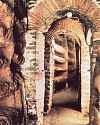
In 1578, the Catacombs of Rome were discovered by accident. A sepulchral chamber was opened by some laborers digging for pozzolana earth. Baronius the ecclesiastical historian was one of the first to visit the new discovery. Fifteen years later, in Dec 1593, 18-yr-old Antonio Bosio began a lifetime exploring the catacombs. Gradually he found links between them, for narrow passageways had been dug from one to another, excavated in the soft rock (tufa). He found 30 additional entrances. He carefully recorded what he found with the care of an early archaeologist. These catacombs, dating from about the 3rd century, were used then by the Christians of Rome since they were forbidden to bury their dead in regular burial grounds.[Image: an archway in a a narrow corridor; beyond, on the left wall are multiple niches for burials.]





