
Born 22 May 1927.
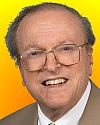
George Andrew Olah is a Hungarian-American chemist who won the 1994 Nobel Prize for Chemistry for work conducted in the early 1960s that isolated the positively charged, electron-deficient fragments of hydrocarbons known as carbocations (or carbonium ions). Carbocations are elusive intermediate compounds formed when large hydrocarbon molecules are broken into smaller ones, or vice versa. His discovery has opened up a new area of economically important hydrocarbon research into basic reactions of oil refining, plastics and other industrial processes that continues today.
George Andrew Olah is a Hungarian-American chemist who won the 1994 Nobel Prize for Chemistry for work conducted in the early 1960s that isolated the positively charged, electron-deficient fragments of hydrocarbons known as carbocations (or carbonium ions). Carbocations are elusive intermediate compounds formed when large hydrocarbon molecules are broken into smaller ones, or vice versa. His discovery has opened up a new area of economically important hydrocarbon research into basic reactions of oil refining, plastics and other industrial processes that continues today.
A Life Of Magic Chemistry: Autobiographical Reflections..., by George A. Olah. - book suggestion.
Born 22 May 1920; died 22 Jun 2004 at age 84. quotes
Austrian-British-American astronomer known for an offbeat steady-state theory of the universe, naming the magnetosphere and explaining pulsars. In 1948, as a graduate student at Cambridge, he (together with Hermann Bondi and Fred Hoyle) proposed that a continuous creation of matter in space is gradually forming new galaxies, maintaining the average number of galaxies in any part of the universe, despite expansion. This is not accepted, as there is more evidence for the Big Bang theory. In 1967, Gold presented his theory on the nature of pulsars (deep space sources of regularly pulsing radio waves). He explained them as rotating neutron stars (tiny, extraordinarily massive stars) emitting waves as they spin.«
Austrian-British-American astronomer known for an offbeat steady-state theory of the universe, naming the magnetosphere and explaining pulsars. In 1948, as a graduate student at Cambridge, he (together with Hermann Bondi and Fred Hoyle) proposed that a continuous creation of matter in space is gradually forming new galaxies, maintaining the average number of galaxies in any part of the universe, despite expansion. This is not accepted, as there is more evidence for the Big Bang theory. In 1967, Gold presented his theory on the nature of pulsars (deep space sources of regularly pulsing radio waves). He explained them as rotating neutron stars (tiny, extraordinarily massive stars) emitting waves as they spin.«
The Deep Hot Biosphere: The Myth of Fossil Fuels, by Thomas Gold. - book suggestion.
Born 22 May 1912; died 19 Dec 2004 at age 92. quotes
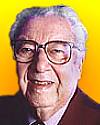
English-born American chemist who developed organoboranes (compounds of boron, carbon and hydrogen) which provided many new techniques in synthetic organic chemistry. For this accomplishment, he shared (with Georg Wittig) the 1979 Nobel Prize for Chemistry. The versatility of organoboranes as reagents in reductions, additions and rearrangements provides new ways of linking carbon atoms to each other. Applications of organoboranes now include the manufacture of agricultural and pharmaceutical chemicals (such as the antidepressant Prozac). In graduate research during WW II, he discovered a method to produce sodium borohydride, giving a new approach to making hydrogen gas, used in weather balloons and later in fuel cells.«
English-born American chemist who developed organoboranes (compounds of boron, carbon and hydrogen) which provided many new techniques in synthetic organic chemistry. For this accomplishment, he shared (with Georg Wittig) the 1979 Nobel Prize for Chemistry. The versatility of organoboranes as reagents in reductions, additions and rearrangements provides new ways of linking carbon atoms to each other. Applications of organoboranes now include the manufacture of agricultural and pharmaceutical chemicals (such as the antidepressant Prozac). In graduate research during WW II, he discovered a method to produce sodium borohydride, giving a new approach to making hydrogen gas, used in weather balloons and later in fuel cells.«
Born 22 May 1903; died 16 Mar 1992 at age 88.
French mathematician and physicist who contributed to the development of the French atomic bomb and to the understanding of such diverse fields of research as semiconductors, seismology, and radio astronomy. During WW II, as Head of the Research Department of the Free French Naval Forces in England, he learnt about radars in England and interference from strong radio emission from the Sun. After the war, Rocard returned to France and proposed that France started a project to conduct radio astronomy. In the last part of his life he studied biomagnetism and dowsing which reduced his standing in the eyes of many of his colleagues.
French mathematician and physicist who contributed to the development of the French atomic bomb and to the understanding of such diverse fields of research as semiconductors, seismology, and radio astronomy. During WW II, as Head of the Research Department of the Free French Naval Forces in England, he learnt about radars in England and interference from strong radio emission from the Sun. After the war, Rocard returned to France and proposed that France started a project to conduct radio astronomy. In the last part of his life he studied biomagnetism and dowsing which reduced his standing in the eyes of many of his colleagues.
Born 22 May 1859; died 7 Jul 1930 at age 71. quotes
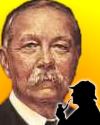
Scottish author and physician whose fictional detective, Sherlock Holmes, emulates the scientist, diligently searching through data to make sense of it. “It is a capital mistake to theorize before one has data.” His medical degree was awarded at the University of Edinburgh, where he studied under noted surgeon Joseph Bell. After serving as the doctor on an Arctic whaling ship, he practiced in England for a short time as a physician, with little income. So he turned to writing. He was active as a social reformer, and spoke to the Committee on the Daylight Saving Bill in 1908 advocating its adoption. Later in life he was a convert to spiritualism, and requested burial in an upright position in the garden of his home.« more
Scottish author and physician whose fictional detective, Sherlock Holmes, emulates the scientist, diligently searching through data to make sense of it. “It is a capital mistake to theorize before one has data.” His medical degree was awarded at the University of Edinburgh, where he studied under noted surgeon Joseph Bell. After serving as the doctor on an Arctic whaling ship, he practiced in England for a short time as a physician, with little income. So he turned to writing. He was active as a social reformer, and spoke to the Committee on the Daylight Saving Bill in 1908 advocating its adoption. Later in life he was a convert to spiritualism, and requested burial in an upright position in the garden of his home.« more
Born 22 May 1846; died 2 Nov 1930 at age 84.
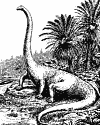
American paleontologist whose catalogs of fossil vertebrates greatly organized existing knowledge and became standard references. From 1912, he conduct his research at the United States National Museum where he assisted in working up and describing the museum's collections in vertebrate paleontology. Hay's primary scientific interest was the study of the Pleistocene vertebrata of North America. He is renowned for his work on skull and brain anatomy. His first major work was his Bibliography and Catalogue of the Fossil Vertebrata of North America (1902), supplemented by two more volumes (1929-30). Hay also wrote on the evidence of early humans in North America.«[Image: Diplodocus is portrayed as a slithering sauropod by Oliver P. Hay, 1910. From Oliver P. Hay, Proceedings of the Washington Academy of Sciences, vol. 12, 1910, pp. 1-25]
American paleontologist whose catalogs of fossil vertebrates greatly organized existing knowledge and became standard references. From 1912, he conduct his research at the United States National Museum where he assisted in working up and describing the museum's collections in vertebrate paleontology. Hay's primary scientific interest was the study of the Pleistocene vertebrata of North America. He is renowned for his work on skull and brain anatomy. His first major work was his Bibliography and Catalogue of the Fossil Vertebrata of North America (1902), supplemented by two more volumes (1929-30). Hay also wrote on the evidence of early humans in North America.«[Image: Diplodocus is portrayed as a slithering sauropod by Oliver P. Hay, 1910. From Oliver P. Hay, Proceedings of the Washington Academy of Sciences, vol. 12, 1910, pp. 1-25]
Bibliography and Catalogue of the Fossil Vertebrata of North America, by Oliver P. Hay. - book suggestion.
Born 22 May 1828; died 20 Jul 1870 at age 42.
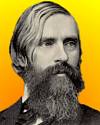
Albrecht Friedrich Wilhelm Ernst von Gräfe was a German eye surgeon, who is regarded as a founder of scientific opthalmology. He was also an authority in diseases of the nerve and brain. He diagnosed sudden visual loss due to retinal artery embolism, optic retinitis and was one of the first to treat glaucoma successfully. He described a large number of new findings, among them stase papillas in brain tumors, retardation of the eyelid in Basedow's disease and introduced a new operation for cataract - iridictomy. In his short career (he died at age 42), von Gräfe performed more than 10,000 eye operations, and was undoubtedly the most important ophthalmologist of the 19th century.«
Albrecht Friedrich Wilhelm Ernst von Gräfe was a German eye surgeon, who is regarded as a founder of scientific opthalmology. He was also an authority in diseases of the nerve and brain. He diagnosed sudden visual loss due to retinal artery embolism, optic retinitis and was one of the first to treat glaucoma successfully. He described a large number of new findings, among them stase papillas in brain tumors, retardation of the eyelid in Basedow's disease and introduced a new operation for cataract - iridictomy. In his short career (he died at age 42), von Gräfe performed more than 10,000 eye operations, and was undoubtedly the most important ophthalmologist of the 19th century.«
Born 22 May 1783; died 4 Dec 1850 at age 67.
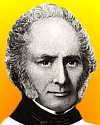
English electrical engineer who devised the first electromagnet capable of supporting more than its own weight (1825). The 7-oz (200-g) magnet supported 9-lb (4-kg) of iron with a single cell's current. He built an electric motor (1832) and invented the commutator, now part of most modern electric motors. In 1836, he invented the first suspended coil galvanometer, a device for measuring current. Sturgeon also worked on improving the voltaic battery, developing a theory of thermoelectricity, and even atmospheric charge conditions. From 500 kite flights made in calm weather, he found the atmosphere is consistently charged positively with respect to the Earth, and increasingly so at increased height.«
English electrical engineer who devised the first electromagnet capable of supporting more than its own weight (1825). The 7-oz (200-g) magnet supported 9-lb (4-kg) of iron with a single cell's current. He built an electric motor (1832) and invented the commutator, now part of most modern electric motors. In 1836, he invented the first suspended coil galvanometer, a device for measuring current. Sturgeon also worked on improving the voltaic battery, developing a theory of thermoelectricity, and even atmospheric charge conditions. From 500 kite flights made in calm weather, he found the atmosphere is consistently charged positively with respect to the Earth, and increasingly so at increased height.«

Died 22 May 2010 at age 95 (born 21 Oct 1914). quotes
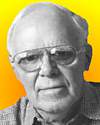
American science writer who, for 25 years, wrote the highly popular “Mathematical Games” column for Scientific American. Though not an academic, nor having ever formally studied maths or science, he wrote widely and prolifically on both subjects, in such popular books as The Ambidextrous Universe and The Relativity Explosion. Since childhood, he was fascinated by magic, so one of his first books was Mathematics, Magic and Mystery (1956), about the maths of popular magic tricks. His interests grew wider and deeper. By age 42, he wrote his first column for Scientific American, and for many years thereafter popularized mathematics by highlighting puzzles that were elegantly understandable. He both inspired professionals and enchanted young readers to take an interest in mathematics.«
American science writer who, for 25 years, wrote the highly popular “Mathematical Games” column for Scientific American. Though not an academic, nor having ever formally studied maths or science, he wrote widely and prolifically on both subjects, in such popular books as The Ambidextrous Universe and The Relativity Explosion. Since childhood, he was fascinated by magic, so one of his first books was Mathematics, Magic and Mystery (1956), about the maths of popular magic tricks. His interests grew wider and deeper. By age 42, he wrote his first column for Scientific American, and for many years thereafter popularized mathematics by highlighting puzzles that were elegantly understandable. He both inspired professionals and enchanted young readers to take an interest in mathematics.«
Undiluted Hocus-Pocus: The Autobiography of Martin Gardner, by Martin Gardner, Persi Diaconis, James Randi. - book suggestion.
Died 22 May 2007 at age 92 (born 29 Jun 1914). quotes
Swedish endocrinologist who coined the term mitochondrial medicine. He was a productive researcher in that field (1950s-1990s). Notably, he identified (1988) the cause of a number of certain diseases, including diabetes, was imbalances of the oxidation process. Luft disease was the first biochemically defined mitochondrial disease. He was the first to demonstrate the diabetes control was aggravated by stress hormones and inheritance played a role in the cells' production of insulin. He was an important leader in advancing the care of diabetes patients including providing nurses in diabetes wards with specialized training.«
Swedish endocrinologist who coined the term mitochondrial medicine. He was a productive researcher in that field (1950s-1990s). Notably, he identified (1988) the cause of a number of certain diseases, including diabetes, was imbalances of the oxidation process. Luft disease was the first biochemically defined mitochondrial disease. He was the first to demonstrate the diabetes control was aggravated by stress hormones and inheritance played a role in the cells' production of insulin. He was an important leader in advancing the care of diabetes patients including providing nurses in diabetes wards with specialized training.«
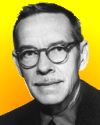
Died 22 May 1997 at age 88 (born 4 Dec 1908). quotes
Alfred Day Hershey was an American microbiologist who, with Max Delbrück and Salvador Luria, won the 1969 Nobel Prize in Physiology or Medicine for research on bacteriophages—viruses that infect bacteria. In the famous Hershey–Chase “blender experiment” (1952), he and Martha Chase, used isotope-labeled phage to infect a bacteria colony and begin to insert their genetic material into the host cells. By spinning the mixture in a Waring Blendor, he was able to shear phage coats from the cells without breaking the bacteria themselves. He found that only phage DNA, not protein, entered the bacteria, proving that DNA carries all the genetic instructions needed to produce new phage.«
Alfred Day Hershey was an American microbiologist who, with Max Delbrück and Salvador Luria, won the 1969 Nobel Prize in Physiology or Medicine for research on bacteriophages—viruses that infect bacteria. In the famous Hershey–Chase “blender experiment” (1952), he and Martha Chase, used isotope-labeled phage to infect a bacteria colony and begin to insert their genetic material into the host cells. By spinning the mixture in a Waring Blendor, he was able to shear phage coats from the cells without breaking the bacteria themselves. He found that only phage DNA, not protein, entered the bacteria, proving that DNA carries all the genetic instructions needed to produce new phage.«
We Can Sleep Later: Alfred D. Hershey and the Origins of Molecular Biology, by Frederick W. Stahl. - book suggestion.
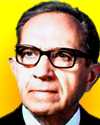
Died 22 May 1983 at age 84 (born 24 Aug 1898). quotes
Belgian-American cytologist who was awarded the 1974 Nobel Prize for Physiology or Medicine for discoveries concerning the structural and functional organization of the cell (shared with Christian de Duve and George E. Palade). With cell fractionization methods he developed using a high-powered centrifuge, Claude was able to separate various organelles in the nucleus of the living cell. He was able to show that mitochondria are the respiration centres of the cell. From 1942, he applied electron microscopy to further elucidate the structure of cells. Modern cell biology is partly based on his work.«
Belgian-American cytologist who was awarded the 1974 Nobel Prize for Physiology or Medicine for discoveries concerning the structural and functional organization of the cell (shared with Christian de Duve and George E. Palade). With cell fractionization methods he developed using a high-powered centrifuge, Claude was able to separate various organelles in the nucleus of the living cell. He was able to show that mitochondria are the respiration centres of the cell. From 1942, he applied electron microscopy to further elucidate the structure of cells. Modern cell biology is partly based on his work.«
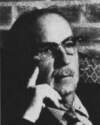
Died 22 May 1970 at age 76 (born 25 Nov 1893). quotes
American naturalist, conservationist, writer, and critic. His fame began with The Modern Temper (1929), a book in which he described how science replaced religious certainties with rational skepticism, leaving man in a meaningless world. But Krutch later discovered profound meaning in Nature. On doctor's orders, in 1950 he had to leave New York and New England, where he had been teaching, for the dry desert air of the Southwest. In the beauty of the Sonoran Desert, he wrote masterpieces of natural history, including The Voice of the Desert and The Desert Year, (which won the John Burroughs Medal in 1954). Dr. Krutch lived his retirement years in Tucson, Arizona, and was a co-founder of the Arizona-Sonora Desert Museum.
American naturalist, conservationist, writer, and critic. His fame began with The Modern Temper (1929), a book in which he described how science replaced religious certainties with rational skepticism, leaving man in a meaningless world. But Krutch later discovered profound meaning in Nature. On doctor's orders, in 1950 he had to leave New York and New England, where he had been teaching, for the dry desert air of the Southwest. In the beauty of the Sonoran Desert, he wrote masterpieces of natural history, including The Voice of the Desert and The Desert Year, (which won the John Burroughs Medal in 1954). Dr. Krutch lived his retirement years in Tucson, Arizona, and was a co-founder of the Arizona-Sonora Desert Museum.


(1900s can)
American chemist who developed a breakthrough method (1900) to refine otherwise dark, unpalatable cottonseed oil into an odorless, clear, and stable edible product. Wesson devised a chemical process that improved its purity, and removed strong flavors. Marketed as Wesson Oil, it became the first vegetable cooking oil widely used in U.S. households, and prized by chefs for its ability to allow the taste of the food to come through. To help establish modern standards for edible oil refining, Wesson was one of nine chemists that founded what became the American Oil Chemists' Society (AOCS). It established cooperative research and uniform analysis, thus advancing industrial chemistry, food processing, and large-scale production of affordable vegetable oils.«
Wesson Oil Cookbook: From the Kitchens of Hunt-Wesson Inc., by Jillian Stewart (ed.). - book suggestion.
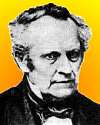
Died 22 May 1868 at age 66 (born 16 Jun 1801). quotes
German mathematician and physicist whose work suggested the far-reaching principle of duality, which states the equivalence of certain related types of theorems. He also discovered that cathode rays (electron rays produced in a vacuum) are diverted from their path by a magnetic field, a principle vital to the development of modern electronic devices, such as television. At first alone and later with the German physicist Johann W. Hittorf, Plücker made many important discoveries in spectroscopy. Before Bunsen and Kirchhoff, he announced that spectral lines were characteristic for each chemical substance and this had value to chemical analysis. In 1862 he pointed out that the same element may exhibit different spectra at different temperatures.
German mathematician and physicist whose work suggested the far-reaching principle of duality, which states the equivalence of certain related types of theorems. He also discovered that cathode rays (electron rays produced in a vacuum) are diverted from their path by a magnetic field, a principle vital to the development of modern electronic devices, such as television. At first alone and later with the German physicist Johann W. Hittorf, Plücker made many important discoveries in spectroscopy. Before Bunsen and Kirchhoff, he announced that spectral lines were characteristic for each chemical substance and this had value to chemical analysis. In 1862 he pointed out that the same element may exhibit different spectra at different temperatures.
Died 22 May 1805 at age 41 (born 1 Apr 1764).
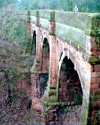
English civil engineer and industrialist who was a pioneer builder of canals. His commissions included becoming engineer for the Nottingham Canal in 1792, and the Derby Canal in 1793. For the latter, he erected the world's first cast iron navigable aquaduct (water bridge), the 44-ft (13 m) long, single span, Holmes Aquaduct that carried the Derby Canal. It was opened in Feb 1796, and demolished in 1971. He is also notable for building what is now the oldest aquaduct still in use on the Ashton Canal, built in 1798, to cross Store Street, Manchester. Outram was consulting engineer for the construction of the Huddersfield Narrow Canal, which included the pioneering Standedge Canal Tunnel. The first boat went through the tunnel on 10 Dec 1810, before the official opening on 4 Apr 1811. Boats would be legged through, without horses.«[Image: Aqueduct on Peak Forest Canal.] more
English civil engineer and industrialist who was a pioneer builder of canals. His commissions included becoming engineer for the Nottingham Canal in 1792, and the Derby Canal in 1793. For the latter, he erected the world's first cast iron navigable aquaduct (water bridge), the 44-ft (13 m) long, single span, Holmes Aquaduct that carried the Derby Canal. It was opened in Feb 1796, and demolished in 1971. He is also notable for building what is now the oldest aquaduct still in use on the Ashton Canal, built in 1798, to cross Store Street, Manchester. Outram was consulting engineer for the construction of the Huddersfield Narrow Canal, which included the pioneering Standedge Canal Tunnel. The first boat went through the tunnel on 10 Dec 1810, before the official opening on 4 Apr 1811. Boats would be legged through, without horses.«[Image: Aqueduct on Peak Forest Canal.] more
Benjamin Outram, 1764-1805: An Engineering Biography, by Reginald B. Schofield. - book suggestion.
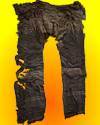
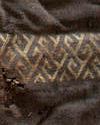
knee detail
In 1995, astronomers Amanda S. Bosh and Andrew S. Rivkin found two new moons of Saturn in photos taken by the Hubble Space Telescope.
In 1989, the first successful transfer of cells containing foreign genes into a human being is performed at the National Institutes of Health (altered cancer-fighting cells placed in the blood of a cancer-patient).
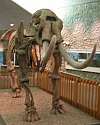
In 1979, the discovery of a Clovis type projectile point found in association with mastodon remains provided the first solid evidence of the coexistence of humans and the American mastodon in Eastern North America. Paleontologist Russell W. Graham of the Illinois State Museum made the discovery during a state sponsored excavation in the Kimmswick Bone Bed, near Imperial, Missouri. The first recorded report of bones of mastodons and other now-extinct animals in the vicinity of the town of Kimmswick, Missouri, was in the early 1800s. St. Louis Museum owner, Albert C. Koch, in 1839 excavated bones weathering out of the banks along Rock Creek. The site is now the Mastodon State Historic Site and excavations have been halted.«*
In 1973, Robert Metcalfe wrote a memo describing a way to transmit data from the early generation of personal computers to a new device, the laser printer. He called his multipoint data communications system Ethernet, and today it continues to dominate as the standard computer network. A U.S. patent for "a Multipoint data communication system with collision detection" was issued 13 Dec 1977 ( 4,063,220) to Metcalfe, and others who developed the Ethernet. The patent was assigned to the Xerox Corporation.
In 1964, the Am-Quote system capable of giving subscribing stock brokers automated voice quotes over the telephone was described in Time magazine. It replaced the need to search paper tape. A computer built by Teleregister Corp. stored the stock quotation information from the floor of New York's American Stock Exchange. A stock's code numbers could be dialled by the broker, and the computer responded by repeating the stock's code letters and the latest information including bid price, high and low. The voice of Walter Jennison, a Teleregister Corp. engineer, was recorded for a machine vocabulary of 57 words and letters on a revolving magnetic drum. The computer extracted a sequence of these pre-recorded words to report the stock data.«
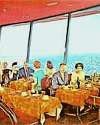
1962 )
In 1961, the Top Of The Needle restauraunt in the Space Needle in Seattle, Wash., was dedicated. It was the first revolving restaurant in the U.S., 500 feet above the ground. A 14-foot ring next to the windows carrying 260 seats rotated 360 degrees in one hour on a track and wheel system driven by a 1 horsepower motor. Dinners averaged $7.50, including a cocktail. The Space Needle itself is a 600 foot high steel and glass tower with an observation deck above the restaurant, topped by a beacon. A ride up the elevator cost only one dollar.
In 1931, the first sale of canned rattlesnake meat was made by George Kenneth End of Arcadia, Florida. Cans were first packed in Mar 1931, and first served at an American Legionnaires dinner. End formed the Floridian Products Corp to market the canned rattlesnake meat.
In 1906, the brothers Orville and Wilbur Wright were granted U.S. patent No. 821,393. Although referred to as the first airplane patent in the U.S., it was not for the airplane itself, but for their flight control technique of wing-warping. After three years experimenting with gliders, while they were building their powered Flyer, they filed for the patent on 23 Mar 1903. Their historic flight was made later that year, on 17 Dec 1903, long before the patent was granted. Significantly, the patent embraced any subsequent methods used to adjust the outer edges of the wings. Different adjustments made on the edges of the left and right wings, changing the angle of incidence to the air, gave critical roll control. Ailerons devised by others were judged also covered by the patent. The Wrights agressively protected their patent rights.«.
In 1900, a U.S. patent was granted to Edwin S. Votey for the first practical pneumatic piano attachment, or pianola (No. 650,285). His original invention (1896) led to a model that was larger than the piano itself. The patent described the device as being of practical and economical construction which could be applied to and removed from any piano. It was produced by the Aeolian Company.
In 1900, the first automatic computing scale was issued a patent to the Toledo, Ohio, inventor Allen De Vilbiss, Jr. After applying for the patent on 24 Jan 1899, he formed the De Vilbiss cale Co., predecessor of the Toledo Scale Co. This company produced a number of firsts in innovations for scales. In addition to the first automatic computing pendulum-type scale, other firsts included an indicator controller to bring the hand to a quick stop, a cylinder type platform scale, automatic-dial portable scale and auto truck scales using a shallow pit.
In 1899, Plain Dealer reporter Charles Shanks first used the French word "automobile" in a series of articles he writes about a road trip with car magnate Alexander Winton from Cleveland to N.Y. (the word thereafter becomes accepted in U.S.).
In 1894, black American inventor S. Newson was issued a patent for an "oil heater or cooker" (U.S. No. 520,188).
The Inventive Spirit of African Americans: Patented Ingenuity, by Patricia Carter Sluby. - book suggestion.
In 1892, Dr. Washington Sheffield, a dentist of New London, Conn., USA, invented the collapsible metal toothpaste tube, which was later manufactured by his Sheffield Tube Corp. Within the same year, in Great Britain, where toothpaste was formerly sold in round pots, Beecham's Tooth Paste was packages for sale in collapsible tubes. The idea of collapsible metal tubes, however, dates back to a patent by American artist John Rand on 11 Sep 1841, but these packages were first commercially used for oil-paints. The first collapsible polythene tubes were produced in the U.S. for skin-tanning lotion in 1953.
In 1888, Architect Leroy S. Buffington patented the system for building skyscrapers using a metal skeleton frame. Although Buffington claimed to be the originator of the metal skeleton frame that made building tall structures feasible, his claim to be the inventor of the skyscraper was refuted. However, using the designs created by Harvey Ellis, Buffington is credited with playing a pivotal role in refining the new method of construction. The invention of the skyscraper lies with George A. Fuller (1851-1900), who worked on solving the problems of the load bearing capacities of tall buildings.
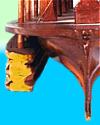
patent model bow view
In 1849, Abraham Lincoln was issued a patent for “Buoying Boats Over Shoals” (No. 6,469). Twelve years later, he was the first American President to take office (4 Mar 1861) who held a patent. His idea utilized inflated cylinders to float grounded vessels through shallow water. In effect, they were externally attached long narrow bellows along the length of each side of a boat, intended to increase the hull volume when needed. They would stay retracted above the water line when not in use. Before becoming a lawyer, Lincoln had worked as a young deck-hand on a Mississippi flat-boat. (No further practical design application work was done with the patent.)«
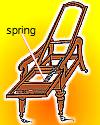
In 1841, Henry P. Kennedy, a cabinetmaker and upholsterer of Philadelphia, Pa., was issued the first U.S. patent for a reclining chair (U.S. No. 2100). Although the patent title was for a “Reclining Chair,” his specific claim was not for the chair structure itself. The patent claim was instead specified for the “improved action of the seat” by means of a spring between the back rail and the front rail of a reclinable frame which would be self-acting to return the chair, once unoccupied, to its upright position. Previously, recumbent chairs were in common use, but had no such mechanical action.«
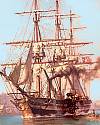
In 1819, the first American-built steam-propelled vessel to cross the Altantic, the Savannah, left from Savannah, Ga.. The 350-ton wooden boat, was fully rigged with sails using mostly wind power for the trip. Steam power was used for only 80 hours, from an inclined direct-acting low-pressure steam engine. The Atlantic crossing ended at Liverpool on 20 June 1819. The vessel had been originally launched on 22 Aug 1818, with a sea trial from New York City to Savannah on 28 Mar 1819. Although it had 32 state rooms, it sailed without passengers, for none dared to make the trip. The Savannah was not a commercial success as a steam ship, and was converted to a fulltime sailing ship after her return voyage, until wrecked off Long Island in 1821. No other American owned steamship crossed the Atlantic for 30 years.
more
Steam Coffin: Captain Moses Rogers and The Steamship Savannah Break the Barrier, by John Laurence Busch. - book suggestion.




