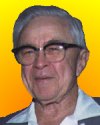
Born 20 May 1918; died 21 Jul 2004 at age 86.
American developmental geneticist who was awarded the 1995 Nobel Prize for Physiology or Medicine for discovering the functions that control early embryonic development with co-winners Christiane Nüsslein-Volhard and Eric F. Wieschaus who identified and classified 15 key genes that determine the body plan and formation of body segments of the fruit fly Drosophila melanogaster. Lewis studied the next step, the homeotic genes that govern the development of a larval segment into a specific body segment. (Homeotic means that something has been changed into the likeness of something else.) Lewis found a co-linearity in time and space between the order of the genes in the bithorax complex and their effect regions in the segments.
American developmental geneticist who was awarded the 1995 Nobel Prize for Physiology or Medicine for discovering the functions that control early embryonic development with co-winners Christiane Nüsslein-Volhard and Eric F. Wieschaus who identified and classified 15 key genes that determine the body plan and formation of body segments of the fruit fly Drosophila melanogaster. Lewis studied the next step, the homeotic genes that govern the development of a larval segment into a specific body segment. (Homeotic means that something has been changed into the likeness of something else.) Lewis found a co-linearity in time and space between the order of the genes in the bithorax complex and their effect regions in the segments.
Genes, Development and Cancer: The Life and Work of Edward B. Lewis, by Howard D. Lipshitz (ed.). - book suggestion.
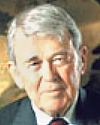
Born 20 May 1913; died 12 Jan 2001 at age 87.
William Redington Hewlett was an American electrical engineer who co-founded the Hewlett-Packard Company, a leading manufacturer computers, computer printers, and analytic and measuring equipment. In 1939, he formed a partnership known as Hewlett-Packard Company with David Packard, a friend and Stanford classmate. (The order of their names was determined by a coin toss.) HP's first product was an audio oscillator based on a design developed by Hewlett when he was in graduate school. Eight were sold to Walt Disney for Fantasia. Lesser-known early products were: bowling alley foul-line indicator, automatic urinal flusher, weight-loss shock machine. The company began with $538 intial capital, and its first production facility was a small garage in Palo Alto.
William Redington Hewlett was an American electrical engineer who co-founded the Hewlett-Packard Company, a leading manufacturer computers, computer printers, and analytic and measuring equipment. In 1939, he formed a partnership known as Hewlett-Packard Company with David Packard, a friend and Stanford classmate. (The order of their names was determined by a coin toss.) HP's first product was an audio oscillator based on a design developed by Hewlett when he was in graduate school. Eight were sold to Walt Disney for Fantasia. Lesser-known early products were: bowling alley foul-line indicator, automatic urinal flusher, weight-loss shock machine. The company began with $538 intial capital, and its first production facility was a small garage in Palo Alto.
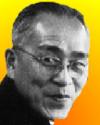
Born 20 May 1901; died 18 Mar 1998 at age 96.
Japanese engineer, who designed and supervised the construction of the world's first high-speed "bullet" train, linking Tokyo and Osaka. It began service at 138 mph in Oct 1964. The rail line opened a new era in land transport. (The current generation reaches 169 mph). Shima led Japan's space development programme until 1977 at Japan's National Space Development Agency. In his early career, Shima worked hard to further develop powerful steam locomotives, culminating in the wartime 2-8-2 D51 and D52 for freight and the post-war 4-6-4 C62 for passenger trains. He next developed electrical motive power distributed along the whole train length yielding higher power output on a multiple-unit train without damaging tracks and structures.
Japanese engineer, who designed and supervised the construction of the world's first high-speed "bullet" train, linking Tokyo and Osaka. It began service at 138 mph in Oct 1964. The rail line opened a new era in land transport. (The current generation reaches 169 mph). Shima led Japan's space development programme until 1977 at Japan's National Space Development Agency. In his early career, Shima worked hard to further develop powerful steam locomotives, culminating in the wartime 2-8-2 D51 and D52 for freight and the post-war 4-6-4 C62 for passenger trains. He next developed electrical motive power distributed along the whole train length yielding higher power output on a multiple-unit train without damaging tracks and structures.
Born 20 May 1900; died 25 Sep 1991 at age 91.
Cuban ethnologist and short-story author noted for her collections of Afro-Cuban folklore. Lydia did extensive work in Matanzas, including the small towns south of the city of Matanzas itself, places such as Perico and Union de Reyes.
Cuban ethnologist and short-story author noted for her collections of Afro-Cuban folklore. Lydia did extensive work in Matanzas, including the small towns south of the city of Matanzas itself, places such as Perico and Union de Reyes.
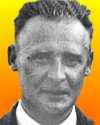
Born 20 May 1895; died 11 Jun 1937 at age 42.
Reginald Joseph Mitchell was a British aircraft designer, developer of the eight-gun Spitfire (1936), one of the best-known fighters in World War II. He was an engineer and designer for Supermarine Aviation Works (1916-37), chief engineer (from 1919) and was also known for design of a series of flying boats and high-speed seaplanes. In the years from 1920 to 1936, he designed no less than twenty-four different aircraft. The Spitfire was a derivative of his earlier S.6B seaplane racing aircraft.(image right source)
Reginald Joseph Mitchell was a British aircraft designer, developer of the eight-gun Spitfire (1936), one of the best-known fighters in World War II. He was an engineer and designer for Supermarine Aviation Works (1916-37), chief engineer (from 1919) and was also known for design of a series of flying boats and high-speed seaplanes. In the years from 1920 to 1936, he designed no less than twenty-four different aircraft. The Spitfire was a derivative of his earlier S.6B seaplane racing aircraft.(image right source)
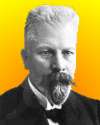
Born 20 May 1860; died 13 Aug 1917 at age 57. quotes
German biochemist who was awarded the 1907 Nobel Prize for Chemistry for demonstrating that the fermentation of carbohydrates results from the action of different enzymes contained in yeast and not the yeast cell itself. He showed that an enzyme, zymase, can be extracted from yeast cells and that it causes sugar to break up.
German biochemist who was awarded the 1907 Nobel Prize for Chemistry for demonstrating that the fermentation of carbohydrates results from the action of different enzymes contained in yeast and not the yeast cell itself. He showed that an enzyme, zymase, can be extracted from yeast cells and that it causes sugar to break up.
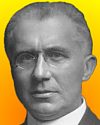
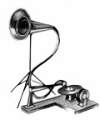
German-American inventor who made important contributions to telephone technology and developed the phonograph record disk, the microphone in 1877 and the gramophone in 1887. Whereas Thomas Edison invented cylindrical records, Berliner came up with the idea of using disks. He coined the word gramophone as is trademark. Later, he became a pioneer in helicopter design.
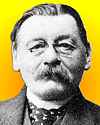
Born 20 May 1838; died 12 Jun 1912 at age 74.
German geologist and micropetrographist who was a pioneer in microscopic petrography, the study of rock minerals by viewing thin slices of rock under a microscope and noting their optical characteristics. He travelled in the U.S. through the Park Range mountains of the Continental Divide with the King Survey in 1871, and his name was given to the 12,180 foot tall peak as Mount Zirkel, in northwestern Colorado. The King Survey was one of the four “Great Surveys,” the federally sponsored expeditions to the West resumed after the Civil War. These differed from their pre-Civil War surveys in their greater inclusion of civilian specialists, particularly scientists. Zirkel wrote one of the 7 volumes of the King expedition Report, Vol. VI: Microscopial Petrography (1876).
German geologist and micropetrographist who was a pioneer in microscopic petrography, the study of rock minerals by viewing thin slices of rock under a microscope and noting their optical characteristics. He travelled in the U.S. through the Park Range mountains of the Continental Divide with the King Survey in 1871, and his name was given to the 12,180 foot tall peak as Mount Zirkel, in northwestern Colorado. The King Survey was one of the four “Great Surveys,” the federally sponsored expeditions to the West resumed after the Civil War. These differed from their pre-Civil War surveys in their greater inclusion of civilian specialists, particularly scientists. Zirkel wrote one of the 7 volumes of the King expedition Report, Vol. VI: Microscopial Petrography (1876).
Born 20 May 1825; died 17 Feb 1865 at age 39.
American astronomer who made the first photograph of a double star, discovered a number of comets, and with his father discovered Hyperion, the eighth moon of Saturn.
American astronomer who made the first photograph of a double star, discovered a number of comets, and with his father discovered Hyperion, the eighth moon of Saturn.
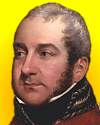
Born 20 May 1772; died 16 May 1828 at age 55. quotes
English artillery officer and inventor (2nd Baronet) who invented a rocket (about 1804) for use in warfare that improved on simple black-powder rockets. They were first used militarily against the French on 8 Oct 1806 at Boulogne and later at Copenhagen and Leipzig. By 1830, most European armies had copied them. He also invented a gun-recoil mounting, a steam engine, a triple-paper process for coloured watermarks and a “perpetual-motion” machine. He created a wheelchair for himself after losing the use of his legs. He designed a vessel propelled by a “wave-wheel” and a human-powered aircraft. His 18 patents also include making of gunpowder, gas lighting, “hydropneumatic” canal locks, a rolling-ball clock and a built-in sprinkler system.« more
English artillery officer and inventor (2nd Baronet) who invented a rocket (about 1804) for use in warfare that improved on simple black-powder rockets. They were first used militarily against the French on 8 Oct 1806 at Boulogne and later at Copenhagen and Leipzig. By 1830, most European armies had copied them. He also invented a gun-recoil mounting, a steam engine, a triple-paper process for coloured watermarks and a “perpetual-motion” machine. He created a wheelchair for himself after losing the use of his legs. He designed a vessel propelled by a “wave-wheel” and a human-powered aircraft. His 18 patents also include making of gunpowder, gas lighting, “hydropneumatic” canal locks, a rolling-ball clock and a built-in sprinkler system.« more
Commodore Squib: The Life, Times and Secretive Wars of England's First Rocket Man, Sir William Congreve, by James Earle. - book suggestion.
Born 20 May 1759; died 28 Mar 1828 at age 68.
British-born American architect, inventor, and public official, best known as the creator of the original design for the Capitol at Washington, D.C.
British-born American architect, inventor, and public official, best known as the creator of the original design for the Capitol at Washington, D.C.

Born 20 May 1537; died 21 May 1619 at age 82.
Italian physician, surgeon, anatomist and embryologist who was an outstanding Renaissance anatomist and helped found modern embryology. He studied under, and then suceeded, Gabriel Fallopius. In 1600 and 1612, he published his studies of chick embryo development, which promoted embryology as a field of research, though his understanding was flawed. For example, he believed it was the chalaza (spiral threads that hold the yolk in position inside the egg) that produced the chick, while the yolk was merely present to provide nutrition for the devloping embryo. In 1603, he published his most significant book, De venarum ostiolis, describing the veinous system. His pupil, William Harvey, extended this knowledge of blood circulation.«[also known as: Geronimo, or Girolamo Fabrizio, or Fabrici. DSB gives birth as c. 1533.] more
Italian physician, surgeon, anatomist and embryologist who was an outstanding Renaissance anatomist and helped found modern embryology. He studied under, and then suceeded, Gabriel Fallopius. In 1600 and 1612, he published his studies of chick embryo development, which promoted embryology as a field of research, though his understanding was flawed. For example, he believed it was the chalaza (spiral threads that hold the yolk in position inside the egg) that produced the chick, while the yolk was merely present to provide nutrition for the devloping embryo. In 1603, he published his most significant book, De venarum ostiolis, describing the veinous system. His pupil, William Harvey, extended this knowledge of blood circulation.«[also known as: Geronimo, or Girolamo Fabrizio, or Fabrici. DSB gives birth as c. 1533.] more

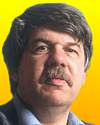
Died 20 May 2002 at age 60 (born 10 Sep 1941). quotes
American paleontologist, evolutionary biologist, and science writer who grew up in New York City. He graduated from Antioch College and received his Ph.D. from Columbia University in 1967. Since then he has been Professor of Geology and Zoology at Harvard University. He considers himself primarily a palaeontologist and an evolutionary biologist, though he teaches geology and the history of science as well. A frequent and popular speaker on the sciences, his published work includes both scholarly study and many prize-winning popular collections of essays.
American paleontologist, evolutionary biologist, and science writer who grew up in New York City. He graduated from Antioch College and received his Ph.D. from Columbia University in 1967. Since then he has been Professor of Geology and Zoology at Harvard University. He considers himself primarily a palaeontologist and an evolutionary biologist, though he teaches geology and the history of science as well. A frequent and popular speaker on the sciences, his published work includes both scholarly study and many prize-winning popular collections of essays.
Stephen Jay Gould: Reflections on His View of Life, by Patricia Kelley, Robert Ross and Warren D. Allmon (ed.). - book suggestion.
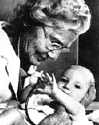
Died 20 May 1986 at age 87 (born 24 May 1898).
American physician who founded pediatric cardiology. She pioneered using X-rays and fluoroscopy to identify heart defects in newborns. With surgeon Alfred Blalock, she developed a surgical procedure for treating blue baby syndrome. After 1944, when the first Blalock-Taussig operation was developed, many blue babies were saved from invalidism or death. The Blalock-Taussig shunt (a surgical shunt made between the pulmonary artery and the aorta as treatment for tricuspid and pulmonary atresia) is named for her. In the early 1960s, Taussig was a major person in revealing and stopping the harm caused by the sedative drug thalidamide, which when taken by pregnant woman caused terrible deformations of their to newborn children.
American physician who founded pediatric cardiology. She pioneered using X-rays and fluoroscopy to identify heart defects in newborns. With surgeon Alfred Blalock, she developed a surgical procedure for treating blue baby syndrome. After 1944, when the first Blalock-Taussig operation was developed, many blue babies were saved from invalidism or death. The Blalock-Taussig shunt (a surgical shunt made between the pulmonary artery and the aorta as treatment for tricuspid and pulmonary atresia) is named for her. In the early 1960s, Taussig was a major person in revealing and stopping the harm caused by the sedative drug thalidamide, which when taken by pregnant woman caused terrible deformations of their to newborn children.
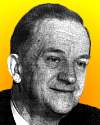
Died 20 May 1982 at age 80 (born 27 Jun 1901). quotes
American research physicist and geophysicist who (with Gregory Breit) made the first use pulsed radio waves to explore the ionosphere. He devised the necessary detecting equipment to measure the time between receiving a direct radio pulse and a second pulse reflected from the ionosphere. The observations he made provided the theoretical foundation for the development of radar. Tuve, with Lawrence R. Hafstad and Norman P. Heydenburg, made the first and definitive measurements of the nuclear force between proton-proton force at nuclear distances. During WW II he developed the proximity fuse. Following the war, he made important contributions to experimental seismology, radio astronomy, and optical astronomy.«
American research physicist and geophysicist who (with Gregory Breit) made the first use pulsed radio waves to explore the ionosphere. He devised the necessary detecting equipment to measure the time between receiving a direct radio pulse and a second pulse reflected from the ionosphere. The observations he made provided the theoretical foundation for the development of radar. Tuve, with Lawrence R. Hafstad and Norman P. Heydenburg, made the first and definitive measurements of the nuclear force between proton-proton force at nuclear distances. During WW II he developed the proximity fuse. Following the war, he made important contributions to experimental seismology, radio astronomy, and optical astronomy.«
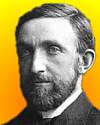
Died 20 May 1947 at age 84 (born 7 Jun 1862). quotes
Philipp Eduard Anton von Lenard was a Hungarian-German physicist who wasawardedthe 1905 Nobel Prize in Physics for hisstudyof cathode rays. Lenard showed they could exit a cathode ray tube, pass through thin metal, and ionize air. In 1902, he found a free electrons in cathode rays must have minimum energy to ionize a gas (i.e. knock a bound electron out of an atom). His determination of the necessary ionization energy for hydrogen was highly accurate. In the same year, he also demonstrated the photoelectric effect produces electrons like those in cathode rays, and that photoelectrons are ejected with definite energy, not merely dislodged from the metal surface.«
Philipp Eduard Anton von Lenard was a Hungarian-German physicist who wasawardedthe 1905 Nobel Prize in Physics for hisstudyof cathode rays. Lenard showed they could exit a cathode ray tube, pass through thin metal, and ionize air. In 1902, he found a free electrons in cathode rays must have minimum energy to ionize a gas (i.e. knock a bound electron out of an atom). His determination of the necessary ionization energy for hydrogen was highly accurate. In the same year, he also demonstrated the photoelectric effect produces electrons like those in cathode rays, and that photoelectrons are ejected with definite energy, not merely dislodged from the metal surface.«
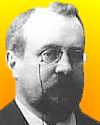
Died 20 May 1927 at age 64 (born 29 Jul 1862). quotes
German climatologist who also studied the glaciers of the Alps and particularly the effect of the ice ages on the Earth's surface features. By analyzing direct and indirect observations of climatic fluctuations, in pioneering research, he discovered the 35-year Brückner climatic cycle (1887) of swings between damp-cold and warm-dry conditions. He initiated scientific debate on whether climate change should be interpreted as a natural function of the Earth system, or whether it was influenced by man's activities, such as deforestation. He considered the impact of climate change on the balance of power between nations and its economic significance in agricultural productivity, emigration, river transportation and the spreading of diseases.«
German climatologist who also studied the glaciers of the Alps and particularly the effect of the ice ages on the Earth's surface features. By analyzing direct and indirect observations of climatic fluctuations, in pioneering research, he discovered the 35-year Brückner climatic cycle (1887) of swings between damp-cold and warm-dry conditions. He initiated scientific debate on whether climate change should be interpreted as a natural function of the Earth system, or whether it was influenced by man's activities, such as deforestation. He considered the impact of climate change on the balance of power between nations and its economic significance in agricultural productivity, emigration, river transportation and the spreading of diseases.«
Eduard Brückner - The Sources and Consequences of Climate Change and Climate Variability in Historical Times, by N. Stehr and H. von Storch (eds.). - book suggestion.
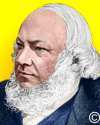
Died 20 May 1893 at age 70 (born 9 Aug 1822). quotes
Dutch physiologist and philosopher noted for his belief in the material basis of emotion and thought. His most important work, Kreislauf des Lebens (1852; “The Cycle of Life”), expounded scientific materialism, requiring “scientific answers to scientific questions.” For example, he recognized that the miner brings phosphoric lime out of the earth, and the farmer uses it to fertilize his wheat, which nourishes not only the body, but also, at the very end, the human brain. Thus, “No thought without phosphorus!” Man is the sum of parents and nurse, place and time, air and weather, sound and light, food and clothing, in short, conditioned by external influences. Organisms have emerged from the inorganic.« more
Dutch physiologist and philosopher noted for his belief in the material basis of emotion and thought. His most important work, Kreislauf des Lebens (1852; “The Cycle of Life”), expounded scientific materialism, requiring “scientific answers to scientific questions.” For example, he recognized that the miner brings phosphoric lime out of the earth, and the farmer uses it to fertilize his wheat, which nourishes not only the body, but also, at the very end, the human brain. Thus, “No thought without phosphorus!” Man is the sum of parents and nurse, place and time, air and weather, sound and light, food and clothing, in short, conditioned by external influences. Organisms have emerged from the inorganic.« more
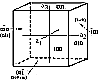
Died 20 May 1880 at age 79 (born 6 Apr 1801).
Welsh mineralogist known for his Millerian indices built on his system of reference axes for crystals by which the different systems of crystal forms can be designated using a a set of three integers for each crystal face. When he published this scheme in A Treatise on Crystallography (1839), he provided an alternative to the existing confusion due to the many different descriptive systems previously in use. In his early career he published successful textbooks for hydrostatics and hydrodynamics (1831) and differential calculus (1833). Miller also prepared new standards in 1843 to replace the National Standards of weight and length that had been lost in the 1834 fire that destroyed the Parliament buildings.«
Welsh mineralogist known for his Millerian indices built on his system of reference axes for crystals by which the different systems of crystal forms can be designated using a a set of three integers for each crystal face. When he published this scheme in A Treatise on Crystallography (1839), he provided an alternative to the existing confusion due to the many different descriptive systems previously in use. In his early career he published successful textbooks for hydrostatics and hydrodynamics (1831) and differential calculus (1833). Miller also prepared new standards in 1843 to replace the National Standards of weight and length that had been lost in the 1834 fire that destroyed the Parliament buildings.«
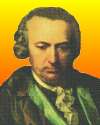
Died 20 May 1793 at age 73 (born 13 Mar 1720). quotes
Swiss naturalist and philosophical writer who discovered parthenogenesis (reproduction without fertilization) in female aphids. Bonnet also: demonstrated the regenerative ability of annelid worms, found that insects breathe through pores which he called stigmata, studied photosynthesis and epinasty in plants and noted the emission of bubbles by a submerged illuminated leaf. With eyesight failing in the 1750's he turned to speculation. Remembering the aphid, in 1770, Bonnet published an argument that all females carry within them all future evolutionary generations in a miniature form, able to survive even such cataclysms as the biblical Flood. He predicted, moreover, that these catastrophes thus brought about evolutionary change.
Swiss naturalist and philosophical writer who discovered parthenogenesis (reproduction without fertilization) in female aphids. Bonnet also: demonstrated the regenerative ability of annelid worms, found that insects breathe through pores which he called stigmata, studied photosynthesis and epinasty in plants and noted the emission of bubbles by a submerged illuminated leaf. With eyesight failing in the 1750's he turned to speculation. Remembering the aphid, in 1770, Bonnet published an argument that all females carry within them all future evolutionary generations in a miniature form, able to survive even such cataclysms as the biblical Flood. He predicted, moreover, that these catastrophes thus brought about evolutionary change.
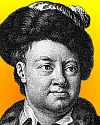
Died 20 May 1755 at age 45 (born 10 Aug 1709).
German explorer, natural scientist and botanist who acted as a natural historian on the imperial scientific expedition led by Friedrich Müller in eastern Siberia (1733-43). From barometric pressure readings, he was first to determine that the shores of the Caspian lay below sea level. In 1735, at the town of Yeniseysk, he recorded a record low temperature. He also detected the permafrost in eastern Siberia, which, a little way below the surface of the ground remained frozen year round. Gmelin spent the period 1747-69 preparing a book recording his finds there. In Flora sibirica sive historia plantorum Sibiriae, he detailed 1,178 species and provided 294 illustrations. His original degree was in medicine (1727), but his fields of study included chemistry, natural resources, geology, zoology, ethnography and geography. He was Leopold Gmelin's great uncle.«
German explorer, natural scientist and botanist who acted as a natural historian on the imperial scientific expedition led by Friedrich Müller in eastern Siberia (1733-43). From barometric pressure readings, he was first to determine that the shores of the Caspian lay below sea level. In 1735, at the town of Yeniseysk, he recorded a record low temperature. He also detected the permafrost in eastern Siberia, which, a little way below the surface of the ground remained frozen year round. Gmelin spent the period 1747-69 preparing a book recording his finds there. In Flora sibirica sive historia plantorum Sibiriae, he detailed 1,178 species and provided 294 illustrations. His original degree was in medicine (1727), but his fields of study included chemistry, natural resources, geology, zoology, ethnography and geography. He was Leopold Gmelin's great uncle.«
In 1996, a giant balloon-like antenna was inflated outside a satellite released by the Space Shuttle.*
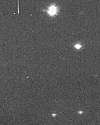
In 1990, the Hubble Space Telescope sent its first photograph from space, an image of a double star 1,260 light years away, and were found to be roughly 50 percent sharper than high-quality ground-based images with a 100-inch telescope. The first image was intended to assist in focusing the telescope. The region observed in this image is centered on the 8.2-magnitude star HD96755 in the open cluster NGC 3532, in the southern constellation Carina. During a follow-up repair mission (launched 2 Dec 1993), astronauts installed new equipment that successfully addressed the mirror imperfection causing the aberration present in the early images.«
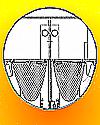
In 1974, a U.S. patent was issued to Gustano A. Pizzo (1926-2006) of Jackson Heights, N.Y., for his “Anti Hijacking System for Aircraft” (No. 3,811,643). It described an electro-mechanical system immediately aft of the pilots cabin to trap airplane hijackers. When activated a hijacker is dropped by trap doors through the floor into a net bag in the belly area. The hijacker's weight causes a draw cord to close the bag and also automatically open the airplane's specially-installed bomb bay doors. The encapsulated hijacker is dropped and parachuted to earth, where police, having been alerted by radio, await his arrival. On 21 Sep 2013, Pizzo was posthumously awarded the Ig Nobel Prize for Safety Engineering.«
(2001)
In 1967, the Soviets displayed the world’s largest atom smasher U-70, near completion, after 7 years of construction. Correspondent Walter Sullivan having personally visited the site, wrote from nearby Serpukhov, describing the machine in the next day’s New York Times as “more than twice as powerful as any in existence.” He was apparently the first Western journalist permitted a visit to the “closely guarded installation buried in a pine forest 50 miles south of Moscow.” Project leaders hoped that within four months they could begin accelerating protons around the inside of the kilometer-long ring of 120 magnet blocks—in time for the fall’s 50th anniversary celebration of the Bolshevik revolution.«
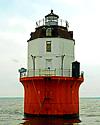
In 1964, the first U.S. atomic-powered lighthouse was put into operation in the Chesapeake Bay, Baltimore Harbor, Md. Designed to supply a continuous flow of electricity for ten years without refuelling, the 60-watt SNAP-7B nuclear generator generated heat from strontium-90 in the form of strontium titinate, a safe radioisotope. The heat was converted to electricity by 120 pairs of lead telluride thermocouples. Complete with shielding, the 4,600-lb unit was only 34.5 inches high and 22 inches in diameter. It was designed and produced by the nuclear division of Martin-Marietta Corp. The unit was installed by crane on the U.S. Coast Guard buoy tender White Pine.«
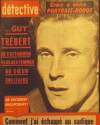
In 1959, in Paris, France, the first person to be arrested using an Identikit picture was Guy Trébert for the murder of a woman, Arlette Donier, whose remains were found the previous 5 Apr in the forest of Saint-Germain-en Laye. In French, the composite sketch was known as Portrait-Robot.«
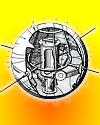
In 1958, a patent for a “Satellite Structure” (U.S. No. 2,835,548) was issued to Robert Baumann of Alexandria, Va., assigned to the U.S., represented by the Secretary of the Navy. The invention was made freely available to the government without royalties. This was about just 13 years since Arthur C. Clarke proposed (25 May 1945) the use of artificial satellites for communication and broadcasting television “at all times, over the whole globe.” In his patent, Baumann described a spherical satellite shell to carry instruments for scientific exploration of the upper atmosphere, collecting data widespread over the whole earth, much higher than balloons, and for sustained duration of observation.«
In 1956, the first hydrogen fusion bomb (H-bomb) to be dropped from an airplane exploded over Namu Atoll at the northwest edge of the Bikini Atoll. The fireball was four miles in diameter. It was designated as "Cherokee," as part of "Operation Redwing."
In 1940, inventor Igor Sikorsky demonstrated his helicopter invention to the public.
In 1939, transatlantic airmail service was inaugurated. A four-engine Pan American airplane, the Yankee Clipper, flew from Poert Washington, N.Y. via Horta to Lisbon, Portugal. It also represented the first scheduled air service.

In 1932, Amelia Earhart took off for Ireland from Habor Grace, Newfoundland, to become the first woman to fly solo across the Atlantic Ocean. She later landed her plane in Ireland after a thirteen-hour, thirty-minute flight from Canada. Four years earlier, she had already become the first woman to fly across the Atlantic when she travelled as a passenger on 17 Jun 1928 for a 21-hour flight.
more
Amelia Earhart: The Truth at Last, by Mike Campbell. - book suggestion.
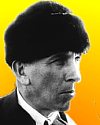
In 1931, the bodies of the German Greenland Expedition that went missing last November were discovered. Their leader was prominent explorer Dr Alfred Lothar Wegener, the German meteorologist and geophysicist who formulated the first complete statement of the continental drift hypothesis. This proposed that about 250 million years ago all the present-day continents had formed a single supercontinent, Pangaea, which had subsequently broken away and drifted apart. He was also interested in paleoclimatology, and took part in several expeditions to Greenland to study polar air circulation since 1906. He died during his fourth expedition.*
In 1930, for the first time, an airplane was catapulted from a U.S.dirigible. A Vought two-seat observation plane was catapulted from the airship Los Angeles and then flew to the carrier Saratoga.
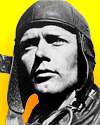
1927
In 1927, at 7:40 a.m., Charles Lindbergh took off from Roosevelt Field in Long Island, N.Y., aboard the Spirit of St. Louis monoplane on his historic first solo flight across the Atlantic Ocean. He arrived in France thirty-three and one-half hours later.
more
The Spirit of St. Louis, by Charles A. Lindbergh. - book suggestion.
In 1913, the world's longest submarine, the 243ft Gustave Zede, was launched at Cherbourg, France.*
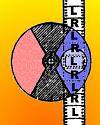
In 1901, Claude Grivolas, one of Pathe's main shareholders in Paris, France, patented a projector for three-dimensional (stereoscopic) movies viewed wearing spectacles with one red and one blue lens (French patent No. 310,864). He received a British patent on 23 May 1901 (No. 10,695) For filming, he used a dual camera arrangement which photographed images alternately. He then created one composite master film with the left camera images alternated with the right camera image. His projector had a shutter with one red and one blue transparent sections, with opaque quadrants between them. Left-eye images were projected through the blue filter followed by right-eye images in red light. The movie appeared black and white when viewed using red/blue spectacles.*[Image: rotating shutter with red and blue quadrants alternately project left (L) and right (R) frames of movie film.]
Stereoscopic Cinema and the Origins of 3-D Film, 1838-1952, by Ray Zone. - book suggestion.
In 1899, the American Physical Society was founded for the advancement and diffusion of the knowledge of physics. It was formed at Columbia University by scientists from 17 institutions. The first president was Henry Rowland, and the first vice-president was A. A. Michelson. During the first year, 57 fellows were admitted.
In 1892, George T. Sampson, a black American inventor, patented what was titled a “Clothes-Drier” (U.S. No. 476,416). In the patent description, he said “The object of my invention is to suspend clothing in close relation to a stove by means of frames so constructed that they can be readily placed in proper position and put aside when not required for use.” Thus, it was a passive drying frame. A few years earlier, on 17 Feb 1885, he had been issued a patent for a “Sled Propeller” (No. 312,388), being adapted from a tricycle frame by adding two runners, and a chain-driven rear wheel for propulsion.«
The Inventive Spirit of African Americans: Patented Ingenuity, by Patricia Carter Sluby. - book suggestion.
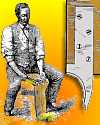
In 1884, Lackrum Blue, a black American inventor, was issued a patent for a “Hand Corn Shelling Device” (U.S. No. 298,937). It consisted of an oblong blade or plate of metal, such as cast-steel, having its shank formed with screw-holes, by which it can be secured to a bench, or any other suitable support. At the outer end it is formed with a semicircular, concave portion, the lower edge of which is slightly sharpened, and at its extreme outer end is a tooth or projection. The tooth would assist in the removal of two rows of grain when an ear is started for shelling. The ear is then placed in and turned around and against the concave knife-edged portion, and the remaining grain is thus shelled off rapidly.«
The Inventive Spirit of African Americans: Patented Ingenuity, by Patricia Carter Sluby. - book suggestion.
In 1875, the International Bureau of Weights and Measures was established in Sèvres, France, by the International Metric Convention, (also known as the Treaty of the Meter), initially signed by representatives of 17 nations. Contributions from signatory goverments support the Bureau, which became the depository for the International Prototypes of the Meter and the Kilogram, and secondary standards. In French, it is known as the Bureau International des Poids et Mesures (BIPM). In subsequent years, additional nations joined, so by 2012 there are 53 member states, including all the major industrialized countries. The Convention thus provides the organizational structure for international agreements concerning matter relating to units of measurement. Each 20 May is now World Metrology Day.«[Original logo of the BIPM.]

In 1873, Jacob W Davis of Reno, Nevada, received a U.S. patent (No.139,121) on a rivet process for strengthening the pocket openings of canvas pants. He assigned the patent to himself and Levi Strauss, as his business partner. Jacob Davis was in charge of manufacturing when Levi Strauss & Co. opened its two San Francisco factories. Sometime during 1873, the first riveted clothing was made and sold. (The exact date is unknown; the company's historic records were lost in the 1906 San Francisco earthquake and fire.) For nearly 20 years, Levi Strauss & Co. was the only company making riveted clothing, until the patent expired around 1891. Thereafter, dozens of garment manufacturers began to imitate the original riveted clothing.
In 1856, the first telegraph ticker that successfuly printed type was issued a patent for the inventor, David Edward Hughes of Louisville, Ky. (U.S. No. 14,917). The following year, he sold the rights for $100,000 to the Commercial Co.
In 1830, D. Hyde of Reading, Pa., patented the fountain pen. However, it was 1884 before a truly practical fountain pen was invented by Lewis Waterman. In the first year, 200 Waterman pens were made by hand. Subsequently, Waterman designed machinery to produce them in larger quantities.
In 1794, John Hunter dated his dedication to the King, printed in his last book. Hunter died of a heart attack a few months later (16 Oct 1793). A Treatise on the Blood, Inflammation, and Gun-Shot Wounds was published posthumously in 1794. For a century it was regarded as the authoritative work on the subject. The text begins with the nature of blood and the circulatory system. He gathered observations on inflammation, since his time as a military surgeon, and from some classic experiments. Hunter outlines the four signs of inflammation: redness,swelling, heat and pain. He then details the condition in three main categories: adhesive, suppurative and ulcerative. Hunter’s work guided Joseph Lister is his own study of antisepsis.«
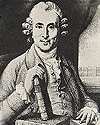
In 1747, an experiment to remedy scurvy among sailors was begun by a British ship's surgeon, James Lind, on the HMS Salisbury. He regulated the diets of the sailors, and especially included lemons and oranges. Positive results quickly showed that scurvy, and the huge numbers of deaths, could be easily remedied.
In 1663, Robert Hooke was one of 98 persons who were declared members at a meeting of the Royal Society. He was admitted to society on 3 Jun 1663, and was peculiarly exempted of all payments. Before the Royal Society had been establish in 1660, Hooke was already distinguished for the invention of various astronomical instruments, and the air-pump he contrived for Charles Boyle (whom he had assisted for several years with chemical experiments at the Philosophical Society, Oxford). He invented a balance or pendulum spring (1656-58), one of the greatest improvements in the construction of timepieces. By 1662, he had been appointed curator of experiments to the Royal Society, and on 11 Jan 1664, awarded a salary of £30 per annum for life for that position.«




