
Born 11 May 1946; died 26 May 2025 at age 79.
Robert Koffler Jarvik was an American surgeon and inventor who invented the Jarvik-7, the first artificial heart used as a permanent implant in a human. On 2 Dec 1982, terminally ill cardiac patient Barney Clark, was the first to have his heart replaced with a Jarvik-7. The surgeon was William C. DeVries. The aluminum and plastic device replaced the two lower chambers (ventricles) of his natural heart. Two rubber diaphragms acted to pump blood, powered by hoses to an external compressor. Oxygenation occurred naturally in the patient’s lungs. After 112 days, Clark died from physical complications caused by the implant. Several more patients had no better results. The Jarvik-7 problems remained unsolved and its permanent use was abandoned.«[Image: Jarvik-7 held by its inventor.]
Robert Koffler Jarvik was an American surgeon and inventor who invented the Jarvik-7, the first artificial heart used as a permanent implant in a human. On 2 Dec 1982, terminally ill cardiac patient Barney Clark, was the first to have his heart replaced with a Jarvik-7. The surgeon was William C. DeVries. The aluminum and plastic device replaced the two lower chambers (ventricles) of his natural heart. Two rubber diaphragms acted to pump blood, powered by hoses to an external compressor. Oxygenation occurred naturally in the patient’s lungs. After 112 days, Clark died from physical complications caused by the implant. Several more patients had no better results. The Jarvik-7 problems remained unsolved and its permanent use was abandoned.«[Image: Jarvik-7 held by its inventor.]
After Barney Clark: Reflections on the Utah Artificial Heart Program, by Margery W. Shaw. - book suggestion.
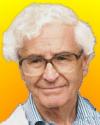
Born 11 May 1924. quotes
British astrophysicist who won the Nobel Prize for Physics in 1974 for his discovery of pulsars (cosmic objects that emit extremely regular pulses of radio waves). In late Nov 1967, using a radio telescope, Hewish and Ph.D. student Jocelyn Bell observed an unusual signal corresponding to a sharp burst of radio energy at a regular interval of approximately one second. It is believed that rapidly rotating neutron stars with intense electromagnetic fields emit radio waves from their north and south poles. From a great distance, these radio emissions are perceived in pulses, similar to the way one sees the light from a lighthouse's rotating lantern. Hewish and Bell's discovery served as the first evidence of this phenomenon.
British astrophysicist who won the Nobel Prize for Physics in 1974 for his discovery of pulsars (cosmic objects that emit extremely regular pulses of radio waves). In late Nov 1967, using a radio telescope, Hewish and Ph.D. student Jocelyn Bell observed an unusual signal corresponding to a sharp burst of radio energy at a regular interval of approximately one second. It is believed that rapidly rotating neutron stars with intense electromagnetic fields emit radio waves from their north and south poles. From a great distance, these radio emissions are perceived in pulses, similar to the way one sees the light from a lighthouse's rotating lantern. Hewish and Bell's discovery served as the first evidence of this phenomenon.
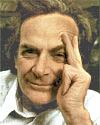
Born 11 May 1918; died 15 Feb 1988 at age 69. quotes
Richard Philips Feynman was an American theoretical physicist who was probably the most brilliant, influential, and iconoclastic figure in his field in the post-WW II era. By age 15, he had mastered calculus. He took every physics course at MIT. His lifelong interest was in subatomic physics. In 1942, he went to Los Alamos where Hans Bethe made the 24 year old Feynman a group leader in the theoretical division, to work on estimating how much uranium would be needed to achieve critical mass for the Manhattan (atomic bomb) Project. After the war, he developed Feynman Diagrams, a simple notation to describe the complex behavior of subatomic particles. In 1965, he shared (with Julian Schwinger and Shin-ichiro Tomonaga) the Nobel Prize in Physics for work in quantum electrodynamics. more
Richard Philips Feynman was an American theoretical physicist who was probably the most brilliant, influential, and iconoclastic figure in his field in the post-WW II era. By age 15, he had mastered calculus. He took every physics course at MIT. His lifelong interest was in subatomic physics. In 1942, he went to Los Alamos where Hans Bethe made the 24 year old Feynman a group leader in the theoretical division, to work on estimating how much uranium would be needed to achieve critical mass for the Manhattan (atomic bomb) Project. After the war, he developed Feynman Diagrams, a simple notation to describe the complex behavior of subatomic particles. In 1965, he shared (with Julian Schwinger and Shin-ichiro Tomonaga) the Nobel Prize in Physics for work in quantum electrodynamics. more
Genius: The Life and Science of Richard Feynman, by James Gleick. - book suggestion.
Born 11 May 1914; died 2 Feb 1998 at age 83.
Polish-born French volcanologist whose fascination with volcanoes and knowledge of them, often obtained under extremely harrowing conditions, were enthusiastically shared by the French public through books and, especially, in films on television; he was considered one of the six most popular personalities in France...
Polish-born French volcanologist whose fascination with volcanoes and knowledge of them, often obtained under extremely harrowing conditions, were enthusiastically shared by the French public through books and, especially, in films on television; he was considered one of the six most popular personalities in France...
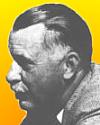
Born 11 May 1897; died 29 Mar 1985 at age 87.
George P(eter) Murdock was an American anthropologist who specialized in comparative ethnology, the ethnography of African and Oceanic peoples, and social theory. He is perhaps most notable as the originator, in 1937, of the Cross-Cultural Survey, a project of the Institute of Human Relations of Yale University. During WW II he enlisted in the Army, and arranged to be sent to Columbia University to produce informational handbooks on Micronesia. He also asked for the reports of the 1910 German expedition and the available Japanese reports to be translated. With these, he was able to create a set of Civil Affairs Handbooks covering not only Micronesia, but also the areas from Bikini to Yap, Okinawa and Taiwan.
George P(eter) Murdock was an American anthropologist who specialized in comparative ethnology, the ethnography of African and Oceanic peoples, and social theory. He is perhaps most notable as the originator, in 1937, of the Cross-Cultural Survey, a project of the Institute of Human Relations of Yale University. During WW II he enlisted in the Army, and arranged to be sent to Columbia University to produce informational handbooks on Micronesia. He also asked for the reports of the 1910 German expedition and the available Japanese reports to be translated. With these, he was able to create a set of Civil Affairs Handbooks covering not only Micronesia, but also the areas from Bikini to Yap, Okinawa and Taiwan.
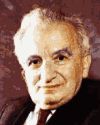
Born 11 May 1881; died 7 May 1963 at age 81. quotes
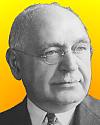
Hungarian aeronautical engineer who designed the Bell X-1 airplane that was the first to fly faster than the speed of sound. He made scientific insights on the nature of aerodynamics, which he demonstrated through a highly intuitive style of applied mathematics. In 1911, he made an analysis of the alternating double row of vortices behind a bluff in a fluid stream, now famous as Karman's Vortex Street, which occur when the air stream that flow around a body fails to stick to the shape, but instead breaks off behind it into a wave. This wave is a form of drag that tries to keep the object from flying, or cause damage (as seen in the 1940 collapse of the Tacoma Narrows bridge caused by a 42 mph wind streaming across the deck).[DSB gives date of death 7 May 1963. EB gives 6 May 1963.]
Hungarian aeronautical engineer who designed the Bell X-1 airplane that was the first to fly faster than the speed of sound. He made scientific insights on the nature of aerodynamics, which he demonstrated through a highly intuitive style of applied mathematics. In 1911, he made an analysis of the alternating double row of vortices behind a bluff in a fluid stream, now famous as Karman's Vortex Street, which occur when the air stream that flow around a body fails to stick to the shape, but instead breaks off behind it into a wave. This wave is a form of drag that tries to keep the object from flying, or cause damage (as seen in the 1940 collapse of the Tacoma Narrows bridge caused by a 42 mph wind streaming across the deck).[DSB gives date of death 7 May 1963. EB gives 6 May 1963.]
The Wind and Beyond: Theodore von Karman, Pioneer in Aviation and Pathfinder in Space, by Thedore von Karman and Lee Edson (ed.). - book suggestion.
(EB)
Born 11 May 1875; died 1 Jul 1912 at age 37.
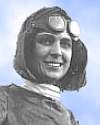
American aviator, the first female pilot to fly across the English Channel. Although she was the first American woman to become a licensed pilot, her career as a pilot lasted a mere 11 months. On 16 Apr 1912 she left England in a 50-hp monoplane lent to her by Louis Blériot. She headed for France in a plane she had never flown before and a compass she had just learned how to use. Despite poor visibility and fog, Quimby landed 59 minutes later near Hardelot, France. Upon landing, she was greeted by the local residents, but the Titanic sinking just days earlier, limited reporting of Quimby's achievement in the world press. She died the same year, on 1 Jul 1912, when she lost control of her plane at a flying exhibition near Quincy, Mass.[Birth day or year is uncertain; there is no birth certificate. 11 May 1875 is widely quoted, but Enc. Brit. gives born May 1, 1875?]
American aviator, the first female pilot to fly across the English Channel. Although she was the first American woman to become a licensed pilot, her career as a pilot lasted a mere 11 months. On 16 Apr 1912 she left England in a 50-hp monoplane lent to her by Louis Blériot. She headed for France in a plane she had never flown before and a compass she had just learned how to use. Despite poor visibility and fog, Quimby landed 59 minutes later near Hardelot, France. Upon landing, she was greeted by the local residents, but the Titanic sinking just days earlier, limited reporting of Quimby's achievement in the world press. She died the same year, on 1 Jul 1912, when she lost control of her plane at a flying exhibition near Quincy, Mass.[Birth day or year is uncertain; there is no birth certificate. 11 May 1875 is widely quoted, but Enc. Brit. gives born May 1, 1875?]
Fearless: Harriet Quimby A Life Without Limit, by Don Dahler. - book suggestion.
c. 1916
Born 11 May 1871; died 10 Jul 1943 at age 72.
American astronomer who pioneered in the use of photography to map stellar positions and to measure stellar parallaxes, which could give more precise determinations of distance than visual ones, and with less than one hundredth as much time at the telescope. He designed instruments and mathematical and numerical techniques to improve parallax measurements. He published ten volumes of zone catalogs, including some 150,000 stars. He compiled positions, magnitudes, proper motions, radial velocities, and other data to produce the first edition and, with Louise Jenkins, the second, of the widely-used Bright Star Catalogues, making Yale a leading institution in astrometry. He established a second Yale observatory in South Africa.
American astronomer who pioneered in the use of photography to map stellar positions and to measure stellar parallaxes, which could give more precise determinations of distance than visual ones, and with less than one hundredth as much time at the telescope. He designed instruments and mathematical and numerical techniques to improve parallax measurements. He published ten volumes of zone catalogs, including some 150,000 stars. He compiled positions, magnitudes, proper motions, radial velocities, and other data to produce the first edition and, with Louise Jenkins, the second, of the widely-used Bright Star Catalogues, making Yale a leading institution in astrometry. He established a second Yale observatory in South Africa.
Yale University Observatory: Catalogue of Bright Stars, by Frank Schlesinger. - book suggestion.
Born 11 May 1854; died 28 Oct 1899 at age 45. quotes
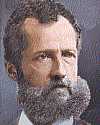
German-American inventor of the Linotype typesetting machine (1886), regarded as the greatest advance in printing since the development of moveable type 400 years earlier. He moved to the U.S. in 1872. At the age of 32, he designed and built his first linotype machine. With it, the two operations of setting and casting type in lead lines were performed simply by touching the keys of a board similar to the keyboard of a typewriter. His invention enabled one operator to be machinist, type-setter, justifier and typefounder. His machine was first used in 1886 by the New York Tribune newspaper, followed by many great improvements on its design. He died at the early age of 45. more
German-American inventor of the Linotype typesetting machine (1886), regarded as the greatest advance in printing since the development of moveable type 400 years earlier. He moved to the U.S. in 1872. At the age of 32, he designed and built his first linotype machine. With it, the two operations of setting and casting type in lead lines were performed simply by touching the keys of a board similar to the keyboard of a typewriter. His invention enabled one operator to be machinist, type-setter, justifier and typefounder. His machine was first used in 1886 by the New York Tribune newspaper, followed by many great improvements on its design. He died at the early age of 45. more
The Biography of Ottmar Mergenthaler, Inventor of the Linotype, by Carl Schlesinger (ed.). - book suggestion.
Born 11 May 1801; died 24 Jun 1875 at age 74.
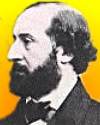
French architect important for his early use of iron frame construction. He is primarily remembered for the two Parisian libraries he designed. The Bibliothèque Sainte-Geneviève (built 1843-50) uses exposed iron structural elements (columns and arches). For his second library project, the reading room of the Bibliothèque Nationale, (built 1862-68), its roof consists of nine decorated metal domes supported by slender cast-iron columns.
French architect important for his early use of iron frame construction. He is primarily remembered for the two Parisian libraries he designed. The Bibliothèque Sainte-Geneviève (built 1843-50) uses exposed iron structural elements (columns and arches). For his second library project, the reading room of the Bibliothèque Nationale, (built 1862-68), its roof consists of nine decorated metal domes supported by slender cast-iron columns.
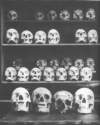
Born 11 May 1752; died 22 Jan 1840 at age 87.
German anthropologist, physiologist and comparative anatomist, frequently called the father of physical anthropology, who proposed one of the earliest classifications of the races of mankind. He divided humanity into five races: Caucasian, Ethiopian, American, Mongolian, and Malay. Blumenbach coined the term Caucasian (derived from the residents of Georgia in the Caucasus Mountains) to describe the white race; and the term Mongolian. Blumenbach was a pioneer collector of human crania and was among the first to place comparative anatomy on a completely scientific basis. His book Collectionis Suae Craniorum Diversarum Gentium Illustratae Decades (1790-1828) contains the results of his observations of the skulls of different races.
German anthropologist, physiologist and comparative anatomist, frequently called the father of physical anthropology, who proposed one of the earliest classifications of the races of mankind. He divided humanity into five races: Caucasian, Ethiopian, American, Mongolian, and Malay. Blumenbach coined the term Caucasian (derived from the residents of Georgia in the Caucasus Mountains) to describe the white race; and the term Mongolian. Blumenbach was a pioneer collector of human crania and was among the first to place comparative anatomy on a completely scientific basis. His book Collectionis Suae Craniorum Diversarum Gentium Illustratae Decades (1790-1828) contains the results of his observations of the skulls of different races.

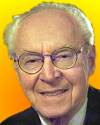
Died 11 May 2011 at age 100 (born 18 Apr 1911).
Austrian-American physicist who devised an experiment to show that neutrinos always rotate in one direction (only counterclockwise). His method was simple, elegant, and used an apparatus small enough to fit on a benchtop, rather than employing a huge accelerator. He also discovered that the nucleus of the deuterium atom consists of a proton and a neutron. In the decade (1961-73) that he headed the Brookhaven National Laboratory in New York, he oversaw the experiments there which led to three Nobel Prizes. He died at age 100.«
Austrian-American physicist who devised an experiment to show that neutrinos always rotate in one direction (only counterclockwise). His method was simple, elegant, and used an apparatus small enough to fit on a benchtop, rather than employing a huge accelerator. He also discovered that the nucleus of the deuterium atom consists of a proton and a neutron. In the decade (1961-73) that he headed the Brookhaven National Laboratory in New York, he oversaw the experiments there which led to three Nobel Prizes. He died at age 100.«
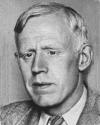
Died 11 May 1981 at age 83 (born 17 May 1897).
Norwegian physical chemist who shared (with Sir Derek H.R. Barton of Great Britain) the 1969 Nobel Prize for Chemistry for his work in establishing conformational analysis (the study of the 3-D geometric structure of molecules). A ring of six carbon atoms has two conformations - the chair and boat forms. These easily interchange - about a million times in a second at room temperature. One of the conformations is, however, strongly predominant (about 99%). Hassel carried out fundamental investigations on this system and showed how heavy or bulky groups, attached to the carbon atoms, take up their positions relative to the ring and to each other. Such work is of great importance for predicting the mode of reaction of a certain molecule.
Norwegian physical chemist who shared (with Sir Derek H.R. Barton of Great Britain) the 1969 Nobel Prize for Chemistry for his work in establishing conformational analysis (the study of the 3-D geometric structure of molecules). A ring of six carbon atoms has two conformations - the chair and boat forms. These easily interchange - about a million times in a second at room temperature. One of the conformations is, however, strongly predominant (about 99%). Hassel carried out fundamental investigations on this system and showed how heavy or bulky groups, attached to the carbon atoms, take up their positions relative to the ring and to each other. Such work is of great importance for predicting the mode of reaction of a certain molecule.
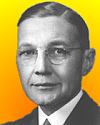
Died 11 May 1963 at age 74 (born 5 Jul 1888). quotes
American physiologist who shared (with Joseph Erlanger) of the Nobel Prize for Physiology or Medicine in 1944 for fundamental discoveries concerning the functions of different kinds of nerve fibres. They studied the barely detectable electrical impulses carried by isolated mammalian nerve fibres. By 1924, they had succeeded in adapting the oscillograph to physiological research, enabling them to visualize amplified nerve impulses on a fluorescent screen. Using this device, they demonstrated that different nerve fibres exist for the transmission of specific kinds of impulses, such as those of pain, cold, or heat. Their work also made it possible to construct improved recording machines to diagnose brain and nervous disorders.
American physiologist who shared (with Joseph Erlanger) of the Nobel Prize for Physiology or Medicine in 1944 for fundamental discoveries concerning the functions of different kinds of nerve fibres. They studied the barely detectable electrical impulses carried by isolated mammalian nerve fibres. By 1924, they had succeeded in adapting the oscillograph to physiological research, enabling them to visualize amplified nerve impulses on a fluorescent screen. Using this device, they demonstrated that different nerve fibres exist for the transmission of specific kinds of impulses, such as those of pain, cold, or heat. Their work also made it possible to construct improved recording machines to diagnose brain and nervous disorders.
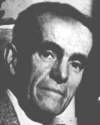
Died 11 May 1956 at age 79 (born 20 Dec 1876).
Walter Sydney Adams was an American astronomer who is best known for his spectroscopic studies of sunspots, the rotation of the Sun, the velocities and distances of thousands of stars, and planetary atmospheres. He found (with Arnold Kohlschütter) that the relative intensities of stallar spectral lines depend on the absolute luminosities of the star, which in turn provides a spectroscopic method of determining stellar distances.By this method, he measured distances to hundreds of giant and main sequence stars. Adams identified Sirius B as the first white dwarf star known, and his measurement of its gravitational redshift was confirming evidence for the general theory of relativity. He was director of Mount Wilson (1923-46).«
Walter Sydney Adams was an American astronomer who is best known for his spectroscopic studies of sunspots, the rotation of the Sun, the velocities and distances of thousands of stars, and planetary atmospheres. He found (with Arnold Kohlschütter) that the relative intensities of stallar spectral lines depend on the absolute luminosities of the star, which in turn provides a spectroscopic method of determining stellar distances.By this method, he measured distances to hundreds of giant and main sequence stars. Adams identified Sirius B as the first white dwarf star known, and his measurement of its gravitational redshift was confirming evidence for the general theory of relativity. He was director of Mount Wilson (1923-46).«
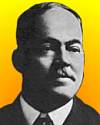
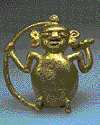
American archaeologist who spent 40 years expanding knowledge of the Mayan civilization, most famously by dredging Chichén Itzá's sacred cenote (1904) in Yucatán. Cenotes (a Spanish word equivalent to the Yucatec Maya word for a water-filled limestone sinkhole) provided a stable supply of water for the ancient Maya people who settled in Mexico's northern Yucatán Peninsula. There were few lakes or streams, so the great city of Chichén Itzá was built around a cluster of these natural wells, including the one known as the Cenote of Sacrifice. Thompson was archeological consul to the Yucatan from 1895. After some travelling among the known sites, he purchased the Chichén Itzá site with funds provided by meat packing magnet Allison Armour. Thompson took deep sea diving lessons and adapted a dredging bucket on a winch for his project. After the dredging operation retrieved artefacts, Thompson began diving and brought up figures representing Mayan gods, gold discs, jade stones, and human skeletons that proved young women had been sacrificed in the pool. In other investigations, he researched how the Maya built pyramids.«[Image right: Gold monkey bell from sacred cenote.]
The City of the Sacred Well, by T. A. Willard. - book suggestion.
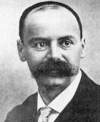
Died 11 May 1916 at age 42 (born 9 Oct 1873).
German theoretical astrophysicist who made both practical and theoretical contributions to 20th-century astronomy. He developed the use of photography for measuring variable stars. He also investigated the geometrical aberrations of optical systems using ray optics by introducing a perturbation equation which he called the Seidel Eikonal. While on the Russian front during military service, he computed the first two exact solutions of the Einstein Field Equations of General Relativity, one in static isotropic empty space surrounding a massive body (such as a "black hole"), and one inside a spherically symmetric body of constant density - work which led directly to modern research on black holes.
German theoretical astrophysicist who made both practical and theoretical contributions to 20th-century astronomy. He developed the use of photography for measuring variable stars. He also investigated the geometrical aberrations of optical systems using ray optics by introducing a perturbation equation which he called the Seidel Eikonal. While on the Russian front during military service, he computed the first two exact solutions of the Einstein Field Equations of General Relativity, one in static isotropic empty space surrounding a massive body (such as a "black hole"), and one inside a spherically symmetric body of constant density - work which led directly to modern research on black holes.
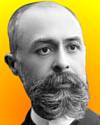
Died 11 May 1891 at age 71 (born 24 Mar 1820).
French physicist who was the son of the chemist Antoine-César Becquerel and the father of physicist Henri Becquerel (who discovered radioactivity). His own experimental work was done in electricity, optics and magnetism. He measured properties of electric currents, how they arise, and discovered (1840) electric currents in certain chemical reactions initiated by light. He studied diamagnetism (1845-46). In 1855, he discovered that simply displacing a metallic conductor in a liquid would produce some electric current. He invented the phosphoroscope to measure short durations of phosphorescence of materials after exposure to bright light, and was also able to examine the spectrum of the light emanating from luminescent bodies.«
French physicist who was the son of the chemist Antoine-César Becquerel and the father of physicist Henri Becquerel (who discovered radioactivity). His own experimental work was done in electricity, optics and magnetism. He measured properties of electric currents, how they arise, and discovered (1840) electric currents in certain chemical reactions initiated by light. He studied diamagnetism (1845-46). In 1855, he discovered that simply displacing a metallic conductor in a liquid would produce some electric current. He invented the phosphoroscope to measure short durations of phosphorescence of materials after exposure to bright light, and was also able to examine the spectrum of the light emanating from luminescent bodies.«
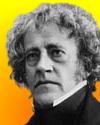
Died 11 May 1871 at age 79 (born 7 Mar 1792). quotes
Sir John Frederick William Herschel was an English astronomer, chemist and chemist (1st Baronet), who, as a successor to his father Sir William Herschel, discovered a further 525 nebulae and clusters. John Herschel was a pioneer in celestial photography, and as a chemist contributed to the development of sensitized photographic paper (independently of Henry Talbot). In 1819, he discovered that sodium thiosulphate dissolved silver salts, as used in developing photographs. He introduced the terms positive image and negative image. Being diverse in his research, he also studied physical and geometrical optics, birefringence of crystals, spectrum analysis, and the interference of light and sound waves. To compare the brightness of stars, he invented the astrometer.
Sir John Frederick William Herschel was an English astronomer, chemist and chemist (1st Baronet), who, as a successor to his father Sir William Herschel, discovered a further 525 nebulae and clusters. John Herschel was a pioneer in celestial photography, and as a chemist contributed to the development of sensitized photographic paper (independently of Henry Talbot). In 1819, he discovered that sodium thiosulphate dissolved silver salts, as used in developing photographs. He introduced the terms positive image and negative image. Being diverse in his research, he also studied physical and geometrical optics, birefringence of crystals, spectrum analysis, and the interference of light and sound waves. To compare the brightness of stars, he invented the astrometer.
The Shadow of the Telescope: A Biography of John Herschel, by Günther Buttmann. - book suggestion.
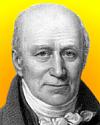
Died 11 May 1838 at age 78 (born 12 Aug 1759).
British horticulturalist who initiated the field of fruit breeding, experimental horticulture while also studying plant physiology with botanical experiments. He made studies on the movement of sap in plants, the nature of the cambium, and phototropism in tendrils. To investigate the geotropism of roots and stems, he invented a machine, rotating to simulate gravity with centrifugal force in either horizontal or vertical position. In each case, he found the roots grew outwards and the stems inwards towards the centre. Forty years before Mendel, he studied the effects of pollen in the garden pea on seed characters. In horticulture, he investigated controlled environmental culture (greenhouses), plant nutrition, fertilization, and pest control.«
British horticulturalist who initiated the field of fruit breeding, experimental horticulture while also studying plant physiology with botanical experiments. He made studies on the movement of sap in plants, the nature of the cambium, and phototropism in tendrils. To investigate the geotropism of roots and stems, he invented a machine, rotating to simulate gravity with centrifugal force in either horizontal or vertical position. In each case, he found the roots grew outwards and the stems inwards towards the centre. Forty years before Mendel, he studied the effects of pollen in the garden pea on seed characters. In horticulture, he investigated controlled environmental culture (greenhouses), plant nutrition, fertilization, and pest control.«
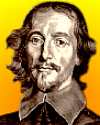
Died 11 May 1686 at age 83 (born 20 Nov 1602).
German physicist who investigated the properties of a vacuum. He invented (1654) the first piston air pump to produce a vacuum. While mayor of Madgeburg, in 1663, he demonstrated that two 51 cm diameter copper hemispheres with air pumped out of their interior would be so strongly held together by the force of air pressure that teams of horses harnessed to each hemisphere were not able to pull the hemispheres apart. He studied the role of air in combustion and respiration. With his invention of the first electrostatic machine—a rotating ball of sulphur electrified by friction against his hand—he produced sizeable sparks and showed that like charges repel each other.«
German physicist who investigated the properties of a vacuum. He invented (1654) the first piston air pump to produce a vacuum. While mayor of Madgeburg, in 1663, he demonstrated that two 51 cm diameter copper hemispheres with air pumped out of their interior would be so strongly held together by the force of air pressure that teams of horses harnessed to each hemisphere were not able to pull the hemispheres apart. He studied the role of air in combustion and respiration. With his invention of the first electrostatic machine—a rotating ball of sulphur electrified by friction against his hand—he produced sizeable sparks and showed that like charges repel each other.«
In 1995, scientists confirmed that Ebola, one of the world's deadliest viruses, had broken out in Zaire. The outbreak, in the city of Kikwit, killed about 50, including three Italian nuns who had cared for victims.
Ebola: Through the Eyes of the People, by William T. Close, M.D. - book suggestion.
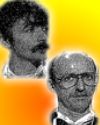
In 1987, Clinton House became the first living heart donor in the U.S. during a so-called domino transplant at Johns Hopkins Hospital in Baltimore. To replace his lungs that had been damaged by cystic fibrosis, doctors gave him a multiple-organ heart and lung combination transplant from an auto accident victim in a 17-hour operation. They believed that option was safer because there were more problems with lungs-only transplants. House gave his own healthy heart to a second recipient, John Couch, 38, at the same hospital. (Two similar procedures had already been performed in Britain). House survived 14 months with his new lungs and heart until overcome by the consequences of rejection. He died on 11 Jul 1988.«[Image: House (top left) and Couch.]
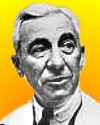
John Rock
In 1960, the FDA approved Searle's contraceptive pill, Enovid, the first drug approved in order to prevent a medical happening. In 1959, Searle had applied to license the "Pill" - an oral progestin - as a contraceptive. They chose Dr John Rock to present the findings of the experiences of 897 women before the Food and Drug Administration (FDA). Rock (1890-1984) was an American obstetrician and gynecologist who was an expert in human fertility, the requirement at the time was that a drug must be proven safe and not necessarily effective. However, the young reviewer, who was aware of the implications of the Pill, was thorough in his examination, requiring further lab tests before approval. By 1964 some four million women were on the pill.*
In 1951, Jay Forrester patented computer core memory.
In 1949, the first Polaroid camera was sold for $89.95 in New York City.
In 1947, the B.F. Goodrich Company of Akron, Ohio, announced the development of a tubeless tyre.
B. F. Goodrich: Tradition and Transformation, 1870-1995, by Mansel G. Blackford and K. Austin Kerr. - book suggestion.
In 1928, radio station WGY, in Schenectady, NY, began America's first regularly scheduled TV broadcasts. The programs lasted from 1:30 to 2:00 p.m. on Tuesdays, Thursdays, and Fridays. Most of the viewers were on the technical staff at nearby General Electric, which had designed the system and was using the broadcasts to refine its equipment. A handful of hobbyists who had built their own sets were also able to watch. Those who tuned in had to make constant adjustments, turning two knobs at once to keep the blurry picture discernible on their three-inch-square, 24-line screens. By the end of 1928, 17 more stations around the country began scheduled broadcasts, designed to test the apparatus rather than attract viewers.
In 1897, black American inventor, William U. Moody was issued a U.S. design patent for a “game board design.” No. 27,046). It shows a rectangular board with a particular arrangement of partitions in the form of arcs of concentric circles and some other shorter partitions causing a complex route for a ball to travel from one corner to the diagonal corner, presumably, by tilting the board.«
The Inventive Spirit of African Americans: Patented Ingenuity, by Patricia Carter Sluby. - book suggestion.
In 1886, black American inventor, Willis Marshall, of Chicago, Illinois, was issued a patent for a “grain binder” (No. 341,589).
The Inventive Spirit of African Americans: Patented Ingenuity, by Patricia Carter Sluby. - book suggestion.
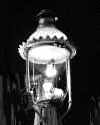
In 1825, the New York Gas Company began laying cast iron pipes in Broadway, New York, from Canal Street to the Battery. The city streets had been previously lit with whale-oil lamps. In summer 1812, seeking brighter illumination, an experiment was made with gaslight in the park. Favorable reports followed, and though the authorities considered the subject of gaslight over the next few years, it was decided the city could not affort the cost of the iron pipe distribution system. Instead, in Apr 1823, the city granted the New York Gas Company rights to supply gas to city residents and to supply the city with gas for street lighting. New York became the third U.S. city with gas street lights, after Baltimore (1817) and Boston (1822).«* [Image: Street gaslight, Baltimore, c. 1920-30.] more
The Invisible Fuel: Manufactured and Natural Gas in America 1800-2000, by Christopher J. Castaneda. - book suggestion.
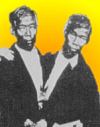
In 1811, the original Siamese twins, Chang and Eng, were born of Chinese parents in Siam (Thailand). Upon immigrating in to the U.S., they adopted Bunker as their surname. They were joined at the waist by a band of cartilage, about 8 in. (20cm) circumference and 4 in. (10cm) long. Only after their death was it found that this could have been easily separated. Robert Hunter, a British merchant, discovered them in 1829 and contracted with them to be exhibited as a curiosity in a world tour. Later, they went into business for themselves. In 1839, they visited Wilkesboro, N.C. with P. T. Barnum. They found the town appealing and settled there. The twins became United States citizens. On 13 Apr 1843, they married two sisters with whom they raised 10 children.
Chang and Eng, by Darin Strauss. - book suggestion.
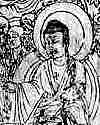
In 868, the first known dated printed book was the Diamond Sutra, a Buddhist scripture. It was made as a 16-ft scroll with six sheets of text printed from wood blocks and one sheet with a woodcut showing the Buddha with disciples and a pair of cats. The sheets measured 12" by 30" and were pasted together. The date is known from a colophon at the end stating it was "printed on 11 May 868, by Wang Chieh, for free general distribution" and that it was dedicated to his parents. The scroll was one of about 1,130 bundles of manuscripts found a thousand years later, walled up in one of the Caves of the Thousand Buddhas in Turkestan. It is now one of the great treasures in the British Library.«
The Diamond Sutra: The Perfection of Wisdom, by (translation) Red Pine. - book suggestion.





