Born 22 Apr 1929. quotes
British mathematician who was awarded the Fields Medal in 1966 primarily for his work in topology. Atiyah received a knighthood in 1983 and the Order of Merit in 1992. He also served as president of the Royal Society (1990-95).
British mathematician who was awarded the Fields Medal in 1966 primarily for his work in topology. Atiyah received a knighthood in 1983 and the Order of Merit in 1992. He also served as president of the Royal Society (1990-95).
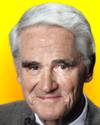
Born 22 Apr 1919; died 17 Jun 2001 at age 82. quotes
Donald James Cram was an American chemist who shared the 1987 Nobel Prize for Chemistry (with Charles J. Pedersen and Jean-Marie Lehn) for his creation of molecules that mimic the chemical behaviour of molecules found in living systems.
Donald James Cram was an American chemist who shared the 1987 Nobel Prize for Chemistry (with Charles J. Pedersen and Jean-Marie Lehn) for his creation of molecules that mimic the chemical behaviour of molecules found in living systems.
Donald J. Cram: From Design to Discovery, by Donald J. Cram. - book suggestion.
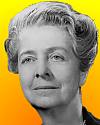
Born 22 Apr 1909; died 30 Dec 2011 at age 102. quotes
Italian-American neurologist who shared the Nobel Prize for Physiology or Medicine in 1986 (with Stanley Cohen) for her discovery of NGF (nerve growth factor), which stimulates and influences both the normal and abnormal the growth of nerve cells in the body. In Italy, as a Jew, during WW II she was denied an academic career by Mussolini's laws, so she set up a laboratory in her home to study the growth of nerve fibers in chicken embryos. In 1952, while at a cell culture laboratory in Rio de Janeiro, she found effective new ways to detect a chemical exuded by tumors that produced astonishing growth of nerve fibers. This was the discovery of the nerve growth factor that won her the Nobel Prize.«
Italian-American neurologist who shared the Nobel Prize for Physiology or Medicine in 1986 (with Stanley Cohen) for her discovery of NGF (nerve growth factor), which stimulates and influences both the normal and abnormal the growth of nerve cells in the body. In Italy, as a Jew, during WW II she was denied an academic career by Mussolini's laws, so she set up a laboratory in her home to study the growth of nerve fibers in chicken embryos. In 1952, while at a cell culture laboratory in Rio de Janeiro, she found effective new ways to detect a chemical exuded by tumors that produced astonishing growth of nerve fibers. This was the discovery of the nerve growth factor that won her the Nobel Prize.«
In Praise of Imperfection: My Life and Work, by Rita Levi-Montalcini. - book suggestion.
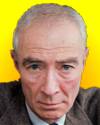
Born 22 Apr 1904; died 18 Feb 1967 at age 62. quotes
Julius Robert Oppenheimer was an American theoretical physicist and science administrator, noted as director of the Los Alamos laboratory during development of the atomic bomb (1943-45) and as director of the Institute for Advanced Study, Princeton (1947-66). Accusations as to his loyalty and reliability as a security risk led to a government hearing that resulted the loss of his security clearance and of his position as adviser to the highest echelons of the U.S. government. The case became a cause célèbre in the world of science because of its implications concerning political and moral issues relating to the role of scientists in government.
Julius Robert Oppenheimer was an American theoretical physicist and science administrator, noted as director of the Los Alamos laboratory during development of the atomic bomb (1943-45) and as director of the Institute for Advanced Study, Princeton (1947-66). Accusations as to his loyalty and reliability as a security risk led to a government hearing that resulted the loss of his security clearance and of his position as adviser to the highest echelons of the U.S. government. The case became a cause célèbre in the world of science because of its implications concerning political and moral issues relating to the role of scientists in government.
American Prometheus: The Triumph and Tragedy of J. Robert Oppenheimer, by Kai Bird, Martin J. Sherwin. - book suggestion.
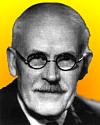
Born 22 Apr 1891; died 18 Mar 1989 at age 97. quotes
English astronomer, geophysicist and mathematician who had diverse scientific interests. In astronomy he proposed models for the structures of the outer planets, and studied the origin of the solar system. He calculated the surface temperatures of gas at less than -100°C, contradicting then accepted views of red-hot temperatures, but Jeffreys was shown to be correct when direct observations were made. In geophysics he researched the circulation of the atmosphere and earthquakes. Analyzing earthquake waves (1926), he became the first to claim that the core of the Earth is molten fluid. Jeffreys also contributed to the general theory of dynamics, aerodynamics, relativity theory and plant ecology.«
English astronomer, geophysicist and mathematician who had diverse scientific interests. In astronomy he proposed models for the structures of the outer planets, and studied the origin of the solar system. He calculated the surface temperatures of gas at less than -100°C, contradicting then accepted views of red-hot temperatures, but Jeffreys was shown to be correct when direct observations were made. In geophysics he researched the circulation of the atmosphere and earthquakes. Analyzing earthquake waves (1926), he became the first to claim that the core of the Earth is molten fluid. Jeffreys also contributed to the general theory of dynamics, aerodynamics, relativity theory and plant ecology.«
The earth: Its Origin, History and Physical Constitution, by Harold Jeffreys. - book suggestion.
Born 22 Apr 1887; died 22 Jan 1951 at age 63.
Danish mathematician who devised a theory that concerned generalizations of functions with periodic properties, the theory of almost periodic functions. His brother was noted physicist Niels Bohr.
Danish mathematician who devised a theory that concerned generalizations of functions with periodic properties, the theory of almost periodic functions. His brother was noted physicist Niels Bohr.
Born 22 Apr 1884; died 31 Oct 1939 at age 55.
original name Otto Rosenfeld Austrian psychologist who extended psychoanalytic theory to the study of legend, myth, art, and creativity and who suggested that the basis of anxiety neurosis is a psychological trauma occurring during the birth of the individual.
original name Otto Rosenfeld Austrian psychologist who extended psychoanalytic theory to the study of legend, myth, art, and creativity and who suggested that the basis of anxiety neurosis is a psychological trauma occurring during the birth of the individual.
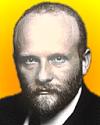
Born 22 Apr 1876; died 8 Apr 1936 at age 59.
Austrian physician and otologist who won the Nobel Prize for Physiology or Medicine in 1914 for his work on the physiology and pathology of the vestibular (balancing) apparatus of the inner ear. The news of this award reached Bárány in a Russian prisoner-of-war camp. He had been captured while attached to the Austrian army as a civilian surgeon and had tended soldiers with head injuries, which fact had enabled him to continue his neurological studies on the correlation of the vestibular apparatus, the cerebellum and the muscular apparatus. Following the personal intervention of Prince Carl of Sweden on behalf of the Red Cross, he was released from the prisoner-of-war camp in 1916 and was presented with the Nobel Prize by the King of Sweden at Stockholm.
Austrian physician and otologist who won the Nobel Prize for Physiology or Medicine in 1914 for his work on the physiology and pathology of the vestibular (balancing) apparatus of the inner ear. The news of this award reached Bárány in a Russian prisoner-of-war camp. He had been captured while attached to the Austrian army as a civilian surgeon and had tended soldiers with head injuries, which fact had enabled him to continue his neurological studies on the correlation of the vestibular apparatus, the cerebellum and the muscular apparatus. Following the personal intervention of Prince Carl of Sweden on behalf of the Red Cross, he was released from the prisoner-of-war camp in 1916 and was presented with the Nobel Prize by the King of Sweden at Stockholm.
The Road to Stockholm: Nobel Prizes, Science, and Scientists, by Istvan Hargittai, James D. Watson. - book suggestion.
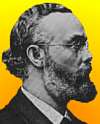
Born 22 Apr 1839; died 2 Mar 1887 at age 47.
German botanist whose natural system of plant classification (1886) was one of the first to become widely adopted. He studied the symmetry of the parts of a flower. His system of plant classification was based on earlier work of de Jussieaus and others. Eichler assumed complexity indicated more advanced development. His plant kingdom had four divisions: Thallophyta: algae, fungi; Bryophyta: liverworts, mosses; Pteridophyta: club mosses, horsetails, ferns; Spermatophyta: seed plants (angiosperms: flowering plants and gymnosperms: pines, spruces, and firs). Eichler wrote a syllabus of pharmaceutical botany and made significant collection on the flora of Brazil.«
German botanist whose natural system of plant classification (1886) was one of the first to become widely adopted. He studied the symmetry of the parts of a flower. His system of plant classification was based on earlier work of de Jussieaus and others. Eichler assumed complexity indicated more advanced development. His plant kingdom had four divisions: Thallophyta: algae, fungi; Bryophyta: liverworts, mosses; Pteridophyta: club mosses, horsetails, ferns; Spermatophyta: seed plants (angiosperms: flowering plants and gymnosperms: pines, spruces, and firs). Eichler wrote a syllabus of pharmaceutical botany and made significant collection on the flora of Brazil.«
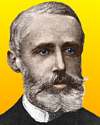
Born 22 Apr 1834; died 21 May 1889 at age 55.
Raimond Louis Gaston Planté was a French physicist constructed the first storage battery (1859), which was able to provide electricty, and be recharged many times. Until this invention, batteries had existed since Alessandro Volta's discovery, in a form that could be used and discharged just one time. Planté made his accumulator with a lead plate, rolled with a linen cloth separator, immersed in sulphuric acid. He had only a hand-cranked generator. His battery had to wait for the later invention of satisfactory dynamos to become useful. The cell was improved by Camille Faure, Sir Joseph Swan and others. The rechargeable battery had an important use for the telegraph. Since it was first adopted for use in automobiles, the lead-acid battery continues to be used with the same fundamental design. In his later life, he investigated atmospheric electricity.«
Raimond Louis Gaston Planté was a French physicist constructed the first storage battery (1859), which was able to provide electricty, and be recharged many times. Until this invention, batteries had existed since Alessandro Volta's discovery, in a form that could be used and discharged just one time. Planté made his accumulator with a lead plate, rolled with a linen cloth separator, immersed in sulphuric acid. He had only a hand-cranked generator. His battery had to wait for the later invention of satisfactory dynamos to become useful. The cell was improved by Camille Faure, Sir Joseph Swan and others. The rechargeable battery had an important use for the telegraph. Since it was first adopted for use in automobiles, the lead-acid battery continues to be used with the same fundamental design. In his later life, he investigated atmospheric electricity.«
The Storage Of Electrical Energy, by Gaston Planté. - book suggestion.
Born 22 Apr 1807; died 9 Sep 1896 at age 89.
Physicist.
Physicist.
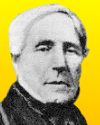
Born 22 Apr 1797; died 26 Dec 1869 at age 72.
French physician and physiologist who contributed to knowledge of blood circulation through arteries and experimentally derived an equation describing the laminar flow rate of fluids through narrow tubes (now known as the Hagen- Poiseuille equation because the German engineer Gotthilf Hagen also independently discovered it). It relates the flow rate to the fluid's viscosity, the pressure drop along the tube, and the radius of the tube. His interest in the circulation of the blood led him to conduct experiments on the flow of liquids in narrow tubes. Poiseuille is believed to be the first to have used the mercury manometer to measure blood pressure with his invention, the hemodynamometer, an improved method for measuring blood pressure.«[DSB gives birth date as 22 Apr 1797. EB gives 22 Apr 1799.]
French physician and physiologist who contributed to knowledge of blood circulation through arteries and experimentally derived an equation describing the laminar flow rate of fluids through narrow tubes (now known as the Hagen- Poiseuille equation because the German engineer Gotthilf Hagen also independently discovered it). It relates the flow rate to the fluid's viscosity, the pressure drop along the tube, and the radius of the tube. His interest in the circulation of the blood led him to conduct experiments on the flow of liquids in narrow tubes. Poiseuille is believed to be the first to have used the mercury manometer to measure blood pressure with his invention, the hemodynamometer, an improved method for measuring blood pressure.«[DSB gives birth date as 22 Apr 1797. EB gives 22 Apr 1799.]
Born 22 Apr 1789; died 16 Mar 1864 at age 74.
Welsh mechanical engineer and inventor who was versatile in his creativity. One of his earliest inventions was the first successful gas meter. His first patent (1822) was for improvements in looms. He was one of the inventors of the first metal planing machines (1817). Roberts also developed a screw-cutting lathe, and machines for gearcutting and slotting. The self-acting spinning mule (1825) he invented was his most important contribution to the textile industry, which he also set up in France. In the 1830s, his firm built railway locomotives in one of the earliest applications of the use of interchangeable parts. In the 1840s he devised machinery for punching patterns of holes in bridge and boiler plate, automated using punched cards similar to the Jacquard loom.
Welsh mechanical engineer and inventor who was versatile in his creativity. One of his earliest inventions was the first successful gas meter. His first patent (1822) was for improvements in looms. He was one of the inventors of the first metal planing machines (1817). Roberts also developed a screw-cutting lathe, and machines for gearcutting and slotting. The self-acting spinning mule (1825) he invented was his most important contribution to the textile industry, which he also set up in France. In the 1830s, his firm built railway locomotives in one of the earliest applications of the use of interchangeable parts. In the 1840s he devised machinery for punching patterns of holes in bridge and boiler plate, automated using punched cards similar to the Jacquard loom.
Born 22 Apr 1724; died 12 Feb 1804 at age 79. quotes
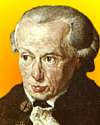
German philosopher, trained as a mathematician and physicist, who published his General History of Nature and theory of the Heavens in 1755. This physical view of the universe contained three anticipations of importance to astronomers. 1) He made the nebula hypothesis ahead of Laplace. 2) He described the Milky Way as a lens-shaped collection of stars that represented only one of many "island universes," later shown by Herschel. 3) He suggested that friction from tides slowed the rotation of the earth, which was confirmed a century later. In 1770 he became a professor of mathematics, but turned to metaphysics and logic in 1797, the field in which he is best known.
German philosopher, trained as a mathematician and physicist, who published his General History of Nature and theory of the Heavens in 1755. This physical view of the universe contained three anticipations of importance to astronomers. 1) He made the nebula hypothesis ahead of Laplace. 2) He described the Milky Way as a lens-shaped collection of stars that represented only one of many "island universes," later shown by Herschel. 3) He suggested that friction from tides slowed the rotation of the earth, which was confirmed a century later. In 1770 he became a professor of mathematics, but turned to metaphysics and logic in 1797, the field in which he is best known.

Thm.jpg "Jack Allen")
Died 22 Apr 2001 at age 92 (born 6 May 1908).
John Frank (Jack) Allen was a Canadian physicist who codiscovered the superfluidity of liquid helium near absolute zero temperature. Working at the Royal Society Mond Laboratory in Cambridge, with Don Misener he discovered (1930's) that below 2.17 kelvin temperature, liquid helium could flow through very small capillaries with practically zero viscosity. Independently, P. L. Kapitza in Moscow produced similar results at about the same time. Their two articles were published together in the 8 Jan 1938 issue of the journal Nature. Superfluidity is a visible manifestation resulting from the quantum mechanics of Bose- Einstein condensation. By 1945, research in Moscow delved into the microscopic aspect, which Allen did not pursue.«
John Frank (Jack) Allen was a Canadian physicist who codiscovered the superfluidity of liquid helium near absolute zero temperature. Working at the Royal Society Mond Laboratory in Cambridge, with Don Misener he discovered (1930's) that below 2.17 kelvin temperature, liquid helium could flow through very small capillaries with practically zero viscosity. Independently, P. L. Kapitza in Moscow produced similar results at about the same time. Their two articles were published together in the 8 Jan 1938 issue of the journal Nature. Superfluidity is a visible manifestation resulting from the quantum mechanics of Bose- Einstein condensation. By 1945, research in Moscow delved into the microscopic aspect, which Allen did not pursue.«
Died 22 Apr 1989 at age 84 (born 1 Feb 1905). quotes
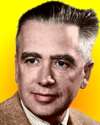
Emilio Gino Segrè was an Italian-American physicist who shared (with Owen Chamberlain) the 1959 Nobel Prize for Physics for the discovery of the antiproton, an antiparticle having the same mass as a proton but opposite in electrical charge. He also created atoms of the man-made new element technetium (1937) and astatine (1940). Technetium occupied a hitherto unfilled space in the body of the Periodic Table, and was the first man-made element not found in nature. Astatine exists naturally only in exceedingly small quantities because as a decay product of larger atoms, and having a half-life of only a few days, it quickly disappears by radioactively decay to become atoms of another element.
Emilio Gino Segrè was an Italian-American physicist who shared (with Owen Chamberlain) the 1959 Nobel Prize for Physics for the discovery of the antiproton, an antiparticle having the same mass as a proton but opposite in electrical charge. He also created atoms of the man-made new element technetium (1937) and astatine (1940). Technetium occupied a hitherto unfilled space in the body of the Periodic Table, and was the first man-made element not found in nature. Astatine exists naturally only in exceedingly small quantities because as a decay product of larger atoms, and having a half-life of only a few days, it quickly disappears by radioactively decay to become atoms of another element.
A Mind Always in Motion: The Autobiography of Emilio Segrè, by Emilio Segrè. - book suggestion.

Died 22 Apr 1984 at age 82 (born 20 Feb 1902).
American photographer and environmentalist whose compelling images of the American landscape were matched by his dedication to the conservation of those lands. His love began as a child on a family vacation in Yosemite National Park (1916) with the Kodak Box Brownie camera his parents had given him. By 1920 he had joined the Sierra Club and before long was contributing photographs to the Sierra Club Bulletin. On 10 Apr 1927 he created his first masterpiece, Monolith: The Face of Half Dome showing Yosemite's most striking feature. He turned to a career in commercial photography. While on the Sierra Club board of directors (1934-71) he helped lobby to save the great wilderness shown in his photographs.«
American photographer and environmentalist whose compelling images of the American landscape were matched by his dedication to the conservation of those lands. His love began as a child on a family vacation in Yosemite National Park (1916) with the Kodak Box Brownie camera his parents had given him. By 1920 he had joined the Sierra Club and before long was contributing photographs to the Sierra Club Bulletin. On 10 Apr 1927 he created his first masterpiece, Monolith: The Face of Half Dome showing Yosemite's most striking feature. He turned to a career in commercial photography. While on the Sierra Club board of directors (1934-71) he helped lobby to save the great wilderness shown in his photographs.«
America's Wilderness: The Photographs of Ansel Adams With the Writings of John Muir, by Ansel Adams et al. - book suggestion.
Died 22 Apr 1980 at age 78 (born 22 Feb 1902). quotes
Friedrich Wilhelm (Fritz) Strassmann was a German physical chemist who, with Otto Hahn and Lise Mietner, discovered neutron-induced nuclear fission in uranium (1938) and thereby opened the field of atomic energy used both in the atomic bomb for war and in nuclear reactors to produce electricity. Strassmann's analytical chemistry techniques showed up the lighter elements produced from neutron bombardment, which were the result of the splitting of the uranium atom into two lighter atoms. Earlier in his career, Strassmann codeveloped the rubidium-strontium technique of radio-dating geological samples.
Friedrich Wilhelm (Fritz) Strassmann was a German physical chemist who, with Otto Hahn and Lise Mietner, discovered neutron-induced nuclear fission in uranium (1938) and thereby opened the field of atomic energy used both in the atomic bomb for war and in nuclear reactors to produce electricity. Strassmann's analytical chemistry techniques showed up the lighter elements produced from neutron bombardment, which were the result of the splitting of the uranium atom into two lighter atoms. Earlier in his career, Strassmann codeveloped the rubidium-strontium technique of radio-dating geological samples.

Died 22 Apr 1945 at age 69 (born 18 May 1875).
Robert Elmer Horton was an American hydraulic engineer who is regarded as the father of modern hydrology, and who developed and refined techniques for systematic separation of rainfall drainage into the components such as infiltration, evaporation, interception, transpiration and overland flow. He recognized that physical characteristics were important for determining runoff and flood discharge, such as drainage density, channel slope, and overland flow length. His studies established a basis for the analysis of soil erosion enabling strategies for soil conservation. One month before he died, he published a 95-page landmark paper that summarized two decades of study giving what are now known as Horton's Laws: the law of stream numbers, the law of stream lengths, limiting infiltration capacity, and the runoff-detention-storage relation.«[Image: from Robert E. Horton Medal awarded by the American Geophysical Union to recognize outstanding contributions to the geophysical aspects of hydrology.]
Robert Elmer Horton was an American hydraulic engineer who is regarded as the father of modern hydrology, and who developed and refined techniques for systematic separation of rainfall drainage into the components such as infiltration, evaporation, interception, transpiration and overland flow. He recognized that physical characteristics were important for determining runoff and flood discharge, such as drainage density, channel slope, and overland flow length. His studies established a basis for the analysis of soil erosion enabling strategies for soil conservation. One month before he died, he published a 95-page landmark paper that summarized two decades of study giving what are now known as Horton's Laws: the law of stream numbers, the law of stream lengths, limiting infiltration capacity, and the runoff-detention-storage relation.«[Image: from Robert E. Horton Medal awarded by the American Geophysical Union to recognize outstanding contributions to the geophysical aspects of hydrology.]
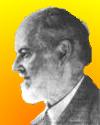
Died 22 Apr 1933 at age 70 (born 27 Mar 1863). quotes
English industrialist who, having met Charles Rolls, in May 1904, found they shared a common interest to manufacture and market the finest cars. Together, in 1906 they started the company, Rolls-Royce Ltd. Within a few years, at the onset of WWI, they turned to the production of much-needed reliable engines for aviation. After the war, they continued both as a manufacturer of luxury automobiles and airplane engines. In WWII, it was Rolls-Royce engines powered British aircraft in the “Hurricanes” and “Spitfires.”«
English industrialist who, having met Charles Rolls, in May 1904, found they shared a common interest to manufacture and market the finest cars. Together, in 1906 they started the company, Rolls-Royce Ltd. Within a few years, at the onset of WWI, they turned to the production of much-needed reliable engines for aviation. After the war, they continued both as a manufacturer of luxury automobiles and airplane engines. In WWII, it was Rolls-Royce engines powered British aircraft in the “Hurricanes” and “Spitfires.”«
The Magic of a Name: The Rolls-Royce Story, Part 1, The First Forty Years, by Peter Pugh. - book suggestion.
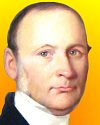
Died 22 Apr 1890 at age 82 (born 22 Oct 1807). quotes
Swedish physician who coined the word “alcoholism” and was the first to define it as a chronic, relapsing disease. (Some risks related to alcohol consumption had been mentioned earlier in lectures by Carl von Linné in the 18th century.)
Swedish physician who coined the word “alcoholism” and was the first to define it as a chronic, relapsing disease. (Some risks related to alcohol consumption had been mentioned earlier in lectures by Carl von Linné in the 18th century.)
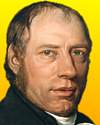
Died 22 Apr 1833 at age 62 (born 13 Apr 1771). quotes
English mechanical engineer and inventor who successfully harnessed high-pressure steam and constructed the world's first steam railway locomotive (1803). In 1805 he adapted his high-pressure engine to driving an iron-rolling mill and to propelling a barge with the aid of paddle wheels. He also experimented with a steam carriage as a road locomotive. In 1812, he invented the Cornish boiler in which the hot flue gasses could also be used to heat the water, so improving efficiency. Trevithick's combined improvements made the new design of Cornish engine do double or treble the duty of the James Watt type, and so they supplanted them as the Watt type had supplanted the Newcomen styles. Lacking business acumen, he died in poverty. more
English mechanical engineer and inventor who successfully harnessed high-pressure steam and constructed the world's first steam railway locomotive (1803). In 1805 he adapted his high-pressure engine to driving an iron-rolling mill and to propelling a barge with the aid of paddle wheels. He also experimented with a steam carriage as a road locomotive. In 1812, he invented the Cornish boiler in which the hot flue gasses could also be used to heat the water, so improving efficiency. Trevithick's combined improvements made the new design of Cornish engine do double or treble the duty of the James Watt type, and so they supplanted them as the Watt type had supplanted the Newcomen styles. Lacking business acumen, he died in poverty. more
Richard Trevithick: Giant of Steam, by Anthony Burton. - book suggestion.
Died 22 Apr 1778 (born c. 1721).
English inventor of the spinning jenny, the first practical application of multiple spinning by a machine. At the time he devised the machine, he was a poor, uneducated spinner and weaver living at Standhill, near Blackburn, Lancashire. On the machine, carriage pulled away from the raw cotton, emulating the action of a hand spinner. The drawn-out thread was then wound onto a spindle as the carriage returned. The hand- powered jenny produced several threads at once and increased a spinner's output eight fold. The machine did not twist the thread enough to give it sufficient strength for the warp; but it was suitable for weft. By 1767 he had so perfected it that children could work it.[Birth year circa 1720-1.]
English inventor of the spinning jenny, the first practical application of multiple spinning by a machine. At the time he devised the machine, he was a poor, uneducated spinner and weaver living at Standhill, near Blackburn, Lancashire. On the machine, carriage pulled away from the raw cotton, emulating the action of a hand spinner. The drawn-out thread was then wound onto a spindle as the carriage returned. The hand- powered jenny produced several threads at once and increased a spinner's output eight fold. The machine did not twist the thread enough to give it sufficient strength for the warp; but it was suitable for weft. By 1767 he had so perfected it that children could work it.[Birth year circa 1720-1.]
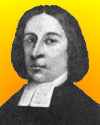
Died 22 Apr 1763 at age 77 (born 7 Nov 1685).
American colonial clergyman, physician, and agronomist, who wrote Essays upon Field Husbandry, about reducing inefficiency and waste in colonial farming methods. He became concerned about soil erosion in the new colonies when he noticed that water running from a vegetated hillside was clear, but water running from a bare hillside was muddy. He believed that the mud in the water was fertile soil washed away from above. He conducted many experiments, and studied the farming methods advocated by English authors. He plowed green crops back into the soil to enrich it, and planted grasses and legumes to make better pastures for livestock. He invented a drill which would open a furrow, plant seed, and drop manure in a single operation.
American colonial clergyman, physician, and agronomist, who wrote Essays upon Field Husbandry, about reducing inefficiency and waste in colonial farming methods. He became concerned about soil erosion in the new colonies when he noticed that water running from a vegetated hillside was clear, but water running from a bare hillside was muddy. He believed that the mud in the water was fertile soil washed away from above. He conducted many experiments, and studied the farming methods advocated by English authors. He plowed green crops back into the soil to enrich it, and planted grasses and legumes to make better pastures for livestock. He invented a drill which would open a furrow, plant seed, and drop manure in a single operation.
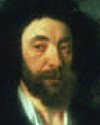
Died 22 Apr 1662 at age 53 (born 4 Aug 1608).
English botanist and gardener who was appointed by King Charles I as Keeper of his Majesty's Gardens, Vines, and Silkworms at Oatlands Palace in Surrey, where he continued the work of his father John Tradescant the Elder (c.1570-1638). Together, they were among the earliest English botanists, who introduced to England many of the best known garden plants, fruit trees including apricots, and the horse chestnut. After his apprenticeship, John Tradescant the Younger became a freeman of the Worshipful Company of Gardeners (1634). Three years later, he went to Virginia on a botanical collection expedition (1637-38) “to gather up all raritye of flowers, plants, shells.” His father had served similarly for the king from 1630, travelling abroad several times to bring back new plant species. The son succeeded to the post at Oatland Palace upon his father's death in 1638. By 1656, his garden had over 1600 named plants in cultivation. The Tradescant curiosities - fish, weapons, birds, even a stuffed dodo passed into Elias Ashmole's collection that he contributed for the Ashmolian Museum at Oxford University (1683), the first public museum in Britain.«
English botanist and gardener who was appointed by King Charles I as Keeper of his Majesty's Gardens, Vines, and Silkworms at Oatlands Palace in Surrey, where he continued the work of his father John Tradescant the Elder (c.1570-1638). Together, they were among the earliest English botanists, who introduced to England many of the best known garden plants, fruit trees including apricots, and the horse chestnut. After his apprenticeship, John Tradescant the Younger became a freeman of the Worshipful Company of Gardeners (1634). Three years later, he went to Virginia on a botanical collection expedition (1637-38) “to gather up all raritye of flowers, plants, shells.” His father had served similarly for the king from 1630, travelling abroad several times to bring back new plant species. The son succeeded to the post at Oatland Palace upon his father's death in 1638. By 1656, his garden had over 1600 named plants in cultivation. The Tradescant curiosities - fish, weapons, birds, even a stuffed dodo passed into Elias Ashmole's collection that he contributed for the Ashmolian Museum at Oxford University (1683), the first public museum in Britain.«
The John Tradescants: Gardeners to the Rose and Lily Queen, by Prudence Leith-Ross. - book suggestion.

In 2017, the first March For Science was held in Washington, D.C. On this, and subsequent days, there were rallies in U.S. and international cities. Scientists, with other concerned people, marched to promote the importance of evidence-based research, to protest new adverse government policies sidelining it, and to urge politicians to provide adequate funding. The cruel dishonest pretend-president in the White House at the time proceded to freeze research grants. He put a gag order on EPA scientists to control publishing of true research findings clashing with his unscientific political beliefs. Irresponsibly, he cut funding for many key federal scientific agencies. He became a reviled failure who lost his 2020 re-election attempt.«

Teddy Houlston
In 2014, Teddy Houlston became the youngest organ donor in Britain, aged only 100 minutes. During the pregnancy, a rare abnormality had been detected. Anencephaly was a lethal condition in which the brain and skull would not properly develop. His twin, Noah, was born healthy, but it was known Teddy’s life would be extremely short. The parents arranged in advance to permit donation of his kidneys and heart valves. Surgery began three minutes after death at the University Hospital of Wales, Cardiff. Teddy’s two kidneys saved the life of an adult renal patient. The parents were proud of this positive outcome. On 4 Nov 2015, baby Hope Lee, of Newmarket, became England’s youngest organ donor at age 74 minutes.«
In 1986, the first virus produced with genetic engineering was approved for use in a vaccine by the U.S. Department of Agriculture. The virus was designed for use in veterinary medicine to fight a form of swine herpes.

In 1970, the first nationwide Earth Day was celebrated in the U.S. as an environmental awareness event celebrated by millions of Americans with marches, educational programs, and rallies. (A local Earth Day celebration had occurred on 21 Mar 1970, in San Francisco, Cal.). Later the same year, President Nixon created the Environmental Protection Agency, or EPA, on 2 Dec 1970 to address America’s severe pollution problem. Its mission is to safeguard the nation’s water, air and soil from pollution. The agency conducts research, sets standards, monitors activities and helps to enforce environmental protection laws.

generic eye surgery image

Conard D. Moore
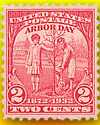
In 1932, the U.S. Post Office issued a stamp to celebrate the 60th anniversary of Arbor Day, and the 100th anniversary of the birth of its founder, Julius Sterling Morton. He was the Nebraskan who promoted foresting his young state, and advocated a day for the planting of trees by schoolchildren, civic groups, organizations and individuals. The first tree-planting day, when a million trees were planted, was on 10 Apr 1872. It was subsequently made an official state holiday on 22 Jun every year, in honor of Morton’s day of birth. Arbor Day, in various forms has spread throughout America, now celebrated on the last Friday of April. Around the world, the name and date celebrated varies.«

(USPTO)
In 1924, a U.S. patent for a laminated padlock was issued to its inventor Harry E. Soref. (No. 1,490,987). As a locksmith, Soref had realized that the cheaper padlocks, made with stamped metal sheels, were poor security because they were easily damaged. He applied the idea to his invention of a laminated padlock that bank vault doors and battleships were built in laminations of layer on layer of steel for greater strength. This would also be a low-cost construction for a padlock. He established Master Lock company in 1921. When he was unable to sell his invention to any existing manufacturer, he began making them at his own company. In 1935, he introduced the Master combination padlock.
more
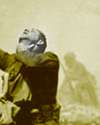
In 1915, modern chemical weapons were first used in a war. German troops released chlorine gas from several metal cylinders on the front lines at Ypres, Belgium during WW I. The cloud of yellow-green gas with a strong odour was blown by wind over the French trenches, painfully killing 5,000 soldiers. Chlorine causes suffocation, constriction of the chest, tightness in the throat, and edema of the lungs. As little as 2.5 mg per litre (approximately 0.085 percent by volume) in the atmosphere causes death in minutes. Under more controlled conditions, this is the same agent that is used as a germicide for public water supplies.[Image: detail from WWI training photo for gas attack.]
In 1913, under the headline Automobilism: the Wear of Roads and Trackways, the English newspaper, The Times, published an early comment on the expense of the construction and maintenance of roads as traffic became more mechanical and of greater volume. The correspondant pointed out that although a reasonable average width of a main road was 18 feet, the wheels of the vehicles together touched only about 6 inches of the surface. Thus, to save the expense of renewing the surface of the whole 18ft width, he offered the solution that roads be prepared with plateways. These would provide four specially prepared tracks (two in each direction) to take the wear from the wheels.
In 1913, Thomas Wright of Jersey City, NJ patented a "body elevating mechanism." to load ice into refrigerator railway cars. It was a truck with an extension top that could be adjusted to any position. Thus ice could be loaded by one man, without help, even in the upper section of the railcar. His company manufactured these machines, and they were first used by the William Metz Ice Company of Pittsburgh, Pa. (May 1917).
In 1892, the Wistar Institute of Anatomy and Biology was incorporated, becoming the first anatomy school in the U.S. It took its name from the benefactor, Gen. Isaac James Wistar in memory of his granduncle, Caspar Wistar, who was the first American physician to write an anatomy text book.
In 1884, expanded metal screen was patented by John Golding (No. 297,383).
In 1823, roller skates were patented in Britain by Robert John Tyers, a fruiterer in Picadilly, London. His Volitos were an “apparatus to be attached to boots ... for the purpose of travelling or pleasure.” They used five small wheels in a single line. Tyers demonstrated them at the tennis court in windmill Street. The first use of roller skates is believed to be by Joseph Merlin in Belgium (1760). The first four-wheeled skates, using small boxwood wheels in pairs, were patented in 1863 by James L. Plimpton of New York.
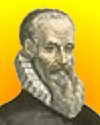
In 1575, printing of Ambroise Paré's book Oeuvres Complètes (Complete Works) was finished, but its publication was opposed by establishment physicians. His previous texts on surgery had popularized a new way to treat gunshot wounds without cauterisation, reintroduced the ligature in amputation, and improved midwifery techniques. These many writings were gathered together in this one new volume, which spread his teachings throughout the world. It remained in print for a century and ran to thirteen editions. He wrote in French instead of Latin with practical, common sense so that many barber-surgeons, who (like Paré) were unable to interpret Latin, had access to medical knowledge otherwise unavailable from Latin texts.
more
Ambroise Pare: Surgeon of the Renaissance, by Wallace B. Hamby. - book suggestion.
In 1056, the supernova in the Crab nebula was last seen by the naked eye.




