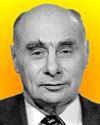
Born 2 Mar 1913; died 19 Nov 1990 at age 77.
Soviet physicist who, in 1941, recognized that uranium undergoes spontaneous fission (needing no neutron bombardment). He was one of the early Russian investigators of nuclear fission. In early 1942 , Flerov noticed that articles on nuclear fission were no longer appearing in western journals. Recognizing the implication that such research had become secret, he wrote to Premier Joseph Stalin, insisting that "we must build the uranium bomb without delay," (subsequently led by Igor V. Kurchatov.) In later research, Flerov announced synthesis of isotopes of element 104 (1965) and 106 (1974). Co-discoveries were made in the U.S. Several names were suggested. Eventually the adopted names were rutherfordium and seaborgium.«
Soviet physicist who, in 1941, recognized that uranium undergoes spontaneous fission (needing no neutron bombardment). He was one of the early Russian investigators of nuclear fission. In early 1942 , Flerov noticed that articles on nuclear fission were no longer appearing in western journals. Recognizing the implication that such research had become secret, he wrote to Premier Joseph Stalin, insisting that "we must build the uranium bomb without delay," (subsequently led by Igor V. Kurchatov.) In later research, Flerov announced synthesis of isotopes of element 104 (1965) and 106 (1974). Co-discoveries were made in the U.S. Several names were suggested. Eventually the adopted names were rutherfordium and seaborgium.«
On the Way to Superelements (Scientists to school-children), by G. N Flerov. - book suggestion.
Born 2 Mar 1908; died 5 May 1990 at age 82.
German electrical engineer who invented the Phase Alternating Line (PAL) colour television system adopted in Europe. On a trip to America in 1953, he found inadequacies in the system as first developed there (NTSC, National Television Standards Committee). He returned to German employer, Telefunken, and researched a way to improve colour stability without need for tint and hue controls. By 1961, a preliminary patent was filed, but was superceded on 30 Dec 1962 with a definitive version of the PAL system. There followed a struggle for to be recognized as the best coding method. Britain selected PAL as superior to NTSC and introduced it on 1 Jul 1967. Germany followed on 25 Aug 1967. Eventually most of the world, too.«
German electrical engineer who invented the Phase Alternating Line (PAL) colour television system adopted in Europe. On a trip to America in 1953, he found inadequacies in the system as first developed there (NTSC, National Television Standards Committee). He returned to German employer, Telefunken, and researched a way to improve colour stability without need for tint and hue controls. By 1961, a preliminary patent was filed, but was superceded on 30 Dec 1962 with a definitive version of the PAL system. There followed a struggle for to be recognized as the best coding method. Britain selected PAL as superior to NTSC and introduced it on 1 Jul 1967. Germany followed on 25 Aug 1967. Eventually most of the world, too.«
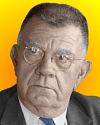
Born 2 Mar 1902; died 26 Mar 1974 at age 72. quotes
Edward Uhler Condon was an American physicist who is remembered for the Franck-Condon principle (1928), development of radar and contributing to the design of magnetic separation equipment subsequently applied to process uranium for atomic bombs. The Franck-Condon principle (1928) is a quantum-mechanical treatment of the earlier statement by James Franck (1925) that in any molecular system the transition from one energy state to another occurs so near to instantaneously that the nuclei of the atoms involved are stationary. During the Manhattan project, he assisted J. Robert Oppenheimer assemble the team of scientist that created the first atomic bombs at Los Alamos, N.M. He led a scientific study of UFO's, which found no credible evidence.«
Edward Uhler Condon was an American physicist who is remembered for the Franck-Condon principle (1928), development of radar and contributing to the design of magnetic separation equipment subsequently applied to process uranium for atomic bombs. The Franck-Condon principle (1928) is a quantum-mechanical treatment of the earlier statement by James Franck (1925) that in any molecular system the transition from one energy state to another occurs so near to instantaneously that the nuclei of the atoms involved are stationary. During the Manhattan project, he assisted J. Robert Oppenheimer assemble the team of scientist that created the first atomic bombs at Los Alamos, N.M. He led a scientific study of UFO's, which found no credible evidence.«
Selected popular writings of E.U. Condon, by Edward Uhler Condon. - book suggestion.
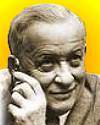
Born 2 Mar 1887; died 1 Mar 1957 at age 69.
American locksmith and inventor who patented the laminated steel padlock, and founder of Master Lock Company (1921). As a locksmith, Soref had realized that the cheaper padlocks, made with stamped metal sheels, were poor security because they were easily damaged. He patented (1924) his invention of a laminated padlock which, like bank vault doors and battleships, was built in laminations of layer on layer of steel for greater strength. Unable to sell his invention to a padlock manufacturer, he began making them himself. Master Lock opened its first tiny factory in Milwaukee, Wisc. In 1928 Master Lock gained national recognition for shipping 147,600 padlocks to federal prohibition agents in New York for locking up the speakeasies they raided.« more
American locksmith and inventor who patented the laminated steel padlock, and founder of Master Lock Company (1921). As a locksmith, Soref had realized that the cheaper padlocks, made with stamped metal sheels, were poor security because they were easily damaged. He patented (1924) his invention of a laminated padlock which, like bank vault doors and battleships, was built in laminations of layer on layer of steel for greater strength. Unable to sell his invention to a padlock manufacturer, he began making them himself. Master Lock opened its first tiny factory in Milwaukee, Wisc. In 1928 Master Lock gained national recognition for shipping 147,600 padlocks to federal prohibition agents in New York for locking up the speakeasies they raided.« more

Born 2 Mar 1883; died 29 Sep 1967 at age 84.
English pharmacologist and medical researcher who found an effective treatment for puerperal (childbed) fever and improved the treatment of burns. Puerperal fever resulting from infection after childbirth or abortion had affected women for centuries with severe abdominal pain, or even death. Coleman read of Domagk’s successful use of Protonsil, the first sulfonamide drug, against streptococcal infection in tests on mice and a few human subjects. In 1936, Coleman published the results of his clinical trial of Protonsil curing streptococcal puerperal fever, and launched a new era of antimicrobial chemotherapy. During WW II, he supervised the use of sulphonomides in the military. He then investigated control of infection in burns.«
English pharmacologist and medical researcher who found an effective treatment for puerperal (childbed) fever and improved the treatment of burns. Puerperal fever resulting from infection after childbirth or abortion had affected women for centuries with severe abdominal pain, or even death. Coleman read of Domagk’s successful use of Protonsil, the first sulfonamide drug, against streptococcal infection in tests on mice and a few human subjects. In 1936, Coleman published the results of his clinical trial of Protonsil curing streptococcal puerperal fever, and launched a new era of antimicrobial chemotherapy. During WW II, he supervised the use of sulphonomides in the military. He then investigated control of infection in burns.«
A New Approach to the Treatment of Burns and Scalds, by Leonard Colebrook. - book suggestion.
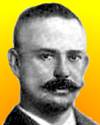
Born 2 Mar 1862; died 17 May 1916 at age 54.
Prince Boris Borisovich Golitsyn was a Russian physicist and seismologist who developed scientific methods and instruments for earthquake observations and mineral prospecting. His early studies were in molecular physics, mathematical physics and electromagnetism, From 1899 his interests turned to seismology. In 1906, he invented the first effective electromagnetic seismograph and continued to improve it. It had a pendulum carrying a coil of insulated wire around a magnetic core fixed to the ground. The small current generated in the coil by relative motion caused by earth tremors is amplified to operate a pen recorder. The part of the Earth's mantle at a depth of 400-800 km, in which seismic waves travel rapidly, is named the Golitsyn layer in recognition of his work.«[Name also spelled Galizin ot Golicyn. Death given as 17 May in EB, but 16 May in DSB. Old style dates on the Russian calendar of that time: b 18 Feb; d 4 May.]
Prince Boris Borisovich Golitsyn was a Russian physicist and seismologist who developed scientific methods and instruments for earthquake observations and mineral prospecting. His early studies were in molecular physics, mathematical physics and electromagnetism, From 1899 his interests turned to seismology. In 1906, he invented the first effective electromagnetic seismograph and continued to improve it. It had a pendulum carrying a coil of insulated wire around a magnetic core fixed to the ground. The small current generated in the coil by relative motion caused by earth tremors is amplified to operate a pen recorder. The part of the Earth's mantle at a depth of 400-800 km, in which seismic waves travel rapidly, is named the Golitsyn layer in recognition of his work.«[Name also spelled Galizin ot Golicyn. Death given as 17 May in EB, but 16 May in DSB. Old style dates on the Russian calendar of that time: b 18 Feb; d 4 May.]

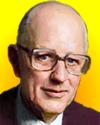
Died 2 Mar 2008 at age 96 (born 4 Jul 1911). quotes
American physicist who was a pioneer in condensed-matter physics investigating the physical and chemical properties of materials, and contributed to the fields of nuclear physics. He was Eugene Wigner's first doctoral student. Late in 1932, their joint work developed the cellular method of deriving solid-state wave functions. Use of this Wigner-Seitz method is now widespread. By the time he was 29 years old, Seitz’s book, The Modern Theory of Solids (1940) was his 24th publication. His treatment of all properties of all solids in terms of the electronic structure provided an outline distinguishing the field of solid state physics. Seitz was prominent in debating threats of nuclear weapon proliferation and global warming.«
American physicist who was a pioneer in condensed-matter physics investigating the physical and chemical properties of materials, and contributed to the fields of nuclear physics. He was Eugene Wigner's first doctoral student. Late in 1932, their joint work developed the cellular method of deriving solid-state wave functions. Use of this Wigner-Seitz method is now widespread. By the time he was 29 years old, Seitz’s book, The Modern Theory of Solids (1940) was his 24th publication. His treatment of all properties of all solids in terms of the electronic structure provided an outline distinguishing the field of solid state physics. Seitz was prominent in debating threats of nuclear weapon proliferation and global warming.«
On the Frontier: My Life in Science, by Frederick Seitz. - book suggestion.
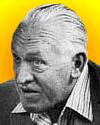
Died 2 Mar 1997 at age 83 (born 6 Jul 1913).
Canadian-American scientist who, as head of the theoretical division at the Los Alamos (N.M.) Scientific Laboratory, was involved in the development of various weapons systems, including thermonuclear bombs. He began at Los Alamos in 1945 as a collaborator on the Manhattan Project. He joined the staff in 1946 and became leader of T Division the following year until his retirement in 1973. He had a broad range of research interests, including hydrodynamics, neutron physics and transport theory. By the 1960s, much of the weapons work had been relocated and the T division diversified into working with outside agencies and private industry. After his retirement, he was active in issues related to disarmament and nonproliferation.«
Canadian-American scientist who, as head of the theoretical division at the Los Alamos (N.M.) Scientific Laboratory, was involved in the development of various weapons systems, including thermonuclear bombs. He began at Los Alamos in 1945 as a collaborator on the Manhattan Project. He joined the staff in 1946 and became leader of T Division the following year until his retirement in 1973. He had a broad range of research interests, including hydrodynamics, neutron physics and transport theory. By the 1960s, much of the weapons work had been relocated and the T division diversified into working with outside agencies and private industry. After his retirement, he was active in issues related to disarmament and nonproliferation.«
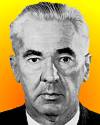
Died 2 Mar 1978 at age 63 (born 27 Nov 1914). quotes
American mathematician, a topologist, who led development of “new math.” When the Soviet Union launched the Sputnik satellite (1957), beating the U.S. into space, the effectiveness of science and mathematics education in American schools came under scrutiny. Begle's idea was to replace the traditional focus on mathematics as memorization and algorithmic computation. Instead, he designed a program to emphasise the fundamental importance of understanding the principles of mathematics. He directed (1958-72) the School Mathematics Study Group, funded by the National Science Foundation. SMSG produced teaching materials for all grade levels with this approach. Ultimately, initiating lasting reform through teachers was unsuccessful.«
American mathematician, a topologist, who led development of “new math.” When the Soviet Union launched the Sputnik satellite (1957), beating the U.S. into space, the effectiveness of science and mathematics education in American schools came under scrutiny. Begle's idea was to replace the traditional focus on mathematics as memorization and algorithmic computation. Instead, he designed a program to emphasise the fundamental importance of understanding the principles of mathematics. He directed (1958-72) the School Mathematics Study Group, funded by the National Science Foundation. SMSG produced teaching materials for all grade levels with this approach. Ultimately, initiating lasting reform through teachers was unsuccessful.«
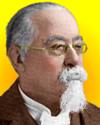
Died 2 Mar 1960 at age 84 (born 23 Jan 1876).
Italian sociologist, criminologist and statistician who extended his original career as a criminologist into a study of the criminal from biological and psychology viewpoints. Then to understand the normal man in his social environment, he applied statistics to analysis of social phenomena. He proposed that every person has a “deep ego’' of driven by subconscious primitive instincts for antisocial, egotistical or infantile behaviour. This co-exists with a “superior ego” responsible for social-adjusted attitudes of values, rules and norms. A person’s conduct is the result which of these is dominant. He published this theory in 1902, in La transformation del delito and continued to publish further elaborations upon it for years later.«
Italian sociologist, criminologist and statistician who extended his original career as a criminologist into a study of the criminal from biological and psychology viewpoints. Then to understand the normal man in his social environment, he applied statistics to analysis of social phenomena. He proposed that every person has a “deep ego’' of driven by subconscious primitive instincts for antisocial, egotistical or infantile behaviour. This co-exists with a “superior ego” responsible for social-adjusted attitudes of values, rules and norms. A person’s conduct is the result which of these is dominant. He published this theory in 1902, in La transformation del delito and continued to publish further elaborations upon it for years later.«
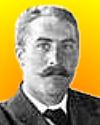
Died 2 Mar 1939 at age 65 (born 9 May 1873). quotes
British Egyptologist who made one of the richest and most celebrated contributions to Egyptology: the discovery (27 Nov 1922) of the largely intact tomb of King Tutankhamen. In 1891, at age 17, with a talent for drawing and an interest in Egyptian antiquities, he was hired by the Egypt Exploration Fund in London to help with the epigraphic recording of tombs in Middle Egypt. At the beginning of 1900 Howard Carter was appointed Chief Inspector of Antiquities to the Egyptian Government with responsibilities for Upper Egypt. The Earl of Carnarvon, visited Egypt for health reasons in 1905, became interested in Egyptian antiquities and decided to finance some archaeological work. He funded Carter's excavation work beginning in 1909.[EB gives birth year as 9 May 1873. Some sources, including Enc. of World Bio give 9 May 1874. No DSB entry.]
British Egyptologist who made one of the richest and most celebrated contributions to Egyptology: the discovery (27 Nov 1922) of the largely intact tomb of King Tutankhamen. In 1891, at age 17, with a talent for drawing and an interest in Egyptian antiquities, he was hired by the Egypt Exploration Fund in London to help with the epigraphic recording of tombs in Middle Egypt. At the beginning of 1900 Howard Carter was appointed Chief Inspector of Antiquities to the Egyptian Government with responsibilities for Upper Egypt. The Earl of Carnarvon, visited Egypt for health reasons in 1905, became interested in Egyptian antiquities and decided to finance some archaeological work. He funded Carter's excavation work beginning in 1909.[EB gives birth year as 9 May 1873. Some sources, including Enc. of World Bio give 9 May 1874. No DSB entry.]
The Tomb of Tut.Ankh.Amen, by Howard Carter. - book suggestion.
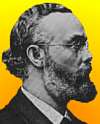
Died 2 Mar 1887 at age 47 (born 22 Apr 1839).
German botanist whose natural system of plant classification (1886) was one of the first to become widely adopted. He studied the symmetry of the parts of a flower. His system of plant classification was based on earlier work of de Jussieaus and others. Eichler assumed complexity indicated more advanced development. His plant kingdom had four divisions: Thallophyta: algae, fungi; Bryophyta: liverworts, mosses; Pteridophyta: club mosses, horsetails, ferns; Spermatophyta: seed plants (angiosperms: flowering plants and gymnosperms: pines, spruces, and firs). Eichler wrote a syllabus of pharmaceutical botany and made significant collection on the flora of Brazil.«
German botanist whose natural system of plant classification (1886) was one of the first to become widely adopted. He studied the symmetry of the parts of a flower. His system of plant classification was based on earlier work of de Jussieaus and others. Eichler assumed complexity indicated more advanced development. His plant kingdom had four divisions: Thallophyta: algae, fungi; Bryophyta: liverworts, mosses; Pteridophyta: club mosses, horsetails, ferns; Spermatophyta: seed plants (angiosperms: flowering plants and gymnosperms: pines, spruces, and firs). Eichler wrote a syllabus of pharmaceutical botany and made significant collection on the flora of Brazil.«
Died 2 Mar 1874 at age 85 (born 15 May 1788).
Scottish physician and scientist who invented a water-bed for the comfort of patients during a prolonged illness. He is also known for his invention of the economical Arnott stove, which he called a thermometer-stove with a self-regulating fire.«
Scottish physician and scientist who invented a water-bed for the comfort of patients during a prolonged illness. He is also known for his invention of the economical Arnott stove, which he called a thermometer-stove with a self-regulating fire.«
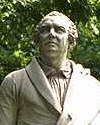
Died 2 Mar 1840 at age 81 (born 11 Oct 1758).
Heinrich Wilhelm Matthaus Olbers was a German physician and astronomer who, while practising medicine at Bremen, calculated the orbit of the comet of 1779, discovered the minor planets (asteroids) Pallas (1802) and Vesta (1807), and discovered five comets (all but one already observed at Paris). Olbers invented a method for calculating the velocity of falling stars. He is also known for Olber's paradox which asks “why is the night sky dark if there are so many bright stars all around to light it?”Image: Monument in Bremen, Germany
Heinrich Wilhelm Matthaus Olbers was a German physician and astronomer who, while practising medicine at Bremen, calculated the orbit of the comet of 1779, discovered the minor planets (asteroids) Pallas (1802) and Vesta (1807), and discovered five comets (all but one already observed at Paris). Olbers invented a method for calculating the velocity of falling stars. He is also known for Olber's paradox which asks “why is the night sky dark if there are so many bright stars all around to light it?”Image: Monument in Bremen, Germany
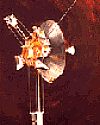
(NASA)
In 1972, U.S. spacecraft Pioneer 10 was launched. It passed close by Jupiter and Neptune before leaving the solar system. It is now more than six billion miles from Earth.
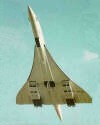
In 1969, the Concorde SST Supersonic jet aircraft, prototype 001, made its first flight from Toulouse airport in France. With tons of test instruments aboard, test pilot Captain Andre Turcat took off at 3:40 pm, followed by two chase aircraft for filming the historic flight, and for calibration purposes. The flight lasted only about a half hour, remaining at a subsonic speed with its landing gear and nose in the down position. The aircraft made a clean landing at 4:08 pm. It was not the first supersonic-capable airliner to fly, however, as the Russian Tupolev-144 first flew several months earlier, on 31 Dec 1968. The British prototype Concorde 002 made its first flight from Filton Airport, Bristol on 9 Apr 1969. It was not until its 45th test flight, on 1 Oct 1969, that prototype 001 flew at a supersonic speed, above Mach 1.«
The Concorde Story: 21 Years in Service, by Christopher Orlebar. - book suggestion.
In 1959, an experimental push-button phone was tested by the Southern New England Telephone Company (New Haven, Conn.), to see if customers dial fewer wrong numbers using the new design.
In 1949, the first automatic street light was installed in New Milford, Conn.
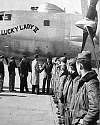
In 1949, the first round the world nonstop airplane flight was completed in a U.S. Air Force B-50 Superfortress bomber, the Lucky Lady II with a crew of 14 headed by Captain James Gallagher. They landed back at Carswell Air Force base, Fort Worth, Texas, which they had left on 26 Feb 1949, about 94 hours earlier. The airplane was refueled several times in midflight on its 23,452 journey. Its average speed was 249-mph. This was at the time of the Berlin Airlift and the Cold War. The flight showed that the USAF was capable of projecting air power anywhere in the world. The first jets - three U.S. Air Force B-52 Stratofortress bombers - to fly nonstop around the world - took 45 hours (16-18 Jan 1957), completing 24,325 miles at an average speed of 525-mph.«
In 1928, Mrs R Valentino patented a doll (No. 1,575,263) .
In 1908, Gabriel Lippman introduced the new three-dimensional colour photography at the Academy of Sciences.
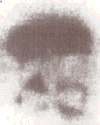
In 1896, Henri Becquerel reported his discovery of the penetrating rays of a uranium compound to the French Academy of Sciences. The photographic plate, fogged by these rays, showing the outline of a metal cross lying between the compound and the plate, is the first recognition of the effects later known as radioactivity.
more
Radioactivity: A History of a Mysterious Science, by Marjorie C. Malley. - book suggestion.
In 1866, Excelsior Needle Company of Wolcottville, Conn., began making sewing machine needles.
In 1863, Congress authorized a track width of 4-ft 8-1/2 in. as the standard for the Union Pacific Railroad, which became the accepted width for most of the world.
In 1858, Frederick Cook, New Orleans, patented a metal cotton-bale tie.
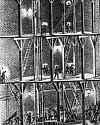
In 1825, work began on the Thames Tunnel in London, the world's first tunnel under a navigable river, between Rotherhithe and Wapping. Excavation was engineered by Marc Brunel, for which he used a tunneling shield to reduce the danger of collapse while digging through soft sediments. Beginning his own engineering career, his son Isambad K. Brunel assisted. Together they persevered through 18 years, dealing with floods, human disasters, and delays caused by financing difficulties. It opened for pedestrians on 25 Mar 1843. Planned ramps for use by carts and freight traffic were never added due to cost. The tunnel re-opened with a railway line on 7 Dec 1869, and it continued in use as the oldest part of the London Underground.«[Image: detail of the first vertical shaft excavated for access to Thames Tunnel, Rotherhithe, showing workers and ladders between floors.] more
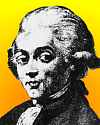
In 1784, Jean Pierre Blanchard made his first successful ascent on 2 Mar 1784 in a self-built balloon. He had been inspired by the demonstrations by the brothers Étienne and Jacques Montgolfier of hot-air balloon flying in Annonay, France. By 7 Jan 1785, he and an American physician, Dr. John Jeffries, made the first flight over the English Channel, from Dover to Calais.On 9 Jan 1793, Blanchard made the first balloon ascent in North America.




