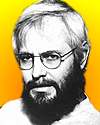
Born 17 Apr 1946; died 1 Mar 1995 at age 48.
Georges Jean Franz Köhler was a German immunologist who shared (with César Milstein and Niels K. Jerne) the 1984 Nobel Prize for Physiology or Medicine for his work in developing the technique for producing monoclonal antibodies - pure, uniform, and highly sensitive protein molecules used in diagnosing and combating a number of diseases. These antibodies, and the subsequent developments based their work, revolutionized the diagnosis and treatment of many immunologic diseases, including some forms of cancer and AIDS. In 1975, he and Milstein published in Nature the results of their work leading to the production of monoclonal antibodies “Continuous cultures of fused cells secreting antibody of predefined specificity.” Milstein's and Köhler's method of producing monoclonal antibodies involves fusing an antibody-producing cell - which can recognize an invading organism - with a tumor cell, which lives and reproduces indefinitely. Their discoveries are being used in research on mild illnesses and diseases such as cancer and AIDS.
Georges Jean Franz Köhler was a German immunologist who shared (with César Milstein and Niels K. Jerne) the 1984 Nobel Prize for Physiology or Medicine for his work in developing the technique for producing monoclonal antibodies - pure, uniform, and highly sensitive protein molecules used in diagnosing and combating a number of diseases. These antibodies, and the subsequent developments based their work, revolutionized the diagnosis and treatment of many immunologic diseases, including some forms of cancer and AIDS. In 1975, he and Milstein published in Nature the results of their work leading to the production of monoclonal antibodies “Continuous cultures of fused cells secreting antibody of predefined specificity.” Milstein's and Köhler's method of producing monoclonal antibodies involves fusing an antibody-producing cell - which can recognize an invading organism - with a tumor cell, which lives and reproduces indefinitely. Their discoveries are being used in research on mild illnesses and diseases such as cancer and AIDS.

Born 17 Apr 1925.
American geneticist who demonstrated the colinearity of gene and protein structures. In the 1960s, Yanofsky began work on the structure of proteins and genes responsible for tryptophan biosynthesis. He used the expression and regulation of these proteins as tools to dissect the inner workings of the cell's genetic apparatus. This work on the nature of mutations that prevent tryptophan biosynthesis produced some of his most significant discoveries. His remarkable exploitation of the E. coli tryptophan operon to work out the biochemical pathway of the synthesis of an amino acid and to elucidate fundamental aspects of transcription and translation, such as missense suppression and polarity, are historic achievements.
American geneticist who demonstrated the colinearity of gene and protein structures. In the 1960s, Yanofsky began work on the structure of proteins and genes responsible for tryptophan biosynthesis. He used the expression and regulation of these proteins as tools to dissect the inner workings of the cell's genetic apparatus. This work on the nature of mutations that prevent tryptophan biosynthesis produced some of his most significant discoveries. His remarkable exploitation of the E. coli tryptophan operon to work out the biochemical pathway of the synthesis of an amino acid and to elucidate fundamental aspects of transcription and translation, such as missense suppression and polarity, are historic achievements.
Microbiology: A Centenary Perspective, by Charles Yanofsky, co-author. - book suggestion.
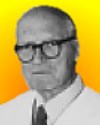
c.1980s
Born 17 Apr 1899; died 11 Feb 1994 at age 94.
English entomologist who pioneered in the study of insect physiology; he was particularly respected for his research into the role of hormones in insect growth, metamorphosis, and reproduction and for his insights into simple mechanisms, such as how insects walk upside down. His investigations of the living insect body and its tissues and organs revealed much about the dynamic complexity of individual insects and their interactions with the environment. An important contribution was his recognition that insects could be used - instead of mice or other laboratory animals - for the fundamental investigation of animal physiology and function. His Insect Physiology (1934) is often considered the foundation for this branch of entomology.
English entomologist who pioneered in the study of insect physiology; he was particularly respected for his research into the role of hormones in insect growth, metamorphosis, and reproduction and for his insights into simple mechanisms, such as how insects walk upside down. His investigations of the living insect body and its tissues and organs revealed much about the dynamic complexity of individual insects and their interactions with the environment. An important contribution was his recognition that insects could be used - instead of mice or other laboratory animals - for the fundamental investigation of animal physiology and function. His Insect Physiology (1934) is often considered the foundation for this branch of entomology.
Insect Physiology, by Vincent B. Wigglesworth. - book suggestion.
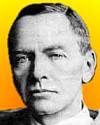
Born 17 Apr 1880; died 20 Feb 1960 at age 79.
Charles Leonard Woolley was an English archaeologist whose excavation (1922-34) of the ancient Sumerian city of Ur (in modern Iraq), the royal burial site of many Mesopotamian royalties, greatly advanced knowledge of ancient Mesopotamian civilization, enabling scholars to trace the history of the city from its final days during the 4th century BC back to its prehistoric beginnings (c. 4000 BC). His finds revealed much about everyday life, art, architecture, literature, government, and religion in this "cradle of civilization. " In royal tombs dating from about 2700 BC, he uncovered the practice of the sacrificial burial of a deceased king's personal retinue. He discovered tombs of great material wealth, gold and silver jewelry, large paintings of ancient Mesopotamian culture at its zenith, and other furnishings. The most extravagant tomb of Queen Pu-Abi was untouched by the hands of looters through the millennia, with many well-preserved items, including a cylindrical seal bearing her name in Sumerian. His widely read Ur of the Chaldees: A record of seven years of excavation (1929), described his findings in a manner both informative to specialists and accessible by lay-persons.
Charles Leonard Woolley was an English archaeologist whose excavation (1922-34) of the ancient Sumerian city of Ur (in modern Iraq), the royal burial site of many Mesopotamian royalties, greatly advanced knowledge of ancient Mesopotamian civilization, enabling scholars to trace the history of the city from its final days during the 4th century BC back to its prehistoric beginnings (c. 4000 BC). His finds revealed much about everyday life, art, architecture, literature, government, and religion in this "cradle of civilization. " In royal tombs dating from about 2700 BC, he uncovered the practice of the sacrificial burial of a deceased king's personal retinue. He discovered tombs of great material wealth, gold and silver jewelry, large paintings of ancient Mesopotamian culture at its zenith, and other furnishings. The most extravagant tomb of Queen Pu-Abi was untouched by the hands of looters through the millennia, with many well-preserved items, including a cylindrical seal bearing her name in Sumerian. His widely read Ur of the Chaldees: A record of seven years of excavation (1929), described his findings in a manner both informative to specialists and accessible by lay-persons.
Woolley of Ur: The Life of Sir Leonard Woolley, by H. V. F. Winstone. - book suggestion.

Born 17 Apr 1874; died 12 Nov 1938 at age 64.
American communications executive and philanthropist who supervised the completion of the first transpacific cable between the United States and the Far East in 1904. He laid a cable between New York and Cuba in 1907 and later established cable communication with southern Europe via the Azores and with northern Europe via Ireland. In 1928, he became the first to combine radio, cables, and telegraphs under one management. Unfortunately the Postal Telegraph-Commercial Cable empire he had inherited from his father was shattered in the depression of 1929, going into receivership in 1935. In 1943 the Mackay land lines merged with Western Union. He founded the multinational company International Telephone and Telegraph.
American communications executive and philanthropist who supervised the completion of the first transpacific cable between the United States and the Far East in 1904. He laid a cable between New York and Cuba in 1907 and later established cable communication with southern Europe via the Azores and with northern Europe via Ireland. In 1928, he became the first to combine radio, cables, and telegraphs under one management. Unfortunately the Postal Telegraph-Commercial Cable empire he had inherited from his father was shattered in the depression of 1929, going into receivership in 1935. In 1943 the Mackay land lines merged with Western Union. He founded the multinational company International Telephone and Telegraph.
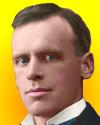
Born 17 Apr 1866; died 2 May 1927 at age 61. quotes
English physiologist whose prolific contributions to a modern understanding of body functions include Starling’s hypothesis (in which he described the forces that propel fluids through blood vessels) and his discovery of how hormones and nerves control digestion. He coined the term hormone for the body’s chemical messengers from the endocrine glands (1905). His “law of the heart” stated the strength of the heart contraction is proportional to the stretching of the heart muscle. He discovered the functional significance of serum proteins. In 1902 along with William Bayliss he demonstrated that secretin stimulates pancreatic secretion. In 1924, along with Ernest B. Verney, he demonstrated the reabsorption of water by the tubules of the kidney.
English physiologist whose prolific contributions to a modern understanding of body functions include Starling’s hypothesis (in which he described the forces that propel fluids through blood vessels) and his discovery of how hormones and nerves control digestion. He coined the term hormone for the body’s chemical messengers from the endocrine glands (1905). His “law of the heart” stated the strength of the heart contraction is proportional to the stretching of the heart muscle. He discovered the functional significance of serum proteins. In 1902 along with William Bayliss he demonstrated that secretin stimulates pancreatic secretion. In 1924, along with Ernest B. Verney, he demonstrated the reabsorption of water by the tubules of the kidney.
Principles of Human Physiology, by Ernest Henry Starling. - book suggestion.
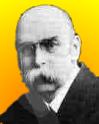
Born 17 Apr 1863; died 5 Jun 1940 at age 77.
British geophysicist and mathematician who discovered a major type of earthquake wave that was subsequently named for him. Love assumed that the Earth consists of concentric layers that differ in density and postulated the occurrence of a seismic wave confined to the surface layer (crust) of the Earth which propagated between the crust and underlying mantle. His prediction was confirmed by recordings of the behaviour of waves in the surface layer of the Earth. He proposed a method, based on measurements of Love waves, to measure the thickness of the Earth's crust. In addition to his work on geophysical theory, Love studied elasticity and wrote A Treatise on the Mathematical Theory of Elasticity, 2 vol. (1892-93).
British geophysicist and mathematician who discovered a major type of earthquake wave that was subsequently named for him. Love assumed that the Earth consists of concentric layers that differ in density and postulated the occurrence of a seismic wave confined to the surface layer (crust) of the Earth which propagated between the crust and underlying mantle. His prediction was confirmed by recordings of the behaviour of waves in the surface layer of the Earth. He proposed a method, based on measurements of Love waves, to measure the thickness of the Earth's crust. In addition to his work on geophysical theory, Love studied elasticity and wrote A Treatise on the Mathematical Theory of Elasticity, 2 vol. (1892-93).
Treatise on the Mathematical Theory of Elasticity, by Augustus E. Love. - book suggestion.
Born 17 Apr 1853; died 4 Sep 1912 at age 59.
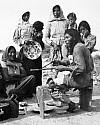
American geologist, hydrologist, archaeologist who was noted for his pioneer studies documenting the occurrence of waves of invasions and recessions of ice sheets in North America, thus establishing the complexity of the Great Ice Age. He worked in a number of governmental capacities, including as a director in the U.S. Geological Survey, and was a founder and president of the National Geographic Society. While on the staff of the Bureau of Soils, he organized the landmark Conference of Governors on Conservation of Natural Resources (13-15 May 1908) and has been called the "chief theorist of the conservation movement." As an anthropologist he studied the American Indians and wrote The Seri Indians (1898).[Image: Seri Indians]
American geologist, hydrologist, archaeologist who was noted for his pioneer studies documenting the occurrence of waves of invasions and recessions of ice sheets in North America, thus establishing the complexity of the Great Ice Age. He worked in a number of governmental capacities, including as a director in the U.S. Geological Survey, and was a founder and president of the National Geographic Society. While on the staff of the Bureau of Soils, he organized the landmark Conference of Governors on Conservation of Natural Resources (13-15 May 1908) and has been called the "chief theorist of the conservation movement." As an anthropologist he studied the American Indians and wrote The Seri Indians (1898).[Image: Seri Indians]
Trails to Tiburón: The 1894 and 1895 Field Diaries of W J McGee, by Hazel McFeely Fontana. - book suggestion.
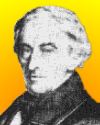
Born 17 Apr 1794; died 13 Dec 1868 at age 74.
German botanist best known for his work on Brazilian flora. He spent three years on expedition with zoologist Johann Baptist von Spix to study the botany, zoology, mineralogy, and ethnology of Brazil, covering 6,500 km of Brazilian territory. Upon returning to Munich, they carried with them numerous examples of mammals, birds, fish, insects and vegetation. They also had written descriptions and etchings of all they had observed. Martius dedicated his life to the study of the material collected during his expedition to Brazil. In this way, such works as Flora Brasiliensis, considered to be one of the most important works on a country's flora, took form. It took 66 years to complete and the collaboration of 57 botanists from various parts of the world.
German botanist best known for his work on Brazilian flora. He spent three years on expedition with zoologist Johann Baptist von Spix to study the botany, zoology, mineralogy, and ethnology of Brazil, covering 6,500 km of Brazilian territory. Upon returning to Munich, they carried with them numerous examples of mammals, birds, fish, insects and vegetation. They also had written descriptions and etchings of all they had observed. Martius dedicated his life to the study of the material collected during his expedition to Brazil. In this way, such works as Flora Brasiliensis, considered to be one of the most important works on a country's flora, took form. It took 66 years to complete and the collaboration of 57 botanists from various parts of the world.
Born 17 Apr 1598; died 25 Jun 1671 at age 73.
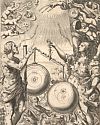
Giovanni Battista Riccioli was an Italian astronomer who was the first to observe (1650) a double star (two stars so close together that they appear to be one) - Mizar in Ursa Major, the middle star in the handle of the Big Dipper. He also discovered satellite shadows on Jupiter. In 1651, he assigned the majority of the lunar feature names in current use. He named the more prominent features after famous astronomers, scientists and philosophers, while the large dark and smooth areas he called "seas" or "maria". The lunar seas were named after moods (Seas of Tranquillity, Serenity) or terrestrial phenomena (Sea of Rains, Ocean or Storms) His map was published in Almagestum Novum in1651.[Image: Frontispiece from Riccioli's Almagestum novum, 1651] more
Giovanni Battista Riccioli was an Italian astronomer who was the first to observe (1650) a double star (two stars so close together that they appear to be one) - Mizar in Ursa Major, the middle star in the handle of the Big Dipper. He also discovered satellite shadows on Jupiter. In 1651, he assigned the majority of the lunar feature names in current use. He named the more prominent features after famous astronomers, scientists and philosophers, while the large dark and smooth areas he called "seas" or "maria". The lunar seas were named after moods (Seas of Tranquillity, Serenity) or terrestrial phenomena (Sea of Rains, Ocean or Storms) His map was published in Almagestum Novum in1651.[Image: Frontispiece from Riccioli's Almagestum novum, 1651] more


Died 17 Apr 1996 at age 85 (born 25 Aug 1910).
American inventor of the Rolodex, an alphabetized rotating card file with a ball-bearing clutch. He invented the device in the 1940s with the help of an engineer who developed the cylindrical housing. Neustadter specialized in office technology, also inventing the Swivodex, spill-proof inkwell and the Clipodex, a knee-top dictation tool.
American inventor of the Rolodex, an alphabetized rotating card file with a ball-bearing clutch. He invented the device in the 1940s with the help of an engineer who developed the cylindrical housing. Neustadter specialized in office technology, also inventing the Swivodex, spill-proof inkwell and the Clipodex, a knee-top dictation tool.
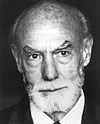
Died 17 Apr 1994 at age 80 (born 20 Aug 1913). quotes
American neurobiologist, corecipient with David Hunter Hubel and Torsten Nils Wiesel of the Nobel Prize for Physiology or Medicine in 1981 for their investigations of brain function, Sperry in particular for his study of functional specialization in the cerebral hemispheres. He was responsible for overturning the widespread belief that the left brain is dominant by showing that several cognitive abilities were localized in the right brain. He also provided experimental proof for the specificity of the reconnection of regenerating severed neurons in newts, which later led to new theories on how neurons grow. After 1965, his work turned more to psychology and philosophy.
American neurobiologist, corecipient with David Hunter Hubel and Torsten Nils Wiesel of the Nobel Prize for Physiology or Medicine in 1981 for their investigations of brain function, Sperry in particular for his study of functional specialization in the cerebral hemispheres. He was responsible for overturning the widespread belief that the left brain is dominant by showing that several cognitive abilities were localized in the right brain. He also provided experimental proof for the specificity of the reconnection of regenerating severed neurons in newts, which later led to new theories on how neurons grow. After 1965, his work turned more to psychology and philosophy.
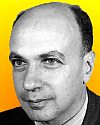
Died 17 Apr 1977 at age 76 (born 10 Feb 1901).
German-American mathematician and educator, a pioneer in the development of algebra theory. He worked with Weyl on several projects including a famous joint paper on spinors (published in 1935 in the American Journal of Mathematics). This work provided a background for Paul Dirac's theory of the spinning electron within the framework of quantum mechanics. With Nesbitt, Brauer introduced the theory of blocks (1937). Brauer used this to obtain results on finite groups, particularly finite simple groups, and the theory of blocks would play a big part in much of Brauer's later work. Starting with his group-theoretical characterisation of the simple groups (1951), he spent the rest of his life formulating a method to classify all finite simple groups.
German-American mathematician and educator, a pioneer in the development of algebra theory. He worked with Weyl on several projects including a famous joint paper on spinors (published in 1935 in the American Journal of Mathematics). This work provided a background for Paul Dirac's theory of the spinning electron within the framework of quantum mechanics. With Nesbitt, Brauer introduced the theory of blocks (1937). Brauer used this to obtain results on finite groups, particularly finite simple groups, and the theory of blocks would play a big part in much of Brauer's later work. Starting with his group-theoretical characterisation of the simple groups (1951), he spent the rest of his life formulating a method to classify all finite simple groups.
Richard Brauer Collected Papers, Vol. 1: Theory of Algebras, and Finite Groups, by Richard Brauer. - book suggestion.
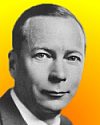
Died 17 Apr 1976 at age 81 (born 21 Feb 1895).
Carl Peter Henrik Dam was a Danish biochemist who shared (with Edward A. Doisy) the 1943 Nobel Prize in Physiology or Medicine for research into antihemorrhagic substances and the discovery of vitamin K (1939).
Carl Peter Henrik Dam was a Danish biochemist who shared (with Edward A. Doisy) the 1943 Nobel Prize in Physiology or Medicine for research into antihemorrhagic substances and the discovery of vitamin K (1939).
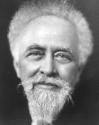
Died 17 Apr 1942 at age 71 (born 30 Sep 1870). quotes
Jean-Baptiste Perrin was a physicist who provided decisive experimental proof of the atomic nature of matter through his studies of erratic Brownian motion in fluids, in which tiny particles are battered by liquid molecules. Building on Albert Einstein’s theoretical explanation, he suspended minute particles in a gamboge emulsion and analyzed their movements. From this work, Perrin was able to calculate Avogadro’s number, which specifies the number of molecules in a gram-molecular weight of a substance—for example, the number in two grams of hydrogen. His result closely matched that predicted by the kinetic theory of gases. In recognition of this achievement, Perrin was awarded the 1926 Nobel Prize in Physics.«
Jean-Baptiste Perrin was a physicist who provided decisive experimental proof of the atomic nature of matter through his studies of erratic Brownian motion in fluids, in which tiny particles are battered by liquid molecules. Building on Albert Einstein’s theoretical explanation, he suspended minute particles in a gamboge emulsion and analyzed their movements. From this work, Perrin was able to calculate Avogadro’s number, which specifies the number of molecules in a gram-molecular weight of a substance—for example, the number in two grams of hydrogen. His result closely matched that predicted by the kinetic theory of gases. In recognition of this achievement, Perrin was awarded the 1926 Nobel Prize in Physics.«
Atoms, by Jean Perrin. - book suggestion.
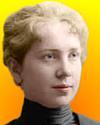
Died 17 Apr 1933 at age 56 (born 2 Jul 1876). quotes
Canadian nuclear physicist who was probably the first to observe the recoil of the atomic nucleus as nuclear particles were emitted during radioactive decay. During the years 1901-05, she contributed much to the new science of radioactivity. Working with Ernest Rutherford, she measured the rate at which radium released radon (and other gases) into the air. They demonstrated that the diffusion of the emanations of radium both behaved like a a gas, and that this gas had a high (over 100) molecular weight. Rutherford credited her work identifying the release of radon as crucial to developing his theory of the transmutation of one element into another. She died at the age of 56, from leukemia or a like disease related to radiation exposure.
Canadian nuclear physicist who was probably the first to observe the recoil of the atomic nucleus as nuclear particles were emitted during radioactive decay. During the years 1901-05, she contributed much to the new science of radioactivity. Working with Ernest Rutherford, she measured the rate at which radium released radon (and other gases) into the air. They demonstrated that the diffusion of the emanations of radium both behaved like a a gas, and that this gas had a high (over 100) molecular weight. Rutherford credited her work identifying the release of radon as crucial to developing his theory of the transmutation of one element into another. She died at the age of 56, from leukemia or a like disease related to radiation exposure.
Harriet Brooks: Pioneer Nuclear Scientist, by M.F. & G.W. Rayner-Canham. - book suggestion.
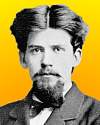
Died 17 Apr 1932 at age 77 (born 2 Oct 1854).
Scottish biologist and sociologist who was one of the modern pioneers of the concept of town and regional planning. He studied under Darwin's champion, Thomas Henry Huxley. As a professor of botany, Geddes emphasized the development of sexual reproduction as a major step in organic evolution and, with the naturalist John Arthur Thomson, published The Evolution of Sex (1889). Geddes turned his attention to sociology after an attack of blindness in Mexico hampered his biological experimentation. His researches in India, Palestine, Mexico, and Scotland led to his conviction that the development of human communities was primarily biological in nature, consisting of interactions among people, their environment, and their activities.
Scottish biologist and sociologist who was one of the modern pioneers of the concept of town and regional planning. He studied under Darwin's champion, Thomas Henry Huxley. As a professor of botany, Geddes emphasized the development of sexual reproduction as a major step in organic evolution and, with the naturalist John Arthur Thomson, published The Evolution of Sex (1889). Geddes turned his attention to sociology after an attack of blindness in Mexico hampered his biological experimentation. His researches in India, Palestine, Mexico, and Scotland led to his conviction that the development of human communities was primarily biological in nature, consisting of interactions among people, their environment, and their activities.
c.1890
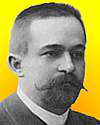
Died 17 Apr 1918 at age 52 (born 13 May 1865). quotes
Friedrich Karl Johannes Thiele was a German chemist who researched conjugated unsaturated organic molecules (involving alternating single and double bonds along a carbon chain) followed by other chemists, yielding new ideas for theories on the mechanisms of organic reactions. He extended the idea (1865) of August Kekulé for the ring structure of benzene with a “partial valence” hypothesis, for which he suggested a resonance structure with partial bonds represented by a dashed circle drawn inside the carbon ring (1899). He also studied the chemistry of nitrogen compounds, and discovered many new compounds and synthesis methods. He investigated guanidine, hydrazine, and their derivatives (of which some were explosive). He invented the Thiele tube for measuring melting points.«
Friedrich Karl Johannes Thiele was a German chemist who researched conjugated unsaturated organic molecules (involving alternating single and double bonds along a carbon chain) followed by other chemists, yielding new ideas for theories on the mechanisms of organic reactions. He extended the idea (1865) of August Kekulé for the ring structure of benzene with a “partial valence” hypothesis, for which he suggested a resonance structure with partial bonds represented by a dashed circle drawn inside the carbon ring (1899). He also studied the chemistry of nitrogen compounds, and discovered many new compounds and synthesis methods. He investigated guanidine, hydrazine, and their derivatives (of which some were explosive). He invented the Thiele tube for measuring melting points.«
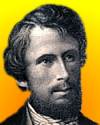
Died 17 Apr 1888 at age 66 (born 17 Jun 1821).
Ephraim George Squier was an American newspaper editor, diplomat and archaeologist was a newspaper editor, diplomat, and archaeologist who, with the physician and archaeologist Edwin H. Davis, conducted the first major study of the remains of the pre-Columbian North American Mound Builders. Their book, Ancient Monuments (1848, more familiarly known as "Squire and Davis") was the undisputed primary reference source of their time on Indian mounds in the eastern US. It gave the grandest illustrations of what remained of the unbelievable civilizations that inhabited this continent. While hundreds of mounds have been plowed flat, theirs is a guide to what was lost. He also explored in Central America, Peru, and Bolivia in an effort to find the origins of the Mound Builder civilization.
Ephraim George Squier was an American newspaper editor, diplomat and archaeologist was a newspaper editor, diplomat, and archaeologist who, with the physician and archaeologist Edwin H. Davis, conducted the first major study of the remains of the pre-Columbian North American Mound Builders. Their book, Ancient Monuments (1848, more familiarly known as "Squire and Davis") was the undisputed primary reference source of their time on Indian mounds in the eastern US. It gave the grandest illustrations of what remained of the unbelievable civilizations that inhabited this continent. While hundreds of mounds have been plowed flat, theirs is a guide to what was lost. He also explored in Central America, Peru, and Bolivia in an effort to find the origins of the Mound Builder civilization.
Ancient Monuments of the Mississippi Valley, by E. H. Davis, E. G. Squier, Charles Sullivan.(illustrator). - book suggestion.
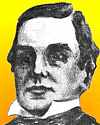
Died 17 Apr 1843 at age 80 (born 23 Oct 1762).
American inventor that one author called “the Edison of his day.” His inventions include raising water by wind (patented 11 Apr 1796), a rotary steam engine (14 Jul 1815), a fuel-saving fireplace (18 Jan 1813), a tide and current water wheel (13 Mar 1817), and shooting by steam (19 Jan 1819). Morey’s earliest patent (26 Jan 1793), one of the first (No. X51) to be issued in the U.S., was for a rotating, steam-powered cooking spit for roasting meat, and was signed by George Washington. His next patent (25 Mar 1795) was for a steam engine to power boats, years before Robert Fulton. He developed a method for production of water gas fuel (a mixture of carbon monoxide and hydrogen from steam passed over heated carbon substances), patented as his “American Water Burner” (11 Dec 1817). On 1 Apr 1826, he was issued the first U.S. patent for an internal-combustion engine titled “Gas or Vapour Engine.”«[Image, drawn for a magazine (1909) is likely (?) from the artist's imagination. Webmaster has not yet found any other likeness on which it could have been based.] more
American inventor that one author called “the Edison of his day.” His inventions include raising water by wind (patented 11 Apr 1796), a rotary steam engine (14 Jul 1815), a fuel-saving fireplace (18 Jan 1813), a tide and current water wheel (13 Mar 1817), and shooting by steam (19 Jan 1819). Morey’s earliest patent (26 Jan 1793), one of the first (No. X51) to be issued in the U.S., was for a rotating, steam-powered cooking spit for roasting meat, and was signed by George Washington. His next patent (25 Mar 1795) was for a steam engine to power boats, years before Robert Fulton. He developed a method for production of water gas fuel (a mixture of carbon monoxide and hydrogen from steam passed over heated carbon substances), patented as his “American Water Burner” (11 Dec 1817). On 1 Apr 1826, he was issued the first U.S. patent for an internal-combustion engine titled “Gas or Vapour Engine.”«[Image, drawn for a magazine (1909) is likely (?) from the artist's imagination. Webmaster has not yet found any other likeness on which it could have been based.] more
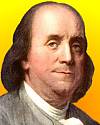
Died 17 Apr 1790 at age 84 (born 17 Jan 1706). quotes
American statesman, scientist, inventor, diplomat, author, printer and publisher who become widely known in European scientific circles for his reports of electrical experiments and theories. He invented a type of stove, still being manufactured, to give more warmth than open fireplaces and the lightning rod. He used bifocal eyeglasses also were his ideas. Grasping the fact that by united effort a community may have amenities which only the wealthy few can get for themselves, he helped establish institutions people now take for granted: a fire company (1736), a library (1731), an insurance company (1752), an academy (1751), and a hospital (1751). In some cases these foundations were the first of their kind in North America.
American statesman, scientist, inventor, diplomat, author, printer and publisher who become widely known in European scientific circles for his reports of electrical experiments and theories. He invented a type of stove, still being manufactured, to give more warmth than open fireplaces and the lightning rod. He used bifocal eyeglasses also were his ideas. Grasping the fact that by united effort a community may have amenities which only the wealthy few can get for themselves, he helped establish institutions people now take for granted: a fire company (1736), a library (1731), an insurance company (1752), an academy (1751), and a hospital (1751). In some cases these foundations were the first of their kind in North America.
Benjamin Franklin: An American Life, by Walter Isaacson. - book suggestion.
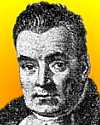
Died 17 Apr 1761 (born 1702). quotes
English theologian and mathematician who was the first to use probability inductively and who established a mathematical basis for probability inference (a means of calculating, from the frequency with which an event has occurred in prior trials, the probability that it will occur in future trials). This became the basis of a statistical technique, now called Bayesian estimation, for calculating the probability of the validity of a proposition on the basis of a prior estimate of its probability and new relevant evidence. Later statisticians cite disadvantages of the method that include the different ways of assigning prior distributions of parameters and the possible sensitivity of conclusions to the choice of distributions.
English theologian and mathematician who was the first to use probability inductively and who established a mathematical basis for probability inference (a means of calculating, from the frequency with which an event has occurred in prior trials, the probability that it will occur in future trials). This became the basis of a statistical technique, now called Bayesian estimation, for calculating the probability of the validity of a proposition on the basis of a prior estimate of its probability and new relevant evidence. Later statisticians cite disadvantages of the method that include the different ways of assigning prior distributions of parameters and the possible sensitivity of conclusions to the choice of distributions.
In 1970, The Apollo 13 mission ended safely with a splashdown in the Pacific Ocean, four days after the spacecraft aborted its mission while it was four-fifths of the way to the moon. It was crippled when a tank containing liquid oxygen burst. The astronauts made an extraordinary escape. Upon his return, astronaut A. J. Lovell, Jr. was the first American astronaut to travel over 700 hours in space.
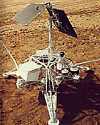
In 1967, the spacecraft Surveyor 3 was successfully launched from Cape Kennedy, Florida. It was the second US spacecraft to make a soft landing on the moon, where it studied the lunar surface and sent more than 6300 pictures back to Earth. A total of seven Surveyors were sent to the moon, which were to support the coming crewed Apollo landings by validating soft-landing technology and determining the lunar surface conditions. Surveyor 3 carried a survey television camera, soil mechanics experiments, and devices to measure temperature and radar reflectivity as on the earlier missions. Its mass was1026 kg at launch and 296 kg upon landing.«
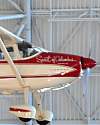
In 1964, Geraldine (“Jerrie”) Mock landed in Columbus, Ohio, becoming the first woman to complete a solo airplane flight around the world. She was a Columbus housewife with less than 800 hours logged in 7-1/2 years of flying experience, and had received her instrument rating less than a month before taking off from Columbus, on 19 Mar 1964, in a single-engine Cessna Model 180 aircraft on her 23,206-mile solo air voyage. The trip lasted 29-1/2 days with 21 stopovers. The insignia on the aircraft was “Spirit of Columbus,” but it was nick-named “Three-Eight Charlie.” She was born in Newark, Ohio, and had studied Aeronautical Engineering at Ohio State University. Though not without some problems, the ultimate success of her solo flight also reflects the reliability of small aircraft of the era.«
In 1930, the discovery of a new rubber-like compound was recorded by Dr. Arnold M. Collins in his laboratory notebook. He had noticed that a mixture that had stood from some weeks before, had solidified “to white, somewhat rubber-like masses,” from polymerization of monovinylacetylene mixed with concentrated HCl. He theorized the new compound was 2-chloro-1,3-butadiene. His research group at the Du Pont Company, over the next several weeks, but only gradually, recognized its potential as the first synthetic rubber. Wallace Carothers named it chloroprene. It was announced as DuPrene on 2 Nov 1931. After more development, it was sold as a material useful for products impervious to oil, for electrical wire insulation and as a coating compound. From 1936, it is known as Neoprene.«
In 1906, San Francisco was hit by a disastrous earthquake.
In 1861, the first oil well fire occurred at the Little and Merrick well at Oil Creek, near Rouseville, Pennsylvania. It ignited shortly after gushing, burned for three days, and resulted in 19 deaths.
In 1844, the first U.S. patent for a cylinder and flatbed combination printing press was issued to Robert Hoe.
In 1810, the first U.S. patent for pineapple cheese was issued to L.M. Norton of Troy, Pennsylvania.





