
Born 2 Nov 1932; died 28 Aug 2006 at age 73. quotes
American physicist and entrepreneur who shared (with Leon M. Lederman and Jack Steinberger) the Nobel Prize for Physics in 1988 for their research concerning neutrinos (subatomic particles that have no electric charge and virtually no mass). Using a beam of neutrinos, the team discovered a new kind of neutrino called a muon, and new information about the structure of particles called leptons. Neutrinos are produced when unstable atomic nuclei or subatomic particles disintegrate. Schwartz and his team wanted to study the “"weak” nuclear force that creates certain kinds of radioactivity. The team used a particle accelerator to create a high-intensity beam of neutrinos. They studied the reactions produced when this beam hit other matter.
American physicist and entrepreneur who shared (with Leon M. Lederman and Jack Steinberger) the Nobel Prize for Physics in 1988 for their research concerning neutrinos (subatomic particles that have no electric charge and virtually no mass). Using a beam of neutrinos, the team discovered a new kind of neutrino called a muon, and new information about the structure of particles called leptons. Neutrinos are produced when unstable atomic nuclei or subatomic particles disintegrate. Schwartz and his team wanted to study the “"weak” nuclear force that creates certain kinds of radioactivity. The team used a particle accelerator to create a high-intensity beam of neutrinos. They studied the reactions produced when this beam hit other matter.
Principles of Electrodynamics, by Melvin Schwartz. - book suggestion.
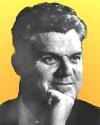
Born 2 Nov 1929.
Canadian physicist who in 1990 shared the Nobel Prize for Physics with Jerome Friedman and Henry Kendall for his collaboration in pioneering investigations concerning deep inelastic scattering of electrons on protons and bound neutrons, which have been of essential importance for the development of the quark model in particle physics. The team performed a series of experiments that confirmed the hypothesis that protons and neutrons are made up of quarks. This discovery was crucial to the formulation of the currently accepted theoretical description of matter and its interactions, known as the standard model.
Canadian physicist who in 1990 shared the Nobel Prize for Physics with Jerome Friedman and Henry Kendall for his collaboration in pioneering investigations concerning deep inelastic scattering of electrons on protons and bound neutrons, which have been of essential importance for the development of the quark model in particle physics. The team performed a series of experiments that confirmed the hypothesis that protons and neutrons are made up of quarks. This discovery was crucial to the formulation of the currently accepted theoretical description of matter and its interactions, known as the standard model.
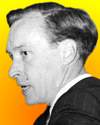
Born 2 Nov 1906; died 10 Feb 1993 at age 86.
Swedish astrophysicist and spectroscopist who showed that certain emission lines in the solar spectrum were due to transitions in highly ionized atoms. For seventy years, since the first corona line was discovered by Thomas Young (1869), and more later, astrophysicists had puzzled over their origin, for they existed in no known spectrum. Edlén presented his answer to the Royal Swedish Academy of Sciences on 12 Mar 1941. The high degree of ionization (loss of 9 to 15 electrons) in such atoms as iron, and calcium, implied that the temperature of the corona (the rarified outlying gases) was actually higher then the visible surface of the sun. With a large group of spectroscopists he established at Lund, Edlén worked on more elements in other ionization states. Star spectra can now be interpreted to yield composition and temperature information.«
Swedish astrophysicist and spectroscopist who showed that certain emission lines in the solar spectrum were due to transitions in highly ionized atoms. For seventy years, since the first corona line was discovered by Thomas Young (1869), and more later, astrophysicists had puzzled over their origin, for they existed in no known spectrum. Edlén presented his answer to the Royal Swedish Academy of Sciences on 12 Mar 1941. The high degree of ionization (loss of 9 to 15 electrons) in such atoms as iron, and calcium, implied that the temperature of the corona (the rarified outlying gases) was actually higher then the visible surface of the sun. With a large group of spectroscopists he established at Lund, Edlén worked on more elements in other ionization states. Star spectra can now be interpreted to yield composition and temperature information.«
Born 2 Nov 1897; died 7 Jul 1975 at age 77.
Norwegian-American meteorologist.
Norwegian-American meteorologist.
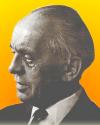
Born 2 Nov 1894; died 11 Feb 1976 at age 81.
Alexander M(artin) Lippisch was a German-American aerodynamicist whose designs of tailless and delta-winged aircraft in the 1920s and 1930s were important in the development of high-speed jet and rocket airplanes. Lippisch based his tailless arrow shaped aircraft on this example from nature - a flying seed of a tropical plant sent to him by a friend. He felt that the wing near the body should be thicker so that it could be utilized for additional storage, made possible by making the wing near the body longer. This is how he arrived at the delta shaped wing. His first motorized delta wing flew in 1931.
Alexander M(artin) Lippisch was a German-American aerodynamicist whose designs of tailless and delta-winged aircraft in the 1920s and 1930s were important in the development of high-speed jet and rocket airplanes. Lippisch based his tailless arrow shaped aircraft on this example from nature - a flying seed of a tropical plant sent to him by a friend. He felt that the wing near the body should be thicker so that it could be utilized for additional storage, made possible by making the wing near the body longer. This is how he arrived at the delta shaped wing. His first motorized delta wing flew in 1931.
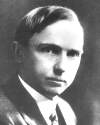
Born 2 Nov 1885; died 20 Oct 1972 at age 86. quotes
American astronomer known as “The Modern Copernicus,” who discovered the Sun's position in the galaxy. From 1914 to 1921 he was at Mt. Wilson Observatory, where he calibrated Henrietta S. Leavitt's period vs. luminosity relation for Cepheid variable stars and used it to determine the distances of globular clusters. He boldly and correctly proclaimed that the globulars outline the Galaxy, and that the Galaxy is far larger than was generally believed and centered thousands of light years away in the direction of Sagittarius. In the early 1920s, Shapley entered a “Great Debate” with Heber D. Curtis. They truly argued over the “Scale of the Universe.”
American astronomer known as “The Modern Copernicus,” who discovered the Sun's position in the galaxy. From 1914 to 1921 he was at Mt. Wilson Observatory, where he calibrated Henrietta S. Leavitt's period vs. luminosity relation for Cepheid variable stars and used it to determine the distances of globular clusters. He boldly and correctly proclaimed that the globulars outline the Galaxy, and that the Galaxy is far larger than was generally believed and centered thousands of light years away in the direction of Sagittarius. In the early 1920s, Shapley entered a “Great Debate” with Heber D. Curtis. They truly argued over the “Scale of the Universe.”
Harlow Shapley: Biography of an Astronomer: The Man Who Measured the Universe, by Doug West. - book suggestion.
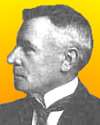
Born 2 Nov 1849; died 13 May 1920 at age 70.
Hungarian geologist who first scientifically described the mountains bordering the Tibetan Plateau that connect the Kunlun Mountains with the north-south-oriented belt of mountains and gorges in central China. In 1878, with the Hungarian Count Széchenyi Béla and Gustav Kreitner, he was the first western visitor to remote ancient Buddhist sites such as the oasis town of Dunhuang, situated at the edge of the Gobi desert, in the west of the present-day Chinese province of Gansu. He wrote many accounts his discoveries, and during his expeditions made many pictures for documentation.
Hungarian geologist who first scientifically described the mountains bordering the Tibetan Plateau that connect the Kunlun Mountains with the north-south-oriented belt of mountains and gorges in central China. In 1878, with the Hungarian Count Széchenyi Béla and Gustav Kreitner, he was the first western visitor to remote ancient Buddhist sites such as the oasis town of Dunhuang, situated at the edge of the Gobi desert, in the west of the present-day Chinese province of Gansu. He wrote many accounts his discoveries, and during his expeditions made many pictures for documentation.
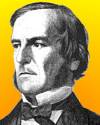
Born 2 Nov 1815; died 8 Dec 1864 at age 49. quotes
English mathematician and logician who helped establish modern symbolic logic and an algebra of logic, now called Boolean algebra. By replacing logical operations by symbols, Boole showed that the operations could be manipulated to give logically consistent results. Boole's logical algebra is essentially an algebra of classes, being based on such concepts as complement and union of classes. The study of mathematical or symbolic logic developed mainly from his ideas, and is basic to the design of digital computer circuits. Boolean algebras also find important applications in such diverse fields as topology, measure theory, probability and statistics. Boole also wrote important works on differential equations and other branches of mathematics.
English mathematician and logician who helped establish modern symbolic logic and an algebra of logic, now called Boolean algebra. By replacing logical operations by symbols, Boole showed that the operations could be manipulated to give logically consistent results. Boole's logical algebra is essentially an algebra of classes, being based on such concepts as complement and union of classes. The study of mathematical or symbolic logic developed mainly from his ideas, and is basic to the design of digital computer circuits. Boolean algebras also find important applications in such diverse fields as topology, measure theory, probability and statistics. Boole also wrote important works on differential equations and other branches of mathematics.
An Investigation of the Laws of Thought, by George Boole. - book suggestion.
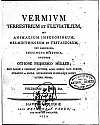
Born 2 Nov 1730; died 26 Dec 1784 at age 54.
German-Danish biologist and microscopist who concentrated on viewing bacteria, as previously seen only dimly by Antonie Leeuwenhoek. Despite the limited resolution of the microscopes of his time, Müller was the first to see bacteria with sufficient clarity to divide them into categories, and introduced to the world the new animal kingdom of Infusoria. In 1773, he was the first to describe diatoms. He coined the terms baccilum and spirillum and was also was the first to make a general classification of micro-organisms, following the scheme of Linnaeus. He invented the naturalist's dredge.
German-Danish biologist and microscopist who concentrated on viewing bacteria, as previously seen only dimly by Antonie Leeuwenhoek. Despite the limited resolution of the microscopes of his time, Müller was the first to see bacteria with sufficient clarity to divide them into categories, and introduced to the world the new animal kingdom of Infusoria. In 1773, he was the first to describe diatoms. He coined the terms baccilum and spirillum and was also was the first to make a general classification of micro-organisms, following the scheme of Linnaeus. He invented the naturalist's dredge.

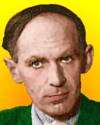

Kenneth Page Oakley was an English physical anthropologist, geologist and paleontologist who developed a method to date fossils bones by measuring their fluoride levels, based on a French mineralogist’s theory that bones would gradually absorb fluoride from surrounding soil. While working for the British Natural History Museum, Oakley become famous in 1953 for exposing a forgery. A “Piltdown Man” skull had been “unearthed” in 1912, in Piltdown, England, and had for decades been said to represent the “missing link” in human evolution. With his fluoride and other tests he proved the true age of the bones to be a modern human braincase and an orangutan jawbone. The bones of the forgery had been chemically stained to appear ancient.[Image right: The Piltdown skull as reconstructed by J. H McGregor]
The Piltdown Forgery, by J. S. Weiner. - book suggestion.
Died 2 Nov 1970 at age 79 (born 23 Jan 1891). quotes
Abram Samoilovitch Besicovitch was a Russian-British mathematician whose academic career began in St. Petersburg. Due to the complications of being of Jewish heritage during the Russian Revolution, he left the Soviet Union in 1925 and settled in Cambridge, England, the next year. In his body of work, he contributed to the theories of measure, sets of points, real analysis, surface area, and the additive theory of numbers. Besicovitch solved Kekeya’s famous problem (to determine the least area swept out by a straight line which is reversed in direction by a continuous motion in the plane. He demonstrated that result was, surprisingly, no least area. Besicovitch himself also presented deceptively simple problems which were in fact extremely difficult to solve«
Abram Samoilovitch Besicovitch was a Russian-British mathematician whose academic career began in St. Petersburg. Due to the complications of being of Jewish heritage during the Russian Revolution, he left the Soviet Union in 1925 and settled in Cambridge, England, the next year. In his body of work, he contributed to the theories of measure, sets of points, real analysis, surface area, and the additive theory of numbers. Besicovitch solved Kekeya’s famous problem (to determine the least area swept out by a straight line which is reversed in direction by a continuous motion in the plane. He demonstrated that result was, surprisingly, no least area. Besicovitch himself also presented deceptively simple problems which were in fact extremely difficult to solve«
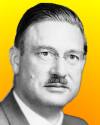
Died 2 Nov 1966 at age 82 (born 24 Mar 1884). quotes
Peter Joseph Wilhelm Debye was a Dutch-American physical chemist whose investigations of dipole moments, X rays, and light scattering in gases brought him the 1936 Nobel Prize for Chemistry. Most of his work was in chemical-physics with special interest in electrolytes and dipolar momentum analysis. He established a theory of specific heat with some improvements on that proposed by Einstein. Debye performed important work in the analysis of crystalline powders using X-ray diffraction techniques. He also determined the dimensions of gaseous molecules and the interatomic distances using X-rays.
Peter Joseph Wilhelm Debye was a Dutch-American physical chemist whose investigations of dipole moments, X rays, and light scattering in gases brought him the 1936 Nobel Prize for Chemistry. Most of his work was in chemical-physics with special interest in electrolytes and dipolar momentum analysis. He established a theory of specific heat with some improvements on that proposed by Einstein. Debye performed important work in the analysis of crystalline powders using X-ray diffraction techniques. He also determined the dimensions of gaseous molecules and the interatomic distances using X-rays.
Polar Molecules, by Peter J. W Debye. - book suggestion.
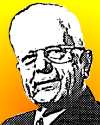

1914
William Coffin Coleman was an American inventor and industrialist widely known for his Coleman lantern, camping stoves and other camping equipment, manufactured by the Coleman Company that he founded. He introduced the first outdoor, all-weather gasoline-fuel lantern in 1914. It was advertised as shining with 300 candlepower, useful in barns, feed-lots or cellars. During World War I, over a million lamps were supplied, with U.S. government financial help, to farmers working well into the night to maintain the food supply. He then introduced a short-lived product line including gasoline powered appliances such as toasters, coffee percolators and clothes irons. Coleman stoves became army issue for World War II. By the time of his death, his company employed more than 2,500 people.«
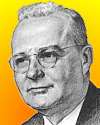
Died 2 Nov 1944 at age 55 (born 18 May 1889). quotes
American engineer and chemist who discovered the effectiveness of tetraethyl lead (C2H5)4Pb in 1921 as an antiknock additive for gasoline. Knocking jars the wall of the automobile cylinders by the explosion instead of steadily pushing the cylinder back. This wastes a large percentage of the energy and damages the engine. He also developed carbon tetrafluoride (CF4) a cleaning agent and in 1930 dichlorofluoromethane (CCl2F2) later called "Freon". This is a non-toxic and non-flammable gas, unreactive at normal temperatures but able to be easily liquified by pressure alone. It replaced toxic gases previously used in home refrigeration. more
American engineer and chemist who discovered the effectiveness of tetraethyl lead (C2H5)4Pb in 1921 as an antiknock additive for gasoline. Knocking jars the wall of the automobile cylinders by the explosion instead of steadily pushing the cylinder back. This wastes a large percentage of the energy and damages the engine. He also developed carbon tetrafluoride (CF4) a cleaning agent and in 1930 dichlorofluoromethane (CCl2F2) later called "Freon". This is a non-toxic and non-flammable gas, unreactive at normal temperatures but able to be easily liquified by pressure alone. It replaced toxic gases previously used in home refrigeration. more
From the Periodic Table to Production: The Life of Thomas Midgley, Jr., by Thomas Midgley. - book suggestion.
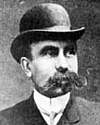
Died 2 Nov 1931 at age 75 (born 10 Nov 1855).
French automobile manufacturer, one of the first to plan mass production of motor vehicles. Darracq started out making sewing machines then founded the Gladiator Cycle company in 1891 making the Millet motorcycles. He turned to cars in the late 1890s in France. Later, Darracq manufactured electric cars and Millet motor bicycles. He began producing Léon Bollée voiturettes (1898), then produced quality automobiles under the Darracq, Talbot-Darracq,and Talbot trademarks, notably the Darracq Flying Fifteen (1904). He also built racing cars and operated a school for race drivers. In 1904 Darracq was the most successful car manfacturer in the world producing 1600 vehicles. The Italian branch factory was the origins of Alfa Romeo. He never learned to drive.
French automobile manufacturer, one of the first to plan mass production of motor vehicles. Darracq started out making sewing machines then founded the Gladiator Cycle company in 1891 making the Millet motorcycles. He turned to cars in the late 1890s in France. Later, Darracq manufactured electric cars and Millet motor bicycles. He began producing Léon Bollée voiturettes (1898), then produced quality automobiles under the Darracq, Talbot-Darracq,and Talbot trademarks, notably the Darracq Flying Fifteen (1904). He also built racing cars and operated a school for race drivers. In 1904 Darracq was the most successful car manfacturer in the world producing 1600 vehicles. The Italian branch factory was the origins of Alfa Romeo. He never learned to drive.
Died 2 Nov 1930 at age 84 (born 22 May 1846).
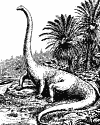
American paleontologist whose catalogs of fossil vertebrates greatly organized existing knowledge and became standard references. From 1912, he conduct his research at the United States National Museum where he assisted in working up and describing the museum's collections in vertebrate paleontology. Hay's primary scientific interest was the study of the Pleistocene vertebrata of North America. He is renowned for his work on skull and brain anatomy. His first major work was his Bibliography and Catalogue of the Fossil Vertebrata of North America (1902), supplemented by two more volumes (1929-30). Hay also wrote on the evidence of early humans in North America.«[Image: Diplodocus is portrayed as a slithering sauropod by Oliver P. Hay, 1910. From Oliver P. Hay, Proceedings of the Washington Academy of Sciences, vol. 12, 1910, pp. 1-25]
American paleontologist whose catalogs of fossil vertebrates greatly organized existing knowledge and became standard references. From 1912, he conduct his research at the United States National Museum where he assisted in working up and describing the museum's collections in vertebrate paleontology. Hay's primary scientific interest was the study of the Pleistocene vertebrata of North America. He is renowned for his work on skull and brain anatomy. His first major work was his Bibliography and Catalogue of the Fossil Vertebrata of North America (1902), supplemented by two more volumes (1929-30). Hay also wrote on the evidence of early humans in North America.«[Image: Diplodocus is portrayed as a slithering sauropod by Oliver P. Hay, 1910. From Oliver P. Hay, Proceedings of the Washington Academy of Sciences, vol. 12, 1910, pp. 1-25]
Bibliography and Catalogue of the Fossil Vertebrata of North America, by Oliver P. Hay. - book suggestion.
Died 2 Nov 1905 at age 88 (born 6 Jul 1817). quotes
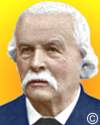
Rudolph Albert von Kölliker was a Swiss anatomist, physiologist and histologist who was one of the founders of embryology. His thorough microscopic work on tissues enabled him to be among the first to identify their structure. He showed that they were made up of cells, that did not freely come into being, but must develop from existing cells. Nerve fibres, he discovered, were elongated cells. In animal reproduction, he identified the cellular form of both the egg in the female, and the sperm from the male. Furthermore, he identified the formation of the sperm from the walls of the testes. In like fashion, pollen grains form from the cells of the anthers in flowers. Although he suspected the nucleus of the cell was involved in heredity, it was left to others coming later to recognize the function of the DNA molecules therein.«[Name also written as Koelliker.] more
Rudolph Albert von Kölliker was a Swiss anatomist, physiologist and histologist who was one of the founders of embryology. His thorough microscopic work on tissues enabled him to be among the first to identify their structure. He showed that they were made up of cells, that did not freely come into being, but must develop from existing cells. Nerve fibres, he discovered, were elongated cells. In animal reproduction, he identified the cellular form of both the egg in the female, and the sperm from the male. Furthermore, he identified the formation of the sperm from the walls of the testes. In like fashion, pollen grains form from the cells of the anthers in flowers. Although he suspected the nucleus of the cell was involved in heredity, it was left to others coming later to recognize the function of the DNA molecules therein.«[Name also written as Koelliker.] more
Died 2 Nov 1874 at age 55 (born 2 Jul 1819).
Scottish organic chemist who discovered pyridine. By distilling bone-oil and other animal material, he also discovered related compounds such as picoline. Other research with alkaloids yielded the structure of codeine. His other interests included agricultural chemistry, and research on anthracene.«
Scottish organic chemist who discovered pyridine. By distilling bone-oil and other animal material, he also discovered related compounds such as picoline. Other research with alkaloids yielded the structure of codeine. His other interests included agricultural chemistry, and research on anthracene.«
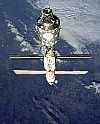
In 2000, an American astronaut and two Russian cosmonauts became the first permanent residents of the international space station, at the start of their four-month mission. After their Soyuz spacecraft linked up at 11:00am GMT, William Shepherd, Sergei Krikalev and Yuri Gidzenko entered the station, turned on the lights and life support systems, and proceeded to set up a live television link with the Russian mission control to confirm that the move-in was going well. They were confined to two of the space station's three rooms until space shuttle Endeavor arrived in early Dec. with giant solar panels that would provide all the necessary power.
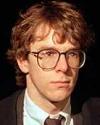
In 1988, a computer "worm" unleashed by a Cornell University graduate student, Robert T. Morris, began replicating wildly, clogging thousands of computers around the country. Intended as an experimental, self-replicating, self-propagating program, Morris soon discovered that the program was infecting machines at a much faster rate than he had anticipated. Computers were affected at many universities, military sites, and medical research facilities. When Morris realized what was happening he sent an anonymous message, instructing programmers how to kill the worm and prevent reinfection. However, because the network route was clogged, this message did not get through until it was too late. Morris, was later tried, fined and given probation.
In 1977, the identification of methanogens, a form of life dating back some 3.5 billion years, was reported by scientists at the University and Illinois. Microbiologist Carl R. Woese had long studied the evolutionary track of DNA and RNA. In 1976, he was approached by his colleague Ralph Wolfe, who presented a group of methane producing organisms. Woese studied their RNA and recognized their lack of the entire oligonucleotide sequences. He discovered the organisms were so different from bacteria, they deserved their own branch of the family tree as the third domain of life, Archaea. Methanogens are found in oxygen-deficient environments, and mostly obtain their energy by reducing carbon dioxide and oxidizing hydrogen, with the production of methane.
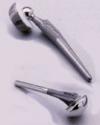
In 1957, the first titanium mill was opened in Toronto, Ohio by the Titanium Metals Corp. of America (TIMET). The birth of a tonnage structural metal industry is an unusual event. Only three such births have occurred in the past 100 years - aluminum, magnesium, and titanium. This mill was the first in the U.S. for rolling and forging titanium. The same company had previously opened a titanium plant on 1 Jun 1951 which was the first U.S. fully self-contained and fully integrated producer of titanium metal ingots from titanium ore. In Toronto, Ohio the ingots are forged into slabs, billets and bars. Slabs are subsequently hot rolled to sheet and plate or cold rolled for strip and welded tube applications, bar, rod, and wire.Image: Titanium hip and knee bone implants.
In 1955, American investigators Carlton Schwerdt and Frederick L. Schaffer crystallized the polio virus. This was the first animal virus to be obtained in crystalline form. (The first plant virus, tobacco mozaic virus, had been crystallized in 1935 by Wendell M. Stanley.) Each virus crystal is composed of many thousands of virus particles. Virus preparations pure enough to crystallize usually provide the best material for chemical studied. This was used to split the polio virus into infectious and non-infectious parts. Their research laid the groundwork for the polio vaccine.(Reference: Proc. Natl. Acad. Sci. 41:1020-1023)
Jonas Salk: Beyond the Microscope, by Victoria Sherrow. - book suggestion.

In 1950, concentrated milk was first test-marketed in the U.S. in Wilmington, Delaware. The Sealtest brand was produced by the Clover Dairy Company (a division of National Dairy Products Corporation). Fresh milk contains about 88% water. Partial water removal concentrates the milk to one-third of its original volume yielding a a heavy, creamy-looking milk. This gives benefits including improved shelf-life, reduced storage space, and lower weight saving transportation cost. The high-temperature processing of evaporated or condensed milk results in changed taste. Concentrated milk, however, is made at lower pressures and temperatures so that when water is added, it tastes like fresh whole milk with the same food values.«[Image: promotional pin-on button.]

In 1936, the world's first high-definition television service began by the BBC from studios and transmitters at Alexandra Palace, in north London. Its range was about 35 miles, though only 25 had been predicted. For a trial period, the 405-line Marconi-EMI system and the 240-line Baird system were used during alternate weeks, the aerial having to switch between them. By the toss of a coin, the Baird transmitting system was used first. The service was opened by a televised ceremony. Regular programmes thereafter were given twice a day, from 3-4 pm, and from 9-10 pm except on Sundays. With a system that was more mobile, flexible and easy to use, Marconi-EMI won the contract in February 1937.
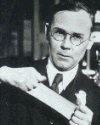
In 1931, The DuPont company, of Wilmington, Delaware, announced the first synthetic rubber. It was known as DuPrene, and from 1936 as Neoprene. Many scientists were trying to make natural rubber in the 1920s and 30s. One of the Wallace Carothers team, Gerard Berchet, had left a sample of monovinylacetylene in a jar with hydrochloric acid (HCl) for about five weeks. Then on 17 Apr 1930, coworker Arnold M. Collins happened to look in that jar and found a rubbery white material. The HCl had reacted with the vinylacetylene, making chloroprene, which then polymerized to become polychloroprene. The new rubber was expensive, but resisted oil and gasoline, which natural rubber didn't. It was the first good synthetic rubber.[Image: Wallace Carothers showing the new DuPrene product]




