

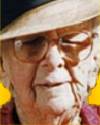
Kenneth Page Oakley was an English physical anthropologist, geologist and paleontologist who developed a method to date fossils bones by measuring their fluoride levels, based on a French mineralogist’s theory that bones would gradually absorb fluoride from surrounding soil. While working for the British Natural History Museum, Oakley become famous in 1953 for exposing a forgery. A “Piltdown Man” skull had been “unearthed” in 1912, in Piltdown, England, and had for decades been said to represent the “missing link” in human evolution. With his fluoride and other tests he proved the true age of the bones to be a modern human braincase and an orangutan jawbone. The bones of the forgery had been chemically stained to appear ancient.[Image right: The Piltdown skull as reconstructed by J. H McGregor]
The Piltdown Forgery, by J. S. Weiner. - book suggestion.
Born 7 Apr 1890; died 14 May 1998 at age 108. quotes
Marjory Stoneman Douglas (née Marjory Stoneman) was an American conservationist, author and journalist who advocated so tirelessly to maintain natural protection for the Florida Everglades wetlands, she earned nicknames like “The Grande Dame of the Everglades.” Her most significant book was The Everglades: River of Grass (1947), which changed perceptions of the wetlands from a worthless swamp to a valuable natural resource. Douglas established Friends of the Everglades as a conservation group. She was also active giving speeches for various other causes she passionately believed in, such as social justice. From her early career as a reporter for The Miami Herald, she was influential in the community, and gained more credibility from her 50 short stories which largely focused on the Florida environs.«
Marjory Stoneman Douglas (née Marjory Stoneman) was an American conservationist, author and journalist who advocated so tirelessly to maintain natural protection for the Florida Everglades wetlands, she earned nicknames like “The Grande Dame of the Everglades.” Her most significant book was The Everglades: River of Grass (1947), which changed perceptions of the wetlands from a worthless swamp to a valuable natural resource. Douglas established Friends of the Everglades as a conservation group. She was also active giving speeches for various other causes she passionately believed in, such as social justice. From her early career as a reporter for The Miami Herald, she was influential in the community, and gained more credibility from her 50 short stories which largely focused on the Florida environs.«
The Everglades: River of Grass, by Marjory Stoneman Douglas. - book suggestion.
Born 7 Apr 1884; died 16 May 1942 at age 58. quotes
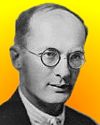
Bronislaw Kasper Malinowski was a Polish-British anthropologist, one of the most important in the 20th century, who is widely recognized as the founder of social anthropology. He is principally associated with field studies of the peoples of Oceania. In 1914, on a research assignment to Australia, the outbreak of WW I kept him partially confined to the Trobriand Islands, off the eastern tip of New Guinea. In 1920, he returned to teaching in London, and in 1938 moved to teach in the U.S. He was the pioneer of “participant observation” as a method of fieldwork, used in his works on the Trobriand Islanders, especially Argonauts of the Western Pacific (1922) and Coral Gardens and their Magic (2 vols, 1935), which set new standards for ethnographic description.
Bronislaw Kasper Malinowski was a Polish-British anthropologist, one of the most important in the 20th century, who is widely recognized as the founder of social anthropology. He is principally associated with field studies of the peoples of Oceania. In 1914, on a research assignment to Australia, the outbreak of WW I kept him partially confined to the Trobriand Islands, off the eastern tip of New Guinea. In 1920, he returned to teaching in London, and in 1938 moved to teach in the U.S. He was the pioneer of “participant observation” as a method of fieldwork, used in his works on the Trobriand Islanders, especially Argonauts of the Western Pacific (1922) and Coral Gardens and their Magic (2 vols, 1935), which set new standards for ethnographic description.
Magic, Science and Religion and Other Essays, by Bronislaw Malinowski. - book suggestion.
1889
Born 7 Apr 1869; died 6 Aug 1954 at age 85. quotes
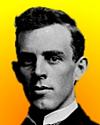
David Grandison Fairchild was an American botanist and plant explorer who supervised the introduction of over 20,000 exotic plants and varieties of established crops into the U.S., including soya beans, mangos, alfalfa, nectarines, horseradish, and flowering cherries. He spent 37 years seeking new and useful plants by travelling the world including the South Sea Islands, Australia, New Zealand, New Guinea, Japan, China, the Persian Gulf, Africa, the West Indies, and South America. In 1898 he set up a small plant introduction garden on a six-acre plot near Miami, Florida, especially interested in aesthetically valuable or economically useful exotic fruits and plants. He managed the Foreign Seed and Plant Introduction program of the U.S. Dept. of Agriculture (1906-28).«
David Grandison Fairchild was an American botanist and plant explorer who supervised the introduction of over 20,000 exotic plants and varieties of established crops into the U.S., including soya beans, mangos, alfalfa, nectarines, horseradish, and flowering cherries. He spent 37 years seeking new and useful plants by travelling the world including the South Sea Islands, Australia, New Zealand, New Guinea, Japan, China, the Persian Gulf, Africa, the West Indies, and South America. In 1898 he set up a small plant introduction garden on a six-acre plot near Miami, Florida, especially interested in aesthetically valuable or economically useful exotic fruits and plants. He managed the Foreign Seed and Plant Introduction program of the U.S. Dept. of Agriculture (1906-28).«
David Fairchild’s The World Was My Garden, by David Fairchild. - book suggestion.
Born 7 Apr 1869; died 9 Jul 1934 at age 65. quotes
William Hultz Walker was an American chemical engineer who reorganized the undergraduate program in industrial chemistry at the Massachusetts Institute of Technology to create a course of study in Chemical Engineering. He coauthored a seminal text on chemical engineering, Principles of Chemical Engineering (1923).
William Hultz Walker was an American chemical engineer who reorganized the undergraduate program in industrial chemistry at the Massachusetts Institute of Technology to create a course of study in Chemical Engineering. He coauthored a seminal text on chemical engineering, Principles of Chemical Engineering (1923).
Born 7 Apr 1866; died 17 Aug 1927 at age 61.
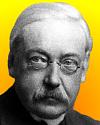
Erik Ivar Fredholm was a Swedish mathematician who is remembered for Fredholm integral equations with applications in mathematical physics and actuarial science. His first paper (1890) was on a special class of functions inspired by the heat equation. His 1898 doctoral dissertation involved a study of partial differential equations motivated by an equilibrium problem in elasticity. Fredhlom also had a career in actuarial science and from 1902 onwards he studyied various questions in this area, including an elegant formula he proposed to determine the surrender value of a life insurance policy. He built a machine to solve differential equations. David Hilbert extended one of Fredholm's integral equations discoving Hilbert spaces on which would be built the quantum theory.«
Erik Ivar Fredholm was a Swedish mathematician who is remembered for Fredholm integral equations with applications in mathematical physics and actuarial science. His first paper (1890) was on a special class of functions inspired by the heat equation. His 1898 doctoral dissertation involved a study of partial differential equations motivated by an equilibrium problem in elasticity. Fredhlom also had a career in actuarial science and from 1902 onwards he studyied various questions in this area, including an elegant formula he proposed to determine the surrender value of a life insurance policy. He built a machine to solve differential equations. David Hilbert extended one of Fredholm's integral equations discoving Hilbert spaces on which would be built the quantum theory.«
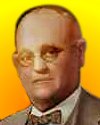
Born 7 Apr 1860; died 6 Oct 1951 at age 91.
William Keith Kellogg was an American industrialist and philanthropist who founded (1906) the W.K. Kellogg Company to manufacture cereal products as breakfast foods. His cereals have found widespread use throughout the United States.
William Keith Kellogg was an American industrialist and philanthropist who founded (1906) the W.K. Kellogg Company to manufacture cereal products as breakfast foods. His cereals have found widespread use throughout the United States.
The Original Has This Signature: W.K. Kellogg, by Horace B Powell. - book suggestion.
(EB)
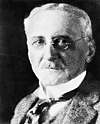
Born 7 Apr 1859; died 11 Feb 1924 at age 64. quotes
German-born American biologist noted chiefly for his experimental work on artificial parthenogenesis (reproduction without fertilization). Loeb was able to bring the unfertilized eggs of urchins and frogs to maturity by manipulating their environment, which influenced cell division. He also studied the tropisms of plants and simple animals, which means their reflexive responses to environmental stimuli. Before the age of thirty he published the "tropism theory" which was destined to make him famous. Loeb also worked on brain physiology and tissue regeneration.
German-born American biologist noted chiefly for his experimental work on artificial parthenogenesis (reproduction without fertilization). Loeb was able to bring the unfertilized eggs of urchins and frogs to maturity by manipulating their environment, which influenced cell division. He also studied the tropisms of plants and simple animals, which means their reflexive responses to environmental stimuli. Before the age of thirty he published the "tropism theory" which was destined to make him famous. Loeb also worked on brain physiology and tissue regeneration.
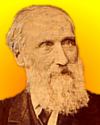
Born 7 Apr 1817; died 13 Aug 1881 at age 64.
Italian chemist and toxicologist who is considered one of the founders of colloid chemistry. He coined (1870) the word ptomaine to denote certain nitrogenous compounds easily detectible by smell. Ptomaines (Greek ptoma, carcass or corpse) are the products of protein decay. Doubtless because they are extremely malodorous, Selmi believed these alkaloids to be the primary cause of food poisoning. Although the term "ptomaine poisoning" is still commonly used in the scientific community to designate food poisoning, it is now known that ptomaines do not themselves cause illness (which instead is caused by microorganisms and their toxins.)
Italian chemist and toxicologist who is considered one of the founders of colloid chemistry. He coined (1870) the word ptomaine to denote certain nitrogenous compounds easily detectible by smell. Ptomaines (Greek ptoma, carcass or corpse) are the products of protein decay. Doubtless because they are extremely malodorous, Selmi believed these alkaloids to be the primary cause of food poisoning. Although the term "ptomaine poisoning" is still commonly used in the scientific community to designate food poisoning, it is now known that ptomaines do not themselves cause illness (which instead is caused by microorganisms and their toxins.)
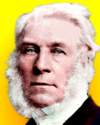
Born 7 Apr 1809; died 7 Feb 1903 at age 93. quotes
English meteorologist and aeronaut who, between 1862-66, mostly with Henry Tracey Coxwell, made balloon ascents, many of which were arranged by a committee of the British Association. The object was to carry out scientific observations such as the variation in temperature and humidity of the atmosphere at high elevations. On 5 Sep 1862, ascending from Wolverhampton, Glaisher and his companion attained the greatest height that had then been reached by a balloon carrying passengers. The precise altitude at the highest point is unknown because Glaisher lost consciousness and was unable to read the barometer, but estimated at 7 miles high. He produced dew-point tables (1847) and wrote several scientific books including Travels in the Air .« more
English meteorologist and aeronaut who, between 1862-66, mostly with Henry Tracey Coxwell, made balloon ascents, many of which were arranged by a committee of the British Association. The object was to carry out scientific observations such as the variation in temperature and humidity of the atmosphere at high elevations. On 5 Sep 1862, ascending from Wolverhampton, Glaisher and his companion attained the greatest height that had then been reached by a balloon carrying passengers. The precise altitude at the highest point is unknown because Glaisher lost consciousness and was unable to read the barometer, but estimated at 7 miles high. He produced dew-point tables (1847) and wrote several scientific books including Travels in the Air .« more
Travels in the air, by James Glaisher. - book suggestion.
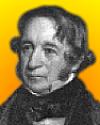
Born 7 Apr 1775; died 10 Aug 1817 at age 42.
American manufacturer who was the principal founder of a textile mill carrying out all operations involved to process raw cotton into finished cloth. Believed to be the world's first mill to pioneer the combination of all production operations, it was important in the development of the New England texile industry. For two years, from 1810, he studied the British textile industy in Lancashire and Scotland, then teamed with his Nathan Appleton and his brother-in law, Tracy Jackson to establish the Boston Manufacturing Company in Waltham, Massachusetts and build a factory (1813-14) on the Charles River. Lowell worked with mechanic Paul Moody to develop an efficient power loom, the first constructed in the U.S. (1814) and a spinning apparatus. Moody also oversaw the factory operations and made other innovations.«
American manufacturer who was the principal founder of a textile mill carrying out all operations involved to process raw cotton into finished cloth. Believed to be the world's first mill to pioneer the combination of all production operations, it was important in the development of the New England texile industry. For two years, from 1810, he studied the British textile industy in Lancashire and Scotland, then teamed with his Nathan Appleton and his brother-in law, Tracy Jackson to establish the Boston Manufacturing Company in Waltham, Massachusetts and build a factory (1813-14) on the Charles River. Lowell worked with mechanic Paul Moody to develop an efficient power loom, the first constructed in the U.S. (1814) and a spinning apparatus. Moody also oversaw the factory operations and made other innovations.«
The Life and Times of Francis Cabot Lowell, 1775-1817, by Chaim M. Rosenberg. - book suggestion.
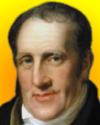
Born 7 Apr 1767; died 14 Mar 1830 at age 62.
Scottish engineer who began Europe's first successful steamship service, with his paddle steamboat, Comet, on the River Clyde in Scotland. In 1790, at age 23, he was a carpenter at Glasgow. He became interested in steam navigation, and corresponded with Robert Fulton, who later began the world's first commercial steamboat service in New York (17 Aug 1807). In 1811, Bell commissioned a 30-ton vessel from John Wood, a Port Glasgow shipbuilder, and it was fitted with a three horsepower Boulton & Watt steam engine. It was delivered on 6 Aug 1812, to a central Glasgow quay. Commercial service began two days later, travelling 24 miles between there and Greenock in under five hours. By 1819, it offered a four-day journey to Fort William. In 1820, it wrecked in strong currents near Oban.«
Scottish engineer who began Europe's first successful steamship service, with his paddle steamboat, Comet, on the River Clyde in Scotland. In 1790, at age 23, he was a carpenter at Glasgow. He became interested in steam navigation, and corresponded with Robert Fulton, who later began the world's first commercial steamboat service in New York (17 Aug 1807). In 1811, Bell commissioned a 30-ton vessel from John Wood, a Port Glasgow shipbuilder, and it was fitted with a three horsepower Boulton & Watt steam engine. It was delivered on 6 Aug 1812, to a central Glasgow quay. Commercial service began two days later, travelling 24 miles between there and Greenock in under five hours. By 1819, it offered a four-day journey to Fort William. In 1820, it wrecked in strong currents near Oban.«
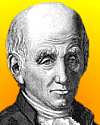
Born 7 Apr 1727; died 3 Aug 1806 at age 79.
French botanist who established natural classification as a fundamental aim of biology. From 1748 he spent five years exploring Senegal, where he not only described and collected its flora and fauna, but also collected objects of commerce, drew maps, made meteorological and astronomical observations, and studied the languages. He classified the mollusks in an original way: by the anatomical structure of the living animals within the shells. The number and diversity of tropical plants in Senegal led him to consider grouping plants based on all their physical characteristics (rather than a few arbitrarily selected ones), with an emphasis on families. In 1763, he published his sytem in Familles des Plantes. The baobob tree is known by the genus Adansonia.«
French botanist who established natural classification as a fundamental aim of biology. From 1748 he spent five years exploring Senegal, where he not only described and collected its flora and fauna, but also collected objects of commerce, drew maps, made meteorological and astronomical observations, and studied the languages. He classified the mollusks in an original way: by the anatomical structure of the living animals within the shells. The number and diversity of tropical plants in Senegal led him to consider grouping plants based on all their physical characteristics (rather than a few arbitrarily selected ones), with an emphasis on families. In 1763, he published his sytem in Familles des Plantes. The baobob tree is known by the genus Adansonia.«

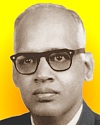
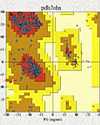
Ramachandran plot
Gopalasamudram Narayanan Ramachandran was an Indian biophysicist who discovered the triple helical “coiled coil” structure of the collagen molecule, among other remarkable contributions to structural biology. Ramachandran was a master of X-ray crystallography, and with his colleagues, he constructed space filling models of protein molecules. He devised the Ramachandran Plot, a method to diagram the conformation of polypeptides, polysaccharides and polynucleotides. It remains the international standard to describe protein structures. Ramachandran also explored artificial intelligence (AI), inspired by the ancient Syaad Nyaaya (doctrine of may be). He developed the Boolean Vector Matrix Formulation which has important application in writing software for AI.«
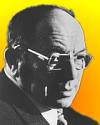
Died 7 Apr 1986 at age 74 (born 19 Jan 1912).
Soviet mathematician and economist who shared the 1975 Nobel Prize for Economics with Tjalling Koopmans for their work on the optimal allocation of scarce resources. Kantorovich's background was entirely in mathematics but he showed a considerable feel for the underlying economics to which he applied the mathematical techniques. He was one of the first to use linear programming as a tool in economics and this appeared in a publication Mathematical methods of organising and planning production which he published in 1939. The mathematical formulation of production problems of optimal planning was presented here for the first time and the effective methods of their solution and economic analysis were proposed.
Soviet mathematician and economist who shared the 1975 Nobel Prize for Economics with Tjalling Koopmans for their work on the optimal allocation of scarce resources. Kantorovich's background was entirely in mathematics but he showed a considerable feel for the underlying economics to which he applied the mathematical techniques. He was one of the first to use linear programming as a tool in economics and this appeared in a publication Mathematical methods of organising and planning production which he published in 1939. The mathematical formulation of production problems of optimal planning was presented here for the first time and the effective methods of their solution and economic analysis were proposed.
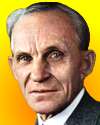
Died 7 Apr 1947 at age 83 (born 30 Jul 1863). quotes
American inventor and automobile manufacturer who first experimented with internal combustion engines while he was an engineer with the Edison Illuminating Company. He completed his first useful gas motor on 24 Dec 1893. The Quadricycle, he designed made its first road test on 4 Jun 1896. On 16 Jun 1903, he and eleven investors signed paperwork to incorporate the Ford Motor Company. By 1 Oct 1908, Ford introduced the low cost, reliable Model T, while continuing to revolutionize his industry. Ford introduced precision manufactured parts designed to be standardized and interchangeable parts. On 1 Dec 1913, production was increased using a continuous moving assembly line. By 1918, half of all cars in America were Model T's. The last Model T rolled off the assembly line on 26 May 1927.
American inventor and automobile manufacturer who first experimented with internal combustion engines while he was an engineer with the Edison Illuminating Company. He completed his first useful gas motor on 24 Dec 1893. The Quadricycle, he designed made its first road test on 4 Jun 1896. On 16 Jun 1903, he and eleven investors signed paperwork to incorporate the Ford Motor Company. By 1 Oct 1908, Ford introduced the low cost, reliable Model T, while continuing to revolutionize his industry. Ford introduced precision manufactured parts designed to be standardized and interchangeable parts. On 1 Dec 1913, production was increased using a continuous moving assembly line. By 1918, half of all cars in America were Model T's. The last Model T rolled off the assembly line on 26 May 1927.
My Life and Work, by Henry Ford. - book suggestion.
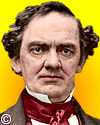
Died 7 Apr 1891 at age 80 (born 5 Jul 1810).
Phineas Taylor Barnum was an American museum administrator and circus owner who is remembered for his showmanship, but began as proprietor of his American Museum in New York City, which included not just freak shows, but also serious scientific exhibits, for which he actively collected natural history specimens.
Phineas Taylor Barnum was an American museum administrator and circus owner who is remembered for his showmanship, but began as proprietor of his American Museum in New York City, which included not just freak shows, but also serious scientific exhibits, for which he actively collected natural history specimens.
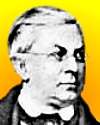
Died 7 Apr 1885 at age 81 (born 16 Feb 1804).
German zoologist who studied primarily invertebrates (such as jelly fish, intestinal worms, salamanders and freshwater fish) He also investigated life cycles of parasites and discovered the parthenogenesis of the honeybee (the development of an organism from an unfertilized egg). In 1848, with Koelliker, he created Zeitschrift für wissenschaftliche Zoologie ("Journal of Scientific Zoology"), which he edited until his death.«
German zoologist who studied primarily invertebrates (such as jelly fish, intestinal worms, salamanders and freshwater fish) He also investigated life cycles of parasites and discovered the parthenogenesis of the honeybee (the development of an organism from an unfertilized egg). In 1848, with Koelliker, he created Zeitschrift für wissenschaftliche Zoologie ("Journal of Scientific Zoology"), which he edited until his death.«
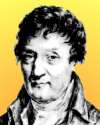
Died 7 Apr 1823 at age 76 (born 12 Nov 1746). quotes
French mathematician, physicist, and inventor. When Benjamin Franklin visited France in 1779, Charles was inspired to study physics. He soon became an eloquent speaker to non-scientific audiences. His lectures and demonstrations attracted notable patrons and helped popularize Franklin's theory of electricity and other new scientific concepts. With Anne-Jean and Nicolas Robert, he made several balloon ascents, and was the first to use hydrogen for balloon inflation (1783). Charles invented most of the equipment that is still used in today's balloons. About 1787 he developed Charles's law concerning the thermal expansion of gases that for a gas at constant pressure, its volume is directly proportional to its absolute temperature.
French mathematician, physicist, and inventor. When Benjamin Franklin visited France in 1779, Charles was inspired to study physics. He soon became an eloquent speaker to non-scientific audiences. His lectures and demonstrations attracted notable patrons and helped popularize Franklin's theory of electricity and other new scientific concepts. With Anne-Jean and Nicolas Robert, he made several balloon ascents, and was the first to use hydrogen for balloon inflation (1783). Charles invented most of the equipment that is still used in today's balloons. About 1787 he developed Charles's law concerning the thermal expansion of gases that for a gas at constant pressure, its volume is directly proportional to its absolute temperature.
Died 7 Apr 1816 at age 65 (born 22 Sep 1750). quotes
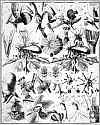
German botanist and teacher whose studies of sex in plants led him to a general theory of fertilization which, basically, is accepted today. Although director of a school at Spandau and tutor in Berlin, he devoted himself chiefly to the study of flowering plants. Sprengel's 1793 treatise [illustration at left] on floral structure examines the ways that flower colors, scents, shapes, and markings work harmoniously to attract insects for pollination. A clergyman and botanist, he spent his life researching the role played by the wind and insects in the fertilization of flowers. Although Sprengel's work was neglected by his contemporaries, Charles Darwin later praised Sprengel's work and brought it brought to public attention.
German botanist and teacher whose studies of sex in plants led him to a general theory of fertilization which, basically, is accepted today. Although director of a school at Spandau and tutor in Berlin, he devoted himself chiefly to the study of flowering plants. Sprengel's 1793 treatise [illustration at left] on floral structure examines the ways that flower colors, scents, shapes, and markings work harmoniously to attract insects for pollination. A clergyman and botanist, he spent his life researching the role played by the wind and insects in the fertilization of flowers. Although Sprengel's work was neglected by his contemporaries, Charles Darwin later praised Sprengel's work and brought it brought to public attention.

In 2000, NASA launched the 2001 Mars Odyssey spacecraft on a Delta 2 rocket. Stunning images were sent back by the rocket's TV cameras during its fiery ascent. Odyssey would travel 286 million miles before entering orbit around the red planet on 24 Oct 2001. Its primary mission was to look for water in the form of ice under the Martian surface and to create a thermal map of the planet. From an altitude of about 250 miles, the spacecraft was to search for traces of hydrogen, which could point out the existence of water.
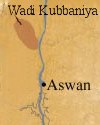
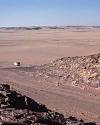
The Wadi Kubbaniya Skeleton: A Late Paleolithic Burial from Southern Egypt, by Fred Wendorf, et. al. - book suggestion.
In 1978, President Jimmy Carter deferred production of America's neutron bomb. In a statement on enhanced radiation weapons, he announced neither a commitment nor a rejection of the neutron bomb, but production was “deferred,” dependent on subsequent actions of the Soviet Union. He said: “I have decided to defer production of weapons with enhanced radiation effects. The ultimate decision regarding the incorporation of enhanced radiation features into our modernized battlefield weapons will be made later, and will be influenced by the degree to which the Soviet Union shows restraint in its conventional and nuclear arms programs and force deployments affecting the security of the United States and Western Europe.” President Ronald Reagan ordered production of neutron warheads in 1981.«

In 1964, IBM launched System/360, a familyof six mutually compatible computers and 40 peripherals that could work together. Many consider it the biggest business gamble of all time, yet the System/360 helped transform the government, science and commercial landscape. It introduced a number of industry standards to the marketplace, including the de facto worldwide standard of the 8-bit byte. The $5 billion investment by IBM paid off, and within two years orders for the System/360 reached 1,000 per month. Customers could choose from small to large, low to high performance, (nearly) all running the same command set, allowing customers to begin with a low-cost version of the family, and upgrade later.
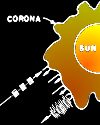
In 1959, the first distinguishable echo was recorded of a radar signal bounced off the Sun—considered a milestone in the emerging field of radar astronomy. A three-person team from the Radioscience Laboratory, Stamford University, led by electrical engineering Professor Von R. Eshleman, recorded an echo from the outer corona of the sun, 17 min. after transmission. They used an IBM computer for signal processing. The echo signal was extracted from a background noise 10,000 times greater due to the Sun's normal radio radiation. Earlier in 1959, a team at MIT had bounced a radar signal off Venus, 18 million miles away. The Stamford team set a new record distance with the Sun, a difficult target at 93 million miles away. Their accomplishment was published in Science (5 Feb 1960, p.329-33).«

In 1959, it was reported that the first generation of electricity direct from uranium heated by fission in a reactor took place at Los Alamos Scientific Laboratory, New Mexico. It used a “plasma thermocouple” in the reactor without any boiler or turbine of a conventional power station. The device produced merely 3.8 volts, 30-40 amps current, and with low efficiency that made it unlikely to have any immediate practical application. It was an interesting application of Seebeck's thermo-electric effect (1821) by which a current will flow in a circuit formed by different conductors joined with two junctions at different temperatures. The Los Alamos experiment used a rod of uranium carbide, heated by fusion of its U-235 content, in a plasma atmosphere of casesium metal in a metal container with cooled exterior.«
In 1959, a patent for "improved photo-engraving" was issued to Sherman Fairchild, No. 2,881,246.
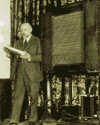
In 1927, the first public display of a long distance television transmission was viewed by a group of newspaper reporters and dignitaries in the auditorium of AT&T Bell Telephone Laboratories, New York. The research at AT&T was led by Herbert Ives, who introduceded the system to the audience, followed by a broadcast speech by the then Secretary of Commerce, Herbert Hoover from Washington, D.C.. Both the live picture and voice were transmitted by wire, over telephone lines. Hoover said,“Today we have, in a sense, the transmission of sight for the first time in the world's history,” and also, “Human genius has now destroyed the impediment of distance in a new respect, and in a manner hitherto unknown.” The accomplishment was heralded with great acclaim by the press.«[Image: Before the demonstration began, tells the audience about the photoelectric cells, which served as the “eyes” of the television.]
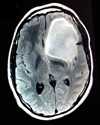
brain tumor MRI (2014)
In 1923, the first operation using only local anesthetic during removal of a brain tumour was performed using cocaine on the patient’s scalp. The condition of the patient, Henry A. Brown, had been deemed too risky for the usual general anethesia. The procedure was undertaken at Beth Israel Hospital in New York City by a team of surgeons led by Dr. Karl Winfield Ney. The large tumor, measuring 4"×2"× ¾", was life-threatening, though the cancer itself was benign. Brown remained fully conscious while his skull was opened, able to answer the doctors’ questions and was reported to have “cooperated cheerfully”. Ney was previously chief of surgery for the French Red Cross.«*
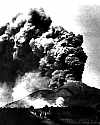
In 1906, an eruption of Mount Vesuvius reached its climax with lava fountains, earthquakes and an eruptive column of ash and gas that reached a height of 13,000-m. The top of Vesuvius was truncated, and formed a crater approx. 500-m diam. and 250-m deep. It had been active since May 1905 with slow lava effusions, and from Jan 1906 some intermittent explosive (strombolian) activity. After its climax, various minor activity occurred until its last eruption in Mar 1944.«[Image: 1906 eruption photograph by American vulcanologist Frank Perret]
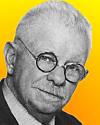
Lake
In 1896, inventor Simon Lake was issued a U.S. patent for his "Submarine Locomotive" (No. 557,835), which he designed with underwater salvage operations in mind. It was fitted with traction wheels to travel the water-bed, and a crane hoist at the front. A diver's compartment with a bottom door could be filled with compressed air at the same pressure as the surrounding water to enable the diver to exit and enter the vessel underwater to have "an aperture on one side closed by means of a vibratory disphragm, and a combined air-supply and speakingtube connecting ... with a diver's helmet." He improved his design with a later patent issued 20 Apr 1897 (No. 581,213). On 16 Dec 1897 he demonstrated submarine Argonaut.«
Argonaut: The Submarine Legacy of Simon Lake, by John J. Poluhowich. - book suggestion.
In 1896, a patent for "justifying lines of type" was issued to Tolbert Langston, No. 557,994.
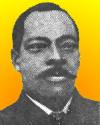
In 1885, Granville T. Woods, a prolific black American inventor, patented an “Apparatus for Transmission of Messages by Electricity,” No. 315,368. In the following years he introduced numerous innovations for use on railroads, applying electricity for telegraphy, brakes, overhead conductors, controls and an electric railway.
Black Inventors in the Age of Segregation, by Rayvon Fouche. - book suggestion.
(USPTO)
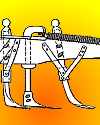
In 1874, an “Improvement in Cotton-Cultivators” was issued a U.S. patent for its black American inventor, Edward H. Sutton, of Edenton, north Carolina (No. 149,543). A horizontal beam, mounted on wheels, had a harness coupling at the front, and carried three blades. Teeth on the forward blade were intended to loosen and pulverise the soil, followed by two blades to cut weeds. The middle of the three blades was arranged to “be rotated in such a manner as to cut the weeds or thin out the growing cotton which is beyond the reach of the stationary blade” at the back. Adjustment of the middle blade was made using a spring-loaded lever attached from to one of the operator's handles behind the plough. The short patent application was made on 10 Feb 1874, and issued less than two months later.«[Image: detail from patent drawing, showing blades.]
The Inventive Spirit of African Americans: Patented Ingenuity, by Patricia Carter Sluby. - book suggestion.

/WalkerJohn(1781-1859)Thm.jpg)
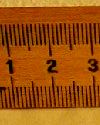
In 1795, France adopted by law, the metre as the unit of length and the base of the metric system. Since there had been no uniformity of French weights and measures prior to the Revolution, the Academy of Sciences had been charged on 8 May 1790 to organise a better system. Jean Delambre and Pierre Méchain measured an arc of the meridian from Dunkirk to Barcelona, so that the metre could be defined as one ten-millionth part of the distance between the poles and the equator.
The Measure of All Things: The Seven-Year Odyssey and Hidden Error That Transformed the World, by Ken Alder. - book suggestion.
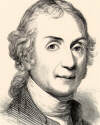
In 1794, chemist Joseph Priestley (1733-1804) forever left England and travelled to the United States. The previous year, on 14 Jul 1791, his laboratory, home and library were burned to destruction by a mob of people angry at his support of the French Revolution. His French colleague, Antoine Lavoisier, was executed a week after he left England. Priestley's discovery of oxygen was 20 years earlier, on 1 Aug 1774. During the last years of his life in America he spent his time quietly writing, and furthering the cause of Unitarianism in the new nation.
Joseph Priestley: Adventurer in Science and Champion of Truth, by F W. Gibbs. - book suggestion.




