
Born 29 Mar 1941.
American radio astronomer and physicist who shared the 1993 Nobel Prize in Physics for co-discovering (1974, with Russell A. Hulse) the first binary pulsar, PSR B1913+16, a system of a pulsar and an unseen companion star, orbiting each other. As the pulsar emits regular radio-frequency “beeps”, it offered a new method to study gravitation. Precise timing of pulse arrival times, revealed orbital decay exactly as predicted by Einstein’s general theory of relativity—the first indirect evidence for gravitational waves. The 305-m (1,000-foot) radio telescope at Arecibo, Puerto Rico, used by the Princeton researchers, was an extremely sensitive instrument for detecting radio waves from deep space. Their work gave pulsar astronomy a high-precision tool for testing fundamental physics.«[Encyclopedia Britannica gives birth date as 24 Mar 1941.]
American radio astronomer and physicist who shared the 1993 Nobel Prize in Physics for co-discovering (1974, with Russell A. Hulse) the first binary pulsar, PSR B1913+16, a system of a pulsar and an unseen companion star, orbiting each other. As the pulsar emits regular radio-frequency “beeps”, it offered a new method to study gravitation. Precise timing of pulse arrival times, revealed orbital decay exactly as predicted by Einstein’s general theory of relativity—the first indirect evidence for gravitational waves. The 305-m (1,000-foot) radio telescope at Arecibo, Puerto Rico, used by the Princeton researchers, was an extremely sensitive instrument for detecting radio waves from deep space. Their work gave pulsar astronomy a high-precision tool for testing fundamental physics.«[Encyclopedia Britannica gives birth date as 24 Mar 1941.]
Born 29 Mar 1941.
American atmospheric physicist who advocates for actions to protect the future of the planet from climate change. He was Director of the NASA Goddard Institute for Space Studies (1981-2013). On 25 Jun 1988, he testified to the Senate Energy and Natural Resources Committee, that there was 99% certainty the cause of climate change was known with 99% certainty to be the buildup of carbon dioxide and other artificial gases in the atmosphere. Hansen started at Columbia University as a research associate in 1969, and taught there from 1978 there until in 2013, he was named Director of its Program on Climate Science, Awareness and Solutions. He is now recognised as one of the world's most influential speakers on the subject of climate change.«
American atmospheric physicist who advocates for actions to protect the future of the planet from climate change. He was Director of the NASA Goddard Institute for Space Studies (1981-2013). On 25 Jun 1988, he testified to the Senate Energy and Natural Resources Committee, that there was 99% certainty the cause of climate change was known with 99% certainty to be the buildup of carbon dioxide and other artificial gases in the atmosphere. Hansen started at Columbia University as a research associate in 1969, and taught there from 1978 there until in 2013, he was named Director of its Program on Climate Science, Awareness and Solutions. He is now recognised as one of the world's most influential speakers on the subject of climate change.«
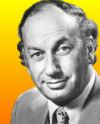
Born 29 Mar 1927; died 19 Nov 2004 at age 77.
English biochemist, who shared the 1982 Nobel Prize for Physiology or Medicine (with Sune K. Bergström and Bengt Ingemar Samuelsson of Sweden) for their isolation, identification, and analysis of prostaglandins. In 1971, Vane discovered how aspirin's effect was to block the formation of the prostaglandins involved in pain, fever, and inflammation. Further, a relatively small dose (75 mg/day) prevents blood clotting and lessen heart attacks, strokes and leg thromboses. In 1976, he discovered prostacyclin, a blood-vessel dilating prostaglandin that inhibits blood-clotting. His discoveries led to the Ace inhibitors, a new class of drugs giving life-saving benefits to patients with pulmonary hypertension, and new treatments for heart disease.«
English biochemist, who shared the 1982 Nobel Prize for Physiology or Medicine (with Sune K. Bergström and Bengt Ingemar Samuelsson of Sweden) for their isolation, identification, and analysis of prostaglandins. In 1971, Vane discovered how aspirin's effect was to block the formation of the prostaglandins involved in pain, fever, and inflammation. Further, a relatively small dose (75 mg/day) prevents blood clotting and lessen heart attacks, strokes and leg thromboses. In 1976, he discovered prostacyclin, a blood-vessel dilating prostaglandin that inhibits blood-clotting. His discoveries led to the Ace inhibitors, a new class of drugs giving life-saving benefits to patients with pulmonary hypertension, and new treatments for heart disease.«
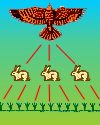
Charles Sutherland Elton was an English biologist who is credited with describing the “sociology and economy of animals,” thus outlining the basic principles of modern animal ecology. He thought of the “community” as a group of species related through the food chains. Elton developed the idea of a food chain in 1927. He described the way plants get energy from sunlight, plant-eating animals get their energy from eating plants, and meat-eating animals get their energy from eating other animals. Elton’s pyramid of numbers shows how energy flow links organisms to form the biological community. In 1932, Elton created the Bureau of Animal Population at Oxford, which was a mecca for ecologists from around the world, until its demise when he retired in 1967.
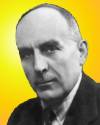
Born 29 Mar 1890; died 3 Nov 1960 at age 70. quotes
English astronomer who was 10th astronomer royal of England (1933–55). His work was devoted to fundamental positional astronomy. While HM Astronomer at the Cape of Good Hope, he worked on proper motions and parallaxes. Later he showed that small residuals in the apparent motions of the planets are due to the irregular rotation of the earth. He led in the worldwide effort to determine the distance to the sun by triangulating the distance of the asteroid Eros when it passed near the earth in 1930-31. Spencer Jones also improved timekeeping and knowledge of the Earth's rotation. After WW II he supervised the move of the Royal Observatory to Herstmonceux, where it was renamed the Royal Greenwich Observatory.
English astronomer who was 10th astronomer royal of England (1933–55). His work was devoted to fundamental positional astronomy. While HM Astronomer at the Cape of Good Hope, he worked on proper motions and parallaxes. Later he showed that small residuals in the apparent motions of the planets are due to the irregular rotation of the earth. He led in the worldwide effort to determine the distance to the sun by triangulating the distance of the asteroid Eros when it passed near the earth in 1930-31. Spencer Jones also improved timekeeping and knowledge of the Earth's rotation. After WW II he supervised the move of the Royal Observatory to Herstmonceux, where it was renamed the Royal Greenwich Observatory.
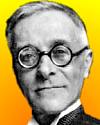
Born 29 Mar 1873; died 29 Dec 1941 at age 68.
Italian mathematician who was one of the founders of absolute differential calculus (tensor analysis) which had applications to the theory of relativity. In 1887, he published a famous paper in which he developed the calculus of tensors. In 1900 he published, jointly with Ricci, the theory of tensors Méthodes de calcul differential absolu et leures applications in a form which was used by Einstein 15 years later. Weyl also used Levi-Civita's ideas to produce a unified theory of gravitation and electromagnetism. In addition to the important contributions his work made in the theory of relativity, Levi-Civita produced a series of papers treating elegantly the problem of a static gravitational field.«
Italian mathematician who was one of the founders of absolute differential calculus (tensor analysis) which had applications to the theory of relativity. In 1887, he published a famous paper in which he developed the calculus of tensors. In 1900 he published, jointly with Ricci, the theory of tensors Méthodes de calcul differential absolu et leures applications in a form which was used by Einstein 15 years later. Weyl also used Levi-Civita's ideas to produce a unified theory of gravitation and electromagnetism. In addition to the important contributions his work made in the theory of relativity, Levi-Civita produced a series of papers treating elegantly the problem of a static gravitational field.«
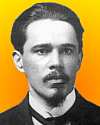
Born 29 Mar 1869; died 5 Sep 1943 at age 74.
Czech anthropologist known for his studies of Neanderthal man and his theory of the migration of American Indians from Asia. He worked gratis as a field anthropologist (1899-1903) under Fredric Ward Putnam, in four intense anthropometric studies of the Indians of the American Southwest and northern Mexico. In 1903, Hrdlicka joined the Smithsonian Institute, where during the next forty years, he compiled the most complete collection of human bone material in the world. He was the one of the first scientists to argue the Americans originated in Asia and came across the Bering Strait, and participated in numerous archeological expeditions which contributed a great amount of information and physical evidence.
Czech anthropologist known for his studies of Neanderthal man and his theory of the migration of American Indians from Asia. He worked gratis as a field anthropologist (1899-1903) under Fredric Ward Putnam, in four intense anthropometric studies of the Indians of the American Southwest and northern Mexico. In 1903, Hrdlicka joined the Smithsonian Institute, where during the next forty years, he compiled the most complete collection of human bone material in the world. He was the one of the first scientists to argue the Americans originated in Asia and came across the Bering Strait, and participated in numerous archeological expeditions which contributed a great amount of information and physical evidence.
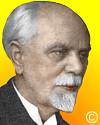
Born 29 Mar 1860; died 11 Mar 1938 at age 77.
Christen Christensen Raunkaer was a Danish botanist and ecologist remembered for the Raunkiaer's classification he used to categorize vegetation with regard to “life-forms” and study the abundance of plant species in different climates. He recognized that the position of the perennating buds of plants offered greater protection in conditions of cold or drought when they were closer to the ground. His frequency method (cirklingsmetoden) was to register all plants within within 0.1 m², in the form of a square or a circle laid out in several places in the area, with data collected then treated statistically. This was first published in 1905, and expanded in form in 1907. It continues to be used worldwide for vegetation analysis. He was a scientific assistant of the Botanical Garden, Copenhagen (1893-11) and thereafter was a professor of botany at the University of Copenhagen until 1923.«
Christen Christensen Raunkaer was a Danish botanist and ecologist remembered for the Raunkiaer's classification he used to categorize vegetation with regard to “life-forms” and study the abundance of plant species in different climates. He recognized that the position of the perennating buds of plants offered greater protection in conditions of cold or drought when they were closer to the ground. His frequency method (cirklingsmetoden) was to register all plants within within 0.1 m², in the form of a square or a circle laid out in several places in the area, with data collected then treated statistically. This was first published in 1905, and expanded in form in 1907. It continues to be used worldwide for vegetation analysis. He was a scientific assistant of the Botanical Garden, Copenhagen (1893-11) and thereafter was a professor of botany at the University of Copenhagen until 1923.«
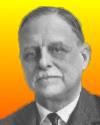
Born 29 Mar 1853; died 13 Mar 1937 at age 83. quotes
English-American engineer and inventor whose discoveries in the field of alternating current phenomena led to the development of successful alternating current motors. Thomson invented electric welding and other important inventions in electric lighting and power among his lifetime total of about 700 patents. Thomson was also a cofounder of the General Electric Company (in 1892, in a merger with the Edison Company) industry. more
English-American engineer and inventor whose discoveries in the field of alternating current phenomena led to the development of successful alternating current motors. Thomson invented electric welding and other important inventions in electric lighting and power among his lifetime total of about 700 patents. Thomson was also a cofounder of the General Electric Company (in 1892, in a merger with the Edison Company) industry. more
Innovation as a Social Process: Elihu Thomson and the Rise of General Electric, by W. Bernard Carlson. - book suggestion.
Born 29 Mar 1824; died 1 May 1899 at age 75. quotes
Friedrich Karl Christian Ludwig Buchner was a German physician and philosopher who became one of the most popular exponents of 19th-century scientific materialism. He wrote many works to disseminate knowledge of the natural sciences. These were based on his definition of force as “expression for the cause of a possible or an actual movement,” and on the unity of matter and force. No insight was conceivable without exact knowledge of matter and its laws. “The laws according to which nature acts, and matter moves, now destroying, now rebuilding, and thus producing the most varied organic and inorganic forms, are eternal and unalterable.” He also did much to spread knowledge of Darwin's work in particular.[Date of death DSB = 1 May 1899; EB = 30 Apr 1899.]
Friedrich Karl Christian Ludwig Buchner was a German physician and philosopher who became one of the most popular exponents of 19th-century scientific materialism. He wrote many works to disseminate knowledge of the natural sciences. These were based on his definition of force as “expression for the cause of a possible or an actual movement,” and on the unity of matter and force. No insight was conceivable without exact knowledge of matter and its laws. “The laws according to which nature acts, and matter moves, now destroying, now rebuilding, and thus producing the most varied organic and inorganic forms, are eternal and unalterable.” He also did much to spread knowledge of Darwin's work in particular.[Date of death DSB = 1 May 1899; EB = 30 Apr 1899.]
Born 29 Mar 1819; died 8 Nov 1880 at age 61.
American petroleum engineer who drilled the first productive oil well near Titusville, Pennsylvania, which launched the modern U.S. petroleum industry. A former railroad conductor, his success in hitting oil was based on his belief that drilling would be the best way to obtain petroleum from the earth. He organized Seneca Oil Co., leased land, and on 27 Aug 1859, struck oil at a depth of 69 feet. Drake used an old steam engine to power the drill. After his well began to produce oil, other prospectors drilled wells nearby. Other men, with better business sense, grew rich from the oil boom, yet Drake died in poverty, after years of crippling illnesses. more
American petroleum engineer who drilled the first productive oil well near Titusville, Pennsylvania, which launched the modern U.S. petroleum industry. A former railroad conductor, his success in hitting oil was based on his belief that drilling would be the best way to obtain petroleum from the earth. He organized Seneca Oil Co., leased land, and on 27 Aug 1859, struck oil at a depth of 69 feet. Drake used an old steam engine to power the drill. After his well began to produce oil, other prospectors drilled wells nearby. Other men, with better business sense, grew rich from the oil boom, yet Drake died in poverty, after years of crippling illnesses. more
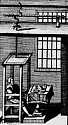
Santorio's balance to measure body weight after a meal
aka Sanctorius Sanctorius was an Italian physician who made the first systematic study of basal metabolism. In his research, he was also the first to employ instruments of precision and to apply quantitative experimental research techniques in the practice of medicine. His adaptation of the pendulum to medical practice (to determine pulse rate) was probably inspired by his discussions with Galileo on the latter's experiments with pendulums in 1602. His most famous medical contribution was a balance used to study the metabolic changes undergone by his experimental subjects, who included Galileo. He published descriptions of a new type of thermometer which may well have been inspired by Galileo's thermoscope.[Date of death: OS 22 Feb 1636, NS 6 Mar 1636.]

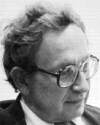
Died 29 Mar 2020 at age 96 (born 13 Dec 1923). quotes
Philip Warren Anderson was an American physicist who shared (with John H. Van Vleck and Sir Nevill F. Mott) the 1977 Nobel Prize for Physics for his research on semiconductors, superconductivity, and magnetism. He made contributions to the study of solid-state physics, and research on molecular interactions has been facilitated by his work on the spectroscopy of gases. He conceived a model (known as the Anderson model) to describe what happens when an impurity atom is present in a metal. He also investigated magnetism and superconductivity, and his work is of fundamental importance for modern solid-state electronics, making possible the development of inexpensive electronic switching and memory devices in computers.
Philip Warren Anderson was an American physicist who shared (with John H. Van Vleck and Sir Nevill F. Mott) the 1977 Nobel Prize for Physics for his research on semiconductors, superconductivity, and magnetism. He made contributions to the study of solid-state physics, and research on molecular interactions has been facilitated by his work on the spectroscopy of gases. He conceived a model (known as the Anderson model) to describe what happens when an impurity atom is present in a metal. He also investigated magnetism and superconductivity, and his work is of fundamental importance for modern solid-state electronics, making possible the development of inexpensive electronic switching and memory devices in computers.
Concepts in Solids, by Philip W. Anderson. - book suggestion.
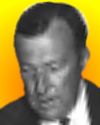
1955

South African-American geophysicist and inventor who, as a student at the University he built a sand yacht out of an old automobile and sailed it on nearby salt flats, much like an ice boat with wheels. By 1937, he invented the bathythermograph (or BT), a temperature measuring device. Initially it was used by biologists and oceanographers, but during WW II in conjunction with sonar it played a major role in the detection of German submarines. In 1954, he became the first U.S. ambassador to UNESCO. He launched a weekly science-oriented comic strip called Our New Age, seen in 100 newspapers worldwide (1957-73). As a futurist, Spilhaus suggested covered skyways and tunnels connecting city buildings, useful in bad weather.[Image right: bathythermograph]
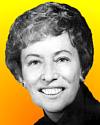
Died 29 Mar 1997 at age 79 (born 7 Feb 1918).
American cellular geneticist whose research (1950's - 60's) altered the prevailing view about where genetic material was within the cell. In particular, she recognized that a second set of genes were found outside of the cell's nucleus. Even though they were nonchrosomomal, these genes also influenced inherited characteristics. Previously, only the chromosomal genes had been considered to control genetic behaviour. Her research in later life turned to the study of genetic mechanisms involved in cancer. She was among the first to study the role of mutations in suppressor genes that neutralized their restraint on cell reproduction.«
American cellular geneticist whose research (1950's - 60's) altered the prevailing view about where genetic material was within the cell. In particular, she recognized that a second set of genes were found outside of the cell's nucleus. Even though they were nonchrosomomal, these genes also influenced inherited characteristics. Previously, only the chromosomal genes had been considered to control genetic behaviour. Her research in later life turned to the study of genetic mechanisms involved in cancer. She was among the first to study the role of mutations in suppressor genes that neutralized their restraint on cell reproduction.«
Cell heredity, by Ruth Sager and Francis J. Ryan. - book suggestion.
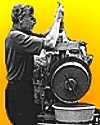
Died 29 Mar 1997 at age 89 (born 1 Jul 1907). quotes
British biochemist and virologist who collaborated with Frederick Bawden to demonstrate that the genetic material found in viruses is RNA. Together they obtained about a dozen viruses, or strains of viruses, in semi-crystalline or even crystalline form, including tobacco mosaic virus (TMV). Pirie demonstrated that the preparations contained small amounts of phosphorus and showed conclusively that all contained ribonucleic acid (RNA). This contradicted the early views of Wendell Stanley (a later Nobel laureate), who believed viruses consisted entirely of protein. Bawden and Pirie realized that RNA might be the infective component of viruses; but they were unable to confirm this experimentally, and it was left until 1956 for others to establish.
British biochemist and virologist who collaborated with Frederick Bawden to demonstrate that the genetic material found in viruses is RNA. Together they obtained about a dozen viruses, or strains of viruses, in semi-crystalline or even crystalline form, including tobacco mosaic virus (TMV). Pirie demonstrated that the preparations contained small amounts of phosphorus and showed conclusively that all contained ribonucleic acid (RNA). This contradicted the early views of Wendell Stanley (a later Nobel laureate), who believed viruses consisted entirely of protein. Bawden and Pirie realized that RNA might be the infective component of viruses; but they were unable to confirm this experimentally, and it was left until 1956 for others to establish.
Died 29 Mar 1985 at age 87 (born 11 May 1897).
George P(eter) Murdock was an American anthropologist who specialized in comparative ethnology, the ethnography of African and Oceanic peoples, and social theory. He is perhaps most notable as the originator, in 1937, of the Cross-Cultural Survey, a project of the Institute of Human Relations of Yale University. During WW II he enlisted in the Army, and arranged to be sent to Columbia University to produce informational handbooks on Micronesia. He also asked for the reports of the 1910 German expedition and the available Japanese reports to be translated. With these, he was able to create a set of Civil Affairs Handbooks covering not only Micronesia, but also the areas from Bikini to Yap, Okinawa and Taiwan.
George P(eter) Murdock was an American anthropologist who specialized in comparative ethnology, the ethnography of African and Oceanic peoples, and social theory. He is perhaps most notable as the originator, in 1937, of the Cross-Cultural Survey, a project of the Institute of Human Relations of Yale University. During WW II he enlisted in the Army, and arranged to be sent to Columbia University to produce informational handbooks on Micronesia. He also asked for the reports of the 1910 German expedition and the available Japanese reports to be translated. With these, he was able to create a set of Civil Affairs Handbooks covering not only Micronesia, but also the areas from Bikini to Yap, Okinawa and Taiwan.
Died 29 Mar 1935 at age 84 (born 2 Jun 1850).
English physiologist and co-inventor of the prone-pressure method (Schafer method) of artificial respiration adopted by the Royal Life Saving Society. In 1894, Sharpey-Schafer (with George Oliver) (1841-1915) demonstrated that the action of a specific hormone—adrenaline (epinephrine), an extract of the adrenal gland—on blood vessels and muscle contraction. Upon injection into normal animals it produced a striking elevation in blood pressure. They also noted that the smooth muscles of the animal's bronchi relaxed. Their work stimulated interest in the study of the nature and functions of hormones. Later, adrenaline became the first hormone to be isolated and crystallized. Sharpey-Schafer also suspected that another hormone was produced by the islets of Langerhans in the pancreas. He adopted the name insulin (1914, from the Latin for "island") independently coining the same word used by J. DeMeyer (1909 in a paper in French) for a secretion of the pancreas.
English physiologist and co-inventor of the prone-pressure method (Schafer method) of artificial respiration adopted by the Royal Life Saving Society. In 1894, Sharpey-Schafer (with George Oliver) (1841-1915) demonstrated that the action of a specific hormone—adrenaline (epinephrine), an extract of the adrenal gland—on blood vessels and muscle contraction. Upon injection into normal animals it produced a striking elevation in blood pressure. They also noted that the smooth muscles of the animal's bronchi relaxed. Their work stimulated interest in the study of the nature and functions of hormones. Later, adrenaline became the first hormone to be isolated and crystallized. Sharpey-Schafer also suspected that another hormone was produced by the islets of Langerhans in the pancreas. He adopted the name insulin (1914, from the Latin for "island") independently coining the same word used by J. DeMeyer (1909 in a paper in French) for a secretion of the pancreas.
Died 29 Mar 1931 at age 63 (born 6 Feb 1868). quotes
George Amos Dorsey was an American anthropologist and ethnographer whose research about North American Indians, especially the Mandan tribe, was among the earliest ethnographic studies done on them. He engaged in extensive field work, particularly among the Plains Indians, and published extensively. Between 1891-92 he conducted anthropological investigations in Peru, Ecuador, Chili and Bolivia for the World's Columbian Exposition. His positions included being a professor of anthropology, professor of comparative anatomy, Curator of the Field Museum of Natural History. On15 Sep 1897, Dorsey began testifying at the murder trial of Adolph Luetgert, probably the first anthropologist to testify in an American criminal trial. After WW I, he wrote works popularizing the science of anthropology.«
George Amos Dorsey was an American anthropologist and ethnographer whose research about North American Indians, especially the Mandan tribe, was among the earliest ethnographic studies done on them. He engaged in extensive field work, particularly among the Plains Indians, and published extensively. Between 1891-92 he conducted anthropological investigations in Peru, Ecuador, Chili and Bolivia for the World's Columbian Exposition. His positions included being a professor of anthropology, professor of comparative anatomy, Curator of the Field Museum of Natural History. On15 Sep 1897, Dorsey began testifying at the murder trial of Adolph Luetgert, probably the first anthropologist to testify in an American criminal trial. After WW I, he wrote works popularizing the science of anthropology.«
The Story of Civilization: Man's Own Show, by George Amos Dorsey. - book suggestion.
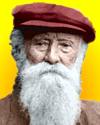
Died 29 Mar 1921 at age 83 (born 3 Apr 1837). quotes
American naturalist and author who lived and wrote after the manner of Henry David Thoreau. Burroughs studied and celebrated nature in his many essays and books. Growing up on a farm in the Catskill Mountains, Burroughs absorbed much of the nature and country life that would fill his essays in later life. As a clerk in the Treasury Department in Washington, D.C. during the Civil War, he filled idle hours with writing about the outdoors he loved. This became his first book, Wake-Robin. Returning to the Hudson River Valley in 1873, he began fruit farming and continued to write, publishing a new book about every two years. He travelled extensively, camping out with such friends as the naturalist John Muir and Theodore Roosevelt. more
American naturalist and author who lived and wrote after the manner of Henry David Thoreau. Burroughs studied and celebrated nature in his many essays and books. Growing up on a farm in the Catskill Mountains, Burroughs absorbed much of the nature and country life that would fill his essays in later life. As a clerk in the Treasury Department in Washington, D.C. during the Civil War, he filled idle hours with writing about the outdoors he loved. This became his first book, Wake-Robin. Returning to the Hudson River Valley in 1873, he began fruit farming and continued to write, publishing a new book about every two years. He travelled extensively, camping out with such friends as the naturalist John Muir and Theodore Roosevelt. more
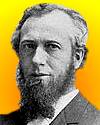
Died 29 Mar 1903 at age 63 (born 24 Jun 1839).
American manufacturer and inventor of the first refrigerated railroad cars. These improved his handling of the supply of beef from western states to the Chicago meat company of which he was a partner. No longer was it necessary to ship live cattle for slaughter in the East. Upon the huge success of this venture, he founded a new company with his brother, Swift and Company, worth $25 million at his death. The alliances he made with two other major meat suppliers, J.O. Armour and Edward Morris, formed such a monopoly that the “Beef Trust” was broken up by action of the Supreme Court in 1905. Swift further pioneered products such as glue, soap, and margarine to make use of the parts of cattle previously discarded.
American manufacturer and inventor of the first refrigerated railroad cars. These improved his handling of the supply of beef from western states to the Chicago meat company of which he was a partner. No longer was it necessary to ship live cattle for slaughter in the East. Upon the huge success of this venture, he founded a new company with his brother, Swift and Company, worth $25 million at his death. The alliances he made with two other major meat suppliers, J.O. Armour and Edward Morris, formed such a monopoly that the “Beef Trust” was broken up by action of the Supreme Court in 1905. Swift further pioneered products such as glue, soap, and margarine to make use of the parts of cattle previously discarded.
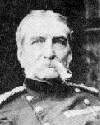
Died 29 Mar 1902 at age 77 (born 27 Jul 1824).
British military engineer and politician with scientific interests, who became surveyor-general of Victoria, Australia (Mar 1853) where he planned railways, installed telegraph communication and initiated the Museum of Natural History there (1854). While governor of the Straits Settlements (1873-75), he negotiated the Pangkor Treaty (1874) providing for British political control of Perak and later the other peninsular Malay States. In Perak, he developed a communication system by which state roads were constructed between the principal mining towns. In 1885, a railway line 12.8 km long joined Taiping, the distribution centre for the Larut tin fields, to Port Weld for shipping tin back to the United Kingdom. Thus, it was with the provision of infrastructure to support tin mining, that Malaysia began its develoment.«
British military engineer and politician with scientific interests, who became surveyor-general of Victoria, Australia (Mar 1853) where he planned railways, installed telegraph communication and initiated the Museum of Natural History there (1854). While governor of the Straits Settlements (1873-75), he negotiated the Pangkor Treaty (1874) providing for British political control of Perak and later the other peninsular Malay States. In Perak, he developed a communication system by which state roads were constructed between the principal mining towns. In 1885, a railway line 12.8 km long joined Taiping, the distribution centre for the Larut tin fields, to Port Weld for shipping tin back to the United Kingdom. Thus, it was with the provision of infrastructure to support tin mining, that Malaysia began its develoment.«
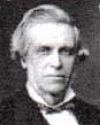
Died 29 Mar 1892 at age 75 (born 20 Jul 1816).
(1st Baronet) was an English surgeon and histologist who obtained a European reputation for medical research long before he was thirty years of age. He described (1842) the histologic structure of the nephron, the functional unit of the kidney, where the process of of urine takes place as a by-product of blood filtration that is carried on in the kidney. The "Bowman's capsule" of the kidney carries his name. The kidney contains millions of very tiny sacs called Bowman's capsules that filter blood to produce urine. He also made important discoveries concerning the structure and function of the eye and of striated muscle. He collaborated with Todd in writing The Physiological Anatomy.
(1st Baronet) was an English surgeon and histologist who obtained a European reputation for medical research long before he was thirty years of age. He described (1842) the histologic structure of the nephron, the functional unit of the kidney, where the process of of urine takes place as a by-product of blood filtration that is carried on in the kidney. The "Bowman's capsule" of the kidney carries his name. The kidney contains millions of very tiny sacs called Bowman's capsules that filter blood to produce urine. He also made important discoveries concerning the structure and function of the eye and of striated muscle. He collaborated with Todd in writing The Physiological Anatomy.
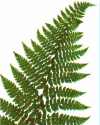
Died 29 Mar 1877 at age 71 (born 10 May 1805).
German botanist who was the most highly regarded botanist of the “nature philosophy” school, a doctrine which attempted to explain natural phenomena in terms of the speculative theories that dominated early 19th-century German science. Several species of cryptogams he discovered bear his name, such as Chara braunii. With Karl Schimper, he established the theory of spiral phyllotaxy. In his book Betrachtungern über die Erscheinung der Verjüngung in der Natur (1851) he made some significant contributions to the morphology of plants, to the biology of freshwater algae, and especially to cell theory. He opposed Darwinian selection, and remained a believer of “nature philosophy” when the doctrine was falling out of favour.
German botanist who was the most highly regarded botanist of the “nature philosophy” school, a doctrine which attempted to explain natural phenomena in terms of the speculative theories that dominated early 19th-century German science. Several species of cryptogams he discovered bear his name, such as Chara braunii. With Karl Schimper, he established the theory of spiral phyllotaxy. In his book Betrachtungern über die Erscheinung der Verjüngung in der Natur (1851) he made some significant contributions to the morphology of plants, to the biology of freshwater algae, and especially to cell theory. He opposed Darwinian selection, and remained a believer of “nature philosophy” when the doctrine was falling out of favour.
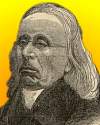
Died 29 Mar 1873 (born 1797).
Italian priest and physicist, who published papers (1829, 1830) on the production of electric currents in closed circuits by the approach and withdrawal of a magnet, preceding Faraday's classic experiment of 1831. Studying the solar spectrum, Zantedeschi was among the first to recognize the marked absorption by the atmosphere of the red, yellow, and green light. Though not confirmed, he also thought he detected a magnetic action on steel needles by ultra-violet light (1838), at least suspecting a connection between light and magnetism many years before Clerk-Maxwell's announcement (1867) of the electromagnetic theory of light. He experimented on the repulsion of flames by a strong magnetic field.«
Italian priest and physicist, who published papers (1829, 1830) on the production of electric currents in closed circuits by the approach and withdrawal of a magnet, preceding Faraday's classic experiment of 1831. Studying the solar spectrum, Zantedeschi was among the first to recognize the marked absorption by the atmosphere of the red, yellow, and green light. Though not confirmed, he also thought he detected a magnetic action on steel needles by ultra-violet light (1838), at least suspecting a connection between light and magnetism many years before Clerk-Maxwell's announcement (1867) of the electromagnetic theory of light. He experimented on the repulsion of flames by a strong magnetic field.«
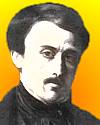
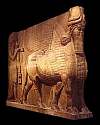
French consul and archaeologist whose momentous discovery of the palace of the Assyrian king Sargon II at Dur Sharrukin (modern Khorsabad), Iraq, initiated the large-scale field archaeology of ancient Mesopotamia. As a French diplomat working in Mosul, a city on the River Tigris, Botta's duty included excavation. In 1843, Botta began to excavate a large mound in Khorsabad about 15 miles northeast of Nineveh. He uncovered the first of the Assyrian palaces, the monumental palace of Sargon II who ruled from 721 to 705 BC. His palace was built on a scale never till then attempted by an Assyrian monarch, covering an entire city within walls a mile long with huge stone sculptures.[Image right: Winged human-headed bull from Khorsabad]
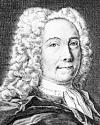
Died 29 Mar 1772 at age 84 (born 29 Jan 1688).
Swedish scientist, philosopher and theologian. While young, he studied mathematics and the natural sciences in England and Europe. From Swedenborg's inventive and mechanical genius came his method of finding terrestrial longitude by the Moon, new methods of constructing docks and even tentative suggestions for the submarine and the airplane. Back in Sweden, he started (1715) that country's first scientific journal, Daedalus Hyperboreus. His book on algebra was the first in the Swedish language, and in 1721 he published a work on chemistry and physics. Swedenborg devoted 30 years to improving Sweden's metal-mining industries, while still publishing on cosmology, corpuscular philosophy, mathematics, and human sensory perceptions.
Swedish scientist, philosopher and theologian. While young, he studied mathematics and the natural sciences in England and Europe. From Swedenborg's inventive and mechanical genius came his method of finding terrestrial longitude by the Moon, new methods of constructing docks and even tentative suggestions for the submarine and the airplane. Back in Sweden, he started (1715) that country's first scientific journal, Daedalus Hyperboreus. His book on algebra was the first in the Swedish language, and in 1721 he published a work on chemistry and physics. Swedenborg devoted 30 years to improving Sweden's metal-mining industries, while still publishing on cosmology, corpuscular philosophy, mathematics, and human sensory perceptions.
The Generative Organs, Considered Anatomically, Physically and Philosophically, by Emanuel Swedenborg. - book suggestion.
In 1980, the first transplant of a human fingernail was accomplished on a 12-year-old boy's thumb, using one of his own toenails. Dr Guy Foutcher performed the surgery in Strasbourg, France, for Christopher Kempf who had lost the original thumbnail due to poor treatment of a hang-nail.

In 1977, an analysis was publicly announced of the greater risk of death when birth-control pills were used by women smokers over age 30. The effects of combining cigarette smoking and taking the pills seemed “synergistic” and more dangerous for that age group than the use of any other contraceptive measure. (Pill use by non-smokers indicated no unreasonable risk.) The report in Studies in Family Planning was prepared by Anrudh K. Jain, a research analyst at the Population Council. He analyzed over 400 deaths reported in existing British and American studies. Collectively, they showed that for female smokers over 40, pill use greatly increased the risk of death by heart attack or stroke. The risk was previously known; this analysis quantified it. The U.S. Food and Drug Administration proposed to advise physicians that use of oral contraceptives for women over 40 was not recommended.«[Ref: Studies in Family Planning (Mar 1977), Vol. 8, No.3, 50-4.]
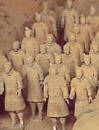
In 1974, the Terracotta Army of Emperor Qin Shi Huangdi (259-210 BC), was discovered by local farmers while digging a well near Lintong, Xian, Shaanxi, China. At first they found random shards of pottery, then a terracotta head was revealed, which spurred extensive excavation of 8,000 lifesize terracotta soldiers and horses. These were part of the necropolis of China’s first emperor, to aid him in the afterlife. The soldiers each had unique facial expressions and were positioned according to rank. Though mostly gone today, patches of paint hint at once brightly colored clothes. Excavations also revealed swords, arrow tips, and other weapons, many in pristine condition. Chinese archeologists announced the discovery on 11 Jul 1975.«
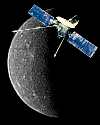
(NASA)
In 1974, Mariner 10 took the first close-up pictures of Mercury. It was launched 3 Nov 1973. On its way to Mercury, Mariner 10 made its first flyby of Venus on 5 Feb 1974 and discovered evidence of rotating clouds. The mission required more course corrections than any previous mission and was the first spacecraft to use the gravitational pull of one planet to help it reach another planet. In three flybys past Mercury, it mapped about half of the planet's surface. It found a thin atmosphere and a magnetic field. This craft was also the first to use the solar wind as a means of locomotion; when the probe's thruster fuel ran low, scientists used the solar panels as sails to make course corrections. It ended a series of Mariner missions.[Image: Mercury shown from a mozaic of images with Marine 10 inset]
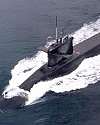
In 1967, the French Navy launchedLe Redoutable, its first ballistic missile nuclear-powered submarine, in the presence of General de Gaulle at the Cherbourg naval shipyard. It entered service 1 Dec 1971 with 16 MSBS M-1 missiles aboard. Measuring 128.70 meters long and 10.60 meters wide, Le Redoutable had a top speed (submerged) of 25 knots. After 20 years of service, it was retired in 1991, after 58 patrols and 90,000 hours under water. It was disarmed, and opened for display to the public at La Cité de la Mer, Cherbourg.
In 1960, British Prime Minister Harold Macmillan reached agreement with U.S. leaders in Washington, D.C., on a nuclear test ban treaty to be put to the U.S.S.R.*
In 1956, Soviet scientists reported in the U.K. the development of a new form of electron microscope that enabled atoms to be seen for the first time.*
In 1931, new excavations at Knossos, Crete, revealed relics of an ancient snake cult.*
In 1920, the French airline CGEA introduced the splendid new Farman F.60 Goliath airplane on its service between Le Bourget (France) and Croydon (U.K.)*
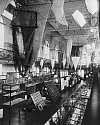
In 1910, in Monaco, the world's largest oceanographic museum was opened.* The grandiose façade of the museum overlooks the Mediterranean Sea. It was established through the generosity of Prince Albert I of Monaco (1848-1922), a great oceanographer, statesman, and humanitarian. The museum is part of the Oceanographic Institute, founded 1906.[Image: The physical oceanography hall of the Oceanographic Museum of Monaco showing part of the collections]
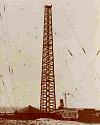
In 1903, regular news service began between New York and London on Marconi’s wireless. On 30 Mar 1903, The Times in London became the first newspaper to establish an ongoing arrangement with the Marconi Telegraph Company for the regular transmission of news between the United States and the UK. Shortly thereafter, the New York Times requested that it be part of the arrangement. Despite extensive teething problems the importance of wireless as a cheap form of communication quickly became obvious.*
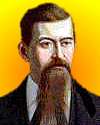
In 1886, the first batch of Coca Cola was brewed over a fire in a backyard in Atlanta, Georgia. Dr. John Pemberton had created the concoction as a cure for “hangover,” stomach ache and headache. He advertised it as a “brain tonic and intellectual beverage,” and first sold it to the public a few weeks later on 8 May. Coke contained cocaine as an ingredient until 1904, when the drug was banned by Congress.
For God, Country, and Coca-Cola: The Definitive History of the Great American Soft Drink and the Company That Makes It, by Mark Pendergrast. - book suggestion.
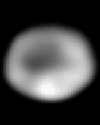
In 1807, Vesta 4, the only asteroid visible to the naked eye, thus the brightest on record, was first observed by the amateur astronomer Heinrich Wilhelm Olbers from Bremen. Vesta is a main belt asteroid with a diameter of 525-km and a rotation period of 5.34 hours. Pictures taken by the Hubble Space Telescope in 1995 show Vesta's complex surface, with a geology similar to that of terrestrial worlds - such as Earth or Mars - a surprisingly diverse world with an exposed mantle, ancient lava flows and impact basins. Though no bigger than the state of Arizona, it once had a molten interior. This contradicts conventional ideas that asteroids essentially are cold, rocky fragments left behind from the early days of planetary formation.
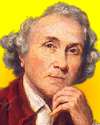
In 1761, newly appointed to the surgical staff of the army, John Hunter sailed from Portsmouth, with an expeditionary force. Their mission was to capture Belle Île-en-Mer (Belleisle), a small island off the French coast. He treated many casualties shot in the conflict. Years later, he recorded this experience in his last book, published posthumously, A Treatise on the Blood, Inflammation and Gun-Shot Wounds (1794) which became a classic reference on the subject for a century. After about a year on Belle Île-en-Mer, he went with the British forces to Portugal, engaged in further medical administration. He also studied the local natural history and geology. He returned to London in summer 1763, and began a private medical practice.«
The Knife Man: Blood, Body Snatching, and the Birth of Modern Surgery, by Wendy Moore . - book suggestion.




