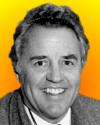
Born 18 Mar 1936; died 23 Aug 1999 at age 63.
American marine geologist whose pioneering studies of the deep-sea floor revealed not tranquil depths but that strong currents and storms occur there. He started the development of the giant piston coring system and in the 1970's, documented the longest continuous record of ocean basin history in a single 100-ft core sample that contained a continuous 65 million-year-long record of ocean-basin history. He also made significant discoveries concerning ocean sediment transport and directed the High Energy Benthic Boundary Layer Experiment (HEBBLE). Also, he initiated the sub-seabed concept and led the international team that studied the scientific feasibility of isolating high-level radioactive material into sediments below the sea floor.
American marine geologist whose pioneering studies of the deep-sea floor revealed not tranquil depths but that strong currents and storms occur there. He started the development of the giant piston coring system and in the 1970's, documented the longest continuous record of ocean basin history in a single 100-ft core sample that contained a continuous 65 million-year-long record of ocean-basin history. He also made significant discoveries concerning ocean sediment transport and directed the High Energy Benthic Boundary Layer Experiment (HEBBLE). Also, he initiated the sub-seabed concept and led the international team that studied the scientific feasibility of isolating high-level radioactive material into sediments below the sea floor.
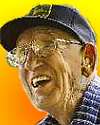

round hay bale
American agricultural engineer whose 25 patents include the farm forage-handling machine that produces the familiar large round hay bales in US fields since the 1960's, and developed rollover protective devices for tractors. He grew up on a Kansas farm, went on to do his doctoral thesis on conservation tillage, became a junior engineer at the John Deere Waterloo Works (1946-48) then joined academia, eventually becoming a professor at Iowa State University (1963-89). There he originated many courses including one on Agricultural Safety, the first course of its kind in the U.S. Throughout his life, he worked to prevent soil erosion, encouraging widespread adoption of ridge-till farming to slow erosion and reduce pesticide use.«[Image right: Iowa hay bale]
The Grain Harvesters, by Graeme Quick and Wesley Buchele. - book suggestion.
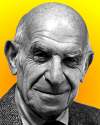
Born 18 Mar 1911; died 26 Nov 1991 at age 80.
American biochemist who pioneered the use of radioactive and stable isotopes to trace chemical pathways by which the body creates its own materials, such as blood. He discovered the metabolic pathway by which the cell synthesizes heme (the red substance in haemoglobin), vitamin B-12 and related compounds. In 1946, with David Rittenberg, to investigate the path of glycine in the body, he ingested glycine labelled with atoms of the stable isotope nitrogen-15, and his blood was analyzed for products containing the tracer atoms. Hence they found glycine is used to synthesize the pyrrole rings of protoporphyrin. Further, he found that red blood cells had a lifespan of about 127 days, which led to understanding certain red blood cell diseases. He continued to study the mechanism of the intermediary metabolism of amino acids.«
American biochemist who pioneered the use of radioactive and stable isotopes to trace chemical pathways by which the body creates its own materials, such as blood. He discovered the metabolic pathway by which the cell synthesizes heme (the red substance in haemoglobin), vitamin B-12 and related compounds. In 1946, with David Rittenberg, to investigate the path of glycine in the body, he ingested glycine labelled with atoms of the stable isotope nitrogen-15, and his blood was analyzed for products containing the tracer atoms. Hence they found glycine is used to synthesize the pyrrole rings of protoporphyrin. Further, he found that red blood cells had a lifespan of about 127 days, which led to understanding certain red blood cell diseases. He continued to study the mechanism of the intermediary metabolism of amino acids.«
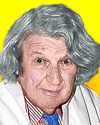
1978
Born 18 Mar 1907; died 4 Jul 1997 at age 90. quotes
John Zachary Young was an English zoologist and neuroscientist who had a passionate interest in how animals function, and their brains in particular. His research laid a foundation for modern neurobiology. His career began as a cephalopod biologist, curious also in physiology, experimental psychology and philosophy, but became a neuroscientist. His first paper (1929) was on the previously undescribed epistellar body in the octopus. He continued his research on cephalopods (octopus, squids, cuttlefish and nautiloids) with experiments on octopus learning and the basis of memory. He wrote many more papers on this subject. He identified distinct stores in the octopus brain for visual and touch memories, a brain far more complicated than previously known.«
John Zachary Young was an English zoologist and neuroscientist who had a passionate interest in how animals function, and their brains in particular. His research laid a foundation for modern neurobiology. His career began as a cephalopod biologist, curious also in physiology, experimental psychology and philosophy, but became a neuroscientist. His first paper (1929) was on the previously undescribed epistellar body in the octopus. He continued his research on cephalopods (octopus, squids, cuttlefish and nautiloids) with experiments on octopus learning and the basis of memory. He wrote many more papers on this subject. He identified distinct stores in the octopus brain for visual and touch memories, a brain far more complicated than previously known.«
The Life of Vertebrates, by J.Z. Young. - book suggestion.
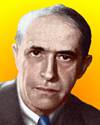
Born 18 Mar 1886; died 22 Nov 1941 at age 55. quotes
German-American psychologist who co-founded, with Wolfgang Köhler and Max Wertheimer, the Gestalt school of psychology. Koffka became in time their most influential spokesman of Gestalt psychology. He applied it to child development, learning, memory and emotion. The name Gestalt, meaning form or configuration, emphasizes that the whole is more than the sum of its parts. Gestalt psychology grew as reaction against the traditional atomistic approach to the human being where behaviour was analyzed into constituent elements called sensations. He made an influential distinction between the behavioural and the geographical environments - the perceived world of common sense and the world studied by scientists.
German-American psychologist who co-founded, with Wolfgang Köhler and Max Wertheimer, the Gestalt school of psychology. Koffka became in time their most influential spokesman of Gestalt psychology. He applied it to child development, learning, memory and emotion. The name Gestalt, meaning form or configuration, emphasizes that the whole is more than the sum of its parts. Gestalt psychology grew as reaction against the traditional atomistic approach to the human being where behaviour was analyzed into constituent elements called sensations. He made an influential distinction between the behavioural and the geographical environments - the perceived world of common sense and the world studied by scientists.
Kurt Koffka: An Unwitting Self-Portrait, by Molly Harrower. - book suggestion.
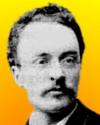
Born 18 Mar 1858; died 29 Sep 1913 at age 55.
Rudolf Christian Karl Diesel was a German engineer who invented the internal-combustion engine that bears his name. After studying the four-stroke internal combustion engines developed by Nikolaus Otto, Diesel conceived of an engine that would approach the thermodynamic limit established by Sadi Carnot in 1824. If the fuel in a cylinder could be expanded at constant pressure, it could get closer to Carnot's limit. He patented the concept in 1892, while working at the firm of the refrigeration engineer Carl von Linde in Berlin. After boarding an English Channel steamer, he was found dead in the sea. It was most likely suicide resulting from depression, after having lost control over his invention and after receiving a great deal of criticism in the German engineering journals for his theories.[EB gives date of death 29 Sep 1913. Diesel's unwitnessed presumed suicide at sea leaves the exact date of death uncertain, and some sources give 30 Sep 1913, by which time he was known to be missing from those on board the steamer.]
Rudolf Christian Karl Diesel was a German engineer who invented the internal-combustion engine that bears his name. After studying the four-stroke internal combustion engines developed by Nikolaus Otto, Diesel conceived of an engine that would approach the thermodynamic limit established by Sadi Carnot in 1824. If the fuel in a cylinder could be expanded at constant pressure, it could get closer to Carnot's limit. He patented the concept in 1892, while working at the firm of the refrigeration engineer Carl von Linde in Berlin. After boarding an English Channel steamer, he was found dead in the sea. It was most likely suicide resulting from depression, after having lost control over his invention and after receiving a great deal of criticism in the German engineering journals for his theories.[EB gives date of death 29 Sep 1913. Diesel's unwitnessed presumed suicide at sea leaves the exact date of death uncertain, and some sources give 30 Sep 1913, by which time he was known to be missing from those on board the steamer.]
Diesel: Technology and Society in Industrial Germany, by Donald E. Thomas Jr. - book suggestion.
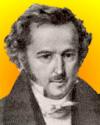
Born 18 Mar 1796; died 1 Apr 1863 at age 67.
Swiss mathematician who was one of the greatest, contributors to projective geometry. He discovered the Steiner surface which has a double infinity of conic sections on it. The Steiner theorem states that the two pencils by which a conic is projected from two of its points are projectively related. He is also known for the Poncelet-Steiner theorem which shows that only one given circle and a straight edge are required for Euclidean constructions. His work included conic sections and surfaces, the theory of second-degree surfaces and centre-of-gravity problems. He developed the principle of symmetrization (1840-41). In 1848 he ws the first to define various polar curves with respect to a given curve, and introduced the “Steiner Curves.”«
Swiss mathematician who was one of the greatest, contributors to projective geometry. He discovered the Steiner surface which has a double infinity of conic sections on it. The Steiner theorem states that the two pencils by which a conic is projected from two of its points are projectively related. He is also known for the Poncelet-Steiner theorem which shows that only one given circle and a straight edge are required for Euclidean constructions. His work included conic sections and surfaces, the theory of second-degree surfaces and centre-of-gravity problems. He developed the principle of symmetrization (1840-41). In 1848 he ws the first to define various polar curves with respect to a given curve, and introduced the “Steiner Curves.”«
Geometrical Constructions With a Ruler, by Jakob Steiner. - book suggestion.
Born 18 Mar 1690; died 20 Nov 1764 at age 74.
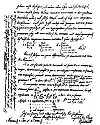
Russian mathematician whose contributions to number theory include Goldbach’s conjecture, formulated in a letter to Leonhard Euler dated 7 Jul 1742. Stated in modern terms it proposes that: “Every even natural number greater than 2 is equal to the sum of two prime numbers.” It has been checked by computer for vast numbers - up to at least 4 x 10¹⁴ - but still remains unproved. Goldbach made another conjecture that every odd number is the sum of three primes, on which Vinogradov made progress in 1937. (It has been checked by computer for vast numbers, but remains unproved.) Goldbach also studied infinite sums, the theory of curves and the theory of equations.«[Image: Letter to Euler, in which Goldbach presented his conjecture.]
Russian mathematician whose contributions to number theory include Goldbach’s conjecture, formulated in a letter to Leonhard Euler dated 7 Jul 1742. Stated in modern terms it proposes that: “Every even natural number greater than 2 is equal to the sum of two prime numbers.” It has been checked by computer for vast numbers - up to at least 4 x 10¹⁴ - but still remains unproved. Goldbach made another conjecture that every odd number is the sum of three primes, on which Vinogradov made progress in 1937. (It has been checked by computer for vast numbers, but remains unproved.) Goldbach also studied infinite sums, the theory of curves and the theory of equations.«[Image: Letter to Euler, in which Goldbach presented his conjecture.]


Died 18 Mar 1998 at age 96 (born 20 May 1901).
Japanese engineer, who designed and supervised the construction of the world's first high-speed "bullet" train, linking Tokyo and Osaka. It began service at 138 mph in Oct 1964. The rail line opened a new era in land transport. (The current generation reaches 169 mph). Shima led Japan's space development programme until 1977 at Japan's National Space Development Agency. In his early career, Shima worked hard to further develop powerful steam locomotives, culminating in the wartime 2-8-2 D51 and D52 for freight and the post-war 4-6-4 C62 for passenger trains. He next developed electrical motive power distributed along the whole train length yielding higher power output on a multiple-unit train without damaging tracks and structures.
Japanese engineer, who designed and supervised the construction of the world's first high-speed "bullet" train, linking Tokyo and Osaka. It began service at 138 mph in Oct 1964. The rail line opened a new era in land transport. (The current generation reaches 169 mph). Shima led Japan's space development programme until 1977 at Japan's National Space Development Agency. In his early career, Shima worked hard to further develop powerful steam locomotives, culminating in the wartime 2-8-2 D51 and D52 for freight and the post-war 4-6-4 C62 for passenger trains. He next developed electrical motive power distributed along the whole train length yielding higher power output on a multiple-unit train without damaging tracks and structures.
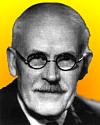
Died 18 Mar 1989 at age 97 (born 22 Apr 1891). quotes
English astronomer, geophysicist and mathematician who had diverse scientific interests. In astronomy he proposed models for the structures of the outer planets, and studied the origin of the solar system. He calculated the surface temperatures of gas at less than -100°C, contradicting then accepted views of red-hot temperatures, but Jeffreys was shown to be correct when direct observations were made. In geophysics he researched the circulation of the atmosphere and earthquakes. Analyzing earthquake waves (1926), he became the first to claim that the core of the Earth is molten fluid. Jeffreys also contributed to the general theory of dynamics, aerodynamics, relativity theory and plant ecology.«
English astronomer, geophysicist and mathematician who had diverse scientific interests. In astronomy he proposed models for the structures of the outer planets, and studied the origin of the solar system. He calculated the surface temperatures of gas at less than -100°C, contradicting then accepted views of red-hot temperatures, but Jeffreys was shown to be correct when direct observations were made. In geophysics he researched the circulation of the atmosphere and earthquakes. Analyzing earthquake waves (1926), he became the first to claim that the core of the Earth is molten fluid. Jeffreys also contributed to the general theory of dynamics, aerodynamics, relativity theory and plant ecology.«
The earth: Its Origin, History and Physical Constitution, by Harold Jeffreys. - book suggestion.
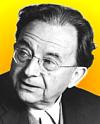
Died 18 Mar 1980 at age 79 (born 23 Mar 1900). quotes
German-American psychologist who investigated the connections between psychology and society. He was born in Germany, but fled from the Nazis, and worked in many fields of the humanities. Although influenced by Sigmund Freud's theories, Fromm diverged in thinking that beyond the unconscious alone, conditions of the society and economy affect human behaviour. Fromm believed psychoanalytic principles could be applied to remedy cultural ills. He wished to see the creation of a sane society meeting human needs with harmony between men and nations in a nuclear age, and helped organize the National Committee for a Sane Nuclear Policy (SANE) in 1957.«
German-American psychologist who investigated the connections between psychology and society. He was born in Germany, but fled from the Nazis, and worked in many fields of the humanities. Although influenced by Sigmund Freud's theories, Fromm diverged in thinking that beyond the unconscious alone, conditions of the society and economy affect human behaviour. Fromm believed psychoanalytic principles could be applied to remedy cultural ills. He wished to see the creation of a sane society meeting human needs with harmony between men and nations in a nuclear age, and helped organize the National Committee for a Sane Nuclear Policy (SANE) in 1957.«
The Sane Society, by Erich Fromm. - book suggestion.
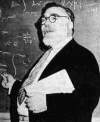
1963
Died 18 Mar 1964 at age 69 (born 26 Nov 1894). quotes
American mathematician and cyberneticist who established the science of cybernetics, a term he coined, which is concerned with the common factors of control and communication in living organisms, automatic machines, and organizations. He attained international renown by formulating some of the most important contributions to mathematics in the 20th century. His work on generalised harmonic analysis and Tauberian theorems won the Bôcher Prize in 1933 when he received the prize from the American Mathematical Society for his memoir Tauberian theorems published in Annals of Mathematics in the previous year. His extraordinarily wide range of interests included stochastic processes, quantum theory and during WW II he worked on gunfire control.
American mathematician and cyberneticist who established the science of cybernetics, a term he coined, which is concerned with the common factors of control and communication in living organisms, automatic machines, and organizations. He attained international renown by formulating some of the most important contributions to mathematics in the 20th century. His work on generalised harmonic analysis and Tauberian theorems won the Bôcher Prize in 1933 when he received the prize from the American Mathematical Society for his memoir Tauberian theorems published in Annals of Mathematics in the previous year. His extraordinarily wide range of interests included stochastic processes, quantum theory and during WW II he worked on gunfire control.
Cybernetics, by Norbert Wiener. - book suggestion.
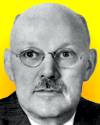
Died 18 Mar 1955 at age 69 (born 5 Jun 1885). quotes
American zoologist and ecologist who researched the social behaviour, aggregations, and distribution of both land and sea animals. He demonstrated that an unconscious drive existed among many species of animals for their fellow individuals, such that undercrowding was detrimental to some animals. He noted what he called “protocooperation” among animals, unconscious cooperation instead of competition. Allee believed this evolved in the higher animals to become both unconscious and conscious cooperation creating levels of community organization. He investigated the role and function of social hierarchies in nature, and the capacity of animals to maintain internal equilibrium by making physiological adaptations.«
American zoologist and ecologist who researched the social behaviour, aggregations, and distribution of both land and sea animals. He demonstrated that an unconscious drive existed among many species of animals for their fellow individuals, such that undercrowding was detrimental to some animals. He noted what he called “protocooperation” among animals, unconscious cooperation instead of competition. Allee believed this evolved in the higher animals to become both unconscious and conscious cooperation creating levels of community organization. He investigated the role and function of social hierarchies in nature, and the capacity of animals to maintain internal equilibrium by making physiological adaptations.«
Principles of Animal Ecology, by Warder Clyde Allee. - book suggestion.
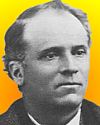
Died 18 Mar 1914 at age 73 (born 6 Aug 1840).
Swiss-American anthropologist, historian and archaeologist who was among the first to study the American Indian cultures of the southwestern United States, Mexico, and Peru-Bolivia. He was one of the first to use the methodology of participant observation, by living with the Indians and studying their culture, artifacts and the ruins on their land. He followed their ancestors' migration from northern Mexico, down the Rio Grande Valley, to central Mexico. Even though Bandelier was criticized for being untrained and forming premature conclusions, he proved that working and training in the field was just as effective as going to school. With many archaeological sites, the Bandelier National Monument in New Mexico was named after him.
Swiss-American anthropologist, historian and archaeologist who was among the first to study the American Indian cultures of the southwestern United States, Mexico, and Peru-Bolivia. He was one of the first to use the methodology of participant observation, by living with the Indians and studying their culture, artifacts and the ruins on their land. He followed their ancestors' migration from northern Mexico, down the Rio Grande Valley, to central Mexico. Even though Bandelier was criticized for being untrained and forming premature conclusions, he proved that working and training in the field was just as effective as going to school. With many archaeological sites, the Bandelier National Monument in New Mexico was named after him.
Bandelier: The Life and Adventures of Adolph Bandelier, by Lange and Riley. - book suggestion.
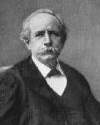
Died 18 Mar 1907 at age 79 (born 27 Oct 1827). quotes
Pierre-Eugène-Marcellin Berthelot was a French chemist and science historian and government official whose creative thought and work significantly influenced the development of chemistry in the late 19th century. He helped to found the study of thermochemistry, introduced a standard method for determining the latent heat of steam, measured hundreds of heats of reactions and coined the words exothermic and endothermic. Berthelot systematically synthesized organic compounds, including some not found in nature. His syntheses of many fundamental organic compounds helped to destroy the classical division between organic and inorganic compounds.
Pierre-Eugène-Marcellin Berthelot was a French chemist and science historian and government official whose creative thought and work significantly influenced the development of chemistry in the late 19th century. He helped to found the study of thermochemistry, introduced a standard method for determining the latent heat of steam, measured hundreds of heats of reactions and coined the words exothermic and endothermic. Berthelot systematically synthesized organic compounds, including some not found in nature. His syntheses of many fundamental organic compounds helped to destroy the classical division between organic and inorganic compounds.
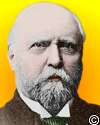
Died 18 Mar 1899 at age 67 (born 29 Oct 1831). quotes
Othniel Charles Marsh was an American paleontologist who discovered over 1000 fossils. He made extensive scientific explorations of the western U.S. and contributed greatly to knowledge of extinct North American vertebrates. Marsh spent only four seasons in the field, between 1870 and 1873. “The Great Bone Wars,” were the result of rivalry with Edward Drinker Cope, America's other great vertebrate paleontologist of the period. Each scientist hired field crews to unearth and ship back fossils as fast as possible. The rival crews were known to spy on each other, dynamite their own and each other's secret localities (to keep their opponents from digging there), and occasionally steal each other's fossils. more
Othniel Charles Marsh was an American paleontologist who discovered over 1000 fossils. He made extensive scientific explorations of the western U.S. and contributed greatly to knowledge of extinct North American vertebrates. Marsh spent only four seasons in the field, between 1870 and 1873. “The Great Bone Wars,” were the result of rivalry with Edward Drinker Cope, America's other great vertebrate paleontologist of the period. Each scientist hired field crews to unearth and ship back fossils as fast as possible. The rival crews were known to spy on each other, dynamite their own and each other's secret localities (to keep their opponents from digging there), and occasionally steal each other's fossils. more
O.C. Marsh: Pioneer in Paleontology, by Charles Schuchert and Clara M. Levene. - book suggestion.
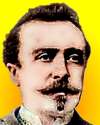
Died 18 Mar 1892 at age 45 (born 27 Apr 1846).
Belgian-American inventor who was a pioneer in railway, electric lighting, and mining work, with more than 100 patents on electrical inventions. He emigrated to the U.S. in 1869. While experimenting with electric motors in Detroit (1874) he established the practicality of railway cars running on electricity. He invented an electric generator (1880), and exhibited an operating electric streetcar at the Chicago Exposition of Railway Appliances (1883). He designed electric streetcar systems for several cities. In 1888, he sold his electric railway patents to Thomson-Houston Electric Company of Lynn, Mass. He died four years later, at age 46. His other patents include: arc lamp (1870), coal-mining machine (1891), gearless electric locomotive (1894).« more
Belgian-American inventor who was a pioneer in railway, electric lighting, and mining work, with more than 100 patents on electrical inventions. He emigrated to the U.S. in 1869. While experimenting with electric motors in Detroit (1874) he established the practicality of railway cars running on electricity. He invented an electric generator (1880), and exhibited an operating electric streetcar at the Chicago Exposition of Railway Appliances (1883). He designed electric streetcar systems for several cities. In 1888, he sold his electric railway patents to Thomson-Houston Electric Company of Lynn, Mass. He died four years later, at age 46. His other patents include: arc lamp (1870), coal-mining machine (1891), gearless electric locomotive (1894).« more
Died 18 Mar 1871 at age 64 (born 27 Jun 1806). quotes
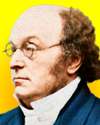
English mathematician and logician who did important work in abstract symbolic logic, the theory of relations, and formulated De Morgan's laws: one is “NOT (A AND B) = (NOT A) or (NOT B)” and the other is “NOT (A OR B) = (NOT A) AND (NOT B)”. These laws continue to be applied in modern proof theory and for software programming. When he defined and introduced the term “mathematical induction” (1838), he gave the process a rigorous basis and clarity that it had previously lacked. He originated the use of the slash to represent fractions, as in 1/5 or 3/7. In Trigonometry and Double Algebra (1849) he gave a geometric interpretation of complex numbers.«[Born in India, De Morgan (according to Macfarlane) De Morgan considered himself to be British, without being specifically English, Scottish, Welsh or Irish.]
English mathematician and logician who did important work in abstract symbolic logic, the theory of relations, and formulated De Morgan's laws: one is “NOT (A AND B) = (NOT A) or (NOT B)” and the other is “NOT (A OR B) = (NOT A) AND (NOT B)”. These laws continue to be applied in modern proof theory and for software programming. When he defined and introduced the term “mathematical induction” (1838), he gave the process a rigorous basis and clarity that it had previously lacked. He originated the use of the slash to represent fractions, as in 1/5 or 3/7. In Trigonometry and Double Algebra (1849) he gave a geometric interpretation of complex numbers.«[Born in India, De Morgan (according to Macfarlane) De Morgan considered himself to be British, without being specifically English, Scottish, Welsh or Irish.]
Memoir of Augustus De Morgan, by Sophia Elizabeth (Frend) De Morgan. - book suggestion.
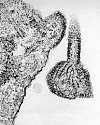
In 1999, the Nipah virus was isolated, by Dr Chua Kaw Ping, of the University Malaya. This caused a previously unrecorded viral disease, and was implicated by laboratory testing in many of cases of febrile encephalitic and respiratory illnesses among workers who had exposure to pigs in Malaysia and Singapore. The virus, which is transmissible from pigs to humans, had caused approximately 100 human deaths in the preceding six months. On 10 Apr 1999, it was officially called the Nipah virus, after one of the villages affected by the outbreak - Sungai Nipah in the Malaysian state of Negeri Sembilan. The virus was discovered More than 900,000 pigs in the affected areas were destroyed to contain the outbreak.«[Image: Nipah virus shown budding from a cell under an electron microscope.]
Paul Chu
In 1987, the latest discoveries in “high-temperature” superconductivity (HTS) were reported by many speakers at a marathon session packed with about 1800 scientists at the American Physical Society meeting in New York City. Because of the excitement created there, it was dubbed the “Woodstock of Physics.” When first reported in 1911, the phenomenon only occurred at 4 degrees above absolute zero (4 K), when all electrical resistance in a metal sample disappeared. In Sep 1986, researchers published their discovery of HTS in a ceramic material at temperature in the 30 K range. That news stirred many others in the scientific community into action. One speaker ar the APS meeting, Dr. Paul Chu, announced HTS achieved at 92 K .«

In 1967, the biggest oil spill ever, at that time, affected Great Britain and France when the supertanker Torrey Canyon ran aground on Pollard's Rock between Land’s End and the Isles of Scilly. The rocks ripped open six of the ship’s 18 cargo tanks that morning, and by evening there was an eight-mile oil slick leaking from it. Attempts to refloat the the ship failed, and one member of the salvage team died. With no prior incident of such a huge disaster to guide clean up efforts, bombs and napalm were tried to cause the oil to burn, then detergents which emulsified the oil, but were themselves highly toxic to all marine and shore life. Eventually, all 120,000 tons of crude oil being shipped from Kuwait were released as the ship broke apart. Damage to ecosystems lasted decades. Some lessons were learned.«
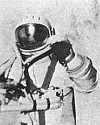
In 1965, Voskhod 2 was launched into space carrying Aleksey Leonov and Pavel Belyayev aboard. On the second orbit Leonov left the spacecraft through the air lock while still tethered to the vessel. He was the first man to climb out of a spacecraft in space. While outside, he took motion pictures and practiced moving outside of the spacecraft for 10 minutes. Voskhod 2 made 17 orbits at about 110 miles (177 km) above earth.