
Born 6 Mar 1937.
Soviet cosmonaut who was the first woman to fly in space, and is the only solo woman. She had worked in tyre and textile factories. She was selected (1961) as a cosmonaut for her expert skill in parachuting. She trained in a special woman-in-space program, and was the only one of the four women participants to complete a space mission. She was launched in Vostok 6 on 16 Jun 1963, two days after Valery F. Bykovsky in Vostok 5. Tereshkova made 48 orbits of Earth in 71 hours. The two cosmonauts landed on the same day, 19 Jun. Tereshkova left the program shortly after her return. She was honored with the title Hero of the Soviet Union. She went into space two decades before America's first woman astronaut, Sally Ride.«
Soviet cosmonaut who was the first woman to fly in space, and is the only solo woman. She had worked in tyre and textile factories. She was selected (1961) as a cosmonaut for her expert skill in parachuting. She trained in a special woman-in-space program, and was the only one of the four women participants to complete a space mission. She was launched in Vostok 6 on 16 Jun 1963, two days after Valery F. Bykovsky in Vostok 5. Tereshkova made 48 orbits of Earth in 71 hours. The two cosmonauts landed on the same day, 19 Jun. Tereshkova left the program shortly after her return. She was honored with the title Hero of the Soviet Union. She went into space two decades before America's first woman astronaut, Sally Ride.«
Born 6 Mar 1917; died 26 Mar 2011 at age 94.
American chemist and inventor who invented Super Glue™. He accidentally discovered (1951) the adhesive properties of cyanoacrylate monomers that needed neither heat nor pressure to permanently bond between various surfaces. He patented the formula (U.S. No. 2,768,109) with the title “Alcohol-Catalyzed Cyanoacrylate Adhesive Compositions/Superglue.” It was first marketed (1958) under the “Eastman 910” name, after his employer, Eastman Kodak. From 1963, it has been sold as Loctite “Super Glue.” Memorable advertising showed a car lifted by a crane using an attachment bonded with just a few drops. Its versatility extends to derivatives used for repairing arteries, veins, teeth and as a spray to seal open wounds of soldiers during combat in Vietnam. Coover held 460 patents in his lifetime. After Eastman, he joined Loctite as its president.«
American chemist and inventor who invented Super Glue™. He accidentally discovered (1951) the adhesive properties of cyanoacrylate monomers that needed neither heat nor pressure to permanently bond between various surfaces. He patented the formula (U.S. No. 2,768,109) with the title “Alcohol-Catalyzed Cyanoacrylate Adhesive Compositions/Superglue.” It was first marketed (1958) under the “Eastman 910” name, after his employer, Eastman Kodak. From 1963, it has been sold as Loctite “Super Glue.” Memorable advertising showed a car lifted by a crane using an attachment bonded with just a few drops. Its versatility extends to derivatives used for repairing arteries, veins, teeth and as a spray to seal open wounds of soldiers during combat in Vietnam. Coover held 460 patents in his lifetime. After Eastman, he joined Loctite as its president.«
Born 6 Mar 1911; died 5 Apr 1998 at age 87.
English physicist and chemist whose work encompassed the physics of earthquakes, the growth of crystals (from diamonds to ice), the strength of polymers, and the molecular alignments within liquid crystals. During WW II, he worked for Scientific Intelligence at the Air Ministry. In 1946, at the University of Bristol, Frank looked into problems concerned with crystal growth and the plastic deformation of metallic crystals when mechanically loaded. His scientific fame was established by a decade bringing successes in applications of crystal-dislocation theory. This theoretical work has been the foundation of researches by scientists of all nationalities ever since, and continues to guide practice in the metallurgical and semiconductor industries.
English physicist and chemist whose work encompassed the physics of earthquakes, the growth of crystals (from diamonds to ice), the strength of polymers, and the molecular alignments within liquid crystals. During WW II, he worked for Scientific Intelligence at the Air Ministry. In 1946, at the University of Bristol, Frank looked into problems concerned with crystal growth and the plastic deformation of metallic crystals when mechanically loaded. His scientific fame was established by a decade bringing successes in applications of crystal-dislocation theory. This theoretical work has been the foundation of researches by scientists of all nationalities ever since, and continues to guide practice in the metallurgical and semiconductor industries.

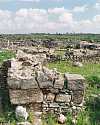
French archaeologist who was the first excavator at Ras Shamra in Syria. The site, Ugarit, dates back to the sixth or seventh millennium B.C. nestled in the shadow of the Jebel al-Aqra (Mount Sanpanu) by the Mediterranean Sea, 10-km north of present-day Syrian port, Latakia. It was discovered accidentally (1928) when a peasant's plow hit the stones of a vaulted tomb. In 1929, Schaeffer began a lifetime excavating there. His stratographic soundings revealed five separate archaeological levels. The uppermost dates from the Late Bronze Age, 1600-1200 B.C., and the time of Ugarit's demise. The deeper levels date from the Middle Bronze Age, Early Bronze Age, Chalcolithic age of stone and copper, and the Neolithic.«[Image: view of a small section of the ruins at Ugarit.]
Vounous: C.F.A. Schaeffer's Excavations..., by Anne-Elizabeth Dunn-Vaturi, Claude F.-A. Schaeffer, et al. - book suggestion.
Born 6 Mar 1879; died 11 Dec 1975 at age 96.
American forester and conservationist and regional planner, who was as "father of the Appalachian Trail" was instrumental in creating a 2,000-mile footpath from Maine to Georgia. As a government planner, he spearheaded the idea of the "townless highway." Early on, he advocated preserving cultural and recreational areas in an increasingly urbanized environment. He proposed the Appalachian Trail in an Oct 1921 article. He was one of the founders of the Regional Planning Association of America (1923), through which he held a two-day "Appalachian Trail Conference" in Washington, D.C. (Mar 2-3, 1925). By 1934, 1,937 miles of the trail had been blazed through the efforts of volunteers.«
American forester and conservationist and regional planner, who was as "father of the Appalachian Trail" was instrumental in creating a 2,000-mile footpath from Maine to Georgia. As a government planner, he spearheaded the idea of the "townless highway." Early on, he advocated preserving cultural and recreational areas in an increasingly urbanized environment. He proposed the Appalachian Trail in an Oct 1921 article. He was one of the founders of the Regional Planning Association of America (1923), through which he held a two-day "Appalachian Trail Conference" in Washington, D.C. (Mar 2-3, 1925). By 1934, 1,937 miles of the trail had been blazed through the efforts of volunteers.«
Benton MacKaye: Conservationist, Planner, and Creator of the Appalachian Trail, by Larry Anderson. - book suggestion.
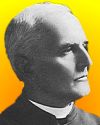
Born 6 Mar 1847; died 5 Sep 1930 at age 83.
Austrian Jesuit priest and astronomer who made a catalog of variable stars (1890-1908). Working at the Vatican Observatory he reexamined for accuracy the listing of all of the NGC (New General Catalogue of Nebulae and Star Clusters) objects north of about -30 degrees. He published lists of errata in the NGC. During his observations, he observed dark nebulae, tenuous dark clusters of interstellar matter sometimes known as Hagen's clouds. These strange clouds have not been recorded by others, and are now attributed to optical illusions associated with visual observations. Jesuits have been involved in astronomy since 1551 when Fr. Christoph Clavius, SJ, a mathematician and astronomer helped Pope Gregory XIII reform the calendar.«
Austrian Jesuit priest and astronomer who made a catalog of variable stars (1890-1908). Working at the Vatican Observatory he reexamined for accuracy the listing of all of the NGC (New General Catalogue of Nebulae and Star Clusters) objects north of about -30 degrees. He published lists of errata in the NGC. During his observations, he observed dark nebulae, tenuous dark clusters of interstellar matter sometimes known as Hagen's clouds. These strange clouds have not been recorded by others, and are now attributed to optical illusions associated with visual observations. Jesuits have been involved in astronomy since 1551 when Fr. Christoph Clavius, SJ, a mathematician and astronomer helped Pope Gregory XIII reform the calendar.«
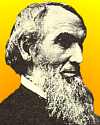
Born 6 Mar 1812; died 9 Jan 1895 at age 82.
American watchmaker who was the first person to apply the interchangeable system to the manufacture of watches, and has been called the “father of the American watch factories.” He began work as a journeyman watchmaker in Boston in 1833. Having observed the precision manufacturing of firearms, around 1840 he invented the Dennison Standard Gauge, and then began to develop the "Interchangeable System" (the American System of Watch Manufacturing). In 1849, Dennison partnered with the clockmaker Edward Howard to manufacture interchangeable movement parts, from 1950, to enhance quality and lower the price of watches. He moved to pursue business in Switzerland in 1865 after the American Civil War.«
American watchmaker who was the first person to apply the interchangeable system to the manufacture of watches, and has been called the “father of the American watch factories.” He began work as a journeyman watchmaker in Boston in 1833. Having observed the precision manufacturing of firearms, around 1840 he invented the Dennison Standard Gauge, and then began to develop the "Interchangeable System" (the American System of Watch Manufacturing). In 1849, Dennison partnered with the clockmaker Edward Howard to manufacture interchangeable movement parts, from 1950, to enhance quality and lower the price of watches. He moved to pursue business in Switzerland in 1865 after the American Civil War.«
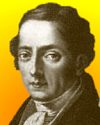
Born 6 Mar 1787; died 7 Jun 1826 at age 39.
German physicist who was the first to study the dark lines in the solar spectrum, which were seen by Wollaston in 1802, but are called Fraunhofer lines. Fraunhofer was not able to explain them, but measured 576 lines. Over 25,000 have now been found in the solar spectrum. These are caused by selective absorption of those wavelengths by atoms of elements, and their relative positions are the same whether the light is produced by heated metals in the laboratory or seen from those gaseous elements in the sun or viewed from other heavenly bodies. Before other scientists so widely adopted the technique, he used a diffraction grating instead of a prism to disperse the spectrum. He also invented a heliometer.«
German physicist who was the first to study the dark lines in the solar spectrum, which were seen by Wollaston in 1802, but are called Fraunhofer lines. Fraunhofer was not able to explain them, but measured 576 lines. Over 25,000 have now been found in the solar spectrum. These are caused by selective absorption of those wavelengths by atoms of elements, and their relative positions are the same whether the light is produced by heated metals in the laboratory or seen from those gaseous elements in the sun or viewed from other heavenly bodies. Before other scientists so widely adopted the technique, he used a diffraction grating instead of a prism to disperse the spectrum. He also invented a heliometer.«
Spectrum of Belief: Joseph von Fraunhofer..., by Myles W. Jackson. - book suggestion.
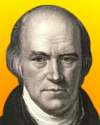
Born 6 Mar 1767; died 24 Dec 1839 at age 72. quotes
Davies Gilbert (born Davies Giddy) was an English engineer and author who was President of the Royal Society (1827-30). In this position, he followed Sir Humphry Davy (1820-1827), whose scientific career he had advanced many years earlier by introducing him to Dr. Thomas Beddoes. Born Davies Giddy, he took the name and arms of Gilbert, pursuant to royal sign manual, on 10 Dec 1817, subsequent to his marriage (18 Apr 1808) to Mary Anne, only daughter and heiress of Thomas Gilbert.«
Davies Gilbert (born Davies Giddy) was an English engineer and author who was President of the Royal Society (1827-30). In this position, he followed Sir Humphry Davy (1820-1827), whose scientific career he had advanced many years earlier by introducing him to Dr. Thomas Beddoes. Born Davies Giddy, he took the name and arms of Gilbert, pursuant to royal sign manual, on 10 Dec 1817, subsequent to his marriage (18 Apr 1808) to Mary Anne, only daughter and heiress of Thomas Gilbert.«
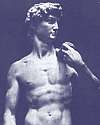
David
Born 6 Mar 1475; died 18 Feb 1564 at age 88. quotes
Michelangelo Buonarroti was an Italian artist and architect known primarily for his works of art, but he also prepared extremely accurate anatomical drawings of the human body. Michelangelo, too, performed a number of dissections to be able to more accurately depict the physiology of saints and sinners. Thus science was advanced, but in the name of Renaissance art.
Michelangelo Buonarroti was an Italian artist and architect known primarily for his works of art, but he also prepared extremely accurate anatomical drawings of the human body. Michelangelo, too, performed a number of dissections to be able to more accurately depict the physiology of saints and sinners. Thus science was advanced, but in the name of Renaissance art.

Died 6 Mar 2005 at age 98 (born 2 Jul 1906). quotes
German-American physicist who helped to shape classical physics into quantum physics and increased the understanding of the atomic processes responsible for the properties of matter and of the forces governing the structures of atomic nuclei. Bethe did work relating to armour penetration and the theory of shock waves of a projectile moving through air. He studied nuclear reactions and reaction cross sections (1935-38). In 1943, Robert Oppenheimer asked Bethe to be the head of the Theoretical Division at Los Alamos on the Manhattan Project. After returning to Cornell University in 1946, Bethe became a leader promoting the social responsibility of science. He received the Nobel Prize for Physics (1967) for his work on the production of energy in stars.
German-American physicist who helped to shape classical physics into quantum physics and increased the understanding of the atomic processes responsible for the properties of matter and of the forces governing the structures of atomic nuclei. Bethe did work relating to armour penetration and the theory of shock waves of a projectile moving through air. He studied nuclear reactions and reaction cross sections (1935-38). In 1943, Robert Oppenheimer asked Bethe to be the head of the Theoretical Division at Los Alamos on the Manhattan Project. After returning to Cornell University in 1946, Bethe became a leader promoting the social responsibility of science. He received the Nobel Prize for Physics (1967) for his work on the production of energy in stars.
The Road from Los Alamos (Masters of Modern Physics), by Hans Albrecht Bethe. - book suggestion.
Died 6 Mar 1948 at age 83 (born 12 Feb 1865).
American physician, with her husband Cornelius McKane, were African-American doctors who worked tirelessly to improve healthcare for Black Americans in the late 19th and early 20th centuries. Despite facing racial discrimination, they earned medical degrees, started hospitals and schools, and helped communities in both the United States and Africa. Their contributions had lasting impacts on Black medical education, public health, and social justice. They worked extensively in Savannah, Georgia. They relocated to Boston in 1909. Although Cornelius died three years later, Alice continued to train nurses and published two books, The Fraternal Sick Bed (1913) and a book of poetry, Clover Leaves (1914).« more
American physician, with her husband Cornelius McKane, were African-American doctors who worked tirelessly to improve healthcare for Black Americans in the late 19th and early 20th centuries. Despite facing racial discrimination, they earned medical degrees, started hospitals and schools, and helped communities in both the United States and Africa. Their contributions had lasting impacts on Black medical education, public health, and social justice. They worked extensively in Savannah, Georgia. They relocated to Boston in 1909. Although Cornelius died three years later, Alice continued to train nurses and published two books, The Fraternal Sick Bed (1913) and a book of poetry, Clover Leaves (1914).« more
Died 6 Mar 1939 at age 86 (born 12 Apr 1852).
Carl Louis Ferdinand von Lindemann was a German mathematician who was the first to prove that is transcendental (it is not a solution of any algebraic equation with rational coefficients). This finally established the insoluble nature of the classical Greek mathematical problem of squaring the circle (constructing a square with the same area as a given circle using ruler and compasses alone.) In 1873, Lindemann visited Hermite in Paris and discussed the methods which Hermite had used in his proof that e, the base of natural logarithms, is transcendental. Following this visit, Lindemann was able to extend Hermite's results to show that was also transcendental (1882).«[DSB and other sources give death date as 6 Mar 1939. EB gives 1 Mar 1939.]
Carl Louis Ferdinand von Lindemann was a German mathematician who was the first to prove that
is transcendental (it is not a solution of any algebraic equation with rational coefficients). This finally established the insoluble nature of the classical Greek mathematical problem of squaring the circle (constructing a square with the same area as a given circle using ruler and compasses alone.) In 1873, Lindemann visited Hermite in Paris and discussed the methods which Hermite had used in his proof that e, the base of natural logarithms, is transcendental. Following this visit, Lindemann was able to extend Hermite's results to show that was also transcendental (1882).«[DSB and other sources give death date as 6 Mar 1939. EB gives 1 Mar 1939.]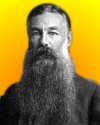
Died 6 Mar 1936 at age 84 (born 6 Feb 1852).
C(onwy) Lloyd Morgan was a British zoologist and psychologist, best remembered for coining Morgan's Canon expressing that the interpretation of animal behavior should be described in the simplest possible terms: "In no case may we interpret an action as the outcome of the exercise of a higher psychical faculty, if it can be interpreted as the outcome of one which stands lower in the psychological scale." (In 1947, Philip L. Harriman stated that Morgan's Canon was simply a specialised form of Occam's razor applied to animal psychology.) For his work, Morgan is sometimes called the founder of comparative, or animal, psychology. His Canon was significant in developing concepts of behaviorism in twentieth century academic psychology.«
C(onwy) Lloyd Morgan was a British zoologist and psychologist, best remembered for coining Morgan's Canon expressing that the interpretation of animal behavior should be described in the simplest possible terms: "In no case may we interpret an action as the outcome of the exercise of a higher psychical faculty, if it can be interpreted as the outcome of one which stands lower in the psychological scale." (In 1947, Philip L. Harriman stated that Morgan's Canon was simply a specialised form of Occam's razor applied to animal psychology.) For his work, Morgan is sometimes called the founder of comparative, or animal, psychology. His Canon was significant in developing concepts of behaviorism in twentieth century academic psychology.«
Habit and Instinct, by C. Lloyd Morgan. - book suggestion.
Died 6 Mar 1935 at age 93 (born 8 Mar 1841). quotes
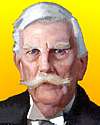
American physician.
American physician.
Oliver Wendell Holmes Jr., by G. Edward White. - book suggestion.
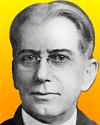
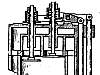
Scottish-American inventor and automobile manufacturer who was a pioneer in the industry. He invented the more powerful valve-in-head engine and the windshield. Lacking business acumen, he was a manufacturer for only a few years, but Buick's brand name remained after his business was taken over by his financiers. Buick had begun (1884) in the plumbing supply business, and developed a method for bonding enamel to iron in the production of baths and sinks. By 1899, he made internal combustion engines, which led to forming the Buick Manufacturing Company (1902) to manufacture automobiles. After about a year in business, his company was turned over to other businessmen able to expand it. Buick left in 1906 to pursue other interests.«
The Buick: A Complete History, by Terry B. Dunham. - book suggestion.
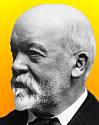
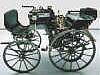
Gottlieb (Wilhelm) Daimler was a German engineer and pioneer automobile manufacturer. He invented the first high-speed internal combustion engine, operating at up to 900 rpm (1883) and a carburetor (1885) to mix petrol fuel and air. The motorbike he built in 1885 was perhaps the world's first. It was the world's first when, with Wilhelm Maybach, he constructed a four-wheeled automobile in 1886 capable of a speed of 11 mph. After developing a four-speed gearbox and a belt-drive to transfer power to the wheels, they started manufacturing. In 1890 he founded Daimler-Motoren-Gesellschaft, which produced the Mercedes (1889), later merging into Daimler-Benz & Co. in 1926. Zeppelin used Daimler engines for his airships.«
A Daimler Century: The Full History of Britain's Oldest Car Maker, by Lord Montagu. - book suggestion.
Died 6 Mar 1867 at age 52 (born 20 Mar 1814). quotes
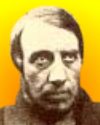
Scottish anatomist who was one of the earliest and most acute observers of cell-life. In his early medical career, he identified the independent origins of deciduous and permanent teeth. Goodsir recognized the importance of cell division as the basis of growth and observed the cell is divided into a number of departments. His discoveries anticipated by a number of years the work of Rudolph Virchow. In 1842, he showed that stomach upsets with vomiting were caused by bacteria, treated it accordingly, and thus, before Louis Pasteur, was the first to successfully recognise and treat a bacterial infection. Goodsir taught anatomy, physiology and pathology, while maintaining his research at the dissecting-table.«
Scottish anatomist who was one of the earliest and most acute observers of cell-life. In his early medical career, he identified the independent origins of deciduous and permanent teeth. Goodsir recognized the importance of cell division as the basis of growth and observed the cell is divided into a number of departments. His discoveries anticipated by a number of years the work of Rudolph Virchow. In 1842, he showed that stomach upsets with vomiting were caused by bacteria, treated it accordingly, and thus, before Louis Pasteur, was the first to successfully recognise and treat a bacterial infection. Goodsir taught anatomy, physiology and pathology, while maintaining his research at the dissecting-table.«
Died 6 Mar 1866 at age 71 (born 24 May 1794). quotes
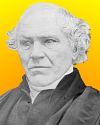
English scholar and philosopher known for his survey of the scientific method and for creating scientific words. He founded mathematical crystallography and developed a revision of Friedrich Mohs's classification of minerals. He created the words scientist and physicist by analogy with the word artist. They soon replaced the older term natural philosopher. Other useful words were coined to help his friends: biometry for John Lubbock; Eocine, Miocene and Pliocene for Charles Lyell; and for Michael Faraday, anode, cathode, diamagnetic, paramagnetic, and ion (whence the sundry other particle names ending -ion). In metereology, Whewell devised a self-recording anemometer. He was second only to Isaac Newton for work on tidal theory. He died as a result of being thrown from his horse.«*
English scholar and philosopher known for his survey of the scientific method and for creating scientific words. He founded mathematical crystallography and developed a revision of Friedrich Mohs's classification of minerals. He created the words scientist and physicist by analogy with the word artist. They soon replaced the older term natural philosopher. Other useful words were coined to help his friends: biometry for John Lubbock; Eocine, Miocene and Pliocene for Charles Lyell; and for Michael Faraday, anode, cathode, diamagnetic, paramagnetic, and ion (whence the sundry other particle names ending -ion). In metereology, Whewell devised a self-recording anemometer. He was second only to Isaac Newton for work on tidal theory. He died as a result of being thrown from his horse.«*
William Whewell: Theory of Scientific Method, by William Whewell. - book suggestion.
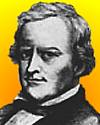
Died 6 Mar 1851 at age 65 (born 21 Oct 1785).
American steamboat designer and builder who helped develop the commercial potential of the inland waterways of the Mississippi River system. Within a few years of Robert Fulton's successful steamboat experiment (1807), Shreve had built his own, the Enterprise (1813), which made the first complete upriver trip from New Orleans to Pittsburgh. He fought legal battles against Fulton's monopoly on river routes. By 1821, Shreve addressed the need to make navigation safer by clearing the river of obstructions. He created snag-boats with a jaw-like bow able to pull up snags (tree trunks), and put them through a sawmill on their deck. Shreve's work was a major contribution to the great era of steamboat traffic prior to the Civil War.«
American steamboat designer and builder who helped develop the commercial potential of the inland waterways of the Mississippi River system. Within a few years of Robert Fulton's successful steamboat experiment (1807), Shreve had built his own, the Enterprise (1813), which made the first complete upriver trip from New Orleans to Pittsburgh. He fought legal battles against Fulton's monopoly on river routes. By 1821, Shreve addressed the need to make navigation safer by clearing the river of obstructions. He created snag-boats with a jaw-like bow able to pull up snags (tree trunks), and put them through a sawmill on their deck. Shreve's work was a major contribution to the great era of steamboat traffic prior to the Civil War.«
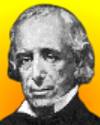
Died 6 Mar 1838 (born 1749).
American engineer and lawyer who invented the screw propeller (1802) and the multitubular boiler engine. His Phoenix was the first oceangoing steamboat (1809), and he operated the Juliana, the first steam-boat ferry. His interest in applying steam steam power to transportation began in the late 1780s. Stevens petitioned the U.S. Congress to establish a U.S. patent law (enacted 1790) and registered patents for his improved boiler and engine designs (1792). The sea voyage of the Phoenix paddle-wheel steamboat was from New York City to Philadelphia. On 11 Oct 1811, the Juliana, began operations as a ferry between New York, NY, and Hoboken, NJ. He demonstrated the first steam locomotive in the U.S. on his estate (1825).
American engineer and lawyer who invented the screw propeller (1802) and the multitubular boiler engine. His Phoenix was the first oceangoing steamboat (1809), and he operated the Juliana, the first steam-boat ferry. His interest in applying steam steam power to transportation began in the late 1780s. Stevens petitioned the U.S. Congress to establish a U.S. patent law (enacted 1790) and registered patents for his improved boiler and engine designs (1792). The sea voyage of the Phoenix paddle-wheel steamboat was from New York City to Philadelphia. On 11 Oct 1811, the Juliana, began operations as a ferry between New York, NY, and Hoboken, NJ. He demonstrated the first steam locomotive in the U.S. on his estate (1825).
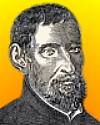
Died 6 Mar 1683 at age 59 (born 17 Jan 1624).
Italian architect and theologian whose study of mathematics led him to a career in architecture in which he created the most fantastic geometric elaboration of all baroque churches. In his Santissima Sindone, Guarini created a diaphanous dome - a geometrical optical illusion in the dome made through the use of the actual structure which creates the illusion that the dome recedes farther up into space than it really does. He wrote two architectural treatises and other works that concentrate on his mathematical knowledge. Therein, Guarini discusses Desargue's projective geometry, which reveal a scientific basis for his daring structures. He worked primarily in Turin and Sicily, with his influence stretching into Germany, Austria and Bohemia.«
Italian architect and theologian whose study of mathematics led him to a career in architecture in which he created the most fantastic geometric elaboration of all baroque churches. In his Santissima Sindone, Guarini created a diaphanous dome - a geometrical optical illusion in the dome made through the use of the actual structure which creates the illusion that the dome recedes farther up into space than it really does. He wrote two architectural treatises and other works that concentrate on his mathematical knowledge. Therein, Guarini discusses Desargue's projective geometry, which reveal a scientific basis for his daring structures. He worked primarily in Turin and Sicily, with his influence stretching into Germany, Austria and Bohemia.«
Guarino Guarini and His Architecture, by H. Meek. - book suggestion.
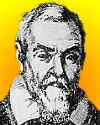
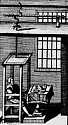
Santorio's balance to measure body weight after a meal
aka Sanctorius Sanctorius was an Italian physician who made the first systematic study of basal metabolism. In his research, he was also the first to employ instruments of precision and to apply quantitative experimental research techniques in the practice of medicine. His adaptation of the pendulum to medical practice (to determine pulse rate) was probably inspired by his discussions with Galileo on the latter's experiments with pendulums in 1602. His most famous medical contribution was a balance used to study the metabolic changes undergone by his experimental subjects, who included Galileo. He published descriptions of a new type of thermometer which may well have been inspired by Galileo's thermoscope.[Date of death: OS 22 Feb 1636, NS 6 Mar 1636.]
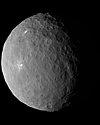
In 2015, the NASA spacecraft, Dawn,entered orbit around the dwarf planet, Ceres, at 7:39 EST. The 7½ year journey of 3,100 million miles (4,900 million km) was made with steady acceleration from ion propulsion. It became the first spacecraft to orbit a dwarf planet. On its way (2011-12), it had explored the giant asteroid Vesta. Dawn returned many images of both bodies, the two most massive (largest and third-largest in size) in the asteroid belt between Mars and Jupiter. Ceres, discovered by Giuseppe Piazzi on 1 Jan 1801, is spheroidal, ave. 590 mi (590 km) diameter. As Dawn neared Ceres, its cratered surface showed some unusual small bright spots (perhaps ice). Vesta is ave. 318 mi (530 km) diameter.«

In 1994, in Biosphere 2, a glass enclosed ecosystem, a group of seven people from five countries began a new study in self-contained living. Their aim was to live within the structure, supported by the several simulated types of ecosystems therein, to provide information which may be applied to solving ecological problems created by man. Biosphere 2 was built in the desert outside of Oracle, Ariz.
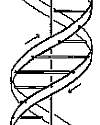
In 1953, James Watson and Francis Crick submitted to the journal Nature their first article on the structure of DNA. It was published in the 25 Apr 1953 issue. "We wish to put forward a radically different structure for the salt of deoxyribose nucleic acid. This structure has two helical chains each coiled around the same axis... Both chains follow right-handed helices... The novel feature of the structure is the manner in which the two chains are held together by purine and pyrimidine bases... They are joined together in pairs, a single base from one chain being hydrogen-bonded to a single base from the other chain, so that the two lie side by side with identical z-co-ordinates. One of the pair must be a purine and the other a pyrimidine in order for bonding to occur."«[Image: DNA as illustrated in the Nature article.]

In 1950, Silly Putty was introduced as a toy by Peter Hodgson, a marketing consultant, who packaged one-ounce portions of the rubber-like material in plastic eggs. It could be stretched, rolled into a bouncing ball, or used to transfer colored ink from newsprint. The original discovery was made in 1943 by James Wright who combined silicone oil and boric acid at the laboratories of General Electric. He was researching methods of making synthetic rubber, but at the time no significant application existed for the material. However, it was passed around as a curiosity. Hodgson saw a sample and realized its potential simply for entertainment and coined its name for marketing it as a toy. Its popularity made him a millionaire.«

In 1930, General Foods put the first individually packaged frozen foods - "Birds Eye Frosted Foods" - on sale in Springfield, Massachussetts, USA. To test the market, the product was sold in 18 retail stores to see how consumers react to frozen foods. Clarence Birdseye got his idea after seeing Canadians thawing and eating naturally frozen fish. From 1922, he prepared frozen fish for sale, and developed freezing processes. By 1927, he turned his attention to a wider range of foods. The initial Birds Eye line featured 26 items, including 18 cuts of frozen meat, spinach and peas, a variety of fruits and berries, blue point oysters and fish fillets. By May, sales increased dramatically. This experiment is considered the birth of retail frozen foods.
more
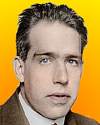
Bohr
In 1913, this date was written by Niels Bohr on his first paper describing his new ideas on atomic structure, and mailed to his mentor, Ernest Rutherford. It was one of three historic papers he wrote on this subject.
Suspended In Language: Niels Bohr's Life, Discoveries, And The Century He Shaped, by Jim Ottaviani. - book suggestion.
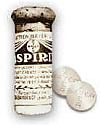
In 1899, acetylsalycilic acid was patented by Felix Hoffmann. It is better known by its tradename as Aspirin. He had successfully created a chemically pure and stable form of acetylsalicylic acid in 1897. His handwritten laboratory notes suggested: “Through its physical characteristics such as a sour taste without any corrosive effect, acetylsalicylic acid has an advantage over salicylic acid and will therefore be tested for its usability in this context.” His success was Aspirin - a better pain reliever for his father's rheumatoid arthritis than the salicylic acid previously used, which had an unpleasant taste and side effects, such as stomach bleeding. Hoffmann had improved on the earlier impure form derived by French chemist Charles Frederic Gerhardt (1853).
Aspirin: The Remarkable Story of a Wonder Drug, by Diarmuid Jeffreys. - book suggestion.
In 1896, the first appearance of an auto on the streets in Detroit occurred when Charles Brady King drove his "Horseless Carriage" down one of its main streets. When his auto broke down, speculators responded by telling him to "get a horse".
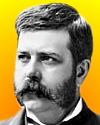
1884
In 1886, America's first alternating current power plant began operation in Great Barrington, Mass. George Westinghouse demonstrated transmission at 500 volts for 4000 feet, with a step-down for lights in stores. Driven by a water mill there, it started producing commercial power two weeks later, but subsequently became damaged by an accident and was abandoned. However, it had sucessfully showed the great advantage of using transformers at the source for transmission at higher voltage, with decreased energy losses, for distances greater than was possible by Edison's direct currect ventures. Westinghouse opened his first successful A.C. generating plant on 30 Nov 1886 at Buffalo, NY.«
A Life of George Westinghouse, by Henry G. Prout. - book suggestion.
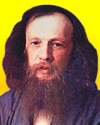
In 1869, Dmitry Mendeleev published his first version of the periodic table of the elements. He was a Russian chemist who developed the periodic classification of the elements. In his final version of the periodic table (1871) he left gaps, foretelling that they would be filled by elements not then known and predicting the properties of three of those elements.
Dmitry Ivanovich Mendeleyev: His Life and His Work, by O. N. Pisarzhevsky. - book suggestion.

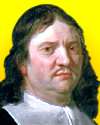
Henry Oldenburg: Shaping the Royal Society, by Marie Boas Hall. - book suggestion.
In 1661, the Royal Society, London, England, elected Sir Robert Moray as their first president.
In 1646, the first patent for any machine in the New World was issued by the Pilgrim Bay Colony to Joseph Jenkes, Mass. with these words: “The Cort, considering the necessity of raising such manufactures of engines of mils to go by water, for speedy dispatch of much worke with few hands, & being sufficiently informed of the ability of the petions to pforme such workes, grant his petition (yt no othr pson shall set up or use any such new invention or trade for fourteen yeares, without the licence of him, the said Joseph Jenkes”





