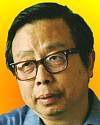
Born 12 Feb 1936.
Chinese astrophysicist and dissident who graduated from university in 1956, and was soon expelled from Communist Party for expressing his beliefs in intellectual freedom and reforms. In 1972, he published a paper on the Big Bang theory, previously a forbidden topic in China, which met condemnation from the Communists; the Marxists claimed that the universe was infinite. As a human rights activist in China, he is often compared to Soviet dissident Andrei Sakharov. Lizhi was blamed for student unrest and resulting rebellion in Tiananmen Square (1987). Since 1990, Lizhi has lived in exile in England and the U.S. He does theoretical work in cosmology, extracting the history of the universe from the remaining physical evidence, such as the cosmic background radiation, and the existence of antimatter.«
Chinese astrophysicist and dissident who graduated from university in 1956, and was soon expelled from Communist Party for expressing his beliefs in intellectual freedom and reforms. In 1972, he published a paper on the Big Bang theory, previously a forbidden topic in China, which met condemnation from the Communists; the Marxists claimed that the universe was infinite. As a human rights activist in China, he is often compared to Soviet dissident Andrei Sakharov. Lizhi was blamed for student unrest and resulting rebellion in Tiananmen Square (1987). Since 1990, Lizhi has lived in exile in England and the U.S. He does theoretical work in cosmology, extracting the history of the universe from the remaining physical evidence, such as the cosmic background radiation, and the existence of antimatter.«
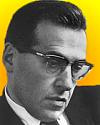
Born 12 Feb 1918; died 16 Jul 1994 at age 76. quotes
American physicist who shared (with Richard Feynman and Shin-Itiro Tomonaga) the 1965 Nobel Prize in Physics for work in quantum electrodynamics which reconciled quantum mechanics with Albert Einstein'sspecial theory of relativity. He published his first physics paper at age 16, and received a Ph.D. by age 21. During WW II, he developed important methods in electromagnetic field theory, which advanced the theory of wave guides. His variational techniques were applied in several fields of mathematical physics. In the 1940s he was one of the inventors of the “renormalization” technique. In 1957, he theorized that there were different neutrinos: one associated with the electron and one with the muon (verified experimentally 1962.) He invented and developed source theory.«A third family of neutrinos associated with the tau meson is now known (per email from David L. Wilson 17 Jul 2012).
American physicist who shared (with Richard Feynman and Shin-Itiro Tomonaga) the 1965 Nobel Prize in Physics for work in quantum electrodynamics which reconciled quantum mechanics with Albert Einstein'sspecial theory of relativity. He published his first physics paper at age 16, and received a Ph.D. by age 21. During WW II, he developed important methods in electromagnetic field theory, which advanced the theory of wave guides. His variational techniques were applied in several fields of mathematical physics. In the 1940s he was one of the inventors of the “renormalization” technique. In 1957, he theorized that there were different neutrinos: one associated with the electron and one with the muon (verified experimentally 1962.) He invented and developed source theory.«A third family of neutrinos associated with the tau meson is now known (per email from David L. Wilson 17 Jul 2012).
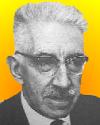
Born 12 Feb 1893; died 26 Oct 1970 at age 77.
Flemish astronomer and solar physicist who was one of the pioneering solar researchers during the first half of the 20th century. Applying solar spectrophotometry, he was one of the first to make quantitative measurements of the intensity distribution inside Fraunhofer lines, and interpret from them information about the outer solar layers. His range of study also included comets, nebulae and lunar photometry. During the time he was director of the observatory at the University of Utrecht, (1937-1963) he created a modern astronomical institute to study solar and stellar spectra with resources including a solar telescope, spectrograph, photometer, and mechanical workshop. Minnaert also maintained a strong interest in the education of physics teachers, and as a univeristy professor gave clear, enthusiastic and well-prepared lectures.«.
Flemish astronomer and solar physicist who was one of the pioneering solar researchers during the first half of the 20th century. Applying solar spectrophotometry, he was one of the first to make quantitative measurements of the intensity distribution inside Fraunhofer lines, and interpret from them information about the outer solar layers. His range of study also included comets, nebulae and lunar photometry. During the time he was director of the observatory at the University of Utrecht, (1937-1963) he created a modern astronomical institute to study solar and stellar spectra with resources including a solar telescope, spectrograph, photometer, and mechanical workshop. Minnaert also maintained a strong interest in the education of physics teachers, and as a univeristy professor gave clear, enthusiastic and well-prepared lectures.«.
The Nature of Light and Color in the Open Air, by Marcel Minnaert. - book suggestion.
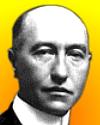
Born 12 Feb 1873; died 1963.
American paleontologist who discovered the first Tyrannosaurus rex fossil (1902) and many other types of dinosaurs. His 66-year career in palaeontology began at the American Museum of Natural History (1897). Sinclair Oil Company sponsored some of his digs (1930-40) and used the dinosaur as their company logo at their petrol stations. He did his fieldwork dressed in a full length fur coat, tie and topcoat. By the end of his life, he had excavated more dinosaurs than any other person.*
American paleontologist who discovered the first Tyrannosaurus rex fossil (1902) and many other types of dinosaurs. His 66-year career in palaeontology began at the American Museum of Natural History (1897). Sinclair Oil Company sponsored some of his digs (1930-40) and used the dinosaur as their company logo at their petrol stations. He did his fieldwork dressed in a full length fur coat, tie and topcoat. By the end of his life, he had excavated more dinosaurs than any other person.*
Bones for Barnum Brown: Adventures of a Dinosaur Hunter, by Roland T. Bird. - book suggestion.
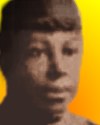
Born 12 Feb 1865; died 6 Mar 1948 at age 83.
American physician, with her husband Cornelius McKane, were African-American doctors who worked tirelessly to improve healthcare for Black Americans in the late 19th and early 20th centuries. Despite facing racial discrimination, they earned medical degrees, started hospitals and schools, and helped communities in both the United States and Africa. Their contributions had lasting impacts on Black medical education, public health, and social justice. They worked extensively in Savannah, Georgia. They relocated to Boston in 1909. Although Cornelius died three years later, Alice continued to train nurses and published two books, The Fraternal Sick Bed (1913) and a book of poetry, Clover Leaves (1914).« more
American physician, with her husband Cornelius McKane, were African-American doctors who worked tirelessly to improve healthcare for Black Americans in the late 19th and early 20th centuries. Despite facing racial discrimination, they earned medical degrees, started hospitals and schools, and helped communities in both the United States and Africa. Their contributions had lasting impacts on Black medical education, public health, and social justice. They worked extensively in Savannah, Georgia. They relocated to Boston in 1909. Although Cornelius died three years later, Alice continued to train nurses and published two books, The Fraternal Sick Bed (1913) and a book of poetry, Clover Leaves (1914).« more
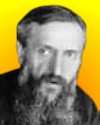
Born 12 Feb 1859; died 4 Dec 1933 at age 74.
Polish-French chemist and philosopher who studied scientific theories, both old and new, to determine the nature of scientific thought. He identified two principles of psychological reasoning by which the scientist understands phenomena: realism and causalism. Applying the first principle, a scientist's mind expects that within diverse physical behaviours, a certain degree of regularity is held to - a lawfulness - such as established by laws of conservation of energy, or the law of inertia. The second principle describes how the scientist seeks to describe a change by the identification of antecedent and consequent of the change. Meyerson's ideas were popular among scientific theorists in the 1930s.«
Polish-French chemist and philosopher who studied scientific theories, both old and new, to determine the nature of scientific thought. He identified two principles of psychological reasoning by which the scientist understands phenomena: realism and causalism. Applying the first principle, a scientist's mind expects that within diverse physical behaviours, a certain degree of regularity is held to - a lawfulness - such as established by laws of conservation of energy, or the law of inertia. The second principle describes how the scientist seeks to describe a change by the identification of antecedent and consequent of the change. Meyerson's ideas were popular among scientific theorists in the 1930s.«
Identity and Reality, by Emile Meyerson. - book suggestion.
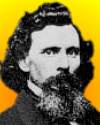
Born 12 Feb 1850; died 5 Feb 1934 at age 83. quotes
American geomorphologist and geologist who developed, geomorphology as the scientific study of landforms. He is noted for his concept of the “cycle of erosion” (or geomorphic cycle) whereby mountains and other landforms have a pattern of creation, maturation and becoming old. Mountains are formed by uplift and have steep, irregular forms. With time, valleys are carved by streams, which widen, and erosion eventually produces gentler, rolling hills. Though this scheme is not accurate by today's understanding, Davis initiated new ideas to interpret the evolution of landforms. His essay The Rivers of Pennsylvania (1889) first gave a broad statement of his concepts.«
American geomorphologist and geologist who developed, geomorphology as the scientific study of landforms. He is noted for his concept of the “cycle of erosion” (or geomorphic cycle) whereby mountains and other landforms have a pattern of creation, maturation and becoming old. Mountains are formed by uplift and have steep, irregular forms. With time, valleys are carved by streams, which widen, and erosion eventually produces gentler, rolling hills. Though this scheme is not accurate by today's understanding, Davis initiated new ideas to interpret the evolution of landforms. His essay The Rivers of Pennsylvania (1889) first gave a broad statement of his concepts.«
Elementary Physical Geography, by William Morris Davis. - book suggestion.
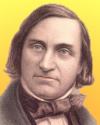
Born 12 Feb 1815; died 18 Nov 1854 at age 39. quotes
British naturalist, pioneer in the field of biogeography, who analyzed the distribution of plant and animal life of the British Isles as related to certain geological changes. Forbes is considered by many to be the founder of the science of oceanography and marine biology, especially mollusks and starfishes. He participated in dredgings and expeditions in the Irish Sea (1834), France, Switzerland, Germany, Algeria (1836), Austria (1838), and the Mediterranean (1841-42). During this period, he pursued the study of life in the littoral zones (the ocean from the shore to the continental shelf) and developed an interest in the geographical distribution of animals. His study of the fauna of the Aegean Sea stimulated interest in marine biology. Unfortunately, he is best known for his “azoic theory” (1843), which stated that marine life did not exist on sea beds at depths over 300 fathoms (1800 feet). This was soon to be disproved, (but the desire to test this hypothesis has led to further exploration until, eventually, no depth has been completely unstudied). He became paleontologist to British Geological Survey in 1844.
British naturalist, pioneer in the field of biogeography, who analyzed the distribution of plant and animal life of the British Isles as related to certain geological changes. Forbes is considered by many to be the founder of the science of oceanography and marine biology, especially mollusks and starfishes. He participated in dredgings and expeditions in the Irish Sea (1834), France, Switzerland, Germany, Algeria (1836), Austria (1838), and the Mediterranean (1841-42). During this period, he pursued the study of life in the littoral zones (the ocean from the shore to the continental shelf) and developed an interest in the geographical distribution of animals. His study of the fauna of the Aegean Sea stimulated interest in marine biology. Unfortunately, he is best known for his “azoic theory” (1843), which stated that marine life did not exist on sea beds at depths over 300 fathoms (1800 feet). This was soon to be disproved, (but the desire to test this hypothesis has led to further exploration until, eventually, no depth has been completely unstudied). He became paleontologist to British Geological Survey in 1844.
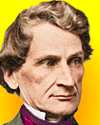
Born 12 Feb 1813; died 14 Apr 1895 at age 82. quotes
American geologist, mineralogist, and naturalist who, in explorations of the South Pacific, the U.S. Northwest, Europe, and elsewhere, made important studies of mountain building, volcanic activity, sea life, and the origin and structure of continents and ocean basins. His contributions to classification systems are still in use today by scientists in these fields of study. He supported a “principle of cephalization” (1864) to order biological diversity, with “cephalized” forms on top. He was one of the American scientists that corresponded with Darwin, and supported Darwin's ideas on the development of coral reefs. He wrote on biological topics, such as the crustacea and fossils in the Wilkes Expedition collections made from Australian coal deposits.
American geologist, mineralogist, and naturalist who, in explorations of the South Pacific, the U.S. Northwest, Europe, and elsewhere, made important studies of mountain building, volcanic activity, sea life, and the origin and structure of continents and ocean basins. His contributions to classification systems are still in use today by scientists in these fields of study. He supported a “principle of cephalization” (1864) to order biological diversity, with “cephalized” forms on top. He was one of the American scientists that corresponded with Darwin, and supported Darwin's ideas on the development of coral reefs. He wrote on biological topics, such as the crustacea and fossils in the Wilkes Expedition collections made from Australian coal deposits.
Life of James Dwight Dana, by Daniel Gilman. - book suggestion.
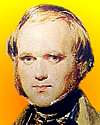
Born 12 Feb 1809; died 19 Apr 1882 at age 73. quotes
Charles Robert Darwin was an English naturalist who presented facts to support his theory of the mode of evolution whereby favourable variations would survive which he called “Natural Selection” or “Survival of the Fittest,” and has become known as Darwinism. His two most important books were On the Origin of Species by Means of Natural Selection (1859) and The Descent of Man, and Selection in Relation to Sex.« more
Charles Robert Darwin was an English naturalist who presented facts to support his theory of the mode of evolution whereby favourable variations would survive which he called “Natural Selection” or “Survival of the Fittest,” and has become known as Darwinism. His two most important books were On the Origin of Species by Means of Natural Selection (1859) and The Descent of Man, and Selection in Relation to Sex.« more
From So Simple a Beginning: Darwin's Four Great Books, by Charles Darwin, Edward O. Wilson. - book suggestion.
Thm.jpg "Peter Cooper")
c.1850

Tom Thumb
American inventor, manufacturer and philanthropist who established The Cooper Union for the Advancement of Science and Art in New York (cornerstone laid in 1854) to provide free technical education of the working class. He invented the first American-built steam locomotive for a common-carrier railway, the Tom Thumb, which made its first run on 28 Aug 1830. His iron-rolling mill produced iron structural beams, included those used to build the Cooper Union, which he wanted to be fire-proof. After founding a telegraph company (1854), he joined Cyrus Field's effort to lay the first tranatlantic cable (1857). Cooper lived to the age of 92, and for his life of philanthropy in New York, the city mourned his passing as one of its most-loved.citizens.« more
Peter Cooper, by Rossiter W. Raymond. - book suggestion.
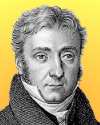
Born 12 Feb 1785; died 18 Jul 1838 at age 53.
French chemist and physicist who helped formulate the Dulong-Petit law of specific heats (1819), which proved useful in determining atomic weights. He began in a medical career, but turned to botany and then chemistry. In 1811, he discovered nitrogen trichloride, losing a finger and the sight of one eye when it spontaneously exploded. Jointly with Alexis Petit (1815-20), they measured the specific heat of elements and related them to atomic weights. They discovered their new law that specific heat times atomic weight of an element is a constant, about six calories per gram atom, the same for all solid elements.«
French chemist and physicist who helped formulate the Dulong-Petit law of specific heats (1819), which proved useful in determining atomic weights. He began in a medical career, but turned to botany and then chemistry. In 1811, he discovered nitrogen trichloride, losing a finger and the sight of one eye when it spontaneously exploded. Jointly with Alexis Petit (1815-20), they measured the specific heat of elements and related them to atomic weights. They discovered their new law that specific heat times atomic weight of an element is a constant, about six calories per gram atom, the same for all solid elements.«
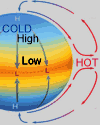
Born 12 Feb 1685; died 28 Jun 1768 at age 83. quotes
English physicist and meteorologist known, despite his only amateur interest, for explaining the trade winds’ origin. In 1735, he proposed that Earth’s rotation, combined with convection from the the differential heating of the atmosphere, drives large-scale wind circulation. This concept, now known as the Hadley Cell, describes the tropical atmospheric circulation that influences climate and weather patterns worldwide. Understanding the trade winds was particularly crucial in his time of sailing ships travelling between Europe and North America. His insights laid the groundwork, now refined, for modern meteorology and climatology, contributing significantly to our understanding of global wind systems.«
English physicist and meteorologist known, despite his only amateur interest, for explaining the trade winds’ origin. In 1735, he proposed that Earth’s rotation, combined with convection from the the differential heating of the atmosphere, drives large-scale wind circulation. This concept, now known as the Hadley Cell, describes the tropical atmospheric circulation that influences climate and weather patterns worldwide. Understanding the trade winds was particularly crucial in his time of sailing ships travelling between Europe and North America. His insights laid the groundwork, now refined, for modern meteorology and climatology, contributing significantly to our understanding of global wind systems.«
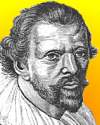
Born 12 Feb 1637; died 15 Feb 1680 at age 43. quotes
Dutch naturalist, known for his skilled biological microscopical observations and accurate illustrations, who was the first to describe the red blood cells (1658). He studied and illustrated the life histories and anatomy of many species of insects, which he classified on the basis of development. He demonstrated the presence of butterfly wings in caterpillars about to undergo pupation. To facilitate the study of human anatomy, he developed better methods for injecting wax and dyes into cadavers. He was one of the first to dissect under water and to remove fat by organic solvents. He demonstrated experimentally that whereas muscles alter in shape during contraction, their volume is not thereby increased, which contradicted beliefs of the time. «
Dutch naturalist, known for his skilled biological microscopical observations and accurate illustrations, who was the first to describe the red blood cells (1658). He studied and illustrated the life histories and anatomy of many species of insects, which he classified on the basis of development. He demonstrated the presence of butterfly wings in caterpillars about to undergo pupation. To facilitate the study of human anatomy, he developed better methods for injecting wax and dyes into cadavers. He was one of the first to dissect under water and to remove fat by organic solvents. He demonstrated experimentally that whereas muscles alter in shape during contraction, their volume is not thereby increased, which contradicted beliefs of the time. «
Born 12 Feb 1585; died 13 Jul 1629 at age 44.
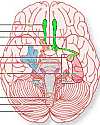
Caspar Berthelsen Bartholin was a Danish physician and theologian (Latin Bartholinus) who wrote one of the most widely read Renaissance manuals of anatomy. He was first to describe the olfactory nerve (associated with the sense of smell) as the first cranial nerve. In 1619, while Professor of medicine at the University of Copenhagen, along with others of the medical faculty, he published A Short Instruction on how one should care for oneself during the plague. Bartholin glands were first described by Caspar Bartholin, a Dutch anatomist, in 1677. They are paired glands present in female mammals. He died at age 44.Image: Olefactory nerve shown in green.
Caspar Berthelsen Bartholin was a Danish physician and theologian (Latin Bartholinus) who wrote one of the most widely read Renaissance manuals of anatomy. He was first to describe the olfactory nerve (associated with the sense of smell) as the first cranial nerve. In 1619, while Professor of medicine at the University of Copenhagen, along with others of the medical faculty, he published A Short Instruction on how one should care for oneself during the plague. Bartholin glands were first described by Caspar Bartholin, a Dutch anatomist, in 1677. They are paired glands present in female mammals. He died at age 44.Image: Olefactory nerve shown in green.

Died 12 Feb 2020 at age 87 (born 19 Jan 1933).
George Vincent Coyne was an American astrophysicist who was ordained as a priest in 1965, then in 1969, joined the Vatican Observatory. He directed its Catalina Observatory. In 1978, Pope John Paul I appointed Father Coyne as director of the Vatican Observatory, a post he held for nearly three decades. Because of light pollution, in 1980, a new division of the Observatory was established with its own telescope, hosted by The University of Arizona’s Steward Observatory, Tucson, Arizona. The new location was named the Vatican Observatory Research Group (VORG). Fr. Coyne presided over the installation of a new Advanced Technology Telescope (VATT) on Mount Graham, in southern Arizona, dedicated in 1993. He retired in 2006.«
George Vincent Coyne was an American astrophysicist who was ordained as a priest in 1965, then in 1969, joined the Vatican Observatory. He directed its Catalina Observatory. In 1978, Pope John Paul I appointed Father Coyne as director of the Vatican Observatory, a post he held for nearly three decades. Because of light pollution, in 1980, a new division of the Observatory was established with its own telescope, hosted by The University of Arizona’s Steward Observatory, Tucson, Arizona. The new location was named the Vatican Observatory Research Group (VORG). Fr. Coyne presided over the installation of a new Advanced Technology Telescope (VATT) on Mount Graham, in southern Arizona, dedicated in 1993. He retired in 2006.«
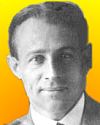
Died 12 Feb 1965 at age 76 (born 13 Apr 1888).
U.S. inventor whose development of radio remote control served as the basis for modern missile guidance systems. Son of the noted U.S. mining engineer John Hays Hammond, he established the Hammond Radio Research Laboratory in 1911. By 1914, he had laid the foundations for all subsequent radio control, able to send an unmanned yacht on a successful 120-mile trip from Gloucester to Boston and back. With WW I just begun, Hammond added an anti-interference feature to prevent jamming. He also invented a target-seeking system that allowed a remote-controlled ship to home in on an enemy ship's searchlights; and he began work on the first radio-guided torpedo. By 1916, he had earned over 100 patents.
U.S. inventor whose development of radio remote control served as the basis for modern missile guidance systems. Son of the noted U.S. mining engineer John Hays Hammond, he established the Hammond Radio Research Laboratory in 1911. By 1914, he had laid the foundations for all subsequent radio control, able to send an unmanned yacht on a successful 120-mile trip from Gloucester to Boston and back. With WW I just begun, Hammond added an anti-interference feature to prevent jamming. He also invented a target-seeking system that allowed a remote-controlled ship to home in on an enemy ship's searchlights; and he began work on the first radio-guided torpedo. By 1916, he had earned over 100 patents.
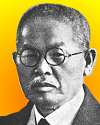
Died 12 Feb 1954 (born Feb 1870).
Japanese metallurgist whose studies of the metallurgy or iron and steel led to the invention of powerful magnetic steels including KS Magnetic Steel (1917) and New KS Magnetic Steel (1933) containing iron, aluminum, nickel, cobalt, copper and titanium.. (KS stands for Kichizaemon Sumitomo, who provided financial support for the research.) Honda investigated magnetic substances, and following research (1926-35) on the magnetization of single crystals of iron, cobalt and nickel, he discovered how to make anisotropic magnets. These have their magnetic domains locked in one particular direction during manufacture, resulting in being able to be magnetised only along this axis. Because all their magnetic domains are aligned in the same direction, anisotropic magnets are much stronger than isotropic magnets.«
Japanese metallurgist whose studies of the metallurgy or iron and steel led to the invention of powerful magnetic steels including KS Magnetic Steel (1917) and New KS Magnetic Steel (1933) containing iron, aluminum, nickel, cobalt, copper and titanium.. (KS stands for Kichizaemon Sumitomo, who provided financial support for the research.) Honda investigated magnetic substances, and following research (1926-35) on the magnetization of single crystals of iron, cobalt and nickel, he discovered how to make anisotropic magnets. These have their magnetic domains locked in one particular direction during manufacture, resulting in being able to be magnetised only along this axis. Because all their magnetic domains are aligned in the same direction, anisotropic magnets are much stronger than isotropic magnets.«
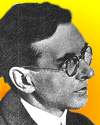
Died 12 Feb 1950 at age 60 (born 5 Oct 1889).
Dutch physicist who (working with Georg von Hevesy) discovered the element hafnium by skillfully applying Henry Moseley's method of X-ray analysis to distinguish the spectral lines of hafnium, despite the distraction of some extraneous lines. Niels Bohr had suggested they look closely at an ore of zirconium, a homologue, for the new element. Bohr heard by telephone of their success on the day of his Nobel Prize lecture (11 Dec 1922), in which he then announced their discovery. The element, at. no.72, was named for Hafnia, the old Roman name for Copenhagen. Earlier, working at Bohr's laboratory in Copenhagen, Coster had used X-rays to provide experimental data to support Bohr's theory of atomic structure and the periodic table. He died from a spinal disease which progressively totally paralysed him.«
Dutch physicist who (working with Georg von Hevesy) discovered the element hafnium by skillfully applying Henry Moseley's method of X-ray analysis to distinguish the spectral lines of hafnium, despite the distraction of some extraneous lines. Niels Bohr had suggested they look closely at an ore of zirconium, a homologue, for the new element. Bohr heard by telephone of their success on the day of his Nobel Prize lecture (11 Dec 1922), in which he then announced their discovery. The element, at. no.72, was named for Hafnia, the old Roman name for Copenhagen. Earlier, working at Bohr's laboratory in Copenhagen, Coster had used X-rays to provide experimental data to support Bohr's theory of atomic structure and the periodic table. He died from a spinal disease which progressively totally paralysed him.«
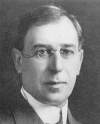
Died 12 Feb 1947 at age 81 (born 8 Feb 1866).
Russian-born American chemist who initiated the study of free radicals in chemistry when in 1900 he prepared the first authentic one, triphenylmethyl. Organic free radicals are essential to body functioning as well as being implicated in aging and diseases. Also, they play a major role in the production of plastics and other widely used synthetic materials. Organic free radicals contain a form of carbon with an unpaired electron which allows the radical to react readily with another molecule. Until Gomberg synthesized triphenylmethyl, free radicals containing carbon had been thought not to exist. Gomberg's discovery led to modern theories of the structure and reactivity of organic molecules, and led to the development of an entire field of research.
Russian-born American chemist who initiated the study of free radicals in chemistry when in 1900 he prepared the first authentic one, triphenylmethyl. Organic free radicals are essential to body functioning as well as being implicated in aging and diseases. Also, they play a major role in the production of plastics and other widely used synthetic materials. Organic free radicals contain a form of carbon with an unpaired electron which allows the radical to react readily with another molecule. Until Gomberg synthesized triphenylmethyl, free radicals containing carbon had been thought not to exist. Gomberg's discovery led to modern theories of the structure and reactivity of organic molecules, and led to the development of an entire field of research.
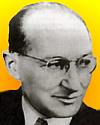
Died 12 Feb 1947 at age 56 (born 9 Sep 1890). quotes
German-American psychologist who originated the field theory of behaviour. He was among the first to apply laboratory techniques to everyday behavior. He would always formulate a problem in terms of a theory to be tested in experiments. His approach was to study the forces leading to action. Thus he described behaviour as the outcome of positive and negative forces affecting the individual at a given moment. This needed consideration of two kinds of factors, those of the person and those of his psychological environment. Thus his field theory is an approach to the study of human behavior, rather than a theory which has content which can be used for explanatory, predictive, or control purposes.«
German-American psychologist who originated the field theory of behaviour. He was among the first to apply laboratory techniques to everyday behavior. He would always formulate a problem in terms of a theory to be tested in experiments. His approach was to study the forces leading to action. Thus he described behaviour as the outcome of positive and negative forces affecting the individual at a given moment. This needed consideration of two kinds of factors, those of the person and those of his psychological environment. Thus his field theory is an approach to the study of human behavior, rather than a theory which has content which can be used for explanatory, predictive, or control purposes.«
The Complete Social Scientist: A Kurt Lewin Reader, by Kurt Lewin and Martin Gold. - book suggestion.
Died 12 Feb 1939 at age 71 (born 9 Jan 1868).
Danish chemist.
Danish chemist.
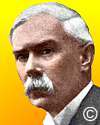
Died 12 Feb 1933 at age 71 (born 8 Jul 1861). quotes
Scottish naturalist who was a professor of natural history at the University of Aberdeen (1899-1930), and became an expert in the soft corals (Alcyonacea), stinging anemones and jellyfish found in the Scottish marine habitats, as well as a general interest in chemistry and the region's animals, plants and geology. He was also active in reconciling religion with science through popular books and lectures. He travelled widely, including the United States with his public presentations. One of the books he editted, Outline of Science (1922), became a best-seller, with more than 100,000 sold in five years. He was knighted in 1930.«
Scottish naturalist who was a professor of natural history at the University of Aberdeen (1899-1930), and became an expert in the soft corals (Alcyonacea), stinging anemones and jellyfish found in the Scottish marine habitats, as well as a general interest in chemistry and the region's animals, plants and geology. He was also active in reconciling religion with science through popular books and lectures. He travelled widely, including the United States with his public presentations. One of the books he editted, Outline of Science (1922), became a best-seller, with more than 100,000 sold in five years. He was knighted in 1930.«
Died 12 Feb 1916 at age 84 (born 6 Oct 1831). quotes
(Julius Wilhelm) Richard Dedekind was a German mathematician who developed a major redefinition of irrational numbers in terms of arithmetic concepts. Although not fully recognized in his lifetime, his treatment of the ideas of the infinite and of what constitutes a real number continues to influence modern mathematics.
(Julius Wilhelm) Richard Dedekind was a German mathematician who developed a major redefinition of irrational numbers in terms of arithmetic concepts. Although not fully recognized in his lifetime, his treatment of the ideas of the infinite and of what constitutes a real number continues to influence modern mathematics.
Essays on the Theory of Numbers, by Richard Dedekind, Wooster W. Beman (trans.). - book suggestion.
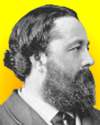
Died 12 Feb 1892 at age 65 (born 5 Sep 1826). quotes
Thomas Sterry Hunt was an American geologist and chemist who in, 1957, suggested using chromium sesquioxide as the basis of a green dye to print U.S. bank notes (hence “greenbacks”), because it could not be removed by either acid or alkali without destroying the paper. Also, it could not be satisfactorily photographed. With Canadian mining engineer, James Douglas, he co-invented the Hunt-Douglas process for extracting copper from its ores. Pointing out that mineralogy is largely the chemistry of compounds of silicon, he tried to make an analogy between the structure of the inorganic silicates in minerals with that found in the carbon compounds of organic chemistry. He was the first president of the American Chemical Society to serve two terms.«
Thomas Sterry Hunt was an American geologist and chemist who in, 1957, suggested using chromium sesquioxide as the basis of a green dye to print U.S. bank notes (hence “greenbacks”), because it could not be removed by either acid or alkali without destroying the paper. Also, it could not be satisfactorily photographed. With Canadian mining engineer, James Douglas, he co-invented the Hunt-Douglas process for extracting copper from its ores. Pointing out that mineralogy is largely the chemistry of compounds of silicon, he tried to make an analogy between the structure of the inorganic silicates in minerals with that found in the carbon compounds of organic chemistry. He was the first president of the American Chemical Society to serve two terms.«

(NASA)
Died 12 Feb 1857 at age 67 (born 26 Mar 1789).
American meteorologist who observed the whirlwind character of tropical storms. Following a hurricane that struck New England on 3 Sep 1821, he noted that in central Connecticut trees had toppled toward the northwest, but in the opposite direction 80-km further west. He found that hurricanes are generated in a belt between the Equator and the tropics, then veer eastward when meeting westerly winds at about latitude 30ºN. In 1831, he published his evidence that storm winds whirl counterclockwise about a centre that moves in the normal direction of the prevailing winds. He also promoted railroads and steamships. He co-founded the American Association for the Advancement of Sciences and was president at its first meeting (Sep 1848).
American meteorologist who observed the whirlwind character of tropical storms. Following a hurricane that struck New England on 3 Sep 1821, he noted that in central Connecticut trees had toppled toward the northwest, but in the opposite direction 80-km further west. He found that hurricanes are generated in a belt between the Equator and the tropics, then veer eastward when meeting westerly winds at about latitude 30ºN. In 1831, he published his evidence that storm winds whirl counterclockwise about a centre that moves in the normal direction of the prevailing winds. He also promoted railroads and steamships. He co-founded the American Association for the Advancement of Sciences and was president at its first meeting (Sep 1848).
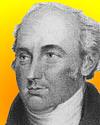
Died 12 Feb 1841 at age 72 (born 23 Aug 1768). quotes
(1st Baronet) English surgeon who was a pioneer in experimental surgery. He was the first to tie the abdominal aorta in treating an aneurysm (1817), among various other operations he performed successfully at a time before antiseptic procedures. He was devoted to the study and teaching of anatomy, and is said to have dissected daily throughout his career. In 1820, for removing a small tumour from the head of King George IV, he was rewarded with a baronetcy, and later appointed Sergeant-Surgeon to the King (1828). He wrote many medical books, including his major work The Anatomy and Surgical Treatment of Hernia (1804-07), and Dislocations and Fractures (1822). He became president of the Royal College of Surgeons in 1827, and vice-president of the Royal Society in 1830.«
(1st Baronet) English surgeon who was a pioneer in experimental surgery. He was the first to tie the abdominal aorta in treating an aneurysm (1817), among various other operations he performed successfully at a time before antiseptic procedures. He was devoted to the study and teaching of anatomy, and is said to have dissected daily throughout his career. In 1820, for removing a small tumour from the head of King George IV, he was rewarded with a baronetcy, and later appointed Sergeant-Surgeon to the King (1828). He wrote many medical books, including his major work The Anatomy and Surgical Treatment of Hernia (1804-07), and Dislocations and Fractures (1822). He became president of the Royal College of Surgeons in 1827, and vice-president of the Royal Society in 1830.«
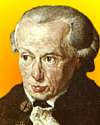
Died 12 Feb 1804 at age 79 (born 22 Apr 1724). quotes
German philosopher, trained as a mathematician and physicist, who published his General History of Nature and theory of the Heavens in 1755. This physical view of the universe contained three anticipations of importance to astronomers. 1) He made the nebula hypothesis ahead of Laplace. 2) He described the Milky Way as a lens-shaped collection of stars that represented only one of many "island universes," later shown by Herschel. 3) He suggested that friction from tides slowed the rotation of the earth, which was confirmed a century later. In 1770 he became a professor of mathematics, but turned to metaphysics and logic in 1797, the field in which he is best known.
German philosopher, trained as a mathematician and physicist, who published his General History of Nature and theory of the Heavens in 1755. This physical view of the universe contained three anticipations of importance to astronomers. 1) He made the nebula hypothesis ahead of Laplace. 2) He described the Milky Way as a lens-shaped collection of stars that represented only one of many "island universes," later shown by Herschel. 3) He suggested that friction from tides slowed the rotation of the earth, which was confirmed a century later. In 1770 he became a professor of mathematics, but turned to metaphysics and logic in 1797, the field in which he is best known.
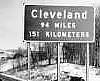
In 1973, four metric distance road signs, the first in the U.S., were erected along Interstate 71 in Ohio. They showed the distance in both miles and kilometers between Columbus and Cincinnati, and Columbus and Cleveland. As early as 1790, Thomas Jefferson proposed a decimal measurement system, similar to the metric system. In 1968 a study was ordered by Congress. By 1971, a report recommended a switch to the metric system and established a 10-year target time to accomplish it. This led to a National Metric Conference in 1973, which prompted Ohio to display metric highway signs. The Metric Conversion Act (1975) planned a voluntary conversion to the metric system, which produced little voluntary action.
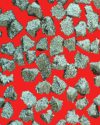
In 1957, the General Electric Co. (U.S.) announced that Borazon, as hard as diamonds, had been created by G.E. research scientist Dr. Robert H. Wentorf, using sustained extreme high pressure at high temperature. Borazon is their trade name for cubic boron nitride (cBN). Whereas diamond burns readily at about 1600 °F, Borazon crystals maintain hardness withstanding temperatures over 3500 °F. Borazon and diamond have approximately equal hardness, each able to scratch the other. Used in lapping tests, Borazon powder polishes the surface of a large diamond at the same rate as using diamond powder. Borazon is now used for industrial abrasive tools utilized in metalworking, stone cutting, and mining.«
In 1957, the prolific black American inventor, F.M. Jones was issued a U.S. patent for a "Method of Preserving Perishables."
The Inventive Spirit of African Americans: Patented Ingenuity, by Patricia Carter Sluby. - book suggestion.
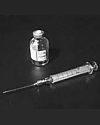
In 1941, the first injection of penicillin into a human test subject was conducted by Ernst Chain and Howard Walter Florey, who developed this antibiotic. The patient, Albert Alexander, 43, an Oxford policeman had scratched his face on a rose bush. When the scratches turned septic, there followed blood poisoning and numerous abscesses. Because he was “in great pain, desperately and pathetically ill,” he was happy to be treated with the new drug. According to the attending doctor, the result was that “within four days, there was a striking improvement... he was vastly better... with obvious resolution of the abscesses.” Due to limited available penicillin, treatment stopped, the infection returned, and he died four weeks later.
(USPTO)
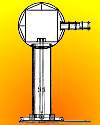
In 1935, a patent was issued to Robert Jemison Van de Graaff for his Electrostatic Generator design (U.S. No. 1,991,236), able to generate direct-current voltages much higher than the 700,000-V which was the state of the art at the time using other methods. It consisted of two large, hollow approximately spherical metal domes on insulated columns. A silk belt ran on rollers between the base of the column to the interior of the dome. Charges from a 5000-V source are transferred to the belt near the lower roller, carried upward and are collected by a metal comb connected to the dome interior. By nature, rather than accumulating on the interior, the charges move to the exterior of the dome. Two such domes with opposite charges could generate a potential difference of 1,500,000-V between them.
more
In 1935, a U.S. patent for a bridge with open-mesh steel flooring was issued to Walter E. Irving of the Irving Subway Grating Co. (No. 1,991,154). His bridge deck design was non-skid, self-cleaning, self-draining and remained free from snow accumulation. Being relatively light in weight and offering little resistance to wind pressure made it suitable for a bridge of the bascule (drawbridge) or vertical lift type, and resulted in a saving of power needed to operate the opening of the bridge. The first bridge in the U.S. to use such open-mesh steel flooring was the University Bridge in Seattle, Washington, which was rebuilt and re-opened on 7 Apr 1933. A previous patent for a design of continuous metal grating (No. 1,629,134) was issued on 17 May 1917, and assigned to Irving Iron Works Co.«
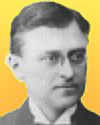
In 1900, James W. Packard received his first automotive patent, a year after forming his company with partner George Weiss. Packard became interested in building cars after purchasing a Winton horseless carriage. The Winton proved unreliable and after nearly a year of fixing up his horseless carriage, Packard decided he would manufacture his own automobile. Among Packard's necessary automotive innovations were the “H” gear-slot pattern and the gas pedal.
Packard Motor Car Company, by Evan P. Idle. - book suggestion.
In 1898, the first car crash resulting in a fatality happened to Henry Lindfield whose electric car's steering gear failed, and he crashed at the bottom of a hill at Purley Corner, Surrey. He was a Brighton business agent for International Cars, on his way to London. The car eventually turned completely round, ran through a wire fence and hit an iron post. The main artery in his leg was cut. Surgeons at Croydon hospital amputated the limb, but he died of shock from the operation the following day. A verdict of accidental death was returned. His passenger, 18 or 19 year-old son Bernard, was thrown clear of the vehicle and escaped almost unhurt. The first pedestrian fatally struck by a car died on 17 Aug 1896. The first petrol-fuelled fatal car crash happened on 25 Feb1899.«
In 1895, Thomas A. Edison was issued several U.S. patents: "Filament for Incandescent Lamps," "Induction Converter" and an "Incandescent Electric Lamp."
In 1889, Thomas A. Edison was issued two U.S. patents: "Method of Winding Field Magnets," and a "Phonograph."
In 1884, Thomas A. Edison was issued several U.S. patents: "An Electric Generator or Motor," "Insulation of Railroad tracks Used for Electrical Circuits," "Incandescent Electric Lamp," and an "Electrical Meter."
In 1878, Frederick W. Thayer, the captain of the Harvard University Baseball Club, patented the now familiar, baseball catcher's mask.
In 1877, a news dispatch was sent using Alexander Graham Bell's new invention, the telephone, for the first time in the U.S. It was sent from Salem, Mass. to the Boston Globe in Boston, Mass., a distance of sixteen miles.
In 1867, black American inventor, H. Lee, was issued a U.S. patent for an "Animal Trap."
Great Discoveries and Inventions by African-Americans, by David M. Foy. - book suggestion.
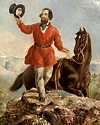
Painting 1875
In 1851, gold was discovered at Lewis Ponds Creek, north of Guyong, NSW, Australia. English prospector, Edward Hargraves, age 34, was traveling on horseback with his guide, John Lister, 18. After following the nearly-dry creek for 24-km, they stopped at a water hole. Hargreaves was excited. After the California Gold Rush began on 24 Jan 1848, he had spent time there prospecting (unsuccessfully). Now these surroundings resembled the terrain he had seen there. Hargraves dug in a schistose dyke that crossed the creek bed, panned the dirt in the water hole and found a few specks of gold. After further weeks of exploration, he had a tiny amount more to take to the colonial secretary and claim a reward.«
The Gold Rush: The Fever That Forever Changed Australia, by David Hill. - book suggestion.




