Born 2 Feb 1926; died 4 Jan 1998 at age 71.
American physiologist who was a pioneer in cardiac electrophysiology. His research on the contraction of heart cells was important in developing ways to better treat heart disease. He was one of the first researchers able to devise techniques to investigate the behavior of individual heart cells. His study of frog heart muscle (1960s-1970s) showed heart contractions could be controlled by changes in calcium ion concentrations outside heart cells. This knowledge helped with the development of drugs for heart disease.«
American physiologist who was a pioneer in cardiac electrophysiology. His research on the contraction of heart cells was important in developing ways to better treat heart disease. He was one of the first researchers able to devise techniques to investigate the behavior of individual heart cells. His study of frog heart muscle (1960s-1970s) showed heart contractions could be controlled by changes in calcium ion concentrations outside heart cells. This knowledge helped with the development of drugs for heart disease.«

Born 2 Feb 1869; died 19 Dec 1954 at age 85. quotes
American zoologist known for work on sensitivity and reactivity of animal organisms, but especially on reproduction, development, and especially regeneration. In 1911, he formulated the axial gradient theory. He believed that when a simple animal regenerates after an injury, the physiological stages occur along an axis, with each successive process appearing to be connected with the stage immediately preceeding it. He observed a similarity between such regeneration and embryonic development in that the dominant section is formed first, with the lesser ones following. Though present knowledge views his theory as incorrect, in its time, it represented an early approach to understanding functional organization within organisms.«
American zoologist known for work on sensitivity and reactivity of animal organisms, but especially on reproduction, development, and especially regeneration. In 1911, he formulated the axial gradient theory. He believed that when a simple animal regenerates after an injury, the physiological stages occur along an axis, with each successive process appearing to be connected with the stage immediately preceeding it. He observed a similarity between such regeneration and embryonic development in that the dominant section is formed first, with the lesser ones following. Though present knowledge views his theory as incorrect, in its time, it represented an early approach to understanding functional organization within organisms.«

(1896)
Born 2 Feb 1862; died 2 Mar 1912 at age 50.
Guyanese-American physician, with his wife Alice Woodby McKane, were African-American doctors who worked tirelessly to improve healthcare for Black Americans in the late 19th and early 20th centuries. Despite facing racial discrimination, they earned medical degrees, started hospitals and schools, and helped communities in both the United States and Africa. Their contributions had lasting impacts on Black medical education, public health, and social justice. They worked extensively in Savannah, Georgia.« more
Guyanese-American physician, with his wife Alice Woodby McKane, were African-American doctors who worked tirelessly to improve healthcare for Black Americans in the late 19th and early 20th centuries. Despite facing racial discrimination, they earned medical degrees, started hospitals and schools, and helped communities in both the United States and Africa. Their contributions had lasting impacts on Black medical education, public health, and social justice. They worked extensively in Savannah, Georgia.« more
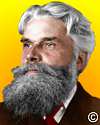
Born 2 Feb 1859; died 8 Jul 1939 at age 80. quotes
(Henry) Havelock Ellis was an English physician and writer on sex. He travelled widely in Australia and South America before studying medicine in London. In 1879 Ellis began studying medicine at St. Thomas's Hospital in London. At this time, Ellis grew intellectually, in the fields of science, philosophy, sociology, anthropology, and literature. His interest in human biology and his personal experiences led him to compile the seven-volume Studies in the Psychology of Sex (1897-1928), the first detached treatment of the subject, which was highly controversial at the time.
(Henry) Havelock Ellis was an English physician and writer on sex. He travelled widely in Australia and South America before studying medicine in London. In 1879 Ellis began studying medicine at St. Thomas's Hospital in London. At this time, Ellis grew intellectually, in the fields of science, philosophy, sociology, anthropology, and literature. His interest in human biology and his personal experiences led him to compile the seven-volume Studies in the Psychology of Sex (1897-1928), the first detached treatment of the subject, which was highly controversial at the time.
Havelock Ellis: Philosopher of Sex - A Biography, by Vincent Brome. - book suggestion.
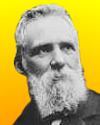
Born 2 Feb 1841; died 7 Aug 1912 at age 71.
Swiss physician, scientist, and founder of limnology, the study of lakes. Forel is credited with the discovery of density currents, which occur in the Alpine lakes because of the cold temperatures of entering glacier-derived streams. He also explained the mechanism of seiches (1901) and studied earthquakes and glaciers. A seiche is a rhythmic oscillation of water in a lake or a partially enclosed coastal inlet, such as a bay, gulf, or harbour. A seiche may last from a few minutes to several hours or for as long as two days. The phenomenon was first observed and studied in Lake Geneva (Lac Léman), Switzerland, in the 18th century.
Swiss physician, scientist, and founder of limnology, the study of lakes. Forel is credited with the discovery of density currents, which occur in the Alpine lakes because of the cold temperatures of entering glacier-derived streams. He also explained the mechanism of seiches (1901) and studied earthquakes and glaciers. A seiche is a rhythmic oscillation of water in a lake or a partially enclosed coastal inlet, such as a bay, gulf, or harbour. A seiche may last from a few minutes to several hours or for as long as two days. The phenomenon was first observed and studied in Lake Geneva (Lac Léman), Switzerland, in the 18th century.
Born 2 Feb 1817; died 1 May 1902 at age 85.
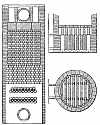
English chemist who developed the Glover Tower in 1859 to reclaim useful chemicals during the manufacture of sulphuric acid, the most important industrial chemical. The previous Lead-Chamber Method (1749) used sulphur dioxide, a nitrate, air and water, but lost the nitrate in the form of nitric oxide to the atmosphere. This was expensive since the replacement nitrate had to be imported from Chile. Glover introduced a mass transfer tower to recover some of this lost nitrate. In his tower, sulphuric acid (still containing nitrates) was trickled downward against upward flowing burner gases. The flowing gas absorbed some of the previously lost nitric oxide. By recycling these gases into the lead chamber the nitric oxide was re-used. He did not patent the process, but gave it freely to benefit the industry.Image shows cross-sectional diagrams of the Glover Tower. more
English chemist who developed the Glover Tower in 1859 to reclaim useful chemicals during the manufacture of sulphuric acid, the most important industrial chemical. The previous Lead-Chamber Method (1749) used sulphur dioxide, a nitrate, air and water, but lost the nitrate in the form of nitric oxide to the atmosphere. This was expensive since the replacement nitrate had to be imported from Chile. Glover introduced a mass transfer tower to recover some of this lost nitrate. In his tower, sulphuric acid (still containing nitrates) was trickled downward against upward flowing burner gases. The flowing gas absorbed some of the previously lost nitric oxide. By recycling these gases into the lead chamber the nitric oxide was re-used. He did not patent the process, but gave it freely to benefit the industry.Image shows cross-sectional diagrams of the Glover Tower. more
A History of the International Chemical Industry: From the Early Days to 2000, by Fred Aftalion. - book suggestion.
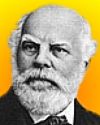
Born 2 Feb 1809; died 4 Feb 1884 at age 75.
German-American botanist and physician, who varied his career in medical practice with botanical travels. After obtaining his medical degree in Europe, he travelled to the U.S. and eventually settled in St. Louis, Missouri. Among his 100 papers documenting western North American flora, his monograph on the cactus, Monography of North American Cuscutinae (1842), is particularly noteworthy. Engelmann collaborated to incorporate a major botanical collection in the public Shaw's Gardens established by businessman Henry Shaw (1800-89) in St. Louis, which is now the Missouri Botanical Garden. The Engelmann spruce of the Rocky Mountains is named for him.«
German-American botanist and physician, who varied his career in medical practice with botanical travels. After obtaining his medical degree in Europe, he travelled to the U.S. and eventually settled in St. Louis, Missouri. Among his 100 papers documenting western North American flora, his monograph on the cactus, Monography of North American Cuscutinae (1842), is particularly noteworthy. Engelmann collaborated to incorporate a major botanical collection in the public Shaw's Gardens established by businessman Henry Shaw (1800-89) in St. Louis, which is now the Missouri Botanical Garden. The Engelmann spruce of the Rocky Mountains is named for him.«
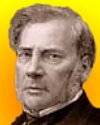
Born 2 Feb 1802; died 12 May 1887 at age 85.
Jean-Baptiste Joseph Dieudonne Boussingault was a French agricultural chemist who identified the biological nitrogen cycle. His first career was as a mining engineer. He wrote variously on such topics as mineralogy, volcanic gases, climate of the Andean region, and earthquakes (which he theorized were a violent elevation of the hardened crust, then subsidence and formation of caves). In 1821, Boussingault discovered that iodine-rich salts could be used to treat goiter, though he did not understand its preventive role. From 1836, he pursued agricultural chemistry. He determined that plants could not assimilate nitrogen directly from the air, but instead from nitrates in the soil. He investigated plant respiration, the function of their leaves, and the value and effect of manures.«
Jean-Baptiste Joseph Dieudonne Boussingault was a French agricultural chemist who identified the biological nitrogen cycle. His first career was as a mining engineer. He wrote variously on such topics as mineralogy, volcanic gases, climate of the Andean region, and earthquakes (which he theorized were a violent elevation of the hardened crust, then subsidence and formation of caves). In 1821, Boussingault discovered that iodine-rich salts could be used to treat goiter, though he did not understand its preventive role. From 1836, he pursued agricultural chemistry. He determined that plants could not assimilate nitrogen directly from the air, but instead from nitrates in the soil. He investigated plant respiration, the function of their leaves, and the value and effect of manures.«
Boussingault, Chemist and Agriculturist, by F. W. J. McCosh. - book suggestion.
Born 2 Feb 1522; died 5 Oct 1565 at age 43.
Italian mathematician who was the first to find an algebraic solution to the biquadratic, or quartic, equation (an algebraic equation that contains the fourth power of the unknown quantity but no higher power).
Italian mathematician who was the first to find an algebraic solution to the biquadratic, or quartic, equation (an algebraic equation that contains the fourth power of the unknown quantity but no higher power).

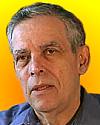
Died 2 Feb 2020 at age 85 (born 19 Nov 1934).
American geneticist who has contributed to mapping the genetic code and identifying the genetic basis of cancer. He introduced the oncomouse which was genetically engineered to be a model for the study of cancer. To create this trangenic mouse, the cancer-critical genes known as oncogenes were introduced by injection into mouse eggs. On 12 Apr1988, Leder and Timothy Stewart were granted a U.S. patent on transgenic nonhuman mammals (No. 4,736,866) resulting their work on the oncomouse. He was awarded National Medal of Science in 1991. « more
American geneticist who has contributed to mapping the genetic code and identifying the genetic basis of cancer. He introduced the oncomouse which was genetically engineered to be a model for the study of cancer. To create this trangenic mouse, the cancer-critical genes known as oncogenes were introduced by injection into mouse eggs. On 12 Apr1988, Leder and Timothy Stewart were granted a U.S. patent on transgenic nonhuman mammals (No. 4,736,866) resulting their work on the oncomouse. He was awarded National Medal of Science in 1991. « more
Died 2 Feb 1998 at age 83 (born 11 May 1914).
Polish-born French volcanologist whose fascination with volcanoes and knowledge of them, often obtained under extremely harrowing conditions, were enthusiastically shared by the French public through books and, especially, in films on television; he was considered one of the six most popular personalities in France...
Polish-born French volcanologist whose fascination with volcanoes and knowledge of them, often obtained under extremely harrowing conditions, were enthusiastically shared by the French public through books and, especially, in films on television; he was considered one of the six most popular personalities in France...
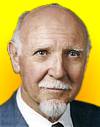
Died 2 Feb 1998 at age 92 (born 20 Mar 1905). quotes
Raymond Bernard Cattell was an English-American psychologist who conducted research on individual differences in cognitive abilities, personality, and motivation. For his BSc degree, he studied physics and chemistry, but turned to physholocy for his PhD. Influenced by his undergraduate training in science, he applied mathematical techniques to the study of psychology, making the discipline more objective and quantitative. Cattell became one of the world's leading personality theorists, and developed many widely used psychological tests, of which the best known is the 16 Personality Factor (16PF) personality assessment. During his life, he wrote 55 books and over 500 research papers.«
Raymond Bernard Cattell was an English-American psychologist who conducted research on individual differences in cognitive abilities, personality, and motivation. For his BSc degree, he studied physics and chemistry, but turned to physholocy for his PhD. Influenced by his undergraduate training in science, he applied mathematical techniques to the study of psychology, making the discipline more objective and quantitative. Cattell became one of the world's leading personality theorists, and developed many widely used psychological tests, of which the best known is the 16 Personality Factor (16PF) personality assessment. During his life, he wrote 55 books and over 500 research papers.«
The Scientific Analysis of Personality, by Raymond B. Cattell. - book suggestion.
Died 2 Feb 1996 at age 77 (born 24 Aug 1918).
U.S. chemical engineer who inadvertently created what became known as Styrofoam while working for the Dow Chemical Co., where he was attempting to develop a rubberlike polymer to be used as a flexible insulator.
U.S. chemical engineer who inadvertently created what became known as Styrofoam while working for the Dow Chemical Co., where he was attempting to develop a rubberlike polymer to be used as a flexible insulator.
Died 2 Feb 1996 at age 92 (born 22 Jan 1904).
U.S. civil engineer who supervised the construction, completed in 1964, of the 28-km (17 1/2-mi) Chesapeake Bay Bridge-Tunnel across the mouth of the Chesapeake Bay in eastern Virginia, considered a marvel of modern engineering and one of the most impressive transportation facilities in the world.
U.S. civil engineer who supervised the construction, completed in 1964, of the 28-km (17 1/2-mi) Chesapeake Bay Bridge-Tunnel across the mouth of the Chesapeake Bay in eastern Virginia, considered a marvel of modern engineering and one of the most impressive transportation facilities in the world.
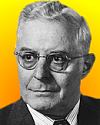
Died 2 Feb 1980 at age 68 (born 25 Jun 1911).
William Howard Stein was an American biochemist who (with Stanford Moore and Christian B. Anfinsen) was a cowinner of the Nobel Prize for Chemistry in 1972 for their studies of the pancreatic enzyme ribonuclease. Stein, with Moore, investigated the connection between its chemical structure and the catalytic activity of the active centre of the ribonuclease molecule. Between 1949 and 1963, they developed methods for the analysis of amino acids and peptides obtained from proteins, determined the structure of ribonuclease, and it catalyzes the digestion of food. By 1972, they had also worked out the complete sequence of deoxyribonuclease, a molecule twice as complex as ribonuclease.
William Howard Stein was an American biochemist who (with Stanford Moore and Christian B. Anfinsen) was a cowinner of the Nobel Prize for Chemistry in 1972 for their studies of the pancreatic enzyme ribonuclease. Stein, with Moore, investigated the connection between its chemical structure and the catalytic activity of the active centre of the ribonuclease molecule. Between 1949 and 1963, they developed methods for the analysis of amino acids and peptides obtained from proteins, determined the structure of ribonuclease, and it catalyzes the digestion of food. By 1972, they had also worked out the complete sequence of deoxyribonuclease, a molecule twice as complex as ribonuclease.
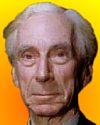
Died 2 Feb 1970 at age 97 (born 18 May 1872). quotes
(3rd earl) Bertrand Arthur William Russell was a Welsh mathematical logician, analytical philosopher and writer. He worked to establish foundations of mathematics and developed contemporary formal logic. He is known for Russell's paradox (concerning the set of all sets that are not members of themselves), his theory of types, and his contributions to the first-order predicate calculus. He believed in logicism, the theory that mathematics was in some important sense reducible to formal logic. With Alfred Whitehead, he co-authored Prinicpia Mathematica (1910). Russell is regarded as one of the most important logicians of the twentieth century. He was active in social and political campaigns, and advocated pacifism and nuclear disarmament. The Nobel Prize for Literature was awarded to Russell in 1950.«
(3rd earl) Bertrand Arthur William Russell was a Welsh mathematical logician, analytical philosopher and writer. He worked to establish foundations of mathematics and developed contemporary formal logic. He is known for Russell's paradox (concerning the set of all sets that are not members of themselves), his theory of types, and his contributions to the first-order predicate calculus. He believed in logicism, the theory that mathematics was in some important sense reducible to formal logic. With Alfred Whitehead, he co-authored Prinicpia Mathematica (1910). Russell is regarded as one of the most important logicians of the twentieth century. He was active in social and political campaigns, and advocated pacifism and nuclear disarmament. The Nobel Prize for Literature was awarded to Russell in 1950.«
Died 2 Feb 1950 at age 76 (born 13 Sep 1873).
German mathematician of Greek origin who made important contributions to the theory of real functions and to the theory of point-set measure. He demonstrated that the calculus of variations (the theory of maxima and minima in curves) could be applied not just to smooth curves, but also those with corners. He also contributed to thermodynamics and helped develop Einstein's special theory of relativity.
German mathematician of Greek origin who made important contributions to the theory of real functions and to the theory of point-set measure. He demonstrated that the calculus of variations (the theory of maxima and minima in curves) could be applied not just to smooth curves, but also those with corners. He also contributed to thermodynamics and helped develop Einstein's special theory of relativity.
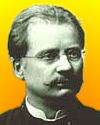
Died 2 Feb 1913 at age 67 (born 9 May 1845).
Swedish scientist, engineer and inventor who pioneered in the development of high-speed turbines. After earning his Ph.D. at age 27, he worked as a technical engineer at a steel mill in his home village. In 1877, he began developing a high-speed centrifugal cream separator, a significant advance in butter-making. He perfected a vacuum milking machine in 1913. About 1882, he began working on steam turbines, and by 1889, he applied for a British patent for an impulse type, with a jet of steam impinging on a set of blades around the periphery of a wheel. His inventive talent was wide, including electric lighting, electrometallurgy, and aerodynamics. During his lifetime, he acquired 92 Swedish patents and founded 37 companies.
Swedish scientist, engineer and inventor who pioneered in the development of high-speed turbines. After earning his Ph.D. at age 27, he worked as a technical engineer at a steel mill in his home village. In 1877, he began developing a high-speed centrifugal cream separator, a significant advance in butter-making. He perfected a vacuum milking machine in 1913. About 1882, he began working on steam turbines, and by 1889, he applied for a British patent for an impulse type, with a jet of steam impinging on a set of blades around the periphery of a wheel. His inventive talent was wide, including electric lighting, electrometallurgy, and aerodynamics. During his lifetime, he acquired 92 Swedish patents and founded 37 companies.
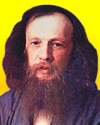
Died 2 Feb 1907 at age 72 (born 8 Feb 1834). quotes
Russian chemist who developed the periodic classification of the elements. In his final version of the periodic table (1871) he left gaps, foretelling that they would be filled by elements not then known. He predicted the properties of three of those elements.[a.k.a. Dimitri Mendeleyev. New Style dates (used by Dict. of Sci. Biog.: 8 Feb 1834 - 2 Feb 1907. Old Style dates: 27 Jan 1834 - 20 Jan 1907.] more
Russian chemist who developed the periodic classification of the elements. In his final version of the periodic table (1871) he left gaps, foretelling that they would be filled by elements not then known. He predicted the properties of three of those elements.[a.k.a. Dimitri Mendeleyev. New Style dates (used by Dict. of Sci. Biog.: 8 Feb 1834 - 2 Feb 1907. Old Style dates: 27 Jan 1834 - 20 Jan 1907.] more
Dmitry Ivanovich Mendeleyev: His Life and His Work, by O. N. Pisarzhevsky. - book suggestion.
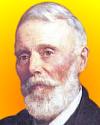
Died 2 Feb 1906 at age 91 (born 1 Jan 1815).
Samuel Cunliffe Lister, 1st Baron Masham of Swinton was an English industrialist and inventor of successful wool-combing and waste-silk spinning machines. The demand for wool that resulted from less expensive products stimulated the Australian wool trade. By 1856, he had several mills in Yorkshire, and abroad. He also created machines to use “chassum,” comprising damaged cocoons, remnants or fibres previously rejected as waste in silk-spinning. By 1867, after ten years in development, eventually those machines made him a further fortune. In 1867, he introduced velvet power looms for making piled fabrics. His inventiveness included a 1848 patent for automatic compressed air brakes for railways. The textile manufacturing company he established in 1838 exists today.
Samuel Cunliffe Lister, 1st Baron Masham of Swinton was an English industrialist and inventor of successful wool-combing and waste-silk spinning machines. The demand for wool that resulted from less expensive products stimulated the Australian wool trade. By 1856, he had several mills in Yorkshire, and abroad. He also created machines to use “chassum,” comprising damaged cocoons, remnants or fibres previously rejected as waste in silk-spinning. By 1867, after ten years in development, eventually those machines made him a further fortune. In 1867, he introduced velvet power looms for making piled fabrics. His inventiveness included a 1848 patent for automatic compressed air brakes for railways. The textile manufacturing company he established in 1838 exists today.
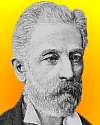
Died 2 Feb 1905 at age 78 (born 26 Jun 1826). quotes
German ethnologist and world traveller who theorized that there is a general psychic unity of humankind that is responsible for certain elementary ideas common to all peoples (Elementargedanken). Bastian proposed, on the other hand, that cultural traits, folklore, myths, and beliefs of various ethnic groups originate within each group according to laws of cultural evolution (Volkergedanken). He was the first director of the Berlin Ethnological Museum and established the Berlin Anthropology Society. more
German ethnologist and world traveller who theorized that there is a general psychic unity of humankind that is responsible for certain elementary ideas common to all peoples (Elementargedanken). Bastian proposed, on the other hand, that cultural traits, folklore, myths, and beliefs of various ethnic groups originate within each group according to laws of cultural evolution (Volkergedanken). He was the first director of the Berlin Ethnological Museum and established the Berlin Anthropology Society. more
Adolf Bastian and the Psychic Unity of Man, by Klaus-Peter Köpping. - book suggestion.
Died 2 Feb 1894 at age 79 (born 28 Feb 1814).
French chemist best known for his discovery of hydrogen fluoride and investigations of fluorine compounds. Among other compounds, Frémy investigated those of iron, tin, and lead. He also studied osmic acid, ozone, the colouring substances of leaves and flowers, and the composition of animal substances. He applied chemistry to the commercial saponification of fats, and to the technology of iron, steel, sulfuric acid, glass and paper. He tried, but failed, to isolate the element fluorine. He also failed in attempts to make crystals of aluminium oxide, but instead found he could create rubies.[DSB gives date of death 2 Feb 1894. EB gives 3 Feb 1894.]
French chemist best known for his discovery of hydrogen fluoride and investigations of fluorine compounds. Among other compounds, Frémy investigated those of iron, tin, and lead. He also studied osmic acid, ozone, the colouring substances of leaves and flowers, and the composition of animal substances. He applied chemistry to the commercial saponification of fats, and to the technology of iron, steel, sulfuric acid, glass and paper. He tried, but failed, to isolate the element fluorine. He also failed in attempts to make crystals of aluminium oxide, but instead found he could create rubies.[DSB gives date of death 2 Feb 1894. EB gives 3 Feb 1894.]
In 1995, news of research linking brain structure and artistic talent was released by at a press conference in Washington. Dr Gottfried Schlaug announced the work of his team of researchers at Beth Israel Hospital in Boston, Mass. Persons with perfect pitch were found to have a region in the left hemisphere of the brain, the plenum temporale, to be enlarged. However, it was also necessary that to have perfect pitch, a person must be exposed to music before age 10 years. Failing that, having an enlarged plenum temporale does not of itself normally coincide with having perfect pitch later.
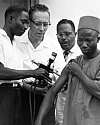
In 1962, the USS Diamond Head set sail for Africa from Newport News, Va. Its passengers were medical workers equipped with the newly invented vaccination gun pistola de la paz (“pistol of peace”). Their mission was to conduct the first field trials of this invention of Robert Hingson. The "jet" injector, which enabled more efficient mass innoculation without need of needles and syringes and subsequently improved the health of millions of people. Hingson thought the most important benefit of the hypospray was that it did not frighten children undergoing vaccination nearly as much as did needles. Hingson was not only a pioneer in anaesthesiology, but also recognized for his humanitarian contributions to public health
In 1962, eight of the nine planets lined up for the first time in 400 years.

In 1947, Edwin H. Land gave the first demonstration his invention of instant photography at a meeting of the Optical Society of America. On 28 Nov 1948, his Polaroid Land Camera first went on sale, at a Boston department store. The 40 series, model 95 roll film camera went on sale for $ 89.75. This first model was sold through 1953, and was the first commercially successful self- developing camera system. A sepia-coloured photograph took about one minute to produce. His first commercial success came in 1939 with his invention of Polaroid filters for lenses in products such as ski goggles, sunglasses and slip-on sunglasses for optical glasses.
Insisting On The Impossible: The Life Of Edwin Land, by Victor K. McElheny. - book suggestion.
In 1935, the detective Leonard Keeler conducted the first use of his invention, the Keeler polygraph, or lie detector machine, on this day, in Portage, WI. Those examined were two criminals Cecil Loniello and Tony Grignano, who were convicted of assault at their trial where the results were introduced as evidence.
In 1931, a rocket was first used to deliver mail in Austria.
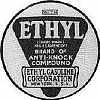
In 1923, the first sale* was made of anti-knock gasoline containing a tetra-ethyl lead compound. First sold at Willard Talbott's service station on S. Main Street in Dayton, Ohio, the fuel was called Ethyl (after its new additive, tetraethyl lead) and colored a distinctive red. This new formulation of ethyl gasoline was the the result of seven years of testing at least 33,000 compounds as additives to influence the combustion rate of the fuel. Previously, on hard acceleration, an engine sometimes made knocking, popping or crackling sounds. Knocking sapped power and could damage the engine. The suitability of tetra-ethyl lead, made from alcohol and lead, was the discovery of Thomas Midgely, Jr., of the General Motors Research Laboratories, located in Dayton. Decades later, the toxicity of the lead present in automobile emissions was recognized, and leaded gasoline is no longer sold.*
From the Periodic Table to Production: The Life of Thomas Midgley, Jr., by Thomas Midgley. - book suggestion.
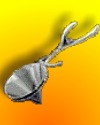
In 1897, a patent was issued for an ice-cream scoop invented by black American inventor, Alfred L. Cralle of Pittsburgh, Pennsylvania (No. 576,395). His design of an "Ice-cream Mold and Disher" was made to be strong and durable, effective, inexpensive, able to keep ice cream and other foods from sticking and easy to operate with one hand. It could be constructed in almost any desired shape, such as a cone or a mound, with no delicate parts that could break or malfunction. The basic design is so efficient that it is seen still in use today.
The Inventive Spirit of African Americans: Patented Ingenuity, by Patricia Carter Sluby. - book suggestion.
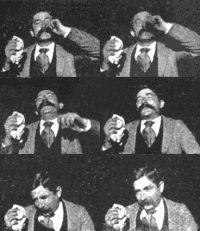
In 1893, the first-ever movie close-up was filmed at Thomas Edison's studio in West Orange, NJ. The film shows comedian Fred Ott sneezing.

In 1892, the bottle cap with cork seal was patented by William Painter, Baltimore (U.S. No. 468,226). This replaced the time-consuming cork and wire bale way of sealing bottles, and represented a major saving for the bottlers. The cap was used until the 1970s, when cork in soft drink and beer bottle caps was considered unhealthy, so, manufacturers switched to cans and plastic, instead. Currently, caps used on bottles use plastic cap "liners", instead of cork.
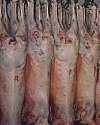
In 1880, the steamship SS Strathleven arrived in London with first successful shipment of frozen mutton from Australia. It had been chartered, fitted with Bell and Coleman (of Glasgow) air compression/expansion refrigeration equipment, and sent to Australia for a trial shipment of frozen carcases. The meat, and some experimental kegs of butter, were loaded from chill rooms in Sydney and Melbourne and, freezing the consignment on board, Strathleven left Melbourne on 6 Dec 1879. Technical men travelled on the ship to oversee the trials. The meat was in excellent condition on arrival and sold well. In all ways this first shipment of frozen meat from Australia was a success, since exports of meat had previously been in tins.
In 1870, the "Cardiff Giant", supposedly the petrified remains of a human being discovered on a farm in Cardiff, New York, was revealed to be nothing but carved gypsum.
In 1869, James Oliver invented the removable tempered steel plow blade.
In 1802, the first leopard to be exhibited in the United States was shown by Othello Pollard in Boston, Mass. It cost 25 cents to see the 'import from Bengal'.
In 1795, a prize of 12,000 francs was offered by the French government for a method of preserving food and transporting it to its armies. The winner was Nicholas Appert, a French chef who invents a way to can food. He developed the method of heating food in airtight glass jars, not very different from the home-bottling method now uses Mason jars. He published The art of preserving animal and vegetable substances for several years, in Paris, 1801. He was also the inventor of the bouillon cube.
In 1046, the weather turned especially cold throughout Europe. Monks noted in the Anglo-Saxon Chronicle that “no man alive...could remember so severe a winter.” It is the first known record of the beginning of the 200 year period of exceptional cold, known as the “Little Ice Age.”





