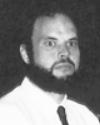
1990
Born 31 Dec 1952.
Vaughan Frederick Randal Jones is a New Zealand mathematician who was awarded the Fields Medal in 1990 for his study of functional analysis and knot theory. In 1984, Jones discovered a relationship between von Neumann algebras and geometric topology. As a result, he found a new polynomial invariant for knots and links in 3-space. It was a complete surprise because his invariant had been missed completely by topologists, in spite of intense activity in closely related areas during the preceding 60 years.
Vaughan Frederick Randal Jones is a New Zealand mathematician who was awarded the Fields Medal in 1990 for his study of functional analysis and knot theory. In 1984, Jones discovered a relationship between von Neumann algebras and geometric topology. As a result, he found a new polynomial invariant for knots and links in 3-space. It was a complete surprise because his invariant had been missed completely by topologists, in spite of intense activity in closely related areas during the preceding 60 years.
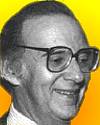
enhanced by A.I.
Born 31 Dec 1929; died 20 Apr 2025 at age 95. quotes
American physicist, educator and writer widely recognized for the clarity with which he explained modern physics to general readers. He served as a staff writer for the New Yorker for more than 30 years, until 1993. He held research and teaching positions at the Institute for Advanced Study, Brookhaven National Laboratory, CERN, Oxford University, University of Islamabad, and École Polytechnique. Bernstein authored over fifty technical papers and several acclaimed popular science books, including Albert Einstein, Cranks, Quarks, and the Cosmos, and A Theory for Everything. His lifelong passion for science began at Harvard University, where he discovered his gift for combining scientific insight with lucid prose.«
American physicist, educator and writer widely recognized for the clarity with which he explained modern physics to general readers. He served as a staff writer for the New Yorker for more than 30 years, until 1993. He held research and teaching positions at the Institute for Advanced Study, Brookhaven National Laboratory, CERN, Oxford University, University of Islamabad, and École Polytechnique. Bernstein authored over fifty technical papers and several acclaimed popular science books, including Albert Einstein, Cranks, Quarks, and the Cosmos, and A Theory for Everything. His lifelong passion for science began at Harvard University, where he discovered his gift for combining scientific insight with lucid prose.«
Hitler's Uranium Club: The Secret Recordings at Farm Hall, by Jeremy Bernstein. - book suggestion.
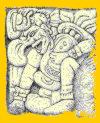
Born 31 Dec 1898; died 9 Sep 1975 at age 76.
Sir John Eric Sidney Thompson was an English ethnographer who was a leading researcher of the Mayan people. Thompson devoted his life to the study of Mayan culture and was able to extensively decipher early Mayan glyphs, determining that, contrary to prevailing belief, they contained historical as well as ritualistic and religious records. Sir Eric Thompson believed that Maya society was organized around religion, specifically star-worship. He thought that the Maya lived peacefully in villages and were ruled by priests that were more concerned with making astronomical calculation than political competition for power. With the discovery during the 1980's of how to decipher the Maya language, it was learned that almost every aspect of the traditional view of the Maya was wrong.
Sir John Eric Sidney Thompson was an English ethnographer who was a leading researcher of the Mayan people. Thompson devoted his life to the study of Mayan culture and was able to extensively decipher early Mayan glyphs, determining that, contrary to prevailing belief, they contained historical as well as ritualistic and religious records. Sir Eric Thompson believed that Maya society was organized around religion, specifically star-worship. He thought that the Maya lived peacefully in villages and were ruled by priests that were more concerned with making astronomical calculation than political competition for power. With the discovery during the 1980's of how to decipher the Maya language, it was learned that almost every aspect of the traditional view of the Maya was wrong.
Maya Archaeologist, by John Eric Sidney Thompson. - book suggestion.
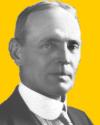
Born 31 Dec 1864; died 29 Oct 1951 at age 86.
American astronomer who specialized in the study of double stars, of which he discovered more than 3,000. He worked at the Lick Observatory from 1895 to 1935, becoming director from 1930. Aitken made systematic surveys of binary stars, measuring their positions visually. His massive New General Catalogue of Double Stars within 120 degrees of the North Pole allowed orbit determinations which increased astronomers' knowledge of stellar masses. He also measured positions of comets and planetary satellites and computed orbits. He wrote an important book on binary stars, and he lectured and wrote widely for the public.
American astronomer who specialized in the study of double stars, of which he discovered more than 3,000. He worked at the Lick Observatory from 1895 to 1935, becoming director from 1930. Aitken made systematic surveys of binary stars, measuring their positions visually. His massive New General Catalogue of Double Stars within 120 degrees of the North Pole allowed orbit determinations which increased astronomers' knowledge of stellar masses. He also measured positions of comets and planetary satellites and computed orbits. He wrote an important book on binary stars, and he lectured and wrote widely for the public.
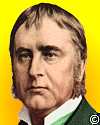
July 1881
Born 31 Dec 1816; died 29 Jan 1890 at age 73. quotes
English physician (1st Baronet) who was prominent in his field, and a leading clinical teacher, at Guy’s Hospital, London, for most of his life. After he successfully treated the Prince of Wales for typhoid, he was created a baronet (1872). Queen Victoria also was one of his patients. He wrote the first description of syringomyelia (1862). The disease for which he remains known, Gull’s disease, had been described before him, but by 1874, Gull had associated myxoedema with atrophy of the thyroid gland, which he viewed as an adult form of cretinism. He coined the term Anorexia Nervosa (1874) for a “nervous loss of appetite,” known since it had been described by physician, Richard Morton (1689). He believed in minimal use of drugs, but supported the use of vivisection in research.«
English physician (1st Baronet) who was prominent in his field, and a leading clinical teacher, at Guy’s Hospital, London, for most of his life. After he successfully treated the Prince of Wales for typhoid, he was created a baronet (1872). Queen Victoria also was one of his patients. He wrote the first description of syringomyelia (1862). The disease for which he remains known, Gull’s disease, had been described before him, but by 1874, Gull had associated myxoedema with atrophy of the thyroid gland, which he viewed as an adult form of cretinism. He coined the term Anorexia Nervosa (1874) for a “nervous loss of appetite,” known since it had been described by physician, Richard Morton (1689). He believed in minimal use of drugs, but supported the use of vivisection in research.«
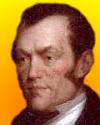
Born 31 Dec 1776; died 10 Nov 1832 at age 55.
German physician who popularized phrenology, a word he coined to describe the determination of character, personality traits, and criminality on the external shape of the skull (now discredited as a pseudoscience). He was a student of German physician Franz Joseph Gall in Paris, who developed “craniology” which linked cerebral functions to localized areas of the brain and associated them with underlying attributes of the human personality. Spurzheim travelled in Europe and Great Britain teaching phrenology. He influenced a Scottish lawyer, George Combe, who further promoted phrenology and wrote several works on the subject.«
German physician who popularized phrenology, a word he coined to describe the determination of character, personality traits, and criminality on the external shape of the skull (now discredited as a pseudoscience). He was a student of German physician Franz Joseph Gall in Paris, who developed “craniology” which linked cerebral functions to localized areas of the brain and associated them with underlying attributes of the human personality. Spurzheim travelled in Europe and Great Britain teaching phrenology. He influenced a Scottish lawyer, George Combe, who further promoted phrenology and wrote several works on the subject.«
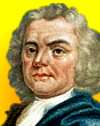
Born 31 Dec 1668; died 23 Sep 1738 at age 69. quotes
Dutch physician, botanist and chemist, who as professor of medicine taught medical students at the sickbed. He has been called the “founder of clinical teaching” since he founded a hospital where he combined practice with clinical instruction, a method continued in modern medical education. He was the first to describe the sweat glands, and that smallpox is transmitted only by contact. Although his discoveries were few, he collated existing medical knowledge. He wrote medical textbooks popular both during and after his lifetime. In 1718, he became professor of chemistry, and published Elementa Chemiae (Elements of Chemistry, 1724), an intellegible work that eluciated the subject. He also made contributions in the field of botany. Sometimes called the “Dutch Hippocrates,” he was the most eminent physician since Galen.«
Dutch physician, botanist and chemist, who as professor of medicine taught medical students at the sickbed. He has been called the “founder of clinical teaching” since he founded a hospital where he combined practice with clinical instruction, a method continued in modern medical education. He was the first to describe the sweat glands, and that smallpox is transmitted only by contact. Although his discoveries were few, he collated existing medical knowledge. He wrote medical textbooks popular both during and after his lifetime. In 1718, he became professor of chemistry, and published Elementa Chemiae (Elements of Chemistry, 1724), an intellegible work that eluciated the subject. He also made contributions in the field of botany. Sometimes called the “Dutch Hippocrates,” he was the most eminent physician since Galen.«
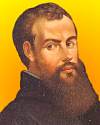
Born 31 Dec 1514; died 15 Oct 1564 at age 49. quotes
Flemish anatomist who, as a university teacher insisted on personally conducting detailed dissections on human cadavers. His De humani corporis fabrica (On the Structure of the Human Body, 1543) marked a major advance from the work of the 2nd-century anatomist Galen. Vesalius provided detailed and accessible information against which future anatomists could compare their observations. Vesalius was the teacher of Gabriel Fallopius, who was in turn tutor to Hieronymous Fabricius, who then taught William Harvey. This lineage supervised the most dramatic reassessment of the anatomy and function of the human body that had occurred for centuries—and can be said to have started the modern science of medicine. more
Flemish anatomist who, as a university teacher insisted on personally conducting detailed dissections on human cadavers. His De humani corporis fabrica (On the Structure of the Human Body, 1543) marked a major advance from the work of the 2nd-century anatomist Galen. Vesalius provided detailed and accessible information against which future anatomists could compare their observations. Vesalius was the teacher of Gabriel Fallopius, who was in turn tutor to Hieronymous Fabricius, who then taught William Harvey. This lineage supervised the most dramatic reassessment of the anatomy and function of the human body that had occurred for centuries—and can be said to have started the modern science of medicine. more
The Illustrations from the Works of Andreas Vesalius of Brussels, by J.B.deC.M. Saunders and Charles D. O’Malley. - book suggestion.

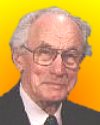
Died 31 Dec 2000 at age 88 (born 9 Jun 1912).
Kenneth Lee Pike was an American linguist and anthropologist who was known for his studies of the aboriginal languages of Mexico, Peru, Ecuador, Bolivia, New Guinea, Java, Ghana, Nigeria, Australia, Nepal, and the Philippines. He was also the originator of tagmemics which extends to the analysis of grammar and behavior the concepts used in phonology so as to view all elements as part of a system. He distinguished between the concept of emic and etic, terms he coined in 1954. Etic refers to a trained observer's perception of the uninterpreted “raw” data. Emic refers to how that data is interpreted by an “insider” to the system.
Kenneth Lee Pike was an American linguist and anthropologist who was known for his studies of the aboriginal languages of Mexico, Peru, Ecuador, Bolivia, New Guinea, Java, Ghana, Nigeria, Australia, Nepal, and the Philippines. He was also the originator of tagmemics which extends to the analysis of grammar and behavior the concepts used in phonology so as to view all elements as part of a system. He distinguished between the concept of emic and etic, terms he coined in 1954. Etic refers to a trained observer's perception of the uninterpreted “raw” data. Emic refers to how that data is interpreted by an “insider” to the system.
Phonetics: A Critical Analysis of Phonetic Theory..., by Kenneth L. Pike. - book suggestion.
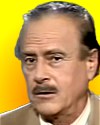
Died 31 Dec 1980 at age 69 (born 21 Jul 1911). quotes
Canadian author and communications theorist.
Canadian author and communications theorist.
Understanding Media, by Herbert Marshall McLuhan. - book suggestion.
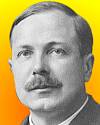
Died 31 Dec 1962 at age 75 (born 18 Dec 1887). quotes
English mathematical physicist, grandson of Charles Darwin, who was director of the National Physical Laboratory (1938-1949), which he helped reorganise after WW II. After retiring, he wrote The Next Million Years, a pessimistic study of the sociological implications of the population explosion from an eugenics standpoint. From 1953 until his death, he was president of the Eugenics Society.
English mathematical physicist, grandson of Charles Darwin, who was director of the National Physical Laboratory (1938-1949), which he helped reorganise after WW II. After retiring, he wrote The Next Million Years, a pessimistic study of the sociological implications of the population explosion from an eugenics standpoint. From 1953 until his death, he was president of the Eugenics Society.
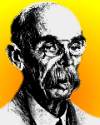
Died 31 Dec 1940 at age 89 (born 8 Jun 1851).
Jacques-Arsène d' Arsonval was a French physician and physicist known for his pioneering researches in therapeutic use of electricity, heat, and light. He designed the first reflecting moving-coil galvanometers for measurement of tiny electric currents (1882). His early research into animal heat, muscle contraction, and electrophysiology led to his invention of devices used to treat diseases with electricity. He created high-frequency currents used to treat diseases of the skin and mucous membranes ('d'Arsonvalization', 1890), and showed that the human body could conduct an alternating current strong enough to light an electric lamp (1892).
Jacques-Arsène d' Arsonval was a French physician and physicist known for his pioneering researches in therapeutic use of electricity, heat, and light. He designed the first reflecting moving-coil galvanometers for measurement of tiny electric currents (1882). His early research into animal heat, muscle contraction, and electrophysiology led to his invention of devices used to treat diseases with electricity. He created high-frequency currents used to treat diseases of the skin and mucous membranes ('d'Arsonvalization', 1890), and showed that the human body could conduct an alternating current strong enough to light an electric lamp (1892).
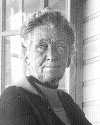
Died 31 Dec 1934 at age 85 (born 17 Mar 1849).
American zoologist and educator whose influence as a teacher was great and enduring in a period when the world of science was just opening to women. She became a professor of zoology at Mt. Holyoke College, where she developed a vivid laboratory method of instruction that proved highly effective. Clapp was active in the research group at the then newly established (1888) Marine Biology Lab at Woods Hole, Mass. She carried on research there, primarily in the field of embryology. She published little during her career, her major influence being to extend scientific knowledge and opportunity to women through education.
American zoologist and educator whose influence as a teacher was great and enduring in a period when the world of science was just opening to women. She became a professor of zoology at Mt. Holyoke College, where she developed a vivid laboratory method of instruction that proved highly effective. Clapp was active in the research group at the then newly established (1888) Marine Biology Lab at Woods Hole, Mass. She carried on research there, primarily in the field of embryology. She published little during her career, her major influence being to extend scientific knowledge and opportunity to women through education.
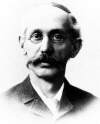
Died 31 Dec 1913 at age 67 (born 17 Sep 1846).
Seth Carlo Chandler, Jr. was an American astronomer best known for his discovery (1884-85) of the Chandler Wobble, a complex movement in the Earth's axis of rotation (now refered to as polar motion) that causes latitude to vary with a period of 14 months. His interests were much wider than this single subject, however, and he made substantial contributions to such diverse areas of astronomy as cataloging and monitoring variable stars, the independent discovery of the nova T Coronae, improving the estimate of the constant of aberration, and computing the orbital parameters of minor planets and comets. His publications totaled more than 200.
Seth Carlo Chandler, Jr. was an American astronomer best known for his discovery (1884-85) of the Chandler Wobble, a complex movement in the Earth's axis of rotation (now refered to as polar motion) that causes latitude to vary with a period of 14 months. His interests were much wider than this single subject, however, and he made substantial contributions to such diverse areas of astronomy as cataloging and monitoring variable stars, the independent discovery of the nova T Coronae, improving the estimate of the constant of aberration, and computing the orbital parameters of minor planets and comets. His publications totaled more than 200.
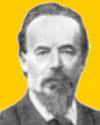
Died 31 Dec 1905 at age 46 (born 4 Mar 1859).
Russian physicist and electrical engineer acclaimed in Russia as the inventor of radio. He became an instructor at the Russian Navy's Torpedo School. Learning of Hertz's work, in 1895 Popov constructed an apparatus that could register electrical disturbances due to lightning. He applied it for receiving man-made signals. In 1896, he demonstrated a radiotelegraph system which transmitted Morse code. In Feb 1904, Popov first demonstrated radio transmission of the human voice. His invention was first used by the Russian navy. However, Russia's first radio factory was established by the Marconi company.
Russian physicist and electrical engineer acclaimed in Russia as the inventor of radio. He became an instructor at the Russian Navy's Torpedo School. Learning of Hertz's work, in 1895 Popov constructed an apparatus that could register electrical disturbances due to lightning. He applied it for receiving man-made signals. In 1896, he demonstrated a radiotelegraph system which transmitted Morse code. In Feb 1904, Popov first demonstrated radio transmission of the human voice. His invention was first used by the Russian navy. However, Russia's first radio factory was established by the Marconi company.
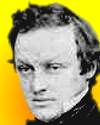
Died 31 Dec 1884 at age 60 (born 26 Jan 1824). quotes
English geologist and businessman who specialized in hydraulic geology and geomorphology, studying both prehistoric and contemporary riverine systems. He wrote On Changes of Sea Level (1853), and presented 17 papers to the Royal Society, mostly on the flow of rivers as connected with the erosion of valleys and the deposit of gravel-beds. He contended there were larger rivers, more rainfall, and greater denudation of the land in former periods. His profession was as a brassfounder, following on from the family business. An obituary stated he would be remembered as a promoter of technical education, at a time when its vital importance was little recognized. He owned a colliery in South Wales.« more
English geologist and businessman who specialized in hydraulic geology and geomorphology, studying both prehistoric and contemporary riverine systems. He wrote On Changes of Sea Level (1853), and presented 17 papers to the Royal Society, mostly on the flow of rivers as connected with the erosion of valleys and the deposit of gravel-beds. He contended there were larger rivers, more rainfall, and greater denudation of the land in former periods. His profession was as a brassfounder, following on from the family business. An obituary stated he would be remembered as a promoter of technical education, at a time when its vital importance was little recognized. He owned a colliery in South Wales.« more
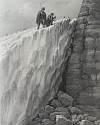
Died 31 Dec 1868 at age 59 (born 20 Apr 1809).
Scottish physicist noted for his research on heat conduction and glaciers. In 1836-44, he described the polarization (alignment of waves to vibrate in a plane) of radiant infrared heat by the mineral tourmaline, by transmission through a bundle of thin mica plates, and by reflection from the surfaces of a pile of mica plates. In 1846 he began experiments on the temperature of the Earth at different depths and in different soils near Edinburgh. Later he investigated the laws of heat conduction in bars, and in his last piece of work reported that iron conducts heat less efficiently as its temperature rises. He was among the first to study glacier movements and was involved with Tyndall in the great glacier controversy of the 1850s.
Scottish physicist noted for his research on heat conduction and glaciers. In 1836-44, he described the polarization (alignment of waves to vibrate in a plane) of radiant infrared heat by the mineral tourmaline, by transmission through a bundle of thin mica plates, and by reflection from the surfaces of a pile of mica plates. In 1846 he began experiments on the temperature of the Earth at different depths and in different soils near Edinburgh. Later he investigated the laws of heat conduction in bars, and in his last piece of work reported that iron conducts heat less efficiently as its temperature rises. He was among the first to study glacier movements and was involved with Tyndall in the great glacier controversy of the 1850s.
Died 31 Dec 1846 (born 1763).
American inventor of the manufacture of cut nails. Cut nails are triangular in shape, made from cutting across bar stock at a slight angle. While Cochran was a brass-founder in Philadelphia, Benjamin Franklin frequently visited his shop. Cochran also claimed to have made the first copper cents in the U.S. After settling in Genesee County, NY., in 1802, as one of the county's first pioneers, he set up a bell foundry business on Bank Street (thence referred to as “Dingle Alley” after Cochran's constant bell testing). He also cast brass newels for staircases and window springs with rollers.«
American inventor of the manufacture of cut nails. Cut nails are triangular in shape, made from cutting across bar stock at a slight angle. While Cochran was a brass-founder in Philadelphia, Benjamin Franklin frequently visited his shop. Cochran also claimed to have made the first copper cents in the U.S. After settling in Genesee County, NY., in 1802, as one of the county's first pioneers, he set up a bell foundry business on Bank Street (thence referred to as “Dingle Alley” after Cochran's constant bell testing). He also cast brass newels for staircases and window springs with rollers.«
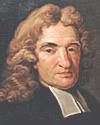
Died 31 Dec 1719 at age 73 (born 19 Aug 1646). quotes
English astronomer who established the Greenwich Observatory, as one of a group of scientists who convinced King Charles II to build a national observatory. Appointed the first Astronomer Royal (1675-1719), Flamsteed was devoted to astronomical measurement, with the task of accurately providing the positions of stars for use in navigation. He eventually produced the first star catalogue, which gave the positions of nearly 3,000 stars. He also worked on the motions of the sun and moon, tidal tables, and was one of the only astronomers to maintain the comets of 1680-1681 were the same, viewed before and after passing around the sun. A quarrelsome man, he argued with Isaac Newton and Edmond Halley over their requests for access to his astronomical observations.
English astronomer who established the Greenwich Observatory, as one of a group of scientists who convinced King Charles II to build a national observatory. Appointed the first Astronomer Royal (1675-1719), Flamsteed was devoted to astronomical measurement, with the task of accurately providing the positions of stars for use in navigation. He eventually produced the first star catalogue, which gave the positions of nearly 3,000 stars. He also worked on the motions of the sun and moon, tidal tables, and was one of the only astronomers to maintain the comets of 1680-1681 were the same, viewed before and after passing around the sun. A quarrelsome man, he argued with Isaac Newton and Edmond Halley over their requests for access to his astronomical observations.
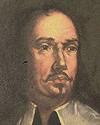
Died 31 Dec 1679 at age 71 (born 28 Jan 1608).
Italian mathematician, physiologist and physicist sometimes called “father of biomechanics.” He was the first to apply the laws of mechanics to the muscular action of the human body. In De motu animalium (Concerning Animal Motion, 1680), he correctly described the skeleton and muscles as a system of levers, and explained the mechanism of bird flight. He calculated the forces required for equilibrium in various joints of the body well before the mechanics of Isaac Newton. In 1649, he published a work on malignant fevers. He repudiated astrological causes of diseases and believed in chemical cures. In 1658, he published Euclidus restitutus. He made anatomical dissections, drew a diver's rebreather, investigated volcanoes, was first to suggest a parabolic path for comets, and considered Jupiter had an attractive influence on its moons.«
Italian mathematician, physiologist and physicist sometimes called “father of biomechanics.” He was the first to apply the laws of mechanics to the muscular action of the human body. In De motu animalium (Concerning Animal Motion, 1680), he correctly described the skeleton and muscles as a system of levers, and explained the mechanism of bird flight. He calculated the forces required for equilibrium in various joints of the body well before the mechanics of Isaac Newton. In 1649, he published a work on malignant fevers. He repudiated astrological causes of diseases and believed in chemical cures. In 1658, he published Euclidus restitutus. He made anatomical dissections, drew a diver's rebreather, investigated volcanoes, was first to suggest a parabolic path for comets, and considered Jupiter had an attractive influence on its moons.«

In 1993, the last research samples of the smallpox virus were scheduled to be destroyed. Smallpox was the world's most dreaded plagues until 1977, when it was declared eradicated. However, some scientists who wanted to continue research on the virus stopped the destruction plan. The remaining frozen samples are in Moscow, Russia, and the Centers for Disease Control and Prevention, Atlanta, U.S., ready to make vaccine should it ever again be necessary. The virus is extremely stable and has not changed in hundreds or even thousands of years. Smallpox (variola) is caused by a poxvirus and was spread from person to person by contact with skin lesions or via the respiratory tract. Its name comes from the pockmarks on the skin that it caused.

In 1968, the Russian Tupolev TU-144 prototype 00-1 became the first supersonic-capable airliner to fly when it made its first 37-min flight at Zhukovski, USSR, with test pilot Captain E.V. Elyan at the controls. Its aerodynamic styling and wing shape made it a look-alike for the British-French Concorde, and so was dubbed Concordski in the West. The Concorde prototype 001 flew for the first time a few months later on 2 Mar 1969. The TU-144 became the first SST to fly at supersonic speeds, over Mach 1 on 5 Jun 1969; and over Mach 2 on 26 May 1970. The Concorde prototype 001 reached these landmark speeds on 1 Oct 1969 and 4 Nov 1970.«
The Soviet SST, by Howard Moon. - book suggestion.
In 1964, Donald Campbell broke the world water speed record with an average speed of 276.33 mph (441.71 km/h) with his speedboat, Bluebird, on Lake Dumbleyung, Perth, Australia. Earlier the same year, in Jul 1964, he had broken the land speed record at 403.1 mph (648.72 km/h) on Lake Eyre salt flat, Australia. Together, they made him the only person to break both land and water speed records in the same year. That land speed record only stood for three months before Art Arfon, on 27 Oct 1964, achieved a land average speed of 536.71 mph (863.75 km/h) in a jet car on Bonneville Salt Flats, Utah. Campbell continued attempting yet higher speeds, but died 4 Jan 1967 when his jet-powered boat crashed on Coniston Water.«
In 1951, the first battery to convert radioactive energy to electrical was announced. Invented by Philip Edwin Ohmart of Cincinnati, Ohio, it consisted of two electrochemically dissimilar electrodes separated by a filling gas that was ionized by exposure to the nuclear energy to produce electrical current. Ohmart obtained an emf efficiency of .01% on a cell using magnesium dioxide and lead-dioxide with argon as the gas and Ag110 as the radioactive source.
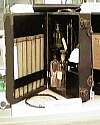
In 1938, the “drunkometer,” the first breath test for car drivers, invented by Dr Rolla N. Harger of Indiana University School of Medicine, was officially introduced in Indianapolis. It was the first successful machine for testing human blood alcohol content by breath analysis. He gave the first “short course” on chemical tests for intoxication (1937). By 1948, Harger and other IU faculty began one-week courses on breath alcohol testing sponsored by the National Safety Council's Committee on Tests for Intoxication. Robert F. Borkenstein, an instructor on those courses later invented the Breathalyzer (1954), a more practical, highly portable instrument for testing breath alcohol. The Drunkometer had required re-calibration when it was moved from place to place.
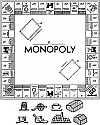
In 1935, a patent was issued for the game of Monopoly assigned to Parker Brothers, Inc., by Charles Darrow of Pennsylvania (No. 2,026,082). The patent titled it a “Board Game Apparatus” and described it as “intended primarily to provide a game of barter, thus involving trading and bargaining” in which “much of the interest in the game lies in trading and in striking shrewd bargains.” Illustrations included with the patent showed not only the playing board and pieces, but also 22 “Title cards of the respective Real Estate holdings,” Utilities, Chance and Community Chest cards, and the scrip money. The play of the game was described that on the throw of the dice, the players may move onto Real Estate locations which they then acquire.
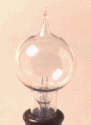
In 1879, inventor Thomas Edison first publicly demonstrated his electric incandescent light in Menlo Park, New Jersey. Electric arc lights had already been widely in use for illumination of large areas, such as department stores and streets lighting. Joseph Swan was the first inventor to experiment with incandescent lamps (which use electricity to heat a thin strip of material, the filament, to glow at a high temperature in an evacuated glass globe). However, Edison's lamp was the first to be practical, because he solved the problems with short-lived filaments. After testing many materials, he found a suitable carbonized filament. His socket mount - the Edison screw base - is still in use.«
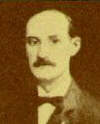
In 1870, the Goodrich, Tew & Co.was formed as a partnership by B.F. Goodrich and his brother-in-law, Harvey W. Tew, with others in Akron, Ohio, to become the first rubber manufacturer west of the Appalachians. After it started production on 19 Feb 1871, its output grew to include such items as fire hoses, industrial belts and bicycle tires. It incorporated as the B.F. Goodrich Company in 1880. After WWI, the company expanded into the chemical business, including plastic materials. As the company extensively evolved into the aerospace market, it left the tire industry in 1988. In In 2001, Goodrich divested its specialty chemicals business to focus even more on aerospace and industrial products. To signify this further transformation, the company changed its name to Goodrich Corporation.«
B. F. Goodrich: Tradition and Transformation, 1870-1995, by Mansel G. Blackford and K. Austin Kerr. - book suggestion.
In 1833, a patent was issued to Obed Hussy of Maryland for a reaper "which embodied the now familiar cutter bar playing between double guard fingers. It was drawn by horses hitched in front, and had a side cut and a platform on which the operator stood who raked off the grain." McCormick's reaper patent was issued 21 Jun 1834. Both were practical, and in greatly improved form were displayed and in competition at the 1851 London World's Fair where the judges awarded the premium to McCormick. However, later that year at another competition it was Hussy's machine that received the award. At the close of that competition, the Prince of Wales ordered two of Hussy's machines.«*
In 1813, Westminster Bridge in London was illuminated with gas lights. Soon after, the oil lights in the streets of St. Margaret's, Westminster, were replaced with gas lights. About a year later, in 1815, the Guildhall was also lighted by gas.«[Date source: Johnson's Universal Cyclopedia, 1893 edition.]
In 1805, it was the last day of the use of the Republican Calendar introduced after the French Revolution. In countries using the Gregorian calendar it was 31 Dec 1805, but in France it was known (for the last time) by the name, 10 Nivôse de l'an XIV, on the Republican calendar. Also known as the Calendar of Reason, it had been introduced 24 Nov 1793, but back-dated to begin its day 1 of year 1 with the new Republic, on 22 Sep 1792 (Gregorian calendar). It had 12 months of 30-days each, with new names, each having three 10-day décades instead of 7-day weeks. The new emperor Napoleon Bonaparte had its use abolished, and from the following day, 1 Jan 1806, France would use the Gregorian calendar again. A failed attempt was made in 1871 to reinstate the Republican calender.«




