
Born 29 Aug 1915; died 21 Feb 1985 at age 69.
American scientist, inventor and nutritionist. Pritikin believed that moderate exercise combined with a diet low in fat and high in unrefined carbohydrates reversed his own heart disease discovered in the late 1950's. He opened the Pritikin Longevity Center in 1976 in Santa Barbara, Cal. to treat others with diet and exercise in a clinical setting.
American scientist, inventor and nutritionist. Pritikin believed that moderate exercise combined with a diet low in fat and high in unrefined carbohydrates reversed his own heart disease discovered in the late 1950's. He opened the Pritikin Longevity Center in 1976 in Santa Barbara, Cal. to treat others with diet and exercise in a clinical setting.
Born 29 Aug 1914.
American physicist.
American physicist.
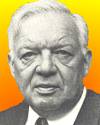

German surgeon who shared (with André F. Cournand and Dickinson W. Richards) the Nobel Prize for Physiology or Medicine in 1956 for the development of cardiac catheterization. This is a procedure in which a tube is inserted into a vein at the elbow and passed through the vein into the right atrium of the heart. Drugs can thus be passed into the heart. In 1929, while a young surgical resident in a small German hospital in Eberswalde, Forssmann proposed introducing a catheter as an alternative to avoid dangers with the direct injection of drugs into the heart frequently demanded in an emergency. It was believed at the time that any entry into the heart would be fatal. Nevertheless, after practice on cadavers, Forssman experimented on himself. He anesthetized his own elbow, inserted a 65-cm catheter in his antecubital vein. Then walked with catheter dangling from his arm, along several flights of stairs to the x-ray department where he calmly documented the position of the tip of the catheter in the right atrium of his heart. Without pain or discomfort, he had proved that a catheter could be inserted safely into a human heart.Various biographical sources (including the Nobel Prize) give date of birth as 29 Aug; Enc. Brit. gives 20 Aug.
Mavericks, Miracles, and Medicine: The Pioneers Who Risked Their Lives to Bring Medicine into the Modern Age, by Julie M. Fenster. - book suggestion.
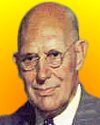
Born 29 Aug 1876; died 25 Nov 1958 at age 82. quotes
Charles Franklin Kettering was an American engineer whose 140 patents included the electric starter, car lighting and ignition systems. In his early career, with the National Cash Register Co., Dayton (1904-09), he created the first electric cash register with an electric motor that opened the drawer. When he co-founded the Dayton Engineering Laboratories Company (DELCO, with Edward A. Deeds) he invented the key-operated self-starting motor for the Cadillac (1912) and it spread to nearly all new cars by the 1920s. As vice president and director of research for General Motors Corp. (1920-47) he developed engines, quick-drying lacquer finishes, anti-knock fuels, and variable-speed transmissions.« more
Charles Franklin Kettering was an American engineer whose 140 patents included the electric starter, car lighting and ignition systems. In his early career, with the National Cash Register Co., Dayton (1904-09), he created the first electric cash register with an electric motor that opened the drawer. When he co-founded the Dayton Engineering Laboratories Company (DELCO, with Edward A. Deeds) he invented the key-operated self-starting motor for the Cadillac (1912) and it spread to nearly all new cars by the 1920s. As vice president and director of research for General Motors Corp. (1920-47) he developed engines, quick-drying lacquer finishes, anti-knock fuels, and variable-speed transmissions.« more
Charles Franklin Kettering: A Biography, by T. A. Boyd. - book suggestion.
Born 29 Aug 1821; died 25 Sep 1898 at age 77.
French anthropologist who was the first to organize man's prehistoric cultural developments into a sequence of epochs. Based on the idea that older specimens of man were more primitive structurally and culturally, he created a ladder-like model of the evolution of man. This model was the basis for the idea of linear evolution of men. This classification system was further detailed in 1882, in Le Prehistorique: antiquite de l'homme (The Prehistoric: Man's Antiquity). His classification system continued to be the basis for anthropological classification into the 1900s. For example, he ordered the Paleolithic (Stone Age) epochs into Chellean, Acheulian, Mousterian, Solutrean, Magdalenian, and so on.
French anthropologist who was the first to organize man's prehistoric cultural developments into a sequence of epochs. Based on the idea that older specimens of man were more primitive structurally and culturally, he created a ladder-like model of the evolution of man. This model was the basis for the idea of linear evolution of men. This classification system was further detailed in 1882, in Le Prehistorique: antiquite de l'homme (The Prehistoric: Man's Antiquity). His classification system continued to be the basis for anthropological classification into the 1900s. For example, he ordered the Paleolithic (Stone Age) epochs into Chellean, Acheulian, Mousterian, Solutrean, Magdalenian, and so on.
Born 29 Aug 1809; died 7 Oct 1894 at age 85. quotes
American physician and writer was best-known as an essayist-poet, but in medicine was famous for his 1843 article 'The Contagiousness of Puerperal Fever,' concerning the high mortality of women giving birth in hospitals. He asserted that the infection was carried from patient to patient by physicians and nurses. Because that defied the conventional wisdom, he received abuse from the obstetricians of the time. (A few years later, Ignaz Semmelweiss demonstrated the importance of hand-washing and hygiene. Before them, John Burton in 1751, and Charles White in 1773 had suspected the role of medical attendants.) Holmes coined the term “anesthesia,” from Greek words meaning “no feeling”. He was the father of the Supreme Court judge of the same name.«
American physician and writer was best-known as an essayist-poet, but in medicine was famous for his 1843 article 'The Contagiousness of Puerperal Fever,' concerning the high mortality of women giving birth in hospitals. He asserted that the infection was carried from patient to patient by physicians and nurses. Because that defied the conventional wisdom, he received abuse from the obstetricians of the time. (A few years later, Ignaz Semmelweiss demonstrated the importance of hand-washing and hygiene. Before them, John Burton in 1751, and Charles White in 1773 had suspected the role of medical attendants.) Holmes coined the term “anesthesia,” from Greek words meaning “no feeling”. He was the father of the Supreme Court judge of the same name.«
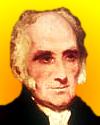
Born 29 Aug 1749; died 26 Jun 1834 at age 84. quotes
Scottish physician who, when head of the Navy Medical Board, required (1795) a diet including lemon juice on navy vessels, which virtually eliminated scurvy and its significant lost manpower due to sickness of sailors. The value of citrus juice had been established by James Lind, with his Treatice on Scurvy (1754). Blane also improved sanitary conditions in the Navy by providing supplies of soap and medicines, and was involved with designing rules that were precursors to modern quarantine conditions. He required every surgeon in the service to make regular returns or journals of the state of health and disease onboard their ship. In 1829, he established a prize medal as an incentive for the surgeon producing the best journal.«
Scottish physician who, when head of the Navy Medical Board, required (1795) a diet including lemon juice on navy vessels, which virtually eliminated scurvy and its significant lost manpower due to sickness of sailors. The value of citrus juice had been established by James Lind, with his Treatice on Scurvy (1754). Blane also improved sanitary conditions in the Navy by providing supplies of soap and medicines, and was involved with designing rules that were precursors to modern quarantine conditions. He required every surgeon in the service to make regular returns or journals of the state of health and disease onboard their ship. In 1829, he established a prize medal as an incentive for the surgeon producing the best journal.«
Scurvy: How a Surgeon, a Mariner, and a Gentlemen Solved..., by Stephen Bown. - book suggestion.
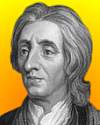
Born 29 Aug 1632; died 28 Oct 1704 at age 72. quotes
English physician who was the most important philosopher during the Age of Reason. He spent over 20 years developing the ideas he published in most significant work, Essay Concerning Human Understanding (1690) which analysed the nature of human reason, and promoted experimentation as the basis of knowledge. He established primary qualities, (ex. solidity, extension, number) as distinct from secondary qualities identified by the sense organs (ex. colour, sound). Thus the world is otherwise silent and without colour. Locke recognised that science is made possible when the primary world mechanically affects the sense organs, thereby creating ideas that faithfully represent reality. He was an acquaintance of Robert Boyle.«
English physician who was the most important philosopher during the Age of Reason. He spent over 20 years developing the ideas he published in most significant work, Essay Concerning Human Understanding (1690) which analysed the nature of human reason, and promoted experimentation as the basis of knowledge. He established primary qualities, (ex. solidity, extension, number) as distinct from secondary qualities identified by the sense organs (ex. colour, sound). Thus the world is otherwise silent and without colour. Locke recognised that science is made possible when the primary world mechanically affects the sense organs, thereby creating ideas that faithfully represent reality. He was an acquaintance of Robert Boyle.«

Died 29 Aug 2003 at age 90 (born 13 Sep 1912).
Horace Welcome was an American astronomer, son of Harold Babcock. Working together, they were the first to measure the distribution of magnetic fields over the surface of the Sun. Horace invented and built many astronomical instruments, including a ruling engine which produced excellent diffraction gratings, the solar magnetograph, and microphotometers, automatic guiders, and exposure meters for the 100 and 200-inch telescopes. By combining his polarizing analyzer with the spectrograph he discovered magnetic fields in other stars. He developed important models of sunspots and their magnetism, and was the first to propose adaptive optics (1953).
Horace Welcome was an American astronomer, son of Harold Babcock. Working together, they were the first to measure the distribution of magnetic fields over the surface of the Sun. Horace invented and built many astronomical instruments, including a ruling engine which produced excellent diffraction gratings, the solar magnetograph, and microphotometers, automatic guiders, and exposure meters for the 100 and 200-inch telescopes. By combining his polarizing analyzer with the spectrograph he discovered magnetic fields in other stars. He developed important models of sunspots and their magnetism, and was the first to propose adaptive optics (1953).
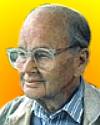
Died 29 Aug 1989 at age 79 (born 14 Sep 1909).
Sir Peter Markham Scott, son of Robert Falcon Scott (Scott of the Antarctic), was a British naturalist, conservationist, artist, and author. He was a founder of both the Severn Wildfowl Trust (1946, now renamed as the Wildlife and Wetlands Trust) and the World Wildlife Fund. From 1953 to 1970 he hosted the environmental television series Look for the British Broadcasting Corporation. (In 1978, he gave the Loch Ness Monster a scientific name, Nessiteras rhombopteryx. Scottish Member of Parliament Nicholas Fairbairn later anagrammed it: "Monster Hoax by Sir Peter S." )
Sir Peter Markham Scott, son of Robert Falcon Scott (Scott of the Antarctic), was a British naturalist, conservationist, artist, and author. He was a founder of both the Severn Wildfowl Trust (1946, now renamed as the Wildlife and Wetlands Trust) and the World Wildlife Fund. From 1953 to 1970 he hosted the environmental television series Look for the British Broadcasting Corporation. (In 1978, he gave the Loch Ness Monster a scientific name, Nessiteras rhombopteryx. Scottish Member of Parliament Nicholas Fairbairn later anagrammed it: "Monster Hoax by Sir Peter S." )
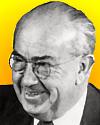
Died 29 Aug 1967 at age 78 (born 10 Aug 1889). quotes
Charles Brace Darrow was an American inventor who designed the board game Monopoly. He had invented the game on 7 Mar 1933, though it was preceded by other real-estate board games. On 31 Dec 1935, a patent was issued for the game of Monopoly assigned to Parker Brothers, Inc., by Charles Darrow of Pennsylvania (No. 2,026,082). The patent titled it a “Board Game Apparatus” and described it as “intended primarily to provide a game of barter, thus involving trading and bargaining” in which “much of the interest in the game lies in trading and in striking shrewd bargains.” Illustrations included with the patent showed not only the playing board and pieces, cards, and the scrip money. Parker Brothers began mass marketing the game on 7 Feb 1935.
Charles Brace Darrow was an American inventor who designed the board game Monopoly. He had invented the game on 7 Mar 1933, though it was preceded by other real-estate board games. On 31 Dec 1935, a patent was issued for the game of Monopoly assigned to Parker Brothers, Inc., by Charles Darrow of Pennsylvania (No. 2,026,082). The patent titled it a “Board Game Apparatus” and described it as “intended primarily to provide a game of barter, thus involving trading and bargaining” in which “much of the interest in the game lies in trading and in striking shrewd bargains.” Illustrations included with the patent showed not only the playing board and pieces, cards, and the scrip money. Parker Brothers began mass marketing the game on 7 Feb 1935.
Monopoly (board game), by Parker Brothers. - book suggestion.
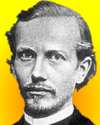
Died 29 Aug 1873 at age 34 (born 14 Feb 1839). quotes
German mathematician who worked on the theory of complex numbers, the theory of functions and the history of mathematics. In his education at the University of Leipzig, he learned physics from his father, Wilhelm Gottlieb Hankel. He studied mathematics there taught by August Möbius, followed by a year at Göttingen with Bernhard Riemann and then completed his doctorate at Berlin under Karl Weierstrass and Leopold Kronecker. Although he died so young, aged 34, he left a legacy of the Hankel transform and the Hankel matrix. The writings he left were at times filled with errors, and at other times showed insight, especially concerning the work of Hermann Grassman to the calculus for vectors and the work on infinite series by Bernard Bolzano.«
German mathematician who worked on the theory of complex numbers, the theory of functions and the history of mathematics. In his education at the University of Leipzig, he learned physics from his father, Wilhelm Gottlieb Hankel. He studied mathematics there taught by August Möbius, followed by a year at Göttingen with Bernhard Riemann and then completed his doctorate at Berlin under Karl Weierstrass and Leopold Kronecker. Although he died so young, aged 34, he left a legacy of the Hankel transform and the Hankel matrix. The writings he left were at times filled with errors, and at other times showed insight, especially concerning the work of Hermann Grassman to the calculus for vectors and the work on infinite series by Bernard Bolzano.«
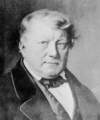
Died 29 Aug 1868 at age 68 (born 18 Oct 1799). quotes
German-Swiss chemist who discovered and named ozone (1840) and was the first to describe guncotton (nitrocellulose). He noted ozone appeared during thunderstorms and named the gas ozone for its peculiar smell (ozo is Greek for smell). Later experiments showed that sending an electric current through pure, dry oxygen (O2) creates ozone (O3). His discovery of the powerful explosive called cellulose nitrate, or gun cotton, was the result of a laboratory accident. One day in 1845 he spilled sulfuric and nitric acids and soaked it with a cotton apron. After the apron dried, it burst into flame - he had created nitrated cellulose. He found that cellulose nitrate could be molded and had some elastic properties. It eventually was used for smokeless gun powder.
German-Swiss chemist who discovered and named ozone (1840) and was the first to describe guncotton (nitrocellulose). He noted ozone appeared during thunderstorms and named the gas ozone for its peculiar smell (ozo is Greek for smell). Later experiments showed that sending an electric current through pure, dry oxygen (O2) creates ozone (O3). His discovery of the powerful explosive called cellulose nitrate, or gun cotton, was the result of a laboratory accident. One day in 1845 he spilled sulfuric and nitric acids and soaked it with a cotton apron. After the apron dried, it burst into flame - he had created nitrated cellulose. He found that cellulose nitrate could be molded and had some elastic properties. It eventually was used for smokeless gun powder.
Died 29 Aug 1865 at age 50 (born 30 Jul 1815). quotes
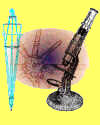
Polish-German physician, neurologist and embryologist. While in medical practice, he researched unpaid at university. (As a Jew, he was barred from teaching.) He discovered the fibres of Remak (1830), nonmedullated nerve fibres (1838), and named the three germ layers he discovered of the early embryo: the ectoderm, the mesoderm, and the endoderm (1842). In 1844 he discovered the nerve cells in the heart now called Remak's ganglia and provided the first illustration of the 6-layered cortex. He was a pioneer in the use of electrotherapy for the treatment of nervous diseases. He finally became the first Jew to teach at university (1847), but even promotion to assistant professor in 1859 did not reflect his eminence.DSB give date of birth 30 Jul 1815. EB gives 26 Jul 1815.]
Polish-German physician, neurologist and embryologist. While in medical practice, he researched unpaid at university. (As a Jew, he was barred from teaching.) He discovered the fibres of Remak (1830), nonmedullated nerve fibres (1838), and named the three germ layers he discovered of the early embryo: the ectoderm, the mesoderm, and the endoderm (1842). In 1844 he discovered the nerve cells in the heart now called Remak's ganglia and provided the first illustration of the 6-layered cortex. He was a pioneer in the use of electrotherapy for the treatment of nervous diseases. He finally became the first Jew to teach at university (1847), but even promotion to assistant professor in 1859 did not reflect his eminence.DSB give date of birth 30 Jul 1815. EB gives 26 Jul 1815.]
Died 29 Aug 1854 at age 66 (born 13 Oct 1787).
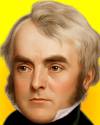
English inventor, painter and writer was known for combining art with practical science. He improved wire-drawing by passing metal through jeweled dies, yielding smoother wire, and co-patented an oblique pen with S. Mordan (1831). In 1838 he created a cork substitute of felt coated with vulcanized rubber, leading to work with Charles Macintosh & Co. He patented compressed lozenges of alkali carbonates for medicine, new wadding for firearms, and a method of refining graphite for pencils. Later he advanced uses for vulcanized india-rubber (1844–51). A founder of the Royal Geographical Society, Brockedon’s inventive output spanned early materials science, polymer chemistry, and mechanical engineering.«
English inventor, painter and writer was known for combining art with practical science. He improved wire-drawing by passing metal through jeweled dies, yielding smoother wire, and co-patented an oblique pen with S. Mordan (1831). In 1838 he created a cork substitute of felt coated with vulcanized rubber, leading to work with Charles Macintosh & Co. He patented compressed lozenges of alkali carbonates for medicine, new wadding for firearms, and a method of refining graphite for pencils. Later he advanced uses for vulcanized india-rubber (1844–51). A founder of the Royal Geographical Society, Brockedon’s inventive output spanned early materials science, polymer chemistry, and mechanical engineering.«
Illustrations Of The Passes Of The Alps: By Which Italy Communicates With France, Switzerland, And Germany, by William Brockedon. - book suggestion.
In 1982, an atom of a new element was made. It has been given the proposed name of Meitnerium, symbol Mt. Physicists at the Heavy Ion Research Laboratory, Darmstadt, West Germany made and identified element 109 by bombing a target of Bi-209 with accelerated nuclei of Fe-58. After a week of target bombardment a single fused nucleus was produced. The combined energy of two nuclei had to be sufficiently high so that the repulsive forces between the nuclei could be overcome. The team confirmed the existence of element 109 by four independent measurements. The nucleus started to decay 5 ms after striking the detector. This experiment demonstrated the feasibility of using fusion techniques as a method of making new, heavy nuclei.
In 1982, the 52,000-mile “Transglobe” expedition completed the first circumnavigation of the world's polar axis. Beginning in 1979, British explorer Ranulph Fiennes with Charles Burton had travelled for three years around the Earth via the Poles circling the earth on longitude 0, the Greenwich Meridian. They had reached the North Pole on 11 Apr 1982, and the South Pole sixteen months before that. Their journey across Antarctica took 67 days, despite the advantages of motorised skidoos. The ocean voyage was undertaken in a craft named Benjamin Bowring. The expedition cost an estimated $18 million. (source)
In 1965, astronaut Gordon Cooper in orbit 100 miles above the Earth aboard Gemini 5 held a conversation with aquanaut M. Scott Carpenter in Sealab II which was 205 feet below the surface of the Pacific Ocean. It was was first time an astronaut in space spoke with an aquanaut. Gemini 5 splashed down later in the day.
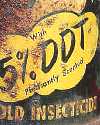
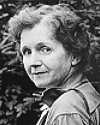
Carson
DDT, Silent Spring, and the Rise of Environmentalism: Classic Texts, by Thomas R. Dunlap. - book suggestion.
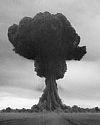
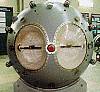
In 1940, Sir Henry Tizard led a mission of leading British and Canadian scientists to the USA to brief official American representatives on devices under active development for war use and to enlist the support of American scientists. Thus began a close cooperation of Anglo-American scientists in such fields as aeronautics and rocketry. His influence probably made the difference between defeat or victory at the Battle of Britain in 1940.
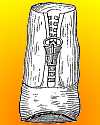
(USPTO)
In 1893, U.S. patent No. 504,038 was issued to Whitcomb L. Judson for a "Zipper Clasp Locker or Unlocker for Shoes."

In 1866, a public demonstration was given of the first cog railway in the world to show the first half-mile of track at the base of Mount Washington, the highest peak in the Northeast U.S. The Mount Washington Cog Railway eventually ran to the summit of Mount Washington, N.H. giving views of four states, Canada, and the Atlantic Ocean. Invented by Sylvester Marsh of Littleton, N.H., work began on the railway in May 1866 and finished in July 1869 at a cost of $139,500. In 1869, the Cog Railway was an engineering marvel, a new technology of toothed cog gears, rack rails and tilted boilers. A third toothed rail was laid between the steel rails for the wheels. In the present day, it remains in use, the only cog railway still powered by steam.
In 1842, the design patent, a new form of patent was authorized by Act of Congress. The first U.S. design patent was issued for typefaces and borders to George Bruce of New York City on 9 Nov 1842.
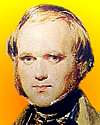
In 1831, Charles Darwin returned home from a geology field trip in North Wales to find letters from Revd. John Henslow and George Peacock informing him that he will soon be invited on a scientific voyage of HMS Beagle. He was 22 years old, and had just graduated from Cambridge University. The offer was to be a naturalist on H.M.S. Beagle for a two year survey of South America, leaving on 25 Sep. Although he immediately accepted the offer, his father and sisters were opposed. They regarded it as an idle pursuit that would delay his expected career in the clergy. His father, however, was prepared to change his mind, but only if Darwin could find a qualified man who viewed the exploit as worthwhile. Darwin spent the next two days doing just that.«
From So Simple a Beginning: Darwin's Four Great Books, by Charles Darwin, Edward O. Wilson. - book suggestion.
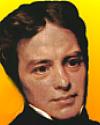
In 1831, Michael Faraday wound a thick iron ring on one side with insulated wire that was connected to a battery. He then wound the opposite side with wire connected to a galvanometer. He found that upon closing the battery circuit, there was a deflection of the galvanometer in the second circuit. Then he was astonished to see the galvanometer needle jump in the opposite direction when the battery circuit was opened. He had discovered that a current was induced in the secondary when a current in the primary was connected and an induced current in the opposite direction when the primary current was disconnected.eb
The Electric Life Of Michael Faraday, by Alan W. Hirshfeld. - book suggestion.
In 1828, the first U.S. patent for a brake of any kind was issued to Robert Turner of Ward (now Auburn), Mass. This was for a "self-regulating wagon brake."




