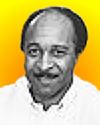
Born 11 Dec 1939.
Black American analytical chemist who refined the technique of Raman spectrometry to test very small sample sizes. Raman spectroscopy, named after its Indian inventor, uses a laser beam passed through a sample of material to determine the identity of the atoms in its molecules and how they combine. In the 1980s, Macklin collaborated with NASA scientists to analyze meteorites and cosmic dust particles looking for complex carbon-based molecules to elucidate the evolution of Earth's carbon-based life. He showed that tiny crystals in clay could adsorb carbon molecules and facilitate the action of the sun's energy to combine into them into larger ones. Macklin has also extended Raman spectrometry to the study environmental pollution.
Black American analytical chemist who refined the technique of Raman spectrometry to test very small sample sizes. Raman spectroscopy, named after its Indian inventor, uses a laser beam passed through a sample of material to determine the identity of the atoms in its molecules and how they combine. In the 1980s, Macklin collaborated with NASA scientists to analyze meteorites and cosmic dust particles looking for complex carbon-based molecules to elucidate the evolution of Earth's carbon-based life. He showed that tiny crystals in clay could adsorb carbon molecules and facilitate the action of the sun's energy to combine into them into larger ones. Macklin has also extended Raman spectrometry to the study environmental pollution.
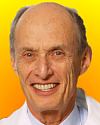
Born 11 Dec 1925.
American neurologist who was awarded a share of the 2000 Nobel Prize in Physiology or Medicine (with Arvid Carlsson of Sweden and Austrian-American Eric R. Kandel) for their discoveries concerning how drugs affect the brain and recognizing drug addiction as a brain disease. Greengard traced the biochemical reactions that occur in nerve cells in response to neurotransmitters such as dopamine. Abused stimulants, such as methamphetamine, alter nerve cells' exposure or reactions to neurotransmitters, which produces feelings of pleasure and leads to addiction. Greengard's continuing research on how cocaine and amphetamine change neurotransmitter function may make possible medications to prevent or treat the addictive effect.
American neurologist who was awarded a share of the 2000 Nobel Prize in Physiology or Medicine (with Arvid Carlsson of Sweden and Austrian-American Eric R. Kandel) for their discoveries concerning how drugs affect the brain and recognizing drug addiction as a brain disease. Greengard traced the biochemical reactions that occur in nerve cells in response to neurotransmitters such as dopamine. Abused stimulants, such as methamphetamine, alter nerve cells' exposure or reactions to neurotransmitters, which produces feelings of pleasure and leads to addiction. Greengard's continuing research on how cocaine and amphetamine change neurotransmitter function may make possible medications to prevent or treat the addictive effect.
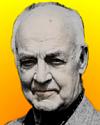
Born 11 Dec 1902; died 27 Jul 1990 at age 87.
William John Hamilton, Jr. was an American mammalogist and environmentalist was an American mammalogist and environmentalist who stressed the vital ecological role of predators and the importance of conserving fur-bearing populations. His interest in plants and animals began in childhood, and working while a teenager for three summers for Daniel C. Beard (a naturalist, artist, and cofounder of the Boy Scouts of America). Hamilton's research dealt with mammals, birds, reptiles, amphibians, and horticulture, with a major interest was in life histories and ecology. He wrote books, including American Mammals (1939), and over 200 papers. He also made some pioneering studies of microtine life cycles.«
William John Hamilton, Jr. was an American mammalogist and environmentalist was an American mammalogist and environmentalist who stressed the vital ecological role of predators and the importance of conserving fur-bearing populations. His interest in plants and animals began in childhood, and working while a teenager for three summers for Daniel C. Beard (a naturalist, artist, and cofounder of the Boy Scouts of America). Hamilton's research dealt with mammals, birds, reptiles, amphibians, and horticulture, with a major interest was in life histories and ecology. He wrote books, including American Mammals (1939), and over 200 papers. He also made some pioneering studies of microtine life cycles.«
Born 11 Dec 1892; died 1 Oct 1965 at age 72.
Canadian-American psychiatrist who invented the modern polygraph.
Canadian-American psychiatrist who invented the modern polygraph.
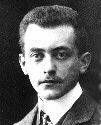
Born 11 Dec 1882; died 5 Jan 1970 at age 87. quotes
German-British physicist who shared the Nobel Prize for Physics in 1954 (with Walther Bothe), for his statistical formulation of the behaviour of subatomic particles. Max Born's studies of the wave function led to the replacement of the original quantum theory, which regarded electrons as particles, with a mathematical description.
German-British physicist who shared the Nobel Prize for Physics in 1954 (with Walther Bothe), for his statistical formulation of the behaviour of subatomic particles. Max Born's studies of the wave function led to the replacement of the original quantum theory, which regarded electrons as particles, with a mathematical description.
My Life and Views, by Max Born. - book suggestion.
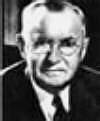
Born 11 Dec 1874; died Feb 1953.
Canadian-American manufacturer and inventor of the pasteurizing process for cheese. Founder of the Kraft Co. In 1903, J.L. Kraft established a wholesale cheese business in Chicago. Kraft had a vision of supplying America with nutritious, low-cost cheese products. In 1916, Kraft patented a processed cheese formula, based on milk solids, that would not spoil. He called it "American Cheese." The general public found it bland, but Kraft remained undaunted. He took his formula to the U.S. Army, and sold them 6 million pounds of the processed cheese product. Soldiers developed a taste for Kraft's creation. When the great depression came, the processed cheese was a boon to everyone: real cheese became hard to get and it was expensive.
Canadian-American manufacturer and inventor of the pasteurizing process for cheese. Founder of the Kraft Co. In 1903, J.L. Kraft established a wholesale cheese business in Chicago. Kraft had a vision of supplying America with nutritious, low-cost cheese products. In 1916, Kraft patented a processed cheese formula, based on milk solids, that would not spoil. He called it "American Cheese." The general public found it bland, but Kraft remained undaunted. He took his formula to the U.S. Army, and sold them 6 million pounds of the processed cheese product. Soldiers developed a taste for Kraft's creation. When the great depression came, the processed cheese was a boon to everyone: real cheese became hard to get and it was expensive.
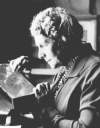
Born 11 Dec 1863; died 13 Apr 1941 at age 77. quotes
American, deaf astronomer who specialized in the classification of stellar spectra. In 1896 she was hired at the Harvard College Observatory, remaining there for her entire career. The Harvard spectral classification system had been first developed by Edward C. Pickering, Director of the Observatory, around the turn of the century using objective prism spectra taken on improved photographic plates. In conjunction with Pickering Cannon was to further develop, refine, and implement the Harvard system. She reorganized the classification of stars in terms of surface temperature in spectral classes O, B, A, F, G, K, M, and catalogued over 225,000 stars for the monumental Henry Draper Catalogue of stellar spectra, (1918-24).
American, deaf astronomer who specialized in the classification of stellar spectra. In 1896 she was hired at the Harvard College Observatory, remaining there for her entire career. The Harvard spectral classification system had been first developed by Edward C. Pickering, Director of the Observatory, around the turn of the century using objective prism spectra taken on improved photographic plates. In conjunction with Pickering Cannon was to further develop, refine, and implement the Harvard system. She reorganized the classification of stars in terms of surface temperature in spectral classes O, B, A, F, G, K, M, and catalogued over 225,000 stars for the monumental Henry Draper Catalogue of stellar spectra, (1918-24).
Born 11 Dec 1855; died 15 Apr 1935 at age 79.
English chemist who, with Edward Bevan and Clayton Beadle, discovered cellulose could be produced (1891) by the dissolution of cellulose xanthate in dilute sodium hydroxide. Although cellulose had previously been made by others, this type of cellulose is the most popular type in use today. It was a syrupy yellow liquid. In 1892, Cross worked out a method for dissolving cellulose in carbon disulphide (producing a solution he called viscose) which could be squirted out of fine holes. As the solvent evaporated, a fine fibre was formed which became known as viscose rayon (or simply viscose). By 1908, the viscose was also used extruded through a narrow slit to produce thin, transparent sheets of cellophane.
English chemist who, with Edward Bevan and Clayton Beadle, discovered cellulose could be produced (1891) by the dissolution of cellulose xanthate in dilute sodium hydroxide. Although cellulose had previously been made by others, this type of cellulose is the most popular type in use today. It was a syrupy yellow liquid. In 1892, Cross worked out a method for dissolving cellulose in carbon disulphide (producing a solution he called viscose) which could be squirted out of fine holes. As the solvent evaporated, a fine fibre was formed which became known as viscose rayon (or simply viscose). By 1908, the viscose was also used extruded through a narrow slit to produce thin, transparent sheets of cellophane.
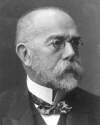
Born 11 Dec 1843; died 27 May 1910 at age 66. quotes
(Heinrich Hermann) Robert Koch was a German physician, a founder of the science of bacteriology, who discovered the tubercle bacillus (1882) and the cholera bacillus (1883). He studied bubonic plague in Bombay (1897) and malaria and sleeping sickness in Africa. In addition Koch investigated tropical dysentery, and the Egyptian eye disease (trachoma), and typhus recurrens in tropical Africa. He also carried out work of exceptional importance concerning destructive tropical cattle diseases, such as rinderpest, Surra disease, Texas fever, coast fever in cattle and the trypanosome disease carried by the tsetse fly. He won the Nobel Prize for Physiology or Medicine in 1905, "for his investigations and discoveries in relation to tuberculosis."
(Heinrich Hermann) Robert Koch was a German physician, a founder of the science of bacteriology, who discovered the tubercle bacillus (1882) and the cholera bacillus (1883). He studied bubonic plague in Bombay (1897) and malaria and sleeping sickness in Africa. In addition Koch investigated tropical dysentery, and the Egyptian eye disease (trachoma), and typhus recurrens in tropical Africa. He also carried out work of exceptional importance concerning destructive tropical cattle diseases, such as rinderpest, Surra disease, Texas fever, coast fever in cattle and the trypanosome disease carried by the tsetse fly. He won the Nobel Prize for Physiology or Medicine in 1905, "for his investigations and discoveries in relation to tuberculosis."
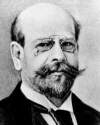
Born 11 Dec 1838; died 20 Jun 1915 at age 76.
German industrialist and a leading figure in the early European electrical industry. In 1881, he met Thomas Edison in Paris at the international electricity exhibition. After lengthy negociations, in 1882, he purchased the rights for the economic use of Edison's patents in Germany. He founded a company to manufacture them (which became one of the two largest German electrical enterprises, Allgemeine Elektrizitats Gesellschaft (AEG)-the German General Electric Company). The product range included power stations, railways as well as electrical machines and devices. Rathenau was also the first to produce aluminium in Germany for industrial use.
German industrialist and a leading figure in the early European electrical industry. In 1881, he met Thomas Edison in Paris at the international electricity exhibition. After lengthy negociations, in 1882, he purchased the rights for the economic use of Edison's patents in Germany. He founded a company to manufacture them (which became one of the two largest German electrical enterprises, Allgemeine Elektrizitats Gesellschaft (AEG)-the German General Electric Company). The product range included power stations, railways as well as electrical machines and devices. Rathenau was also the first to produce aluminium in Germany for industrial use.
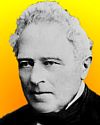
Born 11 Dec 1806; died 1 Jul 1886 at age 79.
Otto Wilhelm Hermann von Abich was a German geologist whose early work was on spinels and other minerals. Later, he made special studies of fumaroles, of the mineral deposits around volcanic vents, and of the structure of volcanoes. He was a supporter of volcanistic theory, and was noted for his explorations in Asia. After moving to Russia in 1843, until his retirement, he made studies that ranged among minerology, petrography, paleontological stratigraphy, tectonics, and economic geology. He developed the anticlinal theory of oil prospecting. The mineral now called clinoclasite (basic copper arsenate) was originally named Abichite after him.
Otto Wilhelm Hermann von Abich was a German geologist whose early work was on spinels and other minerals. Later, he made special studies of fumaroles, of the mineral deposits around volcanic vents, and of the structure of volcanoes. He was a supporter of volcanistic theory, and was noted for his explorations in Asia. After moving to Russia in 1843, until his retirement, he made studies that ranged among minerology, petrography, paleontological stratigraphy, tectonics, and economic geology. He developed the anticlinal theory of oil prospecting. The mineral now called clinoclasite (basic copper arsenate) was originally named Abichite after him.
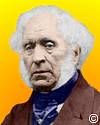
Born 11 Dec 1781; died 10 Feb 1868 at age 86. quotes
Scottish physicist who is noted for his experimental work in optics and polarized light (light in which all waves lie in the same plane.) He is known for Brewster's Law, which relates the refractive index of a material to its polarizing angle (which is the incident angle at which reflected light becomes completely polarized). At 10 years old, a child prodigy, he constructed a telescope. In middle age, he patented the kaleidoscope (1817). Later, he used lenses to improve three-dimensional images viewed with a stereoscope. Brewster also recommended the use of the lightweight, flat Fresnel lens in lighthouses.
Scottish physicist who is noted for his experimental work in optics and polarized light (light in which all waves lie in the same plane.) He is known for Brewster's Law, which relates the refractive index of a material to its polarizing angle (which is the incident angle at which reflected light becomes completely polarized). At 10 years old, a child prodigy, he constructed a telescope. In middle age, he patented the kaleidoscope (1817). Later, he used lenses to improve three-dimensional images viewed with a stereoscope. Brewster also recommended the use of the lightweight, flat Fresnel lens in lighthouses.
Born 11 Dec 1712; died 3 May 1764 at age 51.
Italian scholar of the arts and sciences, recognized for his wide knowledge and elegant presentation of advanced ideas. At age 21, he wrote Il Newtonianismo per le dame (1737; "Newtonianism for Ladies"), a popular exposition of Newtonian optics. He also wrote about architecture, opera and painting.
Italian scholar of the arts and sciences, recognized for his wide knowledge and elegant presentation of advanced ideas. At age 21, he wrote Il Newtonianismo per le dame (1737; "Newtonianism for Ladies"), a popular exposition of Newtonian optics. He also wrote about architecture, opera and painting.

Died 11 Dec 1987 at age 79 (born 14 Oct 1908). quotes
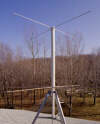
American electrical engineer, a pioneer in radio-thermics, who made major contributions to the development of radio and television broadcast antennas. In 1936, Brown invented the so-called turnstyle antenna for television broadcasting. Because of this, the Federal Communications Commission (FCC) adopted a TV system of 441 lines. In 1938, Brown developed the vestigial sideband filter for use in television transmission, doubling the horizontal resolution of television pictures at any given bandwith. During WW II, with RCA's researchers, George Brown's group used radio-frequency heating in the bulk dehydration of penicillin at E.R. Squibb, a "sewing machine" for thermoplastics, and more consistent riveting and welding techniques.Image: Modern weather satellite receiving turnstyle antenna.
American electrical engineer, a pioneer in radio-thermics, who made major contributions to the development of radio and television broadcast antennas. In 1936, Brown invented the so-called turnstyle antenna for television broadcasting. Because of this, the Federal Communications Commission (FCC) adopted a TV system of 441 lines. In 1938, Brown developed the vestigial sideband filter for use in television transmission, doubling the horizontal resolution of television pictures at any given bandwith. During WW II, with RCA's researchers, George Brown's group used radio-frequency heating in the bulk dehydration of penicillin at E.R. Squibb, a "sewing machine" for thermoplastics, and more consistent riveting and welding techniques.Image: Modern weather satellite receiving turnstyle antenna.
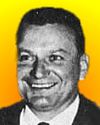
Died 11 Dec 1984 at age 67 (born 24 Mar 1917). quotes
German-born American physicist; rocketry engineer and space-travel theorist. During WW II, he was a key member of the famed Peenemunde Rocket Development team, specializing in the propulsion system for the German V-2 rocket (1942-45). He moved to the U.S. with Wernher von Braun's rocket team in 1945. Entering the U.S. private industry in 1953, he helping develop the Atlas missile at General Dynamics. Subsequently, he invented the first liquid hydrogen propelled upper stage launch vehicle, the Centaur which enabled the U.S. to explore the solar system by launching planetary probes. A vial of his cremated remains accompany those of Star Trek creator Gene Roddenberry and others in space orbit, launched 20 Apr 1997.
German-born American physicist; rocketry engineer and space-travel theorist. During WW II, he was a key member of the famed Peenemunde Rocket Development team, specializing in the propulsion system for the German V-2 rocket (1942-45). He moved to the U.S. with Wernher von Braun's rocket team in 1945. Entering the U.S. private industry in 1953, he helping develop the Atlas missile at General Dynamics. Subsequently, he invented the first liquid hydrogen propelled upper stage launch vehicle, the Centaur which enabled the U.S. to explore the solar system by launching planetary probes. A vial of his cremated remains accompany those of Star Trek creator Gene Roddenberry and others in space orbit, launched 20 Apr 1997.
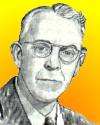
Died 11 Dec 1983 at age 85 (born 14 Apr 1898).
American electrical engineer who discovered and developed the negative-feedback principle, in which amplification output is fed back into the input, thus producing nearly distortionless and steady amplification. In 1921, Black joined the forerunner of Bell Labs, in New York City, working on elimination of distortion. After six years of persistence, Black conceived his negative feedback amplifier in a flash commuting to work aboard the ferry. Basically, the concept involved feeding systems output back to the input as a method of system control. The principle has found widespread applications in electronics, including industrial, military, and consumer electronics, weaponry, analog computers, and such biomechanical devices as pacemakers.
American electrical engineer who discovered and developed the negative-feedback principle, in which amplification output is fed back into the input, thus producing nearly distortionless and steady amplification. In 1921, Black joined the forerunner of Bell Labs, in New York City, working on elimination of distortion. After six years of persistence, Black conceived his negative feedback amplifier in a flash commuting to work aboard the ferry. Basically, the concept involved feeding systems output back to the input as a method of system control. The principle has found widespread applications in electronics, including industrial, military, and consumer electronics, weaponry, analog computers, and such biomechanical devices as pacemakers.
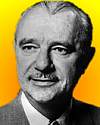
Died 11 Dec 1978 at age 77 (born 18 May 1901). quotes
American biochemist who was awarded the Nobel Prize for Chemistry in 1955 for his work on biochemically important sulphur compounds, especially for the first synthesis of a polypeptide hormone. Underneath the brain, the pituitary gland is well-protected and, in man about as big as a bean. It secretes several hormones, that is, substances which regulate important physiological functions. These are built up from amino acids in the same way as proteins, but with a far lower molecular weight. Vigneaud isolated and synthesized two pituitary hormones: vasopressin, which acts on the muscles of the blood vessels to cause elevation of blood pressure; and oxytocin, the principal agent causing contraction of the uterus and secretion of milk.
American biochemist who was awarded the Nobel Prize for Chemistry in 1955 for his work on biochemically important sulphur compounds, especially for the first synthesis of a polypeptide hormone. Underneath the brain, the pituitary gland is well-protected and, in man about as big as a bean. It secretes several hormones, that is, substances which regulate important physiological functions. These are built up from amino acids in the same way as proteins, but with a far lower molecular weight. Vigneaud isolated and synthesized two pituitary hormones: vasopressin, which acts on the muscles of the blood vessels to cause elevation of blood pressure; and oxytocin, the principal agent causing contraction of the uterus and secretion of milk.
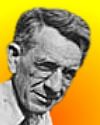
Died 11 Dec 1975 at age 96 (born 6 Mar 1879).
American forester and conservationist and regional planner, who was as "father of the Appalachian Trail" was instrumental in creating a 2,000-mile footpath from Maine to Georgia. As a government planner, he spearheaded the idea of the "townless highway." Early on, he advocated preserving cultural and recreational areas in an increasingly urbanized environment. He proposed the Appalachian Trail in an Oct 1921 article. He was one of the founders of the Regional Planning Association of America (1923), through which he held a two-day "Appalachian Trail Conference" in Washington, D.C. (Mar 2-3, 1925). By 1934, 1,937 miles of the trail had been blazed through the efforts of volunteers.«
American forester and conservationist and regional planner, who was as "father of the Appalachian Trail" was instrumental in creating a 2,000-mile footpath from Maine to Georgia. As a government planner, he spearheaded the idea of the "townless highway." Early on, he advocated preserving cultural and recreational areas in an increasingly urbanized environment. He proposed the Appalachian Trail in an Oct 1921 article. He was one of the founders of the Regional Planning Association of America (1923), through which he held a two-day "Appalachian Trail Conference" in Washington, D.C. (Mar 2-3, 1925). By 1934, 1,937 miles of the trail had been blazed through the efforts of volunteers.«
Benton MacKaye: Conservationist, Planner, and Creator of the Appalachian Trail, by Larry Anderson. - book suggestion.
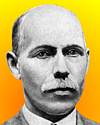

American physicist and radio engineer, known as the “father of navy radar” whose work laid the foundation for U.S. radar development. In Sep 1922, with Leo C. Young, he proposed the detection of intruding ships by transmitting a curtain of high-frequency radio waves across harbour entrances, or between ships, with a receiver to detect disturbances caused by ships moving in the electromagnetic field. Taylor became superintendent of the Radio Division at the newly-established Naval Research Laboratory (1923-45). In 1934, he directed Robert Page to experiment with pulsed high-frequency radio signals for aircraft detection. In 1937, the first 200-MHz shipboard radar was installed. He also investigated ionospheric effects.
The Invention That Changed the World: How a Small Group of Radar Pioneers Won the Second World War, by Robert Buderi. - book suggestion.
Died 11 Dec 1952 at age 84 (born 27 Dec 1867). quotes
British scientist, agriculturist, and science historian who developed a method of extracting lactose (milk sugar) from the surplus whey. His invention, which was later put to use on a commercial scale, was prompted by the cheese shortage in Britain during WW I. From 1917, he conducted experiments for more efficient means of production on farm land with an estate inherited from one of his uncles. He was instrumental in the formation of the Agricultural Research Council, serving as its first secretary (1931-35). In A History of Science and Its Relations with Philosophy and Religion, he surveyed scientific breakthroughs from ancient Babylonia and Egypt, through to the early twentieth century. He was knighted (1931) for public service in agriculture.«
British scientist, agriculturist, and science historian who developed a method of extracting lactose (milk sugar) from the surplus whey. His invention, which was later put to use on a commercial scale, was prompted by the cheese shortage in Britain during WW I. From 1917, he conducted experiments for more efficient means of production on farm land with an estate inherited from one of his uncles. He was instrumental in the formation of the Agricultural Research Council, serving as its first secretary (1931-35). In A History of Science and Its Relations with Philosophy and Religion, he surveyed scientific breakthroughs from ancient Babylonia and Egypt, through to the early twentieth century. He was knighted (1931) for public service in agriculture.«
A history of science and its relations with philosophy & religion, by Sir William Cecil Dampier. - book suggestion.
Died 11 Dec 1950 at age 57 (born 15 Aug 1893).
Leslie (John) Comrie was a New Zealand astronomer and pioneer in the application of punched-card machinery to astronomical calculations. He joined HM Nautical Almanac Office (1926-36), where he replaced the use of logarithm tables with desk calculators and punched card machines for the production of astronomical and mathematical tables. This made scientific use of these machines, made originally for only business uses. In 1938, he founded the Scientific Computing Service Ltd., the first commercial calculating service in Great Britain, to further his ideas of mechanical computation for the preparation of mathematical tables. His use of card processing systems prepared the way for electronic computers.«
Leslie (John) Comrie was a New Zealand astronomer and pioneer in the application of punched-card machinery to astronomical calculations. He joined HM Nautical Almanac Office (1926-36), where he replaced the use of logarithm tables with desk calculators and punched card machines for the production of astronomical and mathematical tables. This made scientific use of these machines, made originally for only business uses. In 1938, he founded the Scientific Computing Service Ltd., the first commercial calculating service in Great Britain, to further his ideas of mechanical computation for the preparation of mathematical tables. His use of card processing systems prepared the way for electronic computers.«
Died 11 Dec 1950 at age 85 (born 15 Aug 1865).
Japanese physicist who was influential in advancing physics in Japan in the early twentieth century. In 1904, he published his Saturnian model of the atom, inspired by the rings around the planet Saturn. He placed discrete, negatively charged electrons of the same tiny mass, spaced in a ring revolving around a central huge positive spherical mass at its centre. Considering the electrostatic forces, hee made a mathematical analogy to Maxwell's model of the stability of the motion of Saturn's rings in a huge central gravitational field. However, Nagaoka's theory failed in other ways, and he sidelined it in 1908.
Japanese physicist who was influential in advancing physics in Japan in the early twentieth century. In 1904, he published his Saturnian model of the atom, inspired by the rings around the planet Saturn. He placed discrete, negatively charged electrons of the same tiny mass, spaced in a ring revolving around a central huge positive spherical mass at its centre. Considering the electrostatic forces, hee made a mathematical analogy to Maxwell's model of the stability of the motion of Saturn's rings in a huge central gravitational field. However, Nagaoka's theory failed in other ways, and he sidelined it in 1908.
Died 11 Dec 1945 at age 78 (born 11 Jun 1867).
French physicist who specialized in optics, devising methods for the accurate measurement of interference effects. He worked with Alfred Pérot, during 1896-1906, on the design and uses of a device known as the Fabry-Pérot interferometer, specifically for high-resolution spectroscopy, composed of two thinly silvered glass plates placed in parallel, producing interference due to multiple reflections. In 1913, Fabry demonstrated that ozone is plentiful in the upper atmosphere and is responsible for filtering out ultraviolet radiation from the Sun, protecting life on the surface of Earth from most of its harmful effects.
French physicist who specialized in optics, devising methods for the accurate measurement of interference effects. He worked with Alfred Pérot, during 1896-1906, on the design and uses of a device known as the Fabry-Pérot interferometer, specifically for high-resolution spectroscopy, composed of two thinly silvered glass plates placed in parallel, producing interference due to multiple reflections. In 1913, Fabry demonstrated that ozone is plentiful in the upper atmosphere and is responsible for filtering out ultraviolet radiation from the Sun, protecting life on the surface of Earth from most of its harmful effects.
Died 11 Dec 1942 at age 43 (born 19 Aug 1899).
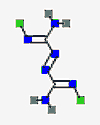
Franz C(arl) Schmelkes was a Czech-born chemist who was best known for his discovery of azochloramid, used to sterilize wounds and burns. This compound is also known by the name chlorazodin, but its formal name is 1-(amino-chloroimino-methyl)imino-2-chloro-guanidine. The image of the strucure of this molecule shows nitrogen atoms in blue, hydrogen in grey, chlorine in green, and carbon shown conventionally by the origin of its four bonds near each end of the molecule. The chlorine which has substituted a hydrogen atom of an amino group - which is present as =N-Cl - is active as a germicide.«
Franz C(arl) Schmelkes was a Czech-born chemist who was best known for his discovery of azochloramid, used to sterilize wounds and burns. This compound is also known by the name chlorazodin, but its formal name is 1-(amino-chloroimino-methyl)imino-2-chloro-guanidine. The image of the strucure of this molecule shows nitrogen atoms in blue, hydrogen in grey, chlorine in green, and carbon shown conventionally by the origin of its four bonds near each end of the molecule. The chlorine which has substituted a hydrogen atom of an amino group - which is present as =N-Cl - is active as a germicide.«
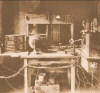
Station 8XK
1920
1920
Died 11 Dec 1941 at age 67 (born 4 May 1874).
American electrical engineer whose interest in radiotelephony led to the establishment of the first commercial radio station. Conrad worked for Westinghouse as assistant chief engineer at its East Pittsburgh Works and acquired over 200 patents in his lifetime. As an amateur, having built a transmitting station on the second floor of the garage behind his home in Wilkinsburg, Pa., when he substituted a phonograph for his microphone, he discovered a large audience of listeners who had built their own crystal radio sets and who, upon hearing the music, wrote or phoned requests for more music and news. When he became swamped with these requests, he decided to broadcast regular, scheduled programs to satisfy his listeners. He coined the term "broadcast."
American electrical engineer whose interest in radiotelephony led to the establishment of the first commercial radio station. Conrad worked for Westinghouse as assistant chief engineer at its East Pittsburgh Works and acquired over 200 patents in his lifetime. As an amateur, having built a transmitting station on the second floor of the garage behind his home in Wilkinsburg, Pa., when he substituted a phonograph for his microphone, he discovered a large audience of listeners who had built their own crystal radio sets and who, upon hearing the music, wrote or phoned requests for more music and news. When he became swamped with these requests, he decided to broadcast regular, scheduled programs to satisfy his listeners. He coined the term "broadcast."
(image)
Died 11 Dec 1941 at age 85 (born 24 Jul 1856). quotes
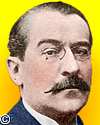
(Charles-) Émile Picard was a French mathematician whose theories did much to advance research into analysis, algebraic geometry, and mechanics. He made his most important contributions in the field of analysis and analytic geometry. He used methods of successive approximation to show the existence of solutions of ordinary differential equations. Picard also applied analysis to the study of elasticity, heat and electricity. He and Henri Poincaré have been described as the most distinguished French mathematicians in their time.
(Charles-) Émile Picard was a French mathematician whose theories did much to advance research into analysis, algebraic geometry, and mechanics. He made his most important contributions in the field of analysis and analytic geometry. He used methods of successive approximation to show the existence of solutions of ordinary differential equations. Picard also applied analysis to the study of elasticity, heat and electricity. He and Henri Poincaré have been described as the most distinguished French mathematicians in their time.
Died 11 Dec 1933 at age 68 (born 19 Jul 1865).
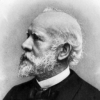
French crystallographer who formulated basic laws concerning the external morphology and internal structure of crystals. He was the son of Charles Friedel (1832-99), French mineralogist and organic chemist. He recognized, in 1892, that liquid crystals had three types of organisation (mesophases). In 1893, he became professor at the National School of the Mines in Saint-Etienne. After WW I, he moved to the University of Strasbourg. Illness caused his premature retirement in 1930.
French crystallographer who formulated basic laws concerning the external morphology and internal structure of crystals. He was the son of Charles Friedel (1832-99), French mineralogist and organic chemist. He recognized, in 1892, that liquid crystals had three types of organisation (mesophases). In 1893, he became professor at the National School of the Mines in Saint-Etienne. After WW I, he moved to the University of Strasbourg. Illness caused his premature retirement in 1930.
Died 11 Dec 1928 at age 80 (born 4 Sep 1848). quotes
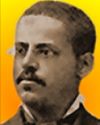
Lewis Howard Latimer was a Black-American inventor who contributed to electrical technology. After joining a Boston firm of patent solicitors as an office boy, he taught himself drafting and eventually rose in the mid-1870s to the position of chief draftman. Meanwhile, he was issued his first patent for his invention of a water-closet for railroad cars. In 1880, he moved to be draftsman and private secretary to Hiram Stevens Maxim of the U.S. Lighting Co. where he took charge of the installation of commercial incandescent lighting systems. He patented his carbon filament lamp improvements and other inventions. By 1883, he was working for the Edison Electric Light Co., where his expertise with patents was recognised with a position with its new legal department in 1889.«
Lewis Howard Latimer was a Black-American inventor who contributed to electrical technology. After joining a Boston firm of patent solicitors as an office boy, he taught himself drafting and eventually rose in the mid-1870s to the position of chief draftman. Meanwhile, he was issued his first patent for his invention of a water-closet for railroad cars. In 1880, he moved to be draftsman and private secretary to Hiram Stevens Maxim of the U.S. Lighting Co. where he took charge of the installation of commercial incandescent lighting systems. He patented his carbon filament lamp improvements and other inventions. By 1883, he was working for the Edison Electric Light Co., where his expertise with patents was recognised with a position with its new legal department in 1889.«
The Inventive Spirit of African Americans: Patented Ingenuity, by Patricia Carter Sluby. - book suggestion.
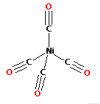
tetracarbonylnickel
German-British chemist and industrialist who perfected a method of soda manufacture by improving the Solvay alkali process. Mond devised a process for the extraction of nickel when with his assistants, he accidentally discovered metal carbonyl compounds while investigating why nickel valves were corroded by carbon monoxide. Further research led to the synthesis of more metal carbonyls, which Lord Kelvin described as "metals with wings" and to the Mond nickel carbonyl process for refining nickel. The term "fuel cell" was coined in 1889 by Ludwig Mond and Charles Langer, who attempted to build the first practical device using air and industrial coal gas, to generate electricity by reacting hydrogen with oxygen. more
The Life of Ludwig Mond, by J. M Cohen. - book suggestion.
Died 11 Dec 1784 at age 43 (born 24 Dec 1740).
Swedish astronomer.
Swedish astronomer.
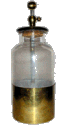
Leyden Jar, c.1885
Died 11 Dec 1748 (born c. 1700).
Ewald Georg von Kleist was a German clergyman and physicist who was dean of the Cathedral of Kamin. Kleist experimented to store electric charge efficiently, and independently discovered (1745) the Leyden jar, an early form of the capacitor, which in a different, miniature form is now an important electronic circuit component. The first Leyden jar was a stoppered glass jar partially filled with water with a wire or nail extending through the cork into the water. While holding the jar in one hand, the jar was charged by placing the end of the wire into contact with a static electricity producer, then removed. When Kleist touched the wire with his other hand, a discharge took place, giving himself a violent shock. The device was more thoroughly investigated by Pieter van Musschenbroek (1746).
Ewald Georg von Kleist was a German clergyman and physicist who was dean of the Cathedral of Kamin. Kleist experimented to store electric charge efficiently, and independently discovered (1745) the Leyden jar, an early form of the capacitor, which in a different, miniature form is now an important electronic circuit component. The first Leyden jar was a stoppered glass jar partially filled with water with a wire or nail extending through the cork into the water. While holding the jar in one hand, the jar was charged by placing the end of the wire into contact with a static electricity producer, then removed. When Kleist touched the wire with his other hand, a discharge took place, giving himself a violent shock. The device was more thoroughly investigated by Pieter van Musschenbroek (1746).
In 2010, the world's first customer delivery of a Nissan Leaf all-electric vehicle was made at by a dealer at Petaluma, California. It was assembled at Nissan's factory in Oppama, Japan, which started manufacturing the model on 22 Oct 2010. The first customer delivery in Japan took place on 22 Dec 2010, following its official introduction ceremony at the Nissan world headquarters in Yokohama, Japan, on 3 Dec 2010. The Leaf is a five-door hatchback design powered solely by a plug-in rechargeable 24 kW-h lithium ion battery with an official range on a full charge of 73 miles (117 km) according to the US EPA. That agency assigned it a 99 miles per gallon gasoline equivalent, rated the best of any midsize car, and an annual electricity cost of $561. Operating cost was estimated at about 3.5 cents per mile.«[Operating cost as estimated by Consumer Reports in Dec 2011.]
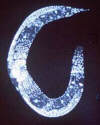
In 1998, scientists announced in the Dec 11 issue of the journal Science that they have deciphered the entire genetic blueprint of an animal - the tiny nematode worm, Caenorhabditis elegans. This is the first time genetic instructions have been spelt out for an animal that, like humans, has a nervous system, digests food, and has sex. The worm's genetic code is spelt out by 97 million genetic letters corresponding to 20,000 genes. This work is a milestone in global efforts to unravel the entire human genetic code - or genome - which is expected to be completed in 2003. The research grew into a collaboration between 1,500 scientists in 250 laboratories worldwide. The efforts were led by John Sulston, in England and Dr Bob Waterston in the U.S.

In 1998, the Mars Climate Orbiter was successfully launched on a Delta II rocket from Cape Canaveral Air Station in Florida. However, the probe disappeared on 23 Sep 1999, apparently destroyed because scientists had failed to convert English measures to metric values. The orbiter's instruments would have monitored the Martian atmosphere and image the planet's surface on a daily basis for one Martian year (1.8 Earth years) with observations of the appearance and movement of atmospheric dust and water vapor, as well as characterizing seasonal changes on the surface. Images of the surface features could provide important clues to the planet's early climate history and possible subsurface liquid water reserves.
In 1997, more than 150 countries agreed at a global warming conference in Kyoto, Japan to control the Earth's greenhouse gases. After nearly two weeks of negotiations, delegates to the conference in Kyoto, Japan announced they had reached a deal to reduce the amount of greenhouse gases produced world wide.
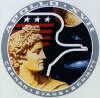
In 1972, Apollo XVII astronauts Gene Cernan and Harrison Schmitt landed on the moon for a three-day exploration, which would be the final Apollo mission to the moon.
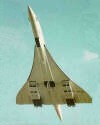
In 1967, the Concorde, a joint British-French venture and the world's first supersonic airliner, was unveiled in Toulouse, France. The French prototype Concorde 001 was displayed in a ceremony attended by 1,100 guests. Anthony Wedgwood Benn, the British technology minister, announced that the British supersonic airliners, previously known by the name Concord, would henceforth use the French spelling, adding the “e” in Concorde. This was a further sign of a committment to cooperation in the joint project by France and Britain.
The Concorde Story: 21 Years in Service, by Christopher Orlebar. - book suggestion.

In 1954, the American Nuclear Society was founded as a non-profit, educational organization by a group of individuals who recognized the need to bring together professional activities within the fields of nuclear science and technology. The mission of the society is through its members to develop and safely apply nuclear science and technology for public benefit through knowledge exchange, professional development, and enhanced public understanding.«
In 1922, the discovery of hafnium by Dirk Coster and Georg von Hevesy was announced by Neils Bohr as he concluded his Nobel Prize lecture, 'On The Structure of Atoms.'. Bohr received the news by telephone from Coster, just a few minutes before he began his lecture, that the β1 and β2 lines of hafnium had been identified on a photographic plate. (Bohr had suggested to them that looking at an ore of zirconium, a homologue, could be a good place to find the new element.) The discovery of hafnuium was shortly afterwards published in the 20 Jan 1923 issue of the journal Nature. Bohr and Hevesy had liked the name danium (after Denmark) for the new element, but the name hafnium (after the Roman name for Copenhagen) suggested by Coster prevailed at the time of publication.«
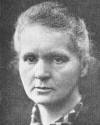
In 1911, at Stockholm, Sweden, Marie Curie became the first person to be awarded a second Nobel prize. She had isolated radium by electrolyzing molten radium chloride. At the negative electrode the radium formed an amalgam with mercury. Heating the amalgam in a silica tube filled with nitrogen at low pressure boiled away the mercury, leaving pure white deposits of radium. This second prize was for her individual achievements in Chemistry, whereas her first prize (1903), in Physics, (shared with her husband, Pierre Curie, and Henri Becquerel) for her contributions in the discovery of radium and polonium.
Madame Curie: A Biography, by Eve Curie. - book suggestion.
In 1899, Henri Becquerel presented his first report* of his investigations into the effects of magnetic fields on the radiation from radium. By 26 Mar 1900, Becquerel had made quantitative observations on collimated beams of radium radiation, emulating the 1897 work of J. J. Thomson on cathode rays. Becquerel showed that radium radiation likewise consisted of negatively charged particles, moving at 1.6 × 1010cm./sec. with a ratio of m/e = 10-7 gm./abcoul. Thus the radium radiation was of the same nature as Thompson’s discovery of high-speed charged corpuscles. The particles became known as electrons, and the radiation was named beta rays by Ernest Rutherford (1899), who also was investigating radioactive decay. «* Henri Becquerel, 'Influence d'un champ magnétique sur le rayonnement des corps radio-actifs', Comptes Rendus de l’Académie des Sciences (11 Dec 1899), 129, 995-1001.
In 1888, black American inventor, H. Creamer was issued a U.S. patent for a Steam Trap Feeder (No. 394,463). He also patented five steam traps between 1887 and 1893.
Great Discoveries and Inventions by African-Americans, by David M. Foy. - book suggestion.
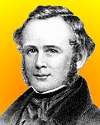
Wells
In 1844, the first dental anaesthetic, nitrous oxide ("laughing gas") was used by Dr. John M. Riggs for a tooth extraction on Dr. Horace Wells. The previous day, Wells had attended a demonstration of the effects of inhaling nitrous oxide gas, that was being conducted by a travelling lecturer, Gardner Quincy Colton. At this demonstration, Horace wells noticed that a man intoxicated by the nitrous oxide suffered a laceration to his leg, and claimed to feel no pain. To test the potential of nitrous oxide as an anaesthetic, Wells arranged for Colton to administer nitrous oxide to Wells himself, while one of Wells' associates (John M. Riggs) successfully extracted one of his teeth.
The History of Surgical Anesthesia, by Thomas E Keys. - book suggestion.

In 1769, Venetian blinds were patented in London by Edward Bevan in England.
In 1719, the first recorded sighting of the Aurora Borealis took place in New England. The report said that a mysterious face seemed to appear in the atmosphere. It caused considerable alarm, as being regarded by many as a precursor of the last judgment. Most aurora borealis displays occur in September and October and again in March and April. The green, red, and frost-white light displays occur most frequently when there is a great deal of sunspot activity. "This evening, about eight o'clock there arose a bright and red light in the E.N.E. like the light which arises from a house on fire ... which soon spread itself through the heavens from east to west, reaching about 43 or 44 degrees in height, and was equally broad."




