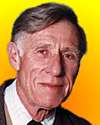
Born 21 Jan 1912; died 15 Oct 2000 at age 88.
Konrad Emil Bloch was a German-American biochemist who shared who shared the 1964 Nobel Prize for Physiology or Medicine with Feodor Lynen for their discoveries concerning the natural synthesis of cholesterol and of fatty acids. Bloch identified the chemical process by which the body turns acetic acid into cholesterol. He discovered the point at which it is possible to regulate the amount of cholesterol the body produces. He discovered that high levels of cholesterol in the bloodstream cause fatty deposits on the inner walls of arteries, which may lead to constricted blood flow and increase the chances of blood clotting and heart attack.
Konrad Emil Bloch was a German-American biochemist who shared who shared the 1964 Nobel Prize for Physiology or Medicine with Feodor Lynen for their discoveries concerning the natural synthesis of cholesterol and of fatty acids. Bloch identified the chemical process by which the body turns acetic acid into cholesterol. He discovered the point at which it is possible to regulate the amount of cholesterol the body produces. He discovered that high levels of cholesterol in the bloodstream cause fatty deposits on the inner walls of arteries, which may lead to constricted blood flow and increase the chances of blood clotting and heart attack.
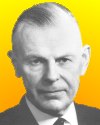
Born 21 Jan 1908; died 4 Jul 1987 at age 79.
Bengt Georg Daniel Strömgren was a Danish astrophysicist who pioneered the present-day knowledge of the gas clouds in space. Researching for his theory of the ionized gas clouds around hot stars, he found relations between the gas density, the luminosity of the star, and the size of the "Strömgren sphere" of ionized hydrogen around it. He surveyed such H II regions in the Galaxy, and he also did important work on stellar atmospheres and ionization in stars.
Bengt Georg Daniel Strömgren was a Danish astrophysicist who pioneered the present-day knowledge of the gas clouds in space. Researching for his theory of the ionized gas clouds around hot stars, he found relations between the gas density, the luminosity of the star, and the size of the "Strömgren sphere" of ionized hydrogen around it. He surveyed such H II regions in the Galaxy, and he also did important work on stellar atmospheres and ionization in stars.
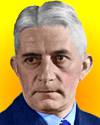
Born 21 Jan 1887; died 11 Jun 1967 at age 80. quotes
Russo-German-American psychologist who significantly developed Gestalt psychology, in which learning, perception, and other mental processes were studied incorporated as part of a structured whole. While director of the Anthropoid Station at Tenerife, Canary Islands (1913-20), Köhler studied intelligent behavior in primates conducting experiments with problem-solving in apes. His tests indicated that chimpanzees solved problems by understanding, rather than continuous random trial-and-error. For example, to reach fruit hanging out of reach in its pen, a chimpanzee learned to use sticks to get the food, or stacked boxes to get it. Then, if tables were substituted for the boxes, the chimp would immediately use them instead.«
Russo-German-American psychologist who significantly developed Gestalt psychology, in which learning, perception, and other mental processes were studied incorporated as part of a structured whole. While director of the Anthropoid Station at Tenerife, Canary Islands (1913-20), Köhler studied intelligent behavior in primates conducting experiments with problem-solving in apes. His tests indicated that chimpanzees solved problems by understanding, rather than continuous random trial-and-error. For example, to reach fruit hanging out of reach in its pen, a chimpanzee learned to use sticks to get the food, or stacked boxes to get it. Then, if tables were substituted for the boxes, the chimp would immediately use them instead.«
Born 21 Jan 1874; died 5 Jul 1932 at age 58.
French mathematician whose study of irrational numbers and whose concept to divide the notion of continuity into upper and lower semi-continuity greatly influenced the French School of Mathematics. His doctoral thesis led to the solution of the problem of the characteristic property of limited functions of continuous functions and helped establish the theory of functions of real variables.
French mathematician whose study of irrational numbers and whose concept to divide the notion of continuity into upper and lower semi-continuity greatly influenced the French School of Mathematics. His doctoral thesis led to the solution of the problem of the characteristic property of limited functions of continuous functions and helped establish the theory of functions of real variables.
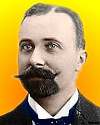
Born 21 Jan 1868; died 8 Feb 1946 at age 78.
German chemist who discovered aspirin, while a researcher for Bayer & Co. At first, he considered pharmacy but turned to chemistry. He earned a Ph.D. degree, then joined Friedrich Bayer's company in 1894. He was interest in finding a better pain reliever for his father's chronic rheumatism, to replace the use of salicylic acid which had a bad taste and caused stomach upset. On 10 Aug 1897, he formed a derivative, acetylsalicylic acid by acetylating salicylic acid with acetic acid. Company testing showed it was a safe and efffective drug for pain relief, lowering fever, and as an anti-inflammatory. It was marketed from 1899. Hoffman's name is on the patent, and he became head of the pharmaceutical marketing department, but received no financial share of its worldwide success. In 1928, he retired to Switzerland.«
German chemist who discovered aspirin, while a researcher for Bayer & Co. At first, he considered pharmacy but turned to chemistry. He earned a Ph.D. degree, then joined Friedrich Bayer's company in 1894. He was interest in finding a better pain reliever for his father's chronic rheumatism, to replace the use of salicylic acid which had a bad taste and caused stomach upset. On 10 Aug 1897, he formed a derivative, acetylsalicylic acid by acetylating salicylic acid with acetic acid. Company testing showed it was a safe and efffective drug for pain relief, lowering fever, and as an anti-inflammatory. It was marketed from 1899. Hoffman's name is on the patent, and he became head of the pharmaceutical marketing department, but received no financial share of its worldwide success. In 1928, he retired to Switzerland.«
Aspirin: The Remarkable Story of a Wonder Drug, by Diarmuid Jeffreys. - book suggestion.
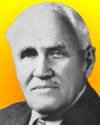
Born 21 Jan 1862; died 12 May 1946 at age 84. quotes
Robert Almer Harper was an American botanist who studied the cell (cytology) in fungi. He trained with leaders in the fields in Germany for his Ph.D. Harper studied the multinucleate cell of the ascus, and how the fungus ascospore developed. The puzzle he addressed was the so-called “free cell formation” whereby eight nuclei could each cut out its own share of cytoplasm to form eight apparently equal, uniformly marked, sexually-produced spores in the ripe ascus of fungi in the class Ascomycetes. In experiments he carried out in the 1920s, while chief of the scientific directors of the New York Botanical Gardens, Harper sought improved methods of treating diseased plants. His limited publications represent only such material that he felt was important to contribute, yet he was regarded as among the great research botanists in his time.«
Robert Almer Harper was an American botanist who studied the cell (cytology) in fungi. He trained with leaders in the fields in Germany for his Ph.D. Harper studied the multinucleate cell of the ascus, and how the fungus ascospore developed. The puzzle he addressed was the so-called “free cell formation” whereby eight nuclei could each cut out its own share of cytoplasm to form eight apparently equal, uniformly marked, sexually-produced spores in the ripe ascus of fungi in the class Ascomycetes. In experiments he carried out in the 1920s, while chief of the scientific directors of the New York Botanical Gardens, Harper sought improved methods of treating diseased plants. His limited publications represent only such material that he felt was important to contribute, yet he was regarded as among the great research botanists in his time.«
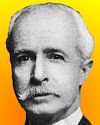
Born 21 Jan 1857; died 8 Sep 1920 at age 63.
American geologist who advanced understanding in the field of petrology - the study of the origin, composition, structure, and alteration of rocks. Around 1880, he was one of the first in the U.S. to study thin rock sections with a microscope. He explored and mapped the geology of Yellowstone National Park during seven field seasons (1883-1890). From this study he introduced original ideas concerning the range of crystal line textures and mineral composition of granular igneous rocks. He proposed that physical and chemical conditions causing differences in the formationof neighbouring igneous rock from the same igneous magma. Further, he rejected the prevailing view that granular rocks were only formed in large masses at depth.«
American geologist who advanced understanding in the field of petrology - the study of the origin, composition, structure, and alteration of rocks. Around 1880, he was one of the first in the U.S. to study thin rock sections with a microscope. He explored and mapped the geology of Yellowstone National Park during seven field seasons (1883-1890). From this study he introduced original ideas concerning the range of crystal line textures and mineral composition of granular igneous rocks. He proposed that physical and chemical conditions causing differences in the formationof neighbouring igneous rock from the same igneous magma. Further, he rejected the prevailing view that granular rocks were only formed in large masses at depth.«
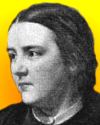
Born 21 Jan 1840; died 7 Jan 1912 at age 71.
Sophia Louisa Jex-Blake was a British physician though whose determined efforts Parliament passed legislation to give women the right to have access to a medical education. She had spent years in her own attempt to enrol in a Scottish medical school. Eventually, she held a license at age 37 and opened a private practice in Scotland the following year. She was the country's first female doctor. She succeeded in having a medical school for women opened in London (1874) and a few years later, she established one in Edinburgh (1886). She made it possible for women to enter the medical profession to practice medicine and surgery.«
Sophia Louisa Jex-Blake was a British physician though whose determined efforts Parliament passed legislation to give women the right to have access to a medical education. She had spent years in her own attempt to enrol in a Scottish medical school. Eventually, she held a license at age 37 and opened a private practice in Scotland the following year. She was the country's first female doctor. She succeeded in having a medical school for women opened in London (1874) and a few years later, she established one in Edinburgh (1886). She made it possible for women to enter the medical profession to practice medicine and surgery.«
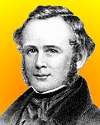
Born 21 Jan 1815; died 24 Jan 1848 at age 33.
American dentist, a pioneer in the use of surgical anesthesia. On 10 Dec 1844, Wells saw a demonstration of the euphoric effects of inhaling nitrous oxide given by a travelling showman, Gardner Quincy Colton. At the show, he noticed a man under its influence had stumbled, injuring his leg, but who claimed to feel no pain. Next day, Wells had Colton administer nitrous oxide to him while having a tooth extracted by an associate. This experiment was a success, and Wells adopted the gas in his dental practice. In Jan 1845, he presented his procedure to a medical school class at Harvard University, but the gas was removed too soon from the patient, who then complained of pain. Thus the demonstration failed, and he lost his rightful recognition.
American dentist, a pioneer in the use of surgical anesthesia. On 10 Dec 1844, Wells saw a demonstration of the euphoric effects of inhaling nitrous oxide given by a travelling showman, Gardner Quincy Colton. At the show, he noticed a man under its influence had stumbled, injuring his leg, but who claimed to feel no pain. Next day, Wells had Colton administer nitrous oxide to him while having a tooth extracted by an associate. This experiment was a success, and Wells adopted the gas in his dental practice. In Jan 1845, he presented his procedure to a medical school class at Harvard University, but the gas was removed too soon from the patient, who then complained of pain. Thus the demonstration failed, and he lost his rightful recognition.
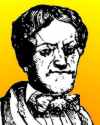
woodcut
Born 21 Jan 1743; died 2 Jul 1798 at age 55. quotes
American pioneer of steamboat transportation who produced serviceable steamboats before Robert Fulton. Fitch found private support, then rapidly built an engine with features of both Watt's and Newcomen's steam engines. He moved from mistake to mistake until he'd made our first steamboat. It was an odd machine - driven by a rack of Indian-canoe paddles. Yet, by the summer of 1790, Fitch used it in a successful passenger line between Philadelphia and Trenton. On 26 Aug 1791, John Fitch was granted a U.S. patent for the steamboat. He logged thousands of miles at six to eight mph carrying passengers that summer. However, it was not a commercial success, and a few years later, broken by failure, an alcoholic, he turned to suicide with opium pills.
American pioneer of steamboat transportation who produced serviceable steamboats before Robert Fulton. Fitch found private support, then rapidly built an engine with features of both Watt's and Newcomen's steam engines. He moved from mistake to mistake until he'd made our first steamboat. It was an odd machine - driven by a rack of Indian-canoe paddles. Yet, by the summer of 1790, Fitch used it in a successful passenger line between Philadelphia and Trenton. On 26 Aug 1791, John Fitch was granted a U.S. patent for the steamboat. He logged thousands of miles at six to eight mph carrying passengers that summer. However, it was not a commercial success, and a few years later, broken by failure, an alcoholic, he turned to suicide with opium pills.
Poor John Fitch: Inventor of the Steamboat, by Thomas Boyd. - book suggestion.

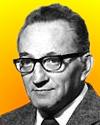
Died 21 Jan 1983 at age 68 (born 14 Dec 1914).
American microbiologist and geneticist who discovered that only one of two strands of molecules that make up DNA, carried the genetic information to produce new substances. The carrier was called ribonucleic acid (RNA). In 1962, he developed a technique that allowed the detection of specific RNA and DNA molecules in cells. This technique, called nucleic acid hybridization, is credited for helping to lay the groundwork for current advances in recombinant DNA technology. Much earlier, his Ph.D. thesis (1944) was the first work to establish that genes are activated and deactivated by compounds that he called inducers, which thus radically affect the pattern of proteins that a cell fabricates without actually altering the genes themselves.
American microbiologist and geneticist who discovered that only one of two strands of molecules that make up DNA, carried the genetic information to produce new substances. The carrier was called ribonucleic acid (RNA). In 1962, he developed a technique that allowed the detection of specific RNA and DNA molecules in cells. This technique, called nucleic acid hybridization, is credited for helping to lay the groundwork for current advances in recombinant DNA technology. Much earlier, his Ph.D. thesis (1944) was the first work to establish that genes are activated and deactivated by compounds that he called inducers, which thus radically affect the pattern of proteins that a cell fabricates without actually altering the genes themselves.
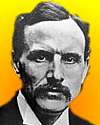
Died 21 Jan 1930 at age 66 (born 18 Apr 1863).
Hugh Longbourne Callendar was an English physicist who was famous for work in calorimetry, thermometry and especially, the thermodynamic properties of steam. He published the first steam tables (1915). In 1886, he invented the platinum resistance thermometer using the electrical resistivity of platinum, enabling the precise measurement of temperatures. He also invented the electrical continuous-flow calorimeter, the compensated air thermometer (1891), a radio balance (1910) and a rolling-chart thermometer (1897) that enabled long-duration collection of climatic temperature data. His son, Guy S. Callendar linked climatic change with increases in carbon dioxide (CO2) resulting from mankind's burning of carbon fuels (1938), known as the Callendar effect, part of the greenhouse effect.«
Hugh Longbourne Callendar was an English physicist who was famous for work in calorimetry, thermometry and especially, the thermodynamic properties of steam. He published the first steam tables (1915). In 1886, he invented the platinum resistance thermometer using the electrical resistivity of platinum, enabling the precise measurement of temperatures. He also invented the electrical continuous-flow calorimeter, the compensated air thermometer (1891), a radio balance (1910) and a rolling-chart thermometer (1897) that enabled long-duration collection of climatic temperature data. His son, Guy S. Callendar linked climatic change with increases in carbon dioxide (CO2) resulting from mankind's burning of carbon fuels (1938), known as the Callendar effect, part of the greenhouse effect.«
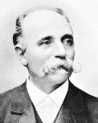
1906 (EB)
Died 21 Jan 1926 at age 82 (born 7 Jul 1843). quotes
Italian physician and cytologist who, in 1873, published his key discovery, the use of silver salts to stain samples for microscope slides. Thus new details of cellular structure components were revealed, still known by such names as the Golgi complex. Golgi distinguished different types of nerve cells in the brain (Golgi cells) and described the complex structure of a network of tubules and granules in the cytoplasm of most cells (the Golgi body or apparatus) that is now known to be involved in secretion. Investigations into the fine structure of the nervous system earned him (with the Spanish histologist Santiago Ramón y Cajal) the 1906 Nobel Prize for Physiology or Medicine.
Italian physician and cytologist who, in 1873, published his key discovery, the use of silver salts to stain samples for microscope slides. Thus new details of cellular structure components were revealed, still known by such names as the Golgi complex. Golgi distinguished different types of nerve cells in the brain (Golgi cells) and described the complex structure of a network of tubules and granules in the cytoplasm of most cells (the Golgi body or apparatus) that is now known to be involved in secretion. Investigations into the fine structure of the nervous system earned him (with the Spanish histologist Santiago Ramón y Cajal) the 1906 Nobel Prize for Physiology or Medicine.
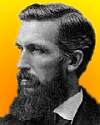

American inventor who filed his ideas for a telephone at the patent office (14 Feb 1876) mere hours after Alexander Graham Bell. In a famous legal battle, Bell was given priority. Gray later worked for Western Electric, where he designed the telegraph printer, the answer-back call-box of the A.D.T. System, and the needle annunciator, among other inventions. He was also the accidental creator of the first electronic musical instrument, a basic single note oscillator using a self-vibrating electromagnetic circuit. To hear that note, he made a simple loudspeaker device with a vibrating diaphragm in a magnetic field. His first “musical telegraph,” or “harmonic telegraph” had sufficient single-note circuits to play two octaves, and later he added a simple tone wheel control. He toured with this invention in 1874.«[Image right: Gray's harmonic telegraph.]
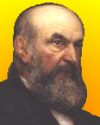
Died 21 Jan 1892 at age 72 (born 5 Jun 1819). quotes
English astronomer and mathematician, one of two people who independently discovered the planet Neptune. On 3 Jul 1841, Adams had entered in his journal: “Formed a design in the beginning of this week of investigating, as soon as possible after taking my degree, the irregularities in the motion of Uranus ... in order to find out whether they may be attributed to the action of an undiscovered planet beyond it.” Adams made many other contributions to astronomy, notably his studies of the Leonid meteor shower (1866) where he showed that the orbit of the meteor shower was very similar to that of a comet. He was able to correctly conclude that the meteor shower was associated with the comet. Adams considered the motion of the Moon, and studied terrestrial magnetism.
English astronomer and mathematician, one of two people who independently discovered the planet Neptune. On 3 Jul 1841, Adams had entered in his journal: “Formed a design in the beginning of this week of investigating, as soon as possible after taking my degree, the irregularities in the motion of Uranus ... in order to find out whether they may be attributed to the action of an undiscovered planet beyond it.” Adams made many other contributions to astronomy, notably his studies of the Leonid meteor shower (1866) where he showed that the orbit of the meteor shower was very similar to that of a comet. He was able to correctly conclude that the meteor shower was associated with the comet. Adams considered the motion of the Moon, and studied terrestrial magnetism.
The Neptune File: A Story of Astronomical Rivalry and the Pioneers of Planet Hunting, by Tom Standage. - book suggestion.
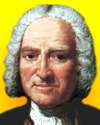
Died 21 Jan 1789 at age 65 (baptized 8 Dec 1723). quotes
Paul-Henri Thiry, Baron d'Holbach (born Paul Heinrich Dietrich, Baron von Holbach) was a German-French philosopher of science who skillfully popularized technical and scientific information in hundreds of articles he wrote for the Encyclopédie, in fields ranging from psychology, history of religion, anthropology and ethnology. He was born in Germany, studied at the University of Leiden, moved to Paris (1749), and naturalized as a French citizen. He subsequently became known by a Frenchified version of his birth name, and inherited his title and a large fortune in 1753. D’Holbach published his methodical magus opus in 1770. He wrote in his Système de la Nature (System of Nature), about the laws of the physical and moral worlds, while affirming materialism and atheism. (He was one of the first European self-declared atheists.)«[Sources differ on his dates. His date of birth is unknown, and his date of baptism is sometimes given instead.]
Paul-Henri Thiry, Baron d'Holbach (born Paul Heinrich Dietrich, Baron von Holbach) was a German-French philosopher of science who skillfully popularized technical and scientific information in hundreds of articles he wrote for the Encyclopédie, in fields ranging from psychology, history of religion, anthropology and ethnology. He was born in Germany, studied at the University of Leiden, moved to Paris (1749), and naturalized as a French citizen. He subsequently became known by a Frenchified version of his birth name, and inherited his title and a large fortune in 1753. D’Holbach published his methodical magus opus in 1770. He wrote in his Système de la Nature (System of Nature), about the laws of the physical and moral worlds, while affirming materialism and atheism. (He was one of the first European self-declared atheists.)«[Sources differ on his dates. His date of birth is unknown, and his date of baptism is sometimes given instead.]
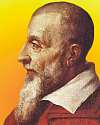
Died 21 Jan 1609 at age 68 (born 5 Aug 1540).
French scholar who was one of the founders of the science of chrolonology. Like Roger de Losinga, Bishop of Hereford, centuries before, Scaliger recognized that combining the three cycles of the 28-year solar cycle (S), the 19-year cycle of Golden Numbers (G) and the 15-year indiction cycle (I) produced one greater cycle of 7980 years (28×9×15). Scalinger applied this fact, called a Julian cycle, in his attempt to resolve a patchwork of historical eras and he used notation (S, G, I) to characterize years. The year of Christ's birth had been determined by Dionysius Exigus to be the number 9 on the solar cycle, by Golden Number 1, and by 3 of the indiction cycle, thus (9, 1, 3), which was 4713 of his chronological era. Hence, the year (1, 1, 1) was 4713 B.C. (later adopted as the initial epoch for the Julian day numbers).«
French scholar who was one of the founders of the science of chrolonology. Like Roger de Losinga, Bishop of Hereford, centuries before, Scaliger recognized that combining the three cycles of the 28-year solar cycle (S), the 19-year cycle of Golden Numbers (G) and the 15-year indiction cycle (I) produced one greater cycle of 7980 years (28×9×15). Scalinger applied this fact, called a Julian cycle, in his attempt to resolve a patchwork of historical eras and he used notation (S, G, I) to characterize years. The year of Christ's birth had been determined by Dionysius Exigus to be the number 9 on the solar cycle, by Golden Number 1, and by 3 of the indiction cycle, thus (9, 1, 3), which was 4713 of his chronological era. Hence, the year (1, 1, 1) was 4713 B.C. (later adopted as the initial epoch for the Julian day numbers).«
In 1988, Retin-A got a boost when a study published in the Journal of the American Medical Association said the anti-acne drug could also reduce wrinkles caused by exposure to the sun.
In 1984, Britain's first test-tube triplets - a girl and two boys - were born to a couple in London. The mother was Anne Maaye.

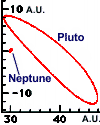

In 1976, commercial supersonic passenger service began with two simultaneous Concorde jet airplane flights. One left London's Heathrow Airport for Bahrain in the Persian Gulf. The other flew from Orly Airport outside Paris to Rio de Janeiro, Brazil, via Senegal, West Africa. With engines twice as powerful as those of normal jets, their 1,350 mph cruising speed was double the speed of sound (Mach 2.04), and halved air travel time, at a cruise altitude of 60,000 feet (17,700 m). Their huge production cost was shared between Britain and France governments. Technical challenges included building the aircraft's frame to withstand immense pressure from shock waves and endure high temperatures from air friction. The Concorde had a delta wing configuration, and was the first civil airliner to be equipped with an analogue fly-by-wire flight control system. Regular transatlantic flights from Europe began to Washington D.C. on 24 May 1976 and service to New York on 22 Nov 1977. The final commercial Concorde flight was on 24 Oct 2003.«
The Concorde Story: 21 Years in Service, by Christopher Orlebar. - book suggestion.

In 1970, the first wide body jet was put into service as the Pan American Airways Boeing 747 flew its first flight between from New York's John F. Kennedy Airport and Heathrow Airport in London, England. This "jumbo jet" had a cabin almost twice as wide as a 707 and a length of 231 feet. The cockpit and first-class section were above the first floor of passengers. With the ability to carry more than 400 passengers more than 5,500 miles, the 747 opened up economic long-distance travel to the masses.
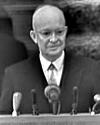
In 1957, NBC taped President Dwight D. Eisenhower's oath of office for his second term inauguration. It was replayed almost immediately to a national audience. CBS had made the first-ever broadcast use of videotape on 30 Nov 1956. with a rebroadcast to the West Coast of the 15-min Douglas Edwards and the News program. It was recorded earlier on 2-inch tape with an Ampex Mark IV machine. The videotape recorder invented by Ray Dolby was ready in Feb 1956 when Ampex had a successful in-house demonstration. After it was introduced at the annual CBS affiliates meeting in Chicago on 14 Apr 1956, taped programming quickly became the normal method in broadcasting«
Video Revolutions: On the History of a Medium, by Michael Z. Newman. - book suggestion.

In 1954, the first atomic submarine, the U.S.S. Nautilus, was launched at Groton, Connecticut. It was commissioned later in the year, on 30 Sep 1954. Its nuclear propulsion system was a landmark in the history of naval engineering and submersible craft. All vessels previously known as “submarines” were in fact only submersible craft. Because of the nuclear power plant, the Nautilus could stay submerged for months at a time, unlike diesel-fueled subs, whose engines required vast amounts of oxygen. Nautilus demonstrated her capabilities in 1958 when she sailed beneath the Arctic icepack to the North Pole. Scores of nuclear submarines followed Nautilus, replacing the nation’s diesel boat fleet. After patrolling the seas until 1980, the Nautilus returned to Groton as a museum.
In 1941, the commercial production of magnesium first began in the U.S. at Freeport, Texas. Magnesium, the lightest of all structural elements, was extracted from seawater through an electrolytic process. Herbert H. Dow first extracted the metal from brine in Midland, Michigan, in 1916. Dow’s Freeport magnesium plant played a key role during WW II when the lightweight metal became a critical alloy for airplanes. U.S. military aircraft production escalated, and as much as 2,000 pounds of magnesium was needed per plane. Today, magnesium alloys are die cast into a variety of automotive components. On 20 Nov 1998, Dow Chemical Co. announced it would shut down production at Freeport due to crippling damage during severe Gulf Coast storms.
In 1930, Thomas A. Edison was issued a patent for the "Production of Molded Articles" (No. 1,744,534) and a method of "Mounting for Diaphragms of Sound Boxes" (No. 1,744,533).
In 1919, Thomas A. Edison was issued a patent for a "Swaging Machine" (No. 1,292,277).
In 1880, Memphis, Tennessee begins construction of the first independent municipal sewage system in the U.S.
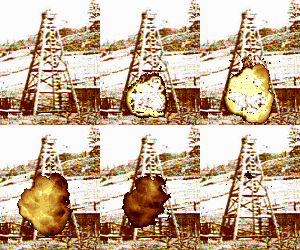
In 1865, for the first time in the U.S., an oil well was shot by torpedo near Titusville, Pennsylvania, by Col. E.A.L. Roberts on the Ladies Well using 8 pounds of black powder. The torpedo, which is an iron case with up to 15-20 pounds of powder, is lowered into a well, down to the spot, as near as can be ascertained, where it is necessary to explode it. It is then exploded by means of a cap on the torpedo, connected with the top of the shell by a wire. The object of the torpedo is to clean out all the deposits at the bottom of the well such as gravel, pieces of seed-bag, etc., as well as to open the fissures, where the oil comes through. These frequently become perfectly clogged with paraffine, and other matter that effectually prevents the production of oil from the well.
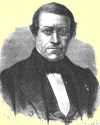
Wheatstone
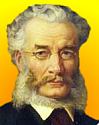
Cooke
Sir Charles Wheatstone, by Margaret Wilson and Brian Bowers (Ed.). - book suggestion.

In 1807, the London Institution received a royal charter signed by King George III, to "promote the diffusion of Science, Literature, and the Arts, by means of Lectures and Experiments, and by easy access to an extensive collection of books, both ancient and modern, in all languages." The full name in the charter was the "London Institution for the Advancement of Literature and The Diffusion of Useful Knowledge." The first president was Sir Francis Baring. Its incorporation came after the Royal Society (1663) and Royal Institution (1800). The institution had an extensive lecture programme. Instruction in practical chemistry was given in its laboratory, and significant chemistry research was done there through the 19th century.«
In 1799, Edward Jenner's smallpox vaccination was introduced.
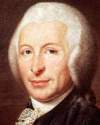

In 1677, the first medical book was published in the U.S. The medical pamphlet was published in Boston, Mass.
In 1472, the great daylight comet of 1472 passed within 10.5 million km of earth.




