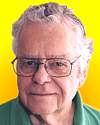

Kenneth Linn Franklin was an American astronomer who co-discovered that the giant planet Jupiter emits radio waves (1955). Dr. Bernard F. Burke and Franklin, astronomers at the Carnegie Institution in Washington, were scanning the sky for radio waves from galaxies. By chance, they found a radio signal that resembled short bursts of static, similar to interference by lightning on home radios. After weeks of study, finding the signals were periodic, four minutes earlier each day, they pin-pointed Jupiter as the source. Never before had radio sounds from a planet in our solar system been detected. Later study showed the radio waves were circularly polarized, so a magnetic field was involved. The discovery was announced on 6 Apr 1955.«
An Introduction to Radio Astronomy, by Bernard F. Burke and Francis Graham-Smith. - book suggestion.
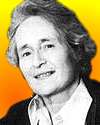
Born 25 Mar 1921; died 16 May 2007 at age 86. quotes
Mary Douglas (née Tew) was an English anthropologist who was one her era’s most influential anthropologists and scholars of classification systems and institutions. In Purity and Danger (1966), she made a cross-cultural study of ritual systems of cleanliness, pollution, and taboo. She considered these did not merely establish hygienic conditions but went further to establish order with rules of behaviours; rituals bind people together. In social anthropology, she was much influenced by Émile Durkheim. However, she disagreed him associating purity with “the sacred” and impurity with “the profane,” which she questioned concerning the “busy scrubbings” of housework. She held that “dirt is essentially disorder.”
Mary Douglas (née Tew) was an English anthropologist who was one her era’s most influential anthropologists and scholars of classification systems and institutions. In Purity and Danger (1966), she made a cross-cultural study of ritual systems of cleanliness, pollution, and taboo. She considered these did not merely establish hygienic conditions but went further to establish order with rules of behaviours; rituals bind people together. In social anthropology, she was much influenced by Émile Durkheim. However, she disagreed him associating purity with “the sacred” and impurity with “the profane,” which she questioned concerning the “busy scrubbings” of housework. She held that “dirt is essentially disorder.”
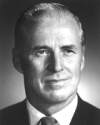
Born 25 Mar 1914. quotes
American agricultural scientist, plant pathologist, and winner of the Nobel Prize for Peace in 1970. He was one of those who laid the groundwork of the so-called Green Revolution, the agricultural technological advance that promised to alleviate world hunger. For decades, he collaborated with Mexican scientists on problems of wheat improvement. Later, he also collaborated with scientists from other parts of the world, especially from India and Pakistan, in adapting the new wheats to new lands and in gaining acceptance for their production.
American agricultural scientist, plant pathologist, and winner of the Nobel Prize for Peace in 1970. He was one of those who laid the groundwork of the so-called Green Revolution, the agricultural technological advance that promised to alleviate world hunger. For decades, he collaborated with Mexican scientists on problems of wheat improvement. Later, he also collaborated with scientists from other parts of the world, especially from India and Pakistan, in adapting the new wheats to new lands and in gaining acceptance for their production.
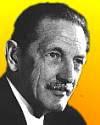
Born 25 Mar 1901; died 22 Feb 2002 at age 100.
New Zealander social anthropologist whose major research was with the Maori and other peoples of Oceania and Southeast Asia. Firth conducted his first research in the British Solomon Islands 1928-29. The economic organization of primitive societies became one of Firth's primary interests as indicated by his works on the Kauri gum industry and the fishing industry of Malaysia. Among his other chief interests were social structure and religion, especially of the Tikopia of the Solomon Islands, and the anthropological treatment of symbols. Firth was also well know for his work concerning sacrifices. In 1963, Raymond began his work on the influence of economics on the ideology of sacrifice.
New Zealander social anthropologist whose major research was with the Maori and other peoples of Oceania and Southeast Asia. Firth conducted his first research in the British Solomon Islands 1928-29. The economic organization of primitive societies became one of Firth's primary interests as indicated by his works on the Kauri gum industry and the fishing industry of Malaysia. Among his other chief interests were social structure and religion, especially of the Tikopia of the Solomon Islands, and the anthropological treatment of symbols. Firth was also well know for his work concerning sacrifices. In 1963, Raymond began his work on the influence of economics on the ideology of sacrifice.
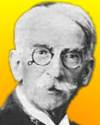
Born 25 Mar 1865; died 24 Oct 1940 at age 75.
French physicist who investigated magnetism and determined the Weiss magneton unit of magnetic moment. Weiss's chief work was on ferromagnetism. Hypothesizing a molecular magnetic field acting on individual atomic magnetic moments, he was able to construct mathematical descriptions of ferromagnetic behaviour, including an explanation of such magnetocaloric phenomena as the Curie point. His theory succeeded also in predicting a discontinuity in the specific heat of a ferromagnetic substance at the Curie point and suggested that spontaneous magnetization could occur in such materials; the latter phenomenon was later found to occur in very small regions known as Weiss domains. His major published work was Le magnetisme ( 1926).
French physicist who investigated magnetism and determined the Weiss magneton unit of magnetic moment. Weiss's chief work was on ferromagnetism. Hypothesizing a molecular magnetic field acting on individual atomic magnetic moments, he was able to construct mathematical descriptions of ferromagnetic behaviour, including an explanation of such magnetocaloric phenomena as the Curie point. His theory succeeded also in predicting a discontinuity in the specific heat of a ferromagnetic substance at the Curie point and suggested that spontaneous magnetization could occur in such materials; the latter phenomenon was later found to occur in very small regions known as Weiss domains. His major published work was Le magnetisme ( 1926).
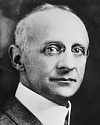
Born 25 Mar 1863; died 2 May 1946 at age 83.
American pathologist and bacteriologist who isolated (1899) a common strain (Shigella dysenteriae) of dysentery bacillus and developed a curative serum for cerebrospinal meningitis (1907). He directed a research team that identified the poliomyelitis virus. At the Rockefeller Institute of Medical Research, he was director of laboratories (1903-35), and director of the Institute (1920-35). For thirty-five years he cultivated the spirit and guided the work of the institute, while implementing John D. Rockefeller's vision of bringing medicine into the realm of science.
American pathologist and bacteriologist who isolated (1899) a common strain (Shigella dysenteriae) of dysentery bacillus and developed a curative serum for cerebrospinal meningitis (1907). He directed a research team that identified the poliomyelitis virus. At the Rockefeller Institute of Medical Research, he was director of laboratories (1903-35), and director of the Institute (1920-35). For thirty-five years he cultivated the spirit and guided the work of the institute, while implementing John D. Rockefeller's vision of bringing medicine into the realm of science.
Born 25 Mar 1848; died 12 Nov 1908 at age 60.
American zoologist known for his research on the anatomy and embryology of marine animals, especially the tunicates, crustaceans (e.g., crayfish), and mollusks (notably the oyster). He was one of the first morphologists to accept Charles Darwin's evolutionary concepts. Brooks advocated the study of marine organisms in their natural habitats. Though remaining in the tradition of 19th-century descriptive morphology, through his more able students, he influenced the transition to an experimental, causal approach to 20th-century biology, particularly in cytology, genetics, and embryology. He founded the Chesapeake Zoological Laboratory (1878) and championed the conservation of the Chesapeake Bay oyster.
American zoologist known for his research on the anatomy and embryology of marine animals, especially the tunicates, crustaceans (e.g., crayfish), and mollusks (notably the oyster). He was one of the first morphologists to accept Charles Darwin's evolutionary concepts. Brooks advocated the study of marine organisms in their natural habitats. Though remaining in the tradition of 19th-century descriptive morphology, through his more able students, he influenced the transition to an experimental, causal approach to 20th-century biology, particularly in cytology, genetics, and embryology. He founded the Chesapeake Zoological Laboratory (1878) and championed the conservation of the Chesapeake Bay oyster.
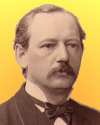
Born 25 Mar 1844; died 10 Oct 1930 at age 86.
(Gustav Heinrich) Adolf Engler was a German botanist famous for his system of plant classification and for his expertise as a plant geographer. He emphasized the importance of geological history in the study of plant geography, and worked out an influential system of plant classification. He wrote several works on plant geography and taxonomy, and collaborated with Karl Prantl on the early volumes of Die natürlichen Pflanzenfamilien (32 vol. in 17, 1887–1909) and edited the early volumes of Das Pflanzenreich. The Engler and Prantl system of flowering plant classification was the principal one in use until the 1970s.
(Gustav Heinrich) Adolf Engler was a German botanist famous for his system of plant classification and for his expertise as a plant geographer. He emphasized the importance of geological history in the study of plant geography, and worked out an influential system of plant classification. He wrote several works on plant geography and taxonomy, and collaborated with Karl Prantl on the early volumes of Die natürlichen Pflanzenfamilien (32 vol. in 17, 1887–1909) and edited the early volumes of Das Pflanzenreich. The Engler and Prantl system of flowering plant classification was the principal one in use until the 1970s.
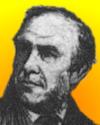
Born 25 Mar 1833; died 12 Jun 1885 at age 52.
British engineer noted for his work in establishing units of electrical measurement. After earning an M.A. (1851), he worked for the next 10 years with engineering firms engaged in the design and manufacture of submarine telegraph cables and equipment for laying them. In 1861 his friend William Thomson (later Lord Kelvin) procured Jenkin's appointment as reporter for the Committee of Electrical Standards of the British Association for the Advancement of Science. He helped compile and publish reports that established the ohm as the absolute unit of electrical resistance and described methods for precise resistance measurements.
British engineer noted for his work in establishing units of electrical measurement. After earning an M.A. (1851), he worked for the next 10 years with engineering firms engaged in the design and manufacture of submarine telegraph cables and equipment for laying them. In 1861 his friend William Thomson (later Lord Kelvin) procured Jenkin's appointment as reporter for the Committee of Electrical Standards of the British Association for the Advancement of Science. He helped compile and publish reports that established the ohm as the absolute unit of electrical resistance and described methods for precise resistance measurements.
A Victorian Scientist and Engineer: Fleeming Jenkin and the Birth of Electrical Engineering, by Colin Hempstead, Gillian Cookson. - book suggestion.
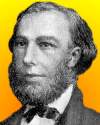
Born 25 Mar 1825; died 16 Jan 1874 at age 48. quotes
German zoologist and cytologist, known especially for his researches in microscopic anatomy. He altered the conception of the cell, emphasizing not the membrane, but the living mass of protoplasm with a nucleus (1861). He pointed out that some cells, for example those of the embryo, do not have bounding membranes. He recognized the protoplasm, with its nucleus, as the fundamental substance found in both plants and animals. Schultze also studied protozoa, and demonstrated minute nerve endings in the ear (1858), nose (1863), and retina (1866). He was an outstanding histologist, introducing several new techniques in histology, including the use of osmic acid for staining fine details of cells. His sudden death in 1874 was caused by a perforated ulcer.
German zoologist and cytologist, known especially for his researches in microscopic anatomy. He altered the conception of the cell, emphasizing not the membrane, but the living mass of protoplasm with a nucleus (1861). He pointed out that some cells, for example those of the embryo, do not have bounding membranes. He recognized the protoplasm, with its nucleus, as the fundamental substance found in both plants and animals. Schultze also studied protozoa, and demonstrated minute nerve endings in the ear (1858), nose (1863), and retina (1866). He was an outstanding histologist, introducing several new techniques in histology, including the use of osmic acid for staining fine details of cells. His sudden death in 1874 was caused by a perforated ulcer.
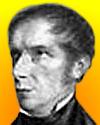
Born 25 Mar 1786; died 10 Apr 1868 at age 82.
Giovanni Battista Amici was an Italian physicist, microscopist, astronomer and optical instrument designer who is best known for his invention of the achromatic lens. He also introduced the Amici-Bertrand lens, a lens for the inspection of an objective’s rear focal plane. The lens system he designed for a new type of microscope in 1837 improved the magnification, capable of up to 6000 times. In 1840, he also introduced an immersion system for microscopes; the lowermost lens was immersed in a drop of oil to reduce improve clarity. He improved the design of mirrors used in reflecting telescopes. As a biologist, he investigated the sexual function of flowers, in particular he clarified the mechanism of the pollination of orchids.«[DSD gives death year 1868. EB gives death year 1863.]
Giovanni Battista Amici was an Italian physicist, microscopist, astronomer and optical instrument designer who is best known for his invention of the achromatic lens. He also introduced the Amici-Bertrand lens, a lens for the inspection of an objective’s rear focal plane. The lens system he designed for a new type of microscope in 1837 improved the magnification, capable of up to 6000 times. In 1840, he also introduced an immersion system for microscopes; the lowermost lens was immersed in a drop of oil to reduce improve clarity. He improved the design of mirrors used in reflecting telescopes. As a biologist, he investigated the sexual function of flowers, in particular he clarified the mechanism of the pollination of orchids.«[DSD gives death year 1868. EB gives death year 1863.]

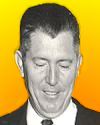
Died 25 Mar 1995 at age 68 (born 12 May 1926).
James Samuel Coleman was an American sociologist who was a pioneer in mathematical sociology and whose studies strongly influenced education policy. In the early 1950s, he was as a chemical engineer with Eastman-Kodak Co. in Rochester, N.Y. He then changed direction, fascinated with sociology and social problems. In 1966, he presented a report to the U.S. Congress which concluded that poor black children did better academically in integrated, middle-class schools. His findings provided the sociological underpinnings for widespread busing of students to achieve racial balance in schools. In 1975, Coleman rescinded his support of busing, concluding that it had encouraged the deterioration of public schools by encouraging white flight to avoid integration.
James Samuel Coleman was an American sociologist who was a pioneer in mathematical sociology and whose studies strongly influenced education policy. In the early 1950s, he was as a chemical engineer with Eastman-Kodak Co. in Rochester, N.Y. He then changed direction, fascinated with sociology and social problems. In 1966, he presented a report to the U.S. Congress which concluded that poor black children did better academically in integrated, middle-class schools. His findings provided the sociological underpinnings for widespread busing of students to achieve racial balance in schools. In 1975, Coleman rescinded his support of busing, concluding that it had encouraged the deterioration of public schools by encouraging white flight to avoid integration.
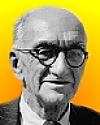
1947
Died 25 Mar 1958 at age 81 (born 7 May 1876).
French ethnologist who was an authority on South American Indian cultures. In his book Les Origènes de l'Homme Americain (1943), he proposed that South American Indians originated from Australia and Melanesia. At the time of the International Exhibition of 1937, he founded in Paris the Musée de l'Homme (Museum of Man) devoted anthropology, not only to house collections, but also as a research centre with a mission to document man's biological anthropology, palaeontology and ethnology. In his early career, starting in 1901, he had participated in the Second French Geodetic Survey in Equador, and remained in South America after its conclusion for another six years, observing the inhabitants of the inter-Andean valleys.«
French ethnologist who was an authority on South American Indian cultures. In his book Les Origènes de l'Homme Americain (1943), he proposed that South American Indians originated from Australia and Melanesia. At the time of the International Exhibition of 1937, he founded in Paris the Musée de l'Homme (Museum of Man) devoted anthropology, not only to house collections, but also as a research centre with a mission to document man's biological anthropology, palaeontology and ethnology. In his early career, starting in 1901, he had participated in the Second French Geodetic Survey in Equador, and remained in South America after its conclusion for another six years, observing the inhabitants of the inter-Andean valleys.«
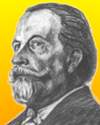
Died 25 Mar 1907 at age 70 (born 16 Dec 1836).
German surgeon and author and author of a classic work on cranial surgery, Die Chirurgische Behandlung der Hirnkrankheiten (1888; “The Surgical Treatment of Brain Disorders”). In 1870, Bergmann wrote the first textbook on nervous system surgery. In addition to his contributions to surgery, Bergmann is noted for introducing steam sterilization of instruments and dressings (1886), and in 1891 he introduced aseptic methods to the practice of surgery.
German surgeon and author and author of a classic work on cranial surgery, Die Chirurgische Behandlung der Hirnkrankheiten (1888; “The Surgical Treatment of Brain Disorders”). In 1870, Bergmann wrote the first textbook on nervous system surgery. In addition to his contributions to surgery, Bergmann is noted for introducing steam sterilization of instruments and dressings (1886), and in 1891 he introduced aseptic methods to the practice of surgery.
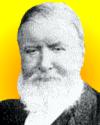
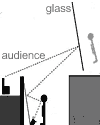
English chemist and lecturer who invented the “Pepper’s Ghost” illusion used on stage to provide the effect of an actor appearing as a transparent image and disappearing by fading away. It used a large sheet of plate glass on stage, inclined at a 45 degree angle to the floor. The use of special lighting enabled the audience to see the reflection of an actor placed offstage, out of the direct view of the audience. Pepper first learned to use showmanship to audiences at London's Royal Polytechnic Institution to present fast-paced, amazing experimental demonstrations to increase the public’s understanding of phenomena in physics and chemistry. In the 1870s, he expanded his activities to a global audience by touring Australia, Canada, and the United States.«
The Boy's Playbook of Science, by John Henry Pepper. - book suggestion.
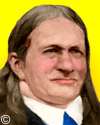
Died 25 Mar 1867 at age 72 (born 8 Feb 1795). quotes
German chemist considered to be the originator of the widely used analytic technique of paper chromatography. In the course of his research on synthetic dyes, he isolated and named several important components of coal-tar oil, among them carbolic acid (1934, now called phenol), pyrrole, rosolic acid (aurin), and cyanol (aniline). He did not analyze any of these compounds, however. In 1850, Runge published the first systematic study of chromatography: concentric circles of different coloured substances diffused through paper. He also noted the ability of belladonna to induce long-lasting dilation of the pupil of the eye (mydriasis), and he developed a process for obtaining sugar from beet juice. He investigated dry distillation and the composition of matter.
German chemist considered to be the originator of the widely used analytic technique of paper chromatography. In the course of his research on synthetic dyes, he isolated and named several important components of coal-tar oil, among them carbolic acid (1934, now called phenol), pyrrole, rosolic acid (aurin), and cyanol (aniline). He did not analyze any of these compounds, however. In 1850, Runge published the first systematic study of chromatography: concentric circles of different coloured substances diffused through paper. He also noted the ability of belladonna to induce long-lasting dilation of the pupil of the eye (mydriasis), and he developed a process for obtaining sugar from beet juice. He investigated dry distillation and the composition of matter.
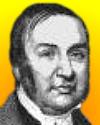
Died 25 Mar 1860 at age 64 (born 19 Jun 1795).
Scottish optometrist whose experiments led him to an early theory of hypnosis that dismissed the idea of "animal magnetism." Earlier, Franz Mesmer induced trances with manual manipulations he believed controlled a force field of animal magnetism. Braid discovered such "mesmeric passes were unnecessary. A person fixating on a bright object about 8 to 15 inches above the eyes could easily enter a trance. In his 1841 book, Neurypnology or the Rationale of Nervous Sleep considered in relation with Animal Magnetism, he coined the word "hypnotism" from the Greek word "hypnos" meaning "sleep." Thus hypnotism replaced mesmerism, even though later investigation showed that hypnosis was not, in fact, related to sleep.«
Scottish optometrist whose experiments led him to an early theory of hypnosis that dismissed the idea of "animal magnetism." Earlier, Franz Mesmer induced trances with manual manipulations he believed controlled a force field of animal magnetism. Braid discovered such "mesmeric passes were unnecessary. A person fixating on a bright object about 8 to 15 inches above the eyes could easily enter a trance. In his 1841 book, Neurypnology or the Rationale of Nervous Sleep considered in relation with Animal Magnetism, he coined the word "hypnotism" from the Greek word "hypnos" meaning "sleep." Thus hypnotism replaced mesmerism, even though later investigation showed that hypnosis was not, in fact, related to sleep.«
Died 25 Mar 1818 at age 72 (born 8 Jun 1745).
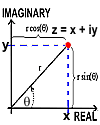
Norwegian surveyor and mathematician who demonstrated innovative mathematical skills as a surveyor, mathematically processing the triangulation data and preparing maps. From 1764, he worked for the Royal Danish Academy, which was making a topographical survey of Denmark. In his life career, Caspar advanced his knowledge of algebra, trigonometry and mathematical geometry. On 10 Mar 1797, he presented his only mathematical paper to the Academy, containing the first geometric representation of complex numbers, but it wasn't seen internationally. Jean-Robert Argand, found the method independently, and his publication (1806) was circulated, hence the method is known as an Argand diagram. A complex numbers is shown as a point in a Cartesian plane, with the real portion of the number on the x axis and the imaginary part on the y axis.«[Image: An Argand diagram, known by that name, but priority goes to Wessel.]
Norwegian surveyor and mathematician who demonstrated innovative mathematical skills as a surveyor, mathematically processing the triangulation data and preparing maps. From 1764, he worked for the Royal Danish Academy, which was making a topographical survey of Denmark. In his life career, Caspar advanced his knowledge of algebra, trigonometry and mathematical geometry. On 10 Mar 1797, he presented his only mathematical paper to the Academy, containing the first geometric representation of complex numbers, but it wasn't seen internationally. Jean-Robert Argand, found the method independently, and his publication (1806) was circulated, hence the method is known as an Argand diagram. A complex numbers is shown as a point in a Cartesian plane, with the real portion of the number on the x axis and the imaginary part on the y axis.«[Image: An Argand diagram, known by that name, but priority goes to Wessel.]
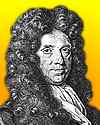
Died 25 Mar 1712 at age 70 (baptized 26 Sep 1641). quotes
English botanist, physician, and microscopist, who was one of the founders of the science of plant anatomy. He began observations on the anatomy of plants in 1664, and his first essay on the subject, The Anatomy of Vegetables Begun was presented to the Royal Society of London in 1670 (published 1672). He took a particular interest in determining the physiological nature of the tissues. He observed the pourous structure of plant tissue, suggested that flowers have a sexual function, and was first to use the term "comparative anatomy" (1676, in a lecture at the Royal Society). His extensive studies of plant tissues, including roots, trunks, leaves, flowers, fruits and seeds were published in a major work The Anatomy of Plants (1682). From a chemical analysis of water from springs at Epsom, Surrey, he isolated magnesium sulphate, which remains known as "Epsom Salts."
English botanist, physician, and microscopist, who was one of the founders of the science of plant anatomy. He began observations on the anatomy of plants in 1664, and his first essay on the subject, The Anatomy of Vegetables Begun was presented to the Royal Society of London in 1670 (published 1672). He took a particular interest in determining the physiological nature of the tissues. He observed the pourous structure of plant tissue, suggested that flowers have a sexual function, and was first to use the term "comparative anatomy" (1676, in a lecture at the Royal Society). His extensive studies of plant tissues, including roots, trunks, leaves, flowers, fruits and seeds were published in a major work The Anatomy of Plants (1682). From a chemical analysis of water from springs at Epsom, Surrey, he isolated magnesium sulphate, which remains known as "Epsom Salts."
Nehemiah Grew: A Study and Bibliography of His Writings, by William Lefanu. - book suggestion.
In 1993, extraordinary findings of wooly mammoth fossils by Russian paleontologists were published Nature. Remains found on Wrangel Island, northwest of Alaska, indicated the population of the extinct mammoths existed 6,000 years later than previously known.
In 1993, two articles in Nature solved a mystery in the development of AIDS: why do many patients having shown an outbreak of virus particles in the blood then go up to ten years without their presence in the blood, only to show them again years later. The published reports point to the lymph tissue throughout the whole body that acts as a reservoir hiding the virus during the latent period. The significance of the finding is that to be effective, any vaccine must act to block the virus before it takes hold in the lymph system.
In 1992, British scientists found new largest perfect number (2 756839 -1 * 2 756839).

In 1970, the prototype British-built airplane Concorde 002 made its first supersonic flight (700 mph; 1,127 kph). A few months earlier, the French prototype, Concorde 001, had broken the sound barrier on 1 Oct 1969. Mach 2 was achieved by Concorde 001 on 4 Nov 1970, and by Concorde 002, a few days later on 12 Nov 1970. The combined number of supersonic flights by the two aircraft reached 100 by Jan 1971.
The Concorde Story: 21 Years in Service, by Christopher Orlebar. - book suggestion.

In 1954, RCA announced the commercial production of color television sets. Their Bloomington, Indiana, plant was the first major assembly-line for color sets, capable of initially making 2,000 color sets a month, increasing to 10,000 units by the year’s end. The first receiver had a 15-inch tube with a viewing area equivalent to the 12½-inch tube of a black and white receiver. The price would be over five times the cost of a 21-inch black-and-white set. By April 1954, the RCA CT-100 was being marketed. Theat year, National Broadcasting Company (NBC), the programming subsidiary of RCA began with one or two color programs a week, but promised at least three weekly by year’s end.«
In 1951, Edward Mills Purcell and H.I. Ewen at the Harvard physics lab detected 21-cm radiation in outer space.
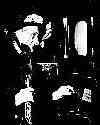
In 1925, the first public demonstration of his television system was held by John Logie Baird at the Selfridges department store, Oxford Street, London. It would be ten years before the introduction in Britain of televisions with higher definition on 2 Nov 1936.«[Image: an early television picture exhibited for viewing by the public.]
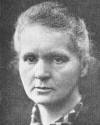
In 1903, The Times newspaper reported that the French physicist, Pierre Curie assisted by Marie Curie, communicated to the Academy of Sciences that the recently discovered Radium “possesses the extraordinary property of continuously emitting heat, without combustion, without chemical change of any kind, and without any change to its molecular structure, which remains spectroscopically identical after many months of continuous emission of heat…such that the pure Radium salt would melt more than its own weight of ice every hour…A small tube containing Radium, if kept in contact with the skin for some hours…produces an open sore, by destroying the epidermis and the true skin beneath…and cause the death of living things whose nerve centres do not lie deep enough to be shielded from their influence.”
Madame Curie: A Biography, by Eve Curie. - book suggestion.
In 1902, Irving W. Colburn was issed a patent for a sheet glass drawing machine (U.S. No. 696,008).
In 1857, Frederick Laggenheim took the first photograph of a solar eclipse.
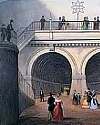
In 1843, the Thames Tunnel in London, the world's first tunnel under a navigable river, was opened for pedestrians between Rotherhithe and Wapping. Work had started on 2 Mar 1825. Excavation was engineered by Marc Brunel, for which he used a tunneling shield to reduce the danger of collapse while digging through soft sediments. Beginning his own engineering career, his son Isambad K. Brunel assisted. Together they persevered through 18 years, dealing with floods, human disasters, and delays caused by financing difficulties. Planned ramps for use by carts and freight traffic were never added due to cost. A railway line through the tunnel opened on 7 Dec 1869, and it remains in use as the oldest part of the London Underground.«
more
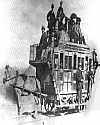
In 1807, the world's first railway passenger service began in Wales on the Oystermouth Railway (later known as the Swansea and Mumbles Railway). It had been built in 1804, originally to transport coal, iron-ore and limestone from Oystermouth to the seaport of Swansea. The rails were “L” shaped tramplates mounted on rough stone blocks. At first, passengers travelled in a four-wheeled horse-drawn “dandy.” Use of steam engines began in 1877. By 1898, the line had been extended to Mumbles. Double-decker electric cars powered by overhead cables were used from 2 Mar 1929. The line was closed on 5 Jan 1960, and dismantled.«
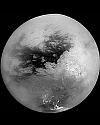
In 1655, Christiaan Huygens (1629-95) discovered Titan, Saturn's largest satellite and the easiest to observe. He determined its period of revolution. (However, the moon wasn't named until almost two centuries later when Sir John Herschel, discoverer of Uranus, assigned names to the seven moons of Saturn that were known at that time. Saturn's largest moon was named simply “Titan,” since the word means “one that is great in size, importance, or achievement.”) Huygens also discovered the rings of Saturn through a telescope of his own design. (In his lifetime he also invented the pendulum clock and the first accurate time-keeping device, his contributions to mathematics, astronomy, time measurement and the theory of light are considered fundamental).[Image: Titan imaged by NASA space probe Cassini on 26 Oct 2004.]
Unrolling Time: Christian Huygens and the Mathematization of Nature, by Joella G. Yoder. - book suggestion.
In 1639, America's first canal to provide industrial water power was began. The canal, dug by colonists in Dedham, Mass., ran from the Charles River to the Neponset River at Mill Creek.




