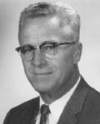
Born 11 Nov 1910; died 24 Dec 1998 at age 88.
Raemer Edgar Schreiber was an American physicist who during World War II was one of the scientists that worked on the Manhattan Project in Los Alamos, N.M., to develop the first atomic bombs. Schreiber started work at Los Alamos on the Water Boiler Reactor, which went critical in May 1944, the first reactor to go critical using enriched uranium. He continued to work on improved reactor models until April 1945, when he became a member of the pit assembly team for the Trinity test. After Trinity, Schreib escorted the plutonium core of the Fat Man device to Tinian Island, where he helped assemble the Nagasaki bomb. After the war he stayed on at Los Alamos in the weapons division and helped develop the hydrogen bomb.
Raemer Edgar Schreiber was an American physicist who during World War II was one of the scientists that worked on the Manhattan Project in Los Alamos, N.M., to develop the first atomic bombs. Schreiber started work at Los Alamos on the Water Boiler Reactor, which went critical in May 1944, the first reactor to go critical using enriched uranium. He continued to work on improved reactor models until April 1945, when he became a member of the pit assembly team for the Trinity test. After Trinity, Schreib escorted the plutonium core of the Fat Man device to Tinian Island, where he helped assemble the Nagasaki bomb. After the war he stayed on at Los Alamos in the weapons division and helped develop the hydrogen bomb.
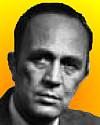
Born 11 Nov 1907; died 18 Feb 1957 at age 49.
Joseph Gilbert Hamilton was an American medical physicist who pioneered in the medical uses and health effects of radioactive isotopes. On 23 Mar 1936, he injected intraveneously a sodium radioisotope into a leukemia patient. His New York Times obituary stated that he was “believed to be the first ever to inject a radioisotope intravenously in a human being.” He became an M.D. in 1936. He identified the usefulness of radioiodine to study and treat thryroid disease. During WW II, he was involved with the Manhattan Project studying the biological effects of the ingestion of plutonium and other fission products. From 1948, Hamilton was Director of the Crocker Laboratory, which had a 60-inch cyclotron for nuclear research.« more
Joseph Gilbert Hamilton was an American medical physicist who pioneered in the medical uses and health effects of radioactive isotopes. On 23 Mar 1936, he injected intraveneously a sodium radioisotope into a leukemia patient. His New York Times obituary stated that he was “believed to be the first ever to inject a radioisotope intravenously in a human being.” He became an M.D. in 1936. He identified the usefulness of radioiodine to study and treat thryroid disease. During WW II, he was involved with the Manhattan Project studying the biological effects of the ingestion of plutonium and other fission products. From 1948, Hamilton was Director of the Crocker Laboratory, which had a 60-inch cyclotron for nuclear research.« more
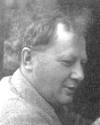
Born 11 Nov 1904; died 8 May 1960 at age 55. quotes
John Henry Constantine Whitehead was a British mathematician who greatly influenced the development of homotopy theory (a special kind of mapping of topological spaces). Whitehead's work in differential geometry culminated in the paper “On the Covering of a Complete Space by the Geodesics Through a Point” (1935), containing pioneering contributions to this area of mathematics. He always retained his interest in geometry but soon focused on topology. He made substantial contributions to combinatorial homotopy and Stiefel manifolds and set up a school of topology at Oxford.
John Henry Constantine Whitehead was a British mathematician who greatly influenced the development of homotopy theory (a special kind of mapping of topological spaces). Whitehead's work in differential geometry culminated in the paper “On the Covering of a Complete Space by the Geodesics Through a Point” (1935), containing pioneering contributions to this area of mathematics. He always retained his interest in geometry but soon focused on topology. He made substantial contributions to combinatorial homotopy and Stiefel manifolds and set up a school of topology at Oxford.
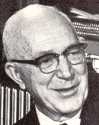
Born 11 Nov 1903; died 9 Sep 2003 at age 99.
English physicist who was a leading authority on high-voltage physics, a member of the Anglo-American team that worked on the atomic bomb, and the last surviving direct colleague of Ernest Rutherford, the father of nuclear physics. Allibone proposed to Rutherford that he could build a powerful generator to provide the huge voltages needed artificially to accelerate electrons in a vacuum tube. By 1927, Allibone had built the Voltage Doubler, a device in which electrons and atoms could be accelerated at high speeds, which was used by Rutherford and his team in their subsequent researches on particle acceleration. In 1944 he joined the British team working on the Manhattan project to build the atomic bomb in Berkeley, Cal., and Oak Ridge, Tenn.
English physicist who was a leading authority on high-voltage physics, a member of the Anglo-American team that worked on the atomic bomb, and the last surviving direct colleague of Ernest Rutherford, the father of nuclear physics. Allibone proposed to Rutherford that he could build a powerful generator to provide the huge voltages needed artificially to accelerate electrons in a vacuum tube. By 1927, Allibone had built the Voltage Doubler, a device in which electrons and atoms could be accelerated at high speeds, which was used by Rutherford and his team in their subsequent researches on particle acceleration. In 1944 he joined the British team working on the Manhattan project to build the atomic bomb in Berkeley, Cal., and Oak Ridge, Tenn.
Born 11 Nov 1897; died 9 Oct 1967 at age 69. quotes
Gordon Willard Allport was an American humanistic psychologist and educator who developed trait theory in an original theory of personality. Allport thought the uniqueness of each personality was one of the most important things to understand. Part of this uniqueness is due to the many, many parts of our personality. He and many other psychologists considered reflexes, habits, drives or needs, beliefs, our particular view of our environment, goals or intentions, values, attitudes, and traits as being the kind of factors that determine what we do. Thus, “personality” becomes very complex. Unlike Sigmund Freud, he did not see us as slavishly controlled by innate or external factors because humans have the ability to make conscious choices about how to behave.
Gordon Willard Allport was an American humanistic psychologist and educator who developed trait theory in an original theory of personality. Allport thought the uniqueness of each personality was one of the most important things to understand. Part of this uniqueness is due to the many, many parts of our personality. He and many other psychologists considered reflexes, habits, drives or needs, beliefs, our particular view of our environment, goals or intentions, values, attitudes, and traits as being the kind of factors that determine what we do. Thus, “personality” becomes very complex. Unlike Sigmund Freud, he did not see us as slavishly controlled by innate or external factors because humans have the ability to make conscious choices about how to behave.
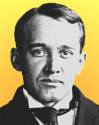
Born 11 Nov 1875; died 8 Nov 1969 at age 93.
American astronomer whose systematic observations (1912-25) of the extraordinary radial velocities of spiral galaxies provided the first evidence supporting the expanding-universe theory. Slipher spectroscopically measured the displacement of their spectral lines by the Doppler effect by which the wavelength of light from an object moving away from an observer will shifted toward the red end of the spectrum. Earlier, Slipher had determined the rotation periods of some of the planets by spectroscopic means. With Lowell (1912), he found Uranus had a rotation period of 10.8 hours. He also produced comparable data for Venus, Mars, Jupiter, and Saturn and showed that Venus's period was much longer than expected.
American astronomer whose systematic observations (1912-25) of the extraordinary radial velocities of spiral galaxies provided the first evidence supporting the expanding-universe theory. Slipher spectroscopically measured the displacement of their spectral lines by the Doppler effect by which the wavelength of light from an object moving away from an observer will shifted toward the red end of the spectrum. Earlier, Slipher had determined the rotation periods of some of the planets by spectroscopic means. With Lowell (1912), he found Uranus had a rotation period of 10.8 hours. He also produced comparable data for Venus, Mars, Jupiter, and Saturn and showed that Venus's period was much longer than expected.
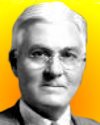
Born 11 Nov 1864; died 7 Jan 1943 at age 78.
American surgeon who was one of the first to study the significance of surgical shock. His interest began when a close friend was injured in a streetcar accident and died in profound shock after the amputation of both legs. Crile conducted research experiments on animals and noted the relationship between shock, blood pressure, and the onset of death. He saw that striving to prevent shock was of great importance. He recognized the importance of monitoring blood pressure in surgical patients and helped popularize the use of the sphygmomanometer. In 1906 he performed the first successful human to human blood transfusion at St. Alexis Hospital in Cleveland. He was the principal founder of the Cleveland Clinic Foundation.«
American surgeon who was one of the first to study the significance of surgical shock. His interest began when a close friend was injured in a streetcar accident and died in profound shock after the amputation of both legs. Crile conducted research experiments on animals and noted the relationship between shock, blood pressure, and the onset of death. He saw that striving to prevent shock was of great importance. He recognized the importance of monitoring blood pressure in surgical patients and helped popularize the use of the sphygmomanometer. In 1906 he performed the first successful human to human blood transfusion at St. Alexis Hospital in Cleveland. He was the principal founder of the Cleveland Clinic Foundation.«
George Crile, an Autobiography, by George Washington Crile. - book suggestion.
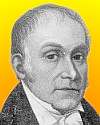
Born 11 Nov 1771; died 25 Jun 1830 at age 58.
American physician who was a pioneer in abdominal surgery. On 13 Dec 1809, he diagnosed a patient (who had at first thought she was pregnant with twins) as having a huge ovarian tumour needing surgical removal. Thus, he performed the first ovariotomy in the U.S. a few days later, on 25 Dec 1809, when she was transported 60 miles to his Danville practice. In this era there were no anaesthetics, but he successfully removed a 22-pound tumor. The patient recovered and lived to age 78. McDowell is also remembered for his chartitable work, including as a founder of Centre College in Danville, Kentucky. In the National Statuary Hall Collection in the Capitol, Washington, D.C., which includes two contributions from each state, he is honored as one of the statues from Kentucky.«
American physician who was a pioneer in abdominal surgery. On 13 Dec 1809, he diagnosed a patient (who had at first thought she was pregnant with twins) as having a huge ovarian tumour needing surgical removal. Thus, he performed the first ovariotomy in the U.S. a few days later, on 25 Dec 1809, when she was transported 60 miles to his Danville practice. In this era there were no anaesthetics, but he successfully removed a 22-pound tumor. The patient recovered and lived to age 78. McDowell is also remembered for his chartitable work, including as a founder of Centre College in Danville, Kentucky. In the National Statuary Hall Collection in the Capitol, Washington, D.C., which includes two contributions from each state, he is honored as one of the statues from Kentucky.«
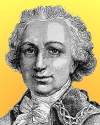
Born 11 Nov 1729; died 31 Aug 1811 at age 81.
French navigator and scientist, born in Paris. A friend of the philosophe Jean le Rond d'Alembert, Bougainville was elected to the British Royal Society in 1754 in recognition of a work on calculus that he wrote at age 25. An accomplished scholar, he was also a man of action who fought in the Seven Years War and explored the Pacific Ocean. Accompanied by naturalists and astronomers, he made a voyage around the world (1767–69). He visited many of the islands of the South Pacific and compiling a scientific record of his findings. The largest of the Solomon Islands is named after him, as is the colourful tropical climbing plant bougainvillaea. At end of his navy career, he was elected to the Academy of Sciences and to the Board of Longitude.
French navigator and scientist, born in Paris. A friend of the philosophe Jean le Rond d'Alembert, Bougainville was elected to the British Royal Society in 1754 in recognition of a work on calculus that he wrote at age 25. An accomplished scholar, he was also a man of action who fought in the Seven Years War and explored the Pacific Ocean. Accompanied by naturalists and astronomers, he made a voyage around the world (1767–69). He visited many of the islands of the South Pacific and compiling a scientific record of his findings. The largest of the Solomon Islands is named after him, as is the colourful tropical climbing plant bougainvillaea. At end of his navy career, he was elected to the Academy of Sciences and to the Board of Longitude.

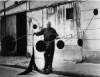
Alexander (Stirling) Calder, was an American sculptor and painter best known as the originator of the mobile, a kinetic sculpture constructed with delicately balanced or suspended components. The sculpture will respond to air currents, or sometimes powered with a motor. He began to make mobiles when he spent time abroad, living in Paris (1931-33). By contrast, Calder's stationary sculptures are called stabiles. He also produced numerous wire figures, notably for a vast miniature circus.Image (right): mobile of 1934.
Died 11 Nov 1973 at age 78 (born 15 Jan 1895).
Finnish biochemist whose investigations directed toward improving the production and storage of protein-rich green fodder, vitally important to regions characterized by long, severe winters, brought him the Nobel Prize for Chemistry in 1945. The AIV method, named for his initials, was storing green fodder in an acid medium to prevent spoilage and retain nutritious nitrogenous material. He found that a mixture of hydrochloric and sulfuric acid was adequate as long as its strength was kept within certain precise limits (a pH of about four). In 1929, he found that cows fed such silage gave milk indistinguishable in taste from that of cows fed on normal fodder, while as rich in vitamins A and C.
Finnish biochemist whose investigations directed toward improving the production and storage of protein-rich green fodder, vitally important to regions characterized by long, severe winters, brought him the Nobel Prize for Chemistry in 1945. The AIV method, named for his initials, was storing green fodder in an acid medium to prevent spoilage and retain nutritious nitrogenous material. He found that a mixture of hydrochloric and sulfuric acid was adequate as long as its strength was kept within certain precise limits (a pH of about four). In 1929, he found that cows fed such silage gave milk indistinguishable in taste from that of cows fed on normal fodder, while as rich in vitamins A and C.
Died 11 Nov 1938 at age 69 (born 23 Sep 1869).
American patient who was the quarantined disease carrier, known as Typhoid Mary, the famous typhoid carrier in the New York City area in the early 20th century. Fifty-one original cases of typhoid and three deaths were directly attributed to her (countless more were indirectly attributed), although she herself was immune to the typhoid bacillus (Salmonella typhi). The outbreak of Typhus in Oyster Bay, Long Island, in 1904 puzzled the scientists of the time because they thought they had wiped out the deadly disease. Mallon's case showed that a person could be a carrier without showing any outward signs of being sick, and it led to most of the Health Code laws on the books today. She died not from typhoid but from the effects of a paralytic stroke dating back to 25 Dec 1932.
American patient who was the quarantined disease carrier, known as Typhoid Mary, the famous typhoid carrier in the New York City area in the early 20th century. Fifty-one original cases of typhoid and three deaths were directly attributed to her (countless more were indirectly attributed), although she herself was immune to the typhoid bacillus (Salmonella typhi). The outbreak of Typhus in Oyster Bay, Long Island, in 1904 puzzled the scientists of the time because they thought they had wiped out the deadly disease. Mallon's case showed that a person could be a carrier without showing any outward signs of being sick, and it led to most of the Health Code laws on the books today. She died not from typhoid but from the effects of a paralytic stroke dating back to 25 Dec 1932.
Typhoid Mary, by Judith Walzer Leavitt. - book suggestion.
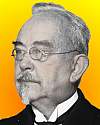
Died 11 Nov 1927 at age 70 (born 3 Feb 1857). quotes
Danish botanist and geneticist whose experiments in plant heredity offered strong support to the mutation theory of the Dutch botanist Hugo de Vries (that changes in heredity come about through sudden, discrete changes of the heredity units in germ cells). Many geneticists thought Johannsen's ideas dealt a severe blow to Charles Darwin's theory that new species were produced by the slow process of natural selection. In 1909, Johannsen proposed that each portion of a chromosome that controls a phenotype be called a "gene" (Greek: "to give birth to").
Danish botanist and geneticist whose experiments in plant heredity offered strong support to the mutation theory of the Dutch botanist Hugo de Vries (that changes in heredity come about through sudden, discrete changes of the heredity units in germ cells). Many geneticists thought Johannsen's ideas dealt a severe blow to Charles Darwin's theory that new species were produced by the slow process of natural selection. In 1909, Johannsen proposed that each portion of a chromosome that controls a phenotype be called a "gene" (Greek: "to give birth to").
Died 11 Nov 1886 at age 53 (born 17 Oct 1833).
French physiologist, politician, and diplomat, founder of modern aerospace medicine, whose research into the effects of air pressure on the body helped make possible the exploration of space and the ocean depths. While professor of physiology at the Sorbonne (1869-86), he found that an illness of animals at high altitudes is caused mainly by the low oxygen content of the sparse atmosphere. Bert also made a study of "the bends", suffered by deep-sea divers coming up too quickly to the surface from the great pressures of the depths. Bert demonstrated that high external pressures force large quantities of atmospheric nitrogen to dissolve in the blood, then during rapid decompression the nitrogen forms gas bubbles that obstruct capillaries. In 1878, he published the first results of hyperbaric experiments, considered the cornerstone publication for diving medicine, hyperbaric medicine, and aerospace medicine.
French physiologist, politician, and diplomat, founder of modern aerospace medicine, whose research into the effects of air pressure on the body helped make possible the exploration of space and the ocean depths. While professor of physiology at the Sorbonne (1869-86), he found that an illness of animals at high altitudes is caused mainly by the low oxygen content of the sparse atmosphere. Bert also made a study of "the bends", suffered by deep-sea divers coming up too quickly to the surface from the great pressures of the depths. Bert demonstrated that high external pressures force large quantities of atmospheric nitrogen to dissolve in the blood, then during rapid decompression the nitrogen forms gas bubbles that obstruct capillaries. In 1878, he published the first results of hyperbaric experiments, considered the cornerstone publication for diving medicine, hyperbaric medicine, and aerospace medicine.
Died 11 Nov 1871 at age 77 (born 9 Sep 1794).
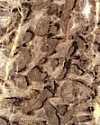
English geologist and paleontologist whose study of coral fossils found in Devon, suggested (1837) certain of them were intermediate between those typical of the older Silurian System (408 to 438 million years old) and those of the later Carboniferous System (286 to 360 million years old). Geologists Roderick Murchison and Adam Sedgwick agreed. They named (1839) this new geologic system after its locale—the Devonian System. Lonsdale's early career was as an army officer (1812-15) and later he became curator and librarian of the Geological Society of London (1829-42). He recognised that fossils showed how species changed over time, and more primitive organisms are found in lower strata. Charles Darwin used this to support his evolution theory.«[Image: Coral-rich limestone from Petitor, Devon.] more
English geologist and paleontologist whose study of coral fossils found in Devon, suggested (1837) certain of them were intermediate between those typical of the older Silurian System (408 to 438 million years old) and those of the later Carboniferous System (286 to 360 million years old). Geologists Roderick Murchison and Adam Sedgwick agreed. They named (1839) this new geologic system after its locale—the Devonian System. Lonsdale's early career was as an army officer (1812-15) and later he became curator and librarian of the Geological Society of London (1829-42). He recognised that fossils showed how species changed over time, and more primitive organisms are found in lower strata. Charles Darwin used this to support his evolution theory.«[Image: Coral-rich limestone from Petitor, Devon.] more
Died 11 Nov 1752 at age 42 (born 25 Dec 1709).
French physician and philosopher whose Materialistic interpretation of psychic phenomena laid the groundwork for future developments of behaviourism and played an important part in the history of modern Materialism.
French physician and philosopher whose Materialistic interpretation of psychic phenomena laid the groundwork for future developments of behaviourism and played an important part in the history of modern Materialism.
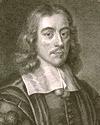
Died 11 Nov 1675 at age 54 (born 27 Jan 1621). quotes
English physician who made important contributions to anatomy, particularly of the brain and nervous system. In De febribus (1659) he significantly advanced epidemiology with an examination of epidemics of smallpox, influenza, plague, war-typhus, measles, and the first medical description of the typhoid fever. As part of his investigation of the brain's circulation, he injected wax into the blood vessels, which enabled him to see a ring of vessels still known as the "circle of Willis." He identified a type of diabetes (diabetes mellitus). A club of scientists including Robert Boyle, Christopher Wren and John Wilkins met in his rooms (1648-9) in Oxford. A number of them became founding members of the Royal Society of London.«
English physician who made important contributions to anatomy, particularly of the brain and nervous system. In De febribus (1659) he significantly advanced epidemiology with an examination of epidemics of smallpox, influenza, plague, war-typhus, measles, and the first medical description of the typhoid fever. As part of his investigation of the brain's circulation, he injected wax into the blood vessels, which enabled him to see a ring of vessels still known as the "circle of Willis." He identified a type of diabetes (diabetes mellitus). A club of scientists including Robert Boyle, Christopher Wren and John Wilkins met in his rooms (1648-9) in Oxford. A number of them became founding members of the Royal Society of London.«
In 1988, the oldest known insect fossils (390 million yrs) were reported in Science.
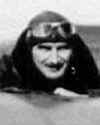
Stevens
In 1935, a record 72,395 feet was reached by Lt. Col. Albert William Stevens and Capt. Orvil Anderson, by helium balloon in a sealed gondola, Explorer II. This set a substratosphere record that stood for 21 years. They left from Rapid City, S.D. and spent 8 hrs in the air taking still and motion pictures in black and white and colour. They measured electrical conductivity and took samples of the stratosphere air, with an interest in the ozone layer, and captured spores floating miles-high in the atmosphere. They also carried fruit flies to study the effect of the rare stratosphere. Stevens was a skilled aerial photographer who took the first photograph (30 Dec 1930) showing the Earth's curvature, and the first pictures (1932) showing the moon's shadow on the Earth during a total lunar eclipse.«
In 1905, the death was recorded of the last victim of Panama Canal related yellow fever. The Report for the Panama Canal in U.S. Congressional Record declared “1906. Yellow fever abolished.” The Yellow Fever Commission had successfully controlled mosquitoes and sanitation. Hundreds of workers per year had previously died from yellow fever building the Panama Canal. On 26 Jun 1900, Surgeon-General George M. Sternberg had formed the commission to fight against the cause and spread of the deadly disease. Dr. Walter Reed was appointed officer-in-charge. He organized the research, identified the disease was spread by the bites of infected mosquitoes, and took control action to save lives.«
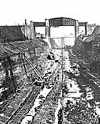
1890
In 1887, construction began on the Manchester Ship Canal in north-west England, supervised by chief engineer and designer, Edward Leader Williams. The 40-mile waterway (60-km) was promoted by local manufacturer Daniel Adamson to establish Manchester as an inland port for ocean-going ships, to be less costly than transport via railway, and the port at Liverpool. Local businessmen met on 27 Jun 1882. Enabling legislation from Parliament was sought in Nov 1882, but strongly opposed by Liverpool and railway companies. An Act of Parliament was eventually passed on 6 Aug 1885, followed by two years raising £5 million for initial costs. The canal opened to traffic on 1 Jan 1894.«
100 Years of the Manchester Ship Canal, by T. Gray. - book suggestion.
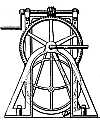
(USPTO)
In 1856, English inventor, Henry Bessemer was issued US Patent No. 16,082 for his “Manufacture of Iron and Steel” process, having previously taken out a British patent for his “decarbonization process, utilizing a blast of air” that revolutionised steel manufacturing (No. 66/1855, 10 Jan 1855). However, the U.S. patent was shortly challenged in a dispute over priority. The American William Kelly—though filing after Bessemer—was recognized as the first to actually use a blast of air into molten pig iron to make steel. Nevertheless, Bessemer benefitted from his patent on the tilting converter in which he processed the iron and then could pour out the molten steel.«[Image: Figure from Bessemer's patent showing end elevation of the tilting mechanism. The circular end of the refining chamber is seen in the lower half of the diagram.] more
Sir Henry Bessemer: An Autobiography, by Henry Bessemer. - book suggestion.
In 1851, the first U.S. patent for a telescope design was issued to Alvan Clark of Cambridge, Mass. (No. 8,509). Clark was a portrait painter who was interested in astronomy as were so many others at that time. He had made several small lenses and mirrors as a hobby. The fact that he could detect the small residual errors in one of the the best lenses Europe could offer, convinced him that he could do as well. After he gained a reputation in Europe, orders from American came in. The Alvin Clark Company became one of the foremost producers of some of the largest lenses for telescopes in the 1800s.*
In 1790, chrysanthemums were introduced into England from China. These hardy plants have since been found native in Japan, northern Africa, and southern Europe. Their flowers come in every color except blue. Their blooms come in a huge variety of shapes and sizes. Some are spherical in shape and have incurved petals at the center. Some have tubular-shaped petals of unequal length with little hooks at the end. Spoon Chrysanthemums have rather flat petals that are spoon-shaped at the end. Anemone Chrysanthemums have fairly flat, thin petals with shorter tubular petals in the center.
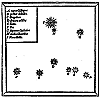
In 1572, Danish astronomer Tycho Brahe began his meticulous observations of the supernova discovered in the W-shaped constellation of Cassiopeia. (Brahe was at the beginning of his career in 1572, and it was this supernova that inspired him to devote his lifetime to making accurate measurements of the positions of the stars and planets.) For two weeks it was brighter than any other star in the sky and visible in daytime. By month's end, it began to fade but it remained visible to the naked eye for about 16 months until Mar 1574. Thus 16th-century astronomers learned that the heavens were not immutable, as had been believed. Brahe's book on his observations, De Nova Stella, originated the word “nova.”«
Tycho & Kepler, by Kitty Ferguson. - book suggestion.




