1983 (EB)
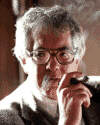
Born 5 Dec 1932. quotes
American theoretical physicist who, with Steven Weinbergand Abdus Salam, received the Nobel Prize for Physics in 1979 for their complementary efforts in formulating the electroweak theory, which explains the unity of electromagnetism and the weak force.
American theoretical physicist who, with Steven Weinbergand Abdus Salam, received the Nobel Prize for Physics in 1979 for their complementary efforts in formulating the electroweak theory, which explains the unity of electromagnetism and the weak force.
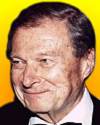
Born 5 Dec 1916; died 11 Apr 2013 at age 96.
Polish virologist and immunologist who discovered the first vaccine against poliomyelitis which was based on oral administration of attenuated polio virus. In researching a polio vaccine, he decided to focus on the use of live viruses that were attenuated (rendered non-virulent) instead of the killed viruses that became the basis for the injections created by Jonas Salk. Koprowski viewed the live vaccine as more powerful since it entered the intestinal tract directly and could provide lifelong immunity, whereas the Salk vaccine required boosters. Also, taking a vaccine by mouth is easy, whereas an injection is more expensive and needs medical facilities. It was taken by the first child on 27 Feb 1950 and within 10 years was used for immunization on four continents.
Polish virologist and immunologist who discovered the first vaccine against poliomyelitis which was based on oral administration of attenuated polio virus. In researching a polio vaccine, he decided to focus on the use of live viruses that were attenuated (rendered non-virulent) instead of the killed viruses that became the basis for the injections created by Jonas Salk. Koprowski viewed the live vaccine as more powerful since it entered the intestinal tract directly and could provide lifelong immunity, whereas the Salk vaccine required boosters. Also, taking a vaccine by mouth is easy, whereas an injection is more expensive and needs medical facilities. It was taken by the first child on 27 Feb 1950 and within 10 years was used for immunization on four continents.
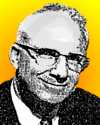
Born 5 Dec 1908; died 28 Dec 1997 at age 89.
American plant pathologist who was an expert on the diseases of roses. He lived in Tyler, Texas, and greatly assisted the city's rose-growing industry. His interest stretched over 50 years; his doctorate dissertation in 1937 was his first study on the control of black spot disease. He found that the chief source of black spot spores is from lesions on the canes, and not the black-spotted leaflets. When spraying for black spot, he found it was important to wet all the woody parts of the plant on a weekly basis. Affected leaflets, when left in place, in fact contributed to the food production of the rose plant. He also helped breed various rose varieties, investigated hybrids, genetic composition, cultural adaptation and the best use of fertilizers.«
American plant pathologist who was an expert on the diseases of roses. He lived in Tyler, Texas, and greatly assisted the city's rose-growing industry. His interest stretched over 50 years; his doctorate dissertation in 1937 was his first study on the control of black spot disease. He found that the chief source of black spot spores is from lesions on the canes, and not the black-spotted leaflets. When spraying for black spot, he found it was important to wet all the woody parts of the plant on a weekly basis. Affected leaflets, when left in place, in fact contributed to the food production of the rose plant. He also helped breed various rose varieties, investigated hybrids, genetic composition, cultural adaptation and the best use of fertilizers.«
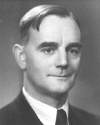
Born 5 Dec 1903; died 9 Aug 1969 at age 65.
English physicist who was awarded the Nobel Prize for Physics in 1950 for his development of the photographic method of studying nuclear processes and for the resulting discovery of the pion (pi-meson), a heavy subatomic particle. The pion proved to be the hypothetical particle proposed in 1935 by Yukawa Hideki of Japan in his theory.
English physicist who was awarded the Nobel Prize for Physics in 1950 for his development of the photographic method of studying nuclear processes and for the resulting discovery of the pion (pi-meson), a heavy subatomic particle. The pion proved to be the hypothetical particle proposed in 1935 by Yukawa Hideki of Japan in his theory.

Born 5 Dec 1901; died 1 Feb 1976 at age 74. quotes
Werner Karl Heisenberg was the German physicist and philosopher who discovered a way to formulate quantum mechanics in terms of matrices (1925). For that discovery, he was awarded the Nobel Prize for Physics for 1932. In 1927 he published his indeterminacy, or uncertainty, principle, upon which he built his philosophy and for which he is best known. He also made important contributions to the theories of the hydrodynamics of turbulence, the atomic nucleus, ferromagnetism, cosmic rays, and elementary particles, and he planned the first post-World War II German nuclear reactor, at Karlsruhe, then in West Germany.
Werner Karl Heisenberg was the German physicist and philosopher who discovered a way to formulate quantum mechanics in terms of matrices (1925). For that discovery, he was awarded the Nobel Prize for Physics for 1932. In 1927 he published his indeterminacy, or uncertainty, principle, upon which he built his philosophy and for which he is best known. He also made important contributions to the theories of the hydrodynamics of turbulence, the atomic nucleus, ferromagnetism, cosmic rays, and elementary particles, and he planned the first post-World War II German nuclear reactor, at Karlsruhe, then in West Germany.
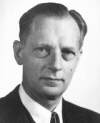
Born 5 Dec 1896; died 20 Oct 1984 at age 87.
Carl Ferdinand Cori was an American biochemist who, teamed with his wife Gerty Cori, discovered a phosphate-containing form of the simple sugar glucose, and its universal importance to carbohydrate metabolism, led to an understanding of hormonal influence on the interconversion of sugars and starches in the animal organism. Their discoveries earned them (with Bernardo Houssay) the Nobel Prize for Medicine or Physiology in 1947.
Carl Ferdinand Cori was an American biochemist who, teamed with his wife Gerty Cori, discovered a phosphate-containing form of the simple sugar glucose, and its universal importance to carbohydrate metabolism, led to an understanding of hormonal influence on the interconversion of sugars and starches in the animal organism. Their discoveries earned them (with Bernardo Houssay) the Nobel Prize for Medicine or Physiology in 1947.
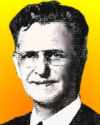
Born 5 Dec 1892; died 16 Oct 1955 at age 62.
American zoologist noted for his research on animal reproductive organs and internal secretions. Moore systematically studied the gonads and associated ducts and glands of vertebrates. Collaborating with T.F. Gallagher and F.C. Koch at the University of Chicago, he became the first to isolate testicular secretion containing the male sex hormones androsterone and testosterone; the former primarily influences the growth and development of the male reproductive system, whereas the latter is responsible for inducing and maintaining secondary male sex characteristics. This discovery (c. 1929) paved the way for research into the chemical makeup of such androgens and their production.
American zoologist noted for his research on animal reproductive organs and internal secretions. Moore systematically studied the gonads and associated ducts and glands of vertebrates. Collaborating with T.F. Gallagher and F.C. Koch at the University of Chicago, he became the first to isolate testicular secretion containing the male sex hormones androsterone and testosterone; the former primarily influences the growth and development of the male reproductive system, whereas the latter is responsible for inducing and maintaining secondary male sex characteristics. This discovery (c. 1929) paved the way for research into the chemical makeup of such androgens and their production.
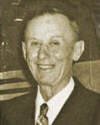
Born 5 Dec 1879; died 20 Nov 1954 at age 74.
American Aviator, aircraft manufacturer who invented the cantilever wing and a V-shaped tail configuration and a simple, flexible monoplane design.
American Aviator, aircraft manufacturer who invented the cantilever wing and a V-shaped tail configuration and a simple, flexible monoplane design.
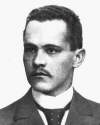
Born 5 Dec 1868; died 26 Apr 1951 at age 82. quotes
Arnold Johannes Wilhelm Sommerfeld was a German physicist whose atomic model permitted the explanation of fine-structure spectral lines. His first work was on the theory of the gyroscope (with Klein), and then on wave spreading in wireless telegraphy. More significant was his major contribution to the development of quantum theory, generally, and in its application to spectral lines and the Bohr atomic model. He evolved also a theory of the electron in the metallic state valuable to the study of thermo-electricity.
Arnold Johannes Wilhelm Sommerfeld was a German physicist whose atomic model permitted the explanation of fine-structure spectral lines. His first work was on the theory of the gyroscope (with Klein), and then on wave spreading in wireless telegraphy. More significant was his major contribution to the development of quantum theory, generally, and in its application to spectral lines and the Bohr atomic model. He evolved also a theory of the electron in the metallic state valuable to the study of thermo-electricity.
Arnold Sommerfeld: Science, Life and Turbulent Times, by Michael Eckert. - book suggestion.
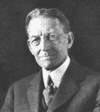
c. 1940 (EB)
Born 5 Dec 1864; died 31 Mar 1945 at age 80.
U.S. botanist and agricultural biologist who was one of the first and most distinguished of American plant pathologists. Jones began his career at a time when his specialty, plant pathology, was emerging as an offshoot of mycology, plant therapeutics, and bacteriology. He was always on the research frontier of each new development, and he has been credited with initiating interest in the environmental aspects of plant pathology. He pioneered in the use of Bordeaux mixture in the US. He began what became a 20-year experimental program of spraying various mixtures on different varieties of potatoes. For the Department of Agriculture he searched in Europe for disease-resistant potatoes. He also carried out fundamental studies on the bacterial soft rot of carrots and other vegetables. Although his work tended to focus on the diseases of economically important plants, the results were also contributions to basic science. His studies made possible a much greater control of potato diseases and a resulting increase in yield.
U.S. botanist and agricultural biologist who was one of the first and most distinguished of American plant pathologists. Jones began his career at a time when his specialty, plant pathology, was emerging as an offshoot of mycology, plant therapeutics, and bacteriology. He was always on the research frontier of each new development, and he has been credited with initiating interest in the environmental aspects of plant pathology. He pioneered in the use of Bordeaux mixture in the US. He began what became a 20-year experimental program of spraying various mixtures on different varieties of potatoes. For the Department of Agriculture he searched in Europe for disease-resistant potatoes. He also carried out fundamental studies on the bacterial soft rot of carrots and other vegetables. Although his work tended to focus on the diseases of economically important plants, the results were also contributions to basic science. His studies made possible a much greater control of potato diseases and a resulting increase in yield.
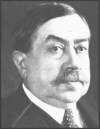
Born 5 Dec 1863; died 29 Oct 1933 at age 69. quotes
French politician and mathematician who was a patron of early aviation. Painlevé; received a doctorate in mathematics from Paris in 1887. In his work on differential equations and mechanics, he solved, using Painlevé; functions, differential equations which Poincaré; and Picard had failed to solve. He took a special interest in aviation, applying his theoretical skills to study the theory of flight. He was Wilbur Wright’s first passenger making a record 1 hr 10 min flight, then within a year he created the first university course in aeronautical mechanics. Although less skilled in politics than mathematics he began a political career in 1906 leading to two periods as French Prime Minister at a crucial period of World War I and again during the 1925 financial crisis.
French politician and mathematician who was a patron of early aviation. Painlevé; received a doctorate in mathematics from Paris in 1887. In his work on differential equations and mechanics, he solved, using Painlevé; functions, differential equations which Poincaré; and Picard had failed to solve. He took a special interest in aviation, applying his theoretical skills to study the theory of flight. He was Wilbur Wright’s first passenger making a record 1 hr 10 min flight, then within a year he created the first university course in aeronautical mechanics. Although less skilled in politics than mathematics he began a political career in 1906 leading to two periods as French Prime Minister at a crucial period of World War I and again during the 1925 financial crisis.
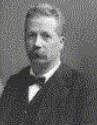
Born 5 Dec 1855; died 19 Mar 1942 at age 86. quotes
American biologist and ethnologist, who helped found the National Geographic Society (1888) and what is now the U.S. Fish and Wildlife Service. During his tenure at the latter, Merriam greatly influenced the manner in which the government studied and responded to wildlife. His seven "life zones" concept, detailing the relationship between animal and plant distribution and temperature patterns is still taught today. However, in steering the Division away from agricultural studies on the economics and control of noxious and predatory animals, Merriam caused difficulties for the very agency he headed. Most of all, his surveys and research studies on food habits of various animal and bird species remain lasting contributions to the wildlife management field.
American biologist and ethnologist, who helped found the National Geographic Society (1888) and what is now the U.S. Fish and Wildlife Service. During his tenure at the latter, Merriam greatly influenced the manner in which the government studied and responded to wildlife. His seven "life zones" concept, detailing the relationship between animal and plant distribution and temperature patterns is still taught today. However, in steering the Division away from agricultural studies on the economics and control of noxious and predatory animals, Merriam caused difficulties for the very agency he headed. Most of all, his surveys and research studies on food habits of various animal and bird species remain lasting contributions to the wildlife management field.
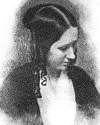
Born 5 Dec 1822; died 27 Jun 1907 at age 84.
American naturalist and educator (née Cary) who was the first president of Radcliffe College, Cambridge, Mass. She married the Swiss naturalist, Louis Agassiz, in 1850. They traveled together on scientific expeditions, and founded the Anderson school of Natural History, a Marine laboratory, located on Penikese Island in Buzzard's Bay, Mass. When her husband died in1873, Elizabeth became interested in the idea of college for women to be taught by the “Harvard Annex” in Cambridge. In 1894 the Annex became Radcliffe College. She served as president until 1899, then honorary president until 1903. Her books include A First Lesson in Natural History (1859), A Journey in Brazil (1867)
American naturalist and educator (née Cary) who was the first president of Radcliffe College, Cambridge, Mass. She married the Swiss naturalist, Louis Agassiz, in 1850. They traveled together on scientific expeditions, and founded the Anderson school of Natural History, a Marine laboratory, located on Penikese Island in Buzzard's Bay, Mass. When her husband died in1873, Elizabeth became interested in the idea of college for women to be taught by the “Harvard Annex” in Cambridge. In 1894 the Annex became Radcliffe College. She served as president until 1899, then honorary president until 1903. Her books include A First Lesson in Natural History (1859), A Journey in Brazil (1867)

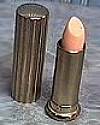
Died 5 Dec 1998 at age 92 (born 17 Aug 1906).
Hazel Gladys Bishop was an American chemist and cosmetic executive who made an indelible mark on the cosmetics industry by inventing non-smear ("stays on you not on him") kissproof lipstick. During WW II, as senior organic chemist with Standard Oil, she discovered the cause of deposits affecting superchargers of aircraft engines. She never married. In 1949, after a long series of home experiments, in a kitchen fitted out as a laboratory, she perfected a lipstick that stayed on the lips longer than any other product then available, and began its manufacture. It was introduced at $1 a tube in the summer of the following year. In 1951, a partner forced her out of the $10 million company she created.
Hazel Gladys Bishop was an American chemist and cosmetic executive who made an indelible mark on the cosmetics industry by inventing non-smear ("stays on you not on him") kissproof lipstick. During WW II, as senior organic chemist with Standard Oil, she discovered the cause of deposits affecting superchargers of aircraft engines. She never married. In 1949, after a long series of home experiments, in a kitchen fitted out as a laboratory, she perfected a lipstick that stayed on the lips longer than any other product then available, and began its manufacture. It was introduced at $1 a tube in the summer of the following year. In 1951, a partner forced her out of the $10 million company she created.
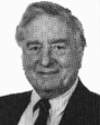
Died 5 Dec 1995 at age 73 (born 19 Nov 1922).
British geophysicist Southport, Lancashire, who was the first to discover evidence of the periodic polar reversals of the Earth's magnetic field. In the 1950s he was a pioneer in the fledgling discipline of paleomagnetism, or remanent magnetism, the study of the residual magnetism. He also made substantial contributions to various fields, including convection in the Earth and Moon, the shape and magnetic fields of the Moon and planets, magnetohydrodynamics of the Earth's core, earth currents, changes in the length of the day and polar wandering, continental drift and plate tectonics. He was murdered, aged 73, when he disturbed a thief in his motel room in San Diego, while on a US lecture tour.
British geophysicist Southport, Lancashire, who was the first to discover evidence of the periodic polar reversals of the Earth's magnetic field. In the 1950s he was a pioneer in the fledgling discipline of paleomagnetism, or remanent magnetism, the study of the residual magnetism. He also made substantial contributions to various fields, including convection in the Earth and Moon, the shape and magnetic fields of the Moon and planets, magnetohydrodynamics of the Earth's core, earth currents, changes in the length of the day and polar wandering, continental drift and plate tectonics. He was murdered, aged 73, when he disturbed a thief in his motel room in San Diego, while on a US lecture tour.
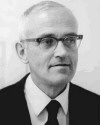
Died 5 Dec 1995 at age 73 (born 2 Jun 1922).
U.S. geochemist who in 1953 made the first precise measurement of the Earth's age, 4.55 billion years. He pioneered in three major areas of geochemical research. (1) He provided the first reliable ages of the earth and meteorites (1962), using analysis of the isotopic compositions and concentrations of lead in terrestrial materials and meteorites. This has been a benchmark for researchers. (2) He established the patterns of isotopic evolution of lead on earth, by analysis of critical rocks, sediments and waters of the planet. Thus he created a powerful tool for identifying, tracing and evaluating the nature of the major geochemical reservoirs in the crust, mantle, and oceans. (3) He studied environmental lead pollution.
U.S. geochemist who in 1953 made the first precise measurement of the Earth's age, 4.55 billion years. He pioneered in three major areas of geochemical research. (1) He provided the first reliable ages of the earth and meteorites (1962), using analysis of the isotopic compositions and concentrations of lead in terrestrial materials and meteorites. This has been a benchmark for researchers. (2) He established the patterns of isotopic evolution of lead on earth, by analysis of critical rocks, sediments and waters of the planet. Thus he created a powerful tool for identifying, tracing and evaluating the nature of the major geochemical reservoirs in the crust, mantle, and oceans. (3) He studied environmental lead pollution.
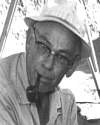
Died 5 Dec 1992 at age 88 (born 2 May 1904).
American anthropologist and archaeologist whose investigations of the ancient Indian civilizations of the southwestern United States and South America focussed on the preceramic and ceramic archaeology of the southwestern U.S. and Mexico; the archaeology of the Hohokam, Mogollon, and Anasazi Indians of the southwestern United States; and the archaeology of the Chibcha Indians of the northern Andes. He assembled one of the first prehistoric-to-historic archaeological records of the Southwestern U.S.
American anthropologist and archaeologist whose investigations of the ancient Indian civilizations of the southwestern United States and South America focussed on the preceramic and ceramic archaeology of the southwestern U.S. and Mexico; the archaeology of the Hohokam, Mogollon, and Anasazi Indians of the southwestern United States; and the archaeology of the Chibcha Indians of the northern Andes. He assembled one of the first prehistoric-to-historic archaeological records of the Southwestern U.S.
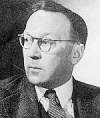

Scottish physicist who is credited with the development of radar location of aircraft, in England. He studied at St Andrews University, taught at Dundee University, and in 1917 worked in the Meteorological Office, designing devices to locate thunderstorms, and investigating the ionosphere (a term he invented in 1926). He became head of the radio section of the National Physical Laboratory (1935), where he began work on locating aircraft. His work led to the development of radar (RAdio Detection And Ranging) which played a vital role in the defence of Britain against German air raids in 1940. He was knighted in 1942.
The Radar Man: The Story of Sir Robert Watson-Watt, by John Rowland. - book suggestion.
Died 5 Dec 1965 at age 91 (born 5 Jan 1874).
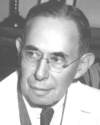
American physiologist who discovered that fibres within the same nerve cord possess different functions. In 1910 he accepted the chair of physiology at Washington University in St. Louis, which he held until his retirement in 1946. While his department became one of the major research centers in physiology in America. Erlanger continued his work on cardiovascular physiology. During WW I, he carried out research on the problem of shock. In 1921 he shifted his interests to neurophysiology, and began joint work, with colleague Herbert Gasser, on the amplification and recording of nerve action potentials with the cathode ray oscilloscope, for which they were awarded the Nobel Prize for Physiology or Medicine in 1944.
American physiologist who discovered that fibres within the same nerve cord possess different functions. In 1910 he accepted the chair of physiology at Washington University in St. Louis, which he held until his retirement in 1946. While his department became one of the major research centers in physiology in America. Erlanger continued his work on cardiovascular physiology. During WW I, he carried out research on the problem of shock. In 1921 he shifted his interests to neurophysiology, and began joint work, with colleague Herbert Gasser, on the amplification and recording of nerve action potentials with the cathode ray oscilloscope, for which they were awarded the Nobel Prize for Physiology or Medicine in 1944.
Died 5 Dec 1960 at age 76 (born 18 Dec 1883).
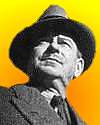
American industrial designer who pioneered in the establishment of industrial design as a profession in the United States. Teague designed cameras for Eastman Kodak and Polaroid, glassware for Steuben, interior designs, and many other items such as flat irons and radios. He designed the old-style Texaco gas stations, the ones that were painted white with forest-green streamline stripes and a free-standing post bearing the red Texaco star logo on a white disk, which were built alike over America.
American industrial designer who pioneered in the establishment of industrial design as a profession in the United States. Teague designed cameras for Eastman Kodak and Polaroid, glassware for Steuben, interior designs, and many other items such as flat irons and radios. He designed the old-style Texaco gas stations, the ones that were painted white with forest-green streamline stripes and a free-standing post bearing the red Texaco star logo on a white disk, which were built alike over America.
Died 5 Dec 1954 at age 85 (born 18 Jul 1869).
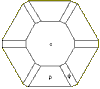
American mineralogist who was one of the most eminent crystallographers and mineralogists of the world, he lived in a period of revolutionary developments in mineralogical science. At the University of California (PhD 1887), he did the field work for the first geologic maps of the San Francisco Peninsula and the Berkley area. In 1895, while at Heidelberg taking courses in petrography, he was introduced to morphological crystallography by Victor Goldschmidt. Palache threw himself with enthusiasm into the study of crystals, and laid the foundation for the work he pursued vigorously for the next fifty-five years.Image: Crystal drawing of usual graphite crystal from Sterling Hill, NJ, from Palache's 1941 paper in American Mineralogist.
American mineralogist who was one of the most eminent crystallographers and mineralogists of the world, he lived in a period of revolutionary developments in mineralogical science. At the University of California (PhD 1887), he did the field work for the first geologic maps of the San Francisco Peninsula and the Berkley area. In 1895, while at Heidelberg taking courses in petrography, he was introduced to morphological crystallography by Victor Goldschmidt. Palache threw himself with enthusiasm into the study of crystals, and laid the foundation for the work he pursued vigorously for the next fifty-five years.Image: Crystal drawing of usual graphite crystal from Sterling Hill, NJ, from Palache's 1941 paper in American Mineralogist.
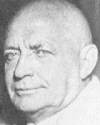
Died 5 Dec 1947 at age 84 (born 13 Aug 1863).
William I(saac) Thomas was an American sociologist and social psychologist whose fields of study included cultural change and personality development and who made important contributions to methodology. He earned his PhD in sociology at the University of Chicago where he joined the faculty in 1894. After he was dismissed from there after a sex scandal in 1918, his career was was limited to obtaining research funding and visiting professorships. An empiricist, he helped to make sociology a scientific discipline; he also pioneered the study of social psychology. His most important books were Source Book for Social Origins (1909) and coauthor The Polish Peasant in Europe and America (ed, 5 vols 1918-20).
William I(saac) Thomas was an American sociologist and social psychologist whose fields of study included cultural change and personality development and who made important contributions to methodology. He earned his PhD in sociology at the University of Chicago where he joined the faculty in 1894. After he was dismissed from there after a sex scandal in 1918, his career was was limited to obtaining research funding and visiting professorships. An empiricist, he helped to make sociology a scientific discipline; he also pioneered the study of social psychology. His most important books were Source Book for Social Origins (1909) and coauthor The Polish Peasant in Europe and America (ed, 5 vols 1918-20).
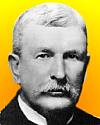
Died 5 Dec 1920 at age 71 (born 1 Jan 1849).
American inventor of the crawler track (1904) in the form of an endless chain tread for his steam traction engine. The Caterpillar name resulted when a man photographing one of Holt's track-laying vehicles viewed the motion of the track as it travelled and said it reminded him of a caterpillar. Holt liked it as a nickname, and began using the name for his crawler track. Some years later, when his company merged with another manufacturer, Caterpillar was first used in the company name.
American inventor of the crawler track (1904) in the form of an endless chain tread for his steam traction engine. The Caterpillar name resulted when a man photographing one of Holt's track-laying vehicles viewed the motion of the track as it travelled and said it reminded him of a caterpillar. Holt liked it as a nickname, and began using the name for his crawler track. Some years later, when his company merged with another manufacturer, Caterpillar was first used in the company name.
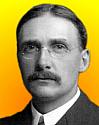
1905
Died 5 Dec 1910 at age 44 (born 3 Sep 1866).
American physician who investigated the role of bacteria in the gastrointestinal tract and developed techniques for measuring their products such as indol. Herter's early research interests culminated in the publication of The Diagnosis of Diseases of the Nervous System (1892). He then shifted his attention to the biochemical study of disease. In 1893 had the upper floor of his house remodelled so that he could carry out laboratory work. Examining the biochemistry of metabolic disorders and the formation of gallstones and glycosuria. He was commissioned by President Theodore Roosevelt to examine the possible effects of sodium benzoate in its use in food preservatives and from the investigation concluded that it was perfectly safe.
American physician who investigated the role of bacteria in the gastrointestinal tract and developed techniques for measuring their products such as indol. Herter's early research interests culminated in the publication of The Diagnosis of Diseases of the Nervous System (1892). He then shifted his attention to the biochemical study of disease. In 1893 had the upper floor of his house remodelled so that he could carry out laboratory work. Examining the biochemistry of metabolic disorders and the formation of gallstones and glycosuria. He was commissioned by President Theodore Roosevelt to examine the possible effects of sodium benzoate in its use in food preservatives and from the investigation concluded that it was perfectly safe.
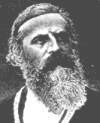
Died 5 Dec 1902 at age 67 (born 24 Jun 1835). quotes
Johannes Adolph Wislicenus was a German chemist whose pioneering work led to the recognition of the importance of the spatial arrangement of atoms within a molecule. He is noted for his work on the lactic acids, and in particular for his discoveries in the study of the geometrical isomerism (the existence of identical formulae with differing chemical properties) of organic compounds.
Johannes Adolph Wislicenus was a German chemist whose pioneering work led to the recognition of the importance of the spatial arrangement of atoms within a molecule. He is noted for his work on the lactic acids, and in particular for his discoveries in the study of the geometrical isomerism (the existence of identical formulae with differing chemical properties) of organic compounds.
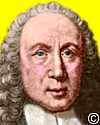
Died 5 Dec 1771 at age 89 (born 25 Feb 1682). quotes
Italian anatomist and pathologist whose works helped make anatomy an exact science. His early studies of particularly the throat, and the sinus and hydatid of Morgagni in this region perpetuate his name. Morgagni wrote his major work De sedibus et causis morborum per anatomen indigatis ("On the Seats and Causes of Disease," Venice, 1771, trans. French, English, and German) which laid the foundation of modern pathology. He thought tuberculosis contagious and refused to make autopsies on tuberculous subjects; his teaching led to laws requiring upon the death of tuberculosis patients that their rooms be disinfected and their clothing burned. For cancer, Morgagni insisted that the knife was the only remedy that gave fruitful results. more
Italian anatomist and pathologist whose works helped make anatomy an exact science. His early studies of particularly the throat, and the sinus and hydatid of Morgagni in this region perpetuate his name. Morgagni wrote his major work De sedibus et causis morborum per anatomen indigatis ("On the Seats and Causes of Disease," Venice, 1771, trans. French, English, and German) which laid the foundation of modern pathology. He thought tuberculosis contagious and refused to make autopsies on tuberculous subjects; his teaching led to laws requiring upon the death of tuberculosis patients that their rooms be disinfected and their clothing burned. For cancer, Morgagni insisted that the knife was the only remedy that gave fruitful results. more
Doctors: The Biography of Medicine, by Sherwin B. Nuland. - book suggestion.
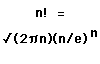
Died 5 Dec 1770 (born 1692).
Scottish mathematician who contributed important advances to the theory of infinite series and infinitesimal calculus. His most important book, Methodus Differentialis (1730), was written while in London. It is a treatise on infinite series, summation, interpolation and quadrature, and the text includes the asymptotic formula for n! for which Stirling is best known. In 1735 he returned to Scotland where he became manager of the 'Scotch mining company, Leadhills'. In 1745 Stirling published a paper on the ventilation of mine shafts.
Scottish mathematician who contributed important advances to the theory of infinite series and infinitesimal calculus. His most important book, Methodus Differentialis (1730), was written while in London. It is a treatise on infinite series, summation, interpolation and quadrature, and the text includes the asymptotic formula for n! for which Stirling is best known. In 1735 he returned to Scotland where he became manager of the 'Scotch mining company, Leadhills'. In 1745 Stirling published a paper on the ventilation of mine shafts.
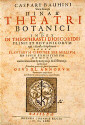
Died 5 Dec 1624 at age 64 (born 17 Jan 1560).
Swiss physician, anatomist and botanist who introduced a scientific binomial system of classification to both anatomy and botany. In 1623 Gaspard Bauhin produced the Pinax Theatri Botanici. (Basel, 1623), the first attempt to summarize a confusing array of names. It was a monumental compilation that pulled together uncoordinated plant names and descriptions of 6000 species that had appeared in Theophrastus and Dioscorides, as well as in later herbals and other plant records. By accepting Bauhin's compilation, Linnaeus was able to avoid many of the complications of the ancient literature.
Swiss physician, anatomist and botanist who introduced a scientific binomial system of classification to both anatomy and botany. In 1623 Gaspard Bauhin produced the Pinax Theatri Botanici. (Basel, 1623), the first attempt to summarize a confusing array of names. It was a monumental compilation that pulled together uncoordinated plant names and descriptions of 6000 species that had appeared in Theophrastus and Dioscorides, as well as in later herbals and other plant records. By accepting Bauhin's compilation, Linnaeus was able to avoid many of the complications of the ancient literature.
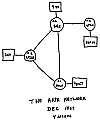
In 1969, the nacent ARPANET grew to four nodes when ARPA (the U.S. Department of Defense's Advanced Research Projects Agency) connected computer network nodes at four universities: the University of California, Los Angeles (UCLA), the Stanford Research Institute (SRI) in Menlo Park, Calif., U.C. Santa Barbara, and the University of Utah. Initial test login characters had been sent on 29 Oct 1969 from a ULCA computer to a computer at SRI, which were permanently connected on 21 Nov 1969 through early routers (small packet-switching computers then called Interface Message Processors). This “network of networks” eventually evolved into what became known as the Internet of the mid-1980s.«Image: Diagram of ARPA Network, Dec 1969, 4 nodes. From bottom, clockwise, links with computers at UCLA, UCSB, SRI and Utah.
Where Wizards Stay Up Late: The Origins Of The Internet, by Katie Hafner. - book suggestion.
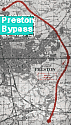
In 1958, Britain's first stretch of motorway, the 8 mile Preston bypass was officially opened by the Prime Minister, Harold MacMillan. The path of the by-pass was designed as part of a North-South Motorway, other lengths of which were under construction. The original bypass started in Walton-le-Dale at a roundabout on the Manchester-Preston Trunk Road a short distance south of the A49 junction, travelled by viaduct over the River Darwen and ended at a roundabout on the A6 a short distance south of Broughton. As a model for all other British motorways it drew such a very large number of visits of inspection by Engineering Institutions and Associations that the County Council appointed a panel of retired engineers to act as guides.
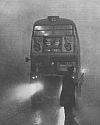
Flare-led bus
In 1952, a dense smog descended on London, England, that would last four days, causing at least 4,000 deaths and chaos for transportation as visibility was reduced to a few hundred yards. Freshening winds and a rise in temperature dissipated the fog, which cleared on 9 Dec 1952. Although the London Underground could maintain service, but during the four days of smog bus service was vitually shut down when visibility was reduced so severely the roads became congested. During the time of dense fog, most flights in to London Airport were diverted to Hurn, near Bournemouth and linked by train with a Waterloo. The many deaths were of mostly among the elderly, the very young, or those with medical problems. The cause of the smog was coal-burning and required drastic action: the Clear Air Act of 1956.«
Killer Smog: The World's Worst Air Pollution Disaster, by William Wise. - book suggestion.

USPTO
In 1951, the first push button-controlled Park-O-Mat garage opened in Washington, DC by Parking Services Inc. It had no ramps, no aisles and no lanes. Instead a single attendant, without entering a car, could automatically park or return an auto in less than a minute. It used a "vehicle parking apparatus" (patented 14 Oct 1947, No. 2,428,856). Two elevators parked 72 cars on a lot 25 by 40 feet. The garage was an open building with 16 floors and 2 basement levels.*

In 1935, the first large hydroponicum was established in Montebello, Cal., by Ernest W. Brundin and Frank F. Lyon, who installed a circulating system. They were issued a U.S. patent on 1 Dec 1936 for a "system of water culture." They incorporated on 19 Oct 1937 as the Chemi-Culture Company.Benefits of chemiculture include higher yields in less space, can be used even in desert gardening, quicker growth and attracts least diseases. The word hydroponics was coined in the early 1930s, by Professor Gericke at U.C.L.A. to describe the growing of plants with their roots suspended in water containing mineral nutrients. It comes from two Greek words: "hydro" (water) and "ponos" (to work, labor).*
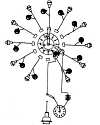
USPTO
In 1879, the first U.S. patent was issued for an automatic telephone switching system to Daniel Connolly of Philadelphia, Thomas A. Connolly of Washington, D.C. and Thomas J. McTighe of Pittsburgh (No. 222,458). The system consisted of a single-line wire, a battery of cells located at each telephone. and a dial switching mechanism for each line. Although this first system was crude in design and limited to a small number of subscribers, it introduced the general principle of later dial systems. The system, with eight stations connected, was exhibited at the Paris Exposition in 1881. The inventors made various modifications in subsequent patents. The system served a limited number of lines and was not introduced commercially.*

USPTO
In 1876, a U.S. patent for the first practical pipe wrench - the Stillson wrench - was issued to Daniel C. Stillson of Somerville, Mass. (No. 184,993). In 1869, he had whittled a model out of wood, which he showed to his boss at the Walworth Company. He recognised the wooden pattern showed a new type of pipe wrench, superior to anything else in use at that time, and badly needed in the growing pipe industry. Stillson was instructed to test one built in steel. The test convinced the company owner that the concept was sound. Stillson obtained a patent, and offered to sell the patent for a small outright payment. Instead, the owner graciously advised Stillson accept royalties instead. Stillson thus earned far more in his lifetime.* more

USPTO
In 1854, Aaron H. Allen of Boston, Mass. was issued a U.S. patent for a folding chair as an "Improvement in Self-Adjusting Opera-Seat" for theatres or other public buildings. (No. 12,017) The pivoted seat was constructed with weights or springs to assume and retain a vertical position when pressure upon it is relieved as the occupant rises from it.*
In 1846, Christian Frederick Schönbein of Basle, Switzerland, was issued a U.S. Patent for guncotton titled “Improvement in Preparation of Cotton-Wool and Other Substances as Substitutes for Gunpowder” (No. 4874). The process uses a mixture of concentrated acids to convert the cellulose present in well-cleaned cotton-wool, C6H10O5 into cellulose nitrate C6H8(NO2)2O5 (nitrocellulose). In 1891, James Dewar and Frederick Abel incorporated nitrocellulose in a mixture that could be handled more safely. Until WW II, this invention replaced gunpower on the battlefield, where it had been used for five centuries. It was also useful for blasting because it generates about six times the gas of an equal volume of gunpowder and produces less smoke and heat.
more




