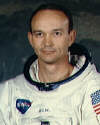
Born 31 Oct 1930. quotes
American astronaut, born in Rome, Italy, was the Apollo 11 Command Module Pilot orbiting while Neil Armstrong and Edwin Aldrin walked on the moon. Selected as a NASA astronaut in Oct 1963, Collins' first assignment was as Gemini VII backup pilot. As a pilot on the three-day Gemini X Mission, launched 18 Jul 1966, he docked with a separately launched Agena target vehicle, and made two extra-vehicular space walks, retrieving micrometeorite detection equipment from the Agena. On the Apollo 11 first lunar landing mission, launched 16 Jul 1969, he remained in orbit while Armstrong and Aldrin walked the Moon's surface. His skill, recovering the Eagle and returning the orbiter to Earth, were vital to the success of the mission.«
American astronaut, born in Rome, Italy, was the Apollo 11 Command Module Pilot orbiting while Neil Armstrong and Edwin Aldrin walked on the moon. Selected as a NASA astronaut in Oct 1963, Collins' first assignment was as Gemini VII backup pilot. As a pilot on the three-day Gemini X Mission, launched 18 Jul 1966, he docked with a separately launched Agena target vehicle, and made two extra-vehicular space walks, retrieving micrometeorite detection equipment from the Agena. On the Apollo 11 first lunar landing mission, launched 16 Jul 1969, he remained in orbit while Armstrong and Aldrin walked the Moon's surface. His skill, recovering the Eagle and returning the orbiter to Earth, were vital to the success of the mission.«
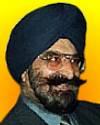
Born 31 Oct 1927.
Indian-American physicist who is widely acknowledged as the father of fibre optics. He coined the term fibre optics for the technology transmitting light through fine glass strands in devices from endoscopy to high-capacity telephone lines that has changed the medical, communications and business worlds. While growing up in Dehradun in northern India, a teacher informed him that light only traveled in a straight line. He took this as a challenge and made the study of light his life work, initially at Imperial College, London. On 2 Jan 1954, Nature published his report of successfully transmitting images through fiber optical bundles. The following year he went to the U.S. to teach. In 1960, Optics Technology. He holds over 100 patents.
Indian-American physicist who is widely acknowledged as the father of fibre optics. He coined the term fibre optics for the technology transmitting light through fine glass strands in devices from endoscopy to high-capacity telephone lines that has changed the medical, communications and business worlds. While growing up in Dehradun in northern India, a teacher informed him that light only traveled in a straight line. He took this as a challenge and made the study of light his life work, initially at Imperial College, London. On 2 Jan 1954, Nature published his report of successfully transmitting images through fiber optical bundles. The following year he went to the U.S. to teach. In 1960, Optics Technology. He holds over 100 patents.
Born 31 Oct 1925; died 15 Mar 2004 at age 78.
British mathematician and chemist who shared (with Walter Kohn) the 1998 Nobel Prize in Chemistry for his work on computational methodology to study the quantum mechanics of molecules, their properties and how they act together in chemical reactions. Using Schrödinger's fundamental laws of quantum mechanics, he developed a computer program which, when provided with particulars of a molecule or a chemical reaction, outputs a description of the properties of that molecule or how a chemical reaction may take place - often used to illustrate or explain the results of different kinds of experiment. Pople provided his GAUSSIAN computer program to researchers (first published in 1970). Further developed, it is now used by thousands of chemists the world over.
British mathematician and chemist who shared (with Walter Kohn) the 1998 Nobel Prize in Chemistry for his work on computational methodology to study the quantum mechanics of molecules, their properties and how they act together in chemical reactions. Using Schrödinger's fundamental laws of quantum mechanics, he developed a computer program which, when provided with particulars of a molecule or a chemical reaction, outputs a description of the properties of that molecule or how a chemical reaction may take place - often used to illustrate or explain the results of different kinds of experiment. Pople provided his GAUSSIAN computer program to researchers (first published in 1970). Further developed, it is now used by thousands of chemists the world over.
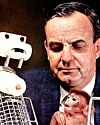
Born 31 Oct 1910; died 6 Dec 1981 at age 71. quotes
American psychologist who studied the social behaviour and development of monkeys. His research in the areas of learning, motivation, and affection extended understanding in general human and child psychology. He experimented with 6-12 hours old infant monkeys separated from their mothers then provided with an inanimate substitute “mother” made either of wire mesh or cloth providing warmth and food. However, as adults, these deprived monkeys exhibited strange behavioral patterns. Some females were negligent as mothers that did not nurse or comfort their young. The other mothers were abusive, biting or injuring their young, even sometimes causing the baby's death. In 1967, he was awarded the National Medal of Science.
American psychologist who studied the social behaviour and development of monkeys. His research in the areas of learning, motivation, and affection extended understanding in general human and child psychology. He experimented with 6-12 hours old infant monkeys separated from their mothers then provided with an inanimate substitute “mother” made either of wire mesh or cloth providing warmth and food. However, as adults, these deprived monkeys exhibited strange behavioral patterns. Some females were negligent as mothers that did not nurse or comfort their young. The other mothers were abusive, biting or injuring their young, even sometimes causing the baby's death. In 1967, he was awarded the National Medal of Science.
Love at Goon Park: Harry Harlow and the Science of Affection, by Deborah Blum. - book suggestion.
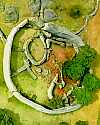
Born 31 Oct 1873; died 30 Apr 1945 at age 71.
English-American archaeologist and anthropologist who excaved in Egypt and Sudan. He began his career of excavation with Sir Flinders Petrie at Abydos, Egypt (1899-1901). After conducting excavations of the Great Zimbabwe ruins in Southern Rhodesia (now Zimbabwe), Randall-MacIver wrote Medieval Rhodesia (1906), in which he contended that the ruins were not built by an ancient and vanished white civilization as was currently believed but were of purely African 14th century origin (as confirmed by later archaeological study). Walls at these ruins stood as high as 32 feet over the surrounding savanna. From 1907 to 1911 Randall-MacIver led an expedition into Egypt and the Sudan.«[Image: aerial view of the Great Zimbabwe ruins.]
English-American archaeologist and anthropologist who excaved in Egypt and Sudan. He began his career of excavation with Sir Flinders Petrie at Abydos, Egypt (1899-1901). After conducting excavations of the Great Zimbabwe ruins in Southern Rhodesia (now Zimbabwe), Randall-MacIver wrote Medieval Rhodesia (1906), in which he contended that the ruins were not built by an ancient and vanished white civilization as was currently believed but were of purely African 14th century origin (as confirmed by later archaeological study). Walls at these ruins stood as high as 32 feet over the surrounding savanna. From 1907 to 1911 Randall-MacIver led an expedition into Egypt and the Sudan.«[Image: aerial view of the Great Zimbabwe ruins.]
Greek Cities in Italy and Sicily, by David Randall-MacIver. - book suggestion.
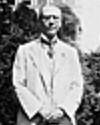
Born 31 Oct 1870; died 17 Oct 1939 at age 68. quotes
English chemist who broadened understanding of stereoisomerism. In 1899, he produced an optically active compound that contained an asymetric nitrogen atom, but no asymmetric carbon atoms, thus proving that the Van't Hoff theory applied to atoms other than carbon. By 1902 he had prepared optically active compounds centred upon asymmetric atoms of sulphur, selenium, and tin. Later, he even demonstrated that compounds without asymmetric atoms of any sort, could yet be optically active due to being asymmetric as a whole, through the influence of steric influence. Such behaviour had first been proposed by Viktor Meyer. During WW I, Pope worked on production methods for large quantities of mustard gas, a poison gas used in that war.
English chemist who broadened understanding of stereoisomerism. In 1899, he produced an optically active compound that contained an asymetric nitrogen atom, but no asymmetric carbon atoms, thus proving that the Van't Hoff theory applied to atoms other than carbon. By 1902 he had prepared optically active compounds centred upon asymmetric atoms of sulphur, selenium, and tin. Later, he even demonstrated that compounds without asymmetric atoms of any sort, could yet be optically active due to being asymmetric as a whole, through the influence of steric influence. Such behaviour had first been proposed by Viktor Meyer. During WW I, Pope worked on production methods for large quantities of mustard gas, a poison gas used in that war.
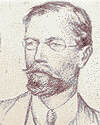
Born 31 Oct 1857; died 11 Feb 1949 at age 91.
Swedish physician, psychiatrist, and writer whose book The Story of San Michele (1929), one of the world first best sellers in its original English version and in many translations. The book recounts his experiences as a doctor in Paris and Rome and in semiretirement at the villa of San Michele on Capri. Munthe himself was a fascinating man, youngest doctor in the history of France, society doctor to European royalty, but who understood that medicine and doctoring is more about people than wonder drugs and technology. He left the lucrative medical practice in Paris to practice his profession part time time so that he could build the house of his dreams, creating of one of the world's most beautiful houses.
Swedish physician, psychiatrist, and writer whose book The Story of San Michele (1929), one of the world first best sellers in its original English version and in many translations. The book recounts his experiences as a doctor in Paris and Rome and in semiretirement at the villa of San Michele on Capri. Munthe himself was a fascinating man, youngest doctor in the history of France, society doctor to European royalty, but who understood that medicine and doctoring is more about people than wonder drugs and technology. He left the lucrative medical practice in Paris to practice his profession part time time so that he could build the house of his dreams, creating of one of the world's most beautiful houses.
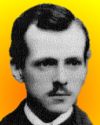
Born 31 Oct 1848; died 4 Feb 1895 at age 46.
American ethnologist who is known principally for his linguistic and ethnographic studies of the Siouan Indians. As an ordained Episcopal deacon (1871), while a missionary to the Ponca tribe of the Dakota Territory, he used his knowledge of classical languages to learn the Ponca language. Subsequently, he joined the newly formed Bureau of American Ethnology (1879), as one of its first members, and was asssigned to Nebraska to study the Omaha tribe. From thereon, Dorsey was able to make extensive linguistic studies among several tribes there and others in Oregon. He published works of his own and edited other works that have remained substantial resources.
American ethnologist who is known principally for his linguistic and ethnographic studies of the Siouan Indians. As an ordained Episcopal deacon (1871), while a missionary to the Ponca tribe of the Dakota Territory, he used his knowledge of classical languages to learn the Ponca language. Subsequently, he joined the newly formed Bureau of American Ethnology (1879), as one of its first members, and was asssigned to Nebraska to study the Omaha tribe. From thereon, Dorsey was able to make extensive linguistic studies among several tribes there and others in Oregon. He published works of his own and edited other works that have remained substantial resources.
Dakota Grammar: With Texts and Ethnography, by Stephen R. Riggs, James Owen Dorsey, John D. Nichols. - book suggestion.
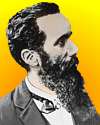
Born 31 Oct 1847; died 7 Feb 1897 at age 49.
Italian physicist who studied optics, acoustics and several fields of electrotechnics, but his most important discovery was the rotating magnetic field. He produced the field with two electromagnets in perpendicular planes, and each supplied with a current that was 90º out of phase. This could induce a current in a incorporated copper rotor, producing a motor powered by alternating current. He produced his first induction motor (with 4 poles) in May-Jun 1885. Its principles are now applied in the majority of today's a.c. motors, yet he refused to patent his invention, and preferred to place it at the service of everyone.«
Italian physicist who studied optics, acoustics and several fields of electrotechnics, but his most important discovery was the rotating magnetic field. He produced the field with two electromagnets in perpendicular planes, and each supplied with a current that was 90º out of phase. This could induce a current in a incorporated copper rotor, producing a motor powered by alternating current. He produced his first induction motor (with 4 poles) in May-Jun 1885. Its principles are now applied in the majority of today's a.c. motors, yet he refused to patent his invention, and preferred to place it at the service of everyone.«
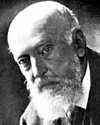
(EB)
Born 31 Oct 1835; died 20 Aug 1917 at age 81. quotes
Johann Friedrich Wilhelm Adolf von Baeyer was a German chemist who synthesized indigo (1880) and formulated its structure (1883). He was awarded the Nobel Prize for Chemistry in 1905 "in recognition of his services in the advancement of organic chemistry and the chemical industry, through his work on organic dyes and hydroaromatic compounds". Baeyer also did work on acetylene and polyacetylene, and from this derived the famous Baeyer strain theory of the carbon rings. He studied benzene and cyclic terpene. In this connexion the Baeyer-Villiger oxidation of ketones by means of per-acids was discovered. His work on organic peroxides and oxonium compounds and on the connexion between constitution and colour aroused special interest.
Johann Friedrich Wilhelm Adolf von Baeyer was a German chemist who synthesized indigo (1880) and formulated its structure (1883). He was awarded the Nobel Prize for Chemistry in 1905 "in recognition of his services in the advancement of organic chemistry and the chemical industry, through his work on organic dyes and hydroaromatic compounds". Baeyer also did work on acetylene and polyacetylene, and from this derived the famous Baeyer strain theory of the carbon rings. He studied benzene and cyclic terpene. In this connexion the Baeyer-Villiger oxidation of ketones by means of per-acids was discovered. His work on organic peroxides and oxonium compounds and on the connexion between constitution and colour aroused special interest.
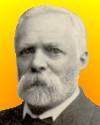
Born 31 Oct 1831; died 31 Jan 1908 at age 76.
German physiologist who measured gross metabolism in mammals and humans. He made the first determination of the amount of fat, protein, and carbohydrate broken down by the body; proved the equality of total input of carbon, hydrogen, nitrogen, and oxygen with output of these elements in metabolic products excreted and exhaled by animals on constant diets; founded study of metabolic activity as guide to disease; disproved idea that protein is the source of muscle energy; investigated nutritional value of many substances including asparagine and peptones, which led to discovery of essential amino acids; devised first calorimeter large enough for studies of human metabolism. His collaboration with Max von Pettenkofer helped establish modern nutritional science.
German physiologist who measured gross metabolism in mammals and humans. He made the first determination of the amount of fat, protein, and carbohydrate broken down by the body; proved the equality of total input of carbon, hydrogen, nitrogen, and oxygen with output of these elements in metabolic products excreted and exhaled by animals on constant diets; founded study of metabolic activity as guide to disease; disproved idea that protein is the source of muscle energy; investigated nutritional value of many substances including asparagine and peptones, which led to discovery of essential amino acids; devised first calorimeter large enough for studies of human metabolism. His collaboration with Max von Pettenkofer helped establish modern nutritional science.
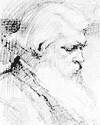
Born 31 Oct 1828; died 27 May 1914 at age 85. quotes
English scientist, chemist, physicist and inventor, born in Sunderland, Yorkshire, who produced an early electric incandescent lamp. He began these experiments in the 1840s and obtained a UK patent covering a partial vacuum, carbon filament incandescent lamp in 1860. Swan's early lamps provided low light output, were short lived, and were operated from battery cells. Low voltage operation required relatively high filament current that necessitated that the power source be co-located near the Swan lamp. He also addressed the problem of photographic print fading and in the mid 1850s some began to experiment with a solution using carbon, perfecting and patenting the process in 1864. Thus Swan invented the dry photographic plate, an important improvement in photography.[Image: pencil drawing by M. Agnes Cohen, 1894.]
English scientist, chemist, physicist and inventor, born in Sunderland, Yorkshire, who produced an early electric incandescent lamp. He began these experiments in the 1840s and obtained a UK patent covering a partial vacuum, carbon filament incandescent lamp in 1860. Swan's early lamps provided low light output, were short lived, and were operated from battery cells. Low voltage operation required relatively high filament current that necessitated that the power source be co-located near the Swan lamp. He also addressed the problem of photographic print fading and in the mid 1850s some began to experiment with a solution using carbon, perfecting and patenting the process in 1864. Thus Swan invented the dry photographic plate, an important improvement in photography.[Image: pencil drawing by M. Agnes Cohen, 1894.]
Sir Joseph Wilson Swan, F.R.S.: inventor and scientist, by Mary E. Swan, Kenneth Raydon Swan. - book suggestion.
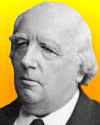
Born 31 Oct 1815; died 19 Feb 1897 at age 81. quotes
Karl Theodor Wilhelm Weierstrass was a German mathematician known as the “father of modern analysis” for his rigour in analysis led to the modern theory of functions, and considered one of the greatest mathematics teachers of all-time. He was doing mathematical research while a secondary school teacher, when in 1854, he published a paper on Abelian functions in the famous Crelle Journal. The paper so impressed the mathematical community that he shortly received an honorary doctorate and by 1856, he had a University appointment in Berlin. In 1871, he demonstrated that there exist continuous functions in an interval which have no derivatives nowhere in the interval. He also did outstanding work on complex variables.«
Karl Theodor Wilhelm Weierstrass was a German mathematician known as the “father of modern analysis” for his rigour in analysis led to the modern theory of functions, and considered one of the greatest mathematics teachers of all-time. He was doing mathematical research while a secondary school teacher, when in 1854, he published a paper on Abelian functions in the famous Crelle Journal. The paper so impressed the mathematical community that he shortly received an honorary doctorate and by 1856, he had a University appointment in Berlin. In 1871, he demonstrated that there exist continuous functions in an interval which have no derivatives nowhere in the interval. He also did outstanding work on complex variables.«
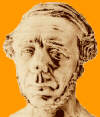
Born 31 Oct 1802; died 31 Jul 1867 at age 64.
French engineer and inventor of the water turbine. In 1827, age 25, Fourneyron, introduced a reaction turbine that channeled water through an enclosed chamber fitted with an inner ring of fixed guide blades. These guide blades deflected the water outward against the moving vanes of a "runner." The vanes of this outer runner were curved in the opposite direction from the fixed inner guide blades, reversing the direction of water flow within the device and creating a reactive force. Fourneyron's patent described his invention as "a wheel of universal and continuous pressure or hydraulic turbine." He died in Paris, known as " father of the turbine"
French engineer and inventor of the water turbine. In 1827, age 25, Fourneyron, introduced a reaction turbine that channeled water through an enclosed chamber fitted with an inner ring of fixed guide blades. These guide blades deflected the water outward against the moving vanes of a "runner." The vanes of this outer runner were curved in the opposite direction from the fixed inner guide blades, reversing the direction of water flow within the device and creating a reactive force. Fourneyron's patent described his invention as "a wheel of universal and continuous pressure or hydraulic turbine." He died in Paris, known as " father of the turbine"
Born 31 Oct 1692; died 5 Sep 1765 at age 72.
Anne-Claude-Philippe de Tubières, comte de Caylus, was a French archaeologist who is credited with being the first to conceive archaeology as a scientific discipline and in this respect Winckelmann acknowledged indebtedness to him. His own collection of antiques, which he began in 1729, formed the basis of his Recueil d'antiquités égyptiennes, étrusques, grecques, romaines et gauloises (7 vols., 1752-67), the most serious work of antiquarian research in the 18th cent. and one of the most influential in spreading knowledge and enthusiasm for the works of Classical antiquity. Caylus was also a painter and an engraver, and he is also credited with finding a new process to inlay colors in marble.
Anne-Claude-Philippe de Tubières, comte de Caylus, was a French archaeologist who is credited with being the first to conceive archaeology as a scientific discipline and in this respect Winckelmann acknowledged indebtedness to him. His own collection of antiques, which he began in 1729, formed the basis of his Recueil d'antiquités égyptiennes, étrusques, grecques, romaines et gauloises (7 vols., 1752-67), the most serious work of antiquarian research in the 18th cent. and one of the most influential in spreading knowledge and enthusiasm for the works of Classical antiquity. Caylus was also a painter and an engraver, and he is also credited with finding a new process to inlay colors in marble.
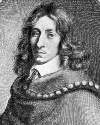
Born 31 Oct 1620; died 27 Feb 1706 at age 85. quotes
English country gentleman, diarist, author of some 30 books on the fine arts, forestry, and religious topics. A lifelong member of the Royal Society, he produced for the commissioners of the navy the book, Sylva, or a Discourse of Forest-trees, and the Propagation of Timber (1664), encouraging estate owners to plant timber for the navy. It was the first important work on conservation, published at a time when English forests were being stripped of timber to build ships for the expanding British Navy. The book gave a description of the various kinds of trees, their cultivation, uses, and advice on pruning, insect control, wound treatment, and transplanting. The study, with numerous modifications, had gone through 10 editions by 1825.
English country gentleman, diarist, author of some 30 books on the fine arts, forestry, and religious topics. A lifelong member of the Royal Society, he produced for the commissioners of the navy the book, Sylva, or a Discourse of Forest-trees, and the Propagation of Timber (1664), encouraging estate owners to plant timber for the navy. It was the first important work on conservation, published at a time when English forests were being stripped of timber to build ships for the expanding British Navy. The book gave a description of the various kinds of trees, their cultivation, uses, and advice on pruning, insect control, wound treatment, and transplanting. The study, with numerous modifications, had gone through 10 editions by 1825.

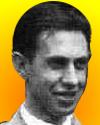
Died 31 Oct 1988 at age 87 (born 6 Dec 1900). quotes
Dutch-American physicist who, with Samuel A. Goudsmit, proposed the concept of electron spin (Jan 1925) - a fourth quantum number which was a half integer. This provided Wolfgang Pauli's anticipated “fourth quantum number.” In their experiment, a horizontal beam of silver atoms travelling through a vertical magnetic field was deflected in two directions according to the interaction of their spin (either “up” or “down”) with the magnetic field. This was the first demonstration of this quantum effect, and an early confirmation of quantum theory. As well as fundamental work on quantum mechanics, Uhlenbeck worked on atomic structure, the kinetic theory of matter and extended Boltzmann's equation to dense gases.«
Dutch-American physicist who, with Samuel A. Goudsmit, proposed the concept of electron spin (Jan 1925) - a fourth quantum number which was a half integer. This provided Wolfgang Pauli's anticipated “fourth quantum number.” In their experiment, a horizontal beam of silver atoms travelling through a vertical magnetic field was deflected in two directions according to the interaction of their spin (either “up” or “down”) with the magnetic field. This was the first demonstration of this quantum effect, and an early confirmation of quantum theory. As well as fundamental work on quantum mechanics, Uhlenbeck worked on atomic structure, the kinetic theory of matter and extended Boltzmann's equation to dense gases.«
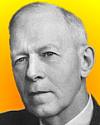
Died 31 Oct 1986 at age 90 (born 7 Jun 1896). quotes
American chemist and physicist who received the 1966 Nobel Prize for Chemistry for “fundamental work concerning chemical bonds and the electronic structure of molecules.” In 1922, he first suggested a method of isotope separation by evaporative centrifuging. Thereafter, most of his research career was concerned with the interpretation of molecular spectra and with the application of quantum theory to the electronic states of molecules. With Friedrich Hund, he developed the molecular-orbital theory of chemical bonding, based on the idea that atomic orbitals of isolated atoms become molecular orbitals, extending over two or more atoms in the molecule. He also made major contributions to the theory and interpretation of molecular spectra.
American chemist and physicist who received the 1966 Nobel Prize for Chemistry for “fundamental work concerning chemical bonds and the electronic structure of molecules.” In 1922, he first suggested a method of isotope separation by evaporative centrifuging. Thereafter, most of his research career was concerned with the interpretation of molecular spectra and with the application of quantum theory to the electronic states of molecules. With Friedrich Hund, he developed the molecular-orbital theory of chemical bonding, based on the idea that atomic orbitals of isolated atoms become molecular orbitals, extending over two or more atoms in the molecule. He also made major contributions to the theory and interpretation of molecular spectra.
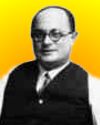
Died 31 Oct 1956 at age 63 (born 2 Jul 1893).
Sir Franz Eugen Francis Simon was a German-British physicist whose work in low-temperature physics reached a low of 20 millionths of a degree above absolute zero. He avoided life in Hitler's Germany by going to Oxford. Simon worked on lowering temperatures below the point previously possible by the Joule-Thomson effect. His method was to withdraw heat by lining up paramagnetic molecules at very low temperatures and then allow their orientation to randomize, abstracting further heat from the surroundings and lowering the temperature still further. He came closer to absolute zero, though with more difficulty, by doing the same with nuclear spins.Name before emigrating from Germany (due to anti-semiticsm): Franz Eugen Simon*
Sir Franz Eugen Francis Simon was a German-British physicist whose work in low-temperature physics reached a low of 20 millionths of a degree above absolute zero. He avoided life in Hitler's Germany by going to Oxford. Simon worked on lowering temperatures below the point previously possible by the Joule-Thomson effect. His method was to withdraw heat by lining up paramagnetic molecules at very low temperatures and then allow their orientation to randomize, abstracting further heat from the surroundings and lowering the temperature still further. He came closer to absolute zero, though with more difficulty, by doing the same with nuclear spins.Name before emigrating from Germany (due to anti-semiticsm): Franz Eugen Simon*
Died 31 Oct 1939 at age 55 (born 22 Apr 1884).
original name Otto Rosenfeld Austrian psychologist who extended psychoanalytic theory to the study of legend, myth, art, and creativity and who suggested that the basis of anxiety neurosis is a psychological trauma occurring during the birth of the individual.
original name Otto Rosenfeld Austrian psychologist who extended psychoanalytic theory to the study of legend, myth, art, and creativity and who suggested that the basis of anxiety neurosis is a psychological trauma occurring during the birth of the individual.
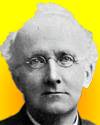
Died 31 Oct 1897 at age 75 (born 21 Dec 1821). quotes
Irish physicist and geologist who was a Victorian polymath with interests in fields as diverse as mathematics, geology, the age of the earth, animal mechanics, hydrostatics, chemistry. In his later life, he turned to medical education. Several texts he wrote (or co-wrote with Joseph Galbraith) explored these subject. He was opposed to Darwin’s theory of evolution, which may have clouded his eminence in the years after his death.
Irish physicist and geologist who was a Victorian polymath with interests in fields as diverse as mathematics, geology, the age of the earth, animal mechanics, hydrostatics, chemistry. In his later life, he turned to medical education. Several texts he wrote (or co-wrote with Joseph Galbraith) explored these subject. He was opposed to Darwin’s theory of evolution, which may have clouded his eminence in the years after his death.
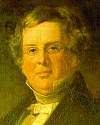

William Parsons, 3rd Earl of Rosse was an Irish astronomer who built the largest reflecting telescope of the 19th century. He learned to polish metal mirrors (1827) and spent the next few years building a 36-inch telescope. He later completed a giant 72-inch telescope (1845) which he named "Leviathan," It remained the largest ever built until decades after his death. He was the first to resolve the spiral shape of objects - previously seen as only clouds - which were much later identified as galaxies independent of our own Milky Way galaxy and millions of light-years away. His first such sighting was made in 1845, and by 1850 he had discovered 13 more. In 1848, he found and named the Crab Nebula (because he thought it resembled a crab), by which name it is still known.**[Image right: people standing in front of Leviathan]
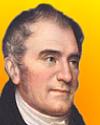
Died 31 Oct 1834 at age 63 (born 24 Jun 1771).
French-American industrialist who migrated following the French Revolution from France to the U.S. in 1800. From 1788, he had worked for French chemist Antoine Lavoisier, then chief of the royal powwder works, and became his first assistant in 1791. Thus, he had the knowledge to recognize an opportunity to manufacture gunpowder in the U.S., and by 1803 had established a small mill at Wilmington, Delaware. Government orders during the American war of 1812 made Du Pont the foremost manufacturer in the U.S. From this beginning, he diversified with interests in a woolen mill, a cotton mill, a tannery and became a director of the Bank of the United States.«
French-American industrialist who migrated following the French Revolution from France to the U.S. in 1800. From 1788, he had worked for French chemist Antoine Lavoisier, then chief of the royal powwder works, and became his first assistant in 1791. Thus, he had the knowledge to recognize an opportunity to manufacture gunpowder in the U.S., and by 1803 had established a small mill at Wilmington, Delaware. Government orders during the American war of 1812 made Du Pont the foremost manufacturer in the U.S. From this beginning, he diversified with interests in a woolen mill, a cotton mill, a tannery and became a director of the Bank of the United States.«
Died 31 Oct 1833 at age 52 (born 17 Oct 1781).
German anatomist who first described the embryonic cartilage (now called Meckel's cartilage) that ossifies to form part of the lower jaw in fishes, amphibians, and birds. He also described a pouch (Meckel's diverticulum) of the small intestine.
German anatomist who first described the embryonic cartilage (now called Meckel's cartilage) that ossifies to form part of the lower jaw in fishes, amphibians, and birds. He also described a pouch (Meckel's diverticulum) of the small intestine.
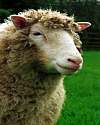
Dolly
In 2003, the U.S. Food and Drug adminstration released a summary of a draft report concluding that cloned farm animals and their offspring pose little scientific risk to the food supply. This could eventually lead to products derived from clones or their offspring onto the nation's grocery shelves. No federal rule prohibits sale of food products derived from clones or their offspring, but producers say they are observing a voluntary moratorium. Since clones still cost about $20,000, they are unlikely to be eaten directly as food. Instead, farmers' elite cloned animals could be used as breeding stock to upgrade the genetics of entire herds. Milk from cloned cows and meat from offspring of cloned cows and pigs might be first to enter the food supply.
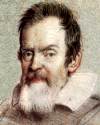
Galileo
In 1992, the Vatican admitted erring for over 359 years in formally condemning Galileo Galilei for entertaining scientific truths such as the Earth revolves around the sun it, which the Roman Catholic Church long denounced as anti-scriptural heresy. After 13 years of inquiry, the Pope's commission of historic, scientific and theological scholars brought the pope a “not guilty” finding for Galileo. Pope John Paul II himself met with the Pontifical Academy of Sciences to help correct the record. In 1633, at age 69, Galileo was forced by the Roman Inquisition to repent and spent the last eight years of his life under house arrest. Galileo was a 17th century Italian mathematician, astronomer and physicist remembered as one of history's greatest scientists.
Galileo: A Life, by James Reston. - book suggestion.
In 1982, the Thames Barrier became operational when all the gates were raised in place for the first time. The flood protection consists of ten stainless steel gates that together span 520 m (1710 ft) across the River Thames. The largest gate is longer than six buses. Construction began in 1974. Since completion in 1982, it was first closed in response to an actual flood threat on 1 Feb 1983 (which was 30 years after the great flood of 1953, that killed 307 people). From then until 19 Mar 2007, the barrier was raised 100 times to prevent flooding. It is also tested monthly, plus one annual high tide test raising. The Thames Barrier was designed to protect the capital until 2030.«
London’s Thames: The River That Shaped a City and Its History, by Gavin Weightman. - book suggestion.
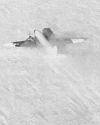
In 1956, an airplane landed at the South Pole for the first time. When Navy Admiral George J. Dufek stepped off the Que Sera Sera, an LC-47 transport plane, he was the first American to set foot on there, the first man since Scott to stand at the Pole. He came with an advance party to build the first permanent South Pole Station. Eighty-four flights later, the Navy had dropped over 700 tons of supplies at the South Pole, and by Mar 1957, the first phase of construction of the Amundsen-Scott station was completed. The station was established in that year for the International Geophysical Year under Paul Siple, first station scientific leader. It continued to function year-round until Jan 1975, when a new station was occupied.
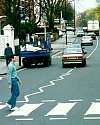
In 1951, the zebra crossing was first introduced in Slough, Berkshire, England to reduce casulaties at pedestrian road crossings. At that time there was only a tenth of the traffic now seen on the roads. The crossings existing then were marked by metal studs in the road. Those on foot could see them clearly but the motorist felt the familiar bumps only in the seconds before he or she collided with a pedestrian. Others things were tried but nothing had the visual impact of the broad white and black stripes across the road at a zebra crossing.[Image: Zebra crossing at Abbey Road, London]
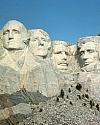
In 1941, work on Mount Rushmore finally ended with the monumental heads of four U.S. presidents - Washington, Jefferson, Lincoln, and Theodore Roosevelt - carved on the face of a mountain near Keystone, S.D. It was dedicated 3 Mar 1933 and work had been continued by Gutzon Borglum's son James after his father (1867-1941), the project's sculptor for 14 years since 10 Aug 1927, died eight months earlier. The carved faces are 60-70 feet tall, and visible for 60 mi (100 km). Gutzon Borglum's ambitious original design was left incomplete; work ceased when funds ran out. Since then, no additional carving has been done, nor is planned, other than maintenance. In its present form it stands as the largest such sculpture in existence.

In 1888, pneumatic bicycle tyres were patented by Scottish inventor, John Boyd Dunlop.
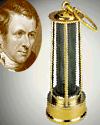
In 1815, English chemist, Sir Humphry Davy of London patented the miner's safety lamp. Miners at work constantly met firedamp, an explosive mix of methane gas and air, during the working of coal. This was an almost insurmountable obstacle to the working of many of the collieries until the discovery of the safety lamp. The flame of the safety lamp is surrounded by a copper or iron gauze cylinder, with openings no more than 1/24-inch. Such a fine gauze prevents flame passing through, but fails if coarser. The wire absorbs or conducts away the heat of the flame contained inside the lamp so it does not explode gas outside the lamp. If firedamp is present, a pale blue flame appears around the central flame. This warns a miner to leave the area immediately!
Humphry Davy: Life Beyond the Lamp, by Raymond Lamont-Brown. - book suggestion.
In 1778, the first British patent (No. 1200) for a mortise lock was issued to Robert Barron. He devised a double-acting tumbler system lock with greater security than the single acting tumbler lock used until that time. Without knowing it, Barron reinvented the ancient Egyptian lock which had gravity tumbler pins. In the Barron lock, each of several levers fall by gravity into corresponding slots on the bolt, thus preventing the bolt from being moved until a key raises all the levers to exactly the right level. Levers raised too high move into a slot above them in the bolt, also preventing the bolt from being moved.




