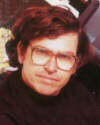
Born 30 Oct 1946; died 21 Aug 2012 at age 65. quotes
American mathematician who was awarded the Fields Medal in 1983 for his work in topology. As early as his Ph.D. thesis entitled Foliations of 3-manifolds which are circle bundles (1972) that showed the existence of compact leaves in foliations of 3-manifolds, Thurston had been working in the field of topology. In the following years, Thurston's contributions to the field of foliations were recognized to be of considerable depth, set apart by their originality. This was also true of his subsequent work on Teichmüller space.
American mathematician who was awarded the Fields Medal in 1983 for his work in topology. As early as his Ph.D. thesis entitled Foliations of 3-manifolds which are circle bundles (1972) that showed the existence of compact leaves in foliations of 3-manifolds, Thurston had been working in the field of topology. In the following years, Thurston's contributions to the field of foliations were recognized to be of considerable depth, set apart by their originality. This was also true of his subsequent work on Teichmüller space.
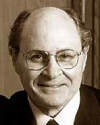
Born 30 Oct 1928; died 16 Nov 1999 at age 71.
American microbiologist, corecipient of the Nobel Prize for Physiology or Medicine in 1978 (with American Hamilton Othanel Smith and Swiss scientist Werner Arber). The winners were cited for their discovery and application of restriction enzymes, which provide the "chemical knives" to cut genes (= DNA) into defined fragments. These may then be used (1) to determine the order of genes on chromosomes, (2) to analyse the chemical structure of genes and of regions of DNA which regulate the function of genes, and (3) to create new combinations of genes. Thus new avenues are opened to study the basic problems in developmental biology; and in medicine, to help the prevention and treatment of malformations, hereditary diseases and cancer.
American microbiologist, corecipient of the Nobel Prize for Physiology or Medicine in 1978 (with American Hamilton Othanel Smith and Swiss scientist Werner Arber). The winners were cited for their discovery and application of restriction enzymes, which provide the "chemical knives" to cut genes (= DNA) into defined fragments. These may then be used (1) to determine the order of genes on chromosomes, (2) to analyse the chemical structure of genes and of regions of DNA which regulate the function of genes, and (3) to create new combinations of genes. Thus new avenues are opened to study the basic problems in developmental biology; and in medicine, to help the prevention and treatment of malformations, hereditary diseases and cancer.
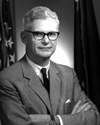
Born 30 Oct 1918.
Dr. Robert C(hanning) Seamans, Jr. is an American aeronautical engineer who pioneered in the development of advanced systems of flight control, fire control, and guidance for modern aircraft. In 1960 Seamans joined NASA as associate administrator with responsibilities for research and development programs, field laboratories, assembling and launching facilities, and a worldwide network of tracking stations. He was the ninth secretary of the Air Force (15 Feb 1969 - May 1973).
Dr. Robert C(hanning) Seamans, Jr. is an American aeronautical engineer who pioneered in the development of advanced systems of flight control, fire control, and guidance for modern aircraft. In 1960 Seamans joined NASA as associate administrator with responsibilities for research and development programs, field laboratories, assembling and launching facilities, and a worldwide network of tracking stations. He was the ninth secretary of the Air Force (15 Feb 1969 - May 1973).
Aiming at Targets: The Autobiography of Robert C. Seamans, Jr., by Robert Seamans. - book suggestion.
Born 30 Oct 1909; died 24 Jan 1966 at age 56. quotes
Homi Jehangir Bhabha was an Indian physicist who is regarded as the father of the Indian nuclear power program. He studied mechanical engineering at Cambridge University, and by 1933 held a PhD in nuclear physics. His teachers included Paul Dirac and Niels Bohr. Bhabha foresaw the need for high quality facilities in India to conduct research on nuclear power. With support from industrialist Dorabji Jamsetji Tata, he established the Tata Institute of Fundamental Research in Bombay (1945) for large scale research in physics, chemistry, electronics and mathematics. He envisioned nuclear power from thorium instead of uranium reserves. He died in the plane crash of Air India 101 near Mont Blanc in the Alps.«
Homi Jehangir Bhabha was an Indian physicist who is regarded as the father of the Indian nuclear power program. He studied mechanical engineering at Cambridge University, and by 1933 held a PhD in nuclear physics. His teachers included Paul Dirac and Niels Bohr. Bhabha foresaw the need for high quality facilities in India to conduct research on nuclear power. With support from industrialist Dorabji Jamsetji Tata, he established the Tata Institute of Fundamental Research in Bombay (1945) for large scale research in physics, chemistry, electronics and mathematics. He envisioned nuclear power from thorium instead of uranium reserves. He died in the plane crash of Air India 101 near Mont Blanc in the Alps.«
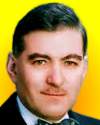
Born 30 Oct 1907; died 4 Jan 1995 at age 87.
American cultural anthropologist, founder of the Current Anthropology journal and initiator of the Fox Project, a study of the culture of the Fox and Sauk Indians. Soon after receiving his Ph.D (1935), Tax began his study of the Omaha kinship pattern among the Fox. This study was done on the Fox and Sauk Indians in Tama, Iowa. He worked with the Indians from 1948 to 1962. His work led to him to develop a pan-Indian organization and to help native American tribes preserve their cultural identity.
American cultural anthropologist, founder of the Current Anthropology journal and initiator of the Fox Project, a study of the culture of the Fox and Sauk Indians. Soon after receiving his Ph.D (1935), Tax began his study of the Omaha kinship pattern among the Fox. This study was done on the Fox and Sauk Indians in Tama, Iowa. He worked with the Indians from 1948 to 1962. His work led to him to develop a pan-Indian organization and to help native American tribes preserve their cultural identity.
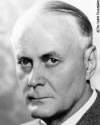
Born 30 Oct 1900; died 12 Mar 1991 at age 90.
Finnish-Swedish physiologist who shared (with George Wald and Haldan Hartline) the 1967 Nobel Prize for Physiology or Medicine for his analysis of the internal electrical changes that take place when the eye is exposed to light. He worked on individual nerve cells of the retina and was the first to show that single nerve fibres could distinguish between different wavelengths of light. His bioelectric studies of vision were possible using the electric measurement method of professor Edgar D. Adrian of Oxford University, who had made the first measurement of the electric impulse in a single nerve fiber. Granit also conducted studies also on the function of muscle spindle, motoneuron, spinal cord and brain.
Finnish-Swedish physiologist who shared (with George Wald and Haldan Hartline) the 1967 Nobel Prize for Physiology or Medicine for his analysis of the internal electrical changes that take place when the eye is exposed to light. He worked on individual nerve cells of the retina and was the first to show that single nerve fibres could distinguish between different wavelengths of light. His bioelectric studies of vision were possible using the electric measurement method of professor Edgar D. Adrian of Oxford University, who had made the first measurement of the electric impulse in a single nerve fiber. Granit also conducted studies also on the function of muscle spindle, motoneuron, spinal cord and brain.
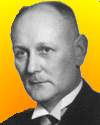
Born 30 Oct 1895; died 24 Apr 1964 at age 68.
German bacteriologist and pathologist who was awarded the 1939 Nobel Prize for Physiology or Medicine for his discovery (announced in 1932) of the antibacterial effects of Prontosil, the first of the sulfonamide drugs. This prize was awarded despite the fact that the Nazi government intervened and informed the Nobel awarding committee in Sweden that the prize was not wanted. (Hitler had been enraged with the committee's award of the Peace Prize to a German in a concentration camp.) Domagk was arrested twice at gunpoint by his government, interrogated and imprisoned. He then refused to accept the prize, the first refusal in the history of the awards. After the fall of Hitler, in 1947, was able to go to Stockholm and accept the prize.
German bacteriologist and pathologist who was awarded the 1939 Nobel Prize for Physiology or Medicine for his discovery (announced in 1932) of the antibacterial effects of Prontosil, the first of the sulfonamide drugs. This prize was awarded despite the fact that the Nazi government intervened and informed the Nobel awarding committee in Sweden that the prize was not wanted. (Hitler had been enraged with the committee's award of the Peace Prize to a German in a concentration camp.) Domagk was arrested twice at gunpoint by his government, interrogated and imprisoned. He then refused to accept the prize, the first refusal in the history of the awards. After the fall of Hitler, in 1947, was able to go to Stockholm and accept the prize.
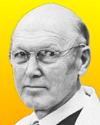
Born 30 Oct 1895; died 23 Feb 1973 at age 77.
Dickinson Woodruff Richards was an American physician and physiologist who was one of three who shared the 1956 Nobel Prize for Physiology or Medicine “for their discoveries concerning heart catheterization and pathological changes in the circulatory system.” Richards helped develop the technique by which a catheter (a flexible tube) could be threaded through a vein into the heart to withdraw blood samples to determine cardiac abnormalities. In addition, it permits the measurement of blood pressure, blood flow or gas concentrations in various parts of the cardiac circulatory system (atrium, ventricles, or artery). This gives valuable information in the treatment of heart disease, defect or injury. Richards worked with André F. Cournand building on the original work of Werner Forssmann.«
Dickinson Woodruff Richards was an American physician and physiologist who was one of three who shared the 1956 Nobel Prize for Physiology or Medicine “for their discoveries concerning heart catheterization and pathological changes in the circulatory system.” Richards helped develop the technique by which a catheter (a flexible tube) could be threaded through a vein into the heart to withdraw blood samples to determine cardiac abnormalities. In addition, it permits the measurement of blood pressure, blood flow or gas concentrations in various parts of the cardiac circulatory system (atrium, ventricles, or artery). This gives valuable information in the treatment of heart disease, defect or injury. Richards worked with André F. Cournand building on the original work of Werner Forssmann.«
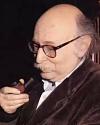
Born 30 Oct 1894; died 4 Sep 1977 at age 82. quotes
French biologist and historian who did research as an experimental biologist in amphibian embryology, artificial ovulation, the effect of cold on reproductive systems, parthenogenesis, teratogeny and anomalies of batrachians (the order of amphibians which includes the frogs and toads). He was also known as a philosopher and a writer popularizing the science of evolutionary theory, genetics, entomology, and herpetology, as well as the history of science. Rostand was an outspoken critic of nuclear proliferation and the death penalty.«
French biologist and historian who did research as an experimental biologist in amphibian embryology, artificial ovulation, the effect of cold on reproductive systems, parthenogenesis, teratogeny and anomalies of batrachians (the order of amphibians which includes the frogs and toads). He was also known as a philosopher and a writer popularizing the science of evolutionary theory, genetics, entomology, and herpetology, as well as the history of science. Rostand was an outspoken critic of nuclear proliferation and the death penalty.«
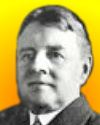
Born 30 Oct 1867; died 27 Jun 1932 at age 64.
American physicist known for research on long-range radio transmissions. In 1904 he began work on radio transmissions for the U.S. Bureau of Standards. In 1908 Austin became head of a naval radiotelegraphy laboratory (later to become the Naval Research Laboratory) and became chief of the bureau's laboratory for special radio transmission research (1923-32). His work involved long-range transmission experiments, most notably a study (1910) that tested radio contact between ships travelling between the US and Liberia. Austin and collaborator Louis Cohen developed the Austin-Cohen formula for predicting the strength of radio signals at long distances. Austin's later work centred on the study of radio atmospheric disturbances, i.e., "static."
American physicist known for research on long-range radio transmissions. In 1904 he began work on radio transmissions for the U.S. Bureau of Standards. In 1908 Austin became head of a naval radiotelegraphy laboratory (later to become the Naval Research Laboratory) and became chief of the bureau's laboratory for special radio transmission research (1923-32). His work involved long-range transmission experiments, most notably a study (1910) that tested radio contact between ships travelling between the US and Liberia. Austin and collaborator Louis Cohen developed the Austin-Cohen formula for predicting the strength of radio signals at long distances. Austin's later work centred on the study of radio atmospheric disturbances, i.e., "static."
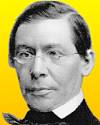
Born 30 Oct 1817; died 20 Feb 1892 at age 74. quotes
German chemist and historian of chemistry whose studies of the relation of physical properties to chemical structure pioneered physical organic chemistry. Through measurement of boiling point, density, specific heat, and thermal expansion, Kopp showed that differences in the physical properties of organic compounds reflected the degree by which their structure differs.
German chemist and historian of chemistry whose studies of the relation of physical properties to chemical structure pioneered physical organic chemistry. Through measurement of boiling point, density, specific heat, and thermal expansion, Kopp showed that differences in the physical properties of organic compounds reflected the degree by which their structure differs.

(EB)
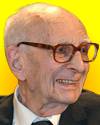
Died 30 Oct 2009 at age 100 (born 28 Nov 1908). quotes
French social anthropologist and leading exponent of structuralism, a name applied to the analysis of cultural systems (e.g., kinship and mythical systems) in terms of the structural relations among their elements. Lévi-Strauss regarded language as an essential common denominator underlying cultural phenomena, a view that forms the basis for his theories concerning the relationships of such societal elements as religion, myth, and kinship. His books include the two-volume Structural Anthropology (1958; 1973). Structuralism has influenced not only 20th-century social science but also the study of philosophy, comparative religion, literature, and film.
French social anthropologist and leading exponent of structuralism, a name applied to the analysis of cultural systems (e.g., kinship and mythical systems) in terms of the structural relations among their elements. Lévi-Strauss regarded language as an essential common denominator underlying cultural phenomena, a view that forms the basis for his theories concerning the relationships of such societal elements as religion, myth, and kinship. His books include the two-volume Structural Anthropology (1958; 1973). Structuralism has influenced not only 20th-century social science but also the study of philosophy, comparative religion, literature, and film.
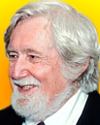
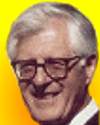
Died 30 Oct 1979 at age 92 (born 26 Sep 1887). quotes
Sir Barnes Neville Wallis was an English aircraft designer and military engineer whose famous 9000-lb bouncing “dambuster” bombs of WW II destroyed the German Möhne and Eder dams on 17 May 1943. He designed the R100 airship; also the Vickers Wellesley and Wellington bombers. The specially-formed RAF 617 Squadron precisely delivered his innovative cylindrical bombs, released from low altitude, rotating backwards at high speed that caused them to skip along the surface of the water, right up to the base of the dam. (His inspiration was the pastime of skipping stones across a pond surface.) He also designed the 5-ton Tallboy and 10-ton Grand Slam earthquake bombs, used on many enemy targets in later years of the war. Postwar, he developed ideas for swing-wing aircraft.«
Sir Barnes Neville Wallis was an English aircraft designer and military engineer whose famous 9000-lb bouncing “dambuster” bombs of WW II destroyed the German Möhne and Eder dams on 17 May 1943. He designed the R100 airship; also the Vickers Wellesley and Wellington bombers. The specially-formed RAF 617 Squadron precisely delivered his innovative cylindrical bombs, released from low altitude, rotating backwards at high speed that caused them to skip along the surface of the water, right up to the base of the dam. (His inspiration was the pastime of skipping stones across a pond surface.) He also designed the 5-ton Tallboy and 10-ton Grand Slam earthquake bombs, used on many enemy targets in later years of the war. Postwar, he developed ideas for swing-wing aircraft.«
The Dam Busters, by Paul Brickhill. - book suggestion.
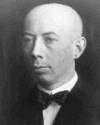
Died 30 Oct 1975 at age 88 (born 22 Jul 1887). quotes
German quantum physicist who, with James Franck, received the Nobel Prize for Physics in 1925 for the Franck-Hertz experiment, which confirmed the quantum theory that energy can be absorbed by an atom only in definite amounts and provided an important confirmation of the Bohr atomic model. He was a nephew of Heinrich Hertz. Although he fought on the German side in World War I, being of Jewish descent, he was forced to resign his professorship (1934) when Hitler took power. From 1945 he worked in the Soviet Union, and then in 1955 was a professor of physics in Leipzig, East Germany.
German quantum physicist who, with James Franck, received the Nobel Prize for Physics in 1925 for the Franck-Hertz experiment, which confirmed the quantum theory that energy can be absorbed by an atom only in definite amounts and provided an important confirmation of the Bohr atomic model. He was a nephew of Heinrich Hertz. Although he fought on the German side in World War I, being of Jewish descent, he was forced to resign his professorship (1934) when Hitler took power. From 1945 he worked in the Soviet Union, and then in 1955 was a professor of physics in Leipzig, East Germany.
Died 30 Oct 1899 at age 83 (born 19 Jun 1816).
American naval architect, one of the most versatile and successful shipbuilders of his day, who in 1889 established and endowed the Webb Institute of Naval Architecture at Glen Cove, N.Y. Webb began shipbuilding in 1836 and by 1869 had more tonnage to his credit than any other American builder. He was innovative and varied in his designs.
American naval architect, one of the most versatile and successful shipbuilders of his day, who in 1889 established and endowed the Webb Institute of Naval Architecture at Glen Cove, N.Y. Webb began shipbuilding in 1836 and by 1869 had more tonnage to his credit than any other American builder. He was innovative and varied in his designs.
Died 30 Oct 1881 at age 37 (born 22 Aug 1844).
American explorer whose disastrous Arctic expedition gave evidence of a continuous ocean current across the polar regions.
American explorer whose disastrous Arctic expedition gave evidence of a continuous ocean current across the polar regions.
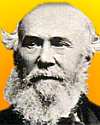
Died 30 Oct 1880 at age 58 (born 25 Feb 1822).
English railway engineer who was knighted for building the Tay Railway Bridge that afterwards collapsed in a fierce gale on 28 Dec 1879 killing a trainload of people. His railway engineering career began at age 17. By 1849, he was Engineer and Manager of the Edinburgh and Northern Railway. Realising the value of a bridge to replace ferries across the mile-wide Firth of Tay on the east Scottish coast, he spent 20 years promoting such a project before it was approved. The foundation stone was laid on 22 Jul 1871. The two-mile bridge of lattice girders on ironwork columns was opened 31 May 1878, but failed the next year. He died four months after the Court of Inquiry held him responsible for poor design against wind pressure.«
English railway engineer who was knighted for building the Tay Railway Bridge that afterwards collapsed in a fierce gale on 28 Dec 1879 killing a trainload of people. His railway engineering career began at age 17. By 1849, he was Engineer and Manager of the Edinburgh and Northern Railway. Realising the value of a bridge to replace ferries across the mile-wide Firth of Tay on the east Scottish coast, he spent 20 years promoting such a project before it was approved. The foundation stone was laid on 22 Jul 1871. The two-mile bridge of lattice girders on ironwork columns was opened 31 May 1878, but failed the next year. He died four months after the Court of Inquiry held him responsible for poor design against wind pressure.«
Thomas Bouch: The Builder of the Tay Bridge, by John Rapley. - book suggestion.
Died 30 Oct 1872 (born 1816).
English locksmith and safe maker. He succeeded his father, Charles Chubb, who had founded the family firm of Chubb & Son, and patented many improvements to locks, safes and strong rooms and the like. He was elected a member of the Institute of Civil Engineers in 1845, where he delivered an important paper on locks and keys which included a list of all British patents in the field up to the date of the paper as well as of all communications on the same subject to the Royal Society of Arts; for this he was awarded the Telford Medal. John Chubb was had three sons, who followed him into the family business.
English locksmith and safe maker. He succeeded his father, Charles Chubb, who had founded the family firm of Chubb & Son, and patented many improvements to locks, safes and strong rooms and the like. He was elected a member of the Institute of Civil Engineers in 1845, where he delivered an important paper on locks and keys which included a list of all British patents in the field up to the date of the paper as well as of all communications on the same subject to the Royal Society of Arts; for this he was awarded the Telford Medal. John Chubb was had three sons, who followed him into the family business.
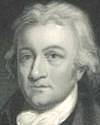
Died 30 Oct 1823 at age 80 (born 24 Apr 1743).
English inventor who was inspired by a visit in 1784 to one ofRichard Arkwright’s cotton-spinning mills, and beganinventingnew looms to mechanize the manual weaving process, to increase production speed and the quality of woven cloth. By 1785, he had patented his first crude loom design. As he improved his machines, and opened his own mill in Doncaster, in 1787, Cartwright revolutionised the textile industry. Two years later, he applied steam power his looms, with engines produced byJames WattandMatthew Boulton. Cartwright also invented amachinefor combing wool. He went bankrupt in 1793 from poor business skills, but in 1809, Parliament awarded him £10,000 for his achievements.« more
English inventor who was inspired by a visit in 1784 to one ofRichard Arkwright’s cotton-spinning mills, and beganinventingnew looms to mechanize the manual weaving process, to increase production speed and the quality of woven cloth. By 1785, he had patented his first crude loom design. As he improved his machines, and opened his own mill in Doncaster, in 1787, Cartwright revolutionised the textile industry. Two years later, he applied steam power his looms, with engines produced byJames WattandMatthew Boulton. Cartwright also invented amachinefor combing wool. He went bankrupt in 1793 from poor business skills, but in 1809, Parliament awarded him £10,000 for his achievements.« more
Memoir of the Life, Writings and Mechanical Inventions of Edmund Cartwright, by Mary Strickland. - book suggestion.
Died 30 Oct 1626 (born 1580).
Dutch mathematician.
Dutch mathematician.
In 1986, the first fibre-optic cable across the English Channel began service.
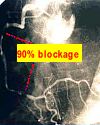
In 1958, the first coronary angiogram was performed, unintentinally, by Dr. F. Mason Sones, Jr. (1919-1985), a pediatric cardiologist at the Cleveland Clinic. This diagnostic x-ray procedure uses dye injected to visualize blockages of the small nutrient arteries of the heart. Earlier studies on dog showed use of the the dye in coronary arteries caused heart fibrillation, so it was never tried on humans. While intending to dye a patient's diseased vessels by injecting dye only near their openings, on this occasion, the catheter insertion had inadvertently strayed into the patient's coronary artery, and about 30 cc of the dye went into the artery. Fortunately, expected heart fibrillation (requiring the opening of the patient's chest to treat) did not occur. Hence the dye could in fact be used safely, especially if in lower amounts.«[Image: Right coronary artery shown on an angiogram: white where healthy, dark where blocked.]
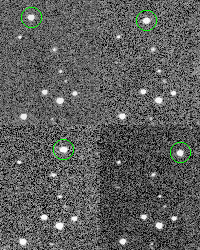
In 1937, an asteroid approached the Earth, at about twice the distance of the moon. At the time, it was regarded as the closest approach of any body other than a meteor. It traversed the night sky at 5 degrees per hour. It was first spotted two nights earlier, on 28 Oct. Astronomer Karl Reinmuth of Heidelberg noticed a streak of light on a picture he had just taken. Because of its fast motion, he named it Hermes, after the herald of the Olympian gods. He was able to observe it for only five days before viewing conditions became unfavorable. It was lost until sighted again on 15 Oct 2003 by Lowell Observatory astronomer Brian Skiff. Its elliptical orbit took 777 days, cutting across the orbits of Venus, Earth and Mars. It was found to be a binary object by Jean-Luc Margot at the Arecibo Observatory.«
In 1929, Marie Curie received a gift of $50,000 to purchase another gram of radium for research at a new Polish Radium Institute cancer hospital and laboratory in Warsaw. The presentation was made at the National Academy of Sciences, on the National Mall, Washington, D.C. President Hoover gave the funds to Curie in the form of a draft, encased in silver. He expressed appreciation of the service to humanity and importance to science of Curie’s discovery of radium. The money was collected by American women as a “symbol of friendship.” The actual radium would be purchased from a Belgian chemical company that performed the ore separations. Curie visited as a guest of the President at the White House.«
Madame Curie: A Biography, by Eve Curie. - book suggestion.
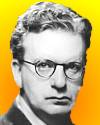
In 1925, the first television transmission was seen in London, England. John Baird built the transmitter in his attic from a tea chest, cardboard scanning discs, an empty biscuit box, old electric motors, darning needles, motorcycle lamp lenses, piano wire, glue, string, and sealing wax.
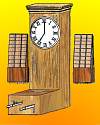
In 1894, Daniel M. Cooper of Rochester, N.Y. received the first U.S. patent for a time clock (No. 528,223). Timecards were inserted into the machine, and when a lever was pressed, the time was recorded on specially printed cards divided by horizontal lines into seven equal spaces for days of the week. The time clock was used to record the time employees started and ended work. Known as the Rochester, the machine was manufactured by the Willard and Frick Manufacturing Company.
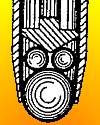
In 1888, the first U.S. patent for a ballpoint pen was issued to John J. Loud of Weymouth, Mass. (No. 392,046). This patent described a pen having a spheroidal marking point capable of revolving in all directions which was held down by three smaller anti-friction balls, themselves held down by a flaired spring-loaded rod. A threaded cap at the end of the pen could be removed to recharge the pen with ink. The patent described the invention as being especially useful for the marking of rough surfaces such as wooden or paper boxes, coarse wrapping paper and other surfaces where the ordinary nib of a fountain pen could not be used because it would split, spatter or catch.
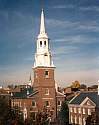
In 1794, the first commercial installation in the U.S. of ball bearings was made on the weather vane on top of the steeple of the Evangelical Lutheran Church of the Holy Trinity, Lancaster, Pennsylvania. The brick portion of the tower rises 86 feet and includes the bell chamber, above which rises the spire from an octagonal base to a height of 195 feet, upon which was mounted the weather vane. The bearings were of an antifriction roller type, with a pin through them.




