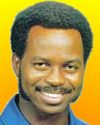
Born 21 Oct 1950; died 28 Jan 1986 at age 35.
Ronald E(rwin) McNair was an American physicist and astronaut who was the second African American to fly in space.He had been fascinated by space since childhood, when as early as in elementary school he talked about the Sputnik satellite. McNair was nationally recognized for his work in the field of laser physics, including chemical and high-pressure lasers. In 1978, he was one of 35 applicants selected from a pool of 10,000 for NASA's space shuttle program. He was assigned as a mission specialist on the Feb 1984 flight of the shuttle Challenger, during which he orbited the earth 122 times. Sadly, on his second trip, on the morning of 28 Jan 1986, McNair with six other crew members died in an explosion shortly after launching aboard the Challenger.
Ronald E(rwin) McNair was an American physicist and astronaut who was the second African American to fly in space.He had been fascinated by space since childhood, when as early as in elementary school he talked about the Sputnik satellite. McNair was nationally recognized for his work in the field of laser physics, including chemical and high-pressure lasers. In 1978, he was one of 35 applicants selected from a pool of 10,000 for NASA's space shuttle program. He was assigned as a mission specialist on the Feb 1984 flight of the shuttle Challenger, during which he orbited the earth 122 times. Sadly, on his second trip, on the morning of 28 Jan 1986, McNair with six other crew members died in an explosion shortly after launching aboard the Challenger.
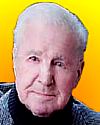
Born 21 Oct 1914; died 11 Feb 2005 at age 90.
American physicist and engineer who invented the crash-test dummy used to test the safety of cars, parachutes and other devices. From the 1930's, when safety of cars during a crash was tested, cadavers had been used. When he started a company in 1952, Alderson Research Laboratories, which designed an anthropomorphic dummy, the first application was for testing jet ejection seats. In 1968, he produced a dummy (called the V.I.P.) built specifically for automotive testing with built-in instruments for collecting data. It had articulated joints with dimensions and weight distribution like an average adult man. His company later also made medical phantoms for simulations such as synthetic wounds that oozed mock blood.«
American physicist and engineer who invented the crash-test dummy used to test the safety of cars, parachutes and other devices. From the 1930's, when safety of cars during a crash was tested, cadavers had been used. When he started a company in 1952, Alderson Research Laboratories, which designed an anthropomorphic dummy, the first application was for testing jet ejection seats. In 1968, he produced a dummy (called the V.I.P.) built specifically for automotive testing with built-in instruments for collecting data. It had articulated joints with dimensions and weight distribution like an average adult man. His company later also made medical phantoms for simulations such as synthetic wounds that oozed mock blood.«
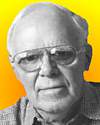
Born 21 Oct 1914; died 22 May 2010 at age 95. quotes
American science writer who, for 25 years, wrote the highly popular “Mathematical Games” column for Scientific American. Though not an academic, nor having ever formally studied maths or science, he wrote widely and prolifically on both subjects, in such popular books as The Ambidextrous Universe and The Relativity Explosion. Since childhood, he was fascinated by magic, so one of his first books was Mathematics, Magic and Mystery (1956), about the maths of popular magic tricks. His interests grew wider and deeper. By age 42, he wrote his first column for Scientific American, and for many years thereafter popularized mathematics by highlighting puzzles that were elegantly understandable. He both inspired professionals and enchanted young readers to take an interest in mathematics.«
American science writer who, for 25 years, wrote the highly popular “Mathematical Games” column for Scientific American. Though not an academic, nor having ever formally studied maths or science, he wrote widely and prolifically on both subjects, in such popular books as The Ambidextrous Universe and The Relativity Explosion. Since childhood, he was fascinated by magic, so one of his first books was Mathematics, Magic and Mystery (1956), about the maths of popular magic tricks. His interests grew wider and deeper. By age 42, he wrote his first column for Scientific American, and for many years thereafter popularized mathematics by highlighting puzzles that were elegantly understandable. He both inspired professionals and enchanted young readers to take an interest in mathematics.«
Undiluted Hocus-Pocus: The Autobiography of Martin Gardner, by Martin Gardner, Persi Diaconis, James Randi. - book suggestion.
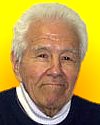
Born 21 Oct 1911; died 26 Jul 2004 at age 92. quotes
American food scientist who invented Pop Rocks candy, Cool Whip, the orange drink mix Tang, and quick-set Jell-O Gelatin. He developed a tapioca substitute during WW II since tapioca itself was limited in supply. For 35 years, he worked worked as a chemist for General Foods Corp, and held more than 70 patents. Pop Rocks exploding candy was patented in 1956, but not marketed until 1975. Its novelty quickly caught the public's attention. It was an accidental discovery while experimenting to produce an instant soft drink. It is a hard candy manufactured by pressurizing carbon dioxide at 600 psi in a candy syrup at 150 °C. When cooled and solidified it traps small pockets of carbon dioxide that “explode” in a person's mouth.
American food scientist who invented Pop Rocks candy, Cool Whip, the orange drink mix Tang, and quick-set Jell-O Gelatin. He developed a tapioca substitute during WW II since tapioca itself was limited in supply. For 35 years, he worked worked as a chemist for General Foods Corp, and held more than 70 patents. Pop Rocks exploding candy was patented in 1956, but not marketed until 1975. Its novelty quickly caught the public's attention. It was an accidental discovery while experimenting to produce an instant soft drink. It is a hard candy manufactured by pressurizing carbon dioxide at 600 psi in a candy syrup at 150 °C. When cooled and solidified it traps small pockets of carbon dioxide that “explode” in a person's mouth.
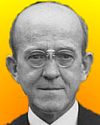
Born 21 Oct 1877; died 20 Feb 1955 at age 77. quotes
Oswald Theodore Avery was a Canadian-American biochemist and immunologist whose research on pneumococcus bacteria made him one of the founders of immunochemistry. His research laid the groundwork for modern genetics and molecular biology. Avery spent most of his research life at Rockefeller Institute where he made important contributions to the understanding of the pneumococcus organism, a particularly virulent bacterium that caused lobar pneumonia. Prior to Avery's work, genetic material was assumed to be protein. At age 67, Avery made his most important discovery when he proved conclusively that DNA from the nucleus of the cell is the genetic material, in a seminal 1944 paper co-authored by Colin MacLeod and Maclyn McCarty.
Oswald Theodore Avery was a Canadian-American biochemist and immunologist whose research on pneumococcus bacteria made him one of the founders of immunochemistry. His research laid the groundwork for modern genetics and molecular biology. Avery spent most of his research life at Rockefeller Institute where he made important contributions to the understanding of the pneumococcus organism, a particularly virulent bacterium that caused lobar pneumonia. Prior to Avery's work, genetic material was assumed to be protein. At age 67, Avery made his most important discovery when he proved conclusively that DNA from the nucleus of the cell is the genetic material, in a seminal 1944 paper co-authored by Colin MacLeod and Maclyn McCarty.
Oswald Avery and the Story of DNA, by Vesta-Nadine Severs and Jim Whiting. - book suggestion.
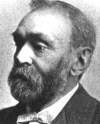
Born 21 Oct 1833; died 10 Dec 1896 at age 63. quotes
Swedish chemist and inventor who invented dynamite and other, more powerful explosives. An explosives expert like his father, in 1866 he invented a safe and manageable form of nitroglycerin he called dynamite, and later, smokeless gunpowder and (1875) gelignite. He helped to create an industrial empire manufacturing many of his other inventions. Nobel amassed a huge fortune, much of which he left in a fund to endow the annual prizes that bear his name. First awarded in 1901, these prizes were for achievements in the areas of physics, chemistry, physiology or medicine, literature, and peace. The sixth prize, for economics, was instituted in his honour in 1969.
Swedish chemist and inventor who invented dynamite and other, more powerful explosives. An explosives expert like his father, in 1866 he invented a safe and manageable form of nitroglycerin he called dynamite, and later, smokeless gunpowder and (1875) gelignite. He helped to create an industrial empire manufacturing many of his other inventions. Nobel amassed a huge fortune, much of which he left in a fund to endow the annual prizes that bear his name. First awarded in 1901, these prizes were for achievements in the areas of physics, chemistry, physiology or medicine, literature, and peace. The sixth prize, for economics, was instituted in his honour in 1969.
Alfred Nobel: A Biography, by Kenne Fant. - book suggestion.
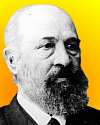
Born 21 Oct 1831; died 24 Sep 1895 at age 63.
German chemist who directed agricultural research at the Bernburg experimental Station in Prussia concerned with determining optimum conditions for growing sugar beets, the primary source of sugar. He made the important discovery of the fixation of nitrogen by certain legumes which took converted nitrogen from the air into a form in the soil accessible for organic assimilation by plants. He identified that it was due to the symbiotic action of soil bacteria in nodules on the roots of the legumes. This improvement of the soil provided particular advantage in the annual rotation of grain crops (which used up nitrogen in the soil) with legumes like beans, peas and clover (which restored nitrogen to the soil).«
German chemist who directed agricultural research at the Bernburg experimental Station in Prussia concerned with determining optimum conditions for growing sugar beets, the primary source of sugar. He made the important discovery of the fixation of nitrogen by certain legumes which took converted nitrogen from the air into a form in the soil accessible for organic assimilation by plants. He identified that it was due to the symbiotic action of soil bacteria in nodules on the roots of the legumes. This improvement of the soil provided particular advantage in the annual rotation of grain crops (which used up nitrogen in the soil) with legumes like beans, peas and clover (which restored nitrogen to the soil).«
The World's Greatest Fix: a History of Nitrogen and Agriculture, by G.J. Leigh. - book suggestion.
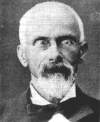
Born 21 Oct 1823; died 11 Aug 1892 at age 68.
Italian mathematician who is noted for his contributions to algebra and topology. His early work is in the area of equations and algebra. He wrote the first rigorous exposition of the theory of equations, previously given without proofs, developed by the noted French mathematician Évariste Galois (1811-32). Betti extended and gave proofs relating to the algebraic concepts of Galois, published in several works from 1851. Betti thus made an important contribution to the transition from classical to modern algebra. He was the first to give a proof that the Galois group is closed under multiplication. Betti also wrote a pioneering memoir on topology, the study of surfaces and space. Betti did important work in theoretical physics, in particular in potential theory and elasticity.
Italian mathematician who is noted for his contributions to algebra and topology. His early work is in the area of equations and algebra. He wrote the first rigorous exposition of the theory of equations, previously given without proofs, developed by the noted French mathematician Évariste Galois (1811-32). Betti extended and gave proofs relating to the algebraic concepts of Galois, published in several works from 1851. Betti thus made an important contribution to the transition from classical to modern algebra. He was the first to give a proof that the Galois group is closed under multiplication. Betti also wrote a pioneering memoir on topology, the study of surfaces and space. Betti did important work in theoretical physics, in particular in potential theory and elasticity.
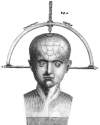
Scottish lawyer who turned to the promotion of phrenology and published several works on the subject. He followed Franz Josef Gall in Paris. Gall was a French physician who identified a number of areas on the surface of the head that he linked with specific localizations of cerebral functions and the underlying attributes of the human personality. Combe established the first infant school in Edinburgh and gave evening lectures. He studied the criminal classes and lunatic asylums wishing to reform them. Andrew Combe, physiologist, was his younger brother.«[Image right: Diagram of the Craniometer from Elements of Phrenology,by Combe, 1834.]
Reminiscences of Dr. Spurzheim and George Combe and ...Phrenology..., by Nahum Capen. - book suggestion.
Born 21 Oct 1785; died 6 Mar 1851 at age 65.
American steamboat designer and builder who helped develop the commercial potential of the inland waterways of the Mississippi River system. Within a few years of Robert Fulton's successful steamboat experiment (1807), Shreve had built his own, the Enterprise (1813), which made the first complete upriver trip from New Orleans to Pittsburgh. He fought legal battles against Fulton's monopoly on river routes. By 1821, Shreve addressed the need to make navigation safer by clearing the river of obstructions. He created snag-boats with a jaw-like bow able to pull up snags (tree trunks), and put them through a sawmill on their deck. Shreve's work was a major contribution to the great era of steamboat traffic prior to the Civil War.«
American steamboat designer and builder who helped develop the commercial potential of the inland waterways of the Mississippi River system. Within a few years of Robert Fulton's successful steamboat experiment (1807), Shreve had built his own, the Enterprise (1813), which made the first complete upriver trip from New Orleans to Pittsburgh. He fought legal battles against Fulton's monopoly on river routes. By 1821, Shreve addressed the need to make navigation safer by clearing the river of obstructions. He created snag-boats with a jaw-like bow able to pull up snags (tree trunks), and put them through a sawmill on their deck. Shreve's work was a major contribution to the great era of steamboat traffic prior to the Civil War.«
Born 21 Oct 1736; died 11 Jul 1808 at age 71.
American physician who was the first systematic teacher of anatomy, surgery, and obstetrics in the U.S. In addition to pictures and casts of the human body, he was also one of the first to use dissected human bodies in the teaching of anatomy in America. This aroused the animosity of the populace - his dissecting rooms were mobbed on several occasions, and once he narrowly escaped with his life - but his courses were very successful, and the number of students increased year by year. He lectured on both anatomy and midwifery. In 1762 he established the first American maternity hospital in Philadelphia.
American physician who was the first systematic teacher of anatomy, surgery, and obstetrics in the U.S. In addition to pictures and casts of the human body, he was also one of the first to use dissected human bodies in the teaching of anatomy in America. This aroused the animosity of the populace - his dissecting rooms were mobbed on several occasions, and once he narrowly escaped with his life - but his courses were very successful, and the number of students increased year by year. He lectured on both anatomy and midwifery. In 1762 he established the first American maternity hospital in Philadelphia.
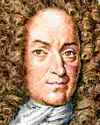
Born 21 Oct 1660; died 14 May 1734 at age 73. quotes
German physician and chemist, who as a youth believed in alchemy and animism. He later rejected them as professor of chemistry and medicine (Halle, 1694). He developed the phlogiston theory of combustion (as did Johann Becher), embraced by chemists for almost a century. This described flammable objects as rich in phlogiston, lost when burned, leaving incombustible ash with no phlogiston. Likewise, Stahl said, metal had phlogiston, but rust did not. Air was only a carrier of phlogiston, not directly involved. If charcoal was burned with metal ore, its phlogiston was transferred to the metal produced. Stahl extended the idea to biological processes such as respiration, fermentation, and decay. He was first to prepare glacial acetic acid.«
German physician and chemist, who as a youth believed in alchemy and animism. He later rejected them as professor of chemistry and medicine (Halle, 1694). He developed the phlogiston theory of combustion (as did Johann Becher), embraced by chemists for almost a century. This described flammable objects as rich in phlogiston, lost when burned, leaving incombustible ash with no phlogiston. Likewise, Stahl said, metal had phlogiston, but rust did not. Air was only a carrier of phlogiston, not directly involved. If charcoal was burned with metal ore, its phlogiston was transferred to the metal produced. Stahl extended the idea to biological processes such as respiration, fermentation, and decay. He was first to prepare glacial acetic acid.«

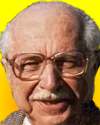
Died 21 Oct 2002 at age 93 (born 15 Oct 1909). quotes
Jesse Leonard Greenstein was an American astronomer who co-discovered quasars. His interest in astronomy began at age 8 when his grandfather gave him a brass telescope. By age 16, he was a student at Harvard University. After earning his Ph.D.(1937), he joined the Yerkes Observatory under Otto Struve. Thereafter, he spent most of his career at the California Institute of Technology. He measured the composition of stars, through which he found less heavy elements in the stars of globular clusters, thus proving they are younger than our Sun. In 1963, he and Maarten Schmidt were the first to interpret the red shift of quasars and correctly describe their nature as compact, very distant and thus very old objects. With Louis Henyey he designed and constructed a new spectrograph and wide-view camera to improve astronomical observations.«
Jesse Leonard Greenstein was an American astronomer who co-discovered quasars. His interest in astronomy began at age 8 when his grandfather gave him a brass telescope. By age 16, he was a student at Harvard University. After earning his Ph.D.(1937), he joined the Yerkes Observatory under Otto Struve. Thereafter, he spent most of his career at the California Institute of Technology. He measured the composition of stars, through which he found less heavy elements in the stars of globular clusters, thus proving they are younger than our Sun. In 1963, he and Maarten Schmidt were the first to interpret the red shift of quasars and correctly describe their nature as compact, very distant and thus very old objects. With Louis Henyey he designed and constructed a new spectrograph and wide-view camera to improve astronomical observations.«
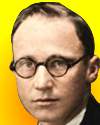
Died 21 Oct 1970 at age 70 (born 3 Aug 1900). quotes
John Thomas Scopes was an American teacher and geologist whose was the defendant in the infamous Scopes Monkey Trial (10 Jul 1925), challenging the constitutionality of the Butler Act, a Tennessee law signed 21 Mar 1925to prohibit the teaching of evolution in the state’s schools. He took a job at Tennessee high-school in Spring 1924, teaching algebra, chemistry and physics for one year. Then, although he wasn't sure he had actually done any teaching of evolution, nevertheless, at the urging of businessmen wanting publicity for Dayton, Tennessee, he agreed to stand trial in a test case funded by the American Civil Liberties Union. Although the trial jury voted guilty, on appeal, the verdict was thrown out on a technicality. After the trial Scopes earned a master’s degree in geology, and went to work for the Gulf Oil Co., and later United Gas Corp.«
John Thomas Scopes was an American teacher and geologist whose was the defendant in the infamous Scopes Monkey Trial (10 Jul 1925), challenging the constitutionality of the Butler Act, a Tennessee law signed 21 Mar 1925to prohibit the teaching of evolution in the state’s schools. He took a job at Tennessee high-school in Spring 1924, teaching algebra, chemistry and physics for one year. Then, although he wasn't sure he had actually done any teaching of evolution, nevertheless, at the urging of businessmen wanting publicity for Dayton, Tennessee, he agreed to stand trial in a test case funded by the American Civil Liberties Union. Although the trial jury voted guilty, on appeal, the verdict was thrown out on a technicality. After the trial Scopes earned a master’s degree in geology, and went to work for the Gulf Oil Co., and later United Gas Corp.«
Center of the Storm: Memoirs of John T. Scopes, by John Scopes. - book suggestion.
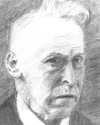
Died 21 Oct 1967 at age 94 (born 8 Oct 1873). quotes
Danish astronomer whose pioneering work transformed stellar astronomy. He was the first to relate a star’s color, luminosity, and temperature, laying the foundation for the Hertzsprung-Russell diagram, developed separately by Henry Russell. This graphical tool showed how stars evolve from hot, bright blue giants to cooler red dwarfs and white dwarfs, providing a framework for modern stellar classification and evolution. Hertzsprung also accurately determined the distances to nearby stars and star clusters, helping establish the cosmic scale and deepening understanding of the structure and life cycle of the stars in our galaxy. In 1913 he established the luminosity scale of Cepheid variable stars.«
Danish astronomer whose pioneering work transformed stellar astronomy. He was the first to relate a star’s color, luminosity, and temperature, laying the foundation for the Hertzsprung-Russell diagram, developed separately by Henry Russell. This graphical tool showed how stars evolve from hot, bright blue giants to cooler red dwarfs and white dwarfs, providing a framework for modern stellar classification and evolution. Hertzsprung also accurately determined the distances to nearby stars and star clusters, helping establish the cosmic scale and deepening understanding of the structure and life cycle of the stars in our galaxy. In 1913 he established the luminosity scale of Cepheid variable stars.«
Vistas in Astronomy: Volume 8: Aspects of Stellar Evolution, by Arthur Beer and K.Aa. Strand (eds.). - book suggestion.
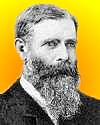
Died 21 Oct 1896 at age 52 (born 6 Aug 1844).
English civil engineer (born in South Africa) who improved tunneling shield methods which he applied during construction of the London Underground. The technique was originated by Marc Brunel and subsequently modified by Peter W. Barlow as a smaller shield of circular cross section. Having learned its use from Barlow, Greathouse utilised the shield with his own further improvements to complete the Tower Subway (1869) under the River Thames near the Tower of London. He adopted screw jacks to push the shield forward while the tunnel behind it was lined with cast-iron rings, and pioneered the use of compressed air to prevent flooding during the lining installation. His statue beside the Royal Exchange was erected in 1994.«
English civil engineer (born in South Africa) who improved tunneling shield methods which he applied during construction of the London Underground. The technique was originated by Marc Brunel and subsequently modified by Peter W. Barlow as a smaller shield of circular cross section. Having learned its use from Barlow, Greathouse utilised the shield with his own further improvements to complete the Tower Subway (1869) under the River Thames near the Tower of London. He adopted screw jacks to push the shield forward while the tunnel behind it was lined with cast-iron rings, and pioneered the use of compressed air to prevent flooding during the lining installation. His statue beside the Royal Exchange was erected in 1994.«
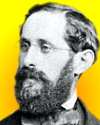
Died 21 Oct 1881 at age 60 (born 16 Mar 1821). quotes
Heinrich Eduard Heine was a German mathematician whose published work includes contributions on partial differential equations, the theory of heat, summation of series, continued fractions and elliptic functions. Heine also worked on Legendre polynomials, Lamé functions and Bessel functions. He remains known for the Heine-Borel theorem, which can be given in a simplified form as “a subset of the reals is compact if and only if it is closed and bounded.” Heine also formulated the concept of uniform continuity.«
Heinrich Eduard Heine was a German mathematician whose published work includes contributions on partial differential equations, the theory of heat, summation of series, continued fractions and elliptic functions. Heine also worked on Legendre polynomials, Lamé functions and Bessel functions. He remains known for the Heine-Borel theorem, which can be given in a simplified form as “a subset of the reals is compact if and only if it is closed and bounded.” Heine also formulated the concept of uniform continuity.«
Died 21 Oct 1872 at age 78 (born 5 Mar 1794).
French physicist who was the first to proposed the definition of the unit of length in terms of the wavelength of a spectral line. The red line in the spectrum of cadmium was chosen, and the angstrom was redefined as a fraction of this value.. He established a principle in diffraction theory (1837) that is named after him. The Babinet compensator was his invention to measure the polarization of light.«
French physicist who was the first to proposed the definition of the unit of length in terms of the wavelength of a spectral line. The red line in the spectrum of cadmium was chosen, and the angstrom was redefined as a fraction of this value.. He established a principle in diffraction theory (1837) that is named after him. The Babinet compensator was his invention to measure the polarization of light.«
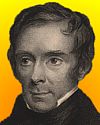
Died 21 Oct 1862 at age 79 (born 8 Jun 1783). quotes
(1st Baronet) British physiologist and surgeon whose name is applied to certain diseases of the bones and joints. As one of the outstanding surgeons of 19th-century London, he opposed the prevailing practice of indiscriminate amputation, always trying to save the limb instead. He pioneered the surgery of varicose veins. In 1814, he described synovitis in the knee joint. In his book Pathological and Surgical Observations on the Diseases of the Joints (1818), he traced the beginnings of disease in the different tissues that form a joint and to give an exact value to the symptom of pain as evidence of organic disease. This work led to conservative measures in the treatment of diseases of the joints, with a consequent reduction in the number of amputations and the saving of many limbs and lives. In 1843 a tuberculous abscess in the head of the tibia, Brodie's abscess. He lectured on hysterical pain. Brodie's knee came to refer to a condition of stiff knees frequently observed in hysterical patients. From research with animals, he disproved the chemical theory of animal heat, which held that respiration was the immediate source of heat production.
(1st Baronet) British physiologist and surgeon whose name is applied to certain diseases of the bones and joints. As one of the outstanding surgeons of 19th-century London, he opposed the prevailing practice of indiscriminate amputation, always trying to save the limb instead. He pioneered the surgery of varicose veins. In 1814, he described synovitis in the knee joint. In his book Pathological and Surgical Observations on the Diseases of the Joints (1818), he traced the beginnings of disease in the different tissues that form a joint and to give an exact value to the symptom of pain as evidence of organic disease. This work led to conservative measures in the treatment of diseases of the joints, with a consequent reduction in the number of amputations and the saving of many limbs and lives. In 1843 a tuberculous abscess in the head of the tibia, Brodie's abscess. He lectured on hysterical pain. Brodie's knee came to refer to a condition of stiff knees frequently observed in hysterical patients. From research with animals, he disproved the chemical theory of animal heat, which held that respiration was the immediate source of heat production.
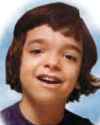
In 1983, David, the “the boy in the bubble,” underwent a bone marrow transplant operation in the hope that it could help him develop the immunity he had lacked all his life. He was born with a genetic disease, severe combined immune deficiency, (SCID). Thus, David Vetter spent his life protected, but isolated, in a sterile plastic “bubble.” The hope was that the bone marrow from his sister (four years older) would stimulate the growth of his immune system. The marrow was treated to cleanse it of germs, and was transferred in a fluid through a vein into David's bloodstream. Sadly an undetected Epstein Barr virus remained in it despite the treatment. By New Year's Day, he had a temperature of 99.5°F, indicating the onset of illness. Less than two months later, he died of Burkitt's lymphoma..«
The American Experience: The Boy in the Bubble (DVD), by PBS. - book suggestion.
In 1976, the United States made a clean sweep of the Nobel Prizes, winning or sharing awards in chemistry, physics, medicine, economics, and literature. (No peace prize was awarded.)

In 1963, the first residential Trimline telephone in the U.S. was placed in service by the Michigan Bell Telephone Company. It was made available to all its customers throughout the company's service area on 2 Aug 1965 for an optional $1 monthly extra charge. The dial and a hang-up button were no longer on a remote base, but instead integrated into the handpiece, midway between the microphone and speaker. A call could thus be dialled from the handpiece alone, which was more convenient in the kitchen or while in bed. It was dramatically different in style from earlier telephones, developed with the industrial design firm Henry Dreyfuss Associates. In 1977, Fortune magazine selected it as one of the country's 25 best-designed products.«
In 1925, the photocell device was given its first U.S. public demonstration. It was shown by the Westinghouse Electric and Mfg Co at the Electrical Show at Grand Central Palace in New York. The photocell was used to count objects by acting as a sensor as each object passed through and interrupted a beam of light. The device was also utilized as a sensor to detect when a person approached a door, which opened as a circuit was activated.«
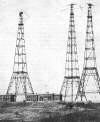
NAA 1922
In 1915, the first experimental transatlantic radiotelephone speech communication was made. Taking advantage of the recently developed vacuum-tube transmitters and receivers, AT&T conducted radiotelephony tests from NAA, the U.S. Navy station in Arlington. B. Webb of AT&T in Arlington, VA.Virginia talks to Lt. Col. Ferries of the French Government using relay points in Canada and at the Eiffel Tower in Paris.His voice was heard as far away as Honolulu, HI., which clearly showed how advanced the vacuum-tube equipment was, since the "somewhat over 10 miles" (16-km) range of Fessenden's groundbreaking alternator-transmitter tests (1906). President Vail announced that AT&T was planning to add radiotelephone links to the Bell system.
1932
In 1895, liquid air for refrigeration and other purposes largely produced by machinery, invented by Carl Linde, was reported.
Linde: History of a Technology Corporation, 1879-2004, by Hans-Liudger Dienel. - book suggestion.
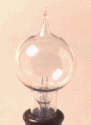
In 1879, Thomas A. Edison successfully demonstrated the first durable and commercially practical electric light bulb at his laboratory in Menlo Park, New Jersey. This model lasted 40 hours before burning out. The idea of electric lighting was not new; several people, including Joseph Swan, had worked on and even developed forms of electric lighting. However, nothing durable had been developed that was practical for home use. The difficulty was finding a suitable material for the filament. Edison tested over 6,000 vegetable growths (baywood, boxwood, hickory, cedar, flax, bamboo) as filament material. After one and a half years of work, after spending $40,000, and performing 1,200 experiments, success was achieved when an incandescent lamp with a filament of carbonized sewing thread.
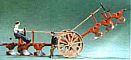
In 1824, in Yorkshire, England, Joseph Aspdin, a stone mason, patented Portland cement, made by burning finely pulverized lime and clay at high temperatures in kilns (UK patent No. 5022). Thus Aspdin had made a manufactured counterpart to natural or Roman cement - a crude formulation of lime and volcanic ash used as early as 27 BC. Aspdin produced a hydraulic cement that would harden with the addition of water. He named his invention "Portland cement" not only to distinguish it from Roman cement, but also as a marketing tool: concrete made from his new cement resembled a highly prized building stone quarried on the Isle of Portland off the British coast. Like flour in a fruit cake, cement glues aggregate (sand or gravel) together to make a "rock" (concrete).
more
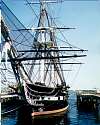
In 1797, the USS Constiution - nicknamed "Old Ironsides" - was launched in Boston, Mass. The oak-wood hulled, three-masted frigate was one of several 44-gun frigates authorized by Congress in 1794 to protect commerce at sea. The vessel was designed by for the U.S. Navy by Joshua Humphreys and built by George Claghorn. Its copper sheathing protecting the hull was manufactured by Paul Revere, along with the copper spikes and bolts securing the planks. In the over 200 years since it was built the USS Constiution has been refitted and restored, and it remains active in the U.S. Navy as a "ship of state." With its crew of 55 modern-day sailors, it remains the oldest commissioned warship afloat in the world.«





