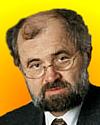
Born 20 Mar 1944.
German physicist, who shared (with Bert Sakmann) the 1991 Nobel Prize for Physiology or Medicine “for their discoveries concerning the function of single ion channels in cells”. The channels are the route by which ions (charged atoms) can pass through the membrane that surrounds the cell. To measure the miniscule electrical currents (in the picoampere range, 10-12A) involved, Neher and Sakmann developed a unique method that tracks how a single channel molecule alters its shape and in that way controls the flow of current within a time frame of a few millionths of a second. The regulation of ion channels influences the life of the cell and its functions under normal and pathological conditions.«
German physicist, who shared (with Bert Sakmann) the 1991 Nobel Prize for Physiology or Medicine “for their discoveries concerning the function of single ion channels in cells”. The channels are the route by which ions (charged atoms) can pass through the membrane that surrounds the cell. To measure the miniscule electrical currents (in the picoampere range, 10-12A) involved, Neher and Sakmann developed a unique method that tracks how a single channel molecule alters its shape and in that way controls the flow of current within a time frame of a few millionths of a second. The regulation of ion channels influences the life of the cell and its functions under normal and pathological conditions.«
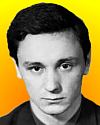
Born 20 Mar 1938.
Russian mathematician who was awarded the Fields Medal in 1970 for his work in algebraic topology. His parents were both mathematicians, and Novikov showed his own talent while a youth. In 1960, the year he obtained his first degree, he published a paper on some problems in the topology of manifolds connected with the theory of Thom spaces. In 1965, he proved his famous theorem on the invariance of Pontryagin classes. He was unable receive the Fields Medal in person because Soviet authorities would not permit his travel. Thereafter he pursued an interest in mathematical physics, including the theory of solitons, quantum field theory and string theory.«
Russian mathematician who was awarded the Fields Medal in 1970 for his work in algebraic topology. His parents were both mathematicians, and Novikov showed his own talent while a youth. In 1960, the year he obtained his first degree, he published a paper on some problems in the topology of manifolds connected with the theory of Thom spaces. In 1965, he proved his famous theorem on the invariance of Pontryagin classes. He was unable receive the Fields Medal in person because Soviet authorities would not permit his travel. Thereafter he pursued an interest in mathematical physics, including the theory of solitons, quantum field theory and string theory.«
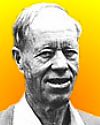
Born 20 Mar 1920; died 9 Jul 1996 at age 76.
Douglas George Chapman was a Canadian-American statistician and wildlife expert who was an expert on wildlife statistics, in particular for marine mammals. He was one of the scientific advisors to the International Whaling Commission that warned in the 1960s that the number of whales being taken by the whaling industry was far in excess of what the population could stand, and proposed annual fin whale catch quotas that would permit the depleted populations of this species to recover. His later research on fish farming expanded to include mollusk aquaculture and he directed a program to develop quantitative methods to aid in the management of fisheries resources.«
Douglas George Chapman was a Canadian-American statistician and wildlife expert who was an expert on wildlife statistics, in particular for marine mammals. He was one of the scientific advisors to the International Whaling Commission that warned in the 1960s that the number of whales being taken by the whaling industry was far in excess of what the population could stand, and proposed annual fin whale catch quotas that would permit the depleted populations of this species to recover. His later research on fish farming expanded to include mollusk aquaculture and he directed a program to develop quantitative methods to aid in the management of fisheries resources.«
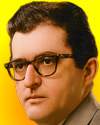
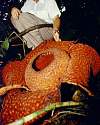
Rafflesia arnoldii
Paul Arthur Zahl was an American biologist and explorer, known for his field research and vivid photography for National Geographic. Leaving behind as newly started career in cancer research, between 1937 and 1939, he led expeditions through Panama, British Guiana, Brazil, and Venezuela, chronicled in his first book To the Lost World (1939), about his search for giant ants. He two-inch ants and beetles six inches long. In Flamingo Hunt (1952), he wrote of his quest for flamingos in the Bahamas. Zahl’s photographs and articles detailed an albino gorilla in Central Africa, frogs weighing seven pounds, and Malaysia’s bathtub-sized Rafflesia flower with two-foot-wide petals. He also explored deep-sea fauna in the Straits of Messina and studied wildlife across many continents.«
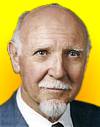
Born 20 Mar 1905; died 2 Feb 1998 at age 92. quotes
Raymond Bernard Cattell was an English-American psychologist who conducted research on individual differences in cognitive abilities, personality, and motivation. For his BSc degree, he studied physics and chemistry, but turned to physholocy for his PhD. Influenced by his undergraduate training in science, he applied mathematical techniques to the study of psychology, making the discipline more objective and quantitative. Cattell became one of the world's leading personality theorists, and developed many widely used psychological tests, of which the best known is the 16 Personality Factor (16PF) personality assessment. During his life, he wrote 55 books and over 500 research papers.«
Raymond Bernard Cattell was an English-American psychologist who conducted research on individual differences in cognitive abilities, personality, and motivation. For his BSc degree, he studied physics and chemistry, but turned to physholocy for his PhD. Influenced by his undergraduate training in science, he applied mathematical techniques to the study of psychology, making the discipline more objective and quantitative. Cattell became one of the world's leading personality theorists, and developed many widely used psychological tests, of which the best known is the 16 Personality Factor (16PF) personality assessment. During his life, he wrote 55 books and over 500 research papers.«
The Scientific Analysis of Personality, by Raymond B. Cattell. - book suggestion.
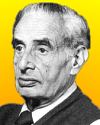
Born 20 Mar 1904; died 14 Oct 1991 at age 87. quotes
Walter Maurice Elsasser was a German-American physicist who contributed to science in several disciplines. In atomic physics, he interpreted electron scattering. In geophysics, during the 1940's, he provided insight into radiative heat transfer in the Earth's atmosphere, and presented the currently accepted dynamo theory to explanation the origin and properties of the Earth's magnetic field. He proposed that this magnetic field resulted from electric currents induced in the fluid outer core of the Earth. He pioneered study of the magnetic orientation of minerals in rocks to reveal the Earth's history of its magnetic field. The last fifty years of his life were to a large part given to studies relevant to biology: a theory of organisms. He wished to establish the distinction between living and inanimate matter.«
Walter Maurice Elsasser was a German-American physicist who contributed to science in several disciplines. In atomic physics, he interpreted electron scattering. In geophysics, during the 1940's, he provided insight into radiative heat transfer in the Earth's atmosphere, and presented the currently accepted dynamo theory to explanation the origin and properties of the Earth's magnetic field. He proposed that this magnetic field resulted from electric currents induced in the fluid outer core of the Earth. He pioneered study of the magnetic orientation of minerals in rocks to reveal the Earth's history of its magnetic field. The last fifty years of his life were to a large part given to studies relevant to biology: a theory of organisms. He wished to establish the distinction between living and inanimate matter.«
Reflections on a Theory of Organisms, by Walter M. Elsasser, Harry Rubin. - book suggestion.
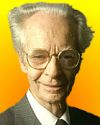
Born 20 Mar 1904; died 18 Aug 1990 at age 86. quotes
Burrhus Frederic (“B.F.”) Skinner was an American psychologist whose pioneering work in experimental psychology promoted behaviorism, shaping behavior through positive and negative reinforcement and demonstrated operant conditioning. The “Skinner box” he used in experiments from 1930 remains famous. To investigate the learning processes of animals, he observed their behaviour in a simple box with a lever which, when activated by the animal, would give a reward (or punishment). The reward, such as pellets of food or water, acts as a primary reinforcer. He observed the behaviour of animals adapted to utilize the opportunity for a reward. He extended his theories to the behaviour of humans, as a form of social engineering.«
Burrhus Frederic (“B.F.”) Skinner was an American psychologist whose pioneering work in experimental psychology promoted behaviorism, shaping behavior through positive and negative reinforcement and demonstrated operant conditioning. The “Skinner box” he used in experiments from 1930 remains famous. To investigate the learning processes of animals, he observed their behaviour in a simple box with a lever which, when activated by the animal, would give a reward (or punishment). The reward, such as pellets of food or water, acts as a primary reinforcer. He observed the behaviour of animals adapted to utilize the opportunity for a reward. He extended his theories to the behaviour of humans, as a form of social engineering.«
B.F. Skinner: A Life, by Daniel W. Bjork. - book suggestion.
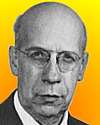
Born 20 Mar 1884; died 22 Jul 1966 at age 82. quotes
Austrian-American physicist and mathematician whose theoretical work covered a broad range of mathematics, including variational calculus, Hamiltonian geometrical optics, Schrödinger wave mechanics, and relativity. Frank had a deep and lasting interest in the philosophy of science. In a number of writings, he strove to reconcile science and philosophy and “bring about the closest rapprochement between” them. The 1907 paper he wrote analyzing the law of causality caught Einstein's attention, who in 1912 recommended Frank as his successor as professor of theoretical physics at the German University of Prague. He held that position until 1938, when he moved to Harvard University in the U.S., first as visiting lecturer, but remaining there until retirement in 1954. He wrote on misinterpretations of the Theory of Relativity.«
Austrian-American physicist and mathematician whose theoretical work covered a broad range of mathematics, including variational calculus, Hamiltonian geometrical optics, Schrödinger wave mechanics, and relativity. Frank had a deep and lasting interest in the philosophy of science. In a number of writings, he strove to reconcile science and philosophy and “bring about the closest rapprochement between” them. The 1907 paper he wrote analyzing the law of causality caught Einstein's attention, who in 1912 recommended Frank as his successor as professor of theoretical physics at the German University of Prague. He held that position until 1938, when he moved to Harvard University in the U.S., first as visiting lecturer, but remaining there until retirement in 1954. He wrote on misinterpretations of the Theory of Relativity.«
Philosophy of Science: The Link Between Science and Philosophy, by Philipp Frank. - book suggestion.
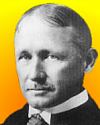
Born 20 Mar 1856; died 21 Mar 1915 at age 59. quotes
Frederick Winslow Taylor was an American engineer and inventor who is known as the father of scientific management. His system of industrial management has influenced and provided benefits in modern industry world-wide. He introduced “time and motion study” (1881). For example, stop-watches were used to time laborers as they worked, shovel-loads moved were counted, and the load per shovel. He thus determined an optimal shovel size and length. Careful observations of various tasks reduced wasted effort, minimized time used, maximized the efficiency of the laborers, lowered costs, and increased productivity. With Maunsel White, he patented (19 Feb 1901) their invention of a high-speed metal-cutting tool steel—revolutionary because it enabled machining at higher cutting speeds.« more
Frederick Winslow Taylor was an American engineer and inventor who is known as the father of scientific management. His system of industrial management has influenced and provided benefits in modern industry world-wide. He introduced “time and motion study” (1881). For example, stop-watches were used to time laborers as they worked, shovel-loads moved were counted, and the load per shovel. He thus determined an optimal shovel size and length. Careful observations of various tasks reduced wasted effort, minimized time used, maximized the efficiency of the laborers, lowered costs, and increased productivity. With Maunsel White, he patented (19 Feb 1901) their invention of a high-speed metal-cutting tool steel—revolutionary because it enabled machining at higher cutting speeds.« more
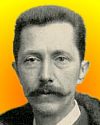
Born 20 Mar 1846; died 8 Apr 1901 at age 55.
Italian pathologist who discovered the role of platelets in haemostasis and identified the bone marrow as the site of production of blood cells. As professor of general pathology at the University of Turin, made it one of the most important European centres of medical scholarship. Among those who studied or worked in his laboratory were Edoardo Bassini, the surgeon who perfected the operation for inguinal hernia (Bassini's operation); Carlo Forlanini, who introduced therapeutic pneumothorax in treating pulmonary tuberculosis; and Antonio Carle and Giorgio Rattone, who demonstrated the transmissibility of tetanus. Bizzozero also contributed to knowledge of histology and public health, emphasizing the control of malaria and tuberculosis.
Italian pathologist who discovered the role of platelets in haemostasis and identified the bone marrow as the site of production of blood cells. As professor of general pathology at the University of Turin, made it one of the most important European centres of medical scholarship. Among those who studied or worked in his laboratory were Edoardo Bassini, the surgeon who perfected the operation for inguinal hernia (Bassini's operation); Carlo Forlanini, who introduced therapeutic pneumothorax in treating pulmonary tuberculosis; and Antonio Carle and Giorgio Rattone, who demonstrated the transmissibility of tetanus. Bizzozero also contributed to knowledge of histology and public health, emphasizing the control of malaria and tuberculosis.
Born 20 Mar 1845; died 10 Mar 1888 at age 42.
Persian-American archaeologist who, though self-taught, was one of the first American women in the field, and became an internationally recognized authority on ancient Greek and Roman sculpture. She spoke Syriac, Arabic, French, German, and Italian and pursued an interest in the study of languages in classical literature. By 1873 she changed her focus to classical archeology, and subsequently became one of the foremost archeologists of her time. In Rome (1876-78) she gave parlour lectures to ladies on Greek and Roman sculpture, and also them to the museums. She was given aid and encouragement by many of the leading European archeologists. Her book, A History of Ancient Sculpture, was one of the first in the field by an American.«
Persian-American archaeologist who, though self-taught, was one of the first American women in the field, and became an internationally recognized authority on ancient Greek and Roman sculpture. She spoke Syriac, Arabic, French, German, and Italian and pursued an interest in the study of languages in classical literature. By 1873 she changed her focus to classical archeology, and subsequently became one of the foremost archeologists of her time. In Rome (1876-78) she gave parlour lectures to ladies on Greek and Roman sculpture, and also them to the museums. She was given aid and encouragement by many of the leading European archeologists. Her book, A History of Ancient Sculpture, was one of the first in the field by an American.«
A History of Ancient Sculpture, by Lucy M. Mitchell. - book suggestion.
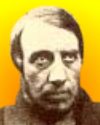
Born 20 Mar 1814; died 6 Mar 1867 at age 52. quotes
Scottish anatomist who was one of the earliest and most acute observers of cell-life. In his early medical career, he identified the independent origins of deciduous and permanent teeth. Goodsir recognized the importance of cell division as the basis of growth and observed the cell is divided into a number of departments. His discoveries anticipated by a number of years the work of Rudolph Virchow. In 1842, he showed that stomach upsets with vomiting were caused by bacteria, treated it accordingly, and thus, before Louis Pasteur, was the first to successfully recognise and treat a bacterial infection. Goodsir taught anatomy, physiology and pathology, while maintaining his research at the dissecting-table.«
Scottish anatomist who was one of the earliest and most acute observers of cell-life. In his early medical career, he identified the independent origins of deciduous and permanent teeth. Goodsir recognized the importance of cell division as the basis of growth and observed the cell is divided into a number of departments. His discoveries anticipated by a number of years the work of Rudolph Virchow. In 1842, he showed that stomach upsets with vomiting were caused by bacteria, treated it accordingly, and thus, before Louis Pasteur, was the first to successfully recognise and treat a bacterial infection. Goodsir taught anatomy, physiology and pathology, while maintaining his research at the dissecting-table.«
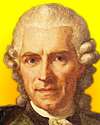
Born 20 Mar 1735; died 8 Jul 1784 at age 49. quotes
Swedish mineralogist, chemist and naturalist who experimented with carbon dioxide, which he named aerial acid, and Joseph Priestley called fixed air. His investigation led him to successfully prepare artificial mineral water. In natural mineral water, he identified hydrogen sulphide. As a pioneer in chemical analysis, he introduced many improvements, studied minerals in particular and contributed to the theory of crystal structure. In 1775, his important paper Essay on Elective Attractions marked the beginning of his extensive work preparing affinity tables for acids and bases. By 1783, he ceased this effort due to failing health, leaving it to others to further develop an understanding of chemical affinity. He wrote an account of the use of the blowpipe in analysis.«
Swedish mineralogist, chemist and naturalist who experimented with carbon dioxide, which he named aerial acid, and Joseph Priestley called fixed air. His investigation led him to successfully prepare artificial mineral water. In natural mineral water, he identified hydrogen sulphide. As a pioneer in chemical analysis, he introduced many improvements, studied minerals in particular and contributed to the theory of crystal structure. In 1775, his important paper Essay on Elective Attractions marked the beginning of his extensive work preparing affinity tables for acids and bases. By 1783, he ceased this effort due to failing health, leaving it to others to further develop an understanding of chemical affinity. He wrote an account of the use of the blowpipe in analysis.«
Torbern Bergman, a Man Before His Time, by Joseph A. Schufle. - book suggestion.
Born 20 Mar 1647; died 18 Oct 1724 at age 77.
French physicist who built a primitive internal-combustion engine which was intended to operate a pump. The piston was pushed back by the explosion of a small charge of gunpowder, and then returned as the combustion gases cooled, leaving a partial vacuum. He wrote on many topics, including acoustics, optics, tidal phenomena, and watch mechanisms. He also invented the micrometer microscope to measure the size of minute objects.
French physicist who built a primitive internal-combustion engine which was intended to operate a pump. The piston was pushed back by the explosion of a small charge of gunpowder, and then returned as the combustion gases cooled, leaving a partial vacuum. He wrote on many topics, including acoustics, optics, tidal phenomena, and watch mechanisms. He also invented the micrometer microscope to measure the size of minute objects.
Born 20 Mar 1546; died 20 Aug 1622 at age 76.
Syrian-Iranian theologian, mathematician and astronomer, a.k.a. Shaykh Baha'i). He became a very learned Muslim whose genius touched every field of knowledge from mathematics and philosophy to architecture and landscape design. He revived the study of mathematics in Iran. His treatise on the subject, Khulasat al-hisab (“The Essentials of Arithmetic”), and translations from the original Arabic was in use as a textbook until the end of the 19th century. His treatise in astronomy, Tashrihu'l-aflak ("Anatomy of the Heavens") summarised the works of earlier masters. He was born within a year of William Gilbert in England and Tycho Brahe in Denmark, and was still a child when his family left Syria to escape religious persecution.«
Syrian-Iranian theologian, mathematician and astronomer, a.k.a. Shaykh Baha'i). He became a very learned Muslim whose genius touched every field of knowledge from mathematics and philosophy to architecture and landscape design. He revived the study of mathematics in Iran. His treatise on the subject, Khulasat al-hisab (“The Essentials of Arithmetic”), and translations from the original Arabic was in use as a textbook until the end of the 19th century. His treatise in astronomy, Tashrihu'l-aflak ("Anatomy of the Heavens") summarised the works of earlier masters. He was born within a year of William Gilbert in England and Tycho Brahe in Denmark, and was still a child when his family left Syria to escape religious persecution.«

Died 20 Mar 2002 at age 90 (born 1 Nov 1911). quotes
Australian geologist who contributed a model of an expanding earth in support of Alfred Wegener's concept of moving continents. Carey's ideas were a prelude to, and replaced by, the present theory of plate tectonics.
Australian geologist who contributed a model of an expanding earth in support of Alfred Wegener's concept of moving continents. Carey's ideas were a prelude to, and replaced by, the present theory of plate tectonics.
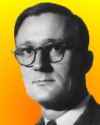
Died 20 Mar 1993 at age 82 (born 26 Jan 1911). quotes
German-American physicist who shared the Nobel Prize for Physics in 1955 for his accurate determination that the magnetic moment of the electron is greater than its theoretical value. This he deduced from researching the hyperfine structure of the energy levels in certain elements, and in 1947 found a discrepancy of about 0.1% between the observed value and that predicted by theory. Although minute, this anomaly was of great significance and led to revised theories about the interactions of electrons with electromagnetic radiation, now known as quantum electrodynamics. (He shared the prize with Willis E. Lamb, Jr. who performed independent but related experiments at Columbia University on the hyperfine structure of the hydrogen atom.)
German-American physicist who shared the Nobel Prize for Physics in 1955 for his accurate determination that the magnetic moment of the electron is greater than its theoretical value. This he deduced from researching the hyperfine structure of the energy levels in certain elements, and in 1947 found a discrepancy of about 0.1% between the observed value and that predicted by theory. Although minute, this anomaly was of great significance and led to revised theories about the interactions of electrons with electromagnetic radiation, now known as quantum electrodynamics. (He shared the prize with Willis E. Lamb, Jr. who performed independent but related experiments at Columbia University on the hyperfine structure of the hydrogen atom.)
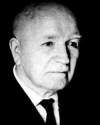
Died 20 Mar 1983 at age 91 (born 2 Sep 1891).
Soviet mathematician known for his contributions to the analytical theory of numbers, including a partial solution of the Goldbach conjecture proving that every sufficiently large odd integer can be expressed as the sum of three odd primes. He described his methods in his most celebrated piece of work Some Theorems Concerning the Theory of Prime Numbers (1937).[EB Online gives born 2 Sep 1891; MacTutor gives 14 Sep 1891, died: 20 March 1983]
Soviet mathematician known for his contributions to the analytical theory of numbers, including a partial solution of the Goldbach conjecture proving that every sufficiently large odd integer can be expressed as the sum of three odd primes. He described his methods in his most celebrated piece of work Some Theorems Concerning the Theory of Prime Numbers (1937).[EB Online gives born 2 Sep 1891; MacTutor gives 14 Sep 1891, died: 20 March 1983]
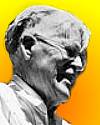
Died 20 Mar 1962 at age 94 (born 5 Jul 1867).
American astronomer and archaeologist who coined the name dendrochronology for tree-ring dating, a field he originated while working at the Lowell Observatory, Flagstaff, Ariz. (1894-1901). He began to collect tree specimens, believing that variations in the width of tree rings would show a connection between sunspot activity and the terrestrial climate and vegetation. His study showed how tree rings could be used to date and interpret past events. The width of tree rings is a record of the rainfall, with implications on the local food supply in dry years. Archaeologist Clark Wissler collaborated in this work by furnishing sections of wooden beams from Aztec Ruin and Pueblo Bonito so Douglass could cross-date the famous sites. Thus the study of tree rings enables archaeologists to date prehistoric remains.«
American astronomer and archaeologist who coined the name dendrochronology for tree-ring dating, a field he originated while working at the Lowell Observatory, Flagstaff, Ariz. (1894-1901). He began to collect tree specimens, believing that variations in the width of tree rings would show a connection between sunspot activity and the terrestrial climate and vegetation. His study showed how tree rings could be used to date and interpret past events. The width of tree rings is a record of the rainfall, with implications on the local food supply in dry years. Archaeologist Clark Wissler collaborated in this work by furnishing sections of wooden beams from Aztec Ruin and Pueblo Bonito so Douglass could cross-date the famous sites. Thus the study of tree rings enables archaeologists to date prehistoric remains.«
Andrew Ellicott Douglass and the Role of the Giant Sequoia in the Development of Dendrochronology, by Donald J. McGraw. - book suggestion.
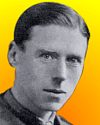
Died 20 Mar 1950 at age 72 (born 22 Oct 1877).
English bacteriologist who, working with George Ingram, was the first to publish (1912) a method for isolating and culturing the extremely fastidious Mycobacterium paratuberculosis, the bacterium that causes Johne's disease, or chronic dysentery of cattle. He was the first to publish a report (1915) on what were called bacteriophage (viruses that prey upon bacteria) when Félix d'Hérelle independently made the discovery two years later. Twort's somewhat accidental discovery happened when he noticed that the bacteria infecting his plates became transparent. Thinking the virus to be a primitive life form, thereafter he tried to grow viruses in artificial media, but had difficulty funding the research.«
English bacteriologist who, working with George Ingram, was the first to publish (1912) a method for isolating and culturing the extremely fastidious Mycobacterium paratuberculosis, the bacterium that causes Johne's disease, or chronic dysentery of cattle. He was the first to publish a report (1915) on what were called bacteriophage (viruses that prey upon bacteria) when Félix d'Hérelle independently made the discovery two years later. Twort's somewhat accidental discovery happened when he noticed that the bacteria infecting his plates became transparent. Thinking the virus to be a primitive life form, thereafter he tried to grow viruses in artificial media, but had difficulty funding the research.«
In Focus, Out of Step: A Biography of Frederick William Twort, by Antony Twort. - book suggestion.
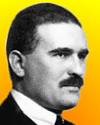
Died 20 Mar 1947 at age 59 (born 27 Jan 1888). quotes
Swiss-Norwegian geochemist, mineralogist and petrologist who established a theoretical background for geochemistry (which in the previous century had been limited to the collection of data on the accessible earth's crust, waters and atmosphere.) Goldschmidt investigated the major and minor elements in minerals, and sought to explain their distribution as a result of cosmic origins. He invented crystal chemistry, whereby he attempted to complete a record of mineral crystal forms, and to link the variations of those forms to the physical and chemical conditions under which they were formed. In this pursuit, he both improved existing instruments and invented new ones. He is regarded as the founder of modern geochemistry.«
Swiss-Norwegian geochemist, mineralogist and petrologist who established a theoretical background for geochemistry (which in the previous century had been limited to the collection of data on the accessible earth's crust, waters and atmosphere.) Goldschmidt investigated the major and minor elements in minerals, and sought to explain their distribution as a result of cosmic origins. He invented crystal chemistry, whereby he attempted to complete a record of mineral crystal forms, and to link the variations of those forms to the physical and chemical conditions under which they were formed. In this pursuit, he both improved existing instruments and invented new ones. He is regarded as the founder of modern geochemistry.«
Victor Moritz Goldschmidt: Father of Modern Geochemistry, by Brian Mason. - book suggestion.
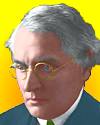
Died 20 Mar 1946 at age 76 (born 9 Jan 1870). quotes
Amadeus William Grabau was an American geologist and palaeontologist known for his work on world stratigraphic deposits and the deciphering of Earth history. In 1899, he published an early work that studied the environment of old sedimentary rocks in light of knowledge of the conditions of life among modern organisms, The Relations of Marine Bionomy to Stratigraphy*, which was a step toward the development of paleoecology. For more than a quarter of a century, he worked on the geologic survey of China. In 1940, he developed a theory of rhythms in the growth of the Earth's crust, and of repetitions in mountain building. He died in China and was buried there.*Ref.: Bulletin of Buffalo Society of Natural Sciences, 6 no. 4 (September 1899): 319-356.
Amadeus William Grabau was an American geologist and palaeontologist known for his work on world stratigraphic deposits and the deciphering of Earth history. In 1899, he published an early work that studied the environment of old sedimentary rocks in light of knowledge of the conditions of life among modern organisms, The Relations of Marine Bionomy to Stratigraphy*, which was a step toward the development of paleoecology. For more than a quarter of a century, he worked on the geologic survey of China. In 1940, he developed a theory of rhythms in the growth of the Earth's crust, and of repetitions in mountain building. He died in China and was buried there.*Ref.: Bulletin of Buffalo Society of Natural Sciences, 6 no. 4 (September 1899): 319-356.
Principles of Stratigraphy, by Amadeus W Grabau. - book suggestion.
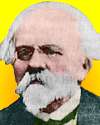
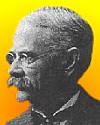
Ilya Ivanovich Ivanov was a Soviet biologist who developed a practical procedure for artificially inseminating domestic animals (extending earlier research by Spallanzani who discovered that it was possible). In 1901 Ivanov founded the world’s first centre for the artificial insemination of racehorses. Thereafter, his method was extensively used breeding farm animals. In 2005, Moscow newspapers reported that uncovered secret documents showed that Ivanov was ordered to use monkey sperm in humans as part of Stalin's quest for a super-warrior that would be “a new invincible human being, insensitive to pain, resistant and indifferent about the quality of food they eat.” His expensive work failed, and he was exiled in disgrace to Kazakhstan in 1931 where he died a year later.«
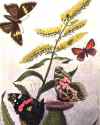
American entomologist who did pioneering work in the systematic classification of scale insects, moths and butterflies. His wife, Anna Botsford, illustrated these subjects in his earlier books. He published works for both the layman and the scientist. After he graduated from Cornell University, he taught there. He spent a summer in Alabama (1878) studying the cotton-leaf worm, Alabama argillacea, and shortly afterwards became the chief entomologist of the United States Department of Agriculture (1879-82), after which he returned to a university position. Over a number of years his research included studing the wing venation of insects, making notable new contributions to the field. Later in life, he turned his interest to morphology.«[Image right: Illustration by Anna Botsford Comstock from A Manual for the Study of Insects(source)]
A Manual for the Study of Insects, by John Henry Comstock. - book suggestion.
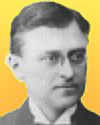
Died 20 Mar 1928 at age 64 (born 5 Nov 1863).
James Ward Packard was an American engineer and inventor who founded Packard Automobile Co. A few years after graduation, as foreman at Sawyer-Mann Electric Co., N.Y., manufacturers of the Sawyer-Mann incandescent electric lamp, he acquired several patents. These included a new form of incandescent lamp, a lamp socket, and improvements in vacuum pumps for exhausting the air from incandescent lamp bulbs. In 1889, he and his brother started an electrical business, the Packard Electric Company. His next patents included manufacturing electrical transformers, fuse boxes, measuring instruments, and cables. Later, he designed and built his first automobile, which he road tested on 6 Nov 1899. He then formed the Packard Motor Co. A Packard Model F left San Francisco on 21 Jun 1902 on a transcontinental journey ending 21 Aug 1903 in NYC.«
James Ward Packard was an American engineer and inventor who founded Packard Automobile Co. A few years after graduation, as foreman at Sawyer-Mann Electric Co., N.Y., manufacturers of the Sawyer-Mann incandescent electric lamp, he acquired several patents. These included a new form of incandescent lamp, a lamp socket, and improvements in vacuum pumps for exhausting the air from incandescent lamp bulbs. In 1889, he and his brother started an electrical business, the Packard Electric Company. His next patents included manufacturing electrical transformers, fuse boxes, measuring instruments, and cables. Later, he designed and built his first automobile, which he road tested on 6 Nov 1899. He then formed the Packard Motor Co. A Packard Model F left San Francisco on 21 Jun 1902 on a transcontinental journey ending 21 Aug 1903 in NYC.«
Packard Motor Car Company, by Evan P. Idle. - book suggestion.
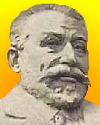
Died 20 Mar 1921 at age 78 (born 25 Apr 1842).
French engineer who was an important leader in experimenting with various ways of reinforcing concrete with iron and steel. At the Paris Exposition of 1867, Hennebique saw Joseph Monier's tubs and tanks built of concrete reinforced with wire mesh, and began experimenting with ways to apply this new material to building construction, setting up his own firm (1867). First using reinforced-concrete floor slabs (1879), he progressed to a complete building system, patented 1892, using his invention of a method using hooked connections on reinforcing bars. Hennébique introduced his techniques into Britain when he was commissioned to build a new flour mill in Swansea (completed 1898). This was the first multistorey reinforced concrete building in Britain.
French engineer who was an important leader in experimenting with various ways of reinforcing concrete with iron and steel. At the Paris Exposition of 1867, Hennebique saw Joseph Monier's tubs and tanks built of concrete reinforced with wire mesh, and began experimenting with ways to apply this new material to building construction, setting up his own firm (1867). First using reinforced-concrete floor slabs (1879), he progressed to a complete building system, patented 1892, using his invention of a method using hooked connections on reinforcing bars. Hennébique introduced his techniques into Britain when he was commissioned to build a new flour mill in Swansea (completed 1898). This was the first multistorey reinforced concrete building in Britain.
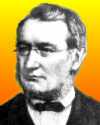
Died 20 Mar 1878 at age 63 (born 25 Nov 1814). quotes
Julius Robert Mayer was a German physicist who, while a ship's doctor sailing to Java, considered the physics of animal heat. In 1842, he measured the mechanical equivalent of heat. His experiment compared the work done by a horse powering a mechanism which stirred paper pulp in a caldron with the temperature rise in the pulp. He held that solar energy was the ultimate source of all energy on earth, both living and nonliving. Mayer had the idea of the conservation of energy before either Joule or Helmholtz. The prominence of these two scientists, however, diminished credit for Mayer's earlier insights. James Joule presented his own value for the mechanical equivalent of heat. Helmhotlz more systematically presented the law of conservation of energy. more
Julius Robert Mayer was a German physicist who, while a ship's doctor sailing to Java, considered the physics of animal heat. In 1842, he measured the mechanical equivalent of heat. His experiment compared the work done by a horse powering a mechanism which stirred paper pulp in a caldron with the temperature rise in the pulp. He held that solar energy was the ultimate source of all energy on earth, both living and nonliving. Mayer had the idea of the conservation of energy before either Joule or Helmholtz. The prominence of these two scientists, however, diminished credit for Mayer's earlier insights. James Joule presented his own value for the mechanical equivalent of heat. Helmhotlz more systematically presented the law of conservation of energy. more
Robert Mayer and the Conservation of Energy, by Kenneth L. Caneva. - book suggestion.
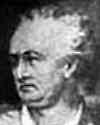
Died 20 Mar 1855 (born c. Dec 1778). quotes
English pioneer in the development of the cement industry. The eldest son of a bricklayer, he became interested in making advanced cements for rendering brickwork. On 21 Oct 1824, he patented Portland Cement, a calcined mixture of limestone, clay and water, so named because he thought its colour resembled Portland Stone. He established his first cement works at Kirkgate in Wakefield (1825-38) and established a new works there in 1843. He retired the following year, and the business was taken over by his elder son, James. His younger son William had already set up his own business in Rotherhithe, London (1841) where he manufactured an improved cement. Sir Marc Brunel used William Aspin's cement in his Thames railway tunnel for its greater strength. more
English pioneer in the development of the cement industry. The eldest son of a bricklayer, he became interested in making advanced cements for rendering brickwork. On 21 Oct 1824, he patented Portland Cement, a calcined mixture of limestone, clay and water, so named because he thought its colour resembled Portland Stone. He established his first cement works at Kirkgate in Wakefield (1825-38) and established a new works there in 1843. He retired the following year, and the business was taken over by his elder son, James. His younger son William had already set up his own business in Rotherhithe, London (1841) where he manufactured an improved cement. Sir Marc Brunel used William Aspin's cement in his Thames railway tunnel for its greater strength. more
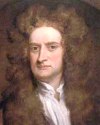
Died 20 Mar 1727 at age 84 (born 25 Dec 1642). quotes
English physicist and mathematician who made seminal discoveries in several areas of science, and was the leading scientist of his era. His study of optics included using a prism to show white light could be split into a spectrum of colours. The statement of his three laws of motion are fundamental in the study of mechanics. He was the first to describe the moon as falling (in a circle around the earth) under the same influence of gravity as a falling apple, embodied in his law of universal gravitation. As a mathematician, he devised infinitesimal calculus to make the calculations needed in his studies, which he published in Philosophiae Naturalis Principia Mathematica (Mathematical Principles of Natural Philosophy, 1687).« more
English physicist and mathematician who made seminal discoveries in several areas of science, and was the leading scientist of his era. His study of optics included using a prism to show white light could be split into a spectrum of colours. The statement of his three laws of motion are fundamental in the study of mechanics. He was the first to describe the moon as falling (in a circle around the earth) under the same influence of gravity as a falling apple, embodied in his law of universal gravitation. As a mathematician, he devised infinitesimal calculus to make the calculations needed in his studies, which he published in Philosophiae Naturalis Principia Mathematica (Mathematical Principles of Natural Philosophy, 1687).« more
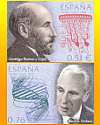
In 2006, Spain issued stamps recognizing their two winners of the Nobel Prize for Physiology or Medicine. A 0.51 € stamp showed the 1906 winner, Spanish histologist Santiago Ramón y Cajal with a diagram of nerve cells. A 0.76 € stamps showed the 1959 winner, Spanish-American biochemist and molecular biologist Severo Ochoa beside a diagram of part of a DNA molecule. The 1906 award was shared with Camillo Golgi, “in recognition of their work on the structure of the nervous system.” The 1959 award was shared with Arthur Kornberg, “for their discovery of the mechanisms in the biological synthesis of ribonucleic acid and deoxyribonucleic acid.” As of 2011, these were the only two Spanish scientists to receive a Nobel prize, though five Nobel Prizes for Literature were presented to Spaniards.«

In 1987, the FDA approved the sale of AZT (azidothymidine), an antiviral drug believed to prolong the lives of some AIDS patients. By 2000, an estimated 50 million people were infected with HIV worldwide. AZT was the first authorized antiretroviral AIDS drug. Combined with other, recently approved antivirals, AZT's effectiveness has been increased. The generic name of AZT is zidovudine, brand name Retrovir. It was originally developed in 1964 by Dr. Jerome Horowitz of the Michigan Cancer Foundation as a possible treatment for cancer. In Feb 1985, the National Cancer Institute, under the direction of Dr. Samuel Broder, tested AZT and found that it was a potent inhibitor of AIDS.

In 1934, the first test of a practical radar apparatus was made by Rudolf Kuhnold in Kiel Harbour, Germany, Chief of the German Navy Signals Research Department. His 700-watt transmitter worked on a frequency of 600 megacycles, had a receiver and had disk reflectors. It received echoes from signals bounced off the battleship Hesse, anchored 600 yds away. In an October test, it picked up echoes from a ship seven miles away. Radar was to be an important asset in the coming WW II, but ironically it was the U.S. and Great Britain, that took Kuhnold's pioneering work and developed it into a reliable detection system. Kuhnold may thus be described as the man who won the Battle of Britain for the English!
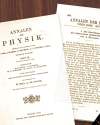
In 1916, Albert Einstein's Theory of General Relativity was published as an academic paper in Annalen der Physik 49, 769, titled “Die Grundlagen der allgemeinen Relativitästheorie.” This theory accounted for the slow rotation of the elliptical path of the planet Mercury, which Newtonian gravitational theory failed to do. Fame and recognition came suddenly in 1919, when the Royal Society of London photographed the solar eclipse and publicly verified Einstein's general theory of relativity. In 1921 he was awarded the Nobel Prize for Physics for his photoelectric law and work in the field of theoretical physics, but such was the controversy still aroused by this theories on relativity that these were not specified in the text of the award.
Subtle Is the Lord: The Science and the Life of Albert Einstein, by Abraham Pais. - book suggestion.
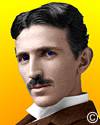
In 1900, Nikola Tesla received a patent for the wireless transmission of electric power (No. 645,576).
Wizard: The Life and Times of Nikola Tesla: Biography of a Genius, by Marc Seifer. - book suggestion.
1884
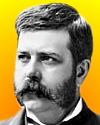
In 1886, America's first demonstration of the alternating-current system provided lighting along Main Street at Great Barrington, Massachusetts. The power came from the first AC power plant in the U.S. to begin commercial operation. With this project, its creator, George Westinghouse, now thirty-nine years old, began a new direction in his career.
A Life of George Westinghouse, by Henry G. Prout. - book suggestion.
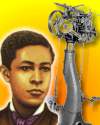
Matzeliger & machine
In 1883, Jan Matzeliger was issued his first U.S. patent for his shoe “Lasting-Machine” (No. 274,207). It provided step-by-step lasting and tacking of a shoe in the same way as the hand method, but much more efficiently. It held the shoe on the last, gripped and pulled the leather down around the heel, then guided and drove the nails in place. The sole could be attached to the upper of the shoe in a minute, significantly increasing the output of finished shoes compared to usual hand work. He later patented further improvements to his machine. The machine was successful, and known as the consolidated hand method lasting machine. He also obtained Canadian Patent No. 24,000 on 7 May 1886 for his “Lasting Machine.”.«
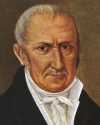
Volta
In 1800, Alessandro Volta dated a letter announcing his invention of the voltaic pile to Sir Joseph Banks, president of the Royal Society, London. “On the electricity excited by the mere contact of conducting substances of different kinds,” described his results of stacking sandwiches of copper and zinc metal discs between pads of moist material. The letter had to pass from Italy, through France, which was then at war with Britain, so Volta sent the message in two parts. When the first pages arrived, Banks showed them to Anthony Carlisle, a London surgeon, who with William Nicholson immediately began trying to repeat Volta’s experiments. By 2 May 1800, they stumbled upon electrolysis of water.«
Volta: Science and Culture in the Age of Enlightenment, by Giuliano Pancaldi. - book suggestion.




