
Born 14 Apr 1950. quotes
Francis Sellers Collins is an American geneticist and physician who became the second director (1993-2008), taking over from James Watson, at the National Human Genome Research Institute at the National Institutes of Health (NIH), an agency of the U.S. government. On 8 Jul 2009, he was nominated by President Obama to be head of the NIH. He was awarded the National Medal of Science at a ceremony at the White House (7 Oct 2009). Collins began his early career with a Ph.D. in physical chemistry, but recognizing the nacent field of molecular biology and genetics, he changed his field, and earned an M.D. (1977). Thereafter, he worked on methods of crossing large stretches of DNA to identify disease genes, for which he later coined the term positional cloning. His research team used it to identify the gene for cystic fibrosis (1989) and for Huntington disease (1993).«
Francis Sellers Collins is an American geneticist and physician who became the second director (1993-2008), taking over from James Watson, at the National Human Genome Research Institute at the National Institutes of Health (NIH), an agency of the U.S. government. On 8 Jul 2009, he was nominated by President Obama to be head of the NIH. He was awarded the National Medal of Science at a ceremony at the White House (7 Oct 2009). Collins began his early career with a Ph.D. in physical chemistry, but recognizing the nacent field of molecular biology and genetics, he changed his field, and earned an M.D. (1977). Thereafter, he worked on methods of crossing large stretches of DNA to identify disease genes, for which he later coined the term positional cloning. His research team used it to identify the gene for cystic fibrosis (1989) and for Huntington disease (1993).«
The Language of Life: DNA and the Revolution in Personalized Medicine, by Francis S. Collins. - book suggestion.
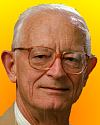
Born 14 Apr 1927; died 7 Feb 2007 at age 79. quotes
Alan Graham MacDiarmid was a New Zealand-American chemist who shared the 2000 Nobel Prize in Chemistry (with Alan Heeger and Hideki Shirakawa) “for the discovery and development of conductive polymers.” Plastics (formed of repeated units in long-chain polymer molecules) most often do not conduct electricity, and are used for insulation. At the end of the 1970s, these scientists devised polymer materials that were semi-conductors, able to conduct electricity. Practical applications now include conductive polymers in “smart” windows able to exclude sunlight, light-emitting diodes, solar cells and displays for mobile telephones and small television screens. Research has been stimulated to attempt to produce transistors consisting of individual molecules with which to dramatically reduce the size of computers.«
Alan Graham MacDiarmid was a New Zealand-American chemist who shared the 2000 Nobel Prize in Chemistry (with Alan Heeger and Hideki Shirakawa) “for the discovery and development of conductive polymers.” Plastics (formed of repeated units in long-chain polymer molecules) most often do not conduct electricity, and are used for insulation. At the end of the 1970s, these scientists devised polymer materials that were semi-conductors, able to conduct electricity. Practical applications now include conductive polymers in “smart” windows able to exclude sunlight, light-emitting diodes, solar cells and displays for mobile telephones and small television screens. Research has been stimulated to attempt to produce transistors consisting of individual molecules with which to dramatically reduce the size of computers.«
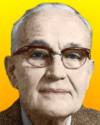
Born 14 Apr 1904; died 19 Nov 1983 at age 79. quotes
Reinout Willem van Bemmelen was a Dutch geologist whose studies of the regional geology of Indonesia led to recognition of the importance of island areas in the development of the Earth's crust. Long before others even thought about compiling an article on this archipelagos, he published his biggest contribution, the Geology of Indonesia (1949). Still often cited, this book covers broad aspects of the regional geology of Indonesia, which is prolific in terms of hydrocarbon and other mineral resources. Indonesia is part of the volcanic “ring of fire” and one of the most complex geological settings in the world because it lies at the junction of three major tectonic plates (Pacific, Indian-Australian, and Eurasian). He also researched continental drift and the winds of the equatorial stratosphere. more
Reinout Willem van Bemmelen was a Dutch geologist whose studies of the regional geology of Indonesia led to recognition of the importance of island areas in the development of the Earth's crust. Long before others even thought about compiling an article on this archipelagos, he published his biggest contribution, the Geology of Indonesia (1949). Still often cited, this book covers broad aspects of the regional geology of Indonesia, which is prolific in terms of hydrocarbon and other mineral resources. Indonesia is part of the volcanic “ring of fire” and one of the most complex geological settings in the world because it lies at the junction of three major tectonic plates (Pacific, Indian-Australian, and Eurasian). He also researched continental drift and the winds of the equatorial stratosphere. more
The Geology of Indonesia, by R.W. van Bemmelen. - book suggestion.
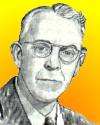
Born 14 Apr 1898; died 11 Dec 1983 at age 85.
American electrical engineer who discovered and developed the negative-feedback principle, in which amplification output is fed back into the input, thus producing nearly distortionless and steady amplification. In 1921, Black joined the forerunner of Bell Labs, in New York City, working on elimination of distortion. After six years of persistence, Black conceived his negative feedback amplifier in a flash commuting to work aboard the ferry. Basically, the concept involved feeding systems output back to the input as a method of system control. The principle has found widespread applications in electronics, including industrial, military, and consumer electronics, weaponry, analog computers, and such biomechanical devices as pacemakers.
American electrical engineer who discovered and developed the negative-feedback principle, in which amplification output is fed back into the input, thus producing nearly distortionless and steady amplification. In 1921, Black joined the forerunner of Bell Labs, in New York City, working on elimination of distortion. After six years of persistence, Black conceived his negative feedback amplifier in a flash commuting to work aboard the ferry. Basically, the concept involved feeding systems output back to the input as a method of system control. The principle has found widespread applications in electronics, including industrial, military, and consumer electronics, weaponry, analog computers, and such biomechanical devices as pacemakers.
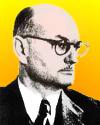
Born 14 Apr 1886; died 19 Nov 1959 at age 73.
Edward Chace Tolman was an American psychologist who developed a system of psychology known as purposive, or molar, behaviourism, which attempts to explore the entire action of the total organism. Because of his strong affiliation with building a scientific psychology he embraced the core notion of behaviorism—that what an organism does is the source of legitimate data. Contrary to John B. Watson's atomism approach, Tolman advocated the use of intervening variables and focused on a number of very non-behaviorist processes such as purpose, expectation, belief and spatial representation. His major book was Purposive Behavior in Animals and Men (1932) in which he summarized a significant series of experiments on the white rat.
Edward Chace Tolman was an American psychologist who developed a system of psychology known as purposive, or molar, behaviourism, which attempts to explore the entire action of the total organism. Because of his strong affiliation with building a scientific psychology he embraced the core notion of behaviorism—that what an organism does is the source of legitimate data. Contrary to John B. Watson's atomism approach, Tolman advocated the use of intervening variables and focused on a number of very non-behaviorist processes such as purpose, expectation, belief and spatial representation. His major book was Purposive Behavior in Animals and Men (1932) in which he summarized a significant series of experiments on the white rat.
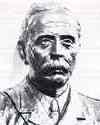
Born 14 Apr 1857; died 16 Jul 1916 at age 59.
Victor Alexander Haden Horsley was an English physiologist and neurosurgeon who was a pioneer in surgery on the brain and spinal cord. Before age 30, on 25 May 1886, he performed his first human brain surgery: excision of a scar. In 1887, he worked with his former professor, Sir William Gowers, in the controversial first surgery to remove a spinal cord tumour, treating an Army officer (age 45) with a spastic paralysis of the lower extremities, enabling him to walk again. He researched the thyroid gland's function in regulating the body's growth and metabolism, and how its malfunction was related to myxedema and cretinism. He confirmed Louis Pasteur's development of an effective rabies vaccine, and advocated its use in England to prevent the disease. In his research to find physiological analogs with humans, he investigated the anatomy as diverse as woodpeckers, ducks and armadillos.«
Victor Alexander Haden Horsley was an English physiologist and neurosurgeon who was a pioneer in surgery on the brain and spinal cord. Before age 30, on 25 May 1886, he performed his first human brain surgery: excision of a scar. In 1887, he worked with his former professor, Sir William Gowers, in the controversial first surgery to remove a spinal cord tumour, treating an Army officer (age 45) with a spastic paralysis of the lower extremities, enabling him to walk again. He researched the thyroid gland's function in regulating the body's growth and metabolism, and how its malfunction was related to myxedema and cretinism. He confirmed Louis Pasteur's development of an effective rabies vaccine, and advocated its use in England to prevent the disease. In his research to find physiological analogs with humans, he investigated the anatomy as diverse as woodpeckers, ducks and armadillos.«
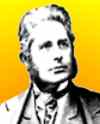
Born 14 Apr 1827; died 4 May 1900 at age 73. quotes
English archaeologist often called the "father of British archaeology," who stressed the need for total excavation of sites, thorough stratigraphic observation and recording, and prompt and complete publication. Like Sir Flinders Petrie, Pitt-Rivers adopted a sociological approach to the study of excavated objects and emphasized the instructional value of common artifacts. His London home became so crowded with items such as skulls, stone implements, pottery and other works of art that he decided to open a public museum at Bethnal Green, which he arranged according to his evolutionary system. When his collection became too large for Bethnal Green, it was transferred to the University of Oxford, where it is seen today.
English archaeologist often called the "father of British archaeology," who stressed the need for total excavation of sites, thorough stratigraphic observation and recording, and prompt and complete publication. Like Sir Flinders Petrie, Pitt-Rivers adopted a sociological approach to the study of excavated objects and emphasized the instructional value of common artifacts. His London home became so crowded with items such as skulls, stone implements, pottery and other works of art that he decided to open a public museum at Bethnal Green, which he arranged according to his evolutionary system. When his collection became too large for Bethnal Green, it was transferred to the University of Oxford, where it is seen today.
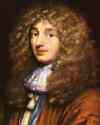
Born 14 Apr 1629; died 8 Jul 1695 at age 66. quotes
Dutch physicist and astronomer who founded the wave theory of light, discovered the true shape of the rings of Saturn, and contributed to the science of dynamics - the study of the action of forces on bodies. Using a lens he ground for himself, on 25 Mar 1655, he discovered the first moon of Saturn, later named Titan. In 1656, he patented the first pendulum clock, which he developed to enable exact time measurement while observing the heavens. Cristiaan Huygens studied the relation of the length of a pendulum to its period of oscillation (1673) and stated theories on centrifugal force in circular motion which influenced Sir Isaac Newton in formulating his Law of Gravity. Huygens also studied and drew the first maps of Mars. On 14 Jan 2005, a NASA space probe, named after Huygens, landed on Titan.
Dutch physicist and astronomer who founded the wave theory of light, discovered the true shape of the rings of Saturn, and contributed to the science of dynamics - the study of the action of forces on bodies. Using a lens he ground for himself, on 25 Mar 1655, he discovered the first moon of Saturn, later named Titan. In 1656, he patented the first pendulum clock, which he developed to enable exact time measurement while observing the heavens. Cristiaan Huygens studied the relation of the length of a pendulum to its period of oscillation (1673) and stated theories on centrifugal force in circular motion which influenced Sir Isaac Newton in formulating his Law of Gravity. Huygens also studied and drew the first maps of Mars. On 14 Jan 2005, a NASA space probe, named after Huygens, landed on Titan.
Unrolling Time: Christian Huygens and the Mathematization of Nature, by Joella G. Yoder. - book suggestion.
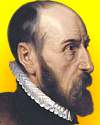
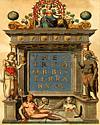
Belgian cartographer and geographer who created the first true modern atlas, the Theatrum Orbis Terrarum (“Theatre of the World”, published 20 May 1570). Its 181 pages included 53 map sheets, each with descriptive text on the reverse side. Ortelius was trained as an engraver. About 1554, he started a books, maps and antiquities business. By 1560, with the encouragement of Geradus Mercator, Ortelius developed an interest in mapmaking, and compiled some maps of the world. His major work was the Theatrum, for which he collated maps from 87 sources, then neatly engraved the maps with a uniform appearance. It was printed by Christophe Plantin. It was an immediate success, and went through 23 editions in his lifetime. By 1592 it had 134 maps.«

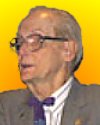
Died 14 Apr 2011 at age 91 (born 9 Dec 1919).
William Nunn Lipscomb was an American physical chemist who won the Nobel Prize for Chemistry in 1976 for his research on the structure of boranes (boron hydride compounds), work which also answered general questions about chemical bonding. Boranes became important in chemical research in the 1940s and ‘50s because of the need to find volatile uranium compounds (borohydrides) for isotope separation, as well as the need to develop high-energy fuels for rockets and jet aircraft. To map the molecular structures of boranes, Lipscomb also developed x-ray techniques that later found application in many other areas of chemical research. Lipscomb's research interests included the relationship of three-dimensional structure and mechanisms of enzymes and other proteins.
William Nunn Lipscomb was an American physical chemist who won the Nobel Prize for Chemistry in 1976 for his research on the structure of boranes (boron hydride compounds), work which also answered general questions about chemical bonding. Boranes became important in chemical research in the 1940s and ‘50s because of the need to find volatile uranium compounds (borohydrides) for isotope separation, as well as the need to develop high-energy fuels for rockets and jet aircraft. To map the molecular structures of boranes, Lipscomb also developed x-ray techniques that later found application in many other areas of chemical research. Lipscomb's research interests included the relationship of three-dimensional structure and mechanisms of enzymes and other proteins.
Died 14 Apr 1995 at age 89 (born 4 Aug 1905).
British analytical psychologist who applied Jungian analysis to the study of development in children. His research and writings produced a theory of the the processes of individuation in the childhood years that had formerly been lacking in Jungian thought. The concept of the self in childhood that he developed was revolutionary for Jungians and path breaking for child development, because at the time, modern research studies on infancy had not begun. Subsequent evidence accumulated from experimental and analytical sources has added further validity to his ideas about the dynamic of the self as an important feature of development.
British analytical psychologist who applied Jungian analysis to the study of development in children. His research and writings produced a theory of the the processes of individuation in the childhood years that had formerly been lacking in Jungian thought. The concept of the self in childhood that he developed was revolutionary for Jungians and path breaking for child development, because at the time, modern research studies on infancy had not begun. Subsequent evidence accumulated from experimental and analytical sources has added further validity to his ideas about the dynamic of the self as an important feature of development.
Michael Fordham: Innovations in Analytical Psychology, by James Astor. - book suggestion.
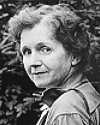
Died 14 Apr 1964 at age 56 (born 27 May 1907). quotes
Rachel Louise Carson was an American marine biologist, conservationist and writer well known for her writings on environmental pollution and the natural history of the sea. Embedded within all of Carson's writing was the view that human beings were but one part of nature distinguished primarily by their power to alter it, in some cases irreversibly. Disturbed by the profligate use of synthetic chemical pesticides after World War II, Carson reluctantly changed her focus in order to warn the public about the long term effects of misusing pesticides. In her book, Silent Spring (1962), she challenged the practices of agricultural scientists and the government, and called for a change in the way humankind viewed the natural world.
Rachel Louise Carson was an American marine biologist, conservationist and writer well known for her writings on environmental pollution and the natural history of the sea. Embedded within all of Carson's writing was the view that human beings were but one part of nature distinguished primarily by their power to alter it, in some cases irreversibly. Disturbed by the profligate use of synthetic chemical pesticides after World War II, Carson reluctantly changed her focus in order to warn the public about the long term effects of misusing pesticides. In her book, Silent Spring (1962), she challenged the practices of agricultural scientists and the government, and called for a change in the way humankind viewed the natural world.
Silent Spring, by Rachel Carson. - book suggestion.
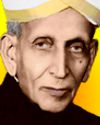
c.1890
Died 14 Apr 1962 at age 101 (born 15 Sep 1860). quotes
Sir Mokshagundam ("Sir MV") Visvesvaraya was an Indian civil engineer and statesman who in his early career designed, and established, an ingenious waterworks for the municipality of Sukkur (1894). He implemented significant works of irrigation, including construction of automatic gates (of his own patented design) at Lake Fife Storage Reservoir. In 1903, M.V. introduced a new system of irrigation known as a “Block System”. He traveled to various countries to study engineering projects. M.V. engineered the extensive Hirakud Dam. A flood protection system was welcomed by the city of Hyderabad. In his career, he continued to devote himself to India’s nation building, with rural developments and industrialization. His birthday is now commemorated in as Engineer’s Day.«
Sir Mokshagundam ("Sir MV") Visvesvaraya was an Indian civil engineer and statesman who in his early career designed, and established, an ingenious waterworks for the municipality of Sukkur (1894). He implemented significant works of irrigation, including construction of automatic gates (of his own patented design) at Lake Fife Storage Reservoir. In 1903, M.V. introduced a new system of irrigation known as a “Block System”. He traveled to various countries to study engineering projects. M.V. engineered the extensive Hirakud Dam. A flood protection system was welcomed by the city of Hyderabad. In his career, he continued to devote himself to India’s nation building, with rural developments and industrialization. His birthday is now commemorated in as Engineer’s Day.«
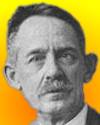
Died 14 Apr 1947 at age 79 (born 8 Apr 1868). quotes
American zoologist who was one of the first scientists to study the behaviour of individual microorganisms and to experiment with genetic variations in single-celled organisms. He wrote his Ph.D. thesis on the morphogenesis of rotiferans (microscopic aquatic organisms), an area of scientific interest he pursued for the next 10 years. The peak of his research and his primary contribution to zoology was his Behaviour of the Lower Organisms (1906). In this study of the reactions of individual organisms and individual response to stimuli, Jennings reported new experimental evidence of the similarity of activity and reactivity in all animals, from protozoans to man. For 40 years of his career Jennings studied the mechanisms of inheritance and variation in single-celled organisms.
American zoologist who was one of the first scientists to study the behaviour of individual microorganisms and to experiment with genetic variations in single-celled organisms. He wrote his Ph.D. thesis on the morphogenesis of rotiferans (microscopic aquatic organisms), an area of scientific interest he pursued for the next 10 years. The peak of his research and his primary contribution to zoology was his Behaviour of the Lower Organisms (1906). In this study of the reactions of individual organisms and individual response to stimuli, Jennings reported new experimental evidence of the similarity of activity and reactivity in all animals, from protozoans to man. For 40 years of his career Jennings studied the mechanisms of inheritance and variation in single-celled organisms.
Behavior of the Lower Organisms, by Herbert Spencer Jennings. - book suggestion.
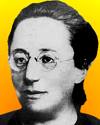
Died 14 Apr 1935 at age 53 (born 23 Mar 1882). quotes
Amalie Emmy Noether was a German mathematician best known for her contributions to abstract algebra, in particular, her study of chain conditions on ideals of rings. In theoretical physics, she produced Noether's Theorem, which proves a relationship between symmetries in physics and conservation principles. This basic result in the general theory of relativity was praised by Einstein. It was her work in the theory of invariants which led to formulations for several concepts of Einstein's general theory of relativity. For her obituary in The New York Times, Albert Einstein wrote: “Fraulein Noether was the most significant mathematical genius thus far produced since the higher education of women began.”«
Amalie Emmy Noether was a German mathematician best known for her contributions to abstract algebra, in particular, her study of chain conditions on ideals of rings. In theoretical physics, she produced Noether's Theorem, which proves a relationship between symmetries in physics and conservation principles. This basic result in the general theory of relativity was praised by Einstein. It was her work in the theory of invariants which led to formulations for several concepts of Einstein's general theory of relativity. For her obituary in The New York Times, Albert Einstein wrote: “Fraulein Noether was the most significant mathematical genius thus far produced since the higher education of women began.”«
Emmy Noether, by Auguste Dick. - book suggestion.
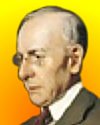
Died 14 Apr 1924 at age 67 (born 3 Sep 1856).
Louis (Henry) Sullivan was an American architect who is identified with the aesthetics and innovation of early skyscraper design. Called the “Father of Modernism,” he was greatly influenced Frank Lloyd Wright and others. He was one of the first to design skyscrapers, such as the Wainwright building in St Louis (1890-91) and the Carson store in Chicago (1899-1904). His experimental, functional skeleton constructions of skyscrapers and office blocks included the Gage building and Stock Exchange, Chicago. His more than 100 works in collaboration (1879-95) with Dankmar Adler include the Auditorium Building, Chicago (1866-89) and the Guaranty Building, Buffalo.
Louis (Henry) Sullivan was an American architect who is identified with the aesthetics and innovation of early skyscraper design. Called the “Father of Modernism,” he was greatly influenced Frank Lloyd Wright and others. He was one of the first to design skyscrapers, such as the Wainwright building in St Louis (1890-91) and the Carson store in Chicago (1899-1904). His experimental, functional skeleton constructions of skyscrapers and office blocks included the Gage building and Stock Exchange, Chicago. His more than 100 works in collaboration (1879-95) with Dankmar Adler include the Auditorium Building, Chicago (1866-89) and the Guaranty Building, Buffalo.
Sullivan: His Life and Work, by Robert Twombly. - book suggestion.
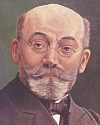
Died 14 Apr 1917 at age 57 (born 15 Dec 1859).
Dr. Lazarus Ludwig Zamenhof was a Polish physician and oculist who created the most important of the international artificial languages - Esperanto. He believed everybody in the world should be able to communicate with each other by means of a single international language, so he developed Esperanto, meaning "he who hopes." It was introduced in a pamphlet he published in 1887. Esperanto vocabulary is comprised primarily of words with Latin roots and words common to several languages. Esperanto is less complicated than an earlier attempt at artificial language called Volapuk. While Esperanto associations formed around the world, it never became widely accepted.
Dr. Lazarus Ludwig Zamenhof was a Polish physician and oculist who created the most important of the international artificial languages - Esperanto. He believed everybody in the world should be able to communicate with each other by means of a single international language, so he developed Esperanto, meaning "he who hopes." It was introduced in a pamphlet he published in 1887. Esperanto vocabulary is comprised primarily of words with Latin roots and words common to several languages. Esperanto is less complicated than an earlier attempt at artificial language called Volapuk. While Esperanto associations formed around the world, it never became widely accepted.
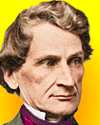
Died 14 Apr 1895 at age 82 (born 12 Feb 1813). quotes
American geologist, mineralogist, and naturalist who, in explorations of the South Pacific, the U.S. Northwest, Europe, and elsewhere, made important studies of mountain building, volcanic activity, sea life, and the origin and structure of continents and ocean basins. His contributions to classification systems are still in use today by scientists in these fields of study. He supported a “principle of cephalization” (1864) to order biological diversity, with “cephalized” forms on top. He was one of the American scientists that corresponded with Darwin, and supported Darwin's ideas on the development of coral reefs. He wrote on biological topics, such as the crustacea and fossils in the Wilkes Expedition collections made from Australian coal deposits.
American geologist, mineralogist, and naturalist who, in explorations of the South Pacific, the U.S. Northwest, Europe, and elsewhere, made important studies of mountain building, volcanic activity, sea life, and the origin and structure of continents and ocean basins. His contributions to classification systems are still in use today by scientists in these fields of study. He supported a “principle of cephalization” (1864) to order biological diversity, with “cephalized” forms on top. He was one of the American scientists that corresponded with Darwin, and supported Darwin's ideas on the development of coral reefs. He wrote on biological topics, such as the crustacea and fossils in the Wilkes Expedition collections made from Australian coal deposits.
Life of James Dwight Dana, by Daniel Gilman. - book suggestion.
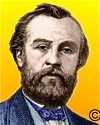
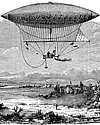
Baptiste Henry Jacques Giffard was a French engineer who built the first successful airship. On 24 Sep 1852, he travelled from Paris in his airship 28 km (17 miles) to Trappes, at a top speed of 8 km/hr (5 mph). His cigar-shaped balloon, was powered by a lightweight, one-cylinder steam engine which turned a large propeller. He became rich from inventing an injector for feeding water into the boiler of steam locomotives (1859), which earned the Academie des Sciences prize for mechanics. Later, he constructed successively larger tethered hydrogen balloons. At the 1878 Paris Exposition, one carried 52 passengers on each ascent, returned to the ground by a cable on a steam-powered winch. Giffard died by suicide after becoming blind. He left much money in his will for humanitarian and scientific purposes.« more
In 1993, British archaeologists unearthed a 7,000-year old seafarer's village on Dalma island in the United Arab Emirates. They said it was the first major settlement of the Ubaid period in that area.
In 1981, the first test flight of America's first operational space shuttle, the Columbia, ended successfully as the orbiter landed at Edwards Air Force Base in California.
In 1961, the man-made element 103, lawrencium (Lw), was announced by the U.S. Atomic Energy Commission. The first evidence of its creation came on 12 Feb 1961 at the Lawrence Radiation Laboratory, University of California, Berkeley. The next two months were spent to verify the results. It was the goal of nearly three years of research efforts by Albert Ghiorso, Torbjom Sikkeland, Almon E. Larsh and Robert M. Latimer. They used a heavy ion linear accelerator to bombard nuclei of boron into a target of californium. The three-millionths of a gram of californium in the target was itself a synthesized element. The researchers suggested the name to honor Ernest O. Lawrence, the late inventor of the cyclotron.«

In 1956, the first practical commercial black-and-white video recorder was demonstrated at a broadcast convention in Chicago and simultaneously in Redwood City, Ca. The VT-100 by Ampex Corporation of Redwood City was the size of a deep-freeze with an additional five 6-foot racks of circuitry. The 2-inch wide magnetic tape moved at a speed of 15 inches per second. The system had four heads on a disc rotating perpendicularly across the width of the tape, thus tracing an oblique track pattern. A single 14-inch reel could carry a 65-min. recording. The Columbia Broadcasting System purchased three of the video recorders in 1956, priced at $75,000 for each unit, and first broadcast from tape on 30 Nov 1956.
Video Revolutions: On the History of a Medium, by Michael Z. Newman. - book suggestion.
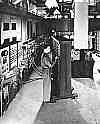
ENIAC in 1946
In 1943, a proposal for an electronic computer was submitted to colleagues at the U.S. Army's Ballistics Research Laboratory by John Grist Brainerd, director of research at the University of Pennsylvania's Moore School, where the proposal was written by John Mauchly. In May 1943, the Army contracted the Moore School to build ENIAC, the first electronic computer. Although ENIAC was not finished until after the war had ended, it nevertheless marked a major step forward in computing.
ENIAC: The Triumphs and Tragedies of the World's First Computer, by Scott McCartney. - book suggestion.
In 1932, the atom was split by a proton beam on a lithium target. Two physicists, Englishman Sir John Douglas Cockcroft and Irishman Errnest Walton had developed the first nuclear particle accelerator (the Cockcroft-Walton generator for which they shared 1951 Nobel Prize for Physics. The accelerator was built in a disused room in the Cavendish Laboratory. With this equipment, Walton succeeded in being the first to split the atom (its nucleus). When a proton from the beam supplied by the accelerator struck a lithium nucleus, their unstable combination disintegrated into two alpha particles (helium nuclei). Walton observed the scintillations characteristic of alpha particles on a zinc sulphide screen.«
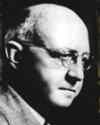
In 1927, frozen fish fingers were patented in the UK by Clarence Birdseye of Gloucester, Mass. He claimed "Improvements in Methods of Preparing Fish Foods," specifically using the flesh of "cleaned fresh fish" (UK patent 257,222). As a trapper and biologist in Labrador (1912-15), Birdseye had noticed that fish and caribou meat frozeb for months tasted as good as fresh food. Slow freezing of food produces large ice crystals, which when thawed produces a very soggy material. However, he realized fish exposed in the sub-zero temperature of Labrador froze solid almost immediately froze solid. At home in his laboratory he tried for eight years to recreate the effects of nature until he developed a satisfactory commercial system of quick freezing. *
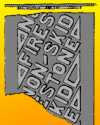
In 1914, the first U.S. patent for a non-skid tyre pattern was issued to Stacy G. Carkhuff of the Firestone Rubber Co. of Akron Ohio (No. 1,093,310). The abrupt oblique edges of raised portions molded on the tyre provided against skidding in all directions. Arranged in rows diagonally across the tread surface of the tyre, the precise form of the projections was not material, but the patentee preferred to use block letters. (The image shows a sidewall area on either side of the tread area.)
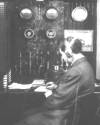
In 1912, David Sarnoff picked up a message of distress call of the Titanic relayed from ships at sea: “S.S. Titanic ran into iceberg, sinking fast.” Sarnoff, aged 21, was a telegraph operator managing a powerful Marconi radio telegraph station on top of Wannamaker's department store in New York. He stayed at his post for 72 hours, receiving and transmitting the first authentic information on the disaster. He relayed the names of the rescued from the Carpathia telegraph operator to newsmen and frantic family members. Sarnoff went on to become a pioneer in radio and television broadcasting: He founded NBC in 1926, created an experimental television station for NBC in 1928, and became president and chairman of RCA.
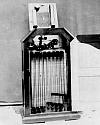
In 1894, the first Kinetoscope parlor opened in New York with five machines. For 25 cents, customers looked through a peephole to view a short film. A motorized film loop was threaded around a number of rollers within a wooden cabinet. Thomas Edison invented these early motion picture machines to do “for the eye what the phonograph does for the ear.’' After several years of effort, by 1892, Edison with W.K.L. Dickson, had invented the kinetograph - a camera to take motion pictures. Edison then began producing films to exhibit. The machines sold for $250 each, but within a year, competitors entered the market, and public interest declined sharply. By then, however, the era of projected pictures had already dawned.«

In 1863, the first U.S. patent for a continuous-roll printing press (No. 38,200) was issued to William Bullock of Philadelphia. Two years later the machine had been built, and was the first press built to use special curved stereo-type plates. It was first used by the New York Sun. By supplying paper in roll form, it could be continuously and automatically fed into the press, with great speed and efficiency. Both sides of the paper were printed, as well as being cut into sheets, either before or after printing. The press was able to produce 12,000 complete newspapers per hour.«
Cesi

Galileo in Rome: The Rise and Fall of a Troublesome Genius, by William R. Shea. - book suggestion.




