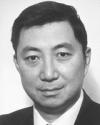
Born 27 Jan 1903; died 2 May 1997 at age 94. quotes
John Carew Eccles was an Australian physiologist who shared, (with Alan Hodgkin and Andrew Huxley) the 1963 Nobel Prize for Physiology or Medicine for his discovery of the chemical means by which impulses are communicated or repressed by nerve cells. He also showed how signals pass between nerves and muscles. A nerve cell that is switched on by receiving a signal passes a chemical on to the next cell in line. This chemical expands minute openings in cell membranes, allowing ions to flood inside, reversing the electrical charge of the cell. This activity is repeated along the chain of cells, permitting transmission of the original impulse through the body. Eccles observed living cells in action by planting exceptionally tiny electrodes in them.
John Carew Eccles was an Australian physiologist who shared, (with Alan Hodgkin and Andrew Huxley) the 1963 Nobel Prize for Physiology or Medicine for his discovery of the chemical means by which impulses are communicated or repressed by nerve cells. He also showed how signals pass between nerves and muscles. A nerve cell that is switched on by receiving a signal passes a chemical on to the next cell in line. This chemical expands minute openings in cell membranes, allowing ions to flood inside, reversing the electrical charge of the cell. This activity is repeated along the chain of cells, permitting transmission of the original impulse through the body. Eccles observed living cells in action by planting exceptionally tiny electrodes in them.
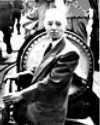
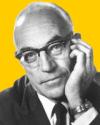
Born 27 Jan 1900; died 8 Jul 1986 at age 86. quotes
Hyman George Rickover was a Polish-American naval officer who immigrated to the US (1906) and graduated from the Naval Academy in 1922. He eventually became an Admiral. He is known as the “Father of the Nuclear Navy” for his leadership to build the atomic-powered submarine, USS Nautilus (1954). He served on active duty with the United States Navy for more than 63 years, receiving exemptions from the mandatory retirement age due to his critical service in the building of the United States Navy's nuclear surface and submarine force.
Hyman George Rickover was a Polish-American naval officer who immigrated to the US (1906) and graduated from the Naval Academy in 1922. He eventually became an Admiral. He is known as the “Father of the Nuclear Navy” for his leadership to build the atomic-powered submarine, USS Nautilus (1954). He served on active duty with the United States Navy for more than 63 years, receiving exemptions from the mandatory retirement age due to his critical service in the building of the United States Navy's nuclear surface and submarine force.
The Rickover Effect: How One Man Made A Difference, by Theodore Rockwell. - book suggestion.
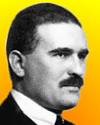
Born 27 Jan 1888; died 20 Mar 1947 at age 59. quotes
Swiss-Norwegian geochemist, mineralogist and petrologist who established a theoretical background for geochemistry (which in the previous century had been limited to the collection of data on the accessible earth's crust, waters and atmosphere.) Goldschmidt investigated the major and minor elements in minerals, and sought to explain their distribution as a result of cosmic origins. He invented crystal chemistry, whereby he attempted to complete a record of mineral crystal forms, and to link the variations of those forms to the physical and chemical conditions under which they were formed. In this pursuit, he both improved existing instruments and invented new ones. He is regarded as the founder of modern geochemistry.«
Swiss-Norwegian geochemist, mineralogist and petrologist who established a theoretical background for geochemistry (which in the previous century had been limited to the collection of data on the accessible earth's crust, waters and atmosphere.) Goldschmidt investigated the major and minor elements in minerals, and sought to explain their distribution as a result of cosmic origins. He invented crystal chemistry, whereby he attempted to complete a record of mineral crystal forms, and to link the variations of those forms to the physical and chemical conditions under which they were formed. In this pursuit, he both improved existing instruments and invented new ones. He is regarded as the founder of modern geochemistry.«
Victor Moritz Goldschmidt: Father of Modern Geochemistry, by Brian Mason. - book suggestion.
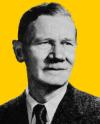
Born 27 Jan 1887; died 24 Aug 1971 at age 84.
Carl William Blegen was an American archaeologist who unearthed evidence that supported and dated the sack of Troy recorded in Homer's Iliad. Storage jars, skeletons and ash piles (which he interpreted as evidence of the city's fiery destruction) reinforced his conviction. He also discovered, in 1939, clay tablets dating from about 1250 BC. At the fabled palace of King Nestor, a major figure in the Trojan War, nearly 1,100 clay tablet records of palace transactions were found there over 15 years. These were inscribed with the earliest known examples of European writing, enabling cryptographers to find the key by which the ancient tablets could be decoded, proving the existence of a Greek civilization where none was formerly thought to exist.«
Carl William Blegen was an American archaeologist who unearthed evidence that supported and dated the sack of Troy recorded in Homer's Iliad. Storage jars, skeletons and ash piles (which he interpreted as evidence of the city's fiery destruction) reinforced his conviction. He also discovered, in 1939, clay tablets dating from about 1250 BC. At the fabled palace of King Nestor, a major figure in the Trojan War, nearly 1,100 clay tablet records of palace transactions were found there over 15 years. These were inscribed with the earliest known examples of European writing, enabling cryptographers to find the key by which the ancient tablets could be decoded, proving the existence of a Greek civilization where none was formerly thought to exist.«
Troy and The Trojans, by Carl W Blegen. - book suggestion.
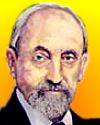
Born 27 Jan 1861; died 26 Jun 1940 at age 79.
Polish-American bridge designer and bridge builder who was outstanding for the number, variety, and innovative character of his projects. His first major commission was the design and construction of a seven-span bridge with railway and highway over the Mississippi River, at Rock Island, Illinois. Later, he developed a set of standard bridges designs for the Northern Pacific Railroad. He remains outstanding for the large number, variety and innovation of America's finest major bridges for which he was chief or consulting engineer. The longest cantilevered bridge in the world, the Quebec City Bridge, was completed when he took over its re-design following a 1907 failure that killed 75 workers. He was chief engineer of the San Francisco-Oakland Bay Bridge.«
Polish-American bridge designer and bridge builder who was outstanding for the number, variety, and innovative character of his projects. His first major commission was the design and construction of a seven-span bridge with railway and highway over the Mississippi River, at Rock Island, Illinois. Later, he developed a set of standard bridges designs for the Northern Pacific Railroad. He remains outstanding for the large number, variety and innovation of America's finest major bridges for which he was chief or consulting engineer. The longest cantilevered bridge in the world, the Quebec City Bridge, was completed when he took over its re-design following a 1907 failure that killed 75 workers. He was chief engineer of the San Francisco-Oakland Bay Bridge.«
A Man Who Spanned Two Eras: The Story of Bridge Engineer Ralph Modjeski, by Jozef Glomb. - book suggestion.
Born 27 Jan 1843; died 4 Mar 1925 at age 82.
English psychologist who had widespread influence on the practice and teaching of psychology in Great Britain, resulting particularly from his influential article (1886) in the ninth edition of the Encyclopaedia Britannica. Therein, he defined psychology's principal task as "to analyze and trace the development of individual experience as it is for the experiencing individual." For Ward, the mind is an active participant in experience. What is presented is not an aggregate of things which produce corresponding mental atoms, but a varying continuum to which the mind attends and selects. In 1904, The British Journal of Psychology began publication, edited by James Ward and W.H.R. Rivers.«
English psychologist who had widespread influence on the practice and teaching of psychology in Great Britain, resulting particularly from his influential article (1886) in the ninth edition of the Encyclopaedia Britannica. Therein, he defined psychology's principal task as "to analyze and trace the development of individual experience as it is for the experiencing individual." For Ward, the mind is an active participant in experience. What is presented is not an aggregate of things which produce corresponding mental atoms, but a varying continuum to which the mind attends and selects. In 1904, The British Journal of Psychology began publication, edited by James Ward and W.H.R. Rivers.«
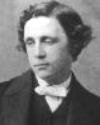
Born 27 Jan 1832; died 14 Jan 1898 at age 65. quotes
Charles Lutwidge Dodgson, pen-name Lewis Carroll, was an English logician, mathematician, photographer, and novelist, remembered for Alice's Adventures in Wonderland (1865) and its sequel. After graduating from Christ Church College, Oxford in 1854, Dodgson remained there, lecturing on mathematics and writing treatises until 1881. As a mathematician, Dodgson was conservative. He was the author of a fair number of mathematics books, for instance A Syllabus of Plane Algebraical Geometry (1860). His mathematics books have not proved of enduring importance except Euclid and his Modern Rivals (1879) which is of historical interest. As a logician, he was more interested in logic as a game than as an instrument for testing reason.
Charles Lutwidge Dodgson, pen-name Lewis Carroll, was an English logician, mathematician, photographer, and novelist, remembered for Alice's Adventures in Wonderland (1865) and its sequel. After graduating from Christ Church College, Oxford in 1854, Dodgson remained there, lecturing on mathematics and writing treatises until 1881. As a mathematician, Dodgson was conservative. He was the author of a fair number of mathematics books, for instance A Syllabus of Plane Algebraical Geometry (1860). His mathematics books have not proved of enduring importance except Euclid and his Modern Rivals (1879) which is of historical interest. As a logician, he was more interested in logic as a game than as an instrument for testing reason.
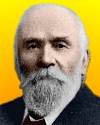
Born 27 Jan 1829; died 17 Jul 1904 at age 75.
Welsh astronomer who was a pioneer in photography of nebulae. In 1885 he had built an observatory with a 20 inch reflector. Using this instrument Roberts was to make considerable progress in the newly developing science of Astro-photography. He photographed numerous celestial objects including Orion Nebula on 15 Jan 1986 (90 minute exposure) and Pleiades. Undoubtedly his finest work was a photograph showing the spiral structure of the Great Nebula in Andromeda, M31 on 29 Dec 1888. In addition to his contribution to astro-photography, Roberts also devised a machine to be used to engrave stellar positions on copper plates, known as the Stellar Pantograver. He was also a geologist of some considerable note.
Welsh astronomer who was a pioneer in photography of nebulae. In 1885 he had built an observatory with a 20 inch reflector. Using this instrument Roberts was to make considerable progress in the newly developing science of Astro-photography. He photographed numerous celestial objects including Orion Nebula on 15 Jan 1986 (90 minute exposure) and Pleiades. Undoubtedly his finest work was a photograph showing the spiral structure of the Great Nebula in Andromeda, M31 on 29 Dec 1888. In addition to his contribution to astro-photography, Roberts also devised a machine to be used to engrave stellar positions on copper plates, known as the Stellar Pantograver. He was also a geologist of some considerable note.
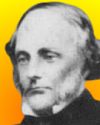
Born 27 Jan 1805; died 23 May 1863 at age 58.
William Henry Duncan was an English physician who was appointed as a Chief Medical Officer, the first such salaried official in Britain, on 1 Jan 1847 in Liverpool, England. He was born of Scottish parents, in Liverpool, received his M.D. in Edinburgh (1829), then returned to Liverpool where he began general practice. He realized the city had poor housing and sanitation conditions for the working people, which threatened the public health with diseases that could be prevented by reform. His 1843 pamphlet, The Physical Causes of the High Mortality Rate in Liverpool, identifed the issues that raised the city's mortality rate far above other towns. Duncan helped create the city's first Sanitary Act (1846) and pioneered in the Victorian public health movement. He used the power of the media to spread public health messages, by holding weekly press conferences to keep a focus on public health and to advocate improvements.«
William Henry Duncan was an English physician who was appointed as a Chief Medical Officer, the first such salaried official in Britain, on 1 Jan 1847 in Liverpool, England. He was born of Scottish parents, in Liverpool, received his M.D. in Edinburgh (1829), then returned to Liverpool where he began general practice. He realized the city had poor housing and sanitation conditions for the working people, which threatened the public health with diseases that could be prevented by reform. His 1843 pamphlet, The Physical Causes of the High Mortality Rate in Liverpool, identifed the issues that raised the city's mortality rate far above other towns. Duncan helped create the city's first Sanitary Act (1846) and pioneered in the Victorian public health movement. He used the power of the media to spread public health messages, by holding weekly press conferences to keep a focus on public health and to advocate improvements.«
Duncan of Liverpool, by W.M. Frazer. - book suggestion.
Born 27 Jan 1792; died 27 Sep 1835 at age 43.
clockmaker and inventor who turned from his self-taught skills making jewellery and timepieces to invent the first successful coal burning locomotive constructed in the U.S. Earlier, railroads used imported locomotives. On 4 Jan 1831, the Baltimore and Ohio Railroad Company advertised a prize of $4,000 for the best engine in trials conducted in Jun 1831. Davis created his York locomotive and won the trial. He then worked developing the engine for that railroad, but died only a few years later, in a train derailment accident.«
clockmaker and inventor who turned from his self-taught skills making jewellery and timepieces to invent the first successful coal burning locomotive constructed in the U.S. Earlier, railroads used imported locomotives. On 4 Jan 1831, the Baltimore and Ohio Railroad Company advertised a prize of $4,000 for the best engine in trials conducted in Jun 1831. Davis created his York locomotive and won the trial. He then worked developing the engine for that railroad, but died only a few years later, in a train derailment accident.«
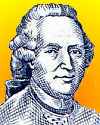
Born 27 Jan 1701; died 4 Feb 1774 at age 73. quotes
French naturalist and mathematician who became particularly interested in geodesy (earth measurement). He was put in charge by the King of France of an expedition to Equador to measure a meridional arc at the equator (1735-43). It was wished to determine whether the Earth was either flattened or elongated at its poles. He then accomplished the first scientific exploration of the Amazon River (1743) on a raft, studying the region, and brought the drug curare to Europe. He also worked on establishment of a universal unit of length, and is credited with developing the idea of vaccination against smallpox, later perfected by Edward Jenner. However, he was almost constantly ill and died in 1773, deaf and completely paralyzed.Date of birth: DSB gives 27 Jan 1701; Enc. Brit. gives 28 Jan 1701.
French naturalist and mathematician who became particularly interested in geodesy (earth measurement). He was put in charge by the King of France of an expedition to Equador to measure a meridional arc at the equator (1735-43). It was wished to determine whether the Earth was either flattened or elongated at its poles. He then accomplished the first scientific exploration of the Amazon River (1743) on a raft, studying the region, and brought the drug curare to Europe. He also worked on establishment of a universal unit of length, and is credited with developing the idea of vaccination against smallpox, later perfected by Edward Jenner. However, he was almost constantly ill and died in 1773, deaf and completely paralyzed.Date of birth: DSB gives 27 Jan 1701; Enc. Brit. gives 28 Jan 1701.
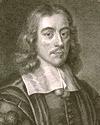
Born 27 Jan 1621; died 11 Nov 1675 at age 54. quotes
English physician who made important contributions to anatomy, particularly of the brain and nervous system. In De febribus (1659) he significantly advanced epidemiology with an examination of epidemics of smallpox, influenza, plague, war-typhus, measles, and the first medical description of the typhoid fever. As part of his investigation of the brain's circulation, he injected wax into the blood vessels, which enabled him to see a ring of vessels still known as the "circle of Willis." He identified a type of diabetes (diabetes mellitus). A club of scientists including Robert Boyle, Christopher Wren and John Wilkins met in his rooms (1648-9) in Oxford. A number of them became founding members of the Royal Society of London.«
English physician who made important contributions to anatomy, particularly of the brain and nervous system. In De febribus (1659) he significantly advanced epidemiology with an examination of epidemics of smallpox, influenza, plague, war-typhus, measles, and the first medical description of the typhoid fever. As part of his investigation of the brain's circulation, he injected wax into the blood vessels, which enabled him to see a ring of vessels still known as the "circle of Willis." He identified a type of diabetes (diabetes mellitus). A club of scientists including Robert Boyle, Christopher Wren and John Wilkins met in his rooms (1648-9) in Oxford. A number of them became founding members of the Royal Society of London.«

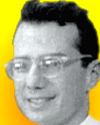
(1963)
Died 27 Jan 2017 at age 90 (born 22 Jun 1926). quotes
Arthur Hinton “Art” Rosenfeld was an American physicist who began his career in particle physics at Lawrence Berkeley National Laboratory. Prompted by the 1973 Arab oil embargo, he changed focus to scrutinize energy conservation. He developed energy-saving standards and became known as the “father of energy efficiency.” In 1975, Rosenfeld founded and led the Center for Building Science at LBNL. His efforts produced energy standards required for all new buildings in California. This included making use of low-energy electric lights like compact fluorescent lamps and appliances designed to reduce energy consumption. His breakthrough ideas are credited with saving billions of dollars of avoidable waste of energy.«
Arthur Hinton “Art” Rosenfeld was an American physicist who began his career in particle physics at Lawrence Berkeley National Laboratory. Prompted by the 1973 Arab oil embargo, he changed focus to scrutinize energy conservation. He developed energy-saving standards and became known as the “father of energy efficiency.” In 1975, Rosenfeld founded and led the Center for Building Science at LBNL. His efforts produced energy standards required for all new buildings in California. This included making use of low-energy electric lights like compact fluorescent lamps and appliances designed to reduce energy consumption. His breakthrough ideas are credited with saving billions of dollars of avoidable waste of energy.«
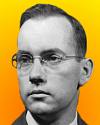
Died 27 Jan 2015 at age 99 (born 28 Jul 1915). quotes
Charles Hard Townes was an American physicist who shared (with the Soviet physicists Aleksandr M. Prokhorov and Nikolay G. Basov) the 1964 Nobel Prize for Physics “for fundamental work in the field of quantum electronics, which has led to the construction of oscillators and amplifiers based on the maser-laser principle.” He had been applying microwave physics to study the interactions between microwaves and molecules, producing microwave spectra, which he thought could be used to determine the structure of molecules, atoms and nuclei. Instead, from this work, in 1951, he conceived the idea of the maser and pursued that goal. By early 1954, using ammonia gas as the medium, the first results of amplification and generation of electromagnetic waves by stimulated emission were obtained. They coined the word maser for this device, an acronym using the initial letters of “Microwave Amplification by Stimulated Emission of Radiation.”«
Charles Hard Townes was an American physicist who shared (with the Soviet physicists Aleksandr M. Prokhorov and Nikolay G. Basov) the 1964 Nobel Prize for Physics “for fundamental work in the field of quantum electronics, which has led to the construction of oscillators and amplifiers based on the maser-laser principle.” He had been applying microwave physics to study the interactions between microwaves and molecules, producing microwave spectra, which he thought could be used to determine the structure of molecules, atoms and nuclei. Instead, from this work, in 1951, he conceived the idea of the maser and pursued that goal. By early 1954, using ammonia gas as the medium, the first results of amplification and generation of electromagnetic waves by stimulated emission were obtained. They coined the word maser for this device, an acronym using the initial letters of “Microwave Amplification by Stimulated Emission of Radiation.”«
Making Waves, by Charles H. Townes. - book suggestion.
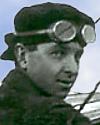
Died 27 Jan 1989 at age 101 (born 18 Jan 1888).
English aircraft designer and aircraft manufacturer whose pioneering firm was famous for British WWI military aircraft. Sopwith's interest in motor racing led in 1910 to flying a monoplane, with which he won the Baron de Forest prize for flying across the English Channel on 18 Dec 1910. In June 1912, Sopwith with Fred Sigrist and others set up The Sopwith Aviation Company and began manufacturing the Sopwith Tabloid biplane. Piloted by Harry Hawker this plane won the British altitude record of 13,000 ft (4000 m) on 16 June 1913. During WWI, the firm manufactured some of the best Allied fighters, including the legendary Sopwith Camel (named after the fuselage shape with a humplike cowl over the guns, in front of the pilot), Sopwith Pup, and Sopwith Snipe. He lived to the age of 101.«
English aircraft designer and aircraft manufacturer whose pioneering firm was famous for British WWI military aircraft. Sopwith's interest in motor racing led in 1910 to flying a monoplane, with which he won the Baron de Forest prize for flying across the English Channel on 18 Dec 1910. In June 1912, Sopwith with Fred Sigrist and others set up The Sopwith Aviation Company and began manufacturing the Sopwith Tabloid biplane. Piloted by Harry Hawker this plane won the British altitude record of 13,000 ft (4000 m) on 16 June 1913. During WWI, the firm manufactured some of the best Allied fighters, including the legendary Sopwith Camel (named after the fuselage shape with a humplike cowl over the guns, in front of the pilot), Sopwith Pup, and Sopwith Snipe. He lived to the age of 101.«
Pure Luck: the Authorized Biography of Thomas Sopwith, by Alan Bramson. - book suggestion.
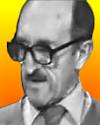
Died 27 Jan 1983 at age 76 (born 25 Apr 1906).
English social anthropologist who is known for his investigations of West African societies. He originally training in psychology, but in 1932 turned to anthropology—which is reflected in his later works on ancestor worship. He was primarily interested in family and kinship, and made field studies (1934–37) with the Tallensi and Ashanti in Ghana. His monographs on these studies laid the foundations for the theory of descent, a cornerstone of the “structural-functionalism” dominating the social anthropology of the 1950s and 60s. His major contributions in lineage theory, studies of religion and ancestor worship set the standard for all subsequent studies of African social organization. He was professor of social anthropology at Cambridge University (1950-73).«
English social anthropologist who is known for his investigations of West African societies. He originally training in psychology, but in 1932 turned to anthropology—which is reflected in his later works on ancestor worship. He was primarily interested in family and kinship, and made field studies (1934–37) with the Tallensi and Ashanti in Ghana. His monographs on these studies laid the foundations for the theory of descent, a cornerstone of the “structural-functionalism” dominating the social anthropology of the 1950s and 60s. His major contributions in lineage theory, studies of religion and ancestor worship set the standard for all subsequent studies of African social organization. He was professor of social anthropology at Cambridge University (1950-73).«
The Web of Kinship among the Tallensi, by Meyer Fortes. - book suggestion.
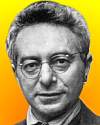
Died 27 Jan 1972 at age 84 (born 8 Jan 1888). quotes
German-American mathematician who, upon joining the faculty of New York University in 1934, began to build the nucleus of a small research group based on the Göttingen model he had experienced as a student of David Hilbert in Germany. Courant's published papers were in variational problems, finite difference methods, minimal surfaces, and partial differential equations. He encouraged the publication of mathematical texts and high quality monographs, such as Methods of Mathematical Physics by Courant and Hilbert. His leadership was commemorated in 1964 when the institute he founded was named the Courant Institute of Mathematical Sciences at New York University.«
German-American mathematician who, upon joining the faculty of New York University in 1934, began to build the nucleus of a small research group based on the Göttingen model he had experienced as a student of David Hilbert in Germany. Courant's published papers were in variational problems, finite difference methods, minimal surfaces, and partial differential equations. He encouraged the publication of mathematical texts and high quality monographs, such as Methods of Mathematical Physics by Courant and Hilbert. His leadership was commemorated in 1964 when the institute he founded was named the Courant Institute of Mathematical Sciences at New York University.«
What Is Mathematics? An Elementary Approach to Ideas and Methods, by Richard Courant, et al. - book suggestion.
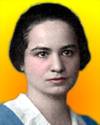
Died 27 Jan 1970 at age 75 (born 29 Apr 1894).
Austrian nuclear physicist who began as a strong student in mathematics and physics at school, and studied physics at university, where she wrote her thesis on the absorption of gamma rays (1919). At first, she took a job (1921) with a manufacturer of x-ray tubes in Berlin. By 1923, she progressed to researching radioactivity with the Institut für Radiumforschung back in Vienna. There she developed the photographic emulsion technique for the study of nuclear disintegration caused by cosmic rays, and contributed to development of photomultiplier tubes. Blau was first to use nuclear emulsions to detect neutrons by observing recoil protons. Albert Einstein recognized her as a very capable experimental physicist, and after 1938 when she fled the rise of the Nazis, Einstein helped her career continue in Mexico City and then the U.S.«
Austrian nuclear physicist who began as a strong student in mathematics and physics at school, and studied physics at university, where she wrote her thesis on the absorption of gamma rays (1919). At first, she took a job (1921) with a manufacturer of x-ray tubes in Berlin. By 1923, she progressed to researching radioactivity with the Institut für Radiumforschung back in Vienna. There she developed the photographic emulsion technique for the study of nuclear disintegration caused by cosmic rays, and contributed to development of photomultiplier tubes. Blau was first to use nuclear emulsions to detect neutrons by observing recoil protons. Albert Einstein recognized her as a very capable experimental physicist, and after 1938 when she fled the rise of the Nazis, Einstein helped her career continue in Mexico City and then the U.S.«
Marietta Blau, Stars of Disintegration: Biography of a Pioneer of Particle Physics, by Brigitte Strohmaier (Author, Editor), Robert Rosner. - book suggestion.
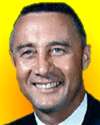
Died 27 Jan 1967 at age 40 (born 3 Apr 1926). quotes
Virgil Ivan (“Gus”) Grissom was an American astronaut and pilot who was one of the original “Mercury Seven” astronaut trainees (1959), the second American in space (1961), and died in a fire that broke out while testing the grounded Apollo I capsule (1967). He first flew in space in the Liberty Bell 7, launched on 21 Jul 1961. On splashdown, the escape hatch blew prematurely. He managed to escape, but the capsule filled with water and sank. Grissom helped design and construct the spacecraft of Project Gemini. He was the first Gemini pilot, launched in Gemini 3 on 23 Mar 1965 with John W. Young for the first two-man space flight. He died with copilots Ed White and Roger Chaffee in an Apollo I simulation launch test that ended in a disastrous fire.«
Virgil Ivan (“Gus”) Grissom was an American astronaut and pilot who was one of the original “Mercury Seven” astronaut trainees (1959), the second American in space (1961), and died in a fire that broke out while testing the grounded Apollo I capsule (1967). He first flew in space in the Liberty Bell 7, launched on 21 Jul 1961. On splashdown, the escape hatch blew prematurely. He managed to escape, but the capsule filled with water and sank. Grissom helped design and construct the spacecraft of Project Gemini. He was the first Gemini pilot, launched in Gemini 3 on 23 Mar 1965 with John W. Young for the first two-man space flight. He died with copilots Ed White and Roger Chaffee in an Apollo I simulation launch test that ended in a disastrous fire.«
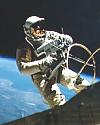
Died 27 Jan 1967 at age 36 (born 14 Nov 1930).
First U.S. astronaut to walk in space. With James A. McDivitt he manned the four-day orbital flight of Gemini 4, launched on 3 Jun 1965. During the third orbit White emerged from the spacecraft, floated in space for about 20 minutes, and became the first person to propel himself in space with a maneuvering unit. Two years later, White was one of the three-man crew of Apollo 1 who in 1967 were the first casualties of the U.S. space program, killed during a flight simulation (the others were Virgil I. Grissom and Roger B. Chaffee).
First U.S. astronaut to walk in space. With James A. McDivitt he manned the four-day orbital flight of Gemini 4, launched on 3 Jun 1965. During the third orbit White emerged from the spacecraft, floated in space for about 20 minutes, and became the first person to propel himself in space with a maneuvering unit. Two years later, White was one of the three-man crew of Apollo 1 who in 1967 were the first casualties of the U.S. space program, killed during a flight simulation (the others were Virgil I. Grissom and Roger B. Chaffee).
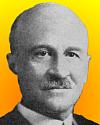
Died 27 Jan 1940 (born 1872). quotes
American pediatrician who promoted the iodization of table salt sold in the U.S. to provide a dietary supplement of iodine, thus reducing the incidence of goitre (major swelling of the thyroid gland in the neck.) The value of sodium iodide for this purpose had been determined by David Marine. Cowie, a professor of pediatrics at the University of Michigan gathered support from the Michigan State Medical Society and pursuaded several table salt producers to add 0.01% sodium iodide to their product. Diamond Crystal Salt, and four other companies agreed. On 1 May 1924, the first iodized salt was on Michigan grocers' shelves. Initially reluctant, Morton Salt Company followed suit later in the year for the national market.« more
American pediatrician who promoted the iodization of table salt sold in the U.S. to provide a dietary supplement of iodine, thus reducing the incidence of goitre (major swelling of the thyroid gland in the neck.) The value of sodium iodide for this purpose had been determined by David Marine. Cowie, a professor of pediatrics at the University of Michigan gathered support from the Michigan State Medical Society and pursuaded several table salt producers to add 0.01% sodium iodide to their product. Diamond Crystal Salt, and four other companies agreed. On 1 May 1924, the first iodized salt was on Michigan grocers' shelves. Initially reluctant, Morton Salt Company followed suit later in the year for the national market.« more
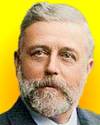
Died 27 Jan 1910 at age 73 (baptized 28 Sep 1836).
English engineer who owned a flourishing plumbing supply business and held several patents. Though he did not invent the familiar toilet flushing syphon mechanism (it was patented in Britain by Albert Giblin, No. 4990 of 1898), he did widely market it, and thus his name has been associated with it. Before this invention, the lavatory had existed in various forms, dating back to Sir John Harrington in 1589. When Victorian era toilets with poor valve designs were wasting too much water, by act of Parliament, a water-saving device was required. For this reason, the lever-activated syphon “pull and let go” mechanism was marketed as “Crapper's Silent Valveless Water Waste Preventer.”«
English engineer who owned a flourishing plumbing supply business and held several patents. Though he did not invent the familiar toilet flushing syphon mechanism (it was patented in Britain by Albert Giblin, No. 4990 of 1898), he did widely market it, and thus his name has been associated with it. Before this invention, the lavatory had existed in various forms, dating back to Sir John Harrington in 1589. When Victorian era toilets with poor valve designs were wasting too much water, by act of Parliament, a water-saving device was required. For this reason, the lever-activated syphon “pull and let go” mechanism was marketed as “Crapper's Silent Valveless Water Waste Preventer.”«
Flushed With Pride: the Story of Thomas Crapper, by Wallace Reyburn. - book suggestion.
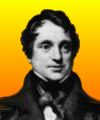
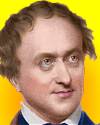
Died 27 Jan 1864 at age 68 (born 6 Aug 1795). quotes
German chemist who named niobium (previously found in the mineral columbite by Charles Hatchett; he called it columbium). Rose distinguished between columbium and tantalum, long thought to be the same. He made numerous analyses of inorganic substances and minerals. Rose also studied how temperature and concentration affect chemical decomposition. He published (1829) the noted textbook, Handbook of Analytical Chemistry. Heinrich Rose came from a family of scientists: grandfather, father and brother, in the fields of pharmacy, chemistry and minerology. Grandfather Valentine Rose the Elder created the fusible Rose metal, an alloy of lead, bismuth and tin, having a low melting point.«
German chemist who named niobium (previously found in the mineral columbite by Charles Hatchett; he called it columbium). Rose distinguished between columbium and tantalum, long thought to be the same. He made numerous analyses of inorganic substances and minerals. Rose also studied how temperature and concentration affect chemical decomposition. He published (1829) the noted textbook, Handbook of Analytical Chemistry. Heinrich Rose came from a family of scientists: grandfather, father and brother, in the fields of pharmacy, chemistry and minerology. Grandfather Valentine Rose the Elder created the fusible Rose metal, an alloy of lead, bismuth and tin, having a low melting point.«
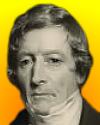
Died 27 Jan 1860 at age 86 (born 23 Jul 1773).
Sir Thomas Makdougall Brisbane was a British soldier and astronomical observer, Baronet British soldier and astronomical observer for whom the city of Brisbane, Australia, is named. He was Governor of NSW (1821-25). Mainly remembered as a patron of science, he built an astronomical observatory at Parramatta, Australia, made the first extensive observations of the southern stars since Lacaille in (1751-52) and built a combined observatory and magnetic station at Makerstoun, Roxburghshire, Scotland. He also conducted (largely unsuccessful) experiments in growing Virginian tobacco, Georgian cotton, Brazilian coffee and New Zealand flax.
Sir Thomas Makdougall Brisbane was a British soldier and astronomical observer, Baronet British soldier and astronomical observer for whom the city of Brisbane, Australia, is named. He was Governor of NSW (1821-25). Mainly remembered as a patron of science, he built an astronomical observatory at Parramatta, Australia, made the first extensive observations of the southern stars since Lacaille in (1751-52) and built a combined observatory and magnetic station at Makerstoun, Roxburghshire, Scotland. He also conducted (largely unsuccessful) experiments in growing Virginian tobacco, Georgian cotton, Brazilian coffee and New Zealand flax.
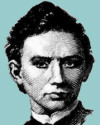
Died 27 Jan 1860 at age 57 (born 15 Dec 1802). quotes
Hungarian mathematician and one of the founders of non-Euclidean geometry - geometry that does not include Euclid's axiom that only one line can be drawn parallel to a given line through a point not on the given line. His father, Farkas Bolyai, had devoted his life to trying to prove Euclid's famous parallel postulate. Despite his father's warnings that it would ruin his health and peace of mind, János followed in working on this axiom until, in about 1820, he came to the conclusion that it could not be proved. He went on to develop a consistent geometry (published 1882) in which the parallel postulate is not used, thus establishing the independence of this axiom from the others. He also did valuable work in the theory of complex numbers.
Hungarian mathematician and one of the founders of non-Euclidean geometry - geometry that does not include Euclid's axiom that only one line can be drawn parallel to a given line through a point not on the given line. His father, Farkas Bolyai, had devoted his life to trying to prove Euclid's famous parallel postulate. Despite his father's warnings that it would ruin his health and peace of mind, János followed in working on this axiom until, in about 1820, he came to the conclusion that it could not be proved. He went on to develop a consistent geometry (published 1882) in which the parallel postulate is not used, thus establishing the independence of this axiom from the others. He also did valuable work in the theory of complex numbers.
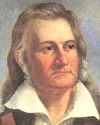
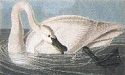
John James Laforest Audubon was a French-American ornithologist, artist and naturalist famous for his drawings and paintings of North American birds. He was born in Haiti, the illegitimate son of a successful merchant, planter, and slave dealer. He was aged 4, when they moved to France, where he had a gentleman’s education. By 15, he was drawing French birds. In 1803, age 18, Audubon went to Pennsylvania, to manage his father’s estate, and there took up serious ornithology. In 1820, he set his goal to publish an anthology of life drawings. He explored for birds following the Ohio and Mississippi Rivers and the Great Lakes. Finding no interested U.S. publisher, his engravings were made in London (1826-38). He returned to the U.S. and spent more years travelling and painting.«Image right: Trumpeter swan by Audubon (1837).
John James Audubon: The Making of an American, by Richard Rhodes. - book suggestion.
In 1970, James M. Schlatter received a patent for “Peptide Sweetening Agents” (U.S. No. 3,492,131), an invention which eventually led led to the marketing of aspartame under the name NutraSweet. The patent was filed 18 Apr 1966, assigned to his employer, G.D. Searle & Co. In Dec 1965, a few months before filing, he had accidentally discovered the first example of such compounds. To pick up a paper, he had licked his finger. He tasted an unexpectedly sweet trace of a substance that had, he realized, earlier splashed onto the outside of a flask he had handled. It contained L-aspartyl-L-phenylalnine methyl ester. After development and much scrutiny of the testing of aspartame, the U.S. Food and Drug Administration approved it (22 Oct 1981) with many permitted uses as a food sweetener.«

In 1964, E.I. duPont de Nemours Co. introduced Corfam. This hydrocarbon-based, synthetic substitute for leather was flexible, with tiny pores, for uses such as shoes, handbags, belts and suitcases. Shoes put on sale with Corfam uppers were supposed to give consumers the look, feel and durability of leather. DuPont predicted that by 1984, 25% of America's shoes would be made of Corfam. But synthetic leather was snubbed by customers in droves. It was one of the best-prepared products in terms of market and technology development and yet it failed. Time on the market: seven years. Production ceased in 1971. Corfam was described by Leonard Sloane in the New York Times as, "Du Pont's $100-Million Edsel," (11 Apr 1971).

In 1950, Science magazine announced the new antibiotic terramycin. Made by Charles Pfizer & Co., it was isolated from Indiana soil, and found effective against pneumonia, dysentery, and other infections. It was the first pharmaceutical discovered and developed exclusively by Pfizer scientists. This was the result of the company's intensive quest to find new organisms to fight disease. Acting on theories that bacteria-fighting organisms would be found in soil, Pfizer solicited soil samples worldwide, received 135,000 soil samples and conducted more than 20 million tests. Said one of the researchers, “We got soil samples from the bottom of mine shafts... from the bottom of the ocean... from the desert... mountains and in between.” Terramycin® was approved by the U.S. Food and Drug Administration on 15 Mar 1950.
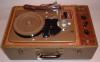
In 1948, Wire Recording Corporation of America announced the first magnetic wire recorder. It is lightweight and portable. The 'Wireway' machine with a built-in oscillator sold for $149.50.[Image: Wireway portable combination magnetic wire recorder and phonograph - ca. 1950]
In 1926, John Logie Baird, a Scottish inventor, gave the first public demonstration of a true television system in London, launching a revolution in communication and entertainment. Baird's invention, a pictorial transmission machine he called a “televisor,” used mechanical rotating disks to scan moving images into electronic impulses. This information was then transmitted by cable to a screen where it showed up as a low-resolution pattern of light and dark. Baird's first television program showed the heads of two ventriloquist dummies, which he operated in front of the camera apparatus out of view of the audience.
Television And Me: The Memoirs of John Logie Baird, by John Logie Baird, Malcolm Baird. - book suggestion.
1921
In 1921, Albert Einstein suggested the possibility of measuring the universe, which startled the audience, with his address Geometry and Expansion given at the Prussian Academy of Sciences in Berlin. Applying certain results of the relativity theory, he came to the conclusion that if the real velocities of the stars (as could be actually measured) were less than the calculated velocities, then it would prove that real gravitations' great distances were smaller than the gravitational distances demanded by the law of Newton. From such divergence, the finiteness of the universe could be proved indirectly, and it would even permit the estimation of its size.«
Subtle Is the Lord: The Science and the Life of Albert Einstein, by Abraham Pais. - book suggestion.
In 1888, the National Geographic Society was established with Gardiner Greene Hubbard as its first president. Two weeks earlier, on 13 Jan 1888, 33 founders in Washington, D.C., U.S.A., had met at the Cosmo Club in Lafayette Square, across from the White House. Their mission was to establish “a society for the increase and diffusion of geographical knowledge.” By Oct 1888, the first National Geographic Magazine was published as a society membership benefit, which continues its monthly issues to the present with photographs and popular articles now expanded from topics of geography and exploration to science, history and world cultures. The society has awarded over 9,000 grants for scientific research, and sponsors a museum and travelling exhibits.«
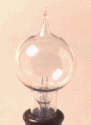
In 1880, Thomas Edison received a patent (#223,898) for his electric incandescent lamp he invented on 21 Oct 1879. Edison’s invention of the light bulb had a major impact on the electronics and computer industries. During the two years of research it took to develop the bulb, one of Edison's assistants noticed a flow of energy from one electrode to another in a pattern later known as the Edison effect. Later, the Edison effect was discovered to be an electron flow, which laid the basis for the electron tube and thence the entire electronics industry.




