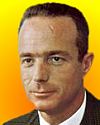
Born 1 May 1925; died 10 Oct 2013 at age 88.
Malcolm Scott Carpenter was an American astronaut whose spaceflight was the second U.S. mission to orbit the Earth. His Mercury-Atlas 7 launched on 24 May 1962 from Cape Canaveral, circled the Earth three times, and splashed down 4-hr 56-min later. Of the original seven Mercury astronauts, he became the fourth to fly in space, and the sixth worldwide. During his orbits, because much was still unknown, he conducted experiments, some as basic as testing whether solid food could be eaten in space. It was his only space flight. After a motorcyle accident (1964) injured his left arm, he never flew in space again. Instead, he became one of the first humans to live under the ocean surface for an extended period of time (1965) as one of the aquanauts in the Navy's Sealab II, an experimental habitat off the California coast. Later in life, he wrote novels.«
Malcolm Scott Carpenter was an American astronaut whose spaceflight was the second U.S. mission to orbit the Earth. His Mercury-Atlas 7 launched on 24 May 1962 from Cape Canaveral, circled the Earth three times, and splashed down 4-hr 56-min later. Of the original seven Mercury astronauts, he became the fourth to fly in space, and the sixth worldwide. During his orbits, because much was still unknown, he conducted experiments, some as basic as testing whether solid food could be eaten in space. It was his only space flight. After a motorcyle accident (1964) injured his left arm, he never flew in space again. Instead, he became one of the first humans to live under the ocean surface for an extended period of time (1965) as one of the aquanauts in the Navy's Sealab II, an experimental habitat off the California coast. Later in life, he wrote novels.«
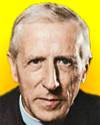
Born 1 May 1881; died 10 Apr 1955 at age 73. quotes
Pierre Teilhard de Chardin was a French philosopher and paleontologist who was a Jesuit theologian as well as a scientist, and wrote on the reconciliation of faith and evolutionary theory. However, his thinking was ahead of his time, and the Vatican forbade him from publishing on religious matters during his lifetime, though his works were eventually published after his death. He regarded evolution as not just a physical fact, but also a spiritual truth. After studying theology and being ordained a priest, he pursued paleontology, and began working at the Musée National d'Histoire Naturelle, in Paris (1912-14). He investigated the site of the claimed Piltdown Man discovery (1912), and assisted excavations at the Cave of Castillo, Spain, a prehistoric painted cave (1913). After military service during WW I, he later travelled in China, and participated in excavations at the Peking Man site.«
Pierre Teilhard de Chardin was a French philosopher and paleontologist who was a Jesuit theologian as well as a scientist, and wrote on the reconciliation of faith and evolutionary theory. However, his thinking was ahead of his time, and the Vatican forbade him from publishing on religious matters during his lifetime, though his works were eventually published after his death. He regarded evolution as not just a physical fact, but also a spiritual truth. After studying theology and being ordained a priest, he pursued paleontology, and began working at the Musée National d'Histoire Naturelle, in Paris (1912-14). He investigated the site of the claimed Piltdown Man discovery (1912), and assisted excavations at the Cave of Castillo, Spain, a prehistoric painted cave (1913). After military service during WW I, he later travelled in China, and participated in excavations at the Peking Man site.«
1920
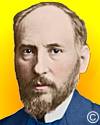
Born 1 May 1852; died 18 Oct 1934 at age 82. quotes
Spanish histologist who shared (with Camillo Golgi) the 1906 Nobel Prize for Physiology or Medicine for establishing the neuron, or nerve cell, as the basic unit of nervous structure. This finding was instrumental in the recognition of the neuron’s fundamental role in nervous function. He developed new stains and microscope techniques.
Spanish histologist who shared (with Camillo Golgi) the 1906 Nobel Prize for Physiology or Medicine for establishing the neuron, or nerve cell, as the basic unit of nervous structure. This finding was instrumental in the recognition of the neuron’s fundamental role in nervous function. He developed new stains and microscope techniques.
Born 1 May 1845; died 13 Jun 1899 at age 54.
British surgeon who was the first to both diagnose and remove a diseased appendix (1880). He drained an abscess associated with the perforated appendix, a procedure which was not novel, as several surgeons had done the same previously. Tait was the first to actually remove the appendix as part of the planned treatment. (Nearly 150 years earlier, Claudius Amyand described a surgery in 1736 for a hernia in an 11-year-old boy during which his perforated appendix was found within the hernia sac. This first recorded removal of the appendix was not the subject of the operation but was only secondary to the hernia repair.) By 1889, work published by Charles McBurney established treating appendicitis early to avert a tragic outcome of delay.
British surgeon who was the first to both diagnose and remove a diseased appendix (1880). He drained an abscess associated with the perforated appendix, a procedure which was not novel, as several surgeons had done the same previously. Tait was the first to actually remove the appendix as part of the planned treatment. (Nearly 150 years earlier, Claudius Amyand described a surgery in 1736 for a hernia in an 11-year-old boy during which his perforated appendix was found within the hernia sac. This first recorded removal of the appendix was not the subject of the operation but was only secondary to the hernia repair.) By 1889, work published by Charles McBurney established treating appendicitis early to avert a tragic outcome of delay.
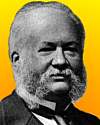
Born 1 May 1839; died 12 Mar 1924 at age 84.
Count (Louis-Marie-) Hilaire Bernigaud Chardonnet was a French chemist and industrialist who first developed rayon, the first commonly used artificial fibre. When it was first displayed at the Paris Exposition of 1891 it was called Chardonnet silk, and caused a sensation. Although trained as a civil engineer, he went to work under Louis Pasteur. Chardonnet was prompted by Pasteur's study of diseases in silkworms to seek an artificial replacement for silk. His starting point was mulberry leaves, the food of silkworms. He turned them into a cellulose pulp with nitric and sulphuric acids and stretched it into fibres. The original fibre was highly flammable, but by 1889 he had eliminated this and developed rayon. He opened factories for its manufacture.
Count (Louis-Marie-) Hilaire Bernigaud Chardonnet was a French chemist and industrialist who first developed rayon, the first commonly used artificial fibre. When it was first displayed at the Paris Exposition of 1891 it was called Chardonnet silk, and caused a sensation. Although trained as a civil engineer, he went to work under Louis Pasteur. Chardonnet was prompted by Pasteur's study of diseases in silkworms to seek an artificial replacement for silk. His starting point was mulberry leaves, the food of silkworms. He turned them into a cellulose pulp with nitric and sulphuric acids and stretched it into fibres. The original fibre was highly flammable, but by 1889 he had eliminated this and developed rayon. He opened factories for its manufacture.
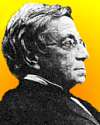
Born 1 May 1825; died 12 Mar 1898 at age 72.
Swiss mathematician and physicist who discovered a formula basic to the development of atomic theory. Although a mathematics lecturer all his life, Balmer's most important work was on spectral series by giving a formula relating the wavelengths of the spectral lines of the hydrogen atom (1885) at age 60. Balmer's famous formula is λ= hm2/(m2-n2). Wavelengths are accurately given using h = 3.6456 x10⁻⁷m, n = 2, and m = 3, 4, 5, 6, 7. He suggested that giving n other small integer values would give other series of wavelengths for hydrogen. Why this prediction agreed with observation was not understood until after his death when the theoretical work of Niels Bohr was published in 1913.
Swiss mathematician and physicist who discovered a formula basic to the development of atomic theory. Although a mathematics lecturer all his life, Balmer's most important work was on spectral series by giving a formula relating the wavelengths of the spectral lines of the hydrogen atom (1885) at age 60. Balmer's famous formula is λ= hm2/(m2-n2). Wavelengths are accurately given using h = 3.6456 x10⁻⁷m, n = 2, and m = 3, 4, 5, 6, 7. He suggested that giving n other small integer values would give other series of wavelengths for hydrogen. Why this prediction agreed with observation was not understood until after his death when the theoretical work of Niels Bohr was published in 1913.
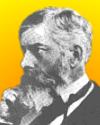
Born 1 May 1824; died 6 May 1904 at age 80. quotes
English chemist whose research on alcohols and ethers clarified organic molecular structure. He was the first to explain the action of a catalyst in terms of the formation of an intermediate compound. Williamson was the first to make 'mixed' ethers, with two different alkyl groups, by a method still known as the Williamson synthesis in which an alkoxide reacts with with an alkyl halide. In the early 1850's, he first noted and described reversible reactions such as those of alcohols and ethers in which products of a reaction may recombine to form the reactants). He named the "dynamic equilibrium" in the case where the rate of the forward reaction is the same as that of the reverse reaction, and all compounds in the process coexist.
English chemist whose research on alcohols and ethers clarified organic molecular structure. He was the first to explain the action of a catalyst in terms of the formation of an intermediate compound. Williamson was the first to make 'mixed' ethers, with two different alkyl groups, by a method still known as the Williamson synthesis in which an alkoxide reacts with with an alkyl halide. In the early 1850's, he first noted and described reversible reactions such as those of alcohols and ethers in which products of a reaction may recombine to form the reactants). He named the "dynamic equilibrium" in the case where the rate of the forward reaction is the same as that of the reverse reaction, and all compounds in the process coexist.
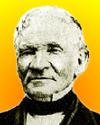
Born 1 May 1792; died 13 Aug 1884 at age 92. quotes
American editor and inventor who put out the first issue of Scientific American on 28 Aug 1845, but sold that business 10 months later to Orson Munn and Alfred Ely Beach. He editted it for one more year. As an inventor, he had little business sense, but held over 100 patents, including a fire alarm, signal telegraph, fog whistle, and a washing machine. He sold his patent for a revolving rifle to Samuel Colt for $100 in 1844. He had an interest in painting portraits, and in 1820 built a camera obscura. From 1820, he became interested in the hot-air balloon. He constructed his first model in 1833. Porter built and exhibited other models. By 1853, he demonstrated a 22-foot model airship which circled in the rotunda of the New York Merchant's Exchange. Ultimately, despite trying, he had no major success in aerial navigation.«
American editor and inventor who put out the first issue of Scientific American on 28 Aug 1845, but sold that business 10 months later to Orson Munn and Alfred Ely Beach. He editted it for one more year. As an inventor, he had little business sense, but held over 100 patents, including a fire alarm, signal telegraph, fog whistle, and a washing machine. He sold his patent for a revolving rifle to Samuel Colt for $100 in 1844. He had an interest in painting portraits, and in 1820 built a camera obscura. From 1820, he became interested in the hot-air balloon. He constructed his first model in 1833. Porter built and exhibited other models. By 1853, he demonstrated a 22-foot model airship which circled in the rotunda of the New York Merchant's Exchange. Ultimately, despite trying, he had no major success in aerial navigation.«
Born 1 May 1591; died 15 Aug 1666 at age 75.
German missionary and astronomer, a Jesuit, who in China (from 1619) revised the Chinese calendar, translated Western astronomical books and was head of Imperial Board of Astronomy (1644-64). He became a trusted adviser (1644-61) to Emperor Shun-chih, first emperor of the Ch'ing dynasty (1644-1911/12) who made him a mandarin. He lost power after the emperor's death (1661). Although then tried (1664) and convicted for plotting against the emperor and state, his sentence was commuted.
German missionary and astronomer, a Jesuit, who in China (from 1619) revised the Chinese calendar, translated Western astronomical books and was head of Imperial Board of Astronomy (1644-64). He became a trusted adviser (1644-61) to Emperor Shun-chih, first emperor of the Ch'ing dynasty (1644-1911/12) who made him a mandarin. He lost power after the emperor's death (1661). Although then tried (1664) and convicted for plotting against the emperor and state, his sentence was commuted.
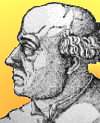
Born 1 May 1493; died 24 Sep 1541 at age 48. quotes
Paracelsus (born Theophrastus Phillipus Aureolus Bombastus von Hohenheim) was a German-Swiss physician and alchemist who condemned medical teaching that was not based on observation and experience. He had travelled widely, gaining practical medical knowledge as surgeon to mercenary armies. In 1527, while a physician at Basel, he also lectured. He established the use of chemistry in medicine, gave the most up-to-date description of syphilis (1530), and was the first to argue that small doses of what makes people ill can also cure them. He introduced chemical remedies to replace traditional herbal ones, influenced the development of medicine during the Renaissance and gave alchemy a wider perspective. Paracelsus saw illness as having a specific external cause rather than being caused by an imbalance of the humours in the body (though he had an overall occultist perspective). He disputed that mental illness was caused by demons, and linked goitre with minerals in drinking water. In his major text, the Grosse Wundartzney ("Great Surgery Book", 1536) he discussed wounds, ulcers, and their cure with salves and balms, with a section on treating gunpowder wounds. His controversial views led to exile in 1538.[Sources disagree widely on day of birth. EB gives born 11 Nov or 17 Dec 1493. Enc. Occultism and Parapsychology states 24 Dec 1493. Enc. World Bio. and European Authors give 10 Nov 1493. DSB date is c.1493 or 1 May 1494(?).]
Paracelsus (born Theophrastus Phillipus Aureolus Bombastus von Hohenheim) was a German-Swiss physician and alchemist who condemned medical teaching that was not based on observation and experience. He had travelled widely, gaining practical medical knowledge as surgeon to mercenary armies. In 1527, while a physician at Basel, he also lectured. He established the use of chemistry in medicine, gave the most up-to-date description of syphilis (1530), and was the first to argue that small doses of what makes people ill can also cure them. He introduced chemical remedies to replace traditional herbal ones, influenced the development of medicine during the Renaissance and gave alchemy a wider perspective. Paracelsus saw illness as having a specific external cause rather than being caused by an imbalance of the humours in the body (though he had an overall occultist perspective). He disputed that mental illness was caused by demons, and linked goitre with minerals in drinking water. In his major text, the Grosse Wundartzney ("Great Surgery Book", 1536) he discussed wounds, ulcers, and their cure with salves and balms, with a section on treating gunpowder wounds. His controversial views led to exile in 1538.[Sources disagree widely on day of birth. EB gives born 11 Nov or 17 Dec 1493. Enc. Occultism and Parapsychology states 24 Dec 1493. Enc. World Bio. and European Authors give 10 Nov 1493. DSB date is c.1493 or 1 May 1494(?).]
The Hermetic and Alchemical Writings of Paracelus, by Paracelsus and Arthur Edward Waite (editor). - book suggestion.

1970
Died 1 May 2011 at age 87 (born 27 Nov 1923).
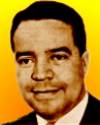
Jesse Ernest Wilkins, Jr. was a Black-American physicist, mathematician and engineer (chemical/nuclear). He entered the University of Chicago at age 13, and by age 19, in 1942, he became the seventh African American to obtain a Ph.D. in Mathematics. His career achievement has been to develop radiation shielding against gamma radiation, emitted during electron decay of the Sun and other nuclear sources. He developed mathematical models to calculate the amount of gamma radiation absorbed by a given material. This technique of calculating radiative absorption is widely used among researcher in space and nuclear science projects. His was also a joint owner of a company which designed and developed nuclear reactors for electrical power generation.
Jesse Ernest Wilkins, Jr. was a Black-American physicist, mathematician and engineer (chemical/nuclear). He entered the University of Chicago at age 13, and by age 19, in 1942, he became the seventh African American to obtain a Ph.D. in Mathematics. His career achievement has been to develop radiation shielding against gamma radiation, emitted during electron decay of the Sun and other nuclear sources. He developed mathematical models to calculate the amount of gamma radiation absorbed by a given material. This technique of calculating radiative absorption is widely used among researcher in space and nuclear science projects. His was also a joint owner of a company which designed and developed nuclear reactors for electrical power generation.
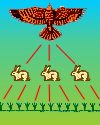
Charles Sutherland Elton was an English biologist who is credited with describing the “sociology and economy of animals,” thus outlining the basic principles of modern animal ecology. He thought of the “community” as a group of species related through the food chains. Elton developed the idea of a food chain in 1927. He described the way plants get energy from sunlight, plant-eating animals get their energy from eating plants, and meat-eating animals get their energy from eating other animals. Elton’s pyramid of numbers shows how energy flow links organisms to form the biological community. In 1932, Elton created the Bureau of Animal Population at Oxford, which was a mecca for ecologists from around the world, until its demise when he retired in 1967.
Died 1 May 1950 at age 92 (born 11 Jun 1857).
American entomologist noted for pioneering efforts in applied entomology and his experiments in the biological control of harmful insects. He is regarded as the founder of agricultural and medical entomology. He proposed that natural enemies rather than pesticides be used for controlling pests. Howard was head of the U.S. Dept. of Agriculture for over 30 years. He described 20 new species of mosquitoes, and 47 new groups of parasitic wasps. Howard revealed that houseflies carry and transmit many diseases. He was the first to suggest covering standing water with oil to control egg-laying by mosquitoes and kill larvae to reduce disease transmission. His work led to belief that great natural balances are mainly due to the action of the parasites.
American entomologist noted for pioneering efforts in applied entomology and his experiments in the biological control of harmful insects. He is regarded as the founder of agricultural and medical entomology. He proposed that natural enemies rather than pesticides be used for controlling pests. Howard was head of the U.S. Dept. of Agriculture for over 30 years. He described 20 new species of mosquitoes, and 47 new groups of parasitic wasps. Howard revealed that houseflies carry and transmit many diseases. He was the first to suggest covering standing water with oil to control egg-laying by mosquitoes and kill larvae to reduce disease transmission. His work led to belief that great natural balances are mainly due to the action of the parasites.
Died 1 May 1949 at age 85 (born 16 Aug 1863).
British chemist who pioneered in the chemistry of silicones, organic derivatives of silicon.
British chemist who pioneered in the chemistry of silicones, organic derivatives of silicon.
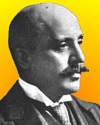
Died 1 May 1927 at age 70 (born 15 Jul 1856).
(1st Viscount Cowdray of Midhurst) British engineer and a developer of the Mexican petroleum industry. At age 19, Pearson became a partner in his family's contracting firm, the operation of which he extended to Spain and the U.S. In Dec 1889, he went to Mexico, where he drained swamps, built railways, power lines and waterworks for the Mexican government. Realizing the need for fuel to power the locomotives, he began as early as 1901 to buy concessions and drilled for oil. When the drilling site, known as Portrero del Llano No 4 struck oil, the plume of crude oil spurted 300 feet into the air. Within a couple of years Mexico was one of the world's biggest oil producer and by 1918 Pearson was one of the richest men in the world.
(1st Viscount Cowdray of Midhurst) British engineer and a developer of the Mexican petroleum industry. At age 19, Pearson became a partner in his family's contracting firm, the operation of which he extended to Spain and the U.S. In Dec 1889, he went to Mexico, where he drained swamps, built railways, power lines and waterworks for the Mexican government. Realizing the need for fuel to power the locomotives, he began as early as 1901 to buy concessions and drilled for oil. When the drilling site, known as Portrero del Llano No 4 struck oil, the plume of crude oil spurted 300 feet into the air. Within a couple of years Mexico was one of the world's biggest oil producer and by 1918 Pearson was one of the richest men in the world.
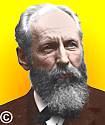
Died 1 May 1918 at age 74 (born 6 May 1843). quotes
U.S. geologist, one of the founders of modern geomorphology (the study of landforms), structural geologist and map-maker. He worked on many U.S. surveys with the U.S. Geological Survey, studying the ancient lakes (Lake Bonneville) of Utah. He was an early pioneer of isostatic theory, made studies in glacial geology and was a close observer of the processes of transport and deposition. He first recognized the applicability of the concept of dynamic equilibrium in landform configuration and evolution, namely, that landforms reflect a state of balance between the processes that act upon them and the structure and composition of the rocks that compose them. Gilbert clearly expounded this concept in his geological report on the Henry Mountains, Utah.
U.S. geologist, one of the founders of modern geomorphology (the study of landforms), structural geologist and map-maker. He worked on many U.S. surveys with the U.S. Geological Survey, studying the ancient lakes (Lake Bonneville) of Utah. He was an early pioneer of isostatic theory, made studies in glacial geology and was a close observer of the processes of transport and deposition. He first recognized the applicability of the concept of dynamic equilibrium in landform configuration and evolution, namely, that landforms reflect a state of balance between the processes that act upon them and the structure and composition of the rocks that compose them. Gilbert clearly expounded this concept in his geological report on the Henry Mountains, Utah.
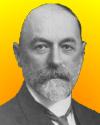
Died 1 May 1914 at age 62 (born 25 Dec 1851).
German-born American petroleum scientist who invented the Frasch Process for sulphur mining. Patented in 1891, his method made it economically possible by a process of drilling, melting and pumping to extract sulphur from underground deposits as found in Louisiana and in eastern Texas. A hole is drilled into the sulphur bearing formation and cased. Then, three concentric pipes are placed within the protective casing to facilitate pumping super-heated water down the hole melting the sulphur and recovering the molten sulphur to the surface. It made possible the exploitation of extensive sulfur deposits otherwise obtainable only at prohibitive expense.«
German-born American petroleum scientist who invented the Frasch Process for sulphur mining. Patented in 1891, his method made it economically possible by a process of drilling, melting and pumping to extract sulphur from underground deposits as found in Louisiana and in eastern Texas. A hole is drilled into the sulphur bearing formation and cased. Then, three concentric pipes are placed within the protective casing to facilitate pumping super-heated water down the hole melting the sulphur and recovering the molten sulphur to the surface. It made possible the exploitation of extensive sulfur deposits otherwise obtainable only at prohibitive expense.«
Brimstone: The Stone That Burns: The Story of the Frasch Sulphur Industry, by Williams Haynes. - book suggestion.
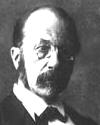
Died 1 May 1904 at age 72 (born 9 Jul 1831). quotes
Wilhelm His, born in Basel, Switzerland, was a German anatomist and embryologist who created the science of histogenesis, or the study of the embryonic origins of different types of animal tissue. His discovery, in 1886, that each nerve fibre stems from a single nerve cell was essential to the development of the neuron theory. He invented the microtome - a device to slice very thin serial specimens for microscope slides (1865). With it, he could examine embryos. He was the first to accurate describe the human embryo.
Wilhelm His, born in Basel, Switzerland, was a German anatomist and embryologist who created the science of histogenesis, or the study of the embryonic origins of different types of animal tissue. His discovery, in 1886, that each nerve fibre stems from a single nerve cell was essential to the development of the neuron theory. He invented the microtome - a device to slice very thin serial specimens for microscope slides (1865). With it, he could examine embryos. He was the first to accurate describe the human embryo.
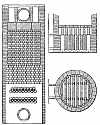
Died 1 May 1902 at age 85 (born 2 Feb 1817).
English chemist who developed the Glover Tower in 1859 to reclaim useful chemicals during the manufacture of sulphuric acid, the most important industrial chemical. The previous Lead-Chamber Method (1749) used sulphur dioxide, a nitrate, air and water, but lost the nitrate in the form of nitric oxide to the atmosphere. This was expensive since the replacement nitrate had to be imported from Chile. Glover introduced a mass transfer tower to recover some of this lost nitrate. In his tower, sulphuric acid (still containing nitrates) was trickled downward against upward flowing burner gases. The flowing gas absorbed some of the previously lost nitric oxide. By recycling these gases into the lead chamber the nitric oxide was re-used. He did not patent the process, but gave it freely to benefit the industry.Image shows cross-sectional diagrams of the Glover Tower. more
English chemist who developed the Glover Tower in 1859 to reclaim useful chemicals during the manufacture of sulphuric acid, the most important industrial chemical. The previous Lead-Chamber Method (1749) used sulphur dioxide, a nitrate, air and water, but lost the nitrate in the form of nitric oxide to the atmosphere. This was expensive since the replacement nitrate had to be imported from Chile. Glover introduced a mass transfer tower to recover some of this lost nitrate. In his tower, sulphuric acid (still containing nitrates) was trickled downward against upward flowing burner gases. The flowing gas absorbed some of the previously lost nitric oxide. By recycling these gases into the lead chamber the nitric oxide was re-used. He did not patent the process, but gave it freely to benefit the industry.Image shows cross-sectional diagrams of the Glover Tower. more
A History of the International Chemical Industry: From the Early Days to 2000, by Fred Aftalion. - book suggestion.
Died 1 May 1899 at age 75 (born 29 Mar 1824). quotes
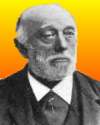
Friedrich Karl Christian Ludwig Buchner was a German physician and philosopher who became one of the most popular exponents of 19th-century scientific materialism. He wrote many works to disseminate knowledge of the natural sciences. These were based on his definition of force as “expression for the cause of a possible or an actual movement,” and on the unity of matter and force. No insight was conceivable without exact knowledge of matter and its laws. “The laws according to which nature acts, and matter moves, now destroying, now rebuilding, and thus producing the most varied organic and inorganic forms, are eternal and unalterable.” He also did much to spread knowledge of Darwin's work in particular.[Date of death DSB = 1 May 1899; EB = 30 Apr 1899.]
Friedrich Karl Christian Ludwig Buchner was a German physician and philosopher who became one of the most popular exponents of 19th-century scientific materialism. He wrote many works to disseminate knowledge of the natural sciences. These were based on his definition of force as “expression for the cause of a possible or an actual movement,” and on the unity of matter and force. No insight was conceivable without exact knowledge of matter and its laws. “The laws according to which nature acts, and matter moves, now destroying, now rebuilding, and thus producing the most varied organic and inorganic forms, are eternal and unalterable.” He also did much to spread knowledge of Darwin's work in particular.[Date of death DSB = 1 May 1899; EB = 30 Apr 1899.]
/WalkerJohn(1781-1859)Thm.jpg "John Walker")
Died 1 May 1859 at age 77 (born 29 May 1781).
English chemist and inventor who invented friction matches. He made them from small wooden sticks which he coated with sulphur, then tipped with a mixture of potassium chlorate, antimony sulphide and a binder of gum arabic. After searching for a suitable mixture with the intent of making a useful way to start a fire, he was successful on 27 Nov 1826. Beginning on 7 Apr 1827, he sold them in boxes of 50 for a shilling, with a folded slip of sandpaper as a striking surface. He called them Congreves, to honour Sir William Congreve, known for his invention of military rockets. He declined to patent the matches, yet was still able to make a comfortable income from them.« more
English chemist and inventor who invented friction matches. He made them from small wooden sticks which he coated with sulphur, then tipped with a mixture of potassium chlorate, antimony sulphide and a binder of gum arabic. After searching for a suitable mixture with the intent of making a useful way to start a fire, he was successful on 27 Nov 1826. Beginning on 7 Apr 1827, he sold them in boxes of 50 for a shilling, with a folded slip of sandpaper as a striking surface. He called them Congreves, to honour Sir William Congreve, known for his invention of military rockets. He declined to patent the matches, yet was still able to make a comfortable income from them.« more
Died 1 May 1774 at age 34 (born 14 Nov 1739).
British anatomist and physiologist who described blood coagulation and isolated a key protein in the coagulation process, fibrinogen, which he called coagulable lymph. He also investigated the structure of the lymphatic system and described red blood cells.
British anatomist and physiologist who described blood coagulation and isolated a key protein in the coagulation process, fibrinogen, which he called coagulable lymph. He also investigated the structure of the lymphatic system and described red blood cells.
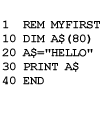
In 1964, first BASIC program was run on a computer at about 4:00 a.m. Invented at Dartmouth University by professors John G. Kemeny and Thomas E. Kurtz, the first implementation was a BASIC compiler. The name is an acronym for Beginner's All-purpose Symbolic Instruction Code, designed to be an easy programming language to learn quickly how to write simple programs. Originally for mainframes, BASIC was adopted for use on personal computers when they became available.
In 1959, the Goddard Space Flight Center in Greenbelt, Maryland, was named in his memory after the rocket pioneer, Robert Goddard. It was announced by T. Keith Glennan, head of NASA. This was to be NASA’s first space flight center, and construction on the $17 million installation had just started. The Center was dedicated on 16 Mar 1961. Robert Goddard had made the first successful liquid-fuelled rocket test on 16 Mar 1926. Although he had died in 1945, many of his principles were being used in modern rocketry. He was postumously awarded the Langley Medal from the Smithsonian Institution in 1960. In the same year, the U.S. government agreed to pay his widow and the Guggenheim foundation $1 million in settlement for the applications from over 200 of his patents that had been used in the U.S. missile and rocket programs.«
Dreams, Hopes, Realities: NASA’s Goddard Space Flight Center - The First Forty Years, by Lane E. Wallace. - book suggestion.
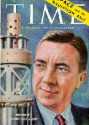
In 1958, the discovery of the powerful Van Allen radiation belts that surround Earth was published in the Washington Evening Star. The article covered the report made by their discoverer James. A. Van Allen to the joint sysmposium of the National Academy of Sciences and the American Physical Society in Washington DC. He used data from the Explorer I and Pioneer III space probes of the earth's magnetosphere region to reveal the existence of the radiation belts - concentrations of electrically charged particles. Van Allen (born 7 Sep 1914) was also featured on the cover of the 4 May 1959 Time magazine for this discovery. He was the principal investigator on 23 other space probes.
In 1956, Minamata disease was first officially reported to the public health authority of Minamata, Japan, by Dr. Hosokawa, the head of the hospital affiliated with the chemical manufacturer, Chisso Corporation. The mysterious ailment was gradually subsequently identified (Jul 1959) as methyl-mercury poisoning. For decades, the company dumped untreated waste chemicals into the Minanata Bay (estimated as 27 tons of mercury compounds from 1932-1968). People of the fishing community ingested mercury from considerable seafood consumption. Eventually thousands were stricken with degeneration of their nervous systems, brain damage, numbness, slurred speech, and constricted vision. Cats and other animals died, even birds dropped from the skies. Chisso denied and resisted taking responsibility, even obstructing Hosokawa's research.«
In 1949, Gerard Kuiper discovered Nereid, the second satellite of Neptune, the outermost and the third largest of Neptune's known satellites. (Orbit: ave 5,513,400 km, diameter: 340 km). Nereid's orbit is the most highly eccentric of any planet or satellite in the solar system; its distance from Neptune varies from 1,353,600 to 9,623,700 kilometers. Nereid's odd orbit indicates that it may be a captured asteroid or Kuiper Belt object. The name, Nereid refers to the sea nymphs who dwell in the Mediterranean sea, the 50 daughters of Nereus and Doris. Kuiper, a Dutch-American astronomer (1905-1973) also studied the surface of the Moon; discovered Miranda, a moon of Uranus; and found an atmosphere on Titan, a moon of Saturn.
In 1947, the first U.S. radar for commercial and private planes was first demonstrated at Culver City, California on a TWA airplane. In the cockpit, both a bright red panel light and a horn warned the pilot if the plane was not at a safe distance from obstacles to flight. The device was developed at the Hughes Aircraft Corp. by Howard Robard Hughes and a team of electronic engineers.
In 1946, the first radar on a commercial ship operated by an American company began service with the maiden voyage of the S.S. African Star of the American South African Line. The Mariner equipment, supplied by the General Electric Co., had been installed on board the ship a few days earlier.
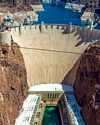
In 1935, Boulder Dam was finished after 4 years and 354 days. In 1947, it was renamed as Hoover Dam.
1934
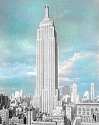
In 1931, the Empire State Building in New York City was dedicated by President Hoover from the White House in Washington D.C. where he pressed a button that switched on the lights. The 102 story skyscraper, at the corner of Fifth Avenue and 34th Street in New York City, was the first higher than 1,250 feet. Excavation had begun in Jan 1930 of the following year, construction commenced in two months later, and its cornerstone was laid in Sep 1930. The steel framework rose at a rate of 4-1/2 stories per week. The building's construction was completed in a phenomenal one year and 45 days. It reigned as the world's tallest skyscraper until 1954, but it still remains an icon for all things New York.
1960s
In 1927, the Recordak, the first check photographing device began commercial manufacture by the Recordak Corporation, a newly-formed subsidiary of the Eastman Kodak Co., Rochester, NY. Designed to simplify bank records, the machine photographed checks onto 16mm film. It was invented by George Lewis McCarthy, who called it a Checkograph and was issued his patent on 25 Feb 1930 (No. 1,748,489). By 1935, it was also used in libraries for the purpose of making microfilm records, beginning with the New York Public Library photographing the New York Times of the WWI period. Microfilming itself began in the early 1800s. Microphotography for military purposes was first used in the Franco-Prussian war (1870 ).

In 1924, the first iodized table salt in the U.S. went on sale at grocers in Michigan state. The table salt contained 0.01% sodium iodide as a dietary supplement, since an adequate intake of iodine reduces the incidence of goitre (major swelling of the thyroid gland in the neck.) Diamond Crystal Salt, and four other Michigan table salt companies agreed to add the trace of iodine compound to their product at the urging of the Michigan State Medical Society, initiated and led by David Murray Cowie. At first reluctant, later in the year, Morton Salt Company supplied the national market. The significant value of iodine for this purpose had been determined by David Marine, as a result of a trial (1917-22) on a large group of schoolgirls.«[Image: Morton's Iodized Salt container; detail from vintage advertising blotter.] more
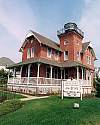
In 1921, the first successful marine radio navigation beacons in the U.S. began regular operation. They were first called radio fog signals. Three stations were installed by the U.S. Lighthouse Service to guide ships approaching New York Harbor. These were the Ambrose Channel Lightship, Sea Girt Light station and the Fire Island Lightship. N.Y. Government trials of the radio fog signal transmitting sets began several years earlier in 1916, but the work was delayed during WW I.[Image: Sea Girt Lighthouse, Sea Girt, N.J.]
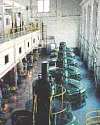
In 1909, the first of five generating units was started in the power plant at the Minidoka Dam on the Snake River in Idaho. This was the first hydroelectric power plant to be built by the U.S. government. The first unit could generate 1,400 kilowatts of electricity. Minidoka Dam was originally designed and constructed without a powerplant and was completed in 1907. The powerplant and three pumping plants were added shortly afterwards. The original Minidoka Powerplant is listed on the National Register of Historic Places.
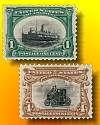
In 1901, a series of six two-colour U.S. stamps was issued to promote the Pan-American Exposition World's Fair opening the same day at Buffalo, New York. Various forms of transport were illustrated. The 1¢ Fast Lake Navigation stamp shows the steamship City of Alpena which operated along the Great Lakes. The 2¢ Fast Express stamp portrays the Empire State Express of the New York Central and Hudson River Railroads. The 4¢ Automobile features an electric automobile. The 5¢ Bridge at Niagara Falls stamp shows what was then the world's largest single span steel bridge, over the Niagara Falls. The 8¢ shows the Canal Locks at Sault de Ste. Marie. The steamship St. Paul is on the 10¢ Fast Ocean Navigation stamp.«
In 1899, Bayer introduced aspirin in powder form, in Germany. It had been discovered by a company researcher, Felix Hoffman on 10 Aug 1897. Since that time, the company investigated the drug's safety. It addition to being a pain reliever, it was also found to be a fever reducer and anti-inflammatory. It was later introduced in tablet form on 1 Jan 1915.
Aspirin: The Remarkable Story of a Wonder Drug, by Diarmuid Jeffreys. - book suggestion.
In 1895, an electric engine for passenger trains began regular use on the Baltimore and Ohio railroad, Maryland. This was already the first railroad in the U.S. to use an electric engine instead of a steam engine in regular service for freight trains (beginning 4 Aug 1894), which travelled on a route 3.6 miles through the Baltimore tunnel. It was also the first U.S. railroad where an electric locomotive made a trial round trip on 29 Apr 1851, on the Washington branch of the B&O Railroad, travelling five miles each way between Washington, DC and Bladensburg, Md. However, this earliest trial used galvanized storage batteries, which could not be practical for great distances.
In 1894, black American inventor, William B. Purvis patented an "Electric Railway" No. 519,291. This was just one of several patents obtained in his life. Others covered a magnetic car balancing device, electric railway switch, ten for paper bag machines. His earliest patents were for a bag fastener, a hand stamp, and a fountain pen.

In 1893, kapok (a textile) was first exhibited in the U.S. as a commercial product by the Netherlands in the Agriculture building at the World's Columbian Exposition in Chicago, Ill. The Book of the Fair referred to it. "Somewhat of a curiosity is the Java kapok, a fibre used for bed-filling, and for which are claimed the advantages of remarkable elasticity and lightness." It had already been used in Europe for a number of years. The water and decay resistant fibre is obtained from the tropical kapoktree seeds. Before the development of synthetic fibres, it was used for stuffing, such as in life-jackets, and for sound or heat insulation.
The Great Kapok Tree: A Tale of the Amazon Rain Forest, by Lynne Cherry. - book suggestion.
In 1888, a trial of the first electric freight locomotive in the U.S. took place on the Ansonia, Derby and Birmingham Electric Line, Connecticut. The 17.5 ton engine could pull a train of about 35 tons, but at less than 10 mph. It was built by the Pullman Car Co. of Pullman, Ill.
In 1888, Nikola Tesla was issued several patents relating to the induction magnetic motor, alternating current (AC) sychronous motor, AC transmission and electricity distribution (Nos. 381,968-70; 382,279-82)
Wizard: The Life and Times of Nikola Tesla: Biography of a Genius, by Marc Seifer. - book suggestion.
In 1884, construction began in Chicago, Illinois, on the first skyscraper, the ten-story steel-skeleton Home Insurance Company of New York (The use of a steel skeleton made the building of skyscrapers possible, for the frame carries the entire weight of the building, instead of the walls themselves supporting the entire weight.) Designed by Major William Le Baron Jenney, marble was used on the walls of the building, with four columns of polished granite supporting a a marble balcony. Work was finished in the fall of 1885. Later, two more stories were added.
In 1883, black American inventor J. Cooper was issued a patent for his invention, "Shutter and Fastening" (No. 276,563). In the next few years, he also patented elevator devices.
In 1860, a patent for the shaving mug was granted to Thomas E. Hughes.
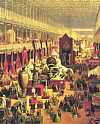
In 1851, the Great Exhibition of the Works of Industry of All Nations opened in Hyde Park, London, England. This was the first international exhibition to be held in any country. Housed in Paxton’s magnificent Crystal Palace, it provided a showcase for many thousands of inventions. The legacy of the Great Exhibition of 1851, still lives on today. Several great institutions were founded with the profits, including the Victoria and Albert Museum and Imperial College. Scholarships which were setup, and still continue, reaped an immense contribution to the world’s body of knowledge. Recipients included several Nobel prize winnners: one scholarship went to Ernest Rutherford, a son of a New Zealand farmer.
The Great Exhibition of 1851, by Louise Purbrick. - book suggestion.
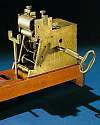
In 1849, a telegraph register was patented by Samuel F. B.Morse (No. 6,420). Although Morse first thoughts of an electromagnetic telegraph (1832) led to building an experimental version (1835), he constructed his first truly practical system in 1844. That line ran from Baltimore to Washington, DC. This patent incorporates the basic features of the 1844 receiver and a method for marking dots and dashes on paper. Within ten years after the first telegraph line opened, 23,000 miles of wire crisscrossed the country. The invention profoundly affected the development of the West, made railroad travel safer, and allowed businessmen to conduct their operations more profitably.
Lightning Man: The Accursed Life of Samuel F. B. Morse, by Kenneth Silverman. - book suggestion.
In 1753, Carolus Linnaeus published the first edition of his Species Plantarum in which he gave systematic names to plants that are still in use today. He was a Swedish botanist and explorer who was the first to frame principles for defining genera and species of organisms and to create a uniform system for naming them. Thus, he is often called the father of classification, and he extended the familiar scheme of dual Latin names to identify animals in 1758. The Species Plantarum was taken by international consent in 1905 as the starting point for modern botanical nomenclature.
In 1683, a patent was awarded in England on this day for the extraction of salt from sea water.
In 1543, Nicolaus Copernicus circulated “The Little Commentary,” showing the heliocentricity of the Solar System.




