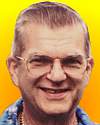
Born 25 Jan 1936; died 22 Jun 2015 at age 79.
American artist who designed the original plastic pink flamingo lawn ornament, at age 21, having just graduated from Worcester Art Museum School. His first project was a plastic lawn duck for the plastic products manufacturer, Union Products of Leominster, Massachussetts (founded 1946). His second was the flamingo, originated in Sep 1957. He first fashioned it out of clay, based on photos in the National Geographic magazine. They were manufactured by the millions for nearly a half-century, but in 2006, Union Products ceased production, ending business, bankrupt. The rights to the flamingo design and the molds were bought by HMC International LLC which subcontracted Cado Manufacturing to make them. Featherstone designed over 750 different items before he retired from Union Products in 2000.«
American artist who designed the original plastic pink flamingo lawn ornament, at age 21, having just graduated from Worcester Art Museum School. His first project was a plastic lawn duck for the plastic products manufacturer, Union Products of Leominster, Massachussetts (founded 1946). His second was the flamingo, originated in Sep 1957. He first fashioned it out of clay, based on photos in the National Geographic magazine. They were manufactured by the millions for nearly a half-century, but in 2006, Union Products ceased production, ending business, bankrupt. The rights to the flamingo design and the molds were bought by HMC International LLC which subcontracted Cado Manufacturing to make them. Featherstone designed over 750 different items before he retired from Union Products in 2000.«
The Original Pink Flamingos: Splendor on the Grass, by Don Featherstone and Tom Herzing. - book suggestion.
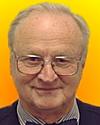
Born 25 Jan 1923.
Swedish neuroscientist who shared (with Paul Greengard and Eric R. Kandel) the 2000 Nobel Prize in Medicine or Physiology “for their discoveries concerning signal transduction in the nervous system.” He made fundamental contributions to understanding of the brain through his research on synaptic transmission—the method of communication between neurons. He discovered the roles of seratonin and dopamine as chemical neurotransmitters, thus adding a whole new mode of action to the existing knowledge of electrical neurotransmission (via action potentials). His work led to the development of levodopa, te first drug to treat Parkinson's disease symptons. Carlsson also introduced the first selective re-uptake inhimitor, zimelidine, which led to development of Prozac and Zoloft for the treatment of depression.«
Swedish neuroscientist who shared (with Paul Greengard and Eric R. Kandel) the 2000 Nobel Prize in Medicine or Physiology “for their discoveries concerning signal transduction in the nervous system.” He made fundamental contributions to understanding of the brain through his research on synaptic transmission—the method of communication between neurons. He discovered the roles of seratonin and dopamine as chemical neurotransmitters, thus adding a whole new mode of action to the existing knowledge of electrical neurotransmission (via action potentials). His work led to the development of levodopa, te first drug to treat Parkinson's disease symptons. Carlsson also introduced the first selective re-uptake inhimitor, zimelidine, which led to development of Prozac and Zoloft for the treatment of depression.«
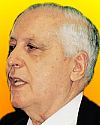
Born 25 Jan 1917; died 28 May 2003 at age 86. quotes
Russian-born Belgian physical chemist who received the Nobel Prize for Chemistry in 1977 for contributions to nonequilibrium thermodynamics, or how life could continue indefinitely in apparent defiance of the classical laws of physics. The main theme of Prigogine's work was the search for a better understanding of the role of time in the physical sciences and in biology. He attempted to reconcile a tendency in nature for disorder to increase (for statues to crumble or ice cubes to melt, as described in the second law of thermodynamics) with so-called "self-organisation", a countervailing tendency to create order from disorder (as seen in, for example, the formation of the complex proteins in a living creature from a mixture of simple molecules).
Russian-born Belgian physical chemist who received the Nobel Prize for Chemistry in 1977 for contributions to nonequilibrium thermodynamics, or how life could continue indefinitely in apparent defiance of the classical laws of physics. The main theme of Prigogine's work was the search for a better understanding of the role of time in the physical sciences and in biology. He attempted to reconcile a tendency in nature for disorder to increase (for statues to crumble or ice cubes to melt, as described in the second law of thermodynamics) with so-called "self-organisation", a countervailing tendency to create order from disorder (as seen in, for example, the formation of the complex proteins in a living creature from a mixture of simple molecules).
The End of Certainty, by Ilya Prigogine. - book suggestion.
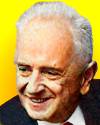
Born 25 Jan 1900; died 18 Dec 1975 at age 75. quotes
Ukrainian-American geneticist and evolutionist whose work had a major influence on 20th-century thought and research on genetics and evolutionary theory. He made the first significant synthesis of Charles Darwin's theory of evolution with Gregor Mendel's theory of genetics in his book Genetics and the Origin of Species (1937). From 1918 his research gave experimental evidence that genes could vary far more than geneticists had previously believed. Thus, successful species tend to have a wide variety of genes that, while redundant in its present environment, do provide a species as a whole with genetic diversity. Such diversity enables the species to adapt effectively to changes in the surrounding environment—the basis for modern evolutionary theory.
Ukrainian-American geneticist and evolutionist whose work had a major influence on 20th-century thought and research on genetics and evolutionary theory. He made the first significant synthesis of Charles Darwin's theory of evolution with Gregor Mendel's theory of genetics in his book Genetics and the Origin of Species (1937). From 1918 his research gave experimental evidence that genes could vary far more than geneticists had previously believed. Thus, successful species tend to have a wide variety of genes that, while redundant in its present environment, do provide a species as a whole with genetic diversity. Such diversity enables the species to adapt effectively to changes in the surrounding environment—the basis for modern evolutionary theory.
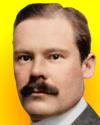
Born 25 Jan 1878; died 14 May 1975 at age 97. quotes
Ernst Frederik Werner Alexanderson was a Swedish-American electronics engineer and inventorwhose contributions revolutionized radio communication, and enabled the first live radio broadcast. He developed a high-frequency alternator to convert direct current into alternating current, capable of producing continuous radio waves. After two years of development, his 2 kilowatt, 100,000 cycle equipment was installed (24 Dec 1906) in the Fessenden station at Brant Rock, Massachusetts. It was used to transmit a radio broadcast of both speech and a live violin solo. Later, he was also a television pioneer, which he first demonstrated to the public on 13 Jan 1928. He spent 46 years associated with General Electric. Alexanderson’s 322 patents were in diverse fields, including railway electrification, motors, power transmission, telephone relays, and electric ship propulsion.«
Ernst Frederik Werner Alexanderson was a Swedish-American electronics engineer and inventorwhose contributions revolutionized radio communication, and enabled the first live radio broadcast. He developed a high-frequency alternator to convert direct current into alternating current, capable of producing continuous radio waves. After two years of development, his 2 kilowatt, 100,000 cycle equipment was installed (24 Dec 1906) in the Fessenden station at Brant Rock, Massachusetts. It was used to transmit a radio broadcast of both speech and a live violin solo. Later, he was also a television pioneer, which he first demonstrated to the public on 13 Jan 1928. He spent 46 years associated with General Electric. Alexanderson’s 322 patents were in diverse fields, including railway electrification, motors, power transmission, telephone relays, and electric ship propulsion.«
Alexanderson: Pioneer in American Electrical Engineering, by Professor James E. Brittain. - book suggestion.
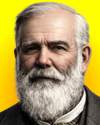
Born 25 Jan 1812; died 13 Jun 1882 at age 70.
English mathematician who, using Machin’s formula, π/4 = 4 tan-1(1/5) - tan-1(1/239), spent numerous years manually calculating the value of π. Shanks kept a boarding school at Houghton-le-Spring in a coal mining area near Durham. Although an amateur practitioner, his calculation of π reached 707 places by 1873. Sadly, seven decades later (1944), D.F. Ferguson’s new mechanical desk calculator computation of π revealed that Shanks had made a mistake in the 528th decimal place, spoiling all digits calculated beyond there. Shanks had omitted two terms which caused his error. By the end of the twentieth century, computers could easily extend the results to over 2 billion places.«
English mathematician who, using Machin’s formula, π/4 = 4 tan-1(1/5) - tan-1(1/239), spent numerous years manually calculating the value of π. Shanks kept a boarding school at Houghton-le-Spring in a coal mining area near Durham. Although an amateur practitioner, his calculation of π reached 707 places by 1873. Sadly, seven decades later (1944), D.F. Ferguson’s new mechanical desk calculator computation of π revealed that Shanks had made a mistake in the 528th decimal place, spoiling all digits calculated beyond there. Shanks had omitted two terms which caused his error. By the end of the twentieth century, computers could easily extend the results to over 2 billion places.«
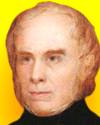
Born 25 Jan 1796; died 5 Sep 1852 at age 56.
Scottish botanist and zoologist. From 1831-41, he was Conservator at the Royal College of Surgeons Museum in Edinburgh, and thereafter Professor of Natural History at Aberdeen until his death. He is best known to botanists for his one-volume abridgment of Withering's Botanical Arrangement. He assisted Audubon in the technical part of his Birds of America. MacGillivray authored five volumes of a History of British Birds. He also wrote other manuals in botany, geology and conchology. Through extensive dissections, he made a thorough study of the internal structure of birds. His eldest son, John MacGillivray, accompanied Captain Stanley as naturalist in the voyage of the Rattlesnake.« more
Scottish botanist and zoologist. From 1831-41, he was Conservator at the Royal College of Surgeons Museum in Edinburgh, and thereafter Professor of Natural History at Aberdeen until his death. He is best known to botanists for his one-volume abridgment of Withering's Botanical Arrangement. He assisted Audubon in the technical part of his Birds of America. MacGillivray authored five volumes of a History of British Birds. He also wrote other manuals in botany, geology and conchology. Through extensive dissections, he made a thorough study of the internal structure of birds. His eldest son, John MacGillivray, accompanied Captain Stanley as naturalist in the voyage of the Rattlesnake.« more
William MacGillivray, by Robert Ralph. - book suggestion.
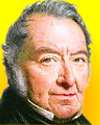
Born 25 Jan 1774; died 13 May 1852 at age 78.
English optician who improved various precision instruments for astronomy, and navigation devices. He inherited the family business from his father, Peter Dollond, maintaining their reputation for high-quality optical instruments. George is noted for his work significantly improving the clarity and effectiveness of telescopes and other optical devices advancing the field of astronomy in the 19th century. His micrometer made of rock crystal (1821), enabled English astronomer William Rutter Dawes to measure close double stars. Dollond invented an atmospheric recorder to simultaneously measure, and record on paper tape, temperature, atmospheric pressure, wind speed and direction, evaporation, and electrical phenomena.«
English optician who improved various precision instruments for astronomy, and navigation devices. He inherited the family business from his father, Peter Dollond, maintaining their reputation for high-quality optical instruments. George is noted for his work significantly improving the clarity and effectiveness of telescopes and other optical devices advancing the field of astronomy in the 19th century. His micrometer made of rock crystal (1821), enabled English astronomer William Rutter Dawes to measure close double stars. Dollond invented an atmospheric recorder to simultaneously measure, and record on paper tape, temperature, atmospheric pressure, wind speed and direction, evaporation, and electrical phenomena.«
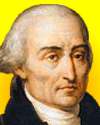
Born 25 Jan 1736; died 10 Apr 1813 at age 77. quotes
Italian-French astronomer and mathematician who contributed to analytical and celestial mechanics, transforming Newtonian ideas into a powerful mathematical framework. He added to number theory, including early results on quadratic forms, and advanced the calculus of variations still applied today, along with work on differential equations and infinite series. Lagrange also developed techniques for solving polynomial equations and studied the stability of planetary motion, identifying the equilibrium points now called Lagrange points. His formulation of Lagrangian mechanics is foundational for modern physics. In Mécanique analytique (1788), he systematized mechanics in purely analytical terms and shaped subsequent progress.«
Italian-French astronomer and mathematician who contributed to analytical and celestial mechanics, transforming Newtonian ideas into a powerful mathematical framework. He added to number theory, including early results on quadratic forms, and advanced the calculus of variations still applied today, along with work on differential equations and infinite series. Lagrange also developed techniques for solving polynomial equations and studied the stability of planetary motion, identifying the equilibrium points now called Lagrange points. His formulation of Lagrangian mechanics is foundational for modern physics. In Mécanique analytique (1788), he systematized mechanics in purely analytical terms and shaped subsequent progress.«
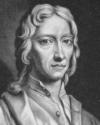
Born 25 Jan 1627; died 30 Dec 1691 at age 64. quotes
Irish-English chemist and natural philosopher noted for his pioneering experiments on the properties of gases and his espousal of a corpuscular view of matter that was a forerunner of the modern theory of chemical elements. He was a founding member of the Royal Society of London. From 1656-68, he resided at Oxford where Robert Hooke, who helped him to construct the air pump. With this invention, Boyle demonstrated the physical characteristics of air and the necessity of air for combustion, respiration, and the transmission of sound, published in New Experiments Physio-Mechanical, Touching the Spring of the Air and its Effects (1660). In 1661, he reported to the Royal Society on the relationship of the volume of gases and pressure (Boyle's Law).[Date of death: DSB = 30 Dec 1691; EB = 31 Dec 1691.]
Irish-English chemist and natural philosopher noted for his pioneering experiments on the properties of gases and his espousal of a corpuscular view of matter that was a forerunner of the modern theory of chemical elements. He was a founding member of the Royal Society of London. From 1656-68, he resided at Oxford where Robert Hooke, who helped him to construct the air pump. With this invention, Boyle demonstrated the physical characteristics of air and the necessity of air for combustion, respiration, and the transmission of sound, published in New Experiments Physio-Mechanical, Touching the Spring of the Air and its Effects (1660). In 1661, he reported to the Royal Society on the relationship of the volume of gases and pressure (Boyle's Law).[Date of death: DSB = 30 Dec 1691; EB = 31 Dec 1691.]
Boyle: Between God and Science, by Michael Hunter. - book suggestion.

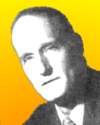
Died 25 Jan 1994 at age 85 (born 5 Jan 1909).
American mathematician and logician whose research was on the theory of algorithms and recursive functions. He developed the field of recursion theory with Church, Gödel, Turing and others. He contributed to mathematical Intuitionism which had been founded by Brouwer. His work on recursion theory helped to provide the foundations of theoretical computer science. By providing methods of determining which problems are soluble, Kleene's work led to the study of which functions can be computed.
American mathematician and logician whose research was on the theory of algorithms and recursive functions. He developed the field of recursion theory with Church, Gödel, Turing and others. He contributed to mathematical Intuitionism which had been founded by Brouwer. His work on recursion theory helped to provide the foundations of theoretical computer science. By providing methods of determining which problems are soluble, Kleene's work led to the study of which functions can be computed.
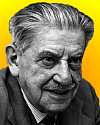
Died 25 Jan 1963 at age 82 (born 1 Mar 1880).
Russian-Born British electrical engineer and principal inventor of the first high-definition television system, as used by the British Broadcasting Corporation (BBC) for the world's first public high-definition telecast (from London, 1936). He had installed the first radio stations in Russia before moving to England in 1914. He was head of a research group for Electrical and Musical Industries (EMI) that developed (1931-35) an advanced kind of camera tube (the Emitron) and a relatively efficient hard-vacuum cathode-ray tube for the television receiver. Until 1964 the BBC used his technical standard proposal - 405 scanning lines and 25 pictures a second. He was director of EMI from 1955. His youngest son, David Shoenberg, became a noted physicist.
Russian-Born British electrical engineer and principal inventor of the first high-definition television system, as used by the British Broadcasting Corporation (BBC) for the world's first public high-definition telecast (from London, 1936). He had installed the first radio stations in Russia before moving to England in 1914. He was head of a research group for Electrical and Musical Industries (EMI) that developed (1931-35) an advanced kind of camera tube (the Emitron) and a relatively efficient hard-vacuum cathode-ray tube for the television receiver. Until 1964 the BBC used his technical standard proposal - 405 scanning lines and 25 pictures a second. He was director of EMI from 1955. His youngest son, David Shoenberg, became a noted physicist.
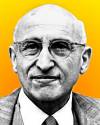
Died 25 Jan 1960 at age 70 (born 4 Jun 1889). quotes
American seismologist noted for his analyses of earthquake waves and the information they furnish about the physical properties of the Earth's interior. With Charles Richter, he developed a method of determining the intensity of earthquakes. Calculating the energy released by present-day shallow earthquakes, they showed that three-quarters of that energy occurs in the Circum-Pacific belt.
American seismologist noted for his analyses of earthquake waves and the information they furnish about the physical properties of the Earth's interior. With Charles Richter, he developed a method of determining the intensity of earthquakes. Calculating the energy released by present-day shallow earthquakes, they showed that three-quarters of that energy occurs in the Circum-Pacific belt.
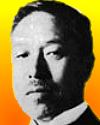
Died 25 Jan 1957 at age 85 (born 7 Feb 1871).
Japanese bacteriologist who discovered (1897) the dysentery bacillus Shigella, named after him. Shigellosis is the infectious disease caused by this group of bacteria leading to diarrhea, fever, stomach cramps and possible hospitalization. He also developed dysentery antiserum (1900). After appointment (1899) and serving a short time as director of the Institute of Infectious Diseases, Tokyo, he spent until 1903 working in Germany on the chemotherapy of trypanosomiasis (sleeping sickness) with Paul Ehrlich. He returned to Japan and continued his earlier association in research with Kitasato. In 1912, he moved to work again with Ehrlich in Frankfurt, this time focussing on tuberculosis. In his later life he also investigated leprosy and beriberi.«
Japanese bacteriologist who discovered (1897) the dysentery bacillus Shigella, named after him. Shigellosis is the infectious disease caused by this group of bacteria leading to diarrhea, fever, stomach cramps and possible hospitalization. He also developed dysentery antiserum (1900). After appointment (1899) and serving a short time as director of the Institute of Infectious Diseases, Tokyo, he spent until 1903 working in Germany on the chemotherapy of trypanosomiasis (sleeping sickness) with Paul Ehrlich. He returned to Japan and continued his earlier association in research with Kitasato. In 1912, he moved to work again with Ehrlich in Frankfurt, this time focussing on tuberculosis. In his later life he also investigated leprosy and beriberi.«
Died 25 Jan 1946 (born 1873).
Edwin B(issell) Holt was a U.S. psychologist and philosopher noted for his emphasis on the purposive character of knowing.
Edwin B(issell) Holt was a U.S. psychologist and philosopher noted for his emphasis on the purposive character of knowing.
Died 25 Jan 1932 at age 79 (born 16 Nov 1852).
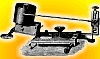
Maximilian Ruppert Franz von Frey was an Austrian physiologist who studied the sense of touch, providing the first comprehensive information about the cutaneous senses. He confirmed the existence of locations for heat, cold, pressure, and pain reception and studied differential sensitivities to each. He suggested a sensory receptor for each modality but later work showed these identifications to be incorrect.[Image: Sphygmograph used for pulse recording by Frey, 1891]
Maximilian Ruppert Franz von Frey was an Austrian physiologist who studied the sense of touch, providing the first comprehensive information about the cutaneous senses. He confirmed the existence of locations for heat, cold, pressure, and pain reception and studied differential sensitivities to each. He suggested a sensory receptor for each modality but later work showed these identifications to be incorrect.[Image: Sphygmograph used for pulse recording by Frey, 1891]
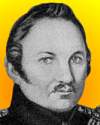
Died 25 Jan 1852 at age 72 (born 30 Aug 1779).
Russian explorer may have been the first to see the Antarctic mainland. He had served in the Russian navy since joining as a ten-year-old cadet in 1789. He was directed by Tsar Alexander I to explore Antartica, and set sail on 16 Jul 1819. Although the Antarctic Circle had been crossed was by Cook in 1773, Bellinghausen may have been the first to sight the Antarctic mainland, when he saw distant mountains on 28 Jan 1820. Between 17-19 Feb, he recorded seeing ice cliffs and ice-covered mountains, though he did not realize they were in fact a continental mainland. Similar sightings were also made at about the same time British naval captain Edward Bransfield and the American sealing captain Nathaniel Palmer sailing from other directions, so who was actually the first of them to see Antartarctica remains unclear.«
Russian explorer may have been the first to see the Antarctic mainland. He had served in the Russian navy since joining as a ten-year-old cadet in 1789. He was directed by Tsar Alexander I to explore Antartica, and set sail on 16 Jul 1819. Although the Antarctic Circle had been crossed was by Cook in 1773, Bellinghausen may have been the first to sight the Antarctic mainland, when he saw distant mountains on 28 Jan 1820. Between 17-19 Feb, he recorded seeing ice cliffs and ice-covered mountains, though he did not realize they were in fact a continental mainland. Similar sightings were also made at about the same time British naval captain Edward Bransfield and the American sealing captain Nathaniel Palmer sailing from other directions, so who was actually the first of them to see Antartarctica remains unclear.«
In 2006, the discovery of the world’s smallest vertebrate - the Paedocypris progenetica fish - was published in the Proceedings of the Royal Society of London, Series B. A tiny member of the carp family, the transparent fish was discovered in the highly acidic peat swamps of the Indonesian island of Sumatra. Mature females are only 7.9mm (3/10 in) in length; the males measure up to 8.6mm. The dark tea-coloured swamp waters in which they live have a pH of 3, which is 100 times more acidic than rainwater.
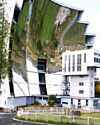
In 1977, France inaugurated its first operational solar generating plant at Odeillo in the Pyranees of southwestern France. Its output of 64 kilowatts (sufficient to power about 1,000 60-watt light bulbs), was connected to the national electricity grid to demonstrate operational solar power. The plant was part of the huge solar furnace project run by the National Center for Scientific Research. The site was built for high-temperature research using an eight-story parabolic mirror to refocus sunlight from an extensive field of mirrors on a hillside in front of it, with 63 moveable mirror arrays designed to follow the motion of the sun. The electricity was generated by a turbo-alternator driven by steam from a boiler at the focus of the reflected sunlight. Alignment of the mirrors began in May 1969.«*
In 1955, Columbia University scientists developed an atomic clock accurate to within one second in 300 years.
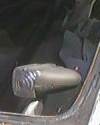
In 1952, the Autronic Eye, an automatic car headlamp beam control was introduced to the public by General Motors. A phototube atop the left end of the dashboard, just inside the windshield, dimmed the lights upon the approach of an oncoming car, and back to bright when the traffic had passed. It was offered on Oldsmobile and Cadillac cars. But automatic headlights tended to flicker erratically in response to minute fluctuations of light. In 1959, the name became the "Guide-Matic Power Headlight Control." General Motors had solved the problem with a new gadget: "With a twist of the dial autronic-eye lets you control the automatic dimming of your lights." Thus the driver could manually control an automatic device designed to eliminate the need for manual control.
In 1945, Grand Rapids, Mich., became the first U.S. city to begin fluoridating the drinking water. With the intention of reducing tooth decay, one part per million of fluoride was added to the water supply. Fluorine is the 13th most abundant element on earth, found in nature in its ionic form - fluoride - in combination with other elements, such as calcium, magnesium, phosphates etc. Thus fluoride is present in small yet varying amounts in almost all soil, water supplies, plants, and animals and, therefore, is a normal constituent of all diets. In mammals, the highest concentrations are found in the bones and teeth. Decades after the conclusion of the Grand Rapids fluoridation study, fluoride continues to be dental science's main weapon in the battle against tooth decay.
In 1915, the inventor of the telephone, Alexander Graham Bell, inaugurated transcontinental telephone service in the United States with a call made between New York City and San Francisco, Cal., which was answered by Dr. Watson, his longtime assistant. The previous long distance limit was New York to Denver, and only then with some shouting. Two metallic circuits made up the line; it used 2,500 tons of hard-drawn copper wire, 130,000 poles and countless loading coils. Three vacuum tube repeaters along the way boosted the signal. It was the world's longest telephone line. In a grand ceremony, 68 year old Alexander Graham Bell in New York City made the ceremonial first call to his old friend Thomas Watson in San Francisco.

In 1870, Gustavus Dows of Lowell, Mass. received his first patent (No. 99,170) for an "Improved Soda Fountain" being the vessel in which carbon dioxide was injected, both forming the soda-water beverage, and delivering the drink using the internal pressure. His improvement was to fit it with an internal perforated partition to improve aeration during oscillation. Earlier, he had had made the first ornamented soda fountain in the U.S. (1858), made from white Italian marble with spread eagles perched on the syrup cocks. He invented a double stream draft arm and cock, for a large or small stream (1862). From 1863, he made and sold soda fountains for $225 each. The first U.S. soda fountain patent was granted to Jacob Ebert and George Dulty (24 Apr 1833).
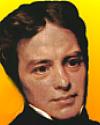
In 1839, Michael Faraday publicly announced for the first time the existence of photography as the subject of his Friday Evening Discourse at the Royal Institution. Faraday announced the “ Daguerreotype” and Henry Fox Talbot's “photogenic drawings” at the same time, and invited the audience to inspect the specimens displayed in the library. Talbot returned the following week to read a more detailed paper describing his process. Faraday had been instrumental in founding and sustaining (1826) the Friday Evening Discourse series of lectures which continue to this day.«[Image: Michael Faraday]
The Electric Life Of Michael Faraday, by Alan W. Hirshfeld. - book suggestion.
In 1799, a seed-planting device was patented by Eliakim Spooner of Vermont. The seeds were fed by gravity. The machine was not practical, however. The first truly practical seeding machine to be patented in the U.S. was invented by Joseph Gibbons of Adrian Mich, who received patent No. 1,731 on 25 Aug 1840. His machine combined a grain drill with cavities to deliver seed and a device for regulating the volume.
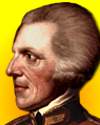
In 1798, Benjamin Thompson Count Rumford) presented a paper to the Royal Society, Enquiry concerning the Source of Heat which is excited by Friction, in which he presented the idea that heat represents a form of motion, as opposed to the prevailing idea of being a fluid. He had come to this conclusion from observation that the boring of cannon barrels produces heat from friction.




