1997
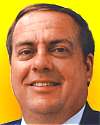
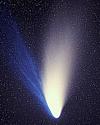
American astronomer and writer who independently co-discovered (with Thomas Bopp) the unusually bright Comet Hale-Bopp (23 Jul 1995), the farthest comet ever to be discovered by amateurs. After service in the navy, he worked at the Jet Propulsion Laboratory (1983-86) as an engineering contractor on several projects, including Voyager II. After earning a Ph.D. in astronomy, he founded the Southwest Institute for Space Research (now named the Earthrise Institute). His interests include near-Earth objects and their possible impact on Earth, and the search for planets outside our solar system. Hale advocates for improved science literacy in society; for better career opportunities for graduating scientists; and develops international collaboration for observation projects.«
Everybody’s Comet: A Layman’s Guide to Hale-Bopp, by Alan Hale. - book suggestion.
Born 7 Mar 1938. quotes
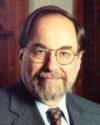
American biochemist and virologist who, at the age of 37, shared the Nobel Prize for Physiology or Medicine in 1975 with Howard M. Temin and Renato Dulbecco. Although the three scientists had made discoveries about ways in which tumour viruses and the genetic material in cells interact, Drs. Baltimore and Temin, working separately and using different approaches discovered retroviruses--viruses with an RNA genome. Diseases such as AIDS and feline leukemia are caused by retroviruses. That led to the isolation of the AIDS virus and to the development not only of many modern biological techniques but also the concept of oncogene--a gene that when mutated can produce uncontrolled cell proliferation.
American biochemist and virologist who, at the age of 37, shared the Nobel Prize for Physiology or Medicine in 1975 with Howard M. Temin and Renato Dulbecco. Although the three scientists had made discoveries about ways in which tumour viruses and the genetic material in cells interact, Drs. Baltimore and Temin, working separately and using different approaches discovered retroviruses--viruses with an RNA genome. Diseases such as AIDS and feline leukemia are caused by retroviruses. That led to the isolation of the AIDS virus and to the development not only of many modern biological techniques but also the concept of oncogene--a gene that when mutated can produce uncontrolled cell proliferation.
Born 7 Mar 1930.
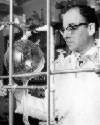
American chemist who made a series of famous experiments beginning in 1953, to determine the possible origin of life from inorganic chemicals on the primeval, just-formed earth. He passed electrical discharges (simulating thunderstorms) through mixtures of reducing gases, such as hydrogen, ammonia, methane and water, believed to have formed the earliest atmosphere. Analysis days later showed the resulting chemicals included glycine and alanine, the simplest amino acids, the basic building blocks of proteins. Other compounds included urea, aldehydes and carboxylic acids. Thus a "primeval soup" is the currently accepted most plausible explanation, though incomplete, of the origin of the complex organic molecules of life.
American chemist who made a series of famous experiments beginning in 1953, to determine the possible origin of life from inorganic chemicals on the primeval, just-formed earth. He passed electrical discharges (simulating thunderstorms) through mixtures of reducing gases, such as hydrogen, ammonia, methane and water, believed to have formed the earliest atmosphere. Analysis days later showed the resulting chemicals included glycine and alanine, the simplest amino acids, the basic building blocks of proteins. Other compounds included urea, aldehydes and carboxylic acids. Thus a "primeval soup" is the currently accepted most plausible explanation, though incomplete, of the origin of the complex organic molecules of life.
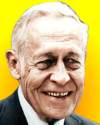
Born 7 Mar 1909; died 15 Jul 1991 at age 82. quotes
Roger Randall Dougan Revelle was an American oceanographer whose research interests integrated study of the sea with geography, geology, geophysics, and meteorology. After WW II, as a commander in the Naval Reserve, he supervised oceanographic measurements during the Operation Crossroads (1946) atom bomb tests off Bikini. In pioneering work in deep-sea drilling he measured the upward flow of heat through ocean floors. His tectonic studies in the Pacific Ocean helped advance the theory of ocean floor spreading. Although in 1955, he was not alarmed about using the oceans as a depository for radiactive wastes, Revelle expressed an early concern about global warming (1957) due to increasing carbon dioxide to the atmosphere.«
Roger Randall Dougan Revelle was an American oceanographer whose research interests integrated study of the sea with geography, geology, geophysics, and meteorology. After WW II, as a commander in the Naval Reserve, he supervised oceanographic measurements during the Operation Crossroads (1946) atom bomb tests off Bikini. In pioneering work in deep-sea drilling he measured the upward flow of heat through ocean floors. His tectonic studies in the Pacific Ocean helped advance the theory of ocean floor spreading. Although in 1955, he was not alarmed about using the oceans as a depository for radiactive wastes, Revelle expressed an early concern about global warming (1957) due to increasing carbon dioxide to the atmosphere.«
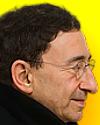
Born 7 Mar 1902; died 15 Nov 1964 at age 62. quotes
American forester and conservationist who was a co-founder of the Wilderness Society. From 1927, and during three decades with the U.S. Forest Service, his interests included soil conservation and watershed management. Bernard wrote on these topics in two books, including the title Water, Land and People (1951), with Anthony Netboy, which the cover described as: “The dramatic picture of our growing water famines and floods, the human consequences, and the possible remedies.” Lake Bernard Frank in Derwood, Maryland, was named in honor of his work leading the organization of Rock Creek Watershed Association to restore and protect Rock Creek in Maryland and Washington, D.C. From 1960, he was a professor at Colorado State University.«[Thumbnail as attempted by A.I. from unclear tiny face image in a group photo.] more
American forester and conservationist who was a co-founder of the Wilderness Society. From 1927, and during three decades with the U.S. Forest Service, his interests included soil conservation and watershed management. Bernard wrote on these topics in two books, including the title Water, Land and People (1951), with Anthony Netboy, which the cover described as: “The dramatic picture of our growing water famines and floods, the human consequences, and the possible remedies.” Lake Bernard Frank in Derwood, Maryland, was named in honor of his work leading the organization of Rock Creek Watershed Association to restore and protect Rock Creek in Maryland and Washington, D.C. From 1960, he was a professor at Colorado State University.«[Thumbnail as attempted by A.I. from unclear tiny face image in a group photo.] more
Our National Forests, by Bernard Frank. - book suggestion.
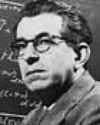
Born 7 Mar 1900; died 30 Mar 1954 at age 54.
German-American physicist who, with Walter Heitler, devised the first quantum mechanical treatment of the hydrogen molecule, while working with Erwin Schrödinger at the University of Zurich. In a seminal paper (1927), they developed a wave equation for the hydrogen molecule with which it was possible to calculate approximate values of the molecule's ionization potential, heat of dissociation, and other constants. These predicted values were reasonably consistent with empirical values obtained by spectroscopic and chemical means. This theory of the chemical binding of homopolar molecules is considered one of the most important advances in modern chemistry. The approach is later called the valence-bond theory.
German-American physicist who, with Walter Heitler, devised the first quantum mechanical treatment of the hydrogen molecule, while working with Erwin Schrödinger at the University of Zurich. In a seminal paper (1927), they developed a wave equation for the hydrogen molecule with which it was possible to calculate approximate values of the molecule's ionization potential, heat of dissociation, and other constants. These predicted values were reasonably consistent with empirical values obtained by spectroscopic and chemical means. This theory of the chemical binding of homopolar molecules is considered one of the most important advances in modern chemistry. The approach is later called the valence-bond theory.
Fritz London: A Scientific Biography, by Kostas Gavroglu. - book suggestion.
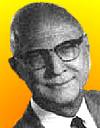
Born 7 Mar 1897; died 26 Nov 1987 at age 90.
American psychologist and practitioner of psychophysics, the quantitative measurement of subjective psychological phenomena (such sensation, personality, attention). For example, he studied the relative affectiveness of colour, hue, brightness, and saturation for men and women. In the 1950s, Guilford created his three-factor structure of the intellect (SOI). In Guilford's Structure of Intellect theory (1959) any intellectual activity is viewed as comprising three separate factors: 1) Operations - the things an individual does (ex. remembering, thinking creatively). 2) Contents - things that the individual works with and performs his operations on, (ex. words, sounds, body language). 3) Products - the ways in which information is organized (ex. singly, in groups, generalized).
American psychologist and practitioner of psychophysics, the quantitative measurement of subjective psychological phenomena (such sensation, personality, attention). For example, he studied the relative affectiveness of colour, hue, brightness, and saturation for men and women. In the 1950s, Guilford created his three-factor structure of the intellect (SOI). In Guilford's Structure of Intellect theory (1959) any intellectual activity is viewed as comprising three separate factors: 1) Operations - the things an individual does (ex. remembering, thinking creatively). 2) Contents - things that the individual works with and performs his operations on, (ex. words, sounds, body language). 3) Products - the ways in which information is organized (ex. singly, in groups, generalized).
Born 7 Mar 1886; died 15 Mar 1970 at age 84.
Wilson Dallam Wallis was an American anthropologist who spent a lifetime studying the cultures of the native New World. He began his career education at a time that anthropology had scarcely achieved the status of a profession, Yet, after earning his B.Sc. (Oxford, 1910), he spent summers of 1911-12 in Nova Scotia with the Canadian Micmac Indians and in summer 1914 with the Dakota Indians in Manitoba, while working towards his Ph.D. (1915). He was interested in intellectual aspects of religion, primitive science, human behavior and biology, linguistics, and archaeology. During WW I, as a 1st Lieutenant in the Sanitary Corps, he applied his interest in physical anthropology and accumulated much data on the physical measurements of army recruits. He published several books and made methodological contributions to cultural anthropology.«
Wilson Dallam Wallis was an American anthropologist who spent a lifetime studying the cultures of the native New World. He began his career education at a time that anthropology had scarcely achieved the status of a profession, Yet, after earning his B.Sc. (Oxford, 1910), he spent summers of 1911-12 in Nova Scotia with the Canadian Micmac Indians and in summer 1914 with the Dakota Indians in Manitoba, while working towards his Ph.D. (1915). He was interested in intellectual aspects of religion, primitive science, human behavior and biology, linguistics, and archaeology. During WW I, as a 1st Lieutenant in the Sanitary Corps, he applied his interest in physical anthropology and accumulated much data on the physical measurements of army recruits. He published several books and made methodological contributions to cultural anthropology.«
The Canadian Dakota, by Wilson D. Wallis. - book suggestion.
Born 7 Mar 1869; died c. 5 Mar 1944.
Dutch chemist who researched piezochemistry, electrochemical thermodynamics, polymorphism of compounds and the allotropy of metals, especially tin. He examined the different properties of tin's allotropes: white tin which is the familiar stable form above 13.2ºC and the powdery gray tin stable below that temperature. (The crumbling transition at low temperature is slow and called tin pest by Cohen. Because the cold transformation can be initiated or accelerated by seeding white tin with traces of grey tin, it is also known as tin disease, as if infected.) Cohen's life ended in the Auschwitz death camp following his arrest as a Jew by Nazi occupation forces in 1944. The exact date of his death is uncertain.«
Dutch chemist who researched piezochemistry, electrochemical thermodynamics, polymorphism of compounds and the allotropy of metals, especially tin. He examined the different properties of tin's allotropes: white tin which is the familiar stable form above 13.2ºC and the powdery gray tin stable below that temperature. (The crumbling transition at low temperature is slow and called tin pest by Cohen. Because the cold transformation can be initiated or accelerated by seeding white tin with traces of grey tin, it is also known as tin disease, as if infected.) Cohen's life ended in the Auschwitz death camp following his arrest as a Jew by Nazi occupation forces in 1944. The exact date of his death is uncertain.«
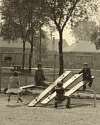
Born 7 Mar 1862; died 28 Jul 1937 at age 75.
American inventor known as the “Father of the American playground movement,” who introduced the first contemporary neighborhood playground in the U.S.Born to a wealthy Boston family, Lee believed that with fortune comes responsibility. To counter social problems of the time, he promoted recreation activities as nurturing experiences. A Boston charity, copying a German practice, established sand-pile play areas among the Boston tenements. In the early 1890's, Lee extended this idea by establishing his own playground for research and demonstration purposes. In speeches and articles Lee supported the spread of the playground movement across the U.S.
American inventor known as the “Father of the American playground movement,” who introduced the first contemporary neighborhood playground in the U.S.Born to a wealthy Boston family, Lee believed that with fortune comes responsibility. To counter social problems of the time, he promoted recreation activities as nurturing experiences. A Boston charity, copying a German practice, established sand-pile play areas among the Boston tenements. In the early 1890's, Lee extended this idea by establishing his own playground for research and demonstration purposes. In speeches and articles Lee supported the spread of the playground movement across the U.S.
Born 7 Mar 1857; died 14 Mar 1935 at age 78.
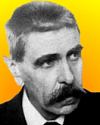
German chemist who won fame at the age of 25 for devising the synthesis of substituted pyridines. He studied stereochemistry of such nitrogen compounds. He synthesised pyridine (1882), cumaron (1886) and thiazol (1889) and he gave a nomenclature of heterocyclic compounds. His investigations of triphenylmethane coloring materials led to progress in the spectrographic analysis, and also the theory of chemical indicators. He was also noted for his study of acids, in which he showed their properties depended on reaction with a solvent; and the electrical conductivity of organic compounds. From 1907 he studied cryoscopy and UV-spectroscopy.
German chemist who won fame at the age of 25 for devising the synthesis of substituted pyridines. He studied stereochemistry of such nitrogen compounds. He synthesised pyridine (1882), cumaron (1886) and thiazol (1889) and he gave a nomenclature of heterocyclic compounds. His investigations of triphenylmethane coloring materials led to progress in the spectrographic analysis, and also the theory of chemical indicators. He was also noted for his study of acids, in which he showed their properties depended on reaction with a solvent; and the electrical conductivity of organic compounds. From 1907 he studied cryoscopy and UV-spectroscopy.
(EB)
Born 7 Mar 1857; died 27 Sep 1940 at age 83.
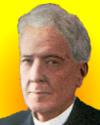
Austrian psychiatrist and neurologist whose made the first use of a shock therapy. He investigated the connections between thyroid function, goitre and cretinism. On his advice the Government, some time later, started selling salt with added iodine, in the areas most affected by goitre. His main life's work built on an earlier observation that certain nervous disorders improved in patients who had caught a fever-inducing illness. He applied this in the treatment of syphilitic meningoencephalitis, or general paresis, by deliberately inducing malaria (chosen because it could be controlled with quinine). The method brought a previously incurable fatal disease under medical control and earned him the 1927 Nobel Prize in Physiology or Medicine.
Austrian psychiatrist and neurologist whose made the first use of a shock therapy. He investigated the connections between thyroid function, goitre and cretinism. On his advice the Government, some time later, started selling salt with added iodine, in the areas most affected by goitre. His main life's work built on an earlier observation that certain nervous disorders improved in patients who had caught a fever-inducing illness. He applied this in the treatment of syphilitic meningoencephalitis, or general paresis, by deliberately inducing malaria (chosen because it could be controlled with quinine). The method brought a previously incurable fatal disease under medical control and earned him the 1927 Nobel Prize in Physiology or Medicine.
Born 7 Mar 1849; died 11 Apr 1926 at age 77. quotes
American naturalist and horticulturist who was a pioneer of plant breeding. At age 21, he produced the the Burbank potato. Thus he began a 55 year career, prodigiously producing useful varieties of fruits, flowers, vegetables, grains, and grasses. He had an ability to detect and nurture hybrids which he made from multiple crosses of foreign and native strains under suitable growing conditions. Basing his understanding upon his own observations, he believed in the Lamarckian idea of the inheritance of acquired characteristics. It was for others to develop the modern science of plant breeding based on the genetic theory. He developed more than 800 strains and varieties of plants, including the Freestone peach, and the Burbank potato (1871). more
American naturalist and horticulturist who was a pioneer of plant breeding. At age 21, he produced the the Burbank potato. Thus he began a 55 year career, prodigiously producing useful varieties of fruits, flowers, vegetables, grains, and grasses. He had an ability to detect and nurture hybrids which he made from multiple crosses of foreign and native strains under suitable growing conditions. Basing his understanding upon his own observations, he believed in the Lamarckian idea of the inheritance of acquired characteristics. It was for others to develop the modern science of plant breeding based on the genetic theory. He developed more than 800 strains and varieties of plants, including the Freestone peach, and the Burbank potato (1871). more
New Creations in Plant Life: An Authoritative Account of the Life and Work of Luther Burbank, by W. S. Harwood. - book suggestion.
tetracarbonylnickel
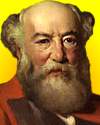
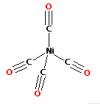
German-British chemist and industrialist who perfected a method of soda manufacture by improving the Solvay alkali process. Mond devised a process for the extraction of nickel when with his assistants, he accidentally discovered metal carbonyl compounds while investigating why nickel valves were corroded by carbon monoxide. Further research led to the synthesis of more metal carbonyls, which Lord Kelvin described as "metals with wings" and to the Mond nickel carbonyl process for refining nickel. The term "fuel cell" was coined in 1889 by Ludwig Mond and Charles Langer, who attempted to build the first practical device using air and industrial coal gas, to generate electricity by reacting hydrogen with oxygen. more
The Life of Ludwig Mond, by J. M Cohen. - book suggestion.
(EB)
Born 7 Mar 1837; died 20 Nov 1882 at age 45.
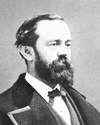
American physician and amateur astronomer who made the first photograph of the spectrum of a star (Vega), in 1872. He was also the first to photograph a nebula, the Orion Nebula, in 1880. For his photography of the transit of Venus in 1874, Congress ordered a gold medal struck in his honour. His father, John William Draper, in 1840 had made the first photograph of the Moon.
American physician and amateur astronomer who made the first photograph of the spectrum of a star (Vega), in 1872. He was also the first to photograph a nebula, the Orion Nebula, in 1880. For his photography of the transit of Venus in 1874, Congress ordered a gold medal struck in his honour. His father, John William Draper, in 1840 had made the first photograph of the Moon.
Born 7 Mar 1792; died 11 May 1871 at age 79. quotes
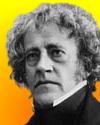
Sir John Frederick William Herschel was an English astronomer, chemist and chemist (1st Baronet), who, as a successor to his father Sir William Herschel, discovered a further 525 nebulae and clusters. John Herschel was a pioneer in celestial photography, and as a chemist contributed to the development of sensitized photographic paper (independently of Henry Talbot). In 1819, he discovered that sodium thiosulphate dissolved silver salts, as used in developing photographs. He introduced the terms positive image and negative image. Being diverse in his research, he also studied physical and geometrical optics, birefringence of crystals, spectrum analysis, and the interference of light and sound waves. To compare the brightness of stars, he invented the astrometer.
Sir John Frederick William Herschel was an English astronomer, chemist and chemist (1st Baronet), who, as a successor to his father Sir William Herschel, discovered a further 525 nebulae and clusters. John Herschel was a pioneer in celestial photography, and as a chemist contributed to the development of sensitized photographic paper (independently of Henry Talbot). In 1819, he discovered that sodium thiosulphate dissolved silver salts, as used in developing photographs. He introduced the terms positive image and negative image. Being diverse in his research, he also studied physical and geometrical optics, birefringence of crystals, spectrum analysis, and the interference of light and sound waves. To compare the brightness of stars, he invented the astrometer.
The Shadow of the Telescope: A Biography of John Herschel, by Günther Buttmann. - book suggestion.
Born 7 Mar 1765; died 5 Jul 1833 at age 68.
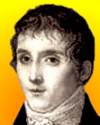
Joseph-Nicéphore Niepce was a French inventor who was the first to make a permanent photographic image. In 1807, with his brother Claude, he invented the pyréolophore, an internal combustion engine fueled by lycopodium powder. Although never practical, the engine was able to move a 2-m model boat upstream. By 1813, Niepce had taken up lithography, which led to his invention of photography. By letter, in May 1816, he told Claude of an apparatus that produced a (negative) image using a paper coated with silver chloride fixed with nitric acid. After further experimentation, by 1826, he achieved the first fixed positive image. Approaching bankruptcy, in 1829, he signed an agreement of cooperation with Daguerre.
Joseph-Nicéphore Niepce was a French inventor who was the first to make a permanent photographic image. In 1807, with his brother Claude, he invented the pyréolophore, an internal combustion engine fueled by lycopodium powder. Although never practical, the engine was able to move a 2-m model boat upstream. By 1813, Niepce had taken up lithography, which led to his invention of photography. By letter, in May 1816, he told Claude of an apparatus that produced a (negative) image using a paper coated with silver chloride fixed with nitric acid. After further experimentation, by 1826, he achieved the first fixed positive image. Approaching bankruptcy, in 1829, he signed an agreement of cooperation with Daguerre.
Born 7 Mar 1746; died 13 Nov 1802 at age 56.
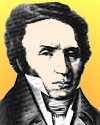
French explorer, botanist and silviculturist who wrote the first book on the forest trees of America. After studying under Bernard de Jussieu, beginning in 1779, he began a series of explorations searching for and classifying new species of plants in England, France and the Pyrenees. Becoming French Consul in Persia led to full-time botanical explorations there (1782-85). Next, he travelled in North America for the French government to send back tree species suitable to transplant for naval shipbuilding. Jefferson provided him with letters of introduction as a scientist. In 1796, he lost notes and specimens in a shipwreck off Egmont, Holland. In 1801, while exploring Madagascar his health failed from the exertion and he died of a tropical fever.
French explorer, botanist and silviculturist who wrote the first book on the forest trees of America. After studying under Bernard de Jussieu, beginning in 1779, he began a series of explorations searching for and classifying new species of plants in England, France and the Pyrenees. Becoming French Consul in Persia led to full-time botanical explorations there (1782-85). Next, he travelled in North America for the French government to send back tree species suitable to transplant for naval shipbuilding. Jefferson provided him with letters of introduction as a scientist. In 1796, he lost notes and specimens in a shipwreck off Egmont, Holland. In 1801, while exploring Madagascar his health failed from the exertion and he died of a tropical fever.

Died 7 Mar 1997 at age 84 (born 30 Aug 1912). quotes
American physicist who shared the 1952 Nobel Prize for Physics with Felix Bloch for independently developing nuclear magnetic resonance (NMR) in liquids and in solids. NMR has become widely used and powerful tool to study the molecular structure of pure materials and the composition of mixtures. The method detects and measures the magnetic fields of atomic nuclei.
American physicist who shared the 1952 Nobel Prize for Physics with Felix Bloch for independently developing nuclear magnetic resonance (NMR) in liquids and in solids. NMR has become widely used and powerful tool to study the molecular structure of pure materials and the composition of mixtures. The method detects and measures the magnetic fields of atomic nuclei.
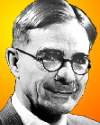
Died 7 Mar 1997 at age 92 (born 8 Nov 1904).
Dutch inventor who helped to transform aircraft construction by developing strong new lightweight materials and synthetic glues. In 1928, he joined Ernest Rutherford at his Cavendish Laboratory in atomic research. Subsequently developing an interest in flying, by 1934 he started his own company, Aero Research to research his invention of a new form of synthetic glue. The long-established casein glues used until then in the building of wooden aircraft were seriously affected in hot and humid conditions. His own revolutionary cantilever-wing “Snark” monoplane utilized his new bonding methods. Later, his metal-to-metal bonding of lightweight and very strong aluminium honeycomb aircraft structures were extensively used during WW II.[Born in Chile to Dutch parents. Educated and spent most of his life in England. Late in life emigrated and took American citizenship, but returned to England.]
Dutch inventor who helped to transform aircraft construction by developing strong new lightweight materials and synthetic glues. In 1928, he joined Ernest Rutherford at his Cavendish Laboratory in atomic research. Subsequently developing an interest in flying, by 1934 he started his own company, Aero Research to research his invention of a new form of synthetic glue. The long-established casein glues used until then in the building of wooden aircraft were seriously affected in hot and humid conditions. His own revolutionary cantilever-wing “Snark” monoplane utilized his new bonding methods. Later, his metal-to-metal bonding of lightweight and very strong aluminium honeycomb aircraft structures were extensively used during WW II.[Born in Chile to Dutch parents. Educated and spent most of his life in England. Late in life emigrated and took American citizenship, but returned to England.]
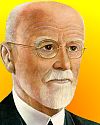
Died 7 Mar 1954 at age 92 (born 11 Aug 1861). quotes
American physician and clinical cardiologist who was the first to observe and describe sickle-cell anemia. In 1910, he reported an unusual case he had examined. The patient was a 20-year-old West Indies student, attending a dental school in Chicago. "His illness had begun with malaise, pain in the back, the muscles of the legs and arms. He had a slight fever and was pale... he had suffered from a bilious attack... had vomited and... somewhat short of breath." In a blood test, Herrick found "nucleated reds were numerous [normal red blood cells lack a nucleus], 74 being seen in a count of 200 leukocytes [white blood cells]. The shape of the reds was very irregular... [with a] large number of thin, elongated, sickle-shaped and crescent-shaped forms."
American physician and clinical cardiologist who was the first to observe and describe sickle-cell anemia. In 1910, he reported an unusual case he had examined. The patient was a 20-year-old West Indies student, attending a dental school in Chicago. "His illness had begun with malaise, pain in the back, the muscles of the legs and arms. He had a slight fever and was pale... he had suffered from a bilious attack... had vomited and... somewhat short of breath." In a blood test, Herrick found "nucleated reds were numerous [normal red blood cells lack a nucleus], 74 being seen in a count of 200 leukocytes [white blood cells]. The shape of the reds was very irregular... [with a] large number of thin, elongated, sickle-shaped and crescent-shaped forms."
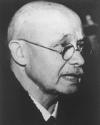
Died 7 Mar 1954 at age 78 (born 23 Jan 1876).
Otto Paul Hermann Diels was a German organic chemist who with Kurt Alder was awarded the Nobel Prize for Chemistry in 1950 for their joint work in developing a method of preparing cyclic organic compounds. His most important work concerned the diene synthesis, in which organic compounds with two carbon-to-carbon double bonds were used to effect syntheses of many cyclic organic substances under conditions that threw light on the molecular structure of the products obtained. This method was developed (1928) in collaboration with Kurt Alder, his student, and is known as the Diels-Alder reaction. Their work proved especially important in the production of synthetic rubber and plastics.
Otto Paul Hermann Diels was a German organic chemist who with Kurt Alder was awarded the Nobel Prize for Chemistry in 1950 for their joint work in developing a method of preparing cyclic organic compounds. His most important work concerned the diene synthesis, in which organic compounds with two carbon-to-carbon double bonds were used to effect syntheses of many cyclic organic substances under conditions that threw light on the molecular structure of the products obtained. This method was developed (1928) in collaboration with Kurt Alder, his student, and is known as the Diels-Alder reaction. Their work proved especially important in the production of synthetic rubber and plastics.
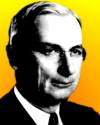
Died 7 Mar 1951 at age 77 (born 28 Dec 1873).
American nuclear chemist who was one of the first to investigate the structure and fusion reactions of the nucleus. In 1920, Harkins predicted the existence of the neutron, subsequently discovered by Edwin Chadwick's experiment. He made pioneering studies of nuclear reactions with Wilson cloud chambers. In the early 1930's, (with M.D. Kamen) he built a cyclotron. Harkins demonstrated that in neutron bombardment reactions the first step in neutron capture is the formation of an “excited nucleus” of measurable lifetime, which subsequently splits into fragments. He also suggested that subatomic energy might provide enough energy to power the Sun over its lifetime.«
American nuclear chemist who was one of the first to investigate the structure and fusion reactions of the nucleus. In 1920, Harkins predicted the existence of the neutron, subsequently discovered by Edwin Chadwick's experiment. He made pioneering studies of nuclear reactions with Wilson cloud chambers. In the early 1930's, (with M.D. Kamen) he built a cyclotron. Harkins demonstrated that in neutron bombardment reactions the first step in neutron capture is the formation of an “excited nucleus” of measurable lifetime, which subsequently splits into fragments. He also suggested that subatomic energy might provide enough energy to power the Sun over its lifetime.«
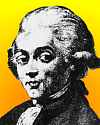
Died 7 Mar 1809 at age 55 (born 4 Jul 1753).
French balloonist who made the first aerial crossing of the English Channel. He was inspired by the demonstrations by Étienne and Jacques Montgolfier of hot-air balloon flying in Annonay, France. Blanchard made his first successful ascent on 2 Mar 1784 in a self-built balloon. On 7 Jan 1785, Blanchard and American physician, Dr. John Jeffries, made the first flight over the English Channel, from Dover to Calais.On 9 Jan 1793, Blanchard made the first balloon ascent in North America from the Washington Prison Yard in Philadelphia, PA, and landed in Gloucester County, NJ. Carrying the first airmail letter, this flight was observed by President George Washington.
French balloonist who made the first aerial crossing of the English Channel. He was inspired by the demonstrations by Étienne and Jacques Montgolfier of hot-air balloon flying in Annonay, France. Blanchard made his first successful ascent on 2 Mar 1784 in a self-built balloon. On 7 Jan 1785, Blanchard and American physician, Dr. John Jeffries, made the first flight over the English Channel, from Dover to Calais.On 9 Jan 1793, Blanchard made the first balloon ascent in North America from the Washington Prison Yard in Philadelphia, PA, and landed in Gloucester County, NJ. Carrying the first airmail letter, this flight was observed by President George Washington.
First Air Voyage in America, by Jean-Pierre Blanchard. - book suggestion.
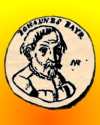
Died 7 Mar 1625 (born 1572).
German astronomer who cataloged the stars visible to the naked eye in his book Uranometria (1603). Therein, he established the convention, still in use, of naming each star in a constellation using one of the 24 lower-case Greek letters (known as the Bayer designation), such as Alpha Canis Majoris. This was the first star atlas to cover the entire celestial sphere. In one plate, he introduced twelve new southern constellations, which he named, inclusing Apus, Chamaeleon, Hydrus and Phoenix. Bayer's primary occupation was as a lawyer; he pursued astronomy as an amateur interest. When he dedicated his Uranometria to two leading citizens of Augsburg, where he lived, he received an honorarium of 150 gulden.«
German astronomer who cataloged the stars visible to the naked eye in his book Uranometria (1603). Therein, he established the convention, still in use, of naming each star in a constellation using one of the 24 lower-case Greek letters (known as the Bayer designation), such as Alpha Canis Majoris. This was the first star atlas to cover the entire celestial sphere. In one plate, he introduced twelve new southern constellations, which he named, inclusing Apus, Chamaeleon, Hydrus and Phoenix. Bayer's primary occupation was as a lawyer; he pursued astronomy as an amateur interest. When he dedicated his Uranometria to two leading citizens of Augsburg, where he lived, he received an honorarium of 150 gulden.«
Died 7 Mar 1274 (born c. 1225). quotes
Italian theologian who wrote commentaries on Aristotle. Following Aristotle’s definition of science as sure and evident knowledge obtained from demonstrations, Thomas defined science as the knowledge of things from their causes. In his major work, Summa, he distinguished between demonstrated truth (science) and revealed truth (faith). In some natural science he was insightful, such as: "In the same plant there is the two-fold virtue, active and passive, though sometimes the active is found in one and the passive in another, so that one plant is said to be masculine and the other feminine." In Summa, however, he made the erroneous observation that metals are formed by rays from the Sun, Moon, and planets, each governing a particular metal.«
Italian theologian who wrote commentaries on Aristotle. Following Aristotle’s definition of science as sure and evident knowledge obtained from demonstrations, Thomas defined science as the knowledge of things from their causes. In his major work, Summa, he distinguished between demonstrated truth (science) and revealed truth (faith). In some natural science he was insightful, such as: "In the same plant there is the two-fold virtue, active and passive, though sometimes the active is found in one and the passive in another, so that one plant is said to be masculine and the other feminine." In Summa, however, he made the erroneous observation that metals are formed by rays from the Sun, Moon, and planets, each governing a particular metal.«
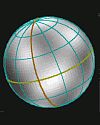
In 1996, the first surface photos of Pluto were released. Although the only solar-system planet never visited by spacecraft, it was successfully photographed by the Hubble Space Telescope. The release presented the images made in 1994, by a team of astronomers. To create a global map of the surface of Pluto, they took a total of 12 images at 4 distinct longitudes in visible light and 8 images in the ultraviolet. These covered nearly the entire surface of Pluto, taken as the planet rotated through a 6.4-day period. Pluto is revealed as a complex object, with more large-scale contrast than any planet, except Earth. The images also show almost a dozen distinctive albedo features, or provinces, never seen before.
The Pluto Files: The Rise and Fall of America's Favorite Planet, by Neil deGrasse. - book suggestion.
In 1979, scientists discovered a ring around Jupiter while examining photographs taken by the Voyager 1 spacecraft. The rings of Saturn had been known since 1610. Astronomers had recognized rings around Uranus in 1977.

Monopoly (board game), by Parker Brothers. - book suggestion.
In 1926, the first successful trans-Atlantic radio-telephone conversation took place, between New York City and London.
In 1911, the first coin-operated locker was patented by Willis S. Farnsworth. (U.S. No. 985,990)
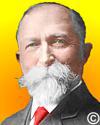
In 1897, Dr. John Kellogg served the world's first cornflakes to his patients at a sanatarium in Battle Creek, Mich. These were an unsweetened addition to the diets of his patients, who suffered from a variety of ailments, which he believed could be cured by a strict vegetarian diet and vigorous exercise. In 1906, his brother, Will Keith Kellogg, added sugar to the recipe and began marketing them as a breakfast food. Dr. Kellogg so thoroughly disapproved of this development that he sued Will in a fruitless attempt to keep the Kellogg name off of mass-produced breakfast cereals.
In 1883, Johann Kjeldahl reported to the Chemical Society of Copenhagen his procedure, still used in the present time and known as the Kjeldahl method. It enables the laboratory determination of the nitrogen content in organic compounds, and continues to be a practical procedure with great value for applications in agriculture, medicine and drug manufacture. While director of the Carlsberg laboratory (a research institution of the Carlsberg brewery), he devised the method to investigate the protein content of grain and its transformation during beer fermentation. His method replaced inexact and more cumbersome procedures.«
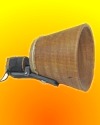
In 1876, Alexander Graham Bell patented an “Improvement in Telegraphy” (No.174,465) which established the principle of the telephone. He held earlier patents. One concerned the simultaneous transmission of two or more telegraphic signals along a single wire which utilized transmission of impulses at different rates to be received by different instruments each tuned to the pitch corresponding to one of the transmitting instruments. Another patent described ways of producing an alternately increasing and decreasing current without actually breaking the circuit. In this patent, he described a device to produce an undulatory current (similar to a sinusoidal wave form rather than the square wave of a pulsatory current) on the line wire.
The Telephone Patent Conspiracy of 1876: The Elisha Gray-Alexander Bell Controversy and Its Many Players, by A. Edward Evenson. - book suggestion.
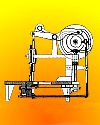
(USPTO)
In 1854, Charles Miller of St. Louis, Mo., patented the first U.S. sewing machine to stitch buttonholes (No. 10,609). His machine was adapted to sew the button-hole stitch, the whip-stitch, and the herring-bone stitch, by giving the cloth to be sewed "a movement laterally to the direction of the seam and in opposite directions, alternately, between every two stitches, in addition to the movement commonly given in the direction of the seam." For the button-hole stitch the movement in the direction of the seam is the distance of one thickness of thread, whereas that movement is greater for a whip-stitch. The herring bone stitch is made by taking all the stitches through. The first U.S. patent for any type of sewing machine dated back to 1842.
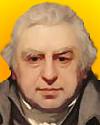
In 1799, the Royal Institution in England was founded at a meeting at the Soho Square house of the President of the Royal Society, Joseph Banks (1743-1820). A list was read of the names of fifty-eight gentlemen who had agreed to contribute fifty guineas each to be a Proprietor of a new Institution for diffusing the knowledge, and facilitating the general introduction, of useful mechanical inventions and inprovements; and for teaching, by courses of philosophical lectures and experiments, the application of science to the common purposes of life. A group of Proprietors met to discuss the Proposals for such an Institution put together in the previous weeks by Sir Benjamin Thompson Rumford.




