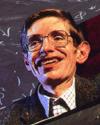
Born 8 Jan 1942; died 14 Mar 2018 at age 76. quotes
Stephen William Hawking was an English theoretical physicist and cosmologist was one of the world’s leaders in the fields of research in theoretical cosmology and quantum gravity. For 30 years from 1979, Hawking was the 17th Lucasian Professor of Mathematics at Cambridge University (a chair formerly held by Sir Isaac Newton). From age 21, he was afflicted with Lou Gehrig’s disease (amyotrophic lateral sclerosis; ALS), progressing slowly through his life, causing increasing paralysis until Hawking was confined to a wheelchair and was unable to speak without the aid of a computer voice synthesizer. Despite these challenges, he retained his intelligence, making remarkable contributions to cosmology (the study of the universe as a whole). He wrote A Brief History of Time.«
Stephen William Hawking was an English theoretical physicist and cosmologist was one of the world’s leaders in the fields of research in theoretical cosmology and quantum gravity. For 30 years from 1979, Hawking was the 17th Lucasian Professor of Mathematics at Cambridge University (a chair formerly held by Sir Isaac Newton). From age 21, he was afflicted with Lou Gehrig’s disease (amyotrophic lateral sclerosis; ALS), progressing slowly through his life, causing increasing paralysis until Hawking was confined to a wheelchair and was unable to speak without the aid of a computer voice synthesizer. Despite these challenges, he retained his intelligence, making remarkable contributions to cosmology (the study of the universe as a whole). He wrote A Brief History of Time.«
A Brief History of Time, by Stephen Hawking. - book suggestion.
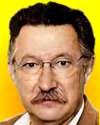
Born 8 Jan 1923; died 5 Mar 2008 at age 85. quotes
German engineer and computer scientist who is remembered for devising the computer program called Eliza, which could mimic human conversation, in written communication, giving the user responses as if an empathetic psychologist. It was named from Eliza Doolittle in My Fair Lady. His family emigrated to the U.S. in the mid-1930s, fleeing Nazi persecution of Jews in Germany. His career in computing led in 1955 to joining the team at General Electric that created the first computer system designed for banking applications. By 1976, in his book, Computer Power and Human Reason: From Judgment to Calculation, he was questioning what limits should be adopted in the implentation of artificial intelligence in computers.«
German engineer and computer scientist who is remembered for devising the computer program called Eliza, which could mimic human conversation, in written communication, giving the user responses as if an empathetic psychologist. It was named from Eliza Doolittle in My Fair Lady. His family emigrated to the U.S. in the mid-1930s, fleeing Nazi persecution of Jews in Germany. His career in computing led in 1955 to joining the team at General Electric that created the first computer system designed for banking applications. By 1976, in his book, Computer Power and Human Reason: From Judgment to Calculation, he was questioning what limits should be adopted in the implentation of artificial intelligence in computers.«
Computer Power and Human Reason: From Judgment to Calculation, by Joseph Weizenbaum. - book suggestion.
Born 8 Jan 1921; died 18 Sep 1994 at age 73.
American physician who contributed to the acceptance of the lifesaving CPR technique. In 1949-50, he evaluated the various methods of artificial ventilation with arm maneuvers and chest compressions used at the time, and found them to be of marginal benefit. Dr. James Elam published the first scientific paper (1956) showing that oxygen could be delivered into a non-breathing patient's lungs from a rescuer's exhaled breath, using a tube. Dr. Peter Safar followed with a simple gadget-free method, exhaling air directly into the mouth of a non-breathing person (1957). At the University of Southern California, quickly repeated the experiments in children. Within a year, these three doctors convinced the world to change artificial breathing methods.«
American physician who contributed to the acceptance of the lifesaving CPR technique. In 1949-50, he evaluated the various methods of artificial ventilation with arm maneuvers and chest compressions used at the time, and found them to be of marginal benefit. Dr. James Elam published the first scientific paper (1956) showing that oxygen could be delivered into a non-breathing patient's lungs from a rescuer's exhaled breath, using a tube. Dr. Peter Safar followed with a simple gadget-free method, exhaling air directly into the mouth of a non-breathing person (1957). At the University of Southern California, quickly repeated the experiments in children. Within a year, these three doctors convinced the world to change artificial breathing methods.«
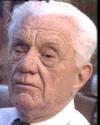
Born 8 Jan 1905; died 9 Nov 1997 at age 92. quotes
German-born U.S. philosopher who was one of the leaders of the Berlin school of logical positivism. The group viewed the task of science as that of showing phenomena to be the consequence of unbroken laws. He emigrated to the USA in 1937 because of Nazism.With Paul Oppenheim, he published an account of the deductive- nomological explanation. In this model, the explanation of a fact is reduced to a logical relationship between statements: the explanandum is a consequence of the explanans. This is a common method of logical positivism. Pragmatic aspects of explanation are not taken into consideration. Another feature is that an explanation requires scientific laws; facts are explained when they are subsumed under laws.
German-born U.S. philosopher who was one of the leaders of the Berlin school of logical positivism. The group viewed the task of science as that of showing phenomena to be the consequence of unbroken laws. He emigrated to the USA in 1937 because of Nazism.With Paul Oppenheim, he published an account of the deductive- nomological explanation. In this model, the explanation of a fact is reduced to a logical relationship between statements: the explanandum is a consequence of the explanans. This is a common method of logical positivism. Pragmatic aspects of explanation are not taken into consideration. Another feature is that an explanation requires scientific laws; facts are explained when they are subsumed under laws.
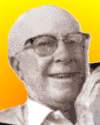
Born 8 Jan 1905; died 8 Jan 1998 at age 93.
American businessman who was working as an accountant for the Fleer Chewing Gum Co., when in 1928 he accidentally invented bubble gum while experimenting during his spare time with recipes for a chewing gum base. Fleer sold a test batch in a Philadelphia grocery store, which sold out in one afternoon. Diemer then taught Fleer salesmen how to blow bubbles, so they could demonstrate the product when they traveled from store to store selling the penny-a-piece gum. He later became senior vice president of Fleer. Almost 3/4 of a century later, Diemer still could not believe "all the bubble gum in the world came from my five-pound batch. It's the most popular confection in the world." Since the first batch, the pink colour is still standard.
American businessman who was working as an accountant for the Fleer Chewing Gum Co., when in 1928 he accidentally invented bubble gum while experimenting during his spare time with recipes for a chewing gum base. Fleer sold a test batch in a Philadelphia grocery store, which sold out in one afternoon. Diemer then taught Fleer salesmen how to blow bubbles, so they could demonstrate the product when they traveled from store to store selling the penny-a-piece gum. He later became senior vice president of Fleer. Almost 3/4 of a century later, Diemer still could not believe "all the bubble gum in the world came from my five-pound batch. It's the most popular confection in the world." Since the first batch, the pink colour is still standard.
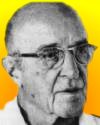
Born 8 Jan 1902; died 4 Feb 1987 at age 85. quotes
American psychologist who founded humanistic psychology. The non-directive or client-centered, approach to psychotherapy that he originated stresses the importance of a personal relationship between therapist and client. He further pioneered encounter group technique. In Client-Centered Therapy (1951), he suggested that by neutrally reflecting clients' feelings, the therapist can create an empathetic environment, in which patients regulate the direction, speed of their own growth and duration of treatment. His methods greatly influenced the course of psychotherapy.
American psychologist who founded humanistic psychology. The non-directive or client-centered, approach to psychotherapy that he originated stresses the importance of a personal relationship between therapist and client. He further pioneered encounter group technique. In Client-Centered Therapy (1951), he suggested that by neutrally reflecting clients' feelings, the therapist can create an empathetic environment, in which patients regulate the direction, speed of their own growth and duration of treatment. His methods greatly influenced the course of psychotherapy.
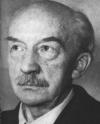
Born 8 Jan 1891; died 8 Feb 1957 at age 66. quotes
Walther Wilhelm Georg Franz Bothe was a German physicist who developed the coincidence method of detecting the emission of electrons by x-rays in which electrons passing through two adjacent Geiger tubes at almost the same time are registered as a coincidental event. He used it to show that momentum and energy are conserved at the atomic level. In 1929 he applied the method to the study of cosmic rays and was able to show that they consisted of massive particles rather than photons. This research brought him a share (with Max Born) in the Nobel Prize for 1954. In 1930, he observed a strange radiation emitted from beryllium when it was exposed to alpha particles, later identified by Chadwick as consisting of neutrons. He built Germany's first cyclotron (1943).
Walther Wilhelm Georg Franz Bothe was a German physicist who developed the coincidence method of detecting the emission of electrons by x-rays in which electrons passing through two adjacent Geiger tubes at almost the same time are registered as a coincidental event. He used it to show that momentum and energy are conserved at the atomic level. In 1929 he applied the method to the study of cosmic rays and was able to show that they consisted of massive particles rather than photons. This research brought him a share (with Max Born) in the Nobel Prize for 1954. In 1930, he observed a strange radiation emitted from beryllium when it was exposed to alpha particles, later identified by Chadwick as consisting of neutrons. He built Germany's first cyclotron (1943).
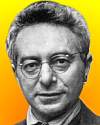
Born 8 Jan 1888; died 27 Jan 1972 at age 84. quotes
German-American mathematician who, upon joining the faculty of New York University in 1934, began to build the nucleus of a small research group based on the Göttingen model he had experienced as a student of David Hilbert in Germany. Courant's published papers were in variational problems, finite difference methods, minimal surfaces, and partial differential equations. He encouraged the publication of mathematical texts and high quality monographs, such as Methods of Mathematical Physics by Courant and Hilbert. His leadership was commemorated in 1964 when the institute he founded was named the Courant Institute of Mathematical Sciences at New York University.«
German-American mathematician who, upon joining the faculty of New York University in 1934, began to build the nucleus of a small research group based on the Göttingen model he had experienced as a student of David Hilbert in Germany. Courant's published papers were in variational problems, finite difference methods, minimal surfaces, and partial differential equations. He encouraged the publication of mathematical texts and high quality monographs, such as Methods of Mathematical Physics by Courant and Hilbert. His leadership was commemorated in 1964 when the institute he founded was named the Courant Institute of Mathematical Sciences at New York University.«
What Is Mathematics? An Elementary Approach to Ideas and Methods, by Richard Courant, et al. - book suggestion.
Born 8 Jan 1881; died 15 Jan 1970 at age 89. quotes
American manufacturer of small aircraft, best known for the Piper Cub, a two-seater that became the most popular family aircraft. He earned the sobriquet "the Henry Ford of Aviation" for his efforts to popularize air travel. In WW II, Piper delivered more than 5,600 Piper Cubs, long popular as a training plane, to the U.S. government for use as special personnel planes, for photoreconnaissance, and as artillery spotters. Because of their low landing speed, 20 mph (32 kph) and high maneuverability, the Pipers easily eluded enemy fighters. In addition to the Piper Cub, the company manufactured light to medium-sized aircraft for use as business planes.
American manufacturer of small aircraft, best known for the Piper Cub, a two-seater that became the most popular family aircraft. He earned the sobriquet "the Henry Ford of Aviation" for his efforts to popularize air travel. In WW II, Piper delivered more than 5,600 Piper Cubs, long popular as a training plane, to the U.S. government for use as special personnel planes, for photoreconnaissance, and as artillery spotters. Because of their low landing speed, 20 mph (32 kph) and high maneuverability, the Pipers easily eluded enemy fighters. In addition to the Piper Cub, the company manufactured light to medium-sized aircraft for use as business planes.
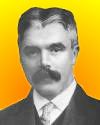
Born 8 Jan 1868; died 25 May 1939 at age 71. quotes
Frank Watson Dyson was a British astronomer, educated at Cambridge, who spent his entire career (except for 5 years in Edinburgh) at the Royal Greenwich Observatory, where he was Astronomer Royal from 1910-33. He directed measurements of terrestrial magnetism, latitude, and time, and he initiated the radio broadcast of time. He determined proper motions of northern stars and completed his portion of the international Carte du Ciel project of photographing the entire sky. Dyson is best known for directing (with Eddington) the 1919 eclipse expedition which confirmed the bending of starlight by the sun's gravitational field. This bending of light, predicted by Einstein, was evidence supporting his general theory of relativity.
Frank Watson Dyson was a British astronomer, educated at Cambridge, who spent his entire career (except for 5 years in Edinburgh) at the Royal Greenwich Observatory, where he was Astronomer Royal from 1910-33. He directed measurements of terrestrial magnetism, latitude, and time, and he initiated the radio broadcast of time. He determined proper motions of northern stars and completed his portion of the international Carte du Ciel project of photographing the entire sky. Dyson is best known for directing (with Eddington) the 1919 eclipse expedition which confirmed the bending of starlight by the sun's gravitational field. This bending of light, predicted by Einstein, was evidence supporting his general theory of relativity.
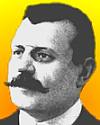
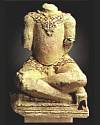
French archaeologist who was an authority on Gallo-Roman and Celtic coins. He wrote Le Manuel d'archéologie préhistorique, celtique et gallo-romaine (1908-14) about the pre-history of France. With his uncle, J.-G. Bulliot, Déchelette excavated Gallic ruins of Bibracte at Mont Beuvray, the only oppidum (a fortified city) in Gaul where the excavations have been sufficiently extended to give an idea of what a Gallic fortified city looked like in the first century B.C. He described his findings in L'Oppidum de Bibracte (1903) which retraces the history of this oppidum and describes what the organisation of the city was: the craft area, the residential area (druids and knights' houses), the place of worship and the wide market place.[Image right: Beuvray relic (source) ]
Born 8 Jan 1823; died 7 Nov 1913 at age 90. quotes
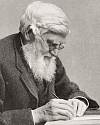
English naturalist and biogeographer who studied the distribution of organisms. He was the first westerner to describe some of the most interesting natural habitats in the tropics. He is best known for devising a theory of the origin of species through natural selection made independently of Darwin. Between 1854 and 1862, Wallace assembled evidence in the Malay Archipelago, sending his conclusions to Darwin in England. Their findings were presented to the Linnaean Society in 1858. Wallace found that Australian species were more primitive, in evolutionary terms, than those of Asia, and that this reflected the stage at which the two continents had become separated. He proposed an imaginary line (now known as Wallace's line) dividing the fauna of the two regions.
English naturalist and biogeographer who studied the distribution of organisms. He was the first westerner to describe some of the most interesting natural habitats in the tropics. He is best known for devising a theory of the origin of species through natural selection made independently of Darwin. Between 1854 and 1862, Wallace assembled evidence in the Malay Archipelago, sending his conclusions to Darwin in England. Their findings were presented to the Linnaean Society in 1858. Wallace found that Australian species were more primitive, in evolutionary terms, than those of Asia, and that this reflected the stage at which the two continents had become separated. He proposed an imaginary line (now known as Wallace's line) dividing the fauna of the two regions.
The Heretic in Darwin's Court: The Life of Alfred Russel Wallace, by Ross A. Slotten. - book suggestion.
Born 8 Jan 1587; died c. 1615.
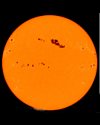
Dutch astronomer who was perhaps the first to observe sunspots. On 9 Mar 1611, at dawn, Johannes directed his telescope at the rising sun and saw several dark spots on it. He called his father to investigate this new phenomenon with him. The brightness of the Sun's center was very painful, and the two quickly switched to a projection method by means of a camera obscura. Johannes was the first to publish information on such observations. He did so in his Narratio de maculis in sole observatis et apparente earum cum sole conversione. ("Narration on Spots Observed on the Sun and their Apparent Rotation with the Sun"), the dedication of which was dated 13 Jun 1611. He died aged 29.
Dutch astronomer who was perhaps the first to observe sunspots. On 9 Mar 1611, at dawn, Johannes directed his telescope at the rising sun and saw several dark spots on it. He called his father to investigate this new phenomenon with him. The brightness of the Sun's center was very painful, and the two quickly switched to a projection method by means of a camera obscura. Johannes was the first to publish information on such observations. He did so in his Narratio de maculis in sole observatis et apparente earum cum sole conversione. ("Narration on Spots Observed on the Sun and their Apparent Rotation with the Sun"), the dedication of which was dated 13 Jun 1611. He died aged 29.

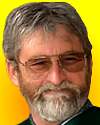
Died 8 Jan 2020 at age 79 (born 24 Jan 1940). quotes
English-American paleontologist renowned for his pioneering studies in functional morphology and evolutionary adaptation. Earning his Ph.D. from Cambridge in 1966 on brachiopod paleobiology, he revealed new insights into shell structure and organismal function. Cowen’s innovative work on trilobite vision proposed unique stereoscopic capabilities in extinct arthropods. His creative analogies—such as comparing crinoid feeding to banana harvesting—advanced understanding of form and function. A gifted teacher and author of History of Life (1976), he inspired generations of students. Cowen’s curiosity, clarity, and enthusiasm left a lasting mark on paleontology and science education. From 1967, he spent his life’s teaching career at University of California, Davis.«
English-American paleontologist renowned for his pioneering studies in functional morphology and evolutionary adaptation. Earning his Ph.D. from Cambridge in 1966 on brachiopod paleobiology, he revealed new insights into shell structure and organismal function. Cowen’s innovative work on trilobite vision proposed unique stereoscopic capabilities in extinct arthropods. His creative analogies—such as comparing crinoid feeding to banana harvesting—advanced understanding of form and function. A gifted teacher and author of History of Life (1976), he inspired generations of students. Cowen’s curiosity, clarity, and enthusiasm left a lasting mark on paleontology and science education. From 1967, he spent his life’s teaching career at University of California, Davis.«
History of Life, by Richard Cowen. - book suggestion.
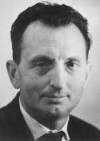
Died 8 Jan 2002 at age 85 (born 11 Jul 1916).
Aleksandr Mikhaylovich Prokhorov is the Soviet physicist who received, (with Nikolay G. Basov, USSR and Charles H. Townes, US), the Nobel Prize for Physics in 1964 "for fundamental work in the field of quantum electronics, which has led to the construction of oscillators and amplifiers based on the maser-laser principle." "Maser" stands for "microwave amplification by stimulated emission of radiation." An amplification can occur only if the stimulated emission is larger than the absorption, requiring that there should be more atoms in a high energy state than in a lower one. This state is called an inverted population. Prokhorov had researched the maser independently but simultaneously with the other prize recipients.
Aleksandr Mikhaylovich Prokhorov is the Soviet physicist who received, (with Nikolay G. Basov, USSR and Charles H. Townes, US), the Nobel Prize for Physics in 1964 "for fundamental work in the field of quantum electronics, which has led to the construction of oscillators and amplifiers based on the maser-laser principle." "Maser" stands for "microwave amplification by stimulated emission of radiation." An amplification can occur only if the stimulated emission is larger than the absorption, requiring that there should be more atoms in a high energy state than in a lower one. This state is called an inverted population. Prokhorov had researched the maser independently but simultaneously with the other prize recipients.
Died 8 Jan 1998 at age 93 (born 8 Jan 1905).
American businessman who was working as an accountant for the Fleer Chewing Gum Co., when in 1928 he accidentally invented bubble gum while experimenting during his spare time with recipes for a chewing gum base. Fleer sold a test batch in a Philadelphia grocery store, which sold out in one afternoon. Diemer then taught Fleer salesmen how to blow bubbles, so they could demonstrate the product when they traveled from store to store selling the penny-a-piece gum. He later became senior vice president of Fleer. Almost 3/4 of a century later, Diemer still could not believe "all the bubble gum in the world came from my five-pound batch. It's the most popular confection in the world." Since the first batch, the pink colour is still standard.
American businessman who was working as an accountant for the Fleer Chewing Gum Co., when in 1928 he accidentally invented bubble gum while experimenting during his spare time with recipes for a chewing gum base. Fleer sold a test batch in a Philadelphia grocery store, which sold out in one afternoon. Diemer then taught Fleer salesmen how to blow bubbles, so they could demonstrate the product when they traveled from store to store selling the penny-a-piece gum. He later became senior vice president of Fleer. Almost 3/4 of a century later, Diemer still could not believe "all the bubble gum in the world came from my five-pound batch. It's the most popular confection in the world." Since the first batch, the pink colour is still standard.
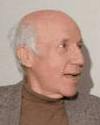
1986
Died 8 Jan 1997 at age 85 (born 8 Apr 1911). quotes
Melvin Ellis Calvin was an American biochemist who was awarded the 1961 Nobel Prize in Chemistry for furthering our knowledge of the mechanism of photosynthesis. In the Calvin Cycle, he described the “dark reactions” of photosynthesis occuring in green plants through the night turning carbon dioxide into sugar. Using carbon-14 isotope as a tracer in carbon dioxide, Calvin and his team identified the complete route as the carbon atom travels through a plant during photosynthesis, from the absorption of atmospheric carbon dioxide to its incorporation into carbohydrates and other organic compounds. With his group, Calvin showed that the sunlight acts on the chlorophyll molecules in a plant, and not on the carbon dioxide (as had been previously believed).«
Melvin Ellis Calvin was an American biochemist who was awarded the 1961 Nobel Prize in Chemistry for furthering our knowledge of the mechanism of photosynthesis. In the Calvin Cycle, he described the “dark reactions” of photosynthesis occuring in green plants through the night turning carbon dioxide into sugar. Using carbon-14 isotope as a tracer in carbon dioxide, Calvin and his team identified the complete route as the carbon atom travels through a plant during photosynthesis, from the absorption of atmospheric carbon dioxide to its incorporation into carbohydrates and other organic compounds. With his group, Calvin showed that the sunlight acts on the chlorophyll molecules in a plant, and not on the carbon dioxide (as had been previously believed).«
Melvin Calvin: Following the Trail of Light: A Scientific Odyssey, by Melvin Calvin. - book suggestion.
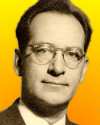
Died 8 Jan 1980 at age 72 (born 30 Aug 1907).
American engineer and physicist, who with John P. Eckert invented (1946) the Electronic Numerical Integrator and Computer (ENIAC), the first general-purpose electronic computer. Mauchly initially conceived of the computer's architecture, and Eckert possessed the engineering skills to bring the idea to life. ENIAC was developed (1946) for the US Army Ordnance Department as what was probably the first general-purpose electronic computer. It was a vast machine, consuming 100 kW of electric power and containing 18,000 electronic valves. Their successful UNIVAC computer (1951) was the first commercial computer, and introduced magnetic tape for programming.
American engineer and physicist, who with John P. Eckert invented (1946) the Electronic Numerical Integrator and Computer (ENIAC), the first general-purpose electronic computer. Mauchly initially conceived of the computer's architecture, and Eckert possessed the engineering skills to bring the idea to life. ENIAC was developed (1946) for the US Army Ordnance Department as what was probably the first general-purpose electronic computer. It was a vast machine, consuming 100 kW of electric power and containing 18,000 electronic valves. Their successful UNIVAC computer (1951) was the first commercial computer, and introduced magnetic tape for programming.
ENIAC: The Triumphs and Tragedies of the World's First Computer, by Scott McCartney. - book suggestion.
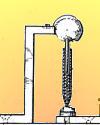
Crystal detector
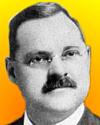
American electrical engineer whose invention of the crystal detector was one of the first devices widely used for receiving radio broadcasts (a key component, until superseded by the triode vacuum tube, and later the transistor). His patent of 20 Nov 1906 described it as “a means for receiving intelligence communicated by electric waves.” He was also one of the first scientists to demonstrate the wireless electromagnetic transmission of speech. In 1899, he transmitted a spoken message over a distance of ten miles. Pickard conducted numerous experiments to determine the effect of the sun and sunspots on radio. In his study of the polarisation of radio waves, he contributed to development of the direction finder, and noted as early as 1908 that errors in reading radio compasses might be caused by buildings, trees and other objects. more
c.1887
Died 8 Jan 1952 at age 85 (born 21 Mar 1866). quotes
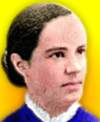
Antonia Coetana de Paiva Pereira Maury was an American astronomer whose painstaking classifications of stars by their spectra included elaborate work on 681 bright stars of the northern skies published in Annals of Harvard College Observatory (1896), a significant early catalog. Yet she was unappreciated by her observatory director, Edward C. Pickering. Her work was important in Ejnar Hertzsprung's verification of the distinction between dwarf stars and giant stars, as now seen in the Hertzsprung-Russell diagram. After Pickering discovered the first spectroscopic binary star, Mizar, she was first to measure its period, 104 days. In 1889, she herself identified the second binary star, Beta Aurigae, with a period of about 4 days. Antonia was the niece of astronomer Henry Draper, and the granddaughter of John William Draper who pioneered in the use of photography in astronomy.«
Antonia Coetana de Paiva Pereira Maury was an American astronomer whose painstaking classifications of stars by their spectra included elaborate work on 681 bright stars of the northern skies published in Annals of Harvard College Observatory (1896), a significant early catalog. Yet she was unappreciated by her observatory director, Edward C. Pickering. Her work was important in Ejnar Hertzsprung's verification of the distinction between dwarf stars and giant stars, as now seen in the Hertzsprung-Russell diagram. After Pickering discovered the first spectroscopic binary star, Mizar, she was first to measure its period, 104 days. In 1889, she herself identified the second binary star, Beta Aurigae, with a period of about 4 days. Antonia was the niece of astronomer Henry Draper, and the granddaughter of John William Draper who pioneered in the use of photography in astronomy.«
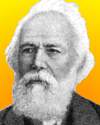
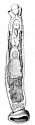
Belgian parasitologist and paleontologist who discovered the life cycle of tapeworms (Cestoda). In the earlier part of his career he directed his attention especially to invertebrates and particularly to marine invertebrates. In 1843 he established at his own expense a marine laboratory and an aquarium to further enable his studies, and this is believed to have been one of the earliest if not actually the first example of a place of study of its kind in the world. Associated with this part of his work were his classical studies in connection with parasitic worms. He expanded his studies to cetacea, living and extinct, and examined a number of bones of fossil whales uncovered by excavations during construction of fortifications for Antwerp.«[Image right: Udonella caligorum(source) ]
Died 8 Jan 1825 at age 59 (born 8 Dec 1765). quotes
American inventor, mechanical engineer, and manufacturer, who invented the cotton gin and developed the idea and methods for mass-production of interchangeable parts. The cotton gin is a machine that separates cotton fibre from the seeds. The device, patented in 1793, greatly stimulated cotton growing in the southern USA. Whitney subsequently turned to firearms manufacture, into which he introduced the notion of interchangeable parts. This he applied in his fulfilment of a US government contract (1797) to supply muskets. Whitney manufactured these in standardized parts for reassembly, meaning that for the first time worn parts could be replaced by spares rather than requiring special replacements to be made.
American inventor, mechanical engineer, and manufacturer, who invented the cotton gin and developed the idea and methods for mass-production of interchangeable parts. The cotton gin is a machine that separates cotton fibre from the seeds. The device, patented in 1793, greatly stimulated cotton growing in the southern USA. Whitney subsequently turned to firearms manufacture, into which he introduced the notion of interchangeable parts. This he applied in his fulfilment of a US government contract (1797) to supply muskets. Whitney manufactured these in standardized parts for reassembly, meaning that for the first time worn parts could be replaced by spares rather than requiring special replacements to be made.
Died 8 Jan 1704 at age 60 (born 3 Sep 1643).
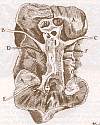
Italian physician and anatomist who described the collecting, or excretory, tubules of the kidney, known as Bellini's ducts (tubules). Bellini is considered a founder of Italian iatromechanism, a pioneer in applying mechanical philosophy to the functions of the human body. His early interests were anatomy and physiology. The first essay he published, Exercitatio anatomica de usu renum (1662), contains his anatomical discovery that in the supposedly unorganized parenchyma there is a complicated structure composed of fibers, open spaces, and densely packed tubules opening into the pelvis of the kidney. His further publications extended his effort to explain all important physiological phenomena according to the law of mechanics. (Several discoveries previously ascribed to Lorenzo Bellini were made earlier by Bartolomeo Eustachi.)Image: kidney structure as drawn by Bellini
Italian physician and anatomist who described the collecting, or excretory, tubules of the kidney, known as Bellini's ducts (tubules). Bellini is considered a founder of Italian iatromechanism, a pioneer in applying mechanical philosophy to the functions of the human body. His early interests were anatomy and physiology. The first essay he published, Exercitatio anatomica de usu renum (1662), contains his anatomical discovery that in the supposedly unorganized parenchyma there is a complicated structure composed of fibers, open spaces, and densely packed tubules opening into the pelvis of the kidney. His further publications extended his effort to explain all important physiological phenomena according to the law of mechanics. (Several discoveries previously ascribed to Lorenzo Bellini were made earlier by Bartolomeo Eustachi.)Image: kidney structure as drawn by Bellini
Died 8 Jan 1642 at age 77 (born 15 Feb 1564). quotes
Italian natural philosopher who applied the new techniques of the scientific method to make significant discoveries in physics and astronomy. His great accomplishments include perfecting (though not inventing) the telescope and consequent contributions to astronomy. He studied the science of motion, inertia, the law of falling bodies, and parabolic trajectories. His formulation of the scientific method parallel the writings of Francis Bacon. His progress came at a price, when his ideas were in conflict with religious dogma.
Italian natural philosopher who applied the new techniques of the scientific method to make significant discoveries in physics and astronomy. His great accomplishments include perfecting (though not inventing) the telescope and consequent contributions to astronomy. He studied the science of motion, inertia, the law of falling bodies, and parabolic trajectories. His formulation of the scientific method parallel the writings of Francis Bacon. His progress came at a price, when his ideas were in conflict with religious dogma.
Galileo: A Life, by James Reston. - book suggestion.
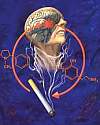
In 1998, scientists announced the identification for the first time of a key brain chemical related to nicotine addiction, in the journal Nature. The researchers worked at the Pasteur Institute in Paris, Karolinska Institute in Stockholm and the research arm of Glaxo-Wellcome in Geneva. The addictive nature of nicotine is related to release of dopamine, a neurotransmitter chemical in the brain. The scientists had found the first of 11 subunits, or molecules, of the nicotine receptor in the brain of mice. Mutant mice lacking the b2 subunit in their brains did not react to nicotine. Humans have the same so-called b2 subunit. This is a step toward to designing a drug to block the receptor, and produce new smoking-cessation drugs.«

Jacques Cousteau's Calypso, by Jacques Yves Cousteau. - book suggestion.
In 1940, George Stibitz's Complex Number Calculator was functional. He was a research mathematician
at Bell Laboratories, who worked on its construction from Apr 1939, assisted by Samuel Williams. Later known as Bell Labs Model I Relay Computer, it used telephone relays and coded decimal numbers as groups of four binary digits (bits) each. It has been called the first electromechanical computer for routine use. A demonstration of its ability in remote computing was given on 11 Sep 1940, when messages were exchanged by phone lines between teletypewriter operators. Calculations suggested by attendees of the American Mathematical Society's meeting at Dartmouth College, Hanover, New Hampshire were communicated to an attendant at the keyboard of Stibitz's calculator in New York.«
In 1938, the superfluidity of liquid helium at a temperature near absolute zero was reported in the journal Nature. Two articles were published together since the discovery had been made independently by both P.L. Kapitza in Moscow, Russia, and also by Jack Allen with Don Misener in Cambridge, England. Kapitza was eventually awarded a share of the Nobel Prize in Physics in 1978 for his inventions and discoveries in the area of low-temperature physics.«
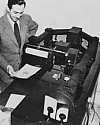
In 1935, the first U.S. patent for a spectrophotometer was issued to Professor Arthur Cobb Hardy of Wellesley, Mass. (No. 1,987,441) which he called a “photometric apparatus.” It could detect two million different shades of colour and make a permanent record chart of the results. The patent was assigned to the General Electric Company of Schenectady, N.Y. which sold the first machine on 24 May 1935. It used a photo-electric device to receive light alternately from a sample and from a standard for comparison. It eliminated any need for the two beams (from sample and from standard) to travel different optical paths which in previous designs could introduce inaccuracies if one path varied from the other.«[Image: a "GE-Hardy" double-beam recording spectrophotometer photographed in 1938 showing Walt Disney with the instrument at his studios.]
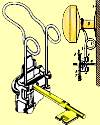
In 1894, Black American inventor Fredrick J. Loudin was issued a U.S. patent for a "Key Fastener" (No.512,308). The invention was a device designed to attach to the knob-shaft or door-handle above the key-hole and fasten the door key in place in the lock by engaging with the eyed-end of the key to keep it from being turned in the lock. As the patent described, this would prevent disengaging the key, as might otherwise be done by a burglar from the outside of the door with some suitable implement, inserted through the key-hole. Loudin's first patent was issued 12 Dec 1892 for a window "Fastener for the Meeting Rails of Sashes" that permitted the window to be locked either closed or partially opened (No. 510,432).
The Inventive Spirit of African Americans: Patented Ingenuity, by Patricia Carter Sluby. - book suggestion.
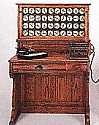
In 1889, Dr. Herman Hollerith received the first US patents for a tabulating machine (No. 395,781, -2, -3) which he called the "Art of Compiling Statistics". His system was designed to record separate statistical items by means of combinations of holes in a punched card to carry information about an individual. The information contained on numerous cards could then be tallied by passing the cards through electrical counters operated by electromagnets. The patent described its application in compilation of the statistics of the population for the U.S. Census. The first extensive application of this system was for the 1890 census counting data items such as age, sex, occupation, etc., of which tallies could be made in combinations such as how many males of certain ages.
Herman Hollerith: Forgotten Giant of Information Processing, by Geoffrey Austrian. - book suggestion.

In 1884, the first U.S. patents for tanning hides and skins through the action of a metallic salt were issued to Augustus Schultz of New York City. His invention of a chrome tanning process enabled leather to be tanned thinner and stronger than by vegetable tanning. (Nos. 291,784 and -5)
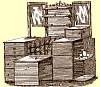
In 1872, a second U.S. patent was issued to Black American inventor Thomas Elkins for a a new article of chamber furniture which he designated a "Chamber Commode" (No. 122,518). It provides a combination of "a bureau, mirror, book-rack, washstand, table, easy-chair, and earth-closet or chamber-stool," which might otherwise be constructed as several separate articles. Previously, a patent had been issued to Elkins on 22 Feb 1870 for a "Dining, Ironing Table and Quilting Frame Combined" (No. 100,020). Another patent was subsequently issued on 11 Apr 1879 for a "Refrigerating Apparatus" for "food or corpses," which provides a convenient container and method of chilling using the evaporation of water. (No. 221,222).
In 1838, the first telegraph message in the U.S. in which letters were represented by dots and dashes was transmitted. The message was: A patient waiter is no loser. The communications system was invented by Alfred Vail of Morristown, N.J., in Sep 1837. A public demonstration was given at New York University using a circuit of ten miles on 24 Jan 1838.
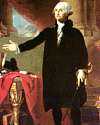
In 1790, President George Washington in his State of the Union address urged the second session of the First U.S. Congress meeting in New York to support the introduction of new and useful inventions from abroad, and recognize the skill and genius of U.S. inventors. Within days, both the House set up a committee to draft a patent statute, because the congressmen agreed that promotion of science would contribute to the security of a free government. By 17 Feb 1790, the bill was given its first reading in the House, and reconciliation of amendments from the Senate was complete by 5 Apr 1790. George Washington signed the statute into law on 10 Apr 1790. The first patent was granted 31 July 1790 to Samuel Hopkins for a method of making potash and pearl ashes.«
The Patent Office Pony: A History of the Early Patent Office, by Kenneth W. Dobyns. - book suggestion.





