|
At
the conclusion of this lecture on aluminum, Professor Jewett
said, "If anyone should invent a process by which aluminum could be
made on a commercial scale, not only would he be a benefactor to the
world but would also be able to lay up a great fortune for himself."
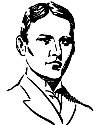 Just as he concluded his remarks, a student, Charles Hall, turning to a
classmate said, "I am going for that metal!"
Just as he concluded his remarks, a student, Charles Hall, turning to a
classmate said, "I am going for that metal!"Inspired by Jewett's statement and his sound advice, he embarked on a research project that has made history. Hall devoted all of his spare time to the project during his remaining college years.  When
young Hall graduated in 1885 he would not admit that he was unable to
obtain aluminum from its ores, so after graduation he continued the
work in a wood-shed back of his father's house in Oberlin. He put
together all sorts of home-made combinations and he would often call on
his friend, Professor Jewett, for the loan of a piece of apparatus.
When
young Hall graduated in 1885 he would not admit that he was unable to
obtain aluminum from its ores, so after graduation he continued the
work in a wood-shed back of his father's house in Oberlin. He put
together all sorts of home-made combinations and he would often call on
his friend, Professor Jewett, for the loan of a piece of apparatus.The Frenchman, Deville, had tried to produce aluminum by electrolysis using a bath of molten cryolite and common salt, but he had abandoned the process thirty years before. After reading this, Hall thought he would try electrolysis, but instead of using cryolite melted with salt, he used aluminum oxide in the molten cryolite. This was new. |