CRAY-1
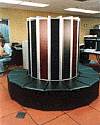
Seymour Roger Cray was an American electronics engineer who is called “the father of supercomputing” as the preeminent designer of large, high-speed computers. In 1957, he helped start Control Data Corporation (CDC), where he built the then fastest scientific computer, the CDC 1604, the first fully transistorized commercial computer. Cray produced successively faster computers to run business and government information networks. In 1972, he founded Cray Research Inc. By 1976, his signature Cray-1 vector supercomputer established a world standard in supercomputing. Using integrated circuits, its processing speed was over 18 times more than the CDC 1604. He died at age 71, from injuries suffered in a car accident.«
The Supermen: The Story of Seymour Cray and the Technical Wizards behind the Supercomputer, by Charles J. Murray. - book suggestion.
Born 28 Sep 1873; died 5 Mar 1954 at age 80. quotes
American mathematician and educator noted for numerous published works in theoretical mathematics. He earned a B.A. degree at Harvard (1895), then a B.Sc. (1897) from Oxford, England, the first natural science degree ever awarded at Oxford. He began teaching at Groton School, Conn. (1897-99) where one of his pupils was Franklin D Roosevelt, the future U.S. president. Coolidge was an instructor at Harvard University, taking leave to study abroad (1902-04) with Corrado Segre at Turin and Eduard Study at the University of Bonn ( Ph.D. 1904). When he returned to Harvard, he remained there for the rest of his career. Later in life, he took an interest in his subject's history, writing Mathematics of the Great Amateurs (1949).«
American mathematician and educator noted for numerous published works in theoretical mathematics. He earned a B.A. degree at Harvard (1895), then a B.Sc. (1897) from Oxford, England, the first natural science degree ever awarded at Oxford. He began teaching at Groton School, Conn. (1897-99) where one of his pupils was Franklin D Roosevelt, the future U.S. president. Coolidge was an instructor at Harvard University, taking leave to study abroad (1902-04) with Corrado Segre at Turin and Eduard Study at the University of Bonn ( Ph.D. 1904). When he returned to Harvard, he remained there for the rest of his career. Later in life, he took an interest in his subject's history, writing Mathematics of the Great Amateurs (1949).«
The Mathematics of Great Amateurs, by Julian Lowell Coolidge. - book suggestion.

Paul-Urich Villard was a French physicist and chemist who in 1900 identified a third kind of natural radiation, later called gamma rays. He was studying the radiations from uranium salts discovered by Henri Becquerel four years before. Charged particles whose paths were bent in a magnetic field were known, but Villard found a form of penetrating radiation that was not deviated, but it drew little attention from contemporary scientists. A year before, in 1899, Ernest Rutherford named the first two kinds of natural radiation—positive alpha particles and negative beta rays. The third kind became known as gamma rays—with energy higher than X-rays, weak power of ionization, and which Rutherford characterized (1914) as a form of electromagnetic radiation, like light. Villard invented several radiological instruments, including the osmoregulator and Villard's valve. He researched hydrates, and discovered silver hydrate. He wrote Les Rayons Cathodiques (1900).«[Ref: 'Les rayons cathodiques et les rayons Roentgen', Bulletin de la Société Internationale des Electriciens, XVII/I (1900), 169-184. He read his paper to the society in Apr 1900.]
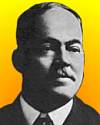
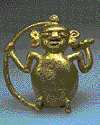
American archaeologist who spent 40 years expanding knowledge of the Mayan civilization, most famously by dredging Chichén Itzá's sacred cenote (1904) in Yucatán. Cenotes (a Spanish word equivalent to the Yucatec Maya word for a water-filled limestone sinkhole) provided a stable supply of water for the ancient Maya people who settled in Mexico's northern Yucatán Peninsula. There were few lakes or streams, so the great city of Chichén Itzá was built around a cluster of these natural wells, including the one known as the Cenote of Sacrifice. Thompson was archeological consul to the Yucatan from 1895. After some travelling among the known sites, he purchased the Chichén Itzá site with funds provided by meat packing magnet Allison Armour. Thompson took deep sea diving lessons and adapted a dredging bucket on a winch for his project. After the dredging operation retrieved artefacts, Thompson began diving and brought up figures representing Mayan gods, gold discs, jade stones, and human skeletons that proved young women had been sacrificed in the pool. In other investigations, he researched how the Maya built pyramids.«[Image right: Gold monkey bell from sacred cenote.]
The City of the Sacred Well, by T. A. Willard. - book suggestion.
Born 28 Sep 1854; died 27 Feb 1913 at age 58.
English zoologist, a grandnephew of the geologist Adam Sedgwick, who is best known for his researches on the wormlike organism Peripatus, which he recognized as the zoologically important connecting link between the Annelida, or segmented worms, and the Arthropoda, such as crabs, spiders, and insects.
English zoologist, a grandnephew of the geologist Adam Sedgwick, who is best known for his researches on the wormlike organism Peripatus, which he recognized as the zoologically important connecting link between the Annelida, or segmented worms, and the Arthropoda, such as crabs, spiders, and insects.
Born 28 Sep 1852; died 20 Feb 1907 at age 54. quotes
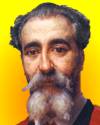
Ferdinand-Frédéric-Henri Moissan was a French chemist who received the 1906 Nobel Prize for Chemistry for the isolation of the highly reactive gaseous element fluorine, and the development of the Moissan electric furnace. In 1884, he began studying fluorine compounds, and separated fluorine two years later when he electrolyzed a solution of potassium fluoride in hydrofluoric acid. Having isolated fluorine, he was then able to determine its physical and chemical properties. From 1892, with an electric arc furnace he designed, Moissan began experimenting with reactions possible at much higher temperatures than before and discovered many new compounds and was able to vaporize substances previously impossible. He developed the furnace for industrial production of acetylene. more
Ferdinand-Frédéric-Henri Moissan was a French chemist who received the 1906 Nobel Prize for Chemistry for the isolation of the highly reactive gaseous element fluorine, and the development of the Moissan electric furnace. In 1884, he began studying fluorine compounds, and separated fluorine two years later when he electrolyzed a solution of potassium fluoride in hydrofluoric acid. Having isolated fluorine, he was then able to determine its physical and chemical properties. From 1892, with an electric arc furnace he designed, Moissan began experimenting with reactions possible at much higher temperatures than before and discovered many new compounds and was able to vaporize substances previously impossible. He developed the furnace for industrial production of acetylene. more
Baptized 28 Sep 1836; died 27 Jan 1910 at age 73.
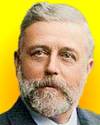
English engineer who owned a flourishing plumbing supply business and held several patents. Though he did not invent the familiar toilet flushing syphon mechanism (it was patented in Britain by Albert Giblin, No. 4990 of 1898), he did widely market it, and thus his name has been associated with it. Before this invention, the lavatory had existed in various forms, dating back to Sir John Harrington in 1589. When Victorian era toilets with poor valve designs were wasting too much water, by act of Parliament, a water-saving device was required. For this reason, the lever-activated syphon “pull and let go” mechanism was marketed as “Crapper's Silent Valveless Water Waste Preventer.”«
English engineer who owned a flourishing plumbing supply business and held several patents. Though he did not invent the familiar toilet flushing syphon mechanism (it was patented in Britain by Albert Giblin, No. 4990 of 1898), he did widely market it, and thus his name has been associated with it. Before this invention, the lavatory had existed in various forms, dating back to Sir John Harrington in 1589. When Victorian era toilets with poor valve designs were wasting too much water, by act of Parliament, a water-saving device was required. For this reason, the lever-activated syphon “pull and let go” mechanism was marketed as “Crapper's Silent Valveless Water Waste Preventer.”«
Flushed With Pride: the Story of Thomas Crapper, by Wallace Reyburn. - book suggestion.
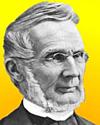
Born 28 Sep 1807; died 8 Feb 1884 at age 76.
Swiss-American geographer and geologist, who, with glaciologist Louis Agassiz, studied the glaciers of his native Switzerland and proved that they were moving - building a foundation for the theory of ice ages. Upon moving to the United States (1848), Guyot began the first systematic instruction in geology at Princeton University. Later, as head of the meteorological department at the Smithsonian Institution, he set up a system of 50 weather observatories that utimately grew into the U. S. Weather Bureau. Using a barometer to measure altitude, he proved that Newfound Gap is the lowest pass through Appalachia's Great Smoky Mountains. The guyot, a flat-topped volcanic peak rising from the ocean floor, is named after him.« more
Swiss-American geographer and geologist, who, with glaciologist Louis Agassiz, studied the glaciers of his native Switzerland and proved that they were moving - building a foundation for the theory of ice ages. Upon moving to the United States (1848), Guyot began the first systematic instruction in geology at Princeton University. Later, as head of the meteorological department at the Smithsonian Institution, he set up a system of 50 weather observatories that utimately grew into the U. S. Weather Bureau. Using a barometer to measure altitude, he proved that Newfound Gap is the lowest pass through Appalachia's Great Smoky Mountains. The guyot, a flat-topped volcanic peak rising from the ocean floor, is named after him.« more
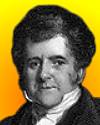
Born 28 Sep 1789; died 16 Dec 1858 at age 69.
English physician, sometimes called the “Father of Nephrology,” who was the first to describe the clinical manifestations of the kidney disorder known as Bright's disease, or nephritis. Richard Bright's research interests included not only renal disease, but also pulmonary diseases, various fevers, abdominal tumors, heart disease, liver, pancreas, and duodenum. He and Thomas Addison lectured at Guy's on the “Theory and Practice of Medicine” for twenty years, and in 1839 published the first volume of Elements of the Practice of Medicine.
English physician, sometimes called the “Father of Nephrology,” who was the first to describe the clinical manifestations of the kidney disorder known as Bright's disease, or nephritis. Richard Bright's research interests included not only renal disease, but also pulmonary diseases, various fevers, abdominal tumors, heart disease, liver, pancreas, and duodenum. He and Thomas Addison lectured at Guy's on the “Theory and Practice of Medicine” for twenty years, and in 1839 published the first volume of Elements of the Practice of Medicine.
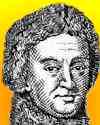
Born 28 Sep 1698; died 27 Jul 1759 at age 60. quotes
French mathematician, biologist, and astronomer. In 1732 he introduced Newton's theory of gravitation to France. He was a member of an expedition to Lapland in 1736 which set out to measure the length of a degree along the meridian. Maupertuis' measurements both verified Newton's predictions that the Earth would be an oblate speroid, and they corrected earlier results of Cassini. Maupertuis published on many topics including mathematics, geography, astronomy and cosmology. In 1744 he first enunciated the Principle of Least Action and he published it in Essai de cosmologie in 1850. Maupertuis hoped that the principle might unify the laws of the universe and combined it with an attempted proof of the existence of God.
French mathematician, biologist, and astronomer. In 1732 he introduced Newton's theory of gravitation to France. He was a member of an expedition to Lapland in 1736 which set out to measure the length of a degree along the meridian. Maupertuis' measurements both verified Newton's predictions that the Earth would be an oblate speroid, and they corrected earlier results of Cassini. Maupertuis published on many topics including mathematics, geography, astronomy and cosmology. In 1744 he first enunciated the Principle of Least Action and he published it in Essai de cosmologie in 1850. Maupertuis hoped that the principle might unify the laws of the universe and combined it with an attempted proof of the existence of God.

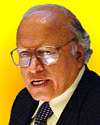
Died 28 Sep 2023 at age 98 (born 7 Aug 1925). quotes
Monkombu Sambisivan Swaminathan was an Indian agricultural scientist and geneticist and international administrator, renowned for his leading role in India's “Green Revolution,” a program under which high-yield varieties of wheat and rice seedlings were planted in the fields of poor farmers. He now recognises the need for an “Evergreen Revolution” to extend the benefits of development to the most marginalised. His work in crop genetics and sustainable agricultural development in India and the Third World earned him the first World Food Prize in 1987, among other awards. more
Monkombu Sambisivan Swaminathan was an Indian agricultural scientist and geneticist and international administrator, renowned for his leading role in India's “Green Revolution,” a program under which high-yield varieties of wheat and rice seedlings were planted in the fields of poor farmers. He now recognises the need for an “Evergreen Revolution” to extend the benefits of development to the most marginalised. His work in crop genetics and sustainable agricultural development in India and the Third World earned him the first World Food Prize in 1987, among other awards. more
Scientist and Humanist; M.S. Swaminathan, by R.D. Iyer. - book suggestion.
Died 28 Sep 2011 at age 99 (born 5 Oct 1911).
French-Canadian plant ecologist who was a pioneer in the study of the dynamics of forests. As his ideas in ecological concepts evolved, he become the first to treat urban and human ecology, in the modern human environment. He introduced perspectives on ecodevelopment, environmental sociology and ecosociology. He maintained these in focus throughout his career. He wrote many books on ecology and the urban environment. To replace the classic food chain pyramid, he suggested a “ball-of-arrows” in six trophic levels: minerotrophic, phytotrophic, herbivore zootrophic, carnivore zootrophic, investment and control, shown as a sphere with arrows pointing in all directions.«
French-Canadian plant ecologist who was a pioneer in the study of the dynamics of forests. As his ideas in ecological concepts evolved, he become the first to treat urban and human ecology, in the modern human environment. He introduced perspectives on ecodevelopment, environmental sociology and ecosociology. He maintained these in focus throughout his career. He wrote many books on ecology and the urban environment. To replace the classic food chain pyramid, he suggested a “ball-of-arrows” in six trophic levels: minerotrophic, phytotrophic, herbivore zootrophic, carnivore zootrophic, investment and control, shown as a sphere with arrows pointing in all directions.«
Biogeography, an Ecological Perspective, by Pierre Dansereau. - book suggestion.
Died 28 Sep 2001 at age 70 (born 13 Apr 1931).
Martha E. Bernal was a Mexican American psychologist, who was the first Latina to earn a PhD in psychology in the U.S. and made major contributions in children’s clinical work in learning theory and multicultural studies. From the 1970s she worked to recruit more ethic minorities into graduate training and increase their status and advancement.«
Martha E. Bernal was a Mexican American psychologist, who was the first Latina to earn a PhD in psychology in the U.S. and made major contributions in children’s clinical work in learning theory and multicultural studies. From the 1970s she worked to recruit more ethic minorities into graduate training and increase their status and advancement.«
Died 28 Sep 1987 at age 84 (born 13 Jun 1903).
Willard Harrison Bennett was an American physicist who discovered (1934) the pinch effect, an electromagnetic process that may offer a way to magnetically confine a plasma at temperatures high enough for controlled nuclear fusion reactions to occur. He proposed (1936) the tandem Van de Graaff accelerator, which later became widely used in nuclear research. He invented a radio-frequency mass spectrometer, developed in 1955. Since it required no heavy magnet, it was the first launched into space to measure the masses of atoms. Sputnik III carried the first R-F mass spectrometer into space. It was the only space instrument used by the Russians and credited to an American inventor in their own Russian-language publications.
Willard Harrison Bennett was an American physicist who discovered (1934) the pinch effect, an electromagnetic process that may offer a way to magnetically confine a plasma at temperatures high enough for controlled nuclear fusion reactions to occur. He proposed (1936) the tandem Van de Graaff accelerator, which later became widely used in nuclear research. He invented a radio-frequency mass spectrometer, developed in 1955. Since it required no heavy magnet, it was the first launched into space to measure the masses of atoms. Sputnik III carried the first R-F mass spectrometer into space. It was the only space instrument used by the Russians and credited to an American inventor in their own Russian-language publications.
Died 28 Sep 1956 at age 74 (born 1 Oct 1881). quotes
William Edward Boeing was an American aviation pioneer who began a lumber business in 1902. His interests shifted to aviation, he trained at Glenn L. Martin’s flying school in 1915, and bought his own aircraft. In 1916, Boeing co-founded Pacific Aero Products Company (soon renamed Boeing Airplane Company). By 1920, he received a major wartime order for 200 MB-3 fighter planes. Boeing Air Transport began flying mail and passengers in Jul 1927. By mergers with other aircraft industries, he built United Aircraft and Air Transport the most profitable aviation company of its time. In 1934, government anti-trust action split it up. (United Airlines became an independent business.) Embittered, Boeing sold all his stock in the company, but volunteered as a consultant during WW II.«
William Edward Boeing was an American aviation pioneer who began a lumber business in 1902. His interests shifted to aviation, he trained at Glenn L. Martin’s flying school in 1915, and bought his own aircraft. In 1916, Boeing co-founded Pacific Aero Products Company (soon renamed Boeing Airplane Company). By 1920, he received a major wartime order for 200 MB-3 fighter planes. Boeing Air Transport began flying mail and passengers in Jul 1927. By mergers with other aircraft industries, he built United Aircraft and Air Transport the most profitable aviation company of its time. In 1934, government anti-trust action split it up. (United Airlines became an independent business.) Embittered, Boeing sold all his stock in the company, but volunteered as a consultant during WW II.«
The Story of the Boeing Company, by Bill Yenne. - book suggestion.
Died 28 Sep 1954 at age 80 (born 15 Apr 1874).
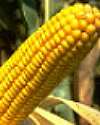
American botanist and geneticist known as the father of hybrid corn (maize). A leader in developing the multiple allele concept of genes, Shull's work with maize led him to develop the first hybrid corn, ancestor of today's sweet corn and a boon to commercial farmers. Shull's approach was to study the effects of inbreeding and subsequent cross-fertilization in corn. In 1909, he published A Pure Line Method of Corn Breedingin which he outlined – with remarkable insight – the basics of breeding hybrid corn. As a result of his researches, corn yields per acre were increased 25 to 50 percent. He developed a method of corn breeding that made possible the production of seed capable of thriving under various soil and climatic conditions.
American botanist and geneticist known as the father of hybrid corn (maize). A leader in developing the multiple allele concept of genes, Shull's work with maize led him to develop the first hybrid corn, ancestor of today's sweet corn and a boon to commercial farmers. Shull's approach was to study the effects of inbreeding and subsequent cross-fertilization in corn. In 1909, he published A Pure Line Method of Corn Breedingin which he outlined – with remarkable insight – the basics of breeding hybrid corn. As a result of his researches, corn yields per acre were increased 25 to 50 percent. He developed a method of corn breeding that made possible the production of seed capable of thriving under various soil and climatic conditions.
Died 28 Sep 1953 at age 63 (born 20 Nov 1889). quotes
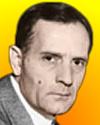
American astronomer who is considered the founder of extragalactic astronomy and who provided the first evidence of the expansion of the universe. In 1923-5 he identified Cepheid variables in “spiral nebulae” M31 and M33 and proved conclusively that they are outside the Galaxy. His investigation of these objects, which he called extragalactic nebulae and which astronomers today call galaxies, led to his now-standard classification system of elliptical, spiral, and irregular galaxies, and to proof that they are distributed uniformly out to great distances. Hubble measured distances to galaxies and their redshifts, and in 1929 he published the velocity-distance relation which is the basis of modern cosmology.
American astronomer who is considered the founder of extragalactic astronomy and who provided the first evidence of the expansion of the universe. In 1923-5 he identified Cepheid variables in “spiral nebulae” M31 and M33 and proved conclusively that they are outside the Galaxy. His investigation of these objects, which he called extragalactic nebulae and which astronomers today call galaxies, led to his now-standard classification system of elliptical, spiral, and irregular galaxies, and to proof that they are distributed uniformly out to great distances. Hubble measured distances to galaxies and their redshifts, and in 1929 he published the velocity-distance relation which is the basis of modern cosmology.
c.1900
Duryea 1893
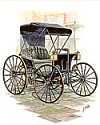
Charles Edgar Duryea was an American inventor who with his brother J. Frank Duryea built the first automobile with multiple copies manufactured in the U.S. On 28 Nov 1895, Frank drove their car to win $2,000 in the first American Automobile Race in Chicago, sponsored by the Chicago Times-Herald. They travelled 54 miles from Chicago to Evanston, Illinois and back, in just over 10 hours. In 1896, they set up the Duryea Motor Wagon Co. in Springfield, Mass. to manufacture multiple units of a gasoline-powered vehicle. Their production of 13 identical machines that year is considered to be the first serial production of American cars, earning them recognition as “Fathers of the American Automobile Industry.''« more
Charles E. Duryea: Automaker, by George W. May. - book suggestion.
Died 28 Sep 1927 at age 67 (born 21 May 1860).
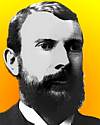
Dutch physiologist who introduced a new era in the diagnosis and treatment of diseases of the heart with his invention of the electrocardiograph, for which he was awarded the 1924 Nobel Prize for Physiology or Medicine. This device became an essential clinical instrument for displaying the electrical properties of the heart, and especially useful in the diagnosis of heart disease.«[DSB gives day of death as 28 Sep 1927. EB gives 29 Sep 1927.]
Dutch physiologist who introduced a new era in the diagnosis and treatment of diseases of the heart with his invention of the electrocardiograph, for which he was awarded the 1924 Nobel Prize for Physiology or Medicine. This device became an essential clinical instrument for displaying the electrical properties of the heart, and especially useful in the diagnosis of heart disease.«[DSB gives day of death as 28 Sep 1927. EB gives 29 Sep 1927.]
Willem Einthoven: Father of Electrocardiography: Life and Work..., by H.A. Snellen. - book suggestion.
Died 28 Sep 1895 at age 72 (born 27 Dec 1822). quotes
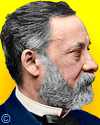
French chemist who became a founder of microbiology. He began as a chemist working on the optical properties of tartaric acid and its stereochemistry (1849). He moved into microbiology when he discovered the role of bacteria in fermentation - that it was micro-organisms in yeast causing the formation of alcohol from sugar - and proved that the growth of microorganisms was not spontaneously generated from non-living matter. This led to understanding of the germ theory of infection, and his method of killing harmful bacteria in liquids by holding them for a time at a given temperature, which is now known as pasteurisation. He created and tested vaccines for diphtheria, cholera, yellow fever, plague, rabies, anthrax, and tuberculosis.« more
French chemist who became a founder of microbiology. He began as a chemist working on the optical properties of tartaric acid and its stereochemistry (1849). He moved into microbiology when he discovered the role of bacteria in fermentation - that it was micro-organisms in yeast causing the formation of alcohol from sugar - and proved that the growth of microorganisms was not spontaneously generated from non-living matter. This led to understanding of the germ theory of infection, and his method of killing harmful bacteria in liquids by holding them for a time at a given temperature, which is now known as pasteurisation. He created and tested vaccines for diphtheria, cholera, yellow fever, plague, rabies, anthrax, and tuberculosis.« more
The Private Science of Louis Pasteur, by Gerald L. Geison. - book suggestion.
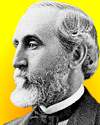
Died 28 Sep 1888 at age 67 (born 1 Aug 1821).
American naturalist who contributed over one thousand medical and zoological articles to Appleton’s New American Cyclopædia. Although trained at Harvard as a physician, and was a surgeon during the Civil War, his activities later turned to natural history. He traveled abroad, interested in observing volcanoes, and the results of earthquakes. Later in life, he joined the faculty at Massachusetts Institute of Technology as an instructor (1867) and then professor of zoology and physiology (1869-78). Kneeland wrote several books, including An American in Iceland (1876), and The Wonders of Yosemite Valley and of California (1871) and was active in various scientific societies.«
American naturalist who contributed over one thousand medical and zoological articles to Appleton’s New American Cyclopædia. Although trained at Harvard as a physician, and was a surgeon during the Civil War, his activities later turned to natural history. He traveled abroad, interested in observing volcanoes, and the results of earthquakes. Later in life, he joined the faculty at Massachusetts Institute of Technology as an instructor (1867) and then professor of zoology and physiology (1869-78). Kneeland wrote several books, including An American in Iceland (1876), and The Wonders of Yosemite Valley and of California (1871) and was active in various scientific societies.«
An American in Iceland, by Samuel Kneeland. - book suggestion.
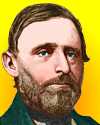
Died 28 Sep 1879 at age 72 (born 4 Nov 1806).
German analytical chemist and geologist who invented or improved a number of titration procedures. His book (1855) on the subject was the first to broadly cover the new field of analytical chemistry, and was well received. It was translated, and had eight editions. His name remains associated with the Mohr pinchcock burrette.[Name also spelled Carl.] more
German analytical chemist and geologist who invented or improved a number of titration procedures. His book (1855) on the subject was the first to broadly cover the new field of analytical chemistry, and was well received. It was translated, and had eight editions. His name remains associated with the Mohr pinchcock burrette.[Name also spelled Carl.] more
Died 28 Sep 1815 at age 90 (born 16 Sep 1725). quotes
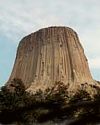
French geologist and geographer whose discovery of the volcanic origin of basalt disproved the Neptunist theory that all rocks were formed by sedimentation from primeval oceans. Studying the Auvergne of central France (1763-74), he found large basalt deposits that he traced as lava flows from nearby ancient volcanoes. He further showed that many valleys are formed by the erosion of the rivers that flow in them. From 1757, Desmarest was employed by the government to help spread better manufacturing methods throughout France. By 1788 he had risen to the post of inspector general and director of manufactures. In 1792, during the French Revolution, Desmarest was imprisoned and narrowly escaped execution.Image: Basalt rock of the Devil's Tower, Wyoming, USA, is an ancient volcanic intrusion left over after all of the overlying material has been eroded away.
French geologist and geographer whose discovery of the volcanic origin of basalt disproved the Neptunist theory that all rocks were formed by sedimentation from primeval oceans. Studying the Auvergne of central France (1763-74), he found large basalt deposits that he traced as lava flows from nearby ancient volcanoes. He further showed that many valleys are formed by the erosion of the rivers that flow in them. From 1757, Desmarest was employed by the government to help spread better manufacturing methods throughout France. By 1788 he had risen to the post of inspector general and director of manufactures. In 1792, during the French Revolution, Desmarest was imprisoned and narrowly escaped execution.Image: Basalt rock of the Devil's Tower, Wyoming, USA, is an ancient volcanic intrusion left over after all of the overlying material has been eroded away.
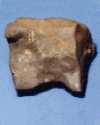
In 1969, a meteorite fell over Murchison, Australia. Only 100-kg of this meteorite has been recovered. Classified as a carbonaceous chondrite, type II (CM2), this meteorite is suspected to be of cometary origin due to its high water content (12%). An abundance of amino acids found within this meteorite has led to intense study by researchers as to its origins. More than 92 different amino acids have been identified within the Murchison meteorite to date. Nineteen of these are found on Earth. The remaining amino acids have no apparent terrestrial source.
In 1959, Explorer VI satellite (launched 7 Aug 1959) revealed an intense radiation belt around Earth and took the first remote imaging TV pictures of Earth meteorological conditions.
In 1901, Prof. R. A. Fessenden applied for a U.S. patent for "Improvements in apparatus for the wireless transmission of electromagnetic wave, said improvements relating more especially to the transmission and reproduction of words or other audible signals." According to Important Events in Radiotelegraphy, a U.S. Dept of Commerce publication (1916), "It appears that in connection with this apparatus there was contemplated the use of an alternating current generator having a frequency of 50,000 per second." Prof. Fessenden was granted a number of United States patents between 1899 and 1905 covering devices used in connection with radiotelegraphy.
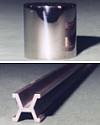
In 1889, the third legal definition of the metre was adopted at the Paris General Conference. An international prototype metre bar was made of a 90-10 platinum-iridium alloy with an X cross section to minimize flexing. The metre was defined as the distance measured between two lines on the bar at the temperature of freezing water, 0 °C. The alloy ingot was made possible by a high-temperature furnace devised by Henry Sainte-Claire and his assistant Jules Henry Debray. The alloy was harder than pure platinum, but retained the other desireable properties, including resistance to corrosion. Duplicate prototypes were made and distributed to each of the countries that joined in the international agreement. The same alloy was used to prepare the international protype of the kilogram.«
The Measure of All Things: The Seven-Year Odyssey and Hidden Error That Transformed the World, by Ken Alder. - book suggestion.
In 1865, Elizabeth Anderson (née Garrett, 9 Jun 1836 - 17 Dec 1917) became the first female licensed physician in Britain. The daughter of a Whitechapel pawnbroker, she had studied medicine privately after being refused admission to medical schools. On 28 Sep 1865, she was examined orally in medicine, midwifery and medical pathology, and was one of three out of the seven candidates to receive a Final Certificate, entitling her to practice as a qualified physician and surgeon. She became a general medical attendant (1866) to St. Mary’s Dispensary, London, later called New Hospital. She instituted medical courses for women. New Hospital was renamed in her honour (1918) as the Elizabeth Garrett Anderson Hospital.
Elizabeth Garrett Anderson, by Jo Manton. - book suggestion.
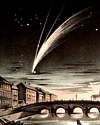
In 1858, Donati's comet (discovered by Giovanni Donati, 1826-1873) became the first to be photographed. It was a bright comet that developed a spectacular curved dust tail with two thin gas tails, captured by an English commercial photographer, William Usherwood, using a portrait camera at a low focal ratio. At Harvard, W.C. Bond, attempted an image on a collodion plate the following night, but the comet shows only faintly and no tail can be seen. Bond was subsequently able to evaluate the image on Usherwood's plate. The earliest celestial daguerreotypes were made in 1850-51, though after the Donati comet, no further comet photography took place until 1881, when P.J.C. Janssen and J.W. Draper took the first generally recognized photographs of a comet.*




