Born 19 Sep 1947; died 26 Apr 2002 at age 54.
Torunn Atteraas “Teri” Garin was a Norwegian chemical engineer who helped develop aspartame sweetener as a sugar substitute while working for General Foods (1971-85), where she became a senior laboratory manager. Earlier in her career, she researched ways to minimize water pollution caused by food production. She co-patented an adsoption process to extract caffeine from coffee (12 Sep 1978, No. 4,113,887) and a method to derive food dyes from natural sources to replace possibly cancer-causing synthetic dyes (11 Oct, 1983, No. 4,409,254), for example, non-toxic betanin, a natural red pigment from red beet. These U.S. patents were assigned to General Foods Corp. After attending university in Norway, she moved to the U.S. for degrees in chemical engineering (1971) and environmental engineering (1977). She died from lung cancer, age 54.«
Torunn Atteraas “Teri” Garin was a Norwegian chemical engineer who helped develop aspartame sweetener as a sugar substitute while working for General Foods (1971-85), where she became a senior laboratory manager. Earlier in her career, she researched ways to minimize water pollution caused by food production. She co-patented an adsoption process to extract caffeine from coffee (12 Sep 1978, No. 4,113,887) and a method to derive food dyes from natural sources to replace possibly cancer-causing synthetic dyes (11 Oct, 1983, No. 4,409,254), for example, non-toxic betanin, a natural red pigment from red beet. These U.S. patents were assigned to General Foods Corp. After attending university in Norway, she moved to the U.S. for degrees in chemical engineering (1971) and environmental engineering (1977). She died from lung cancer, age 54.«
Born 19 Sep 1915; died 18 Aug 1980 at age 64.
Elizabeth Stern (married name Elizabeth Stern Shankman) was a Canadian-born American, one of the first pathologists to work on the progression of a cell from normality to cancerous. Her breakthrough studies of cervical cancers have changed the disease from fatal to one of the most easily diagnosed and treatable. Her studies showed that a normal cell advanced through 250 distinct stages before becoming cancerous and thus is the most easily diagnosed of all cancers. She was the first to linking a virus in herpes simplex to cervical cancer. She was also the first to report the linkage between oral contraceptives and cervical cancer.
Elizabeth Stern (married name Elizabeth Stern Shankman) was a Canadian-born American, one of the first pathologists to work on the progression of a cell from normality to cancerous. Her breakthrough studies of cervical cancers have changed the disease from fatal to one of the most easily diagnosed and treatable. Her studies showed that a normal cell advanced through 250 distinct stages before becoming cancerous and thus is the most easily diagnosed of all cancers. She was the first to linking a virus in herpes simplex to cervical cancer. She was also the first to report the linkage between oral contraceptives and cervical cancer.
Born 19 Sep 1908; died 21 Apr 2002 at age 93. quotes
Viktor Frederick Weisskopf was an Austrian-American theoretical physicist and administrator who was a doctoral student of Max Born at Göttingen. Weisskopf was a major contributor in the golden age of quantum mechanics. In following years, he worked with Heisenberg, Schrödinger, Bohr and Pauli. To escape Nazism, he moved to the U.S. (1937). He joined the Manhattan Project at Los Alamos in 1943, where he became associate head of the theoretical division. His postwar career was spent at M.I.T. (Murray Gell-Mann was one of his students.) In the 1950s, Weisskopf developed the “clouded crystal ball” model of the atomic nucleus. He served as director-general of CERN, the high-energy particle research center (1961-65), then returned to M.I.T. until he retired in 1973.«
Viktor Frederick Weisskopf was an Austrian-American theoretical physicist and administrator who was a doctoral student of Max Born at Göttingen. Weisskopf was a major contributor in the golden age of quantum mechanics. In following years, he worked with Heisenberg, Schrödinger, Bohr and Pauli. To escape Nazism, he moved to the U.S. (1937). He joined the Manhattan Project at Los Alamos in 1943, where he became associate head of the theoretical division. His postwar career was spent at M.I.T. (Murray Gell-Mann was one of his students.) In the 1950s, Weisskopf developed the “clouded crystal ball” model of the atomic nucleus. He served as director-general of CERN, the high-energy particle research center (1961-65), then returned to M.I.T. until he retired in 1973.«
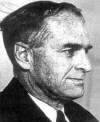
Born 19 Sep 1888; died 23 Sep 1971 at age 83.
James Waddell Alexander was an American mathematician who founded the branch of mathematics originally known as analysis situs, now called topology. In 1912, he joined the faculty of the mathematics department at Princeton. Soon after, Alexander generalised the Jordan curve theorem and, in 1928, he discovered the Alexander polynomial which is much used in knot theory.
James Waddell Alexander was an American mathematician who founded the branch of mathematics originally known as analysis situs, now called topology. In 1912, he joined the faculty of the mathematics department at Princeton. Soon after, Alexander generalised the Jordan curve theorem and, in 1928, he discovered the Alexander polynomial which is much used in knot theory.
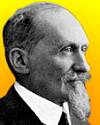
Born 19 Sep 1878; died 25 Apr 1958 at age 79.
Charles-Victor Mauguin was a French mineralogist and crystallographer who was one of the first to make a systematic study of the silicate minerals. Using X-ray diffraction techniques, he determined the structure of a large number of micas. He also published the atomic structure of cinnabar, calomel and graphite and devised a system of symbols for designation of symmetry properties of crystals, adopted (1935) as international standard.«
Charles-Victor Mauguin was a French mineralogist and crystallographer who was one of the first to make a systematic study of the silicate minerals. Using X-ray diffraction techniques, he determined the structure of a large number of micas. He also published the atomic structure of cinnabar, calomel and graphite and devised a system of symbols for designation of symmetry properties of crystals, adopted (1935) as international standard.«
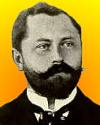
Born 19 Sep 1871; died 22 Jun 1906 at age 34.
Fritz Richard Schaudinn was a German zoologist and microbiologist who, with dermatologist Erich Hoffmann, discovered (1905) the spirochaete which causes syphilis, Spirochaeta pallida, now known as Treponema pallidum. Schaudinn determined the amoebic nature of tropical dysentery, worked on trypanosomes (flagellated protozoans which include the causal agent of African sleeping sickness, an infection of the bloodstream) and researched malaria. He also demonstrated that human hookworm infection is contracted through the skin of the feet. He made important contributions to zoology and helped develop protozoology as an experimental science. He also discovered the alternation of generations in Foraminifera and Coccidae.«
Fritz Richard Schaudinn was a German zoologist and microbiologist who, with dermatologist Erich Hoffmann, discovered (1905) the spirochaete which causes syphilis, Spirochaeta pallida, now known as Treponema pallidum. Schaudinn determined the amoebic nature of tropical dysentery, worked on trypanosomes (flagellated protozoans which include the causal agent of African sleeping sickness, an infection of the bloodstream) and researched malaria. He also demonstrated that human hookworm infection is contracted through the skin of the feet. He made important contributions to zoology and helped develop protozoology as an experimental science. He also discovered the alternation of generations in Foraminifera and Coccidae.«
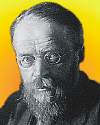
c. 1925
Born 19 Sep 1864; died 14 Feb 1933 at age 68. quotes
Carl Franz Joseph Erich Correns was a German botanist and plant geneticist who in 1900, independent of, but simultaneously with, the biologists Erich Tschermak von Seysenegg and Hugo de Vries, rediscovered Gregor Mendel's historic paper outlining the principles of heredity. In attempting to ascertain the extent to which Mendel's laws are valid, he undertook a classic study of non-Mendelian heredity in variegated plants, such as the four-o'clock (Mirabilis jalapa) which he established (1909) as the first conclusive example of extrachromosomal, or cytoplasmic, inheritance (cases in which certain characteristics of the progeny are determined by factors in the cytoplasm of the female sex cell).
Carl Franz Joseph Erich Correns was a German botanist and plant geneticist who in 1900, independent of, but simultaneously with, the biologists Erich Tschermak von Seysenegg and Hugo de Vries, rediscovered Gregor Mendel's historic paper outlining the principles of heredity. In attempting to ascertain the extent to which Mendel's laws are valid, he undertook a classic study of non-Mendelian heredity in variegated plants, such as the four-o'clock (Mirabilis jalapa) which he established (1909) as the first conclusive example of extrachromosomal, or cytoplasmic, inheritance (cases in which certain characteristics of the progeny are determined by factors in the cytoplasm of the female sex cell).
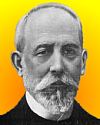
Born 19 Sep 1853; died 6 Aug 1911 at age 57.
Argentinian paleontologist and anthropologist who made significant contributions to the field of vertebrate paleontology and established the Pampas region of Argentina as a rich source of fossils. He discovered over 6,000 fossil species and classified 35 suborders of mammals. Ameghino's controversial discoveries of stone implements, carved bones, and other signs of a human presence in Argentina during the Pliocene, Miocene, and earlier periods served to increase his worldwide fame.«
Argentinian paleontologist and anthropologist who made significant contributions to the field of vertebrate paleontology and established the Pampas region of Argentina as a rich source of fossils. He discovered over 6,000 fossil species and classified 35 suborders of mammals. Ameghino's controversial discoveries of stone implements, carved bones, and other signs of a human presence in Argentina during the Pliocene, Miocene, and earlier periods served to increase his worldwide fame.«
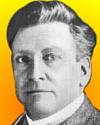
Born 19 Sep 1851; died 7 May 1925 at age 73. quotes
William Hesketh Lever (1st Viscount Leverhulme) was a British manufacturer and philanthropist who formed the Lever Brothers soap manufacturing company (1886) with his brother James (though James was not an active participant in running the business). It was one of the first companies to manufacture soap from vegetable oils instead of tallow. From 1888, Lever established Port Sunlight, a model community providing housing and support for the company's workers, who enjoyed conditions, pay, hours, and benefits far better than found in similar industries. By 1900 the factory was producing other brands such as Lifebuoy, Lux Flakes, Monkey Brand, Vim scouring powder and Rinso. In 1914, soap production reached 60,000 tonnes.« more
William Hesketh Lever (1st Viscount Leverhulme) was a British manufacturer and philanthropist who formed the Lever Brothers soap manufacturing company (1886) with his brother James (though James was not an active participant in running the business). It was one of the first companies to manufacture soap from vegetable oils instead of tallow. From 1888, Lever established Port Sunlight, a model community providing housing and support for the company's workers, who enjoyed conditions, pay, hours, and benefits far better than found in similar industries. By 1900 the factory was producing other brands such as Lifebuoy, Lux Flakes, Monkey Brand, Vim scouring powder and Rinso. In 1914, soap production reached 60,000 tonnes.« more
The King of Sunlight: How William Lever Cleaned Up the World, by Adam Macqueen. - book suggestion.
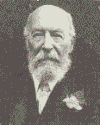
Born 19 Sep 1839; died 1922.
English businessman, Quaker, social reformer and chocolate manufacturer, born in Birmingham. In 1856, at age 21, he joined his father's chocolate business, with his elder brother, Richard, who had joined in 1850. Their father retired in April 1861 due to failing health, and they took over his declining enterprise and built it into the highly prosperous Cadbury Brothers cocoa- and chocolate- manufacturing firm. George was perhaps more important for his improvements in working conditions and for his successful experiments with a new cocoa bean processing technique. The new pure unadulterated Cadbury's cocoa essence was heralded as a major breakthrough and it resulted in the passing of the Adulteration of Foods Acts in 1872 and 1875.
English businessman, Quaker, social reformer and chocolate manufacturer, born in Birmingham. In 1856, at age 21, he joined his father's chocolate business, with his elder brother, Richard, who had joined in 1850. Their father retired in April 1861 due to failing health, and they took over his declining enterprise and built it into the highly prosperous Cadbury Brothers cocoa- and chocolate- manufacturing firm. George was perhaps more important for his improvements in working conditions and for his successful experiments with a new cocoa bean processing technique. The new pure unadulterated Cadbury's cocoa essence was heralded as a major breakthrough and it resulted in the passing of the Adulteration of Foods Acts in 1872 and 1875.

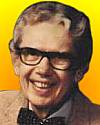
Died 19 Sep 1995 at age 88 (born 16 Jul 1907).
American agronomist and popcorn business founder, born in Brazil, Ind., Popcorn King whose devotion to creating and promoting a fluffier, tastier popcorn turned him into a bow-tied advertising icon. His interest in popcorn blossomed early. It was the favorite snack on his family's farm, and Redenbacher grew it to earn extra spending money. In the early '40s, while managing a 12,000-acre farm where he was growing popcorn, Redenbacher and a friend, Charles Bowman, used the fields to experiment with corn hybrids from Purdue University. Several decades and 30,000 hybrids later, they introduced gourmet popcorn.
American agronomist and popcorn business founder, born in Brazil, Ind., Popcorn King whose devotion to creating and promoting a fluffier, tastier popcorn turned him into a bow-tied advertising icon. His interest in popcorn blossomed early. It was the favorite snack on his family's farm, and Redenbacher grew it to earn extra spending money. In the early '40s, while managing a 12,000-acre farm where he was growing popcorn, Redenbacher and a friend, Charles Bowman, used the fields to experiment with corn hybrids from Purdue University. Several decades and 30,000 hybrids later, they introduced gourmet popcorn.
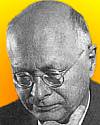
Died 19 Sep 1971 at age 80 (born 24 May 1891).
William Foxwell Albright was a Chilean-American archaeologist who excavated primarily biblical sites and an expert on the culture and history of the Near East. He spent a decade from 1919 at the American School of Oriental Reseach in Jerusalem. During this time, he directed excavations in Palestine at Gibeah, Tell Beit Mirsim, Bethel and Ader. After further work, he produced three volumes of Excavation of Tell Beit Mirsim. His most famous work, From the Stone Age to Christianity (1940) traced the growth of man's belief in God. In 1947, Albright was the first outside expert to declare that the Dead Sea scrolls were genuine. He called their discovery "the most momentous discovery in modern time pertaining to the Bible."«
William Foxwell Albright was a Chilean-American archaeologist who excavated primarily biblical sites and an expert on the culture and history of the Near East. He spent a decade from 1919 at the American School of Oriental Reseach in Jerusalem. During this time, he directed excavations in Palestine at Gibeah, Tell Beit Mirsim, Bethel and Ader. After further work, he produced three volumes of Excavation of Tell Beit Mirsim. His most famous work, From the Stone Age to Christianity (1940) traced the growth of man's belief in God. In 1947, Albright was the first outside expert to declare that the Dead Sea scrolls were genuine. He called their discovery "the most momentous discovery in modern time pertaining to the Bible."«
Archaeology and the Religion of Israel, by William Foxwell Albright et al. - book suggestion.
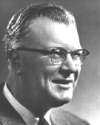
Died 19 Sep 1968 at age 62 (born 8 Feb 1906). quotes
Chester Floyd Carlson was an American physicist who invented xerography (22 Oct 1938), an electrostatic dry-copying process that found applications ranging from office copying to reproducing out-of-print books. The process involved sensitizing a photoconductive surface to light by giving it an electrostatic charge Carlson developed it between 1934 and 1938, and initially described it as electrophotography It was immediately protected by Carlson with an impenetrable web of patents, though it was not until 1944 that he was able to obtain funding for further development. In 1947 he sold the commercial rights for his invention to the Haloid Company, a small manufacturer of photographic paper (which later became the Xerox Corporation).
Chester Floyd Carlson was an American physicist who invented xerography (22 Oct 1938), an electrostatic dry-copying process that found applications ranging from office copying to reproducing out-of-print books. The process involved sensitizing a photoconductive surface to light by giving it an electrostatic charge Carlson developed it between 1934 and 1938, and initially described it as electrophotography It was immediately protected by Carlson with an impenetrable web of patents, though it was not until 1944 that he was able to obtain funding for further development. In 1947 he sold the commercial rights for his invention to the Haloid Company, a small manufacturer of photographic paper (which later became the Xerox Corporation).
Copies in Seconds... Chester Carlson and the Birth of the Xerox Machine, by David Owen. - book suggestion.
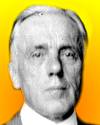
Died 19 Sep 1957 at age 86 (born 19 May 1871). quotes
Canadian-American geologist who independently developed the theory of magmatic stoping, a process in which magma moves up through the Earth's crust the earth by shattering (but not melting) the overlying rock. Resulting broken blocks of denser rock sink, leaving space for the rise of the magma. This explained the structure of many igneous rock formations. Daly believed in the importance of field studies to investigate geologic processes. He based his theory of the origin of igneous rocks on an extensive study of hundreds of miles of landforms along the 49th parallel. From another project exploring the geology of the Samoan Islands, he developed theories relating glacial effects on sea level to the formation of coral atolls. His book Igneous Rocks and Their Origin (1914) was a popular instructional text for many years.«
Canadian-American geologist who independently developed the theory of magmatic stoping, a process in which magma moves up through the Earth's crust the earth by shattering (but not melting) the overlying rock. Resulting broken blocks of denser rock sink, leaving space for the rise of the magma. This explained the structure of many igneous rock formations. Daly believed in the importance of field studies to investigate geologic processes. He based his theory of the origin of igneous rocks on an extensive study of hundreds of miles of landforms along the 49th parallel. From another project exploring the geology of the Samoan Islands, he developed theories relating glacial effects on sea level to the formation of coral atolls. His book Igneous Rocks and Their Origin (1914) was a popular instructional text for many years.«
Earth's Most Challenging Mysteries, by Reginald Daly. - book suggestion.
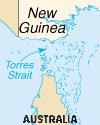
Died 19 Sep 1940 at age 66 (born 24 Dec 1873).
C(harles) G(abriel) Seligman was a pioneer in British anthropology who conducted significant field research in Melanesia, Ceylon (now Sri Lanka), and, most importantly, the Nilotic Sudan. After his education as a physician he went with the Cambridge Anthropological Expedition to the Torres Straits (1898-9). Subsequently, his interests turned from medical research towards anthropology, and revisited New Guinea (1904) to distinguish the characteristic racial, cultural, and social traits of the peoples of the region. In the 1920's, he pioneered a psychoanalytic approach: studying cross-cultural similarity of dreams. He concluded that the psychology of the unconscious could provide an approach to some basic anthropological problems.
C(harles) G(abriel) Seligman was a pioneer in British anthropology who conducted significant field research in Melanesia, Ceylon (now Sri Lanka), and, most importantly, the Nilotic Sudan. After his education as a physician he went with the Cambridge Anthropological Expedition to the Torres Straits (1898-9). Subsequently, his interests turned from medical research towards anthropology, and revisited New Guinea (1904) to distinguish the characteristic racial, cultural, and social traits of the peoples of the region. In the 1920's, he pioneered a psychoanalytic approach: studying cross-cultural similarity of dreams. He concluded that the psychology of the unconscious could provide an approach to some basic anthropological problems.
Died 19 Sep 1935 at age 78 (born 17 Sep 1857). quotes
Russian pioneer space theorist who, while a provincial Russian schoolteacher, worked out many of the principles of space travel. In 1883, he noted that a vehicle in space would travel in the opposite direction to gas that it emitted, and was the first to seriously propose this method propulsion in space travel. He wrote various papers, including the 1903 article “Exploration of Space with Reactive Devices.” The engineering equations he derived included parameters such as specific impulse, thrust coefficient and area ratio. He established that the most efficient chemical combination would be that of liquid hydrogen and liquid oxygen. He was later recognized by the Soviet Union as the “father of cosmonautics.” He also built the first wind tunnel.«
Russian pioneer space theorist who, while a provincial Russian schoolteacher, worked out many of the principles of space travel. In 1883, he noted that a vehicle in space would travel in the opposite direction to gas that it emitted, and was the first to seriously propose this method propulsion in space travel. He wrote various papers, including the 1903 article “Exploration of Space with Reactive Devices.” The engineering equations he derived included parameters such as specific impulse, thrust coefficient and area ratio. He established that the most efficient chemical combination would be that of liquid hydrogen and liquid oxygen. He was later recognized by the Soviet Union as the “father of cosmonautics.” He also built the first wind tunnel.«
Selected Works of Konstantin E. Tsiolkovsky, by Konstantin E. Tsiolkovsky. - book suggestion.
Died 19 Sep 1931 at age 80 (born 19 Jan 1851). quotes
American ichthyologist and peace activist who was not only a leading American authority on ichthyology (study of fish) in his time, but also a renowned expert in many fields. At the Scopes Monkey Trial he provided expert testimony supporting the theory of evolution. He wrote extensively on education, philosophy, eugenics and peace, as well as science. In 1885, Indiana University appointed him its President, at the time, the youngest in the nation. He was a leader for international peace. He applied biology in his arguments for peace, stating that war endangered the health of the species because it was the strongest individuals who died, and were lost from the gene pool. Before America engaged in WW I, he opposed being involved, though once war became the reality, he supported the necessity of aggressive measures to terminate the conflict as soon as possible.« more
American ichthyologist and peace activist who was not only a leading American authority on ichthyology (study of fish) in his time, but also a renowned expert in many fields. At the Scopes Monkey Trial he provided expert testimony supporting the theory of evolution. He wrote extensively on education, philosophy, eugenics and peace, as well as science. In 1885, Indiana University appointed him its President, at the time, the youngest in the nation. He was a leader for international peace. He applied biology in his arguments for peace, stating that war endangered the health of the species because it was the strongest individuals who died, and were lost from the gene pool. Before America engaged in WW I, he opposed being involved, though once war became the reality, he supported the necessity of aggressive measures to terminate the conflict as soon as possible.« more
Shore Fishes of Hawaii, by David Starr Jordan and Barton Warren Evermann. - book suggestion.
Died 19 Sep 1925 at age 88 (born 29 Dec 1836). quotes
German botanist who travelled in the interior of East Africa (from 1868) and studied the inhabitants together with the flora and fauna of the region. During this journey, in Mar 1870, he discovered the River Welle (Uele), explored the upper Nile basin, and charted the western feeders of the White Nile. He wrote about the cannibalistic practices of the Mangbettu, and his discovery of the pygmy Akka confirmed the existence of dwarf races in tropical Africa (The Heart of Africa, 1873). During 1875-88, he lived in Cairo, where he founded the Royal Geographical Society of Egypt. He made historical, geological, ethnographical and botanical investigations ranging from there to the Arabian desert.« more
German botanist who travelled in the interior of East Africa (from 1868) and studied the inhabitants together with the flora and fauna of the region. During this journey, in Mar 1870, he discovered the River Welle (Uele), explored the upper Nile basin, and charted the western feeders of the White Nile. He wrote about the cannibalistic practices of the Mangbettu, and his discovery of the pygmy Akka confirmed the existence of dwarf races in tropical Africa (The Heart of Africa, 1873). During 1875-88, he lived in Cairo, where he founded the Royal Geographical Society of Egypt. He made historical, geological, ethnographical and botanical investigations ranging from there to the Arabian desert.« more
The Heart of Africa: Three Years’ Travels and Adventures…, by Georg August Schweinfurth. - book suggestion.
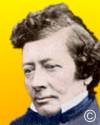
Died 19 Sep 1913 at age 72 (born 1 Nov 1840).
Italian naturalist and explorer who conducted important research in systematic zoology. Pursuing his work, he made expeditions to Persia (1862), Borneo (1865-66) and Tunisia (1879). In 1867, he founded the civic museum of natural history in Genoa. The collection he donated became the nucleus of the museum, which he directed for more than 40 years. He was also director of Societa Geografica Italiana (1891-1900). The museum he founded now contains important zoolological, paleontological, botanical, and mineralogical collections from all over the world. These collections are continually growing, now estimated to be more than 3.5 million exhibits.
Italian naturalist and explorer who conducted important research in systematic zoology. Pursuing his work, he made expeditions to Persia (1862), Borneo (1865-66) and Tunisia (1879). In 1867, he founded the civic museum of natural history in Genoa. The collection he donated became the nucleus of the museum, which he directed for more than 40 years. He was also director of Societa Geografica Italiana (1891-1900). The museum he founded now contains important zoolological, paleontological, botanical, and mineralogical collections from all over the world. These collections are continually growing, now estimated to be more than 3.5 million exhibits.
click to enlarge
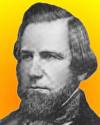
Died 19 Sep 1859 at age 55 (born 13 Jan 1804). quotes
Scottish astronomer and author who, after a few years early in his career as a teacher and headmaster, was appointed in 1836 as Regius Professor of Practical Astronomy at the University of Glasgow, where he spent the rest of his life. While in this position, he also became a popular public lecturer on astronomy and wrote a number of books on science. His fund-raising efforts paid for a new observatory at Horeslethill (1841), which was acquired by the University in 1845. While giving lectures in Natural Philosophy during the two-year absence during the illness of a colleague, it is said he inspired William Thomson as a young student who later became the famed Lord Kelvin. Nichols' last complete work was a Dictionary of the Physical Sciences.
Scottish astronomer and author who, after a few years early in his career as a teacher and headmaster, was appointed in 1836 as Regius Professor of Practical Astronomy at the University of Glasgow, where he spent the rest of his life. While in this position, he also became a popular public lecturer on astronomy and wrote a number of books on science. His fund-raising efforts paid for a new observatory at Horeslethill (1841), which was acquired by the University in 1845. While giving lectures in Natural Philosophy during the two-year absence during the illness of a colleague, it is said he inspired William Thomson as a young student who later became the famed Lord Kelvin. Nichols' last complete work was a Dictionary of the Physical Sciences.
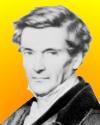
Died 19 Sep 1852 at age 49 (born 12 May 1803).
American inventor who pioneered in the design of truss bridges for the developing railroads. His first bridge (1838-39) was a light, cheap and substantial structure across the Quaboag River at Warren, Mass., for the Boston and Albany Railroad. His truss patent (3 Aug 1840), was for a frame of top and bottom horizontal timber members, with diagonal wooden braces under compression, tied by vertical wrought-iron rods under tension. By 1842, he had spanned the Connecticut River with a truss bridge. In 1846, he patented a stronger truss. Although offered the job of superintendent of the structural work on a railroad in Russia between St. Petersburg and Moscow, he sent a substitute. His invention brought him fame and fortune, but he died at age 49. He was the uncle of Elias Howe who invented a sewing machine.« more
American inventor who pioneered in the design of truss bridges for the developing railroads. His first bridge (1838-39) was a light, cheap and substantial structure across the Quaboag River at Warren, Mass., for the Boston and Albany Railroad. His truss patent (3 Aug 1840), was for a frame of top and bottom horizontal timber members, with diagonal wooden braces under compression, tied by vertical wrought-iron rods under tension. By 1842, he had spanned the Connecticut River with a truss bridge. In 1846, he patented a stronger truss. Although offered the job of superintendent of the structural work on a railroad in Russia between St. Petersburg and Moscow, he sent a substitute. His invention brought him fame and fortune, but he died at age 49. He was the uncle of Elias Howe who invented a sewing machine.« more
North American Railroad Bridges, by Brian Solomon. - book suggestion.
(EB)
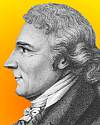
Died 19 Sep 1843 at age 51 (born 21 May 1792).
French engineer and mathematician who first described the Coriolis force, an effect of motion on a rotating body, of paramount importance to meteorology, ballistics, and oceanography. Whereas pressure differences tend to push winds in straight paths, winds follow curved paths across the Earth. In 1835, Coriolis first gave a mathematical description of the effect, giving his name to the Coriolis force. While air begins flowing from high to low pressure, the Earth rotates under it, thus making the wind appear to follow a curved path. In the Northern Hemisphere, the wind turns to the right of its direction of motion. In the Southern Hemisphere, it turns to the left. The Coriolis force is zero at the equator.
French engineer and mathematician who first described the Coriolis force, an effect of motion on a rotating body, of paramount importance to meteorology, ballistics, and oceanography. Whereas pressure differences tend to push winds in straight paths, winds follow curved paths across the Earth. In 1835, Coriolis first gave a mathematical description of the effect, giving his name to the Coriolis force. While air begins flowing from high to low pressure, the Earth rotates under it, thus making the wind appear to follow a curved path. In the Northern Hemisphere, the wind turns to the right of its direction of motion. In the Southern Hemisphere, it turns to the left. The Coriolis force is zero at the equator.
Died 19 Sep 1818 at age 57 (born 21 Sep 1760).
Swedish botanist who left a legacy of a collection of plants from his botanical tours of the West Indies, Jamaica, North America, Puerto Rico, Haiti and Cuba between 1783-87. On his return, he described nearly 900 species, most of them new, in Flora Indiae occidentalis (3 vols., 1797-1806). The Swedish Museum of Natural History now holds the collection, about 6000 specimens of phanerogams and ferns, mostly from the West Indies. It is a part of their Regnellian herbarium. He is also noted for his taxonomic studies of specific plant groups, including orchids, mosses and especially ferns. He also published Nova Genera et Species Plantarum seu Prodromus (1788) and Observationes botanicae (1791).«
Swedish botanist who left a legacy of a collection of plants from his botanical tours of the West Indies, Jamaica, North America, Puerto Rico, Haiti and Cuba between 1783-87. On his return, he described nearly 900 species, most of them new, in Flora Indiae occidentalis (3 vols., 1797-1806). The Swedish Museum of Natural History now holds the collection, about 6000 specimens of phanerogams and ferns, mostly from the West Indies. It is a part of their Regnellian herbarium. He is also noted for his taxonomic studies of specific plant groups, including orchids, mosses and especially ferns. He also published Nova Genera et Species Plantarum seu Prodromus (1788) and Observationes botanicae (1791).«
Died 19 Sep 1761 at age 69 (born 14 Mar 1692). quotes
Dutch physicist and mathematician who invented the Leyden jar, the first effective device for storing static electricity. He grew up in a family that manufactured scientific instruments such as telescopes, microscopes and air pumps. Before Musschenbroek's invention, static electricity had been produced by Guericke using a sulphur ball, with minor effects. In Jan 1746, Musschenbroek placed water in a metal container suspended on silk cords, and led a brass wire through a cork into the water. He built up a charge in the water. When an unwary assistant touched the metal container and the brass wire, the discharge from this apparatus delivered a substantial shock of static electricity. The Leyden name is linked to the discovery having being made at the University of Leiden.
Dutch physicist and mathematician who invented the Leyden jar, the first effective device for storing static electricity. He grew up in a family that manufactured scientific instruments such as telescopes, microscopes and air pumps. Before Musschenbroek's invention, static electricity had been produced by Guericke using a sulphur ball, with minor effects. In Jan 1746, Musschenbroek placed water in a metal container suspended on silk cords, and led a brass wire through a cork into the water. He built up a charge in the water. When an unwary assistant touched the metal container and the brass wire, the discharge from this apparatus delivered a substantial shock of static electricity. The Leyden name is linked to the discovery having being made at the University of Leiden.
Died 19 Sep 1710 at age 65 (born 25 Sep 1644).
Danish astronomer.
Danish astronomer.

In 2015, the Aerovelo Eta human-powered speedbike reached a top speed of 139.45 km/hr (86.65 mph) on a highway outside of Battle Mountain, Nevada. The nearly-level, straight state highway 305 was the venue for the annual World Human-Powered Speed Challenge. The bicylist (Todd Reichert) was recumbant, encased in a lightweight, low-profile aerodynamically designed shell, which also shrouded most of the wheels. During several years’ development the engineering team worked to overcome a speed wobble and steering issues to build the world’s most efficient vehicle. Reichert also flew Aerovelo’s human-powered Atlas helicopter on 13 Jun 2013 to win the AHS Sikorsky prize.«

In 1994, the U.S. DNA Identification Act was signed into law by President Clinton, as part of comprehensive federal crime legislation. Although it authorized the FBI director to establish a national DNA database, the system did not become operational until 1998. The Combined DNA Identification System (acronym CODIS) was designed to enable the states to pool the crime-investigation resources of the separate DNA databases held locally within each state. The central index would include identification records of criminals, and forensic analyses of DNA samples collected from crime scenes and unidentified human reamins. The Act included requirements for proficiency testing and privacy protection requirements, with penalties for violations. By Nov 2011, 198 laboratories were participating,«
DNA and the Criminal Justice System: The Technology of Justice, by David Lazer (ed.). - book suggestion.
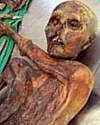
In 1991, Ötzi, the Iceman, a Stone Age wanderer and the most ancient human being ever found, was discovered in the Similaun glacier in the Ötzal Alps on the Italian-Austrian border. His frozen body was found along with artifacts of his vanished way of life. An examination of his gut contents showed the man took his last meal not long before setting out on a hike from which he was never to return. The meal was a simple affair, consisting of a bit of unleavened bread made of einkorn wheat, one of the few domesticated grains used in the Iceman's part of the world at this time, some other plant, possibly an herb or other green, and meat. An Austrian reporter named him Ötzi.
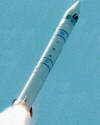
In 1988, Israel launched its first satellite, Offeq-1 (Horizon 1) onboard a Shavit rocket from the Negev Desert over the Mediterranean, becoming the ninth country in space. As an experimental satellite it was possibly on an experimental surveillance mission. Its announced functions included: Experimentation in generation of solar power; experimentation in transmission reception from space; verification of system's ability to withstand vacuum and weightless conditions; plus data collection on space environment conditions and Earth's magnetic field.
In 1982, streetcars stopped running on Market St. in San Francisco after 122 years of service.
In 1957, the United States conducted its first underground nuclear test, in the Nevada desert, at Area 12 of the Nevada Test Site. The Atomic Energy Commission's (AEC) first fully contained underground nuclear detonation named the Rainier event, detonated in a horizontal tunnel, about 47 meters (1600 feet) into the mesa and 274 meters (900 feet) beneath the top of the mesa.
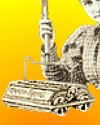
In 1876, American inventor Melville (Reuben) Bissell (1843-89) received a U.S. patent for the carpet sweeper (No. 182,346). At his a crockery shop in Grand Rapids, Mich., his wife Anna's health was affected by dust from the packing materials. From a desperate need for self-preservation, he invented the carpet sweeper. They recognized the sweeper's marketing possibilities and began to assemble them in a room over the store. The inner workings and cases were made by women working in their homes. Tufts of hog bristles were bound with string, dipped in hot pitch, inserted in brush rollers and finally trimmed them with scissors. Anna Bissell gathered the parts together in clothes baskets and brought them back to the store for assembling.
In 1848, Hyperion, the eighth moon of Saturn, was discovered in the U.S. by William Cranch Bond and his son George Phillips Bond and in England by William Lassell.
In 1838, Ephraim Morris patented the railroad brake.
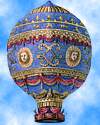
In 1783, Jacques Etienne Montgolfier launched a duck, a sheep and a rooster aboard a hot-air balloon at Versailles in France.
more
The Montgolfier Brothers and the Invention of Aviation, 1783-1784, by Charles Coulston Gillispie. - book suggestion.
In 1666, Robert Hooke furnished to the Royal Society a model for rebuilding the city of London following the Great Fire that had devasted 80% the city 2-5 Sep 1666. According to Sir David Brewster, “Although his plan was not executed, he was appointed one of the surveyors under the act of parliament; a situation in which he realized a considerable sum of money, which was found after his death in a large iron chest, that appeared to have been shut up for 30 years.” In fact, Charless II appointed six Commissioners to redesign the city with wider streets, and brick buildings to replace the timber structures that were so vulnerable to the fire. Famously, a new St. Paul's Cathedral was the work of Sir Christopher Wren, along with nearly 50 other churches, and the Monument to the Great Fire.«[Ref: Sir David Brewster, The Edinburgh Encyclopedia (1832), Vol. 10, 467.]




