
Born 7 Sep 1955.
Russian mathematician who was awarded the 1994 Fields Medal for his work on combinatorial problems in nonassociative algebra and group theory and particularly his solution of the Restricted Burnside problem. His Ph.D. (1980) Ph.D. thesis was on nonassociative algebra, wherein his treatment extending results from the classical theory of finite dimensional Jordan algebras to infinite dimensional Jordan algebras. In 1887, he showed that the Engel identity for Lie algebras implies nilpotence, in the previously unsolved case of infinite dimensions. The Restricted Burnside problem that he solved was a narrower condition arising out of Burnside's 1902 question whether a finitely generated group in which every element has finite order, is finite.«
Russian mathematician who was awarded the 1994 Fields Medal for his work on combinatorial problems in nonassociative algebra and group theory and particularly his solution of the Restricted Burnside problem. His Ph.D. (1980) Ph.D. thesis was on nonassociative algebra, wherein his treatment extending results from the classical theory of finite dimensional Jordan algebras to infinite dimensional Jordan algebras. In 1887, he showed that the Engel identity for Lie algebras implies nilpotence, in the previously unsolved case of infinite dimensions. The Restricted Burnside problem that he solved was a narrower condition arising out of Burnside's 1902 question whether a finitely generated group in which every element has finite order, is finite.«
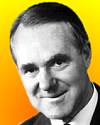
Born 7 Sep 1917.
John Warcup Cornforth is an Australian-British chemist who shared the 1975 Nobel Prize for Chemistry (with Vladimir Prelog) for “his work on the stereochemistry of enzyme-catalyzed reactions.” He investigated the mechanism of important reactions in biological systems, to see which specific hydrogen atom among two or three equivalent ones at a given site in an organic molecule will be replaced in a reaction by a larger group of atoms. The problem involves identifying the three-dimensional arrangement of the nearby and resulting groups of atoms. He used hydrogen's three isotopes (hydrogen, deuterium and tritium) as markers, which have different reaction speeds resulting from the different masses of the different isotope atoms. Comforth became totally deaf at age 16.«
John Warcup Cornforth is an Australian-British chemist who shared the 1975 Nobel Prize for Chemistry (with Vladimir Prelog) for “his work on the stereochemistry of enzyme-catalyzed reactions.” He investigated the mechanism of important reactions in biological systems, to see which specific hydrogen atom among two or three equivalent ones at a given site in an organic molecule will be replaced in a reaction by a larger group of atoms. The problem involves identifying the three-dimensional arrangement of the nearby and resulting groups of atoms. He used hydrogen's three isotopes (hydrogen, deuterium and tritium) as markers, which have different reaction speeds resulting from the different masses of the different isotope atoms. Comforth became totally deaf at age 16.«
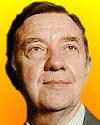
Born 7 Sep 1914; died 9 Aug 2006 at age 91. quotes
American physicist who discovered the Earth's magnetosphere, two toroidal zones of radiation due to trapped charged particles encircling the Earth (also known as the Van Allen radiation belts). During WWII he gained experience miniaturizing electronics, such as in the proximity fuse of a missile. After the war, he studied cosmic radiation, taking advantage of the unused German stock of V2 rockets launched into the outer regions of the atmosphere, carrying research devices using radio to relay back the data gathered. He was also involved in the early U.S. space program, and he had radiation measuring instruments on the first U.S. satellite, Explorer 1, launched 31 Jan 1958 with follow-up carried out by satellites Explorer 3 and 4 later the same year.«
American physicist who discovered the Earth's magnetosphere, two toroidal zones of radiation due to trapped charged particles encircling the Earth (also known as the Van Allen radiation belts). During WWII he gained experience miniaturizing electronics, such as in the proximity fuse of a missile. After the war, he studied cosmic radiation, taking advantage of the unused German stock of V2 rockets launched into the outer regions of the atmosphere, carrying research devices using radio to relay back the data gathered. He was also involved in the early U.S. space program, and he had radiation measuring instruments on the first U.S. satellite, Explorer 1, launched 31 Jan 1958 with follow-up carried out by satellites Explorer 3 and 4 later the same year.«
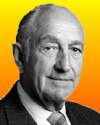
Born 7 Sep 1912; died 26 Mar 1996 at age 83. quotes
American entrepreneur and electrical engineer who co-founded the Hewlett-Packard Co., a leading manufacturer computers, computer printers, and analytic and measuring equipment. In 1939, he formed a partnership known as Hewlett-Packard Company with William R. Hewlett, a friend and Stanford classmate. HP's first product was a resistance-capacitance audio oscillator based on a design developed by Hewlett when he was in graduate school. The company began with $538 in initial capital, and its first production facility was a small garage in Palo Alto.
American entrepreneur and electrical engineer who co-founded the Hewlett-Packard Co., a leading manufacturer computers, computer printers, and analytic and measuring equipment. In 1939, he formed a partnership known as Hewlett-Packard Company with William R. Hewlett, a friend and Stanford classmate. HP's first product was a resistance-capacitance audio oscillator based on a design developed by Hewlett when he was in graduate school. The company began with $538 in initial capital, and its first production facility was a small garage in Palo Alto.
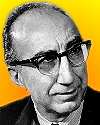
Born 7 Sep 1908; died 11 Jul 2008 at age 99. quotes
American physician and surgeon who was a pioneer in the cardiovascular field. He invented or perfected devices, techniques and procedures, including arterial bypass operations, Dacron graft for aneurism repair, artificial hearts, heart pumps and heart transplants. DeBakey had played a key role in developing the Mobile Army Surgical Hospitals (M.A.S.H.) located only minutes from the battlefield to reduce the fatility rate for critically wounded soldiers. DeBakey performed (1953) the first successful carotid endarterectomy treatment for stroke, the first successful artificial heart implant (1963) and directed the world’s first multiple-organ transplants (1968) from one donor giving a heart, a lung and both kidneys to four recipients.«
American physician and surgeon who was a pioneer in the cardiovascular field. He invented or perfected devices, techniques and procedures, including arterial bypass operations, Dacron graft for aneurism repair, artificial hearts, heart pumps and heart transplants. DeBakey had played a key role in developing the Mobile Army Surgical Hospitals (M.A.S.H.) located only minutes from the battlefield to reduce the fatility rate for critically wounded soldiers. DeBakey performed (1953) the first successful carotid endarterectomy treatment for stroke, the first successful artificial heart implant (1963) and directed the world’s first multiple-organ transplants (1968) from one donor giving a heart, a lung and both kidneys to four recipients.«

Isaac Leslie Hore-Belisha, 1st Baron Hore-Belisha (of Devonport) was an English statesman and inventor, who originated Belisha beacons, the omni-present flashing orange globe lights at British pedestrian road crossings. During his term as Minister of Transport from 1934, the driving test was introduced, the Highway Code was rewritten, which together with his beacons significantly reduced road accidents. As British secretary of state for war (1937-40), being Jewish, he was particularly motivated to fight Nazi Germany. He instituted military conscription in the spring of 1939, a few months before the outbreak of World War II. However, Prime Minister Neville Chamberlain replaced him in Jan 1940, at a time when he had poor relations with the ministers and the War Cabinet.«[Image right: Belisha beacons at a pedestrian crossing]
Born 7 Sep 1855; died 5 May 1921 at age 65.
English photographer and inventor who built and patented an early somewhat practical motion picture camera (21 Jun 1889, No. 10,131). From about 1875, he operated a portrait photography studio. He experimented with motion photography. An early attempt was a camera able to take 10 images per second on a roll of sensitized paper. Later he used celluloid film. He claimed perhaps the first time a film of an actual event was ever projected on a screen - a jerky picture of people and horse-drawn vehicles moving past Hyde Park Corner. Although he held and defended patents, his inventions were less significant than those developed by others. The first functional movie camera is generally credited to Frenchman Etienne-Jules Marey in 1888.«
English photographer and inventor who built and patented an early somewhat practical motion picture camera (21 Jun 1889, No. 10,131). From about 1875, he operated a portrait photography studio. He experimented with motion photography. An early attempt was a camera able to take 10 images per second on a roll of sensitized paper. Later he used celluloid film. He claimed perhaps the first time a film of an actual event was ever projected on a screen - a jerky picture of people and horse-drawn vehicles moving past Hyde Park Corner. Although he held and defended patents, his inventions were less significant than those developed by others. The first functional movie camera is generally credited to Frenchman Etienne-Jules Marey in 1888.«

American inventor who obtained over 280 patents for printing press improvements as well as designing a machine for making the square-bottomed paper bag (U.S. Patent No.123,811 issued 20 Feb 1872) still familiar in grocery stores. His creativity began with developing an aerial machine he patented 3 Jun 1862, but abandoned upon the business failure of his chief backer. He also had a previous patent for a paper bag machine in 1867. By 1873, he had devised a sheet-delivery and folding mechanism adopted two years later by the Boston Herald, as the first rotary folding machine that delivered newspapers complete and folded. Therafter, he joined R. Hoe & Company, and perfected new printing machinery.« more
Born 7 Sep 1829; died 13 Jul 1896 at age 66. quotes
Friedrich August Kekulé von Stradonitz was a German chemist who is traditionally attributed with devising the ring structure of carbon atoms in organic molecules. Although at first intending to study as an architect, his career in chemistry began after hearing Justus Liebig's lectures. He determined the tetravalence of carbon, and its ability to link in chains and form polyvalent radicals (1857-58). Further, he envisioned double or even triple bonds between carbon atoms in those chains, and isomers being molecules with the same atoms arranged differently. Kekulé suggested a vision of a serpent catching its own tail when saying that benzene has a ring structure (1863). Kekulé's ideas became the foundation of structural theory in organic chemistry.«
Friedrich August Kekulé von Stradonitz was a German chemist who is traditionally attributed with devising the ring structure of carbon atoms in organic molecules. Although at first intending to study as an architect, his career in chemistry began after hearing Justus Liebig's lectures. He determined the tetravalence of carbon, and its ability to link in chains and form polyvalent radicals (1857-58). Further, he envisioned double or even triple bonds between carbon atoms in those chains, and isomers being molecules with the same atoms arranged differently. Kekulé suggested a vision of a serpent catching its own tail when saying that benzene has a ring structure (1863). Kekulé's ideas became the foundation of structural theory in organic chemistry.«
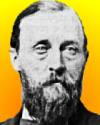
Born 7 Sep 1829; died 22 Dec 1887 at age 58.
American geologist and explorer of the U.S. West. After finishing a medical school training (1853), his early career began in paleontology for James Hall, collecting fossils in the Badlands and the Upper Missouri Valley. It is believed he made the first North American discovery of dinosaur remains (1854) during this expedition. During the Civil War, he served as a surgeon in the Civil War, after which he resumed his western explorations. His work in the Great Plains and Rocky Mountains helped lay the foundation of the U.S. Geological Survey. Hayden is credited with having the Yellowstone geyser area declared the first national park (1872). He hosted the Western botanical journey of Gray and Hooker in 1877.«
American geologist and explorer of the U.S. West. After finishing a medical school training (1853), his early career began in paleontology for James Hall, collecting fossils in the Badlands and the Upper Missouri Valley. It is believed he made the first North American discovery of dinosaur remains (1854) during this expedition. During the Civil War, he served as a surgeon in the Civil War, after which he resumed his western explorations. His work in the Great Plains and Rocky Mountains helped lay the foundation of the U.S. Geological Survey. Hayden is credited with having the Yellowstone geyser area declared the first national park (1872). He hosted the Western botanical journey of Gray and Hooker in 1877.«
Strange Genius: The Life of Ferdinand Vandeveer Hayden, by Mike Foster. - book suggestion.
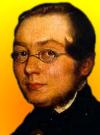
Born 7 Sep 1816; died 5 Aug 1880 at age 63.
Austrian physician who founded the New Vienna School of Dermatology, which became a basis for modern dermatology. He attributed most diseases of skin to local irritation. He rejected the prevailing belief in skin conditions being an effect caused by a general metabolic upset of blood poisoning. Before Hebra's specialized efforts, dermatology had been a highly neglected field in general hospitals. He wrote one of the most influential books on dermatology, Atlas der Hautkrankheiten (1856-76). Among the many diseases of the skin he described and named are lupus, pityriasis, rubra and tinea cruris, and he was the first to describe dermatitis herpetiformes. He classified skin diseases in accordance with pathological anatomy (1845).«
Austrian physician who founded the New Vienna School of Dermatology, which became a basis for modern dermatology. He attributed most diseases of skin to local irritation. He rejected the prevailing belief in skin conditions being an effect caused by a general metabolic upset of blood poisoning. Before Hebra's specialized efforts, dermatology had been a highly neglected field in general hospitals. He wrote one of the most influential books on dermatology, Atlas der Hautkrankheiten (1856-76). Among the many diseases of the skin he described and named are lupus, pityriasis, rubra and tinea cruris, and he was the first to describe dermatitis herpetiformes. He classified skin diseases in accordance with pathological anatomy (1845).«
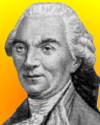
Born 7 Sep 1707; died 16 Apr 1788 at age 80. quotes
French naturalist who formulated a crude theory of evolution and was the first to suggest that the earth might be older than suggested by the Bible. In 1739 he was appointed keeper of the Jardin du Roi, a post he occupied until his death. There he worked on a comprehensive work on natural history, for which he is remembered, Histoire naturelle, générale et particulière. He began this work in 1749, and it dominated the rest of his life. It would eventually run to 44 volumes, including quadrupeds, birds, reptiles and minerals. He proposed (1778) that the Earth was hot at its creation and, from the rate of cooling, calculated its age to be 75,000 years, with life emerging some 40,000 years ago.
French naturalist who formulated a crude theory of evolution and was the first to suggest that the earth might be older than suggested by the Bible. In 1739 he was appointed keeper of the Jardin du Roi, a post he occupied until his death. There he worked on a comprehensive work on natural history, for which he is remembered, Histoire naturelle, générale et particulière. He began this work in 1749, and it dominated the rest of his life. It would eventually run to 44 volumes, including quadrupeds, birds, reptiles and minerals. He proposed (1778) that the Earth was hot at its creation and, from the rate of cooling, calculated its age to be 75,000 years, with life emerging some 40,000 years ago.

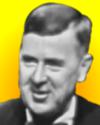
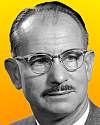
Died 7 Sep 2004 at age 87 (born 24 Aug 1917). quotes
Ralph Eugene Lapp was an American nuclear physicist and author who began his career in high-energy physics research with Arthur H. Compton. Lapp then worked at Chicago on the Manhattan Project. With 69 others, he signed Leo Szilard’s 17 Jul 1945 petition to President Truman, the month before the attack on Hiroshima. They urged that Japan should have an opportunity to surrender before use of the atom bomb. (Nevertheless, the actual attack was by surprise.) After the war, he researched the results in Japan. Lapp lectured across the U.S. He wrote 22 books on nuclear safety, including the dangers of nuclear fallout in The Voyage of the Lucky Dragon (1958). A Post book reviewer in 1956 called him “a one-man atomic truth squad and nuclear lie detector.”«
Ralph Eugene Lapp was an American nuclear physicist and author who began his career in high-energy physics research with Arthur H. Compton. Lapp then worked at Chicago on the Manhattan Project. With 69 others, he signed Leo Szilard’s 17 Jul 1945 petition to President Truman, the month before the attack on Hiroshima. They urged that Japan should have an opportunity to surrender before use of the atom bomb. (Nevertheless, the actual attack was by surprise.) After the war, he researched the results in Japan. Lapp lectured across the U.S. He wrote 22 books on nuclear safety, including the dangers of nuclear fallout in The Voyage of the Lucky Dragon (1958). A Post book reviewer in 1956 called him “a one-man atomic truth squad and nuclear lie detector.”«
The Voyage of the Lucky Dragon, by Ralph Lapp. - book suggestion.
1958
Died 7 Sep 1991 at age 83 (born 18 Sep 1907).
Edwin Mattison McMillan was an American nuclear physicist who shared the Nobel Prize for Chemistry in 1951 (with Glenn T. Seaborg) for his discovery of element 93. Just as the planet Neptune is beyond Uranus, this new element was named neptunium, the first element beyond uranium, thus called a transuranium element. By irradiating uranium with rapid neutrons or with heavy-hydrogen nuclei (deuterons), other neptunium isotopes were soon produced in Berkeley. By 1940, McMillan with his colleagues working with Seaborg found that the radioactive decay of neptunium disintegrates yields element 94, called plutonium, after the planet Pluto beyond Neptune. During WW II he was engaged in national defence nuclear research.«
Edwin Mattison McMillan was an American nuclear physicist who shared the Nobel Prize for Chemistry in 1951 (with Glenn T. Seaborg) for his discovery of element 93. Just as the planet Neptune is beyond Uranus, this new element was named neptunium, the first element beyond uranium, thus called a transuranium element. By irradiating uranium with rapid neutrons or with heavy-hydrogen nuclei (deuterons), other neptunium isotopes were soon produced in Berkeley. By 1940, McMillan with his colleagues working with Seaborg found that the radioactive decay of neptunium disintegrates yields element 94, called plutonium, after the planet Pluto beyond Neptune. During WW II he was engaged in national defence nuclear research.«
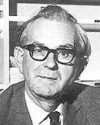
Died 7 Sep 1985 at age 67 (born 8 Oct 1917).
British biochemist who (with Gerald M. Edelman) was awarded the 1972 Nobel Prize in Physiology or Medicine for discoveries concerning the chemical structure of antibodies. As giant molecules, antibodies are difficult to study. Both scientists looked for methods to split the large molecules into well defined fragments that, it was hoped, would prove to be more easily handled. Porter found that this could be done using papain, a protein splitting enzyme. Whereas previously it had earlier been assured that the most common type of antibody would carry two identical combining sites, Porter in fact found that the molecule split into three fragments: two smaller very similar ones, both with capacity of combining with the antigen, and one larger one lacking this capacity. He died in a car accident.
British biochemist who (with Gerald M. Edelman) was awarded the 1972 Nobel Prize in Physiology or Medicine for discoveries concerning the chemical structure of antibodies. As giant molecules, antibodies are difficult to study. Both scientists looked for methods to split the large molecules into well defined fragments that, it was hoped, would prove to be more easily handled. Porter found that this could be done using papain, a protein splitting enzyme. Whereas previously it had earlier been assured that the most common type of antibody would carry two identical combining sites, Porter in fact found that the molecule split into three fragments: two smaller very similar ones, both with capacity of combining with the antigen, and one larger one lacking this capacity. He died in a car accident.
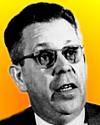
Died 7 Sep 1970 at age 76 (born 9 Jul 1894).
Percy Le Baron Spencer was an American engineer and inventor who had the idea for the microwave oven. In 1940, Sir John Randall and Dr. H. A. Boot invented the magnetron tube to produce radar microwaves. After the war, Dr. Percy Spencer at the Raytheon Company was investigating the magnetron tube. During one experiment, as the story goes, he discovered that a chocolate bar in his pocket had totally melted. Since the heating effect of microwaves was known earlier, Dr. Spencer deduced the magnetron radiation had melted the chocolate, not his body heat. This led Spencer to research cooking food. The first commercial microwave ovens were large equipment, made for restaurants.
Percy Le Baron Spencer was an American engineer and inventor who had the idea for the microwave oven. In 1940, Sir John Randall and Dr. H. A. Boot invented the magnetron tube to produce radar microwaves. After the war, Dr. Percy Spencer at the Raytheon Company was investigating the magnetron tube. During one experiment, as the story goes, he discovered that a chocolate bar in his pocket had totally melted. Since the heating effect of microwaves was known earlier, Dr. Spencer deduced the magnetron radiation had melted the chocolate, not his body heat. This led Spencer to research cooking food. The first commercial microwave ovens were large equipment, made for restaurants.
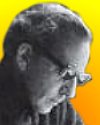
Died 7 Sep 1969 at age 55 (born 15 Jul 1914).
Scottish naturalist and author best known for his book Ring of Bright Water (1960), the story of his life in the western Highlands of Scotland with two pet otters. In 1945, he bought the small Hebridean island of Soay, to create a shark fishery there, but his effort was undercapitalized and failed. He found the sharks elusive, difficult to land in a small boat and he underestimated the refrigeration capacity required to keep the stored meat edible. However, the experience became the source for his book Harpoon Venture (1952). His later enterprises included encouraging Eider Ducks to breed on the small island of Eilean Dudh so that the down from their nests could be harvested, and establishing a collection of wild animals indigenous to Scotland to create a private zoo.«
Scottish naturalist and author best known for his book Ring of Bright Water (1960), the story of his life in the western Highlands of Scotland with two pet otters. In 1945, he bought the small Hebridean island of Soay, to create a shark fishery there, but his effort was undercapitalized and failed. He found the sharks elusive, difficult to land in a small boat and he underestimated the refrigeration capacity required to keep the stored meat edible. However, the experience became the source for his book Harpoon Venture (1952). His later enterprises included encouraging Eider Ducks to breed on the small island of Eilean Dudh so that the down from their nests could be harvested, and establishing a collection of wild animals indigenous to Scotland to create a private zoo.«
Ring of Bright Water, by Gavin Maxwell. - book suggestion.
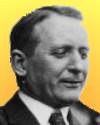
Died 7 Sep 1957 at age 79 (born 16 Oct 1877).
Norwegian oceanographer was a pioneer of physical oceanography. With Fridtjof Nansen he produced the landmark survey, The Norwegian Sea (1909), mapping currents and hydrography from Norway’s research cruises. In 1916 he introduced the temperature–salinity (T–S) diagram and the modern idea of “water masses,” a foundation of ocean-water classification. He led hydrographic work on the Michael Sars North Atlantic expedition (1910) and contributed to the classic synthesis The Depths of the Ocean (1912). He founded and directed Bergen’s Geophysical Institute (1917) and later received the Alexander Agassiz Medal (1933).«
Norwegian oceanographer was a pioneer of physical oceanography. With Fridtjof Nansen he produced the landmark survey, The Norwegian Sea (1909), mapping currents and hydrography from Norway’s research cruises. In 1916 he introduced the temperature–salinity (T–S) diagram and the modern idea of “water masses,” a foundation of ocean-water classification. He led hydrographic work on the Michael Sars North Atlantic expedition (1910) and contributed to the classic synthesis The Depths of the Ocean (1912). He founded and directed Bergen’s Geophysical Institute (1917) and later received the Alexander Agassiz Medal (1933).«
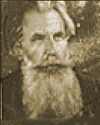
Died 7 Sep 1956 at age 64 (born 30 Sep 1891).
Soviet scientist and explorer responsible for the Soviet program of exploration and exploitation of Arctic resources; through his many activities he exercised a wide and diverse influence on Soviet life and thought. In 1937, on drifting ice near the North Pole, he established a scientific station notable for its oceanographic researches (1937). In the late 1940's he advanced a theory of the formation of the Earth from a rotating cloud of dust and gas. Schmidt led an expedition on the maiden voyage (1933) of the steamship Chelyuskin, which became ice-bound and went under in the Bering Strait. All the 111 scientists and crew members made it just in time to disembark the doomed vessel and, within a month, they were all ferried safely to the mainland.
Soviet scientist and explorer responsible for the Soviet program of exploration and exploitation of Arctic resources; through his many activities he exercised a wide and diverse influence on Soviet life and thought. In 1937, on drifting ice near the North Pole, he established a scientific station notable for its oceanographic researches (1937). In the late 1940's he advanced a theory of the formation of the Earth from a rotating cloud of dust and gas. Schmidt led an expedition on the maiden voyage (1933) of the steamship Chelyuskin, which became ice-bound and went under in the Bering Strait. All the 111 scientists and crew members made it just in time to disembark the doomed vessel and, within a month, they were all ferried safely to the mainland.
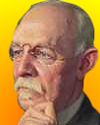
Died 7 Sep 1922 at age 69 (born 23 Sep 1852). quotes
American surgeon who established the first U.S. surgical school. In 1884, he was first to describe injection of cocaine into the trunk of a sensory nerve to block pain transmission. From 1886, he joined research at a pathological laboratory newly-formed in Baltimore, Md. where he developed strict aseptic surgical techniques with fine silk sutures in small stitches and careful tissue handling that gave safer, more effective results. In 1890, Halsted began use of rubber gloves, the year he was appointed first surgeon-in-chief at Johns Hopkins Hospital. Halsted created there subspecialty divisions such as orthopedics, otolaryngology and urology. His successful training of surgeons was spread as those he taught took up careers at other institutions.«
American surgeon who established the first U.S. surgical school. In 1884, he was first to describe injection of cocaine into the trunk of a sensory nerve to block pain transmission. From 1886, he joined research at a pathological laboratory newly-formed in Baltimore, Md. where he developed strict aseptic surgical techniques with fine silk sutures in small stitches and careful tissue handling that gave safer, more effective results. In 1890, Halsted began use of rubber gloves, the year he was appointed first surgeon-in-chief at Johns Hopkins Hospital. Halsted created there subspecialty divisions such as orthopedics, otolaryngology and urology. His successful training of surgeons was spread as those he taught took up careers at other institutions.«
Genius on the Edge: The Bizarre Double Life of Dr. William Stewart Halsted, by Gerald Imber. - book suggestion.
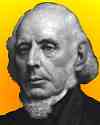
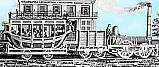
Matthias William Baldwin was an American manufacturer whose significant improvements of the steam locomotive included a steam-tight metal joint that permitted his engines to use steam at double the pressure of others. In 1819 he had established himself as a jeweller and devised a patent gold plating process. He left this trade in 1825 to become a machinist in the manufacture of engravers and book-makers tools; later expanding into hydraulic presses and forms of copper and steel rolls for the calico printing trade. In 1832, he built the locomotive Old Ironsides. He developed tight-fitting steam joints, raising steam pressure from 60 pounds per square inch to 120 psi, which meant far better performance. Baldwin's works eventually produced over 1,000 locomotives. more
The Baldwin Locomotive Works, 1831-1915: A Study in American Industrial Practice, by John K. Brown. - book suggestion.
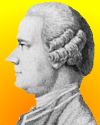
Died 7 Sep 1799 at age 68 (born 8 Dec 1730). quotes
Dutch-English physician who discovered photosynthesis by identifying that sunlight gave green plants the ability to take in carbon dioxide, fix the carbon, and purified the air (returned oxygen) to the benefit of respiration of animals. Earlier, as a physician, he promoted Edward Jenner's use of inoculation with live smallpox vaccine to induce protection against the disease. Ingenhousz was a diligent experimenter, who studied soils and plant nutrition. He introduced the use of cover slips on microscope slides. He improved phosphorus matches and an apparatus for generating static electricity; investigated Brownian motion and heat conduction in metals, invented a hydrogen-fueled lighter, and mixed an explosive propellant for firing pistols.«
Dutch-English physician who discovered photosynthesis by identifying that sunlight gave green plants the ability to take in carbon dioxide, fix the carbon, and purified the air (returned oxygen) to the benefit of respiration of animals. Earlier, as a physician, he promoted Edward Jenner's use of inoculation with live smallpox vaccine to induce protection against the disease. Ingenhousz was a diligent experimenter, who studied soils and plant nutrition. He introduced the use of cover slips on microscope slides. He improved phosphorus matches and an apparatus for generating static electricity; investigated Brownian motion and heat conduction in metals, invented a hydrogen-fueled lighter, and mixed an explosive propellant for firing pistols.«
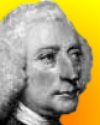
Died 7 Sep 1779 (born 1709). quotes
Scottish physician and poet who wrote poetry with medical themes. His first pamphlet, published anonymously, An Essay for Abridging the Study of Physic (1735), satirized the ignorance of the apothecaries and medical men of his day. In The Oeconomy of Love (1736) he wrote instruction in verse for newly weds. His best known work, The Art of Preserving Health (1744), written in blank verse was immediately popular. From 1746, he was physician to the Hospital for Lame and Sick Soldiers, in Buckinghamshire, and during the Seven Years' War (1760-63) he was physician to the forces in Germany. After the war, he returned to London on half-pay and resumed his practice. He died from infection following a carriage accident.« more
Scottish physician and poet who wrote poetry with medical themes. His first pamphlet, published anonymously, An Essay for Abridging the Study of Physic (1735), satirized the ignorance of the apothecaries and medical men of his day. In The Oeconomy of Love (1736) he wrote instruction in verse for newly weds. His best known work, The Art of Preserving Health (1744), written in blank verse was immediately popular. From 1746, he was physician to the Hospital for Lame and Sick Soldiers, in Buckinghamshire, and during the Seven Years' War (1760-63) he was physician to the forces in Germany. After the war, he returned to London on half-pay and resumed his practice. He died from infection following a carriage accident.« more
In 1967, the first successful U.S. biological research satellite was launched carrying 13 experiments to test the effects of cosmic radiation and the space environment on simple small animal and plant life. The life forms included millions of orange head mold spores, thousands of vinegar gnats, flour beetles and bacteria cells, hundreds of wasp and amoeba, 120 frog eggs as well as dozens of wheat seedlings and blue wild flowers. This mission of Biosatellite II was successfully completed and it was retrieved after re-entry, whereas Biosatellite I (launched 14 Dec 1966) failed to make its planned re-entry due to retrofire failure..*
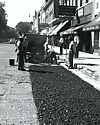
Asphalting Ann Arbor
In 1948, the first rubberized asphalt road surface in the U.S. was applied to 6,217-ft of Exchange Street in Akron, Ohio, a city that was home to a large rubber industry. The paving mixture contained 7 to 11 pounds* of crumbled synthetic rubber per ton of asphalt. This full-scale use followed a test made on a small section resurfaced in 1947. Goodyear President Paul W. Litchfield proposed the paving material - and donated the rubber - to the city after he had seen its use in Holland, where it had been used since the 1930s and was claimed to be more durable, waterproof and safer in extremes of weather. However, by 1959, wear was judged to be no better than less expensive asphalt alone, and rubber additive was no longer used.«
more
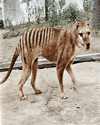
1933 (colorized)
In 1936, the last known Tasmanian Tiger (Thylacine) died at the Hobart Zoo. This dog-like marsupial, named from the striping of its hindquarters, was the first known mammal species to become extinct in Tasmania. The animal had been systematically exterminated by European settlers as an undesirable predator of farm animals. After it was eliminated in the wild, a few remained alive in zoos, but no effort was made to breed the species. In 2022, Australia’s ABC television reported, “A University of Melbourne research lab that has been working on the de-extinction of the Tasmanian tiger for the past 15 years has announced it has partnered with a US-based genetic engineering company to…bring the marsupial back.”
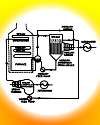
In 1923, an experimental mercury boiler turbine invented by General Electric began generating about 1,500 kW of electricity at the Hartford Electric Light Company's Dutch Point Station*. It was claimed to be more fuel efficient than steam turbines alone. Boiling mercury (354ºC) needed a smaller fraction of the total heat input than for vaporizing water, and it operated at lower pressure causing less stresses in the pipes. After the mercury vapour drove the first stage of turbines, the exhaust heat from the mercury was used to produce steam for a second stage of steam turbines. By 1947, three full-scale plants had been built, but later conventional steam plant efficiency exceeded the mercury/steam cycle, so the toxic design was abandoned.«[Image: schematic of the mercury and steam circuits for generator.]
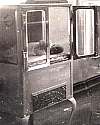
In 1888, a baby incubator was first used in the U.S. to care for an infant at State Emigrant Hospital on Ward's Island, New York. Edith Eleanor McLean weighed 2-lb 7-oz. Originally called a "hatching cradle," the device was 3-ft square, 4-ft high, It was designed to increase the survival rate for premature infants by the maternity ward doctors, Drs. Allan M. Thomas and William C. Deming.* At the 1904 World's Fair, Tennessean E.M. Bayliss exhibited 14 metal-framed glass incubators with constant ventilation and temperature of 90ºF, attended by nurses caring for real endangered infants from orphanages and poor families. The care of the infants was paid for by the exhibit admission fee.«[Image: Incubator exhibited at 1904 World's Fair, St. Louis.]
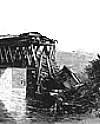
In 1850, a Scientific American article on “Iron Railroad Bridges” reported, “Since the catastrophe on the New York and Erie Railroad, the company have come to the determination to erect no more iron bridges, and to remove the only two remaining on their road as soon as wooden ones can be erected.” In 1849, the company had experimented in building three iron bridges, the first of their kind for a railroad. On 31 Jul 1850, an eastbound stock train was crossing one of these bridges near Mast Hope, Pennsylvania, when the engineer heard a loud cracking. Opening full throttle, he raced the engine safely across. The rest of the train fell with the wrecked bridge into the creek. A brakeman and two stockmen lost their lives.«[19 Sep 2022: corrected Jul 1849 to Jul 1850. Image: unrelated rail bridge collapse scene at Little Miami River, Batavia, Ohio, 1884]

In 1822, a treadmill was completed to grind corn at the New York City Prison employing the labour of 8 to 16 prisoners at a time walking on what looked like a very wide, 5-ft diam. paddle wheel. Prisoners held on to a bar and climbed the paddle boards, like endlessly walking up stairs. On each revolution, a bell rang. This was the first of its kind in the U.S., but it was based on a penal idea that had been previously used successfully in Britain. When production began on 23 Sep 1822, it ground 40 to 50 bushels of corn per day. The project was suggested by Stephen Greelet and Isaac Collins, a manager of the Society for the Prevention of Pauperism, and adopted by the mayor. It was abandoned after a few years trial.*«[Image: English prison treadmill design.] more
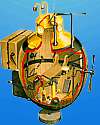
In 1776, the first U.S. submarine built for wartime use, the American Turtle, was used in New York harbour to attach explosives to the hull of the Eagle, Admiral Howe's flagship. Known as a "torpedo" the weapon was a cask with 150 lbs of black powder and a clockwork time fuse. Because it separated from the ship before it exploded, little damage was done. The submarine, just large enough for one occupant, was operated by Ezra Lee, turning a 24-in diam. two-bladed wooden propeller giving up to3 knots speed. It was built by David Bushnell of Saybrook, Conn., who provided it with a rudder and a second propeller for vertical movement. Water taken in as ballast to submerge was expelled by hand-pump to resurface.«*
Antonie Van Leeuwenhoek and His “Little Animals”, by Antonie Van Leeuwenhoek. - book suggestion.




