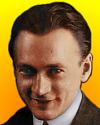
Born 30 Jul 1889; died 29 Jul 1982 at age 92.
Russian-American physicist and electronics engineer who is known as “the Father of Television.” Concurrent with the start of radio broadcasting, Zworykin was developing a system of transmitting sound and pictures. Other inventors were using a motorized, mechanical scanning system with rotating disks capable of a picture about one inch square. It was heavy, bulky and impractical for home use. Zworykin, at Westinghouse, instead developed an electronic scanning television system using his innovations, the iconoscope and kinescope, the forerunners of today's television camera. He also invented the electron microscope.
Russian-American physicist and electronics engineer who is known as “the Father of Television.” Concurrent with the start of radio broadcasting, Zworykin was developing a system of transmitting sound and pictures. Other inventors were using a motorized, mechanical scanning system with rotating disks capable of a picture about one inch square. It was heavy, bulky and impractical for home use. Zworykin, at Westinghouse, instead developed an electronic scanning television system using his innovations, the iconoscope and kinescope, the forerunners of today's television camera. He also invented the electron microscope.
Zworykin, Pioneer of Television, by Albert Abramson. - book suggestion.
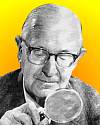

Felix Andries Vening Meinesz was a Dutch geophysicist and geodesist who was known for his measurements of gravity at sea for which he devised the Vening Meinesz pendulum apparatus with comparable accuracy as on land. Starting in 1923 he conducted several global gravity surveys on voyages on submarines, particularly to and in the Indonesian Archipelago. He detected strong gravity anomaly belts running parallel to the Indonesian deep sea trenches. He explained these Meinesz belts as sites of downbuckling of the Earth's crust. He introduced the concept of regional isostasy taking flexure of an elastic crust into account. He also contributed to physical geodesy: The Vening Meinesz formula connects the deviation of the vertical from the plumbline to gravity anomalies.
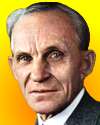
Born 30 Jul 1863; died 7 Apr 1947 at age 83. quotes
American inventor and automobile manufacturer who first experimented with internal combustion engines while he was an engineer with the Edison Illuminating Company. He completed his first useful gas motor on 24 Dec 1893. The Quadricycle, he designed made its first road test on 4 Jun 1896. On 16 Jun 1903, he and eleven investors signed paperwork to incorporate the Ford Motor Company. By 1 Oct 1908, Ford introduced the low cost, reliable Model T, while continuing to revolutionize his industry. Ford introduced precision manufactured parts designed to be standardized and interchangeable parts. On 1 Dec 1913, production was increased using a continuous moving assembly line. By 1918, half of all cars in America were Model T's. The last Model T rolled off the assembly line on 26 May 1927.
American inventor and automobile manufacturer who first experimented with internal combustion engines while he was an engineer with the Edison Illuminating Company. He completed his first useful gas motor on 24 Dec 1893. The Quadricycle, he designed made its first road test on 4 Jun 1896. On 16 Jun 1903, he and eleven investors signed paperwork to incorporate the Ford Motor Company. By 1 Oct 1908, Ford introduced the low cost, reliable Model T, while continuing to revolutionize his industry. Ford introduced precision manufactured parts designed to be standardized and interchangeable parts. On 1 Dec 1913, production was increased using a continuous moving assembly line. By 1918, half of all cars in America were Model T's. The last Model T rolled off the assembly line on 26 May 1927.
My Life and Work, by Henry Ford. - book suggestion.
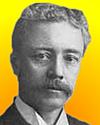
Born 30 Jul 1859; died 27 Feb 1951 at age 91. quotes
American physicist and administrator who is credited with making the first X-ray photograph in the U.S. on about 12 Jan 1896, while he was a professor of physics and astronomy at Davidson College, North Carolina. Shortly after Röntgen's announcement of his discovery of X-rays, Smith copied the technique. Smith made an X-ray photograph of a bullet he had shot into the hand of a cadaver, that was published in the Charlotte Observer (27 Feb 1896). Shortly thereafter, he made the first clinical use of X-rays to locate a thimble stuck in a young girl's throat, enabling its surgical removal. Smith became the college president in 1901 and oversaw adding a new science building. He established an electric light plant. Near the end of WW I, his idea to inform the German population of President Wilson's peace plans was adopted. Millions of messages carried by gas-filled balloons were released from France into the winds over Germany.«
American physicist and administrator who is credited with making the first X-ray photograph in the U.S. on about 12 Jan 1896, while he was a professor of physics and astronomy at Davidson College, North Carolina. Shortly after Röntgen's announcement of his discovery of X-rays, Smith copied the technique. Smith made an X-ray photograph of a bullet he had shot into the hand of a cadaver, that was published in the Charlotte Observer (27 Feb 1896). Shortly thereafter, he made the first clinical use of X-rays to locate a thimble stuck in a young girl's throat, enabling its surgical removal. Smith became the college president in 1901 and oversaw adding a new science building. He established an electric light plant. Near the end of WW I, his idea to inform the German population of President Wilson's peace plans was adopted. Millions of messages carried by gas-filled balloons were released from France into the winds over Germany.«
Born 30 Jul 1815; died 7 Jun 1871 at age 55.
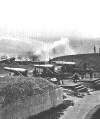
U.S. military inventor of perforated-cake gunpowder. Its hexagonal grains, perforated with several longitudinal holes, increased the burning surface of each grain. By burning evenly, it provided controlled rather than sudden pressure that was maintained as the projectile traveled forward, thus giving increased muzzle velocity. He also invented a system of casting cannon around a hollow core cooled from inside, resulting in a stronger barrel as concentric layers of metal cooled and shrank. His work led to casting of some of the largest cannon ever built: 20-inch muzzleloaders that fired 1,080-pound solid shot.[Image: Rodman Cannon at Fort McHenry.]
U.S. military inventor of perforated-cake gunpowder. Its hexagonal grains, perforated with several longitudinal holes, increased the burning surface of each grain. By burning evenly, it provided controlled rather than sudden pressure that was maintained as the projectile traveled forward, thus giving increased muzzle velocity. He also invented a system of casting cannon around a hollow core cooled from inside, resulting in a stronger barrel as concentric layers of metal cooled and shrank. His work led to casting of some of the largest cannon ever built: 20-inch muzzleloaders that fired 1,080-pound solid shot.[Image: Rodman Cannon at Fort McHenry.]
Born 30 Jul 1815; died 29 Aug 1865 at age 50. quotes
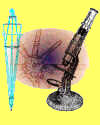
Polish-German physician, neurologist and embryologist. While in medical practice, he researched unpaid at university. (As a Jew, he was barred from teaching.) He discovered the fibres of Remak (1830), nonmedullated nerve fibres (1838), and named the three germ layers he discovered of the early embryo: the ectoderm, the mesoderm, and the endoderm (1842). In 1844 he discovered the nerve cells in the heart now called Remak's ganglia and provided the first illustration of the 6-layered cortex. He was a pioneer in the use of electrotherapy for the treatment of nervous diseases. He finally became the first Jew to teach at university (1847), but even promotion to assistant professor in 1859 did not reflect his eminence.DSB give date of birth 30 Jul 1815. EB gives 26 Jul 1815.]
Polish-German physician, neurologist and embryologist. While in medical practice, he researched unpaid at university. (As a Jew, he was barred from teaching.) He discovered the fibres of Remak (1830), nonmedullated nerve fibres (1838), and named the three germ layers he discovered of the early embryo: the ectoderm, the mesoderm, and the endoderm (1842). In 1844 he discovered the nerve cells in the heart now called Remak's ganglia and provided the first illustration of the 6-layered cortex. He was a pioneer in the use of electrotherapy for the treatment of nervous diseases. He finally became the first Jew to teach at university (1847), but even promotion to assistant professor in 1859 did not reflect his eminence.DSB give date of birth 30 Jul 1815. EB gives 26 Jul 1815.]
c.1664
Born 30 Jul 1641; died 21 Aug 1673 at age 32.
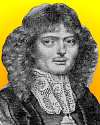
Dutch physician who discovered the follicles of the ovary (known as Graafian follicles), in which the individual egg cells are formed (1672) and also published on male reproductive organs (1668). He was also important for his studies on pancreatic juice (1663) and on the reproductive organs of mammals. He is considered one of the creators of experimental physiology. He used a technique of injecting dye into organs in order to be able to observe them better. It was on this technique that a bitter priority dispute with Swammerdam developed. He wrote a brief tract on the use of the syringe in anatomy (1669). He died, perhaps by suicide, at only 32 years of age.Name also spelled Regnier. Day of death given as 21 Aug in DSB. 17 Aug in Enc. Brit.
Dutch physician who discovered the follicles of the ovary (known as Graafian follicles), in which the individual egg cells are formed (1672) and also published on male reproductive organs (1668). He was also important for his studies on pancreatic juice (1663) and on the reproductive organs of mammals. He is considered one of the creators of experimental physiology. He used a technique of injecting dye into organs in order to be able to observe them better. It was on this technique that a bitter priority dispute with Swammerdam developed. He wrote a brief tract on the use of the syringe in anatomy (1669). He died, perhaps by suicide, at only 32 years of age.Name also spelled Regnier. Day of death given as 21 Aug in DSB. 17 Aug in Enc. Brit.

Died 30 Jul 2002 at age 89 (born 24 Nov 1912).
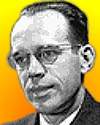
American nuclear physicist who led the construction of the Graphite Research Reactor (BGRR), at Brookhaven National Laboratory. After work on the Manhattan Project in WW II. he organized about 1,300 scientists, and spoke before Congress to keep atomic research under civilian control, to avoid a worldwide nuclear arms race. In 1946, with Karl Morgan, he developed a film badge to measure worker exposure to fast neutrons. BGRR, completed in 1949, was the first reactor built solely to research peacetime uses of atomic energy. In its first year of operation, Borst announced the production of radioactive iodine suitable for treating thyroid cancer. In 1952, he explained how beryllium-7 from helium fusion triggers supernovae.«
American nuclear physicist who led the construction of the Graphite Research Reactor (BGRR), at Brookhaven National Laboratory. After work on the Manhattan Project in WW II. he organized about 1,300 scientists, and spoke before Congress to keep atomic research under civilian control, to avoid a worldwide nuclear arms race. In 1946, with Karl Morgan, he developed a film badge to measure worker exposure to fast neutrons. BGRR, completed in 1949, was the first reactor built solely to research peacetime uses of atomic energy. In its first year of operation, Borst announced the production of radioactive iodine suitable for treating thyroid cancer. In 1952, he explained how beryllium-7 from helium fusion triggers supernovae.«

Died 30 Jul 1954 at age 71 (born 9 May 1883). quotes
Sir Henry Clay was an English economist who became the Stanley Jevons Professor of Political Economy at the University of Manchester (1922) and was an economic adviser to the Bank of England from 1930 until his resignation in 1944 to become Warden of Nuffield College, Oxford. It was his task to develop the College, starting with plans for its building, and to recruit the first members of the new College. His writings include the book, Economics: An Introduction for the General Reader (1916), discussing the relationship of economic studies to political and social problems, which was reprinted for 30 years. In the early 1920s he wrote about industrial relations. He died in a road accident.«
Sir Henry Clay was an English economist who became the Stanley Jevons Professor of Political Economy at the University of Manchester (1922) and was an economic adviser to the Bank of England from 1930 until his resignation in 1944 to become Warden of Nuffield College, Oxford. It was his task to develop the College, starting with plans for its building, and to recruit the first members of the new College. His writings include the book, Economics: An Introduction for the General Reader (1916), discussing the relationship of economic studies to political and social problems, which was reprinted for 30 years. In the early 1920s he wrote about industrial relations. He died in a road accident.«
Economics an Introduction for the General Reader, by Henry Clay. - book suggestion.
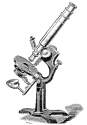
Died 30 Jul 1944 at age 89 (born 26 Sep 1854).
American inventor who developed microscopes and optical instruments. In business, he became chairman Bausch & Lomb Optical Co. His father, John J. Bausch (1830-1926), was born in Germany, emigrated to America in 1849, and started a spectacle making business (the Vulcanite Optical Instrument Co.) with German immigrant Henry Lomb (1828-1908). By 1866, their company was making a simple microscope. The company name was changed to Bausch & Lomb Optical Co. in 1874, the year they produced their first compound microscope. Edward, with brothers William, and Henry all helped in the design and production of a full product line of microscopes. Edward held a number of patents related to the design of microscopes.
American inventor who developed microscopes and optical instruments. In business, he became chairman Bausch & Lomb Optical Co. His father, John J. Bausch (1830-1926), was born in Germany, emigrated to America in 1849, and started a spectacle making business (the Vulcanite Optical Instrument Co.) with German immigrant Henry Lomb (1828-1908). By 1866, their company was making a simple microscope. The company name was changed to Bausch & Lomb Optical Co. in 1874, the year they produced their first compound microscope. Edward, with brothers William, and Henry all helped in the design and production of a full product line of microscopes. Edward held a number of patents related to the design of microscopes.
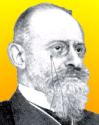
Died 30 Jul 1916 at age 61 (born 22 Jan 1855).
Albert Ludwig Sigismund Neisser was a German physician, who specialized in dermatology and venereal diseases. He discovered gonococcus (1879), the small bacterium that causes gonorrhea. In Norway, he examined patients afflicted with leprosy and demonstrated the existence of the bacillus causing the disease (1879). He was the first to make the connection clear between it and the disease. In his studies of syphilis, he failed to find a successful innoculation against the disease, and may even have spread it instead. more
Albert Ludwig Sigismund Neisser was a German physician, who specialized in dermatology and venereal diseases. He discovered gonococcus (1879), the small bacterium that causes gonorrhea. In Norway, he examined patients afflicted with leprosy and demonstrated the existence of the bacillus causing the disease (1879). He was the first to make the connection clear between it and the disease. In his studies of syphilis, he failed to find a successful innoculation against the disease, and may even have spread it instead. more
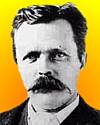
Died 30 Jul 1913 at age 62 (born 30 Dec 1850).
English geologist and seismologist who invented the horizontal pendulum seismograph (1894) and was one of the European scientists that helped organize the seismic survey of Japan in the last half of the 1800's. Milne conducted experiments on the propagation of elastic waves from artificial sources, and building construction. He spent 20 years in Japan, until 1895, when a fire destroyed his property, and he returned home to the Isle of Wight. He set up a new laboratory and persuaded the Royal Society to fund initially 20 earthquake observatories around the world, equipped with his seismographs. By 1900, Milne seismographs were established on all of the inhabited continents and he was recognized as the world's leading seismologist. He died of Bright's disease.«
English geologist and seismologist who invented the horizontal pendulum seismograph (1894) and was one of the European scientists that helped organize the seismic survey of Japan in the last half of the 1800's. Milne conducted experiments on the propagation of elastic waves from artificial sources, and building construction. He spent 20 years in Japan, until 1895, when a fire destroyed his property, and he returned home to the Isle of Wight. He set up a new laboratory and persuaded the Royal Society to fund initially 20 earthquake observatories around the world, equipped with his seismographs. By 1900, Milne seismographs were established on all of the inhabited continents and he was recognized as the world's leading seismologist. He died of Bright's disease.«
Seismology, by John Milne. - book suggestion.
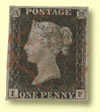
Died 30 Jul 1849 at age 83 (born 9 Jul 1766).
Jacob Perkins was an American inventor, of Newburyport, Mass., a Freemason, who produced innovations in diverse fields. For example, in 1794, under his patent of January 16 of that year, he made the first nails which were both cut and headed by machine in America. Around 1817, he installed a hot air furnace of his own design in the Massachusetts Medical College. While living in London, England, he advocated high pressure steam techniques and designed in 1827-28 a steam gun for the French Government. Also, Perkins advanced the art of engraving and platemaking for bank notes. In 1834, he was issued the first US patent for a refrigerating machine for sulphuric ether compression in a closed cycle. (It utilized a concept displayed by Oliver Evans, 1805.) Back in England, he printed 64 million of the first penny postage stamp in 1840.
Jacob Perkins was an American inventor, of Newburyport, Mass., a Freemason, who produced innovations in diverse fields. For example, in 1794, under his patent of January 16 of that year, he made the first nails which were both cut and headed by machine in America. Around 1817, he installed a hot air furnace of his own design in the Massachusetts Medical College. While living in London, England, he advocated high pressure steam techniques and designed in 1827-28 a steam gun for the French Government. Also, Perkins advanced the art of engraving and platemaking for bank notes. In 1834, he was issued the first US patent for a refrigerating machine for sulphuric ether compression in a closed cycle. (It utilized a concept displayed by Oliver Evans, 1805.) Back in England, he printed 64 million of the first penny postage stamp in 1840.
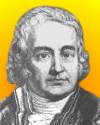
Died 30 Jul 1832 at age 76 (born 4 Jun 1756).
French chemist who authored the first book on industrial chemistry. He also coined the name “nitrogen.” His technical activity covered a wide field, such as improvements in the manufacture of sulphuric acid, saltpetre for gunpowder, beet-root sugar, wine, dyeing, bleaching and other things. He was the first to produce sulphuric acid commercially in France at his factory at Montpellier. His career covered the stormy period of the French Revolution. He was arrested, but more fortunate than the brilliant Antoine Lavoisier (who was guillotined), then released to manage the saltpeter works at Grenelle. He also helped to organize the introduction of the metric system.
French chemist who authored the first book on industrial chemistry. He also coined the name “nitrogen.” His technical activity covered a wide field, such as improvements in the manufacture of sulphuric acid, saltpetre for gunpowder, beet-root sugar, wine, dyeing, bleaching and other things. He was the first to produce sulphuric acid commercially in France at his factory at Montpellier. His career covered the stormy period of the French Revolution. He was arrested, but more fortunate than the brilliant Antoine Lavoisier (who was guillotined), then released to manage the saltpeter works at Grenelle. He also helped to organize the introduction of the metric system.
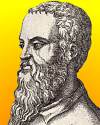
Died 30 Jul 1566 at age 58 (born 27 Sep 1507).
French naturalist and physician who contributed substantially to zoology by his descriptions of marine animals, primarily of the Mediterranean Sea. After studying at Montpellier, he later travelling widely through Europe with his patron Cardinal Tournon. Returning to Montpellier in 1545, he taught medicine. His real interest, however, was zoology, and in 1554 he published his massive compendium on aquatic life, Libri de piscibus marinis in quibus verae piscium effigies expressae sunt, which covered far more marine life than any earlier work in the field. This laid the foundation for later ichthyological research and was the standard reference work for over a century. He also published various other works on diagnosis and several pharmacological works.
French naturalist and physician who contributed substantially to zoology by his descriptions of marine animals, primarily of the Mediterranean Sea. After studying at Montpellier, he later travelling widely through Europe with his patron Cardinal Tournon. Returning to Montpellier in 1545, he taught medicine. His real interest, however, was zoology, and in 1554 he published his massive compendium on aquatic life, Libri de piscibus marinis in quibus verae piscium effigies expressae sunt, which covered far more marine life than any earlier work in the field. This laid the foundation for later ichthyological research and was the standard reference work for over a century. He also published various other works on diagnosis and several pharmacological works.
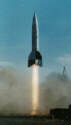
In 1946, for the first time an altitude of 100 mi (167 km) was reached by a test rocket. It was a V-2 rocket (No. 9), fueled with alcohol and liquid oxygen launched at White Sands, NM. This test had the first separation of nose cone. During World War II, the nose cone held a German warhead containing almost a ton of explosives. At White Sands, the Army invited government agencies and universities to use the nose cone's 20 cubic feet of space for scientific research, up to 2,000 pounds of scientific equipment, such as cameras, sensors, and on-board experiments, were carried aloft on each flight.
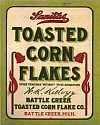
In 1898, Corn Flakes were invented by William Kellogg. At Battle Creek Sanitarium, Sanitarium superintendent, Dr. John Harvey Kellogg and Will Keith Kellogg, his younger brother and business manager, invented many grain-based foods, including a coffee substitute, a type of granola, and peanut butter to provide patients a strict nutritious diet. In 1894 they unintentionally invented a flaked cereal process based on wheat. By 1898, W.K. Kellogg had developed the first flaked corn cereal. Patients enjoyed the cereals and wanted more to take home. In 1906, the Battle Creek Toasted Corn Flake Company was founded by W.K. Kellogg.
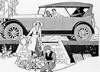
In 1898, Scientific American carried the first magazine automobile advertisement bringing Alexander Winton returns for his $1000 car. The Winton Motor Car Company of Cleveland, OH, invited readers to “dispense with a horse” this day. Alexander Winton, known as a “trigger-tempered Scot,” migrated to New York City from his native Scotland in 1878. He came to Cleveland in 1882 when he was 22. First a maker of bicycles, he made his first experimental four-wheeled, gasoline engine car in 1896. By 1900, the Winton Motor Car Company had the world's largest automobile factory, but by 1904 the manufacturing centre of the country was Detroit, Mich. The cars were expensive, purchased by the upper-middle-class, a market which the company lost to competition, and closed in 1924.Image: The Winton Six, the most popular Winton model, advertised in the 1920 Lakewood High School Yearbook.
In 1872, Mahlon Loomis received a patent for “a new and Improved Mode of Telegraphing and of Generating Light, Heat, and Motive Power’' (U.S.No. 129,971). In 1865, Loomis had transmitted wireless signals between two mountains in Virginia using two kites flown 18 miles apart, each carrying a 600 foot wire from the ground. When he interrupted the flow of electricity from the atmosphere, through the wire, to an earth ground, a galvonometer on the other kite’s wire measured a current change. He also noted dark clouds passing over his apparatus causing too much electricity to be collected by the aerials...causing him to shut down operations. This wireless communication took place many years before Marconi’s experiments.
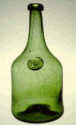
In 1739, German immigrant Caspar Wistar begins glass manufacturing in Allowaystown, NJ. Earlier glass making in America, since1608, failed as the British Crown discouraged glass making in America by high taxes, so they could sell their own glass wares to the colonies. As a result, most bottles were imported to the colonies in the early years. Caspar Wistar founded the first successful and enduring large-scale glass factory, producing bottle sand other glassware and window glass. The Wistars were successful until the hard times of the Revolutionary War damaged their business. In 1780 they closed the glassworks.Image: Wine bottle, about 1745-1755. Height 23.5 cm., nonlead, blown, with applied seal Wistarburgh Glassworks, near Alloway, New Jersey.




