Born 24 Jul 1913; died 16 Nov 2010 at age 97.
American biophysicist.
American biophysicist.

Born 24 Jul 1897; died 2 Jul 1937 at age 39. quotes
American aviator, one of the world's most celebrated aviators, who was the first woman to fly alone over the Atlantic Ocean. She was lost at sea on a flight enroute to Howland Island. more
American aviator, one of the world's most celebrated aviators, who was the first woman to fly alone over the Atlantic Ocean. She was lost at sea on a flight enroute to Howland Island. more
Amelia Earhart: The Truth at Last, by Mike Campbell. - book suggestion.
(image)
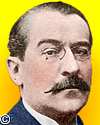
Born 24 Jul 1856; died 11 Dec 1941 at age 85. quotes
(Charles-) Émile Picard was a French mathematician whose theories did much to advance research into analysis, algebraic geometry, and mechanics. He made his most important contributions in the field of analysis and analytic geometry. He used methods of successive approximation to show the existence of solutions of ordinary differential equations. Picard also applied analysis to the study of elasticity, heat and electricity. He and Henri Poincaré have been described as the most distinguished French mathematicians in their time.
(Charles-) Émile Picard was a French mathematician whose theories did much to advance research into analysis, algebraic geometry, and mechanics. He made his most important contributions in the field of analysis and analytic geometry. He used methods of successive approximation to show the existence of solutions of ordinary differential equations. Picard also applied analysis to the study of elasticity, heat and electricity. He and Henri Poincaré have been described as the most distinguished French mathematicians in their time.

Born 24 Jul 1853; died 15 Jan 1948 at age 94.
French astrophysicist who invented a spectroheliograph (1894) to photograph the Sun in monochromatic light (about a year after George E. Hale in the U.S.) and made extensive studies of the solar chromosphere and solar activity. He worked at the Paris and Meudon Observatories. His investigation of molecular spectra produced empirical laws presaging those of quantum mechanics. He observed spectra of planets and stars and measured their radial velocities of, and he determined the rotation rates of Uranus, Jupiter and Saturn (shortly after James E. Keeler).
French astrophysicist who invented a spectroheliograph (1894) to photograph the Sun in monochromatic light (about a year after George E. Hale in the U.S.) and made extensive studies of the solar chromosphere and solar activity. He worked at the Paris and Meudon Observatories. His investigation of molecular spectra produced empirical laws presaging those of quantum mechanics. He observed spectra of planets and stars and measured their radial velocities of, and he determined the rotation rates of Uranus, Jupiter and Saturn (shortly after James E. Keeler).
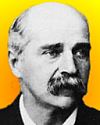
Born 24 Jul 1843; died 2 Dec 1920 at age 77.
English astronomer and chemist who investigated colour photography and colour vision. He pioneered a method to measure the relative proportions of the primaries in a sample colour. Having developed a suitable photographic emulsion, he was the first to take infra-red photographs, and study the solar infra-red spectrum. In 1877, he was first to suggest a relationship between a star’s rapid rotation and broadened lines in its spectrum. He introduced hydroquinone (1880) as an effective photograph developing chemical. He co-authored a paper (1885) on infra-red spectra of organic compounds, studied how sunlight is altered in passing through the atmosphere and invented the abney level.«[DSB gives date of death 2 Dec 1920. EB gives 3 Dec 1920.]
English astronomer and chemist who investigated colour photography and colour vision. He pioneered a method to measure the relative proportions of the primaries in a sample colour. Having developed a suitable photographic emulsion, he was the first to take infra-red photographs, and study the solar infra-red spectrum. In 1877, he was first to suggest a relationship between a star’s rapid rotation and broadened lines in its spectrum. He introduced hydroquinone (1880) as an effective photograph developing chemical. He co-authored a paper (1885) on infra-red spectra of organic compounds, studied how sunlight is altered in passing through the atmosphere and invented the abney level.«[DSB gives date of death 2 Dec 1920. EB gives 3 Dec 1920.]
Photography with Emulsions: A Treatise on the Theory and Practical Working of the Collodion and Gelatine Emulsion Processes, by William de Wiveleslie Abney. - book suggestion.
Born 24 Jul 1794; died 22 Sep 1865 at age 71.
Russian zoologist.
Russian zoologist.

Born 24 Jul 1786; died 11 Sep 1843 at age 57.
Joseph Nicolas Nicollet was a French mathematician, explorer, and cartographer with an interest in astronomy. He was born in France, but financially ruined by the 1830 Revolution, he left for the U.S. in 1831. He made a private survey of the Mississippi region (1836-7), the results of which he presented in Washington. In 1838, he led a surveying expedition for the U.S. government party mapping out the lakes and waterways of northcentral Minnesota. He stressed to map publishers the importance of elevation marks on published maps. His maps were considered among the most accurate and useful until the surveyors for the great logging companies arrived in Minnesota's vast pine forests.
Joseph Nicolas Nicollet was a French mathematician, explorer, and cartographer with an interest in astronomy. He was born in France, but financially ruined by the 1830 Revolution, he left for the U.S. in 1831. He made a private survey of the Mississippi region (1836-7), the results of which he presented in Washington. In 1838, he led a surveying expedition for the U.S. government party mapping out the lakes and waterways of northcentral Minnesota. He stressed to map publishers the importance of elevation marks on published maps. His maps were considered among the most accurate and useful until the surveyors for the great logging companies arrived in Minnesota's vast pine forests.
Born 24 Jul 1737; died 19 Jun 1808 at age 70.
Scottish geographer, first hydrographer of the British Admiralty and proponent of the existence of a vast, populous continent in the South Pacific, which he called the Great South Land.
Scottish geographer, first hydrographer of the British Admiralty and proponent of the existence of a vast, populous continent in the South Pacific, which he called the Great South Land.

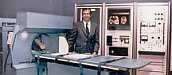
The first model of the Whole Body Computerized Tomograph used at Georgetown University Hospital 1974-1978.
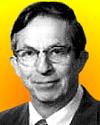
American physicist and radiologist who invented the ACTA (Automatic Computerized Transverse Axial) diagnostic X-ray scanner, the first whole-body computerized tomography (CT) machine (U.S. patent no. 3,922,552) which revolutionized medical diagnosis. The ACTA can make a three-dimensional analysis of all organs and parts of the body in a series of cross-section images using thin X-ray beams and high power computer processing of the collected data. Using the ACTA, diagnosis of tumours, infection or bleeding is possible even deep within large organs, and it can give improved radiation therapy for cancer. The framework could be tilted to give results from planes other than vertical.«
Cross-sectional anatomy: An atlas for computerized tomography, by Robert Steven Ledley. - book suggestion.
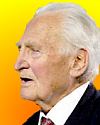
Died 24 Jul 2005 at age 92 (born 28 Oct 1912). quotes
William Richard Shaboe Doll was an English epidemiologist who was one of the first two researchers to link cigarette smoking to lung cancer, as published in the British Medical Journal in 1950. In the same journal, fifty years later, Doll published (22 Jun 2004) the first research that quantified the damage over the lifetime of a generation, based on a 50-year study of a group of almost 35,000 British doctors who smoked. The study found that almost half of persistent cigarette smokers were killed by their habit, and a quarter died before age 70. Persons who quit by age 30 had normal life expectancy. Even quitting at age 50 saved six more years of life over those who continued smoking. He studied other health effects, such as those caused by asbestos and electromagnetic fields.«
William Richard Shaboe Doll was an English epidemiologist who was one of the first two researchers to link cigarette smoking to lung cancer, as published in the British Medical Journal in 1950. In the same journal, fifty years later, Doll published (22 Jun 2004) the first research that quantified the damage over the lifetime of a generation, based on a 50-year study of a group of almost 35,000 British doctors who smoked. The study found that almost half of persistent cigarette smokers were killed by their habit, and a quarter died before age 70. Persons who quit by age 30 had normal life expectancy. Even quitting at age 50 saved six more years of life over those who continued smoking. He studied other health effects, such as those caused by asbestos and electromagnetic fields.«
Geography of Disease, by Richard Doll. - book suggestion.

Died 24 Jul 1986 at age 87 (born 12 Jun 1899).
German-American biochemist who shared (with Sir Hans Krebs) the 1953 Nobel Prize for Physiology or Medicine for the discovery of coenzyme A, an important catalytic substance involved in the cellular conversion of food into energy. Coenzyme A is a compound with a rather small molecule, which, when united with the enzyme-protein, acquires the property of binding acetic acid. Acetic acid is normally quite unreactive but when bound in this way it becomes labile and reactive and represents the previously mystical 2-carbon compound which combines with a 4-carbon compound to form citric acid. A new way for the transmission of energy in the cell was demonstrated by this discovery.
German-American biochemist who shared (with Sir Hans Krebs) the 1953 Nobel Prize for Physiology or Medicine for the discovery of coenzyme A, an important catalytic substance involved in the cellular conversion of food into energy. Coenzyme A is a compound with a rather small molecule, which, when united with the enzyme-protein, acquires the property of binding acetic acid. Acetic acid is normally quite unreactive but when bound in this way it becomes labile and reactive and represents the previously mystical 2-carbon compound which combines with a 4-carbon compound to form citric acid. A new way for the transmission of energy in the cell was demonstrated by this discovery.
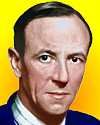
Died 24 Jul 1974 at age 82 (born 20 Oct 1891). quotes
English physicist who received the Nobel Prize for Physics (1935) for his discovery of the neutron. He studied at Cambridge, and in Berlin under Geiger, then worked at the Cavendish Laboratory with Rutherford, where he investigated the structure of the atom. He worked on the scattering of alpha particles and on nuclear disintegration. By bombarding beryllium with alpha particles, Chadwick discovered the neutron - a neutral particle in the atom's nucleus - for which he received the Nobel Prize for Physics in 1935. In 1932, Chadwick coined the name “neutron,” which he described in an article in the journal Nature. He led the UK's work on the atomic bomb in WW II, and was knighted in 1945.«
English physicist who received the Nobel Prize for Physics (1935) for his discovery of the neutron. He studied at Cambridge, and in Berlin under Geiger, then worked at the Cavendish Laboratory with Rutherford, where he investigated the structure of the atom. He worked on the scattering of alpha particles and on nuclear disintegration. By bombarding beryllium with alpha particles, Chadwick discovered the neutron - a neutral particle in the atom's nucleus - for which he received the Nobel Prize for Physics in 1935. In 1932, Chadwick coined the name “neutron,” which he described in an article in the journal Nature. He led the UK's work on the atomic bomb in WW II, and was knighted in 1945.«
The Neutron and the Bomb: A Biography of Sir James Chadwick, by Andrew P. Brown. - book suggestion.
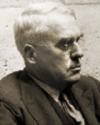
Died 24 Jul 1951 at age 79 (born 2 Jan 1872).
Albert Coombs Barnes was an American chemist who invented the antiseptic Argyrol (1902). This is a silver-protein compound used in aqueous solution as a topical antiseptic. Believing in the social theories of philosophers such as John Dewey, Barnes felt he could better the lives of his fellow citizens. He applied his own ideas in his own factories. He scheduled his workers on 8-hour shifts 6 hours on the production line, followed by 2 hours of lectures on esthetics and art. He became a noted art collector, whose collection is now in the Barnes Foundation galleries in Merion, outside Philadelphia. Barnes' theories of art appreciation continue to be taught at the Barnes Foundation today. Dr. Barnes died in a car crash in 1951.
Albert Coombs Barnes was an American chemist who invented the antiseptic Argyrol (1902). This is a silver-protein compound used in aqueous solution as a topical antiseptic. Believing in the social theories of philosophers such as John Dewey, Barnes felt he could better the lives of his fellow citizens. He applied his own ideas in his own factories. He scheduled his workers on 8-hour shifts 6 hours on the production line, followed by 2 hours of lectures on esthetics and art. He became a noted art collector, whose collection is now in the Barnes Foundation galleries in Merion, outside Philadelphia. Barnes' theories of art appreciation continue to be taught at the Barnes Foundation today. Dr. Barnes died in a car crash in 1951.
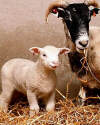
In 1997, the same Scottish scientists who produced Dolly the cloned sheep announced they had cloned a sheep with human genes. Polly and four other cloned lambs mark a milestone in the effort to alter the genetic make-up of animals. It is hoped that similar animals will eventually provide human drugs, milk and transplant organs as well as aiding medical research. PPL Therapeutics and the Roslin Institute near Edinburgh, produced the transgenic animal, which was born July 9.Image: Polly the lamb, who carries human genes, with her Scottish blackface surrogate mother. (Reuters)
[Artist concept]
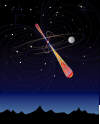
In 1991, a University of Manchester scientist announced the finding a planet outside of solar system. Andrew G. Lyne of the University of Manchester subsequently retracted his claim for a planet around pulsar PSR 1829-10 at the Jan 1992 meeting of the American Astronomical Society in Atlanta. He said that the modulation of radio waves coming from the pulsar was caused not by the presence of a planet but was in fact an artifact of the Earth's motion around the Sun. That possibility had been considered, but discounted, in earlier studies of the data. The first exoplanets (later confirmed) were announced in an article in Nature in 1992 by Aleksander Wolszczan and Dale Frail.«
Exoplanets, by Sara Seager (ed.). - book suggestion.
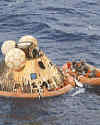
In 1969, the Apollo XI astronauts, two of whom had been the first men to set foot on the moon, splashed down safely in the Pacific Ocean at 12:50 p.m. EDT about 812 nautical miles southwest of Hawaii. The three astronauts. They transferred to a life raft and were met by a Navy frogman. All four men were wearing biological isolation garments. After helicopter pickup and transport to the U.S.S. Hornet, they stayed in quarantine for three weeks. The day before splashdown, Aldrin said, "We feel this stands as a symbol of the insatiable curiousity of all mankind to explore the unknown."
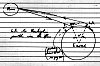
In 1954, the sound of a human voice was, for the first time ever, transmitted beyond the ionosphere and returned to Earth after reflecting off the moon. James H. Trexler, an engineer in the Radio Countermeasures Branch at the Naval Research Laboratory (NRL), spoke carefully into a microphone at the laboratory's Stump Neck radio antenna facility in Maryland. Two and a half seconds later, his words speeded back to him at Stump Neck, after traveling 500,000 miles via an Earth-Moon circuit. The objective of the Communication Moon Relay project was to add another option for the Navy's secure global communications technologies that could reduce the vulnerability of ionospheric storms cutting off radio transmissions to the U.S. fleet.[Image: Early notebook entry by James H. Trexler, 28 Jan 1945, showing calculations for a long-distance communications link via the Moon.]
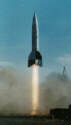
In 1950, the first successful rocket launch from Cape Canaveral took place.“Bumper” No. 8 was a captured German V-2 rocket with the payload replaced by another rocket 700-pound Army-JPL Wac Corporal rocket on top. It was fired from Long-Range Proving Ground at Cape Canaveral. The first-stage V-2 climbed 10 miles, separated from the second-stage Corporal which traveled 15 more miles. (V-2 exploded). A previous attempt on 19 July 1950 of a similar launch was aborted on the pad.Image: A V2 just after launch (White Sands Missle Range, NM)
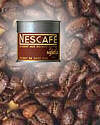
In 1938, Nescafé instant coffee was comercially introduced in Switzerland by the Nestlé company, as it assists the Brazilian government in solving its coffee surplus problem. In 1881, Dr. Satori Kato of Japan presented the first instant coffee during the Pan-American World Fair. It was patented in 1903 in the U.S. Nestlé improved the production process. Instant coffee is made with a blend of beans, mixed in a blending drum, roasted and ground, then brewed in huge percolators, sprayed into a heated stainless steel dryer to remove all water, and the coffee is packed as small granules.
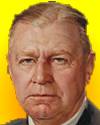
c.1960
In 1933, Dr. William F. Rienhoff Jr. of Baltimore, Maryland, became the first surgeon to perform a successful total lung removal operation (extirpation of the lung). To fully treat the patient’s cancer, one entire lung was removed (pneumonectomy). The primary bronchus was first isolated, transected, and closed with sutures. Rienhoff also dissected out the pulmonary artery and veins, ligated each with transfixing sutures, and divided them. The lung was then ready to remove, and the emptied chest closed. The patient recovered rapidly and well. Three months earlier (4 Apr 1933) Dr. Evarts Graham had used a mass ligation technique and subtotal pneumonectomy to treat a patient, also with cancer of the lung.«[Rienhoff WF. Pneumonectomy: A preliminary report of the operative technique in two successful cases. Bulletin Johns Hopkins Hosp 1933; 55:390-3.]
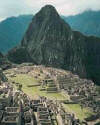
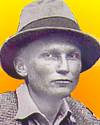
Lost City of the Incas, by Hiram Bingham. - book suggestion.
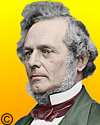
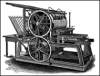
In 1844, Henry Rossiter Worthington (b. 17 Dec 1817, d. 17 Dec 1880) patented the independent single direct-acting steam power pump, an invention which laid the foundation of the entire pump industry. He was a U.S. mechanical engineer, and this invention solved the major steam-engine problem of supplying water to the boiler - even when the engine was shut down - and replaced hand-pumping to keep the boiler filled. He had several inventions leading to the perfection of the direct-acting steam power pump (1845-55), patented the duplex steam pump (1859), and built the first duplex waterworks engine, widely adopted and used for more than 75 years. He established a pump manufacturing plant, New York City, in 1859.
In 1806, a British patent, No 2,951/1806 was dated for Henry Fourdrinier's paper-making machine. The specification gave that "A number of moulds, of the description called laid and wove, are hooked together to form one long mould...A vessel or trough from which the paper stuff or material is caused to flow upon the moulds...A set of cylinders, upon which is passed, in the manner of a jack towel, an endless web of felting. There is a third cylinder...communicates by means of another web of felt with an additional pair of pressing cylinders, whence it proceeds to the second pair,...so that continuing the process, paper of any length may be made..." Improvements were granted a further patent dated 14 Aug 1807.«
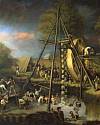
In 1801, the American Philosophical Society of Philadelphia, Pennsylvania, sponsored the first collecting expedition under the auspices of an American scientific society, when a loan of $500 was provided to Charles Willson Peale. He operated a museum in Philadelphia, and he had just returned from New York State with a partial skeleton of a mastodon found by a farmer digging marl from a bog. Peale went back to the collection site and made a systematic search for more bones. The excavation was drained by a huge, man-powered water wheel. Long, slender, iron rods were used to probe the soil for solid objects under the ground. Peale exhibited the complete mastodon skeleton at his museum, where it caused a sensation.«
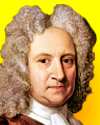
In 1673, Edmond Halley entered Queen's College, Oxford, as an undergraduate. Halley had attended the prestigious St. Paul's school, where in 1671, he was appointed captain, a position resembling today's student body president. He was an excellent student, and by the time he entered Queen's College, Oxford. At this young age, Halley already possessed, “... the basic facts and computations not only of navigation but also those which the practical astronomer is concerned when he sets about the delicate task of measuring the positions of celestial bodies in the sky,” according to Colin Ronan in his book Edmond Halley, Genius in Eclipse (1969).
Edmond Halley: Charting the Heavens and the Seas, by Alan Cook. - book suggestion.




