
Born 23 Jul 1952; died 27 Apr 1999 at age 46. quotes
American computer scientist and visionary who was the chief technology officer at XEROX PARC, and is remembered for developed the pioneering idea for what he referred to as “ubiquitous computing.” He coined that term in 1988 to describe a future in which personal computers will be replaced with tiny computers embedded in everyday “smart” devices (everyday items such as coffeepots and copy machines) and their connection via a network. He said, “First were mainframes, each shared by lots of people. Now we are in the personal computing era, person and machine staring uneasily at each other across the desktop. Next comes ubiquitous computing, or the age of calm technology, when technology recedes into the background of our lives.” He died at age 46, only six weeks after being diagnosed as having gastric cancer.«
American computer scientist and visionary who was the chief technology officer at XEROX PARC, and is remembered for developed the pioneering idea for what he referred to as “ubiquitous computing.” He coined that term in 1988 to describe a future in which personal computers will be replaced with tiny computers embedded in everyday “smart” devices (everyday items such as coffeepots and copy machines) and their connection via a network. He said, “First were mainframes, each shared by lots of people. Now we are in the personal computing era, person and machine staring uneasily at each other across the desktop. Next comes ubiquitous computing, or the age of calm technology, when technology recedes into the background of our lives.” He died at age 46, only six weeks after being diagnosed as having gastric cancer.«
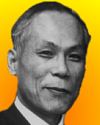
Born 23 Jul 1920.
Japanese astrophysicist who with his coworkers created evolutionary models for stars of mass between 0.01 to 100 times that of the Sun. In 1950, he contributed to the abg (Alpher, Bethe, Gamow) model of nucleosynthesis in the hot big bang. Hayashi pioneered in modeling stellar formation and pre-main sequence evolution along "Hayashi tracks" (1961) downward on the Hertzprung-Russell diagram until stars reach the main sequence. He and Takenori Nakano studied the formation of low-mass, brown dwarf stars. Hayashi also investigated the formation of the solar system and of the earth and its atmosphere. He retired in 1984. He was presented the Bruce Medal in 2004 for lifetime contributions to astronomy.«
Japanese astrophysicist who with his coworkers created evolutionary models for stars of mass between 0.01 to 100 times that of the Sun. In 1950, he contributed to the abg (Alpher, Bethe, Gamow) model of nucleosynthesis in the hot big bang. Hayashi pioneered in modeling stellar formation and pre-main sequence evolution along "Hayashi tracks" (1961) downward on the Hertzprung-Russell diagram until stars reach the main sequence. He and Takenori Nakano studied the formation of low-mass, brown dwarf stars. Hayashi also investigated the formation of the solar system and of the earth and its atmosphere. He retired in 1984. He was presented the Bruce Medal in 2004 for lifetime contributions to astronomy.«
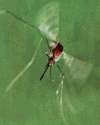
mosquito
Drell Marston Bates was an American zoologist and writer who studied mosquitoes and tropical diseases for the Rockefeller Foundation with fieldwork in Albania, Egypt and Colombia (1937-50). Rockefeller scientists reduced the problem of yellow fever in Colombia, where Bates supervised researchers who worked with local doctors in diagnoses and treatment, studied the region's forests and swamps in the area, and tested insects suspected as disease carriers. His first book, The Natural History of Mosquitoes (1949) was followed by more natural history books for laymen including The Nature of Natural History (1950) which showed his love of the tropics. As an environmental activist, he believed even the government should respect the earth's environment.«
The Nature of Natural History, by Marston Bates. - book suggestion.
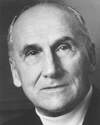
Born 23 Jul 1906; died 7 Jan 1998 at age 91.
Yugoslavian-Swiss chemist who shared the 1975 Nobel Prize for Chemistry with John W. Cornforth for his work on the stereochemistry of organic molecules and reactions. Stereochemistry is the study of the three-dimensional arrangements of atoms within molecules. He authored systematic naming rules for molecules and their mirror-image version, that is, which configuration will be referred to as “dextra” and which will be the “levo” (right or left). Also, by X-ray diffraction, he elucidated the structure of several antibiotics.
Yugoslavian-Swiss chemist who shared the 1975 Nobel Prize for Chemistry with John W. Cornforth for his work on the stereochemistry of organic molecules and reactions. Stereochemistry is the study of the three-dimensional arrangements of atoms within molecules. He authored systematic naming rules for molecules and their mirror-image version, that is, which configuration will be referred to as “dextra” and which will be the “levo” (right or left). Also, by X-ray diffraction, he elucidated the structure of several antibiotics.
Vladimir Prelog: My 132 Semesters of Studies of Chemistry, by Vladimir Prelog. - book suggestion.
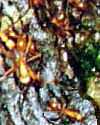
Born 23 Jul 1902; died 20 Aug 1968 at age 66.
Theodore Christian Schneirla was the foremost American comparative psychologist of the mid-1900s (the American Museum of Natural History) whose empirical work was based on observations on the behaviour patterns of army ants. He went so far in his “biphasic A-W theory” as to reduce all behavior to two simple responses: approach and withdrawal. We approach what causes pleasure, and we withdraw from what causes unpleasure or pain. His Principles of Animal Psychology (1935, with N.R.F. Maier) was the leading text in its field.
Theodore Christian Schneirla was the foremost American comparative psychologist of the mid-1900s (the American Museum of Natural History) whose empirical work was based on observations on the behaviour patterns of army ants. He went so far in his “biphasic A-W theory” as to reduce all behavior to two simple responses: approach and withdrawal. We approach what causes pleasure, and we withdraw from what causes unpleasure or pain. His Principles of Animal Psychology (1935, with N.R.F. Maier) was the leading text in its field.
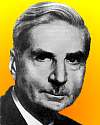
Born 23 Jul 1886; died 4 Mar 1976 at age 89.
Swiss-born German physicist whose research in solid-state physics led to development of a number of electronic devices. He discovered the Schottky effect, an irregularity in the emission of thermions in a vacuum tube and invented the screen-grid tetrode tube (1915). The Schottky diode is a high speed diode with very little junction capacitance (also known as a "hot-carrier diode" or a "surface-barrier diode.") It uses a metal-semiconductor junction as a Schottky barrier, rather than the semiconductor-semiconductor junction of a conventional diode.«
Swiss-born German physicist whose research in solid-state physics led to development of a number of electronic devices. He discovered the Schottky effect, an irregularity in the emission of thermions in a vacuum tube and invented the screen-grid tetrode tube (1915). The Schottky diode is a high speed diode with very little junction capacitance (also known as a "hot-carrier diode" or a "surface-barrier diode.") It uses a metal-semiconductor junction as a Schottky barrier, rather than the semiconductor-semiconductor junction of a conventional diode.«
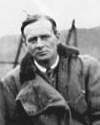
Born 23 Jul 1886; died 4 Oct 1948 at age 62.
Scottish aviator, who was navigator with pilot Capt. John W. Alcock completed the first nonstop airplane crossing of the Atlantic, on 15 Jun 1919, in a Vickers Vimy, named after a battle in WW I. Brown began his career in engineering before the outbreak of WW I. Like Alcock, Brown also became a prisoner of war, after being shot down over Germany. Once released, Brown continued to develop his aerial navigation skills. While visiting the engineering firm of Vickers he was asked if he would be the navigator for the proposed transatlantic flight. By joining forces with the firm Vickers, Alcock and Brown entered a competition for the first direct transatlantic flight, set up by the Daily Mail newspaper, with a prize of ten thousand pounds.
Scottish aviator, who was navigator with pilot Capt. John W. Alcock completed the first nonstop airplane crossing of the Atlantic, on 15 Jun 1919, in a Vickers Vimy, named after a battle in WW I. Brown began his career in engineering before the outbreak of WW I. Like Alcock, Brown also became a prisoner of war, after being shot down over Germany. Once released, Brown continued to develop his aerial navigation skills. While visiting the engineering firm of Vickers he was asked if he would be the navigator for the proposed transatlantic flight. By joining forces with the firm Vickers, Alcock and Brown entered a competition for the first direct transatlantic flight, set up by the Daily Mail newspaper, with a prize of ten thousand pounds.
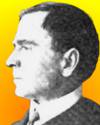
Born 23 Jul 1867; died 1 Mar 1948 at age 80.
Edward Griffith Brewer was an English lawyer, balloonist and aviator who was the first Englishman to fly in an airplane (though as a passenger). Brewer was a patent attorney, who had been making aerial ascents since 1891 as a ballonist. In 1908, he met Wilbur Wright who was giving flying exhibitions in France. Wilbur took Brewer on a short airplane ride, which prompted Brewer to ask about taking flying instruction some time later. They established a lifetime friendship, and Brewer made many visits to Wright's home in Dayton. Meanwhile, Langley—the director of the Smithsonian Institution—was claiming to have had his own Great Aerodrome capable of flight before the Wrights. Brewer staunchly supported the Wrights by writing to the New York Times, and lecturing to the Royal Society in England. He suggested the 1903 Wright Flyer be exhibited at the Science Museum. in London.« more
Edward Griffith Brewer was an English lawyer, balloonist and aviator who was the first Englishman to fly in an airplane (though as a passenger). Brewer was a patent attorney, who had been making aerial ascents since 1891 as a ballonist. In 1908, he met Wilbur Wright who was giving flying exhibitions in France. Wilbur took Brewer on a short airplane ride, which prompted Brewer to ask about taking flying instruction some time later. They established a lifetime friendship, and Brewer made many visits to Wright's home in Dayton. Meanwhile, Langley—the director of the Smithsonian Institution—was claiming to have had his own Great Aerodrome capable of flight before the Wrights. Brewer staunchly supported the Wrights by writing to the New York Times, and lecturing to the Royal Society in England. He suggested the 1903 Wright Flyer be exhibited at the Science Museum. in London.« more
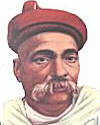
Born 23 Jul 1856; died 1 Aug 1920 at age 64.
Indian scholar, mathematician, philosopher, and militant nationalist who helped lay the foundation for India's independence. Tilak was a great Sanskrit scholar and astronomer. He fixed the origin and date of Rigvedic Aryans, which was highly acclaimed and universally accepted by orientalists of his time. He founded (1914) and served as president of the Indian Home Rule League and, in 1916, concluded the Lucknow Pact with Mohammed Ali Jinnah, which provided for Hindu-Muslim unity in the struggle for independence.
Indian scholar, mathematician, philosopher, and militant nationalist who helped lay the foundation for India's independence. Tilak was a great Sanskrit scholar and astronomer. He fixed the origin and date of Rigvedic Aryans, which was highly acclaimed and universally accepted by orientalists of his time. He founded (1914) and served as president of the Indian Home Rule League and, in 1916, concluded the Lucknow Pact with Mohammed Ali Jinnah, which provided for Hindu-Muslim unity in the struggle for independence.
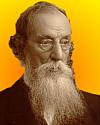
Born 23 Jul 1828; died 26 Jun 1913 at age 84.
English surgeon and pathologist who made a lifelong study of congenital syphilis. He was surgeon at the London hospital (1859-83) and professor of surgery at the Royal College of Surgeons (1879-83). He recorded observations made during his vast clinical experience in over 1,200 medical articles. His name remains associated with a number of medical terms, including Hutchinson's triad (the three symptoms of congenital syphilis which he first described.) He was first to identify a certain inflammatory disease, then known as "Hutchinson's disease"), but now known as sarcoidosis, as named by the Norwegian dermatologist Cæsar Peter Møller Boeck (1845-1917). Hutchinson was knighted in 1908.«
English surgeon and pathologist who made a lifelong study of congenital syphilis. He was surgeon at the London hospital (1859-83) and professor of surgery at the Royal College of Surgeons (1879-83). He recorded observations made during his vast clinical experience in over 1,200 medical articles. His name remains associated with a number of medical terms, including Hutchinson's triad (the three symptoms of congenital syphilis which he first described.) He was first to identify a certain inflammatory disease, then known as "Hutchinson's disease"), but now known as sarcoidosis, as named by the Norwegian dermatologist Cæsar Peter Møller Boeck (1845-1917). Hutchinson was knighted in 1908.«
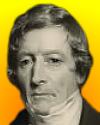
Born 23 Jul 1773; died 27 Jan 1860 at age 86.
Sir Thomas Makdougall Brisbane was a British soldier and astronomical observer, Baronet British soldier and astronomical observer for whom the city of Brisbane, Australia, is named. He was Governor of NSW (1821-25). Mainly remembered as a patron of science, he built an astronomical observatory at Parramatta, Australia, made the first extensive observations of the southern stars since Lacaille in (1751-52) and built a combined observatory and magnetic station at Makerstoun, Roxburghshire, Scotland. He also conducted (largely unsuccessful) experiments in growing Virginian tobacco, Georgian cotton, Brazilian coffee and New Zealand flax.
Sir Thomas Makdougall Brisbane was a British soldier and astronomical observer, Baronet British soldier and astronomical observer for whom the city of Brisbane, Australia, is named. He was Governor of NSW (1821-25). Mainly remembered as a patron of science, he built an astronomical observatory at Parramatta, Australia, made the first extensive observations of the southern stars since Lacaille in (1751-52) and built a combined observatory and magnetic station at Makerstoun, Roxburghshire, Scotland. He also conducted (largely unsuccessful) experiments in growing Virginian tobacco, Georgian cotton, Brazilian coffee and New Zealand flax.

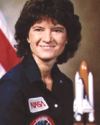
Died 23 Jul 2012 at age 61 (born 26 May 1951). quotes
American astronaut who became the first American woman to orbit the earth when she flew aboard Space Shuttle Challenger on 18 Jun 1983. Only two women preceded her in space: Valentina Tereshkova (1963) and Svetlana Savitskaya (1982), both from the former Soviet Union. Ride applied to the astronaut program after reading an ad in a newspaper. Out of 8,000 applicants to the space program that year, 35 individuals were selected including six women. Accepted into the astronaut corps in 1978, she completed her training as a mission specialist in 1979, and flew on two missions with Challenger, the second in 1984. Dr. Ride, a Ph.D. physicist, was a member of the team chosen to investigate the 1986 explosion of Challenger.
American astronaut who became the first American woman to orbit the earth when she flew aboard Space Shuttle Challenger on 18 Jun 1983. Only two women preceded her in space: Valentina Tereshkova (1963) and Svetlana Savitskaya (1982), both from the former Soviet Union. Ride applied to the astronaut program after reading an ad in a newspaper. Out of 8,000 applicants to the space program that year, 35 individuals were selected including six women. Accepted into the astronaut corps in 1978, she completed her training as a mission specialist in 1979, and flew on two missions with Challenger, the second in 1984. Dr. Ride, a Ph.D. physicist, was a member of the team chosen to investigate the 1986 explosion of Challenger.
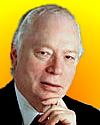
Died 23 Jul 2012 at age 79 (born 3 May 1933). quotes
American nuclear physicist who shared the 1979 Nobel Prize for Physics (with Sheldon Lee Glashow and Abdus Salam) for work in formulating the electroweak theory, which explains the unity of electromagnetism with the weak nuclear force.
American nuclear physicist who shared the 1979 Nobel Prize for Physics (with Sheldon Lee Glashow and Abdus Salam) for work in formulating the electroweak theory, which explains the unity of electromagnetism with the weak nuclear force.
The First Three Minutes: A Modern View of the Origin of the Universe, by Steven Weinberg. - book suggestion.
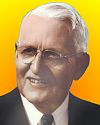
Died 23 Jul 1981 at age 96 (born 11 Sep 1884).
American acoustical engineer who was the first to demonstrate stereophonic sound (1934). He was a trail blazing investigator of the nature of speech and hearing, noted for his contributions in acoustics, electrical engineering, speech, medicine, music, atomic physics, sound pictures, and education. He guided the development of the Western Electric Hearing Aid, the first such device to use vacuum tubes. He developed a group survey method using recorded sound of decreasing volume which has wide acceptance in schools throughout the nation.
American acoustical engineer who was the first to demonstrate stereophonic sound (1934). He was a trail blazing investigator of the nature of speech and hearing, noted for his contributions in acoustics, electrical engineering, speech, medicine, music, atomic physics, sound pictures, and education. He guided the development of the Western Electric Hearing Aid, the first such device to use vacuum tubes. He developed a group survey method using recorded sound of decreasing volume which has wide acceptance in schools throughout the nation.
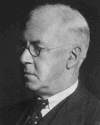
Died 23 Jul 1968 at age 93 (born 9 Jun 1875). quotes
Sir Henry Hallett Dale was an English biologist and physiologist who isolated (1914) the neurotransmitter acetylcholine from ergot fungi. In 1936 he shared the Nobel Prize for Physiology or Medicine (with the German pharmacologist Otto Loewi) for discoveries in the chemical transmission of nerve impulses. Otto Loewi had shown that a substance released by electrical stimulation of the vagus nerve was responsible for effecting changes in heartbeat. Following up this work, Dale showed that the substance is in fact acetylcholine, thus establishing that chemical as well as electrical stimuli are involved in nerve action. He also worked on the properties of histamine and related substances, including their actions in allergic and anaphylactic conditions.
Sir Henry Hallett Dale was an English biologist and physiologist who isolated (1914) the neurotransmitter acetylcholine from ergot fungi. In 1936 he shared the Nobel Prize for Physiology or Medicine (with the German pharmacologist Otto Loewi) for discoveries in the chemical transmission of nerve impulses. Otto Loewi had shown that a substance released by electrical stimulation of the vagus nerve was responsible for effecting changes in heartbeat. Following up this work, Dale showed that the substance is in fact acetylcholine, thus establishing that chemical as well as electrical stimuli are involved in nerve action. He also worked on the properties of histamine and related substances, including their actions in allergic and anaphylactic conditions.
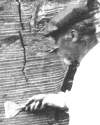
Died 23 Jul 1943 at age 84 (born 2 Oct 1858).
Gerhard (Jakob), Friherre De Geer (Baron) was a Swedish geologist, originator of the varve-counting method used in geochronology. A varve is a seasonal coarse-fine layer of clay deposited in still water.The layers were produced by the annual melt-water sequence with rapid melting and discharge in summer depositing coarse sediments, versus slow settling of fine-grained material during the winter months. The method he devised of counting of layers in glaciers was good for dating back to 18,000 years. Although only accurate to that time, it was useful for studies of the Ice Age.Image: In 1920 De Geer visited the United States to study the varves of New England; he is shown sampling varves at the Essex locality.
Gerhard (Jakob), Friherre De Geer (Baron) was a Swedish geologist, originator of the varve-counting method used in geochronology. A varve is a seasonal coarse-fine layer of clay deposited in still water.The layers were produced by the annual melt-water sequence with rapid melting and discharge in summer depositing coarse sediments, versus slow settling of fine-grained material during the winter months. The method he devised of counting of layers in glaciers was good for dating back to 18,000 years. Although only accurate to that time, it was useful for studies of the Ice Age.Image: In 1920 De Geer visited the United States to study the varves of New England; he is shown sampling varves at the Essex locality.
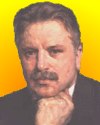
Died 23 Jul 1942 at age 72 (born 23 Nov 1869).
Danish engineer and inventor who in 1903 developed the first device for generating continuous radio waves, thus aiding the development of radio broadcasting. His arc transmitter increased the frequency range of William Duddell's Singing Arc (1900) from the audio range to radio waves, enabling speech to be transmitted up to a radius of 150 miles. By 1920 the Poulsen Arc transmitter was as powerful as 1000kW with ranges of up to 2,500 miles. An earlier invention was the Telegraphone, (Danish patent on 1 Dec 1898). This was the first device in history to use magnetic sound recording, though commercially impractical due to low sound output until the 1930’s advance of vacuum tube amplifiers.«[Biog. Dict. of the Hist. of Tech. gives date of death 23 Jul 1942. DSB and EB give Jul 1942.]
Danish engineer and inventor who in 1903 developed the first device for generating continuous radio waves, thus aiding the development of radio broadcasting. His arc transmitter increased the frequency range of William Duddell's Singing Arc (1900) from the audio range to radio waves, enabling speech to be transmitted up to a radius of 150 miles. By 1920 the Poulsen Arc transmitter was as powerful as 1000kW with ranges of up to 2,500 miles. An earlier invention was the Telegraphone, (Danish patent on 1 Dec 1898). This was the first device in history to use magnetic sound recording, though commercially impractical due to low sound output until the 1930’s advance of vacuum tube amplifiers.«[Biog. Dict. of the Hist. of Tech. gives date of death 23 Jul 1942. DSB and EB give Jul 1942.]
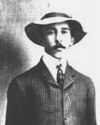
Died 23 Jul 1932 at age 59 (born 20 Jul 1873).
Brazilian aeronaut who was an aviation pioneer, deemed the Father of Aviation by his countrymen. At the age of 18, Santos-Dumont was sent by his father to Paris where he devoted his time to the study of chemistry, physics, astronomy and mechanics. His first spherical balloon made its first ascension in Paris on 4 July 1898. He developed steering capabilities, and in his sixth dirigible on 19 Oct 1901 won the “Deutsch Prize,” awarded to the balloonist who circumnavigated the Eiffel Tower. He turned to heavier-than-air flight, and on 12 Nov 1906 his 14-BIS airplane flew a distance of 220 meters, height of 6 m. and speed of 37 km/h. to win the “Archdecon Prize.” In 1909, he produced his famous Demoiselle or Grasshopper monoplanes, the forerunners of the modern light plane.
Brazilian aeronaut who was an aviation pioneer, deemed the Father of Aviation by his countrymen. At the age of 18, Santos-Dumont was sent by his father to Paris where he devoted his time to the study of chemistry, physics, astronomy and mechanics. His first spherical balloon made its first ascension in Paris on 4 July 1898. He developed steering capabilities, and in his sixth dirigible on 19 Oct 1901 won the “Deutsch Prize,” awarded to the balloonist who circumnavigated the Eiffel Tower. He turned to heavier-than-air flight, and on 12 Nov 1906 his 14-BIS airplane flew a distance of 220 meters, height of 6 m. and speed of 37 km/h. to win the “Archdecon Prize.” In 1909, he produced his famous Demoiselle or Grasshopper monoplanes, the forerunners of the modern light plane.
Wings of Madness: Alberto Santos-Dumont and the Invention of Flight, by Paul Hoffman. - book suggestion.
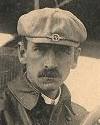
Died 23 Jul 1930 at age 52 (born 21 May 1878).
Glenn Hammond Curtiss was an American aircraft manufacturer who was a pioneer in the development of U.S. aviation. His aircraft were widely used during World War I. That the brother Orville and Wilbur Wright made the first powered flights has generally been accepted, but the achievements of Curtiss spanned several decades and took the airplane from its wood, fabric and wire beginnings to the forerunners of modern transport aircraft. Curtiss made his first flight on his 30th birthday, 21 May 1908, in White Wing, a design of the Aerial Experiment Association, a group led by Alexander Graham Bell. White Wing was the first plane in America to be controlled by ailerons instead of the wing-warping used by the Wrights. It was also the first plane on wheels in the U.S.
Glenn Hammond Curtiss was an American aircraft manufacturer who was a pioneer in the development of U.S. aviation. His aircraft were widely used during World War I. That the brother Orville and Wilbur Wright made the first powered flights has generally been accepted, but the achievements of Curtiss spanned several decades and took the airplane from its wood, fabric and wire beginnings to the forerunners of modern transport aircraft. Curtiss made his first flight on his 30th birthday, 21 May 1908, in White Wing, a design of the Aerial Experiment Association, a group led by Alexander Graham Bell. White Wing was the first plane in America to be controlled by ailerons instead of the wing-warping used by the Wrights. It was also the first plane on wheels in the U.S.
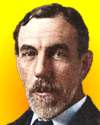
Died 23 Jul 1916 at age 63 (born 2 Oct 1852). quotes
Scottish chemist who discovered who discovered neon, krypton and xenon and co-discovered argon, radon, calcium and barium. He was awarded the Nobel Prize in Chemistry in 1904, “in recognition of his services in the discovery of the inert gaseous elements in air, and his determination of their place in the periodic system.” The so-called “inert gases” are now known as “noble gases” because some examples of reactions have been discovered. more
Scottish chemist who discovered who discovered neon, krypton and xenon and co-discovered argon, radon, calcium and barium. He was awarded the Nobel Prize in Chemistry in 1904, “in recognition of his services in the discovery of the inert gaseous elements in air, and his determination of their place in the periodic system.” The so-called “inert gases” are now known as “noble gases” because some examples of reactions have been discovered. more
A Life of Sir William Ramsay, by Morris W. Travers. - book suggestion.
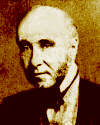
EB/BBC Hulton Library
Died 23 Jul 1904 at age 87 (born 10 Oct 1816).
English pathologist, whose sanitary reforms led to modern standards of public health. In 1850, Simon joined with the new Epidemiological Society, which in 1853 published a report which was submitted to Parliament, calling for compulsory smallpox vaccination of all infants. He also recognized that outside and home employment of mothers is a factor in infant mortality; in 1856 he stated that "infants perish under the neglect and mismanagement that their mothers' occupation implies." With the passing of the Public Health Act of 1848, local boards of health were set up, responsible for drainage, paving, cleansing and an ample supply of water. Simon described the improvements in English Sanitary Institutions, 1890. He was knighted in 1887.
English pathologist, whose sanitary reforms led to modern standards of public health. In 1850, Simon joined with the new Epidemiological Society, which in 1853 published a report which was submitted to Parliament, calling for compulsory smallpox vaccination of all infants. He also recognized that outside and home employment of mothers is a factor in infant mortality; in 1856 he stated that "infants perish under the neglect and mismanagement that their mothers' occupation implies." With the passing of the Public Health Act of 1848, local boards of health were set up, responsible for drainage, paving, cleansing and an ample supply of water. Simon described the improvements in English Sanitary Institutions, 1890. He was knighted in 1887.
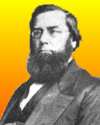
Died 23 Jul 1882 at age 81 (born 15 Mar 1801). quotes
American conservationist, whose book Man and Nature, or Physical Geography as Modified by Human Action (1864) was one of the 19th century's classic influences on geography, ecology, and resource management. Marsh demonstrated a remarkably wide range expertise in philology, etymology, the study of reptiles, engravings, music, the artificial propagation of fish, comparative grammar, physiognomy, and geography. Lewis Mumford was called "the fountain- head of the conservation movement" by Lewis Mumford. In his extensive touring of the Mediterranean world, Marsh became convinced that human civilization had remade the natural world but reshaped the face of nature with disastrous consequences. more
American conservationist, whose book Man and Nature, or Physical Geography as Modified by Human Action (1864) was one of the 19th century's classic influences on geography, ecology, and resource management. Marsh demonstrated a remarkably wide range expertise in philology, etymology, the study of reptiles, engravings, music, the artificial propagation of fish, comparative grammar, physiognomy, and geography. Lewis Mumford was called "the fountain- head of the conservation movement" by Lewis Mumford. In his extensive touring of the Mediterranean world, Marsh became convinced that human civilization had remade the natural world but reshaped the face of nature with disastrous consequences. more
George Perkins Marsh, Prophet of Conservation, by David Lowenthal. - book suggestion.
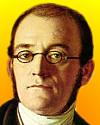
Died 23 Jul 1878 at age 74 (born 19 Feb 1804).
Austrian pathologist whose contributions helped to establish pathology as a recognised science. He is one of the greatest descriptive pathologists, and he himself performed more than 30,000 autopsies, averaging two a day, seven days a week, for 45 years. Rokitansky developed a method of removing the body organs all at once. Thus, the heart, liver, kidneys, urinary bladder, and other organs remained in one block and then dissected on the autopsy table, apart. This permited instruction of medical students by showing all the different organs in the same relationships they had inside the body. He supported Semmelweis, his student, in the controversy over using aseptical methods to prevent contact infection carried on a physician's hands.«
Austrian pathologist whose contributions helped to establish pathology as a recognised science. He is one of the greatest descriptive pathologists, and he himself performed more than 30,000 autopsies, averaging two a day, seven days a week, for 45 years. Rokitansky developed a method of removing the body organs all at once. Thus, the heart, liver, kidneys, urinary bladder, and other organs remained in one block and then dissected on the autopsy table, apart. This permited instruction of medical students by showing all the different organs in the same relationships they had inside the body. He supported Semmelweis, his student, in the controversy over using aseptical methods to prevent contact infection carried on a physician's hands.«
Died 23 Jul 1876 at age 66 (born 26 Jan 1810).
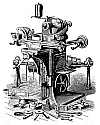
American inventor and manufacturer who made numerous advances in the field of fine measurement and machine-tool production. He perfected and produced a highly accurate linear dividing engine in 1850, and in the succeeding two years he developed a vernier caliper reading to thousandths of an inch and also applied vernier methods to the protractor. Brown's micrometer caliper, widely used in industry, appeared in 1867. He also invented a precision gear cutter in 1855 to produce clock gears, a universal milling machine in 1862, and, perhaps his finest innovation, a universal grinding machine (patented in 1877), in which articles were hardened first and then ground, thereby increasing accuracy and eliminating waste. Cofounded J.R. Brown & Sharpe in 1853.[Image: Brown's universal milling machine]
American inventor and manufacturer who made numerous advances in the field of fine measurement and machine-tool production. He perfected and produced a highly accurate linear dividing engine in 1850, and in the succeeding two years he developed a vernier caliper reading to thousandths of an inch and also applied vernier methods to the protractor. Brown's micrometer caliper, widely used in industry, appeared in 1867. He also invented a precision gear cutter in 1855 to produce clock gears, a universal milling machine in 1862, and, perhaps his finest innovation, a universal grinding machine (patented in 1877), in which articles were hardened first and then ground, thereby increasing accuracy and eliminating waste. Cofounded J.R. Brown & Sharpe in 1853.[Image: Brown's universal milling machine]
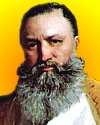
Died 23 Jul 1875 at age 63 (born 27 Oct 1811).
American inventor of a practical sewing machine. While an actor, he invented an excavator (1839) and a wood carver (1849) before he turned itinerant mechanic and improved the sewing machine. His first sewing machine patent, issued 12 Aug 1851 (U.S. No. 8294), had a rocking treadle design, continuous feed, and a straight, vertical needle like modern machines. He settled with Elias Howe for infringement of his prior (1846) sewing machine patent. The company Singer then founded (1856) was, within the decade, the world's largest sewing machine manufacturer. His biggest invention was a new way of marketing to consumers. He spent lavishly on advertising, pioneered affordable purchase by installment credit, and provided after-sale service. In 1863, he retired, with 12 more patents on his machines.«
American inventor of a practical sewing machine. While an actor, he invented an excavator (1839) and a wood carver (1849) before he turned itinerant mechanic and improved the sewing machine. His first sewing machine patent, issued 12 Aug 1851 (U.S. No. 8294), had a rocking treadle design, continuous feed, and a straight, vertical needle like modern machines. He settled with Elias Howe for infringement of his prior (1846) sewing machine patent. The company Singer then founded (1856) was, within the decade, the world's largest sewing machine manufacturer. His biggest invention was a new way of marketing to consumers. He spent lavishly on advertising, pioneered affordable purchase by installment credit, and provided after-sale service. In 1863, he retired, with 12 more patents on his machines.«
Singer and the Sewing Machine: A Capitalist Romance, by Ruth Brandon. - book suggestion.
In 2010, the world's record heaviest hailstone fell in Vivian, South Dakota weighing 1-lb 15-oz, (0.88 kg) and size 8.0-in (20 cm) diam., 18.6-in (47.3 cm) circumference. It broke the former U.S. record set on 3 Sep 1970 in Coffeyville, Kansas, weight 1-lb 11-oz (0.77 kg) with 5.7-in (14.7 cm) diameter. The U.S. record for circumference still held from the 22 Jun 2003 hailstorm in Aurora, Nebraska, when a hailstone was found about 7-in (17.8 cm) diam. and 18.75-in (46.6 cm) circumference. A larger hailstone is said to have fallen on 14 Apr 1986 that weighed 2-lb 4-oz (1.02 kg) during a hailstorm in Bangladesh that killed 92 people.«
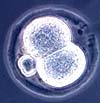
In 1998, in the 23 July issue of the science journal, Nature, an international team of scientists led by Ryuzo Yanagimachi of the University of Hawaii, announced they had accomplished the first reproducible cloning of a mammal from adult cells to produce three generations of cloned mice, more than 50 identical sisters in all. The cloning technique was said to be more reliable than the one used to create Dolly the sheep. Their “Honolulu technique” affords the researchers greater ability to manipulate the adult donor nucleus. This ability will have application industry-wide in increasing the study of the role genes play in aging and the disease processes.Image: Two-cell mouse embryo.
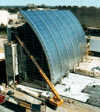
In 1995, Inventure Place, home of the National Inventors Hall of Fame, opened in Akron, Ohio.

In 1986, the FDA licensed production of a new Hepatitis B vaccine - the first recombinant DNA (genetically altered) vaccine - by Merck & Co., marketed as RecombivaxHB. This superceded the old method of making Hepatitis B vaccines from blood taken from human chronic hepatitis B virus carriers.

In 1980, the first human re-entry was made into the Three Mile Island Unit-2 containment building since shutdown after the 28 Mar 1979 accident, when the core of the nuclear power plant lost water coolant and began a partial melt-down incident.
Three Mile Island: A Nuclear Crisis in Historical Perspective, by J. Samuel Walker. - book suggestion.
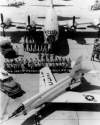
In 1956, Bell X-2 rocket plane sets world aircraft speed record of 3,050 kph. The X-2 was a swept-wing, rocket-powered research aircraft used to investigate the problems of aerodynamic heating, stability, and control effectiveness at high speeds and altitudes. The X-2 was carried to launch altitude by a Boeing B-50, and then released. Lt. Col. Frank "Pete" Everest piloted this ninth powered flight and reached Mach 2.87. (Later that year, on 27 Sep 1956, its 13th powered flight by Capt M. Apt reached Mach 3.2. The flight ended with loss of control, a crash, and the death of the pilot.)Image: X-2 on ramp with B-50 mothership and support crew.
In 1937, the successful isolation of the first of the protein pituitary hormones was published in Science journal. Bovine prolactin (bPRL), the lactogenic hormone, was obtained in pure crystalline form by three doctors at the Yale University School of Medicine. This meticulous, time-consuming work by A. White, H.R. Catchpole and C.N.H. Long was done long before the availability of modern chromatographic methods of analysis and purification. The peanut-sized pituitary gland at the base of the brain is the master endocrine gland in vertebrate animals. Different pituitary hormones control the functioning of most of the body's endocrine glands, stimulate growth and control the water balance of the body. Prolactin was first named for its ability to promote milk production in response to the suckling stimulus of hungry young mammals.«[Ref: White, A., Catchpole, H.R. and Long, C.N.H., 'A crystalline protein with high lactogenic activity', Science (23 Jul 1937), 86, 82-83.]
In 1904, by some narratives, the edible ice cream cone was first sold by Charles E. Menches of Akron, Ohio, at the Louisiana Purchase Exposition (St. Louis World's Fair). He was a vendor on The Ten Million Dollar Pike, a 90-ft-wide, mile-long, brick-paved midway full of extravagant attractions, rides, amusements and food stands. Although Menches is often named as the first to serve his ice cream in a rolled waffle cone, its true originator is far from clear. The edible cone was widely sold at the fair, and various other people there are also claimed as the innovator. In 1903, Italo Marchiony held a U.S. patent (No. 746,971) for a mold to bake ice cream cups. By 8 Jun 1909 Mendes held his own patent (U.S. No. 924484) for a “Baking Iron for Ice-Cream Cones” using batter to make flat circular waffles to form into cones.«
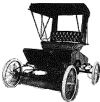
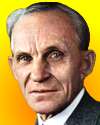
Ford
My Life and Work, by Henry Ford. - book suggestion.

Dunlop
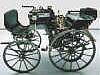
1886
Daimler
A Daimler Century: The Full History of Britain's Oldest Car Maker, by Lord Montagu. - book suggestion.
In 1877, the first telephone and telegraph line in Hawaii was completed.
In 1869, the shore end of the French-Atlantic cable via St. Pierre was landed at Duxbury, Mass.[Ref.: Putnam's Monthly Magazine of American Literature, Science and Art, Vol. 14, No. 21, p.387.]
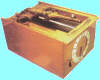
In 1829, William Austin Burt, a surveyor, of Mount Vernon, Michigan, received a patent for his typographer, a forerunner of the typewriter (U.S. No. 5581X). The Patent Office fire of 1836 destroyed the original patent model. Burt's typographer was a heavy, box-like contraption, made almost entirely of wood. Like today's familiar toy typewriter, the typographer had type mounted on a metal wheel, with a rotating, semicircular frame. By turning a crank, Burt was able to move the wheel until it came to the letter he wanted. Then he would pull a lever, driving the type against the paper and making an inked impression.[Image: A reproduction of the Burt typographer]
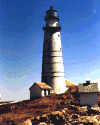
In 1715, The first lighthouse in America was authorized by the Boston Light Bill for construction at Little Brewster Island, Massachusetts. Boston Light, located on Little Brewster Island to mark the entrance to Boston harbour, has guided ships since its lantern was first lighted just before sunset, on 14 Sep 1716. In the 1600s, treacherous rocks caused countless loss of lives. False signal fires lit in the wrong places by "wreckers" lured ships aground to plunder. Boston Light was blown up by the British in 1776, but rebuilt in 1783 by Governor John Hancock. The lighthouse is also the last remaining manned station in the U.S.




