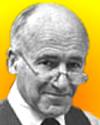
Born 22 Jul 1919; died 14 Jan 2005 at age 85. quotes
American editor who steered the Scientific American for 37 years (1947-84) and established a new style for the magazine of inviting scientists to write its articles, with support from an editor and illustrator, aimed at the general reader. Those writers included such eminent scientists as Albert Einstein, Linus Pauling and J. Robert Oppenheimer. The first issue of Scientific American was on 28 Aug 1845, but it was the new leadership of new owners (1847), Orson Munn and Alfred Eli Beach, who made it prospect. A century later, Flanagan rescued the magazine in the post WW II years when it was failing financially. With partners and investors, and his editorial innovation, the circulation rose from 40,000 to 600,000 by the time he retired. Flanagan had lost his hearing at age 9, but learned to lip-read.«
American editor who steered the Scientific American for 37 years (1947-84) and established a new style for the magazine of inviting scientists to write its articles, with support from an editor and illustrator, aimed at the general reader. Those writers included such eminent scientists as Albert Einstein, Linus Pauling and J. Robert Oppenheimer. The first issue of Scientific American was on 28 Aug 1845, but it was the new leadership of new owners (1847), Orson Munn and Alfred Eli Beach, who made it prospect. A century later, Flanagan rescued the magazine in the post WW II years when it was failing financially. With partners and investors, and his editorial innovation, the circulation rose from 40,000 to 600,000 by the time he retired. Flanagan had lost his hearing at age 9, but learned to lip-read.«
Flanagan's Version: A Spectator's Guide to Science on the Eve of the 21st Century, by Dennis Flanagan. - book suggestion.
Born 22 Jul 1914; died 22 Jan 1982 at age 67.
Edward Rolke Farber was an American inventor who devised a portable, battery-operated stroboscopic flash unit for still cameras (1937) that effectively “stopped action.” He began his career as a photojournalist on the staff of the Milwaukee Journal. After studying electrical engineering at Northwestern University, Farber went on to design flash equipment for the U.S. Army during World War II, and then established his own electronic-flash manufacturing firm. He was a good friend and collaborator of Harold Edgerton and developed the first practical portable strobe flash for news photographers. In 1942, the Milwaukee Journal became the first newspaper to furnish all of its photographers with the portable flash. Weighing only 13.5 pounds, it was a considerable improvement over the 90-pound units photographers used prior to Farber's invention. He sold his Strobe Research firm in 1954. He was a photographic adviser to the U.S. Government during its intercontinental ballistic missile testing program in the late 1950's.
Edward Rolke Farber was an American inventor who devised a portable, battery-operated stroboscopic flash unit for still cameras (1937) that effectively “stopped action.” He began his career as a photojournalist on the staff of the Milwaukee Journal. After studying electrical engineering at Northwestern University, Farber went on to design flash equipment for the U.S. Army during World War II, and then established his own electronic-flash manufacturing firm. He was a good friend and collaborator of Harold Edgerton and developed the first practical portable strobe flash for news photographers. In 1942, the Milwaukee Journal became the first newspaper to furnish all of its photographers with the portable flash. Weighing only 13.5 pounds, it was a considerable improvement over the 90-pound units photographers used prior to Farber's invention. He sold his Strobe Research firm in 1954. He was a photographic adviser to the U.S. Government during its intercontinental ballistic missile testing program in the late 1950's.
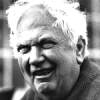
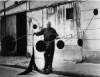
Alexander (Stirling) Calder, was an American sculptor and painter best known as the originator of the mobile, a kinetic sculpture constructed with delicately balanced or suspended components. The sculpture will respond to air currents, or sometimes powered with a motor. He began to make mobiles when he spent time abroad, living in Paris (1931-33). By contrast, Calder's stationary sculptures are called stabiles. He also produced numerous wire figures, notably for a vast miniature circus.Image (right): mobile of 1934.
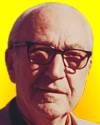
Born 22 Jul 1893; died 18 Jul 1990 at age 96. quotes
American physician who co-founded the Menninger Foundation (1941) with his father, Charles Frederick Menninger and younger brother. They were pioneers of 20th century psychiatric treatment. They established the foundation to bring together not only the practice of psychiatry, but also education, training and research. Their approach stressed using a humane social environment for hospitalized patients as an important part of therapy. Karl believed that most crime was a stage of mental or emotional sickness to be treated as such and that imprisonment without treatment was useless to reform antisocial behavior. Karl was also active in causes concerning abused children, American Indians and wildlife.«
American physician who co-founded the Menninger Foundation (1941) with his father, Charles Frederick Menninger and younger brother. They were pioneers of 20th century psychiatric treatment. They established the foundation to bring together not only the practice of psychiatry, but also education, training and research. Their approach stressed using a humane social environment for hospitalized patients as an important part of therapy. Karl believed that most crime was a stage of mental or emotional sickness to be treated as such and that imprisonment without treatment was useless to reform antisocial behavior. Karl was also active in causes concerning abused children, American Indians and wildlife.«
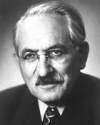
Born 22 Jul 1888; died 16 Aug 1973 at age 85. quotes
Selman Abraham Waksman was an Ukrainian-American microbiologist and biochemist who was one of the world’s foremost authorities on soil microbiology. After the discovery of penicillin, he played a major role in initiating a calculated, systematic search for antibiotics among microbes. In 1939, Dubos, a previous student, pointed out a bacteria-killing agent in a soil microorganism. He introduced the term antibiotic, “against life.” In 1943, he isolated streptomycin from a mold he had known and studied early in his life. His consequent discovery of this antibiotic streptomycin, the first specific antibiotic effective against tuberculosis, earned him the 1952 Nobel Prize.
Selman Abraham Waksman was an Ukrainian-American microbiologist and biochemist who was one of the world’s foremost authorities on soil microbiology. After the discovery of penicillin, he played a major role in initiating a calculated, systematic search for antibiotics among microbes. In 1939, Dubos, a previous student, pointed out a bacteria-killing agent in a soil microorganism. He introduced the term antibiotic, “against life.” In 1943, he isolated streptomycin from a mold he had known and studied early in his life. His consequent discovery of this antibiotic streptomycin, the first specific antibiotic effective against tuberculosis, earned him the 1952 Nobel Prize.
The antibiotic era: A history of the antibiotics..., by Selman Abraham Waksman. - book suggestion.
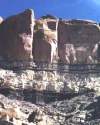
Born 22 Jul 1888; died 22 Aug 1950 at age 62.
American geologist and geomorphologist who pioneered in explaining the forces that molded the present landforms of arid climates. Through his studies in hydrology, Bryan became an authority on the geology of water conservation and dam sites, and on several occasions served as consultant to the Mexican government on the construction of dams and reservoirs for reclamation projects. In 1923-25, Bryan served as geologist on archaeological expeditions in the Chaco Canyon area of New Mexico where he applied geological research as an aid to archaeological and anthropological investigation. His correlations of alluviums, cave deposits bearing artifacts, moraines, and till helped establish the antiquity of man in North America.
American geologist and geomorphologist who pioneered in explaining the forces that molded the present landforms of arid climates. Through his studies in hydrology, Bryan became an authority on the geology of water conservation and dam sites, and on several occasions served as consultant to the Mexican government on the construction of dams and reservoirs for reclamation projects. In 1923-25, Bryan served as geologist on archaeological expeditions in the Chaco Canyon area of New Mexico where he applied geological research as an aid to archaeological and anthropological investigation. His correlations of alluviums, cave deposits bearing artifacts, moraines, and till helped establish the antiquity of man in North America.
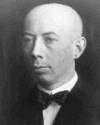
Born 22 Jul 1887; died 30 Oct 1975 at age 88. quotes
German quantum physicist who, with James Franck, received the Nobel Prize for Physics in 1925 for the Franck-Hertz experiment, which confirmed the quantum theory that energy can be absorbed by an atom only in definite amounts and provided an important confirmation of the Bohr atomic model. He was a nephew of Heinrich Hertz. Although he fought on the German side in World War I, being of Jewish descent, he was forced to resign his professorship (1934) when Hitler took power. From 1945 he worked in the Soviet Union, and then in 1955 was a professor of physics in Leipzig, East Germany.
German quantum physicist who, with James Franck, received the Nobel Prize for Physics in 1925 for the Franck-Hertz experiment, which confirmed the quantum theory that energy can be absorbed by an atom only in definite amounts and provided an important confirmation of the Bohr atomic model. He was a nephew of Heinrich Hertz. Although he fought on the German side in World War I, being of Jewish descent, he was forced to resign his professorship (1934) when Hitler took power. From 1945 he worked in the Soviet Union, and then in 1955 was a professor of physics in Leipzig, East Germany.
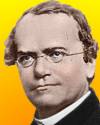
1862
Born 22 Jul 1822; died 6 Jan 1884 at age 61. quotes
Gregor Johann Mendel was an Austrian botanist, geneticist and monk who pioneered in the study of heredity. He spent his adult life with the Augustinian monastery in Brunn, where as a geneticist, botanist and plant experimenter, he was the first to lay the mathematical foundation of the science of genetics, in what came to be called Mendelism. Over the period 1856-63, Mendel grew and analyzed over 28,000 pea plants. He carefully studied for each their plant height, pod shape, pod color, flower position, seed color, seed shape and flower color. He made two very important generalizations from his pea experiments, known today as the Laws of Heredity. He read a paper on his studies on 8 Feb 1865 to the Brünn Society for Natural Sciences in Moravia. It was unappreciated until 1900. Mendel coined the present day terms in genetics: recessiveness and dominance.«[Original name (until 1843) Johann Mendel. Although the baptismal register entry is written as 20 Jul 1822, it is believed that he was actually born on 22 Jul 1822, which is the date Mendel himself always stated.]
Gregor Johann Mendel was an Austrian botanist, geneticist and monk who pioneered in the study of heredity. He spent his adult life with the Augustinian monastery in Brunn, where as a geneticist, botanist and plant experimenter, he was the first to lay the mathematical foundation of the science of genetics, in what came to be called Mendelism. Over the period 1856-63, Mendel grew and analyzed over 28,000 pea plants. He carefully studied for each their plant height, pod shape, pod color, flower position, seed color, seed shape and flower color. He made two very important generalizations from his pea experiments, known today as the Laws of Heredity. He read a paper on his studies on 8 Feb 1865 to the Brünn Society for Natural Sciences in Moravia. It was unappreciated until 1900. Mendel coined the present day terms in genetics: recessiveness and dominance.«[Original name (until 1843) Johann Mendel. Although the baptismal register entry is written as 20 Jul 1822, it is believed that he was actually born on 22 Jul 1822, which is the date Mendel himself always stated.]
The Monk in the Garden: The Lost and Found Genius of Gregor Mendel, the Father of Genetics, by Robin Marantz Henig. - book suggestion.
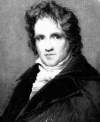
Born 22 Jul 1784; died 17 Mar 1846 at age 61.
German astronomer who spent his entire career from age 26 (appointed 1809) as director of Frederick William III of Prussia's new Königsberg Observatory and professor of astronomy. His monumental task was determining the positions and proper motions for about 50,000 stars, which allowed the first accurate determination of interstellar distances. Bessel's work in determining the constants of precession, nutation and aberration won him further honors. Other than the sun, he was the first to measure the distance of a star, by parallax, of 61 Cygni (1838). In mathematical analysis, he is known for his Bessel function.
German astronomer who spent his entire career from age 26 (appointed 1809) as director of Frederick William III of Prussia's new Königsberg Observatory and professor of astronomy. His monumental task was determining the positions and proper motions for about 50,000 stars, which allowed the first accurate determination of interstellar distances. Bessel's work in determining the constants of precession, nutation and aberration won him further honors. Other than the sun, he was the first to measure the distance of a star, by parallax, of 61 Cygni (1838). In mathematical analysis, he is known for his Bessel function.
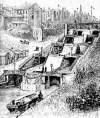
Lockport on Erie Canal
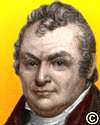
American civil engineer, lawyer and politician, who was born in Pennsylvania but moved to New York state in 1794, where he began the manufacture of salt. He became a justice of the peace (1800) and a member of the State assembly (1804). The N.Y. State Legislature introduced a bill to fund a feasibility study for a New York State canal, and retained Judge Geddes (1808) to survey routes across the state, east to Lake Erie and Lake Ontario. On 20 Jan 1809, Geddes recommended a Hudson-Erie route to the State legislature. Funding was delayed, but construction on the Erie Canal began on 4 Jul 1817. Taking eight years to complete, it was one of the first great engineering works in North America. Close to 1,000 Erie Canal workers died of malaria in the swamps. Geddes also consulted on canal routes for Ohio. more
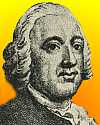
Born 22 Jul 1708; died 10 Oct 1789 at age 81.
Dutch naturalist and engraver who skillfully dissected insects and made detailed illustrations of their anatomy. He also had a career as an official codebreaker. In 1738 he entered the service of the States General as an administrator of secret expenses and as a code-clerk. In his leisure he turned to natural history. He believed that nature was a cipher that could be interpreted by tracing every detail of its perfect design. He designed a simple microscope which had each lens suspended at the end of a series of ball and socket joints over a small mahogony dissecting table mounted on a post above a wooden base with small drawers containing his instruments. After preparing engravings for several books written by others, he produced his own treatises.«[Other sources list his birth year as 1706 and others as 1707.]
Dutch naturalist and engraver who skillfully dissected insects and made detailed illustrations of their anatomy. He also had a career as an official codebreaker. In 1738 he entered the service of the States General as an administrator of secret expenses and as a code-clerk. In his leisure he turned to natural history. He believed that nature was a cipher that could be interpreted by tracing every detail of its perfect design. He designed a simple microscope which had each lens suspended at the end of a series of ball and socket joints over a small mahogony dissecting table mounted on a post above a wooden base with small drawers containing his instruments. After preparing engravings for several books written by others, he produced his own treatises.«[Other sources list his birth year as 1706 and others as 1707.]

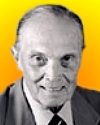
Died 22 Jul 2012 at age 92 (born 3 Feb 1920). quotes
George Armitage Miller was an American psychologist who was one of the fathers of modern cognitive psychology, and helped to establish psycholinguistics as an independent field of research in psychology. His early studies were in speech production and perception. Later he worked on human memory. In his most famous paper, The Magical Number Seven, Plus or Minus Two: Some Limits on our Capacity for Processing Information (1956) he described some limits on the human capacity to process information. Since 1985, Miller oversaw development of WordNet, a lexical database for the English language, funded in part by government agencies interested in machine translation. In 1991 he was awarded the National Medal of Science.[Ref: The Psychological Review (1956), 63, 81-97.]
George Armitage Miller was an American psychologist who was one of the fathers of modern cognitive psychology, and helped to establish psycholinguistics as an independent field of research in psychology. His early studies were in speech production and perception. Later he worked on human memory. In his most famous paper, The Magical Number Seven, Plus or Minus Two: Some Limits on our Capacity for Processing Information (1956) he described some limits on the human capacity to process information. Since 1985, Miller oversaw development of WordNet, a lexical database for the English language, funded in part by government agencies interested in machine translation. In 1991 he was awarded the National Medal of Science.[Ref: The Psychological Review (1956), 63, 81-97.]
Language and Speech, by George A. Miller. - book suggestion.
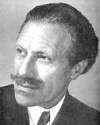
Died 22 Jul 1976 at age 85 (born 10 Sep 1890). quotes
Sir Robert Eric Mortimer Wheeler was a Scottish archaeologist was widely known for popularizing his subject with the public, especially by regular appearances on television.. His notable excavations in Britain were at Verulamium (St Albans) and Maiden Castle. While director-general of archaeology in India (1944-7), he was most active at Mohenjo-daro and Harappa. His particular excavation method was the 'Wheeler' box trench system. Returning to London, he became professor of the archaeology of the Roman provinces at the newly founded Institute of Archaeology (1948-55) and was knighted in 1952. His books include Archaeology from the Earth (1954) and the autobiographical Still Digging (1955).
Sir Robert Eric Mortimer Wheeler was a Scottish archaeologist was widely known for popularizing his subject with the public, especially by regular appearances on television.. His notable excavations in Britain were at Verulamium (St Albans) and Maiden Castle. While director-general of archaeology in India (1944-7), he was most active at Mohenjo-daro and Harappa. His particular excavation method was the 'Wheeler' box trench system. Returning to London, he became professor of the archaeology of the Roman provinces at the newly founded Institute of Archaeology (1948-55) and was knighted in 1952. His books include Archaeology from the Earth (1954) and the autobiographical Still Digging (1955).
Still Digging: Adventures in Archaeology, by Sir Mortimer Wheeler. - book suggestion.
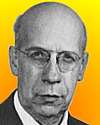
Died 22 Jul 1966 at age 82 (born 20 Mar 1884). quotes
Austrian-American physicist and mathematician whose theoretical work covered a broad range of mathematics, including variational calculus, Hamiltonian geometrical optics, Schrödinger wave mechanics, and relativity. Frank had a deep and lasting interest in the philosophy of science. In a number of writings, he strove to reconcile science and philosophy and “bring about the closest rapprochement between” them. The 1907 paper he wrote analyzing the law of causality caught Einstein's attention, who in 1912 recommended Frank as his successor as professor of theoretical physics at the German University of Prague. He held that position until 1938, when he moved to Harvard University in the U.S., first as visiting lecturer, but remaining there until retirement in 1954. He wrote on misinterpretations of the Theory of Relativity.«
Austrian-American physicist and mathematician whose theoretical work covered a broad range of mathematics, including variational calculus, Hamiltonian geometrical optics, Schrödinger wave mechanics, and relativity. Frank had a deep and lasting interest in the philosophy of science. In a number of writings, he strove to reconcile science and philosophy and “bring about the closest rapprochement between” them. The 1907 paper he wrote analyzing the law of causality caught Einstein's attention, who in 1912 recommended Frank as his successor as professor of theoretical physics at the German University of Prague. He held that position until 1938, when he moved to Harvard University in the U.S., first as visiting lecturer, but remaining there until retirement in 1954. He wrote on misinterpretations of the Theory of Relativity.«
Philosophy of Science: The Link Between Science and Philosophy, by Philipp Frank. - book suggestion.
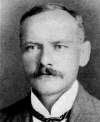
Died 22 Jul 1938 at age 71 (born 29 Nov 1866).
Ernest (William) Brown was a British astronomer who devoted his career to the theory of the Moon's motion and constructing accurate lunar tables. His theory took account of "the gravitational action of every particle of matter which can have a sensible effect on the Moon's motion," some 1500 terms. He then determined the numerical values of the constants by analyzing 150 years of Greenwich observations, and computed tables accurate to 0.01 arcsec. After 30 years of work, Brown published his lunar tables Tables of the Motion of the Moon in 1919. In 1926 Brown published a paper in which he ascribed fluctuations in the Moon's motion to irregular changes in the Earth's period of rotation, which has subsequently proved correct.
Ernest (William) Brown was a British astronomer who devoted his career to the theory of the Moon's motion and constructing accurate lunar tables. His theory took account of "the gravitational action of every particle of matter which can have a sensible effect on the Moon's motion," some 1500 terms. He then determined the numerical values of the constants by analyzing 150 years of Greenwich observations, and computed tables accurate to 0.01 arcsec. After 30 years of work, Brown published his lunar tables Tables of the Motion of the Moon in 1919. In 1926 Brown published a paper in which he ascribed fluctuations in the Moon's motion to irregular changes in the Earth's period of rotation, which has subsequently proved correct.
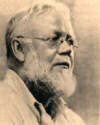
Died 22 Jul 1932 at age 65 (born 6 Oct 1866). quotes
Reginald Aubrey Fessenden was a Canadian-American physicist, engineer and inventor with 300 patents. He broadcast the first program of voice and music. In 1893, Fessenden moved to Pittsburgh as the head of electrical engineering at the university, Fessenden read of Marconi's work and began experimenting himself. Marconi could only transmit Morse code. But Fessenden's goal was to transmit the human voice and music. He invented the “continuous wave” AM radio: sound superimposed by amplitude modulation onto a carrier radio wave for transmission. A radio receiver extracts the signal from the carrier wave so the listener hears the original sound. Fessenden made the first long-range transmissions of voice on Christmas Eve 1906 from a station at Brant Rock, Massachusetts, heard hundreds of miles out in the Atlantic.
Reginald Aubrey Fessenden was a Canadian-American physicist, engineer and inventor with 300 patents. He broadcast the first program of voice and music. In 1893, Fessenden moved to Pittsburgh as the head of electrical engineering at the university, Fessenden read of Marconi's work and began experimenting himself. Marconi could only transmit Morse code. But Fessenden's goal was to transmit the human voice and music. He invented the “continuous wave” AM radio: sound superimposed by amplitude modulation onto a carrier radio wave for transmission. A radio receiver extracts the signal from the carrier wave so the listener hears the original sound. Fessenden made the first long-range transmissions of voice on Christmas Eve 1906 from a station at Brant Rock, Massachusetts, heard hundreds of miles out in the Atlantic.
The Cosmic Inventor: Reginald Aubrey Fessenden (1866-1932), by Frederick Seitz. - book suggestion.
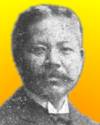
Died 22 Jul 1922 at age 67 (born 3 Nov 1854).
Japanese-American biochemist and industrialist who isolated the hormone produced in the adrenal gland that causes the body to respond to emergencies. This chemical was adrenalin (now called epinephrine) from the suprarenal gland (1901). This was the first pure hormone to be isolated from natural sources. He applied for and received a U.S. patent on the substance, and went on to make a fortune with his marketing of Adrenalin. In fact, the product that he marketed was not pure epinephrine, but a mixture of the hormone and its sibling compound, norepinephrine (or noradrenaline). It is now made synthetically. He also found takadastase, and played a key role in the introduction of phosphate fertilizer along with various other manufacturing and chemical industries. to Japan.
Japanese-American biochemist and industrialist who isolated the hormone produced in the adrenal gland that causes the body to respond to emergencies. This chemical was adrenalin (now called epinephrine) from the suprarenal gland (1901). This was the first pure hormone to be isolated from natural sources. He applied for and received a U.S. patent on the substance, and went on to make a fortune with his marketing of Adrenalin. In fact, the product that he marketed was not pure epinephrine, but a mixture of the hormone and its sibling compound, norepinephrine (or noradrenaline). It is now made synthetically. He also found takadastase, and played a key role in the introduction of phosphate fertilizer along with various other manufacturing and chemical industries. to Japan.
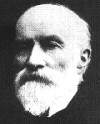
Died 22 Jul 1915 at age 88 (born 7 Jan 1827).
Scottish surveyor and leading railway engineer who divided the world into time zones. He emigrated at age 17 years to Quebec, Canada, on 24 Apr 1845, as a surveyor. Later he became one of the foremost railway engineers of his time. While in charge of the initial survey for the Canadian Pacific Railway, the first Canadian railway to span the continent, he realized the problems of coordinating such a long railway. This lead him to the idea of time zones, which contribution to the adoption of the present system of time zones earned him the title of "Father of Standard Time." Fleming also designed the first Canadian postage stamp. Issued in 1851, it cost three pennies and depicted the beaver, now the national animal of Canada.
Scottish surveyor and leading railway engineer who divided the world into time zones. He emigrated at age 17 years to Quebec, Canada, on 24 Apr 1845, as a surveyor. Later he became one of the foremost railway engineers of his time. While in charge of the initial survey for the Canadian Pacific Railway, the first Canadian railway to span the continent, he realized the problems of coordinating such a long railway. This lead him to the idea of time zones, which contribution to the adoption of the present system of time zones earned him the title of "Father of Standard Time." Fleming also designed the first Canadian postage stamp. Issued in 1851, it cost three pennies and depicted the beaver, now the national animal of Canada.
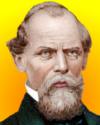
Died 22 Jul 1869 at age 63 (born 12 Jun 1806).
John Augustus Roebling was a German-American engineer who pioneered the design and construction of suspension bridges. In 1831 he immigrated to Saxonburg, near Pittsburgh, Pa., and shortly thereafter was employed by the Pennsylvania Railroad Corp. to survey its route across the Allegheny Mountains. He then demonstrated the practicability of steel cables in bridge construction and in 1841 established at Saxonburg the first U.S. factory to manufacture steel-wire rope. Roebling utilized steel cables in the construction of numerous suspension bridges including a railroad suspension bridge over the Niagara River at Niagara Falls (1851-55). He designed the Brooklyn Bridge. He died from injuries while supervising preliminary construction operations. more
John Augustus Roebling was a German-American engineer who pioneered the design and construction of suspension bridges. In 1831 he immigrated to Saxonburg, near Pittsburgh, Pa., and shortly thereafter was employed by the Pennsylvania Railroad Corp. to survey its route across the Allegheny Mountains. He then demonstrated the practicability of steel cables in bridge construction and in 1841 established at Saxonburg the first U.S. factory to manufacture steel-wire rope. Roebling utilized steel cables in the construction of numerous suspension bridges including a railroad suspension bridge over the Niagara River at Niagara Falls (1851-55). He designed the Brooklyn Bridge. He died from injuries while supervising preliminary construction operations. more
Builders of the Bridge: The Story of John Roebling and His Son, by David Barnard Steinman. - book suggestion.
Died 22 Jul 1826 at age 80 (born 16 Jul 1746).
Italian astronomer and author who discovered the first asteroid, Ceres. He established an observatory at Palermo and mapped the positions of 7,646 stars. He also discovered that the star 61 Cygni had a large Proper Motion, which led Friedrich Bessel to chose it as the object of his parallax studies. He discovered Ceres on 1 Jan 1801, but was able to make only three observations. He named it after Ceres, the Roman goddess of agriculture and motherly love. The term “asteroid,” meaning “star-like” was coined (1803) by William Herschel. Fortuitously, Carl Gauss had recently developed mathematical techniques that allowed the orbit to be calculated. Within the next few years, astronomers discovered three more asteroids: Pallas, Juno, and Vesta. The thousandth asteroid discovered was named Piazzi in his honor.
Italian astronomer and author who discovered the first asteroid, Ceres. He established an observatory at Palermo and mapped the positions of 7,646 stars. He also discovered that the star 61 Cygni had a large Proper Motion, which led Friedrich Bessel to chose it as the object of his parallax studies. He discovered Ceres on 1 Jan 1801, but was able to make only three observations. He named it after Ceres, the Roman goddess of agriculture and motherly love. The term “asteroid,” meaning “star-like” was coined (1803) by William Herschel. Fortuitously, Carl Gauss had recently developed mathematical techniques that allowed the orbit to be calculated. Within the next few years, astronomers discovered three more asteroids: Pallas, Juno, and Vesta. The thousandth asteroid discovered was named Piazzi in his honor.
Died 22 Jul 1823 at age 84 (born 20 Apr 1739).
American traveller and naturalist, the son of botanist John Bartram, whom he accompanied on botanical expeditions. From 1773, William Bartram made his own exploration of several Southern states, observing the wildlife: birds, animals, fishes as well as plants. He also made notes on life of the Indians. He wrote about his journeys in much the reprinted Travels (1791). Alexander Wilson, a Scottish immigrant to America, was inspired to become a leading ornithologist with Bartram's coaching. When Benjamin Smith Barton authored the first botanical textbook published in the U.S., Elements of Botany (1803), Bartram illustrated it.
American traveller and naturalist, the son of botanist John Bartram, whom he accompanied on botanical expeditions. From 1773, William Bartram made his own exploration of several Southern states, observing the wildlife: birds, animals, fishes as well as plants. He also made notes on life of the Indians. He wrote about his journeys in much the reprinted Travels (1791). Alexander Wilson, a Scottish immigrant to America, was inspired to become a leading ornithologist with Bartram's coaching. When Benjamin Smith Barton authored the first botanical textbook published in the U.S., Elements of Botany (1803), Bartram illustrated it.
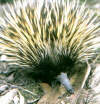

George Shaw was an English naturalist and an anatomist. In 1792, at the Royal Zoological Society in London, he received and was the first to preserve and classify an Australian echidna specimen. Spines and hair on the animal suggested a new genus of porcupine. But it was "captured in New Holland on an anthill," had a naked, elongated snout and long, cylindrical tongue. Thus, he mistakenly classified it in the taxonomic scheme as related to the South American ant bear. What had he missed? Not until 1884 was there verification (of the observations passed on from native aboriginal Australians many decades before) that this mammal laid eggs!
Died 22 Jul 1809 at age 67 (born 6 May 1742).
Swiss naturalist and botanist who demonstrated that green plants consume carbon dioxide and release oxygen under the influence of light. In 1788, Jean Senebier, in his Expériences sur l'action de la lumière solaire dans la végétation established the relationship between the presence of carbon dioxide in the atmosphere and the production of oxygen by plants. His studies built on the work of Ingenhousz who showed that plants produce oxygen in sunlight and carbon dioxide in darkness. Neither scientist fully understood the puzzle of photosynthesis, but they provided steps to the solution by others after them.
Swiss naturalist and botanist who demonstrated that green plants consume carbon dioxide and release oxygen under the influence of light. In 1788, Jean Senebier, in his Expériences sur l'action de la lumière solaire dans la végétation established the relationship between the presence of carbon dioxide in the atmosphere and the production of oxygen by plants. His studies built on the work of Ingenhousz who showed that plants produce oxygen in sunlight and carbon dioxide in darkness. Neither scientist fully understood the puzzle of photosynthesis, but they provided steps to the solution by others after them.
Died 22 Jul 1802 at age 30 (born 14 Nov 1771). quotes
Marie François Xavier Bichat was a French physician who was the first to investigate the body's organs as a complex of simpler structures. He made hundreds of post-mortem examinations, with an unaided eye, noting the effect of disease on the organs. Even before knowledge of the cell as the functional unit of living things, he was among the first to visualize the organs of the body as being formed through the differentiation of simple, functional units. For these, typically thin layers that make up the organs, he coined the term "tissues" and identified 21 types in his book General Anatomy (1800). He died young, at age 30, after fainting and falling down the steps in his laboratory.«
Marie François Xavier Bichat was a French physician who was the first to investigate the body's organs as a complex of simpler structures. He made hundreds of post-mortem examinations, with an unaided eye, noting the effect of disease on the organs. Even before knowledge of the cell as the functional unit of living things, he was among the first to visualize the organs of the body as being formed through the differentiation of simple, functional units. For these, typically thin layers that make up the organs, he coined the term "tissues" and identified 21 types in his book General Anatomy (1800). He died young, at age 30, after fainting and falling down the steps in his laboratory.«
Xavier Bichat and the Medical Theory of the Eighteenth Century, by Elizabeth Haigh. - book suggestion.
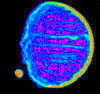
In 1994, the last of the large fragments of the comet Shoemaker-Levy struck Jupiter (Fragment W). This image of the collision of comet fragment W consists of one frame taken within the 7-second period that the impact was visible to the spacecraft Galileo. Enhanced, it shows a bright point about 44 degrees south latitude on the far side of Jupiter from the Earth. The frame was obtained at 8:06 UT on July 22, 1994, with Galileo at a distance of about 150 million miles from Jupiter.
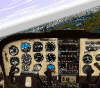
In 1989, the youngest pilot to fly around the world, 11 year old (4th grade) Tony Aliengena, returned to John Wayne Airport in Orange County, CA, nearly seven weeks and 21,567 miles after taking off in a Cessna 210 Centurion. The around-the-world trip had included good will stops in the Soviet Union. The plane crashed while trying to take off from Alaska while the boy's father was at the controls, giving his son a rest. There were no serious injuries, and the journey was completed. Early the previous year, while still age 9 years, he was the youngest pilot to cross the continental U.S.


In 1952, a U.S. patent for a "Self-Propelled Sprinkling Irrigating Apparatus" was issued to Frank L. Zybach of Strasburg, Colorado (No. 2,604,359). A centre-pivoted pipe supported on a series of water-piston-powered wheels rotates and sprinkles water on the crops.A control system ensures that each wheel advances at the correct rate. This is the now-familiar centre-pivot machine that waters large circles of crops in those areas of a country which have limited rainfall but have a supply of surface or well water. It provides irrigation for large areas of even closely-spaced crops for which irrigation ditches are not practical and wasteful of water, or that would be expensive to supply with full coverage with stationary sprinklers.«[Image: a modern example showing the sprinkler pipe carried above a series of large wheels.]
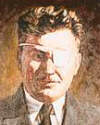
In 1933, the first round-the-world solo flight (15,596 miles) was completed by Wiley Post, in his single-engine Lockheed Vega 5B aircraft "Winnie Mae," in 7 days 18hr 49min. He had made an accompanied flight around the world in 1931.Born 22 Nov 1898, Wiley Post made his first solo flight in 1926, the year he got his flying license, signed by Orville Wright, despite wearing a patch over his left eye, lost in an oilfield accident. Post invented the first pressurized suit to wear when he flew around the world. Another credit was his research into the jet streams. He died with his passenger, humorist Will Rogers, 15 Aug 1935 in a plane crash in Alaska.
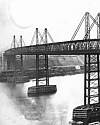
In 1871, the foundation stone was laid for the Tay Railway Bridge to be built across the mile-wide Firth of Tay on the east Scottish coast. The two-mile bridge of lattice girders on ironwork columns was opened 31 May 1878. At the time, it was the longest bridge in the world. It had a clearance of about 88-ft above the high water mark in the middle of the firth to allow ships to pass up the Tay to Perth. Sir Thomas Bouch was the railway engineer in charge of its construction. He was knighted in Jun 1878, the month after it opened. It collapsed the following year, in a fierce gale on 28 Dec 1879, killing a trainload of people.«




