
Born 11 Jun 1937. quotes
American mathematician who was awarded the Fields Medal in 1974 for his work in algebraic geometry. In the 1980s he turned to applied mathematics with the question "Is there a mathematical approach to understanding thought and the brain?" This is part of "Pattern Theory," as introduced by Ulf Grenander in the 70's to give a theoretical setting for a large number of related ideas, techniques and results from fields such as computer vision, speech recognition, image and acoustic signal processing, pattern recognition and its statistical side, neural nets and parts of artificial intelligence.(Born in England to an English father and American Mother thus U.S. citizen by derivation.)
American mathematician who was awarded the Fields Medal in 1974 for his work in algebraic geometry. In the 1980s he turned to applied mathematics with the question "Is there a mathematical approach to understanding thought and the brain?" This is part of "Pattern Theory," as introduced by Ulf Grenander in the 70's to give a theoretical setting for a large number of related ideas, techniques and results from fields such as computer vision, speech recognition, image and acoustic signal processing, pattern recognition and its statistical side, neural nets and parts of artificial intelligence.(Born in England to an English father and American Mother thus U.S. citizen by derivation.)
Born 11 Jun 1912; died 2 May 1997 at age 84.
Canadian-born American cell biologist who developed techniques for electron microscope studies to determine the internal structure and organization of cells and tissues. As a graduate student at Harvard, he developed a method for nuclear transplantation in frog eggs. In 1945, he described the structure of the endoplasmic reticulum. In 1952-53, Porter with George Palade and Fritiof Stig Sjöstrand perfected thin sectioning and fixation methods for electron microscopy of intracellular structures, especially of mitochondria. He used scanning electron microscopy for visualizing the surfaces of cells and tissues and applied it both to tissue culture cells, and to organs and tissues that were dispersed by chemical or mechanical treatment.
Canadian-born American cell biologist who developed techniques for electron microscope studies to determine the internal structure and organization of cells and tissues. As a graduate student at Harvard, he developed a method for nuclear transplantation in frog eggs. In 1945, he described the structure of the endoplasmic reticulum. In 1952-53, Porter with George Palade and Fritiof Stig Sjöstrand perfected thin sectioning and fixation methods for electron microscopy of intracellular structures, especially of mitochondria. He used scanning electron microscopy for visualizing the surfaces of cells and tissues and applied it both to tissue culture cells, and to organs and tissues that were dispersed by chemical or mechanical treatment.
Born 11 Jun 1910; died 25 Jun 1997 at age 87. quotes
French naval officer, oceanographer, marine biologist and ocean explorer, known for his extensive underseas investigations. He was co-inventor of the aqualung which made SCUBA diving possible (1943). Cousteau the developed the Conshelf series of manned habitats, the Diving Saucer, a process of underwater television and numerous other platforms and specialized instruments of ocean science. In 1945 he founded the French Navy's Undersea Research Group. He modified a WWII wooden hull minesweeper into the research vessel Calypso, in 1950. An observation dome added to the foot of Calypso's bow was found to increase the ship's stability, speed and fuel efficiency.
French naval officer, oceanographer, marine biologist and ocean explorer, known for his extensive underseas investigations. He was co-inventor of the aqualung which made SCUBA diving possible (1943). Cousteau the developed the Conshelf series of manned habitats, the Diving Saucer, a process of underwater television and numerous other platforms and specialized instruments of ocean science. In 1945 he founded the French Navy's Undersea Research Group. He modified a WWII wooden hull minesweeper into the research vessel Calypso, in 1950. An observation dome added to the foot of Calypso's bow was found to increase the ship's stability, speed and fuel efficiency.
Jacques Cousteau's Calypso, by Jacques Yves Cousteau. - book suggestion.
Born 11 Jun 1886; died 21 Aug 1960 at age 74.
American engineer whose studies of airflow and wind velocity helped make possible the design of aerodynamically stable bridges. Steinman's thesis for his Ph.D. from Colombia University (1911) was published as "The Design of the Henry Hudson Memorial Bridge as a Steel Arch, and more than 20 years later he built the bridge he had planned over the Harlem River. Steinman designed more than 400 bridges, for instance Sidney Harbor Bridge in Australia, Mackinac Straits Bridge, Carquinez Strait Bridge, San Francisco (1937), Saint Johns Bridge, Portland, Ore, Deer Isle Bridge, Maine, Mount Hope Bridge, Rhode Island.
American engineer whose studies of airflow and wind velocity helped make possible the design of aerodynamically stable bridges. Steinman's thesis for his Ph.D. from Colombia University (1911) was published as "The Design of the Henry Hudson Memorial Bridge as a Steel Arch, and more than 20 years later he built the bridge he had planned over the Harlem River. Steinman designed more than 400 bridges, for instance Sidney Harbor Bridge in Australia, Mackinac Straits Bridge, Carquinez Strait Bridge, San Francisco (1937), Saint Johns Bridge, Portland, Ore, Deer Isle Bridge, Maine, Mount Hope Bridge, Rhode Island.
Born 11 Jun 1876; died 5 Oct 1960 at age 84. quotes
Alfred Louis Kroeber was an American anthropologist who was influential in the first half of the 20th century. His primary concern was to understand the nature of culture and its processes. He graduated from Columbia University in 1896, and received a Ph.D. under Franz Boas there in 1901, then moved west to found the anthropology department at the University of California at Berkeley where he remained until 1946. His chief scholarly interest was California Indians. He developed the concept of cultures as patterned wholes, each with its own style, and each undergoing a growth process analogous to that of a biological organism. Kroeber also made valuable contributions to the archaeology of New Mexico, Mexico, and Peru.
Alfred Louis Kroeber was an American anthropologist who was influential in the first half of the 20th century. His primary concern was to understand the nature of culture and its processes. He graduated from Columbia University in 1896, and received a Ph.D. under Franz Boas there in 1901, then moved west to found the anthropology department at the University of California at Berkeley where he remained until 1946. His chief scholarly interest was California Indians. He developed the concept of cultures as patterned wholes, each with its own style, and each undergoing a growth process analogous to that of a biological organism. Kroeber also made valuable contributions to the archaeology of New Mexico, Mexico, and Peru.
Alfred Kroeber, by Julian H. Steward. - book suggestion.
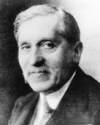
Born 11 Jun 1867; died 11 Dec 1945 at age 78.
French physicist who specialized in optics, devising methods for the accurate measurement of interference effects. He worked with Alfred Pérot, during 1896-1906, on the design and uses of a device known as the Fabry-Pérot interferometer, specifically for high-resolution spectroscopy, composed of two thinly silvered glass plates placed in parallel, producing interference due to multiple reflections. In 1913, Fabry demonstrated that ozone is plentiful in the upper atmosphere and is responsible for filtering out ultraviolet radiation from the Sun, protecting life on the surface of Earth from most of its harmful effects.
French physicist who specialized in optics, devising methods for the accurate measurement of interference effects. He worked with Alfred Pérot, during 1896-1906, on the design and uses of a device known as the Fabry-Pérot interferometer, specifically for high-resolution spectroscopy, composed of two thinly silvered glass plates placed in parallel, producing interference due to multiple reflections. In 1913, Fabry demonstrated that ozone is plentiful in the upper atmosphere and is responsible for filtering out ultraviolet radiation from the Sun, protecting life on the surface of Earth from most of its harmful effects.

Born 11 Jun 1860; died 4 Apr 1943 at age 82.
American marine zoologist known for establishing the basic taxonomic information on Crustacea. For many years she was the Smithsonian's complete department of marine invertebrates where she studied, cataloged, and preserved specimens. Through her basic studies and published works, she fixed the nomenclature of Crustacea and was the recognized, and the much sought after, authority in zoology and carcinology (thestudy of crustacea). When the department needed an assistant, she resigned as superintendent and used her salary to hire someone. She continued to work without pay as a dedicated volunteer carcinologist. She published over 160 papers on a wide variety of scientific subjects.Image: Blue crab, Callinectes sapidus, named by Rathbun.
American marine zoologist known for establishing the basic taxonomic information on Crustacea. For many years she was the Smithsonian's complete department of marine invertebrates where she studied, cataloged, and preserved specimens. Through her basic studies and published works, she fixed the nomenclature of Crustacea and was the recognized, and the much sought after, authority in zoology and carcinology (thestudy of crustacea). When the department needed an assistant, she resigned as superintendent and used her salary to hire someone. She continued to work without pay as a dedicated volunteer carcinologist. She published over 160 papers on a wide variety of scientific subjects.Image: Blue crab, Callinectes sapidus, named by Rathbun.
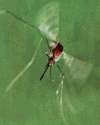
Born 11 Jun 1857; died 1 May 1950 at age 92.
American entomologist noted for pioneering efforts in applied entomology and his experiments in the biological control of harmful insects. He is regarded as the founder of agricultural and medical entomology. He proposed that natural enemies rather than pesticides be used for controlling pests. Howard was head of the U.S. Dept. of Agriculture for over 30 years. He described 20 new species of mosquitoes, and 47 new groups of parasitic wasps. Howard revealed that houseflies carry and transmit many diseases. He was the first to suggest covering standing water with oil to control egg-laying by mosquitoes and kill larvae to reduce disease transmission. His work led to belief that great natural balances are mainly due to the action of the parasites.
American entomologist noted for pioneering efforts in applied entomology and his experiments in the biological control of harmful insects. He is regarded as the founder of agricultural and medical entomology. He proposed that natural enemies rather than pesticides be used for controlling pests. Howard was head of the U.S. Dept. of Agriculture for over 30 years. He described 20 new species of mosquitoes, and 47 new groups of parasitic wasps. Howard revealed that houseflies carry and transmit many diseases. He was the first to suggest covering standing water with oil to control egg-laying by mosquitoes and kill larvae to reduce disease transmission. His work led to belief that great natural balances are mainly due to the action of the parasites.
1932
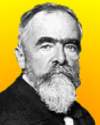
Born 11 Jun 1842; died 16 Nov 1934 at age 92.
German chemist, engineer and inventor who invented mechanical refrigeration. His first refrigeration equipment was tested in a Munich brewery. Brewing good lager beer required low temperatures, limiting brewing to winter, or in deep cellars with the use of large quantities of block ice. Through Linde's invention of refrigeration, beer brewing became seasonally independent. Linde also invented a continuous process of liquefying gases in large quantities which provided both impetus and means for conducting scientific research at low temperatures and very high vacuums. Linde's original industry has now grown to 120 companies around the world.
German chemist, engineer and inventor who invented mechanical refrigeration. His first refrigeration equipment was tested in a Munich brewery. Brewing good lager beer required low temperatures, limiting brewing to winter, or in deep cellars with the use of large quantities of block ice. Through Linde's invention of refrigeration, beer brewing became seasonally independent. Linde also invented a continuous process of liquefying gases in large quantities which provided both impetus and means for conducting scientific research at low temperatures and very high vacuums. Linde's original industry has now grown to 120 companies around the world.
Linde: History of a Technology Corporation, 1879-2004, by Hans-Liudger Dienel. - book suggestion.
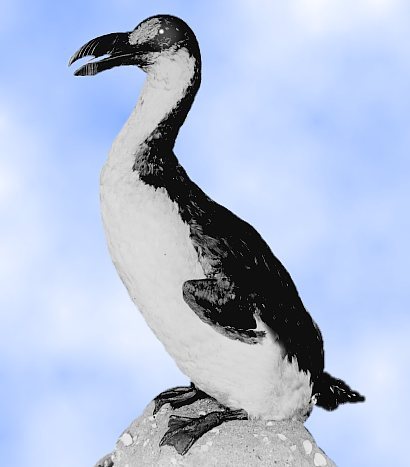
Great auk
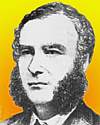
British zoologist and ornithologist, one of the foremost in his time. In 1866, he was appointed the first Professor of Zoology and Comparative Anatomy at Cambridge University. Despite the fact that he suffered from diseased hip joints and walked with the aid of two sticks, he traveled throughout Lapland, Iceland, the West Indies, and North America (1854-63). During these expeditions he studied ornithology and became particularly interested in the great auk. He helped prepare the first Acts of Parliament passed for the protection of birds. He wrote a great deal on his field of work, including a 4-volume Dictionary of Birds, and the articles on Ornithology in several 19th century editions of the Encyclopaedia Britannica.« more
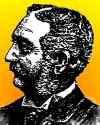
Born 11 Jun 1824; died 28 Feb 1907 at age 82.
Orson Desaix Munn was an American ornithologist who was the publisher of Scientific American. The Munn & Company, formed with Salem H. Wales and editor Alfred Beach, bought the six-month-old Scientific American magazine from Rufus Porter. Together, they built it over the years into a great and unique periodical. Because they published a weekly list of all patents, and dealt with inventions and inventors, their enterprise led to Munn & Co. establishing the Scientific American Patent Agency. This was partially responsible for the rapid growth of the American patent system. In its percentage-peak years around 1860, one-third of all patents issued by the U.S. Patent Office were prosecuted by Munn & Co
Orson Desaix Munn was an American ornithologist who was the publisher of Scientific American. The Munn & Company, formed with Salem H. Wales and editor Alfred Beach, bought the six-month-old Scientific American magazine from Rufus Porter. Together, they built it over the years into a great and unique periodical. Because they published a weekly list of all patents, and dealt with inventions and inventors, their enterprise led to Munn & Co. establishing the Scientific American Patent Agency. This was partially responsible for the rapid growth of the American patent system. In its percentage-peak years around 1860, one-third of all patents issued by the U.S. Patent Office were prosecuted by Munn & Co
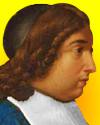
Born 11 Jun 1623; died 6 Aug 1706 at age 83. quotes
French natural philosopher, priest and institutional historian who was the first secretary of the Académie Royale des Sciences (1666-97). His works on astronomy included a short primer, Elementa astronomice (1642) and Astronmia physica (1659). He published the first printed history of the Académie Royale des Sciences. In his lifetime, he held several ecclesiastic appointments. Though he was never an anatomist as a scholar, late in life, he held a place of pensionary anatomist (as described by Pierre Costabel in a biographical entry in DSB).[Name also written as du Hamel or Duhamel. DSB gives 1623 for birth year; Dictionnaire de Biographie Française gives 1624.]
French natural philosopher, priest and institutional historian who was the first secretary of the Académie Royale des Sciences (1666-97). His works on astronomy included a short primer, Elementa astronomice (1642) and Astronmia physica (1659). He published the first printed history of the Académie Royale des Sciences. In his lifetime, he held several ecclesiastic appointments. Though he was never an anatomist as a scholar, late in life, he held a place of pensionary anatomist (as described by Pierre Costabel in a biographical entry in DSB).[Name also written as du Hamel or Duhamel. DSB gives 1623 for birth year; Dictionnaire de Biographie Française gives 1624.]

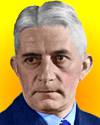
Died 11 Jun 1967 at age 80 (born 21 Jan 1887). quotes
Russo-German-American psychologist who significantly developed Gestalt psychology, in which learning, perception, and other mental processes were studied incorporated as part of a structured whole. While director of the Anthropoid Station at Tenerife, Canary Islands (1913-20), Köhler studied intelligent behavior in primates conducting experiments with problem-solving in apes. His tests indicated that chimpanzees solved problems by understanding, rather than continuous random trial-and-error. For example, to reach fruit hanging out of reach in its pen, a chimpanzee learned to use sticks to get the food, or stacked boxes to get it. Then, if tables were substituted for the boxes, the chimp would immediately use them instead.«
Russo-German-American psychologist who significantly developed Gestalt psychology, in which learning, perception, and other mental processes were studied incorporated as part of a structured whole. While director of the Anthropoid Station at Tenerife, Canary Islands (1913-20), Köhler studied intelligent behavior in primates conducting experiments with problem-solving in apes. His tests indicated that chimpanzees solved problems by understanding, rather than continuous random trial-and-error. For example, to reach fruit hanging out of reach in its pen, a chimpanzee learned to use sticks to get the food, or stacked boxes to get it. Then, if tables were substituted for the boxes, the chimp would immediately use them instead.«
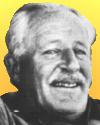
Died 11 Jun 1963 at age 77 (born 29 Oct 1885).
Alfred Vincent Kidder was an American archaeologist who was the foremost American archaeologist of the southwestern U.S. and Middle America of his day and the force behind the first comprehensive, systematic approach to North American archaeology. His excavations included Pecos in New Mexico and the Maya in Guatemala. In spite of his great efforts and diligence he was criticized for his lack of integrated conclusions drawn from his numerous reports from the field without any synthesis and interpretation of that data. In his time, archeology was still considered as “gentlemanly adventure” with the goal of adding “artifacts”to museums. Kidder emphasized archeology's need for the scientific “eye” was the development of fact collecting techniques and clear definitions.
Alfred Vincent Kidder was an American archaeologist who was the foremost American archaeologist of the southwestern U.S. and Middle America of his day and the force behind the first comprehensive, systematic approach to North American archaeology. His excavations included Pecos in New Mexico and the Maya in Guatemala. In spite of his great efforts and diligence he was criticized for his lack of integrated conclusions drawn from his numerous reports from the field without any synthesis and interpretation of that data. In his time, archeology was still considered as “gentlemanly adventure” with the goal of adding “artifacts”to museums. Kidder emphasized archeology's need for the scientific “eye” was the development of fact collecting techniques and clear definitions.
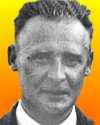
Died 11 Jun 1937 at age 42 (born 20 May 1895).
Reginald Joseph Mitchell was a British aircraft designer, developer of the eight-gun Spitfire (1936), one of the best-known fighters in World War II. He was an engineer and designer for Supermarine Aviation Works (1916-37), chief engineer (from 1919) and was also known for design of a series of flying boats and high-speed seaplanes. In the years from 1920 to 1936, he designed no less than twenty-four different aircraft. The Spitfire was a derivative of his earlier S.6B seaplane racing aircraft.(image right source)
Reginald Joseph Mitchell was a British aircraft designer, developer of the eight-gun Spitfire (1936), one of the best-known fighters in World War II. He was an engineer and designer for Supermarine Aviation Works (1916-37), chief engineer (from 1919) and was also known for design of a series of flying boats and high-speed seaplanes. In the years from 1920 to 1936, he designed no less than twenty-four different aircraft. The Spitfire was a derivative of his earlier S.6B seaplane racing aircraft.(image right source)
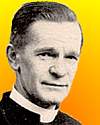
Died 11 Jun 1936 at age 58 (born 14 Feb 1878).
Belgian-American organic chemist who studied reactions of acetylene and invented neoprene. He was ordained as a priest (1903) before earning his Ph.D. (1904). He did not pursue his own discovery of the reaction between acetylene and arsenic trichloride, but it led to the development of the chemical-warfare agent lewisite dubbed “the dew of death”, a poison gas and vesicant used in WW I. He collaborated with DuPont chemists in thepolymerization of acetylene and development of chloroprene, which in turn could be polymerized to the first really successful synthetic rubber, neoprene. This was superior to rubber in many ways such as in its resistance to sunlight, abrasion, and temperature extremes.
Belgian-American organic chemist who studied reactions of acetylene and invented neoprene. He was ordained as a priest (1903) before earning his Ph.D. (1904). He did not pursue his own discovery of the reaction between acetylene and arsenic trichloride, but it led to the development of the chemical-warfare agent lewisite dubbed “the dew of death”, a poison gas and vesicant used in WW I. He collaborated with DuPont chemists in thepolymerization of acetylene and development of chloroprene, which in turn could be polymerized to the first really successful synthetic rubber, neoprene. This was superior to rubber in many ways such as in its resistance to sunlight, abrasion, and temperature extremes.
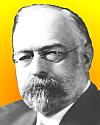
Died 11 Jun 1931 at age 76 (born 23 Mar 1855).
American sociologist, one of the first in the United States to turn sociology from a branch of philosophy into a research science dependent on statistics. He was noted for his doctrine of the "consciousness of kind," which he derived from Adam Smith's conception of "sympathy," or shared moral reactions. His explanation of social phenomena was based this doctrine - his theory that each person has an innate sense of belonging to particular social groups. He encouraged statistical studies in sociology.
American sociologist, one of the first in the United States to turn sociology from a branch of philosophy into a research science dependent on statistics. He was noted for his doctrine of the "consciousness of kind," which he derived from Adam Smith's conception of "sympathy," or shared moral reactions. His explanation of social phenomena was based this doctrine - his theory that each person has an innate sense of belonging to particular social groups. He encouraged statistical studies in sociology.
Died 11 Jun 1897 at age 78 (born 28 Dec 1818). quotes
German analytical chemist who devised a method for systematic identification and separation of individual metal and non-metal ions, selecting the most suitable reactions from the many that were known. The book he wrote expounding this system (Anleitung zur qualitativen chemischen Analyse, 1941) enjoyed great success. As it was the first to address this need, it became an enduring textbook. He followed this with a book on quantitative analysis (1846). Aged only 29, he founded the first chemical analysis and teaching laboratory, the Fresnius Training and Research Institute, in Wiesbaden, Germany. He founded the Zeitschrift für Analytische Chemie (Journal of Analytical Chemistry, 1862) which he edited until his death.«
German analytical chemist who devised a method for systematic identification and separation of individual metal and non-metal ions, selecting the most suitable reactions from the many that were known. The book he wrote expounding this system (Anleitung zur qualitativen chemischen Analyse, 1941) enjoyed great success. As it was the first to address this need, it became an enduring textbook. He followed this with a book on quantitative analysis (1846). Aged only 29, he founded the first chemical analysis and teaching laboratory, the Fresnius Training and Research Institute, in Wiesbaden, Germany. He founded the Zeitschrift für Analytische Chemie (Journal of Analytical Chemistry, 1862) which he edited until his death.«
Died 11 Jun 1895 at age 80 (born 27 Sep 1814).
American astronomer and mathematician who noted in about 1860 that there were several zones of low density in the minor-planet population. These gaps in the distribution of asteroid distances from the Sun are now known as Kirkwood gaps. He explained the gaps as resulting from perturbations by Jupiter. An object that revolved in one of the gaps would be disturbed regularly by the planet’s gravitational pull and eventually would be moved to another orbit. Thus gaps appeared in the distribution of asteroids where the orbital period of any small body present would be a simple fraction of that of Jupiter. Kirwood showed that a similar effect accounted for gaps in Saturns rings.
American astronomer and mathematician who noted in about 1860 that there were several zones of low density in the minor-planet population. These gaps in the distribution of asteroid distances from the Sun are now known as Kirkwood gaps. He explained the gaps as resulting from perturbations by Jupiter. An object that revolved in one of the gaps would be disturbed regularly by the planet’s gravitational pull and eventually would be moved to another orbit. Thus gaps appeared in the distribution of asteroids where the orbital period of any small body present would be a simple fraction of that of Jupiter. Kirwood showed that a similar effect accounted for gaps in Saturns rings.
Died 11 Jun 1743 at age 72 (born 10 May 1671).
English geologist who was the first to suggest the theory of stratified rock formations. He wrote Observations on the Different Strata of Earths and Minerals (1727) and stated that there was a relation between surface features and the rock structure, an idea that was not commonly accepted until a century later. He studied the stratigraphy of coal mines, and published two geological papers on the subject in the Philosophical Transactions. In them he sketched cross-sections of strata, using fossils to identify one stratum. His 1725 paper contained the first clear indication of an angular unconformity, the importance of which was not realised until much later. He mapped Somerset, showing among other things the sites of coal and metalliferous mines.
English geologist who was the first to suggest the theory of stratified rock formations. He wrote Observations on the Different Strata of Earths and Minerals (1727) and stated that there was a relation between surface features and the rock structure, an idea that was not commonly accepted until a century later. He studied the stratigraphy of coal mines, and published two geological papers on the subject in the Philosophical Transactions. In them he sketched cross-sections of strata, using fossils to identify one stratum. His 1725 paper contained the first clear indication of an angular unconformity, the importance of which was not realised until much later. He mapped Somerset, showing among other things the sites of coal and metalliferous mines.
Died 11 Jun 1292 (born c. 1220). quotes
English scholar who was one of the first to propose mathematics and experimentation as appropriate methods of science. He studied mathematics, astronomy, optics, alchemy, and languages. He elucidated the principles of refraction, reflection, and spherical aberration, and described spectacles, which soon thereafter came into use. He developed many mathematical results concerning lenses, proposed mechanically propelled ships, carriages, and flying machines, and used a camera obscura to observe eclipses of the Sun. Bacon was the first European give a detailed description of the process of making gunpowder.[Date of death is given in Asimov’s Dictionary of Science and Technology as 11 Jun 1292, but is likely unreliable since most sources give no specific day or month. Some, including DSB give c.1292, others c.1294. Date of birth is given by some sources as c.1214, by DSB as c.1219, Asimov as c.1220.]
English scholar who was one of the first to propose mathematics and experimentation as appropriate methods of science. He studied mathematics, astronomy, optics, alchemy, and languages. He elucidated the principles of refraction, reflection, and spherical aberration, and described spectacles, which soon thereafter came into use. He developed many mathematical results concerning lenses, proposed mechanically propelled ships, carriages, and flying machines, and used a camera obscura to observe eclipses of the Sun. Bacon was the first European give a detailed description of the process of making gunpowder.[Date of death is given in Asimov’s Dictionary of Science and Technology as 11 Jun 1292, but is likely unreliable since most sources give no specific day or month. Some, including DSB give c.1292, others c.1294. Date of birth is given by some sources as c.1214, by DSB as c.1219, Asimov as c.1220.]

In 1998, scientists deciphered the last of the genetic material of bacterium that causes tuberculosis.
In 1975, Harvard professor Michael McElroy and other scientists concerned about atmospheric ozone depletion proclaim their support for banning chlorofluorocarbons as a propellant in spray cans. (The U.S. government implemented the prohibition three years later.)
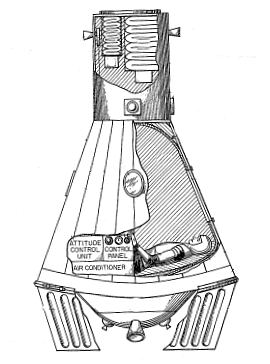
(USPTO)
In 1963, the Mercury space capsule was patented by Faget, Meyer, Chilton, Blanchard, Kehlet, Hammack and Johnson (U.S. No. 3,093,346). It was assigned to NASA. The invention was described as a "manned capsule configuration capable of being launched into orbital flight and returned to the earth's surface." The invention was to provide "protection for its occupant from the deleterious effects of large pressure differentials, high temperatures, micrometerorite collisions, high level acoustical noise, and severe inertial and impact loads." The patent was applied for on 6 Oct 1959. Mercury 1 had already flown, on 5 May 1961, in a 15-min sub-orbital flight carrying Alan B. Shepard before the patent was issued.
In 1928, the world's first rocket-propelled aircraft flight was made over the Rhon Mountains, Germany. It was a tailless glider with two solid-fuel rockets, pioneered and developed by Alexander Martin Lippisch.
In 1901, Thomas A. Edison was granted a patent for a “Phonographic Recording Apparatus” (U.S. No. 676,225).
1986
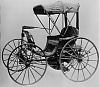
In 1895, the first U.S. patent for a gasoline-driven automobile by a U.S. inventor was issued to Charles E. Duryea (No. 540,648). Early in 1896, the Duryea Motor Wagon Co. set up shop in Springfield, Mass. to manufacture multiple units to a gasoline-powered vehicle that he built with his brother, Frank. The company's assembly of 13 identical machines that year is considered to be the first instance of serial production of American cars. The only surviving 1896 Duryea is on exhibit at the Henry Ford Museum. As this is the first U.S. automobile company, and the first to produce any quantity, the Duryea brothers are considered “Fathers of the American Automobile Industry”
more
Carriages Without Horses: J. Frank Duryea and the Birth of the American Automobile Industry, by Richard P. Scharchburg. - book suggestion.
(USPTO)
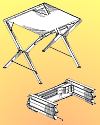
In 1889, a folding chair was patented by black American inventors John E. Purdy and James R. Sadgwar of Washington, D.C. (U.S. No. 405,117). They described a design for a "cheap, strong and durable chair which is capable of being folded into small compass, so as to be easily portable. The invention consists in the peculiar manner of jointing or hinging the frame and in details of construction." Each leg had two sections hinged together. The seat could be canvas, carpet, or any such ordinary flexible material. "When folded, this chair makes a remarkable small and compact bundle... in very convenient form to be carried in a bag or shawl-strap... making a most convenient article for artists, tourists, &c."
The Inventive Spirit of African Americans: Patented Ingenuity, by Patricia Carter Sluby. - book suggestion.
In 1889, Thomas A. Edison was issued a patent for an “Electrical Distribution System” (U.S. No. 404,902).
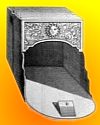
In 1793, Robert Haeterick of Pennsylvania was issued the first American patent for a stove design of cast iron. His name is spelled in various ways in the early records, including "Heterick." His patent was issued about three years after the very first U.S. patent, and like others of the period, it was not numbered. The original record of this patent was destroyed in the 1836 Patent Office fire. Most of the lost records were not reconstructed, and the full patents no longer exist in the Patent Office records. However, a list of titles and inventors was compiled from printed (usually annual) lists of patents which had been issued, and this list preserves some knowledge of the early patents.
Benjamin Franklin: An American Life, by Walter Isaacson. - book suggestion.
In 1644, Florentine scientist, Evangelista Torricelli described in a letter the invention of a barometer, or “torricellian tube.”




