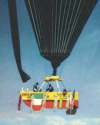
Double Eagle II
Born 9 Jun 1930; died 11 Feb 1985 at age 54.
American balloonist who, with three crew mates, made the first transpacific balloon flight that was also the longest nonstop balloon flight, in the Double Eagle V. Thirteen-stories high, helium filled Double Eagle V, piloted by Ben Abruzzo, Larry Newman, Ron Clark and Rocky Aoki of Japan, launched from Nagashimi, Japan on 10 Nov 1981. When it landed 84 hours, 31 minutes later in Mendocino National Forest, Cal., the new distance record was set at 5,768 miles. He also accompanied Maxie Anderson and Larry Newman on the first tranatlantic balloon flight in the Double Eagle II (11-17 Aug 1978). Abruzzo died when his twin-engine airplane crashed in Albuquerque.See National Geographic, 4/82, First Across the Pacific: Flight of Double Eagle V, pp. 513-521.
American balloonist who, with three crew mates, made the first transpacific balloon flight that was also the longest nonstop balloon flight, in the Double Eagle V. Thirteen-stories high, helium filled Double Eagle V, piloted by Ben Abruzzo, Larry Newman, Ron Clark and Rocky Aoki of Japan, launched from Nagashimi, Japan on 10 Nov 1981. When it landed 84 hours, 31 minutes later in Mendocino National Forest, Cal., the new distance record was set at 5,768 miles. He also accompanied Maxie Anderson and Larry Newman on the first tranatlantic balloon flight in the Double Eagle II (11-17 Aug 1978). Abruzzo died when his twin-engine airplane crashed in Albuquerque.See National Geographic, 4/82, First Across the Pacific: Flight of Double Eagle V, pp. 513-521.
Double Eagle, by Charles McCarry. - book suggestion.
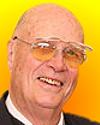
2008
Born 9 Jun 1921.
American inventor and aeromedical scientist who developed the first reliable, low-cost, mass-produced medical respirator, the Bird Universal Medical Respirator for acute or chronic cardiopulmonary care. To continue its development and marketing, he founded Bird Products Corporation (1954). He tested it on patients so seriously ill that cardiopulmonary failure was expected, yet many of them survived due to his device—which became known as “the bird.” Bird continued to make improvements. It was widely adopted by hospitals around the world. The “Babybird” respirator introduced in 1970 greatly reduced infant deaths due to respiratory problems.«
American inventor and aeromedical scientist who developed the first reliable, low-cost, mass-produced medical respirator, the Bird Universal Medical Respirator for acute or chronic cardiopulmonary care. To continue its development and marketing, he founded Bird Products Corporation (1954). He tested it on patients so seriously ill that cardiopulmonary failure was expected, yet many of them survived due to his device—which became known as “the bird.” Bird continued to make improvements. It was widely adopted by hospitals around the world. The “Babybird” respirator introduced in 1970 greatly reduced infant deaths due to respiratory problems.«
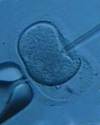
in-vitro fertilization
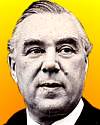
Patrick Christopher Steptoe was a British scientist and medical researcher who, with Robert Edwards, perfected in-vitro fertilization of the human egg. Their technique enabled the birth of Louise Brown, the world's first “test-tube baby,” on 25 Jul 1978. Steptoe, at an early age, chose medicine over music. During World War II, he was captured by the Italians after his ship was sunk. After the war, with a practice in obstetrics and gynecology, he pioneered a new fiber-optic device, a kind of abdominal “telescope,” called a laparoscope, to perform minimally invasive abdominal surgery. In 1966, to help women with blocked Fallopian tubes, a major cause of infertility, he teamed up with Robert Edwards, a Cambridge physiologist who had developed a way to fertilize human eggs in the lab. Steptoe subsequently helped hundreds of infertile couples have children. He was awarded the C.B.E.
The New Fertility: A Guide to Modern Medical Treatment..., by Graham H. Barker and Patrick Steptoe. - book suggestion.
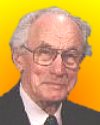
Born 9 Jun 1912; died 31 Dec 2000 at age 88.
Kenneth Lee Pike was an American linguist and anthropologist who was known for his studies of the aboriginal languages of Mexico, Peru, Ecuador, Bolivia, New Guinea, Java, Ghana, Nigeria, Australia, Nepal, and the Philippines. He was also the originator of tagmemics which extends to the analysis of grammar and behavior the concepts used in phonology so as to view all elements as part of a system. He distinguished between the concept of emic and etic, terms he coined in 1954. Etic refers to a trained observer's perception of the uninterpreted “raw” data. Emic refers to how that data is interpreted by an “insider” to the system.
Kenneth Lee Pike was an American linguist and anthropologist who was known for his studies of the aboriginal languages of Mexico, Peru, Ecuador, Bolivia, New Guinea, Java, Ghana, Nigeria, Australia, Nepal, and the Philippines. He was also the originator of tagmemics which extends to the analysis of grammar and behavior the concepts used in phonology so as to view all elements as part of a system. He distinguished between the concept of emic and etic, terms he coined in 1954. Etic refers to a trained observer's perception of the uninterpreted “raw” data. Emic refers to how that data is interpreted by an “insider” to the system.
Phonetics: A Critical Analysis of Phonetic Theory..., by Kenneth L. Pike. - book suggestion.
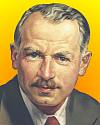
Born 9 Jun 1904; died 18 Apr 1958 at age 53.
English paleontologist, an authority on Jurassic fossils (those dating from 208 to 144 million years ago). Arkell taught at Trinity College, Cambridge University. His work includes the classification of Jurassic ammonites and an interpretation of the environments of that period. He wrote Jurassic Geology of the World (1956), which critically reviewed the information dispersed throughout the world's enormous literature on the world's Jurassic stratigraphy. He made numerous contributions to knowledge of the Jurassic stratigraphy, and gradually stabilized many stratigraphically significant zonal assemblages. In 1946, his "Standard of the European Jurassic" advocated a commission formulate a code of rules for stratigraphical nomenclature.
English paleontologist, an authority on Jurassic fossils (those dating from 208 to 144 million years ago). Arkell taught at Trinity College, Cambridge University. His work includes the classification of Jurassic ammonites and an interpretation of the environments of that period. He wrote Jurassic Geology of the World (1956), which critically reviewed the information dispersed throughout the world's enormous literature on the world's Jurassic stratigraphy. He made numerous contributions to knowledge of the Jurassic stratigraphy, and gradually stabilized many stratigraphically significant zonal assemblages. In 1946, his "Standard of the European Jurassic" advocated a commission formulate a code of rules for stratigraphical nomenclature.
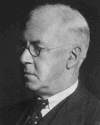
Born 9 Jun 1875; died 23 Jul 1968 at age 93. quotes
Sir Henry Hallett Dale was an English biologist and physiologist who isolated (1914) the neurotransmitter acetylcholine from ergot fungi. In 1936 he shared the Nobel Prize for Physiology or Medicine (with the German pharmacologist Otto Loewi) for discoveries in the chemical transmission of nerve impulses. Otto Loewi had shown that a substance released by electrical stimulation of the vagus nerve was responsible for effecting changes in heartbeat. Following up this work, Dale showed that the substance is in fact acetylcholine, thus establishing that chemical as well as electrical stimuli are involved in nerve action. He also worked on the properties of histamine and related substances, including their actions in allergic and anaphylactic conditions.
Sir Henry Hallett Dale was an English biologist and physiologist who isolated (1914) the neurotransmitter acetylcholine from ergot fungi. In 1936 he shared the Nobel Prize for Physiology or Medicine (with the German pharmacologist Otto Loewi) for discoveries in the chemical transmission of nerve impulses. Otto Loewi had shown that a substance released by electrical stimulation of the vagus nerve was responsible for effecting changes in heartbeat. Following up this work, Dale showed that the substance is in fact acetylcholine, thus establishing that chemical as well as electrical stimuli are involved in nerve action. He also worked on the properties of histamine and related substances, including their actions in allergic and anaphylactic conditions.
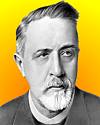
Born 9 Jun 1861; died 17 Dec 1938 at age 77.
Gustav (Heinrich Johann Apollon) Tammann was a Russian chemist who helped to found the science of metallurgy and pioneered in the study of the internal structure and physical properties of metals and their alloys. In addition, his studies on heterogenous equilibria (i.e., the behaviour of matter as a function of chemical composition, temperature, and pressure) played a major role in systematizing inorganic chemistry and contributed significantly to the development of physical chemistry as a discipline. In 1903, Gustav Tammann established the first Institute of Inorganic Chemistry in Germany, before switching his research interest to the physical chemistry of metals and alloys.
Gustav (Heinrich Johann Apollon) Tammann was a Russian chemist who helped to found the science of metallurgy and pioneered in the study of the internal structure and physical properties of metals and their alloys. In addition, his studies on heterogenous equilibria (i.e., the behaviour of matter as a function of chemical composition, temperature, and pressure) played a major role in systematizing inorganic chemistry and contributed significantly to the development of physical chemistry as a discipline. In 1903, Gustav Tammann established the first Institute of Inorganic Chemistry in Germany, before switching his research interest to the physical chemistry of metals and alloys.
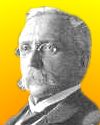
Born 9 Jun 1850; died 15 Sep 1924 at age 74. quotes
German zoologist who was a founder of experimental embryology, by which he studied how organs and tissues are assigned their structural form and functions at the time of fertilization. In the 1880s, he experimented with frog eggs. He thought that mitotic cell division of the fertilized egg is the mechanism by which future parts of a developing organism are determined. He destroyed one of the two initial subdivisions (blastomeres) of a fertilized frog egg, obtaining half an embryo from the remaining blastomere. It seemed to him that determination of future parts and functions had already occurred in the two-cell stage and that each of the two blastomeres had already received the determinants necessary to form half the embryo. His theory was later negated by Hans Driesch.
German zoologist who was a founder of experimental embryology, by which he studied how organs and tissues are assigned their structural form and functions at the time of fertilization. In the 1880s, he experimented with frog eggs. He thought that mitotic cell division of the fertilized egg is the mechanism by which future parts of a developing organism are determined. He destroyed one of the two initial subdivisions (blastomeres) of a fertilized frog egg, obtaining half an embryo from the remaining blastomere. It seemed to him that determination of future parts and functions had already occurred in the two-cell stage and that each of the two blastomeres had already received the determinants necessary to form half the embryo. His theory was later negated by Hans Driesch.
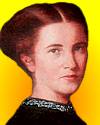
Born 9 Jun 1836; died 17 Dec 1917 at age 81.
English physician and activist who sought the admission of women to professional education, especially in medicine. She became the first woman to be licensed as a medical practitioner in Britain (28 Sep 1865), despite originally being refused admission by the medical schools’ policy not to train women as doctors. She had to study medicine privately, under some of the country’s leading physicians; at times she was forced to dissect cadavers in her own room because she was forbidden to use hospital facilities. In 1865 she qualified as a medical practitioner by examination of the Society of Apothecaries. The following year, she founded the St. Mary’s Dispensary for Women in London. She was also the first female member of the British Medical Association (1873-92). more
English physician and activist who sought the admission of women to professional education, especially in medicine. She became the first woman to be licensed as a medical practitioner in Britain (28 Sep 1865), despite originally being refused admission by the medical schools’ policy not to train women as doctors. She had to study medicine privately, under some of the country’s leading physicians; at times she was forced to dissect cadavers in her own room because she was forbidden to use hospital facilities. In 1865 she qualified as a medical practitioner by examination of the Society of Apothecaries. The following year, she founded the St. Mary’s Dispensary for Women in London. She was also the first female member of the British Medical Association (1873-92). more
Elizabeth Garrett Anderson, by Jo Manton. - book suggestion.
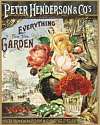
Born 9 Jun 1822; died 17 Jan 1890 at age 67.
Scottish-American horticulturist known as the “Father of American Horticulture.” He learned methods of gardening in the Old World, then immigrated to the U.S. in 1843. He started market gardening in 1847 with a capital of $500.00. The publication Gardening for Profit (1868) was the first American book devoted entirely to market gardening and it encouraged many to enter the business. His seed business was started in 1865. Few men have done more to simplify the handling of plants for commercial use. His greenhouses were models for his many visitors and his methods were widely copied. He also wrote Practical Floriculture (1868) for commercial floriculture, and later, for the amateur audience, Gardening for Pleasure (1875).
Scottish-American horticulturist known as the “Father of American Horticulture.” He learned methods of gardening in the Old World, then immigrated to the U.S. in 1843. He started market gardening in 1847 with a capital of $500.00. The publication Gardening for Profit (1868) was the first American book devoted entirely to market gardening and it encouraged many to enter the business. His seed business was started in 1865. Few men have done more to simplify the handling of plants for commercial use. His greenhouses were models for his many visitors and his methods were widely copied. He also wrote Practical Floriculture (1868) for commercial floriculture, and later, for the amateur audience, Gardening for Pleasure (1875).
Henderson's Handbook Of Plants, by Peter Henderson. - book suggestion.
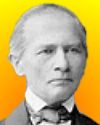
Born 9 Jun 1812; died 10 Jul 1910 at age 98. quotes
German astronomer who on 23 Sep 1846, was the first to observe the planet Neptune, whose existence had been predicted in the calculations of Leverrier. Leverrier had written to Galle asking him to search for the 'new planet' at a predicted location. Galle was then a member of the staff of the Berlin Observatory and had discovered three comets. In 1838, while assistant to Johann Franz Encke, Galle discovered the dark, inner C ring of Saturn at the time of the maxium ring opening. In 1851, he became professor of astronomy at Breslau and director of the observatory there. In 1872, he proposed the use of asteroids rather than regular planets for determinations of the solar parallax, a suggestion which was successful in an international campaign (1888-89).
German astronomer who on 23 Sep 1846, was the first to observe the planet Neptune, whose existence had been predicted in the calculations of Leverrier. Leverrier had written to Galle asking him to search for the 'new planet' at a predicted location. Galle was then a member of the staff of the Berlin Observatory and had discovered three comets. In 1838, while assistant to Johann Franz Encke, Galle discovered the dark, inner C ring of Saturn at the time of the maxium ring opening. In 1851, he became professor of astronomy at Breslau and director of the observatory there. In 1872, he proposed the use of asteroids rather than regular planets for determinations of the solar parallax, a suggestion which was successful in an international campaign (1888-89).
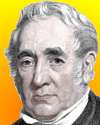
Born 9 Jun 1781; died 12 Aug 1848 at age 67. quotes
English engineer and inventor who was a principal pioneer of the railroad locomotive. The first railway he built ran from Darlington to Stockton which opened 27 Sep 1825 when large crowds saw him at the controls of the Locomotion as it pulled 36 wagons filled with sacks of coal and flour. The initial journey of just under 9 miles took two hours. The Rainhill trials of 1829, was a competition for building the fastest locomotive. He won with his famous locomotive, the Rocket, which traveled at an unheard of speed of 36 miles per hour. Stephenson then built the Liverpool to Manchester line which opened on 15 Sep 1830. He is regarded as one of the most influential people of the Industrial Revolution in Europe.
English engineer and inventor who was a principal pioneer of the railroad locomotive. The first railway he built ran from Darlington to Stockton which opened 27 Sep 1825 when large crowds saw him at the controls of the Locomotion as it pulled 36 wagons filled with sacks of coal and flour. The initial journey of just under 9 miles took two hours. The Rainhill trials of 1829, was a competition for building the fastest locomotive. He won with his famous locomotive, the Rocket, which traveled at an unheard of speed of 36 miles per hour. Stephenson then built the Liverpool to Manchester line which opened on 15 Sep 1830. He is regarded as one of the most influential people of the Industrial Revolution in Europe.
George and Robert Stephenson: The Railway Revolution, by L.T.C. Rolt. - book suggestion.
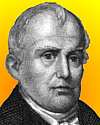
Born 9 Jun 1768; died 21 Apr 1835 at age 66.
English-American mechanical engineer who foundedthe American cotton-textile industry. Before he left Nottingham and immigrating to the U.S. in 1789, Slater apprenticed with Jedediah Strutt (partner of Richard Arkwright) in England. Once in the U.S., he found backing to build Arkwright's spinning and carding machinery, with which he established the first successful cotton mill in the U.S. in Pawtucket, Rhode Island, as well as many others in the New England region.
English-American mechanical engineer who foundedthe American cotton-textile industry. Before he left Nottingham and immigrating to the U.S. in 1789, Slater apprenticed with Jedediah Strutt (partner of Richard Arkwright) in England. Once in the U.S., he found backing to build Arkwright's spinning and carding machinery, with which he established the first successful cotton mill in the U.S. in Pawtucket, Rhode Island, as well as many others in the New England region.
Memoir of Samuel Slater, the Father of American Manufactures, by George White. - book suggestion.

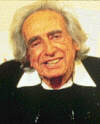
Died 9 Jun 1996 at age 83 (born 18 Dec 1912).
American cell biologist who was notable for his work in nuclear and cellular physiology. His research centered on the broad question of cell reproduction, especially the division and regulation mechanisms involved in mitosis (the process by which the chromosomes within the nucleus of a cell double and divide prior to cell division). Mazia is best known for his isolation (1951, with Japanese biologist Katsuma Dan) of the mitotic apparatus, the structure responsible for cell division. This brought understanding of the mechanisms of cell division and intracellular motility. A study in the early '60s on centrosomal reproduction, an until recently unappreciated structure, led to Mazia's interest in this cell organelle and the publication of a seminal paper.
American cell biologist who was notable for his work in nuclear and cellular physiology. His research centered on the broad question of cell reproduction, especially the division and regulation mechanisms involved in mitosis (the process by which the chromosomes within the nucleus of a cell double and divide prior to cell division). Mazia is best known for his isolation (1951, with Japanese biologist Katsuma Dan) of the mitotic apparatus, the structure responsible for cell division. This brought understanding of the mechanisms of cell division and intracellular motility. A study in the early '60s on centrosomal reproduction, an until recently unappreciated structure, led to Mazia's interest in this cell organelle and the publication of a seminal paper.
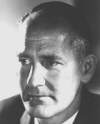
Died 9 Jun 1989 at age 85 (born 22 Oct 1903). quotes
George Wells Beadle was an American geneticist who helped found biochemical genetics when he showed that genes affect heredity genes act by regulating definite chemical events. He shared the 1958 Nobel Prize for Physiology or Medicine with Edward Tatum and Joshua Lederberg. Beadle and Tatum succeeded in demonstrating that the body substances are synthesized in the individual cell step by step in long chains of chemical reactions, and that genes control these processes by individually regulating definite steps in the synthesis chain. This regulation takes place through formation by the gene of special enzymes.
George Wells Beadle was an American geneticist who helped found biochemical genetics when he showed that genes affect heredity genes act by regulating definite chemical events. He shared the 1958 Nobel Prize for Physiology or Medicine with Edward Tatum and Joshua Lederberg. Beadle and Tatum succeeded in demonstrating that the body substances are synthesized in the individual cell step by step in long chains of chemical reactions, and that genes control these processes by individually regulating definite steps in the synthesis chain. This regulation takes place through formation by the gene of special enzymes.
George Beadle... The Emergence of Genetics in the 20th Century, by Paul Berg, Maxine Singer. - book suggestion.
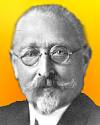
Died 9 Jun 1961 at age 88 (born 22 Dec 1872).
French bacteriologist who (with Albert Calmette) developed, the tuberculosis vaccine known as Bacillus Calmette-Guérin, or BCG (1921). It was adopted throughout Europe and America against tuberculosis. As a vaccine it is an attenuated (weakened) form of the Mycobacterium bovis bacterium. When injected, it gives partial protection against tuberculosis, by stimulating the body's defence system without causing the disease. A successful vaccination produces a lump at the injection site.«
French bacteriologist who (with Albert Calmette) developed, the tuberculosis vaccine known as Bacillus Calmette-Guérin, or BCG (1921). It was adopted throughout Europe and America against tuberculosis. As a vaccine it is an attenuated (weakened) form of the Mycobacterium bovis bacterium. When injected, it gives partial protection against tuberculosis, by stimulating the body's defence system without causing the disease. A successful vaccination produces a lump at the injection site.«
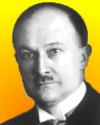
Died 9 Jun 1959 at age 82 (born 25 Dec 1876).
German organic chemist, who was awarded the 1928 Nobel Prize for Chemistry for research "for the services rendered through his research into the constitution of the sterols and their connection with the vitamins", the first Nobel prize for work in human nutrition. Windaus began his studies in 1901 with the steroid cholesterol since nothing was known about its structure at the time. In 1926, he proved that ultraviolet light (from sunlight or laboratory sources) activates the compound ergosterol and gives vitamin D, which is valuable in preventing the rickets bone disease. He later synthetically prepared vitamin D3, discovered histamine, and contributed to the synthesis of vitamin B.«
German organic chemist, who was awarded the 1928 Nobel Prize for Chemistry for research "for the services rendered through his research into the constitution of the sterols and their connection with the vitamins", the first Nobel prize for work in human nutrition. Windaus began his studies in 1901 with the steroid cholesterol since nothing was known about its structure at the time. In 1926, he proved that ultraviolet light (from sunlight or laboratory sources) activates the compound ergosterol and gives vitamin D, which is valuable in preventing the rickets bone disease. He later synthetically prepared vitamin D3, discovered histamine, and contributed to the synthesis of vitamin B.«
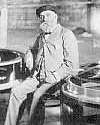
Died 9 Jun 1897 at age 64 (born 10 Jul 1832).
American astronomer, who joined his father and brother in the family firm of Alvan Clark & Sons, world-famous makers of exceptional lenses for refracting telescopes, supplied to various observatories in the U.S. and Europe. His fascination with astronomy, which began in school, continued through his life. In 1861, while viewing Sirius during a test of a new lens, he observed the faint twin star beside it, Sirius B, which had been predicted almost two decades earlier by Friedrich Bessel in 1844. He discovered fourteen double stars in all. He went on total-eclipse expeditions to Jerez, Spain (1870) and Wyoming (1878). Carrying on the family business, after the deaths of his father and brother, Clark made the 40" diam. lenses of the Yerkes telescope (the world's largest refractor). He died shortly after their first use.«[Image: Clark beside the crown-glass element of the Yerkes Observatory 40-inch objective.]
American astronomer, who joined his father and brother in the family firm of Alvan Clark & Sons, world-famous makers of exceptional lenses for refracting telescopes, supplied to various observatories in the U.S. and Europe. His fascination with astronomy, which began in school, continued through his life. In 1861, while viewing Sirius during a test of a new lens, he observed the faint twin star beside it, Sirius B, which had been predicted almost two decades earlier by Friedrich Bessel in 1844. He discovered fourteen double stars in all. He went on total-eclipse expeditions to Jerez, Spain (1870) and Wyoming (1878). Carrying on the family business, after the deaths of his father and brother, Clark made the 40" diam. lenses of the Yerkes telescope (the world's largest refractor). He died shortly after their first use.«[Image: Clark beside the crown-glass element of the Yerkes Observatory 40-inch objective.]
Alvan Clark & Sons, Artists in Optics, by Warner and Ariail. - book suggestion.
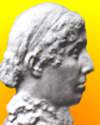
Died 9 Jun 1886 at age 50 (born 26 Apr 1836).
Erminnie Adele Platt Smith was an American anthropologist (née Platt) was the first woman to specialize in ethnographic field work. At first, her interest was as a geologist, studying mineralogy and crystallography. By about age 40, she founded the Aesthetic Society and held parlor meetings at her home about science, literature, and art. When these grew to a crowd of up to 500 members, she moved the meetings to a church hall. Speakers included eminent persons, such as Thomas Edison and Oscar Wilde. After hearing of the emerging field of anthropology, she took to it with a passion for documenting legends and language of the Iroquis Indians. Her work and scientific papers were of the highest quality, and she managed to preserve much information on the Iroquois culture. Of her books, the best known is Myths of the Iroquois (1883). She died when 50 years old.«
Erminnie Adele Platt Smith was an American anthropologist (née Platt) was the first woman to specialize in ethnographic field work. At first, her interest was as a geologist, studying mineralogy and crystallography. By about age 40, she founded the Aesthetic Society and held parlor meetings at her home about science, literature, and art. When these grew to a crowd of up to 500 members, she moved the meetings to a church hall. Speakers included eminent persons, such as Thomas Edison and Oscar Wilde. After hearing of the emerging field of anthropology, she took to it with a passion for documenting legends and language of the Iroquis Indians. Her work and scientific papers were of the highest quality, and she managed to preserve much information on the Iroquois culture. Of her books, the best known is Myths of the Iroquois (1883). She died when 50 years old.«
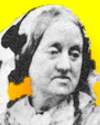
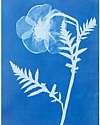
Poppy, c.1852
English botanist and photographer who is recognized as the first female photographer. She learned the calograph technique directly from William Fox Talbot, a family friend. Another family friend, Sir John Herschel, taught her the cyanotype photogram contact printing method he had invented. She had developed an interest in biological subjects from her father, John George Children, and illustrated his book, a translation of Lamarck’s Genera of Shells. Atkins combined these talents to become the first person to publish a book with photographs, and eventually produced three volumes of her own cyanotypes of seaweed in Photographs of British Algae, privately publishing the first volume in Oct 1843.«
Anna Atkins: The First Woman Photographer, by Daniel and Denise Ankele. - book suggestion.
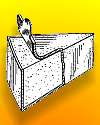
In 1953, John H. Kraft was granted a U.S. patent for "manufacture of soft surface cured cheese" (No. 2,641,545). The invention related in general to the manufacture of soft, surface cured, mold ripened cheeses, such as for example, Camembert, Brie, and the like and in particular, to the provision of a soft, surface cured cheese whose mold pad may be readily removed.
(USPTO)
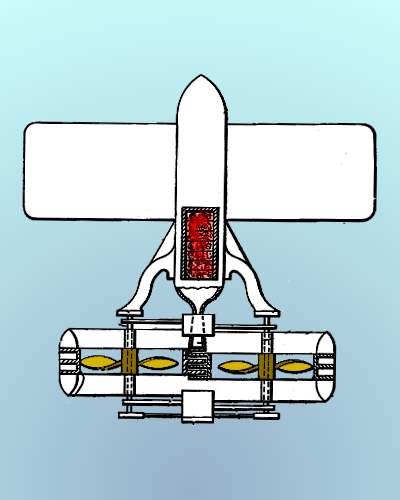
In 1931, Robert Goddard patented a rocket-fueled aircraft design (U.S. No. 1,809,271). However, it drew no military interest from either the Army or the Navy, despite its innovative design, since even the government following the great Depression had limited resources to fund proper research. The invention was designed to utilize the energy of the gas blast of a rocket without dissipation to obtain the maximum propulsive effect by driving one or more turbine elements, which in turn could turn propellers for driving the plane in the usual manner at low altitudes. The invention also proposes using the reaction of the gas blast itself at such higher altitudes where the air is so thin that propellers would be useless.[Image: patent diagram showing propellers at the rear.]
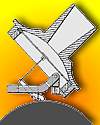
In 1914, three patents related to a “"Phonograph-Reproducer” were issued to Thomas A. Edison (U.S. Nos. 1,099,346; -8) and also a patent for a “Method of Making Sound-Record Molds” (No.1,099,349). The phonograph reproducers were designed to have an improved mounting for the stylus lever to provide the necessary freedom of movement in tracking the grooves of a sound record. To allow the stylus to better follow the contour of the record groove, its mounting allowed movement in both vertical and transverse directions. The design consisted of various combinationd of a diaphragm, a floating weight, a stylus on a movement-amplifying lever and a sound box body. The method of making sound-record molds dealt with the manufacturing process of the pressing of flat disk records.«
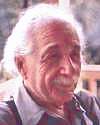
c.1955
In 1905, Albert Einstein published his analysis of Max Planck's quantum theory and its application to light. His article appeared in Annalen der Physik. Though no experimental work was involved, it was for these insights that Einstein earned his Nobel Prize.
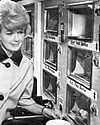
In 1902, the first restaurant with vending machine service was the Automat Restaurant at 818 Chestnut Street in Philadelphia, Pennsylvania. It was Horn & Hardart, a cavernous, waiterless establishment that was a combination of fast-food, vending and a cafeteria. Horn & Hardart Automats expanded into a chain reaching Manhattan in 1912. With their uniform recipes and centralized commissary system of supplying their restaurants, the Automats were America's first major fast-food chain. Customers put nickels into slots in the Automats and turned a knob. In the compartment next to the slot, food revolved into place for the customer to receive through a small glass door.
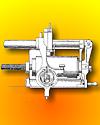
In 1891, Thomas A. Edison was issued a U.S. patent for an innovation for a “Phonograph” (U.S. No. 453,741). The invention consisted of a “means for adjusting a phonograph reproducing-point into exact alignment with the phonogram-record” and also a “means for limiting the movement of the diaphragm which supports the recording and reproducing point when turned to place the reproducer” out of, or into, the operative position. The patent covered only modifications to improve upon the design of his phonograph on which he had previously filed for a patent on 18 Nov 1889 (issued as Patent No. 465,972 on 29 Dec 1891). That related patent for the machine itself was not the first he invented, but a description of a simplified construction. He had various previous patents on the phonograph and improvements.«
In 1803, Robert Brown (1773-1858), botanist on Matthew Flinders' vessel HMS Investigator ended a long voyage of discovery in Port Jackson, Australia. From the ship's arrival at the continent's western coast (then known as New Holland or Terra Australis) in Dec 1801, age 27, he had made an enormous collection of plant samples which he classified and named. He published the results in his famous Prodromus Florae Novae Hollandiae in 1810, now a classic in systematic botany, although it was unillustrated, and failed to sell well at the time. He was the leading British botanist to collect in Australia in the early 19th century. He also described Brownian motion: random motion observed by microscope of pollen immersed in water (1827).
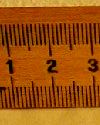
In 1795, a provisional metre bar was constructed in brass by Lenoir under the direction of Jean Borda.. It was a platinum bar about 25×4 mm. The distance between the ends, in the manner of a guage block, was the accepted unit of length. On 1 Aug 1793, the metre had been defined to be one ten-millioneth of the northern quadrant of the Paris meridian (5,132,430 toises of Paris, from the north pole to the equator). On 7 Apr 1795, the first legal definition of the metre was made by the French National Assembly. A second measure was made along the Dunkirk-Barcelona axis (5,130,740 toises of Paris). The toise, an old measurement, was six French feet. The toise of Paris had previously been defined by the length of a specific metal bar kept as a standard at Paris.«
The Measure of All Things: The Seven-Year Odyssey and Hidden Error That Transformed the World, by Ken Alder. - book suggestion.




