
Born 27 May 1954. quotes
Lawrence Maxwell Krauss is an American theoretical physicist, cosmologist and author who was among the first physicists to propose the enigmatic dark energy that makes up most of the mass and energy in the universe. His area of study also includes relating elementary particles to the early universe, general relativity, and neutrino astrophysics. Krauss became the inaugural director of the Origins Project at Arizona State University in Aug 2008. This is a transdisciplinary initiative that nurtures research. Its mission is also to explore fundamental questions, ranging broadly from from the origins of the universe to life; and broaden public understanding of science issues. He has written a number of science books for the layman, including Fear of Physics (1993) and Quantum Man: Richard Feynman's Life in Science (2011). He is also active in popularizing science in print, radio and TV media.«
Lawrence Maxwell Krauss is an American theoretical physicist, cosmologist and author who was among the first physicists to propose the enigmatic dark energy that makes up most of the mass and energy in the universe. His area of study also includes relating elementary particles to the early universe, general relativity, and neutrino astrophysics. Krauss became the inaugural director of the Origins Project at Arizona State University in Aug 2008. This is a transdisciplinary initiative that nurtures research. Its mission is also to explore fundamental questions, ranging broadly from from the origins of the universe to life; and broaden public understanding of science issues. He has written a number of science books for the layman, including Fear of Physics (1993) and Quantum Man: Richard Feynman's Life in Science (2011). He is also active in popularizing science in print, radio and TV media.«
A Universe from Nothing: Why There is Something Rather than Nothing, by Lawrence M. Krauss. - book suggestion.
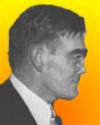
Born 27 May 1909; died 23 May 1949 at age 39.
American physicist who contributed to the development of radar and is regarded as the founder of microwave technology. He developed the klystron, a vacuum tube essential to radar technology (1937). Based on amplitude modulation of an electron beam, rather than on resonant circuits of coils and condensers, it permits the generation of powerful and stable high-frequency oscillations. It revolutionized high-energy physics and microwave research and led to airborne radar. The klystron also has been used in satellite communications, airplane and missile guidance systems, and telephone and television transmission. After WW II, working with three graduate students, Hansen demonstrated the first 4.5 MeV linear accelerator in 1947.
American physicist who contributed to the development of radar and is regarded as the founder of microwave technology. He developed the klystron, a vacuum tube essential to radar technology (1937). Based on amplitude modulation of an electron beam, rather than on resonant circuits of coils and condensers, it permits the generation of powerful and stable high-frequency oscillations. It revolutionized high-energy physics and microwave research and led to airborne radar. The klystron also has been used in satellite communications, airplane and missile guidance systems, and telephone and television transmission. After WW II, working with three graduate students, Hansen demonstrated the first 4.5 MeV linear accelerator in 1947.
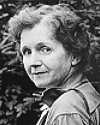
Born 27 May 1907; died 14 Apr 1964 at age 56. quotes
Rachel Louise Carson was an American marine biologist, conservationist and writer well known for her writings on environmental pollution and the natural history of the sea. Embedded within all of Carson's writing was the view that human beings were but one part of nature distinguished primarily by their power to alter it, in some cases irreversibly. Disturbed by the profligate use of synthetic chemical pesticides after World War II, Carson reluctantly changed her focus in order to warn the public about the long term effects of misusing pesticides. In her book, Silent Spring (1962), she challenged the practices of agricultural scientists and the government, and called for a change in the way humankind viewed the natural world.
Rachel Louise Carson was an American marine biologist, conservationist and writer well known for her writings on environmental pollution and the natural history of the sea. Embedded within all of Carson's writing was the view that human beings were but one part of nature distinguished primarily by their power to alter it, in some cases irreversibly. Disturbed by the profligate use of synthetic chemical pesticides after World War II, Carson reluctantly changed her focus in order to warn the public about the long term effects of misusing pesticides. In her book, Silent Spring (1962), she challenged the practices of agricultural scientists and the government, and called for a change in the way humankind viewed the natural world.
Silent Spring, by Rachel Carson. - book suggestion.
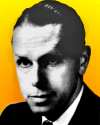
Born 27 May 1901; died 27 Jul 1962 at age 61.
Conrad Arnold Elvehjem was an American biochemist who identified that nicotinic acid was a vitamin which when absent from diet resulted in the disease pellegra. In 1937, working with dogs having the canine equivalent of pellegra (blacktongue), he showed that giving a dog 30 milligrams of nicotinic acid resulted in substantial improvement. Continuing doses to correct the diet deficiency led to complete recovery. It worked as well in humans. Niacin is one of the B vitamins. His later work was on the trace minerals such as zinc and cobalt which are essential to life as component parts of enzymes.
Conrad Arnold Elvehjem was an American biochemist who identified that nicotinic acid was a vitamin which when absent from diet resulted in the disease pellegra. In 1937, working with dogs having the canine equivalent of pellegra (blacktongue), he showed that giving a dog 30 milligrams of nicotinic acid resulted in substantial improvement. Continuing doses to correct the diet deficiency led to complete recovery. It worked as well in humans. Niacin is one of the B vitamins. His later work was on the trace minerals such as zinc and cobalt which are essential to life as component parts of enzymes.
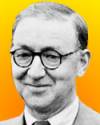
Born 27 May 1897; died 18 Sep 1967 at age 70.
Sir John Douglas Cockcroft was a British physicist, who shared (with Ernest T.S. Walton of Ireland) the 1951 Nobel Prize for Physics for pioneering the use of particle accelerators to study the atomic nucleus. Together, in 1929, they built an accelerator, the Cockcroft-Walton generator, that generated large numbers of particles at lower energies - the first atom-smasher. On 14 Apr 1932, they used it to disintegrate lithium atoms by bombarding them with protons, the first artificial nuclear reaction not utilizing radioactive substances. They were first to split the atom. They conducted further research on the splitting of other atoms and established the importance of accelerators as a tool for nuclear research. Their accelerator design became one of the most useful in the world's laboratories.«
Sir John Douglas Cockcroft was a British physicist, who shared (with Ernest T.S. Walton of Ireland) the 1951 Nobel Prize for Physics for pioneering the use of particle accelerators to study the atomic nucleus. Together, in 1929, they built an accelerator, the Cockcroft-Walton generator, that generated large numbers of particles at lower energies - the first atom-smasher. On 14 Apr 1932, they used it to disintegrate lithium atoms by bombarding them with protons, the first artificial nuclear reaction not utilizing radioactive substances. They were first to split the atom. They conducted further research on the splitting of other atoms and established the importance of accelerators as a tool for nuclear research. Their accelerator design became one of the most useful in the world's laboratories.«
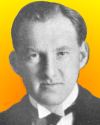
Born 27 May 1887; died 18 May 1975 at age 87. quotes
Polish-American physical chemist who discovered the radioactive displacement law simultaneously with Frederick Soddy of Great Britain. According to this law, when a radioactive atom decays by emitting an alpha particle, the atomic number of the resulting atom is two fewer than that of the parent atom. He discovered several elements that are created through nuclear disintegration. The first discovery of protactinium was in 1913 by Kasimir Fajans and O. Göhring, who found the isotope protactinium-234m (half-life 1.2 min), a decay product of uranium-238; they named it brevium for its short life. (Protactinium-231 was later identified in 1918 by other scientists; the name protoactinium was adopted at this time.)
Polish-American physical chemist who discovered the radioactive displacement law simultaneously with Frederick Soddy of Great Britain. According to this law, when a radioactive atom decays by emitting an alpha particle, the atomic number of the resulting atom is two fewer than that of the parent atom. He discovered several elements that are created through nuclear disintegration. The first discovery of protactinium was in 1913 by Kasimir Fajans and O. Göhring, who found the isotope protactinium-234m (half-life 1.2 min), a decay product of uranium-238; they named it brevium for its short life. (Protactinium-231 was later identified in 1918 by other scientists; the name protoactinium was adopted at this time.)
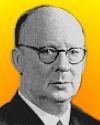
Born 27 May 1883; died 22 Nov 1943 at age 60.
German chemist who devoted his life as a teacher, researcher, editor and one of the founders of colloid chemistry. He defined colloids as disperse systems that are generally polyphasic and that possess particles 1-100 millimicrons in size. He discovered the rule of colour dispersion in the optics of colloidal systems, explained colloids' irregular flow behaviour, textural viscosity, and textural turbulence, and developed a method of foam analysis. He edited (from 1909) Kolloidchemische Beihefte and other journals and as the founder (1922) and president of the Kolloid Gesellschaft, Ostwald advanced research in colloids. He was the second child of 1909 Nobel Laureate Friedrich Wilhelm Ostwald.
German chemist who devoted his life as a teacher, researcher, editor and one of the founders of colloid chemistry. He defined colloids as disperse systems that are generally polyphasic and that possess particles 1-100 millimicrons in size. He discovered the rule of colour dispersion in the optics of colloidal systems, explained colloids' irregular flow behaviour, textural viscosity, and textural turbulence, and developed a method of foam analysis. He edited (from 1909) Kolloidchemische Beihefte and other journals and as the founder (1922) and president of the Kolloid Gesellschaft, Ostwald advanced research in colloids. He was the second child of 1909 Nobel Laureate Friedrich Wilhelm Ostwald.
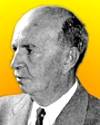
Born 27 May 1879; died 24 Oct 1963 at age 84.
German psychiatrist and psychologist who was known chiefly for his studies of the thought process. While a professor at the University of Vienna (1922-38), his views were influenced by the thinking of Trubetzkoy and other members of the Prague School. His Sprachtheorie (1934) presented a sign theory with particular emphasis on the functions of language, and a distinction between two "fields" which form the context in which a sign is used. The "symbolic field" (Symbolfeld) is formed by the other signs that make up an utterance; the "deictic field" (Zeigfeld) is formed by the context in which it is uttered and is the origin of modern conceptions of deixis. Bühler emigrated to the USA in 1939, practising as a clinical psychologist from 1945.
German psychiatrist and psychologist who was known chiefly for his studies of the thought process. While a professor at the University of Vienna (1922-38), his views were influenced by the thinking of Trubetzkoy and other members of the Prague School. His Sprachtheorie (1934) presented a sign theory with particular emphasis on the functions of language, and a distinction between two "fields" which form the context in which a sign is used. The "symbolic field" (Symbolfeld) is formed by the other signs that make up an utterance; the "deictic field" (Zeigfeld) is formed by the context in which it is uttered and is the origin of modern conceptions of deixis. Bühler emigrated to the USA in 1939, practising as a clinical psychologist from 1945.
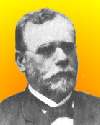
Born 27 May 1840; died 14 May 1899 at age 58.
Swedish chemist who discovered (1879) the oxide of scandium, scandia, in the rare-earth minerals gadolinite and euxenite. The existence of the element had been predicted by Dmitry Ivanovich Mendeleyev (1871) who had tentatively called it ekaboron. Nilson, working with Otto Petterson, he investigated rare earths, established the correct atomic weight for beryllium, and prepared metallic titanium with a purity of 95% (1887). Nilson was professor of analytical chemistry at the University of Upsala and at the Agricultural Academy of Stockholm. His researches on soils and fertilizers enabled improving the barren plains of his native island, Gothland, into an agricultural region.«
Swedish chemist who discovered (1879) the oxide of scandium, scandia, in the rare-earth minerals gadolinite and euxenite. The existence of the element had been predicted by Dmitry Ivanovich Mendeleyev (1871) who had tentatively called it ekaboron. Nilson, working with Otto Petterson, he investigated rare earths, established the correct atomic weight for beryllium, and prepared metallic titanium with a purity of 95% (1887). Nilson was professor of analytical chemistry at the University of Upsala and at the Agricultural Academy of Stockholm. His researches on soils and fertilizers enabled improving the barren plains of his native island, Gothland, into an agricultural region.«
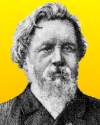
Born 27 May 1818; died 24 Mar 1889 at age 70.
Franciscus Cornelis Donders was a Dutch ophthalmologist, the most eminent of 19th-century Dutch physicians, whose investigations of the physiology and pathology of the eye made possible a scientific approach to the correction of refractive disabilities such as nearsightedness, farsightedness, and astigmatism. He found (1858) that hypermetropia (farsightedness) is caused by a shortening of the eyeball, so that light rays refracted by the lens of the eye converge behind the retina. He discovered (1862) that the blurred vision of astigmatism is caused by uneven and unusual surfaces of the cornea and lens, which diffuse light rays instead of focusing them. more
Franciscus Cornelis Donders was a Dutch ophthalmologist, the most eminent of 19th-century Dutch physicians, whose investigations of the physiology and pathology of the eye made possible a scientific approach to the correction of refractive disabilities such as nearsightedness, farsightedness, and astigmatism. He found (1858) that hypermetropia (farsightedness) is caused by a shortening of the eyeball, so that light rays refracted by the lens of the eye converge behind the retina. He discovered (1862) that the blurred vision of astigmatism is caused by uneven and unusual surfaces of the cornea and lens, which diffuse light rays instead of focusing them. more

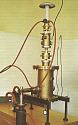
Ruska's electron microscope
Ernst August Friedrich Ruska was a German electrical engineer who invented the electron microscope. For “his fundamental work in electron optics and for the design of the first electron microscope” he was awarded a share of the Nobel Prize for Physics in 1986 (with Heinrich Rohrer and Gerd Binnig). In 1928, found that a magnetic coil could act as a lens to focus an electron beam. Adding a second lens he produced the first primitive (x17 power) electron microscope. By 1933, his refinements increased the magnification to x7000, exceeding what was possible with visible light. The first commercial model was marketed in 1939. Since then, electron microscopes rapidly found applications in biology, medicine and many other areas of science.«[Image right: Ruska's electron microscope (source)]
The early development of electron lenses and electron microscopy, by Ernst Ruska. - book suggestion.
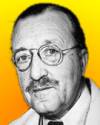
Died 27 May 1987 at age 95 (born 5 Jul 1891).
American biochemist who received (with James B. Sumner and Wendell M. Stanley) the Nobel Prize for Chemistry in 1946 for successfully purifying and crystallizing certain enzymes, thus enabling him to determine their chemical nature. During WW I, he conducted research on fermentation processes suitable for the industrial production of acetone and ethyl alcohol. This work led to a study of enzymes essential for digestion, respiration, and general life processes. He crystallized pepsin (1930), a digestive enzyme present in gastric juice, and found that it is a protein, thus resolving the dispute over the nature of enzymes. Using the same chemical methods, he isolated the first bacterial virus (bacteriophage), and found it is a nucleoprotein (1938).
American biochemist who received (with James B. Sumner and Wendell M. Stanley) the Nobel Prize for Chemistry in 1946 for successfully purifying and crystallizing certain enzymes, thus enabling him to determine their chemical nature. During WW I, he conducted research on fermentation processes suitable for the industrial production of acetone and ethyl alcohol. This work led to a study of enzymes essential for digestion, respiration, and general life processes. He crystallized pepsin (1930), a digestive enzyme present in gastric juice, and found that it is a protein, thus resolving the dispute over the nature of enzymes. Using the same chemical methods, he isolated the first bacterial virus (bacteriophage), and found it is a nucleoprotein (1938).
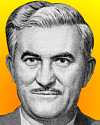
Died 27 May 1972 at age 64 (born 21 Aug 1907). quotes
Roy Kenneth Marshall was an American astronomer with the Fels Planetarium, Philadelphia, then the first director of Morehead Planetarium, Chapel Hill, N.C. He contributed to the slim but classic work Star Maps For Beginners, by I.M. Levitt, a book on skylore and learning the constellations which first appeared in 1942 with periodic revisions over 50 years. He combined his scientific expertise with showmanship as a pioneering TV science broadcaster with a weekly Nature of Things 15 minute program. It premiered on the National Broadcasting Company (NBC) network on 5 Feb 1948 with a broadcast from the Fels Planetarium. It became so popular it ran year-round until 29 Aug 1952.«Image from advertisement for Ford cars in Popular Mechanics Magazine (Jul 1952).
Roy Kenneth Marshall was an American astronomer with the Fels Planetarium, Philadelphia, then the first director of Morehead Planetarium, Chapel Hill, N.C. He contributed to the slim but classic work Star Maps For Beginners, by I.M. Levitt, a book on skylore and learning the constellations which first appeared in 1942 with periodic revisions over 50 years. He combined his scientific expertise with showmanship as a pioneering TV science broadcaster with a weekly Nature of Things 15 minute program. It premiered on the National Broadcasting Company (NBC) network on 5 Feb 1948 with a broadcast from the Fels Planetarium. It became so popular it ran year-round until 29 Aug 1952.«Image from advertisement for Ford cars in Popular Mechanics Magazine (Jul 1952).
The Nature Of Things, by Roy K. Marshall. - book suggestion.
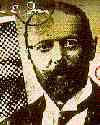
Died 27 May 1937 at age 81 (born 17 Feb 1856).
American photographer and inventor of the halftone process, a method of reproducing photographs on a printing press. Prior to this process, photos and illustrations were reproduced from hand-engraved plates. In this way printers could reproduce line drawings, but not the shades of gray in a photograph because printing presses cannot print gray - only black and white. Ives invented a screen that would convert a photograph into a pattern of tiny dots. Large dots form where the image is dark, and tiny dots where the image is light, thus giving the illusion of shades of gray. In 1881, he was the first to make a three-colour print from halftone blocks. Further inventions in photography and colour printing yielded 70 patents.(Image: 1996 U.S. postage stamp.)
American photographer and inventor of the halftone process, a method of reproducing photographs on a printing press. Prior to this process, photos and illustrations were reproduced from hand-engraved plates. In this way printers could reproduce line drawings, but not the shades of gray in a photograph because printing presses cannot print gray - only black and white. Ives invented a screen that would convert a photograph into a pattern of tiny dots. Large dots form where the image is dark, and tiny dots where the image is light, thus giving the illusion of shades of gray. In 1881, he was the first to make a three-colour print from halftone blocks. Further inventions in photography and colour printing yielded 70 patents.(Image: 1996 U.S. postage stamp.)
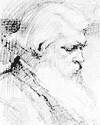
Died 27 May 1914 at age 85 (born 31 Oct 1828). quotes
English scientist, chemist, physicist and inventor, born in Sunderland, Yorkshire, who produced an early electric incandescent lamp. He began these experiments in the 1840s and obtained a UK patent covering a partial vacuum, carbon filament incandescent lamp in 1860. Swan's early lamps provided low light output, were short lived, and were operated from battery cells. Low voltage operation required relatively high filament current that necessitated that the power source be co-located near the Swan lamp. He also addressed the problem of photographic print fading and in the mid 1850s some began to experiment with a solution using carbon, perfecting and patenting the process in 1864. Thus Swan invented the dry photographic plate, an important improvement in photography.[Image: pencil drawing by M. Agnes Cohen, 1894.]
English scientist, chemist, physicist and inventor, born in Sunderland, Yorkshire, who produced an early electric incandescent lamp. He began these experiments in the 1840s and obtained a UK patent covering a partial vacuum, carbon filament incandescent lamp in 1860. Swan's early lamps provided low light output, were short lived, and were operated from battery cells. Low voltage operation required relatively high filament current that necessitated that the power source be co-located near the Swan lamp. He also addressed the problem of photographic print fading and in the mid 1850s some began to experiment with a solution using carbon, perfecting and patenting the process in 1864. Thus Swan invented the dry photographic plate, an important improvement in photography.[Image: pencil drawing by M. Agnes Cohen, 1894.]
Sir Joseph Wilson Swan, F.R.S.: inventor and scientist, by Mary E. Swan, Kenneth Raydon Swan. - book suggestion.
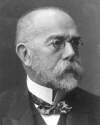
Died 27 May 1910 at age 66 (born 11 Dec 1843). quotes
(Heinrich Hermann) Robert Koch was a German physician, a founder of the science of bacteriology, who discovered the tubercle bacillus (1882) and the cholera bacillus (1883). He studied bubonic plague in Bombay (1897) and malaria and sleeping sickness in Africa. In addition Koch investigated tropical dysentery, and the Egyptian eye disease (trachoma), and typhus recurrens in tropical Africa. He also carried out work of exceptional importance concerning destructive tropical cattle diseases, such as rinderpest, Surra disease, Texas fever, coast fever in cattle and the trypanosome disease carried by the tsetse fly. He won the Nobel Prize for Physiology or Medicine in 1905, "for his investigations and discoveries in relation to tuberculosis."
(Heinrich Hermann) Robert Koch was a German physician, a founder of the science of bacteriology, who discovered the tubercle bacillus (1882) and the cholera bacillus (1883). He studied bubonic plague in Bombay (1897) and malaria and sleeping sickness in Africa. In addition Koch investigated tropical dysentery, and the Egyptian eye disease (trachoma), and typhus recurrens in tropical Africa. He also carried out work of exceptional importance concerning destructive tropical cattle diseases, such as rinderpest, Surra disease, Texas fever, coast fever in cattle and the trypanosome disease carried by the tsetse fly. He won the Nobel Prize for Physiology or Medicine in 1905, "for his investigations and discoveries in relation to tuberculosis."
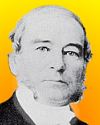
Died 27 May 1874 at age 66 (born 10 Feb 1808).
John Edgar Thomson was an American civil engineer and third president of the Pennsylvania Railroad Company who consolidated a network of railroad lines from Philadelphia to various cities in the Midwest and the South, extending as far as Chicago and Norfolk, Va. His principal projects included completing the road across the Alleghenies, double tracking its main line and experimenting with coal-burning locomotives. In an unprecedented expansion program, though leases and purchases, Thomson controlled over six thousand miles of railroad by 1873. Thomson also invested in transcontinental lines as well as coal companies, iron and steel works, lumber operations, and land companies.
John Edgar Thomson was an American civil engineer and third president of the Pennsylvania Railroad Company who consolidated a network of railroad lines from Philadelphia to various cities in the Midwest and the South, extending as far as Chicago and Norfolk, Va. His principal projects included completing the road across the Alleghenies, double tracking its main line and experimenting with coal-burning locomotives. In an unprecedented expansion program, though leases and purchases, Thomson controlled over six thousand miles of railroad by 1873. Thomson also invested in transcontinental lines as well as coal companies, iron and steel works, lumber operations, and land companies.
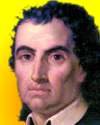
Died 27 May 1781 at age 64 (born 3 Oct 1716). quotes
Giambatista Beccaria, a.k.a. Giovanni Battista Beccaria (orig. Francesco) was an Italian physicist who spread knowledge of Benjamin Franklin's discoveries with electricity, which he extended with his own research. He designed an electrical thermometer and investigated the relative powers of parallel plate condensers (capacitors). He formed explanations for meteorological and geophysical phenomena in terms of “natural electricity.” With his students, he experimentally probed the atmosphere with metal poles, kites and rockets. He published his work in five books.
Giambatista Beccaria, a.k.a. Giovanni Battista Beccaria (orig. Francesco) was an Italian physicist who spread knowledge of Benjamin Franklin's discoveries with electricity, which he extended with his own research. He designed an electrical thermometer and investigated the relative powers of parallel plate condensers (capacitors). He formed explanations for meteorological and geophysical phenomena in terms of “natural electricity.” With his students, he experimentally probed the atmosphere with metal poles, kites and rockets. He published his work in five books.
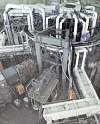
In 1994, the highest temperature produced in a lab was a plasma temperature of 510 million degrees Celsius (918,000,000 deg F) in the Tokamak Fusion Test Reactor (TFTR) operated at the Princeton Plasma Physics Laboratory of Princeton University. An early record was set there in 1985, when the TFTR was the first tokamak to achieve the reactor temperature of 100 million degrees Celsius. The TFTR (Dec 1982-Apr 1997) was the largest magnetic fusion experiment in the U.S. and was the first such device in the world to studied the confinement and heating of plasmas with 50/50 mixtures of deuterium and tritium - the fuel mixture likely to be used in the commercial fusion power plants of the twenty-first century.

In 1941, the U.S. Federal Register published the definition of enriched flour giving specifications for required amounts it must contain of vitamin B-1 (thiamine), nicotinic acid (niacin) or nicotinic acid amide (niacin amide), and iron. All wheat flour manufactured after the effective date was required to be enriched with vitamins to improve the nation's nutrition and good health. Enriched bread could be produced using enriched flour. The addition of niacin led to the virtual elimination of pellagra. (In the Federal Register of 3 Dec 1941, the effective date of riboflavin as a required ingredient of enriched flour was postponed until 20 Apr 1943 because it appeared that the available supply was inadequate.)«[Image: A 1941 advertisement; the words in red script across the top say “Enriched Flour.” Ref.: Federal Register, 27 May 1941, vol 6, pages 2574-82 and 3 Dec 1941, pages 6175-76.]
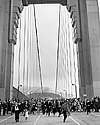
In 1937, the Golden Gate Bridge, San Francisco was first opened to the public as a Pedestrian Day. By 6 am, 18,000 people were waiting for the toll gates to open. Many crossed in unique ways, hoping to be prize-winners as the first to establish a record, whether by walking backwards or on stilts, tap-dancing, roller-skating or playing instruments. It was a sprinter, Donald Bryan, from San Francisco Junior College, who became the first person to cross the entire span. At 10 am, Chief engineer Joseph Strauss gave no speech, but instead read a poem he had written for the event. By the end of the day, about 200,000 people had joined the celebration. The bridge was ceremonially opened to traffic the next day, 28 Feb 1937.«
The Gate: The True Story of the Design and Construction of the Golden Gate Bridge, by John Van Der Zee. - book suggestion.
In 1933, a searchlight shot a great beam above the “Century of Progress” Chicago World's Fair, activated by starlight from Arcturus. It linked that event symbolically with the great Columbian Exposition, some 40 years earlier, by using light that came from (as then thought) 40 lightyears away. The light that left Arcturus in 1893, at the time of the earlier event, travelled across space in the intervening 40 years, and by being focussed by four major observatory telescopes using the latest photocell technology, generated the signals forwarded to the 1933 Fair. The network provided better odds of clear skies at one of them. Each transmitted the current using Western Union telegraph lines. A crowd of thousands saw the signals arrive on a huge display at 9:15 pm. (Arcturus is now measured at 37 lightyears away.)«
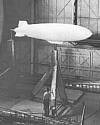
In 1931, the first U.S. full scale wind tunnel for testing airplanes was opened in Langley Field Research Center, Va. In the 30-ft high by 60-ft wide tunnel, flying characteristics of full-size airplanes were tested in air speeds up to 115-mph. The air was driven by two propellers downstream, each over 35-ft in diameter, powered by 4,000 hp electric motors. Over the next 65 years, tests were also run on helicopters, the Mercury space capsule, parachutes and parafoils, the occasional dirigible and, once, the fastest submarine in the world. Generations of aircraft passed through the Full-Scale Tunnel; all emerged more airworthy than when they entered. NASA closed the tunnel in October 1995. A smaller scale wind tunnel opened there in the 1920s. By 1936, a new wind tunnel was built able to provide an air speed of 600 mph.[Image: A scale model of an airship under test.]
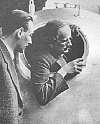
In 1931, Auguste Piccard and Charles Knipfer took man's first trip into the stratosphere when they rode their balloon to an altitude of 51,800 feet (nearly 10 miles above the earth). This required the use of a pressurized cabin, which Piccard had designed. On-board experiments included the use of an electroscope to investigate cosmic rays
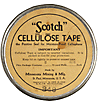
A Century of Innovation – The 3M Story, by W. James McNerney Jr. - book suggestion.
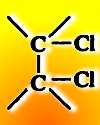
In 1924, Thomas A. Edison was issued a patent for a “Method of Producing Chlorinated Rubber” (U.S. No. 1,495,580), which claimed to be more economical than earlier methods. Natural rubber readily degrades and becomes brittle in the presence of oxygen or ozone in the air. Chlorine is used to replace some hydrogen atoms in the surface molecules of the rubber making it more stable. Edison's method treated very thin rubber strips in a chamber with chlorine gas mixed with the vapour of a highly chlorinated solvent of rubber such as carbon tetrachloride to soften the rubber surface for increased penetration by the gaseous chlorine, followed by other processing. In his patent, Edison envisioned further processing it with naphthaline and fillers, for use as a tough, hard veneer for phonograph records or cylinders.«

In 1919, oil was struck at England's first inland oilwell. Since 1915, the British Government, prompted by the war effort and awareness of the importance in petroleum products had investigated extracting oil on the mainland. At Hardstoft, near Tibshelf, in a Derbyshire coalfield, the bore was 3070-ft deep when oil was struck in a sandy limestone horizon near the top of a faulted dome in the main carboniferous limestone measures. Oil flowed from the well on 7 Jun that year. Between that date and Dec 1927, 2500 tons of oil was produced. The average production of 6 barrels a day compared favourably with US oil wells of the period. In 1938, the well was deepened to continue operation. Production ceased in 1945, and the well was finally capped in 1952.
In 1919, Pyrex glass was issued a U.S. patent (No. 1,304,623). The inventors, Eugene C. Sullivan and William C. Taylor were company research chemists who assigned the patent to Corning Glass Works. Pyrex is the trademark for their sodium borosilicate glass. The original patent, filed on 24 Jun 1915, foresaw the applications including glass baking dishes and laboratory ware. The useful properties of this composition of glass were a low linear thermal expansivity, relatively high coefficient of thermal conductivity (internal heat transfer) and high stability (to resist chemical attack). The composition specified a high silica content of more than 70%. The patent included a discussion of the role of including in the composition certain porportions of alumina, boric acid, antimony and lithia.«
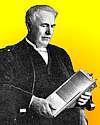
In 1901, the Edison Storage Battery Company was organized. Thomas Edison aimed to improve the widely used lead cell batteries of the time, but he had another target for his effort: a practical battery to power electric automobiles. He converted an old brass mill in Glen Ridge, N.J., for manufacturing the cells, and built a chemical plant to supply materials near Newark. Although, starting in 1899, he had spent two years in testing and developing his battery, once marketing began, unanticipated defects caused him to cease production until five years later. Eventually, it still became a huge operation, in a vast new building, and highly profitable. His innovations produced many uses, such as in railroad signals or miner's lamps. For electric automobiles, though, the market was rapidly dominated by gasoline-powered engines.«[Image: Thomas Edison holding his A4 alkaline storage battery, in May 1911.]
(USPTO)
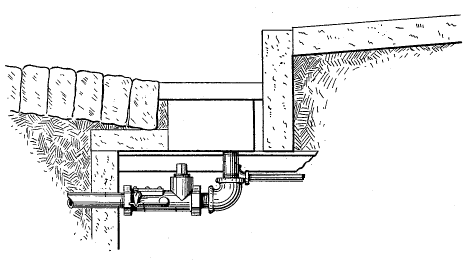
In 1890, black American inventor Frank J. Farrell of New York City was issued a patent for an "Apparatus for melting snow" to be placed in a street gutter (No. 428,670). The box-shaped apparatus was designed so that the upper surface, a removeable cover, formed a portion of the bed of a street gutter. Inside, a duct for heated fluid had openings under a perforated tray, and drain holes. Steam could be supplied from an adjacent house. An automatic steam trap using a float-ball prevented the waste of live steam. The patent described that snow would be thrown upon the surface tray to be melted; the perforated tray caught sticks and stones. Earlier in the year, he patented a steam trap. He patented eight valves between 1890 and 1893.
The Inventive Spirit of African Americans: Patented Ingenuity, by Patricia Carter Sluby. - book suggestion.
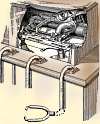
In 1890, two U.S. patents for the first jukebox were issued to Louis Glass and his business associate, William S. Arnold (No. 428,750, -1) concerning a “coin actuated attachment for phonographs.” Their first jukebox was a coin-operated Edison Class M Electric Phonograph with oak cabinet placed in the Palais Royale Saloon in San Francisco. This was before the time of vacuum tubes, so there was no amplification. For a nickel a play, a patron could listen using one of four listening tubes. Known as “Nickel-in-the-Slot” the machine was an instant success, earning over $1000 in less than half a year.
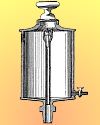
(USPTO)
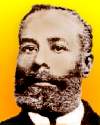
McCoy
The Real McCoy, by Portia P. James. - book suggestion.

In 1796, the first U.S. patent for a piano was issued to James Sylvanus McLean of New Jersey, for “an improvement in piano fortes.” The Patent Office fire (15 Dec 1836) destroyed the record. No detailed information remains except the patent title and patentee in a book listing patents, privately published earlier. The first known printed reference to a piano in America was in the Massachussetts Gazette (7 Mar 1771). Pianos had been imported, until the first one, a square, was made in America in 1775 by Johann Behrent, a German immigrant in Philadelphia. The first important maker was Charles Albrecht in the same city, who, from about 1790, made close copies of English designs. The first piano-like instrument known in the U.S. was a spinet built by John Harris, described in the Boston Gazette (18 Sep 1769).«[Image: Example of a 1796 English instrument, a Stodart grand piano.]




