
Born 7 May 1939; died 5 Apr 2022 at age 82.
Canadian-American molecular biologist who shared the 1989 Nobel Prize for Chemistry with Thomas R. Cech, for their discoveries about ribonucleic acid (RNA), one of the basic molecules present in every living cell. In 1978, Altman made the key discovery that RNA had properties that were previously unknown. Prior to this work, it was believed that the purpose of RNA was to transmit genetic information contained in DNA to the proteins. Altman showed beyond that, RNA could also undergo a transformation that allowed it to perform the catalytic functions of an enzyme, and engage in chemical reactions. This research extended scientists’ understanding of fundamental biochemical processes and led to applications in medicine and gene therapy.«
Canadian-American molecular biologist who shared the 1989 Nobel Prize for Chemistry with Thomas R. Cech, for their discoveries about ribonucleic acid (RNA), one of the basic molecules present in every living cell. In 1978, Altman made the key discovery that RNA had properties that were previously unknown. Prior to this work, it was believed that the purpose of RNA was to transmit genetic information contained in DNA to the proteins. Altman showed beyond that, RNA could also undergo a transformation that allowed it to perform the catalytic functions of an enzyme, and engage in chemical reactions. This research extended scientists’ understanding of fundamental biochemical processes and led to applications in medicine and gene therapy.«
Born 7 May 1913.
American engineer who made notable contributions to electronics and was chief scientist (1954-58) of the U.S. intercontinental ballistic missile (ICBM) program.
American engineer who made notable contributions to electronics and was chief scientist (1954-58) of the U.S. intercontinental ballistic missile (ICBM) program.
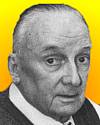
Born 7 May 1911; died 16 May 1995 at age 84.
English mathematician and theoretical astronomer who researched stellar evolution and composition. In 1939, with Fred Hoyle, he demonstrated the large scale existence of interstellar hydrogen, refuting the existing belief of that space was devoid of interstellar gas. Together, in the early 1940's, they applied nuclear physics to explain how energy is generated by stars. In his own mongraph (1953) Lyttleton described stability of rotating liquid masses, which he extended later to explain that the Earth had a liquid core resulting from a phase change associated with a combination of intense pressure and temperature. With Hermann Bondi, in 1959, he proposed the electrostatic theory of the expanding universe. He authored various astronomy books.
English mathematician and theoretical astronomer who researched stellar evolution and composition. In 1939, with Fred Hoyle, he demonstrated the large scale existence of interstellar hydrogen, refuting the existing belief of that space was devoid of interstellar gas. Together, in the early 1940's, they applied nuclear physics to explain how energy is generated by stars. In his own mongraph (1953) Lyttleton described stability of rotating liquid masses, which he extended later to explain that the Earth had a liquid core resulting from a phase change associated with a combination of intense pressure and temperature. With Hermann Bondi, in 1959, he proposed the electrostatic theory of the expanding universe. He authored various astronomy books.
Mysteries of the solar system, by Raymond Arthur Lyttleton. - book suggestion.

1947
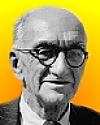
Born 7 May 1909; died 1 Mar 1991 at age 81. quotes
American inventor and physicist who founded the Polaroid Company. His one-step process for developing and printing photographs was the greatest innovation in photography since the introduction of roll film. He first demonstrated the Polaroid Land Camera in 1947, which gave fully developed prints in 60 seconds. Land also applied the name Polaroid to the light-polarizing filter he had previously invented by embedding suitable crystals in a plastic sheet, which was widely known for its use in the lenses of sunglasses. His other projects included instant X-rays, 3D movie projector among the over 500 patents he held.
American inventor and physicist who founded the Polaroid Company. His one-step process for developing and printing photographs was the greatest innovation in photography since the introduction of roll film. He first demonstrated the Polaroid Land Camera in 1947, which gave fully developed prints in 60 seconds. Land also applied the name Polaroid to the light-polarizing filter he had previously invented by embedding suitable crystals in a plastic sheet, which was widely known for its use in the lenses of sunglasses. His other projects included instant X-rays, 3D movie projector among the over 500 patents he held.
Insisting On The Impossible: The Life Of Edwin Land, by Victor K. McElheny. - book suggestion.
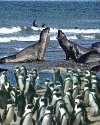
Alton A(nthony) Lindsey, an American biologist, was a pioneer ecologist and conservationist who mobilized support from scientists, educators and in Congress to preserve the Indiana shore of Lake Michigan. In Oct 1966, the 5,800 acre Indiana Dunes National Lakeshore was established. In his early career, he travelled to Antarctica as vertebrate zoologist for Adm. Richard E. Byrd's second expedition (1933-35). Lindsey studied the continent's animal life: seals and penguins. Throughout his life he observed the planetary ecosystem in many lands, on the seas, in plains and prairies, the deserts and mountains, forests, the tropics, and both polar regions. At his death, he was believed to be the last living scientist from the Antarctica expeditions.«
1947
Born 7 May 1876; died 25 Mar 1958 at age 81.
French ethnologist who was an authority on South American Indian cultures. In his book Les Origènes de l'Homme Americain (1943), he proposed that South American Indians originated from Australia and Melanesia. At the time of the International Exhibition of 1937, he founded in Paris the Musée de l'Homme (Museum of Man) devoted anthropology, not only to house collections, but also as a research centre with a mission to document man's biological anthropology, palaeontology and ethnology. In his early career, starting in 1901, he had participated in the Second French Geodetic Survey in Equador, and remained in South America after its conclusion for another six years, observing the inhabitants of the inter-Andean valleys.«
French ethnologist who was an authority on South American Indian cultures. In his book Les Origènes de l'Homme Americain (1943), he proposed that South American Indians originated from Australia and Melanesia. At the time of the International Exhibition of 1937, he founded in Paris the Musée de l'Homme (Museum of Man) devoted anthropology, not only to house collections, but also as a research centre with a mission to document man's biological anthropology, palaeontology and ethnology. In his early career, starting in 1901, he had participated in the Second French Geodetic Survey in Equador, and remained in South America after its conclusion for another six years, observing the inhabitants of the inter-Andean valleys.«
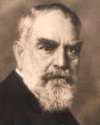
Born 7 May 1855; died 9 Apr 1934 at age 78.
German electrical engineer who fostered the electric-power industry in Germany and founded the Deutsches Museum of science and technology in Munich. He made fundamental initial experiments on long-distance energy transmission such as (in 1882) over 57 km from Miesbach to Munich with 1400 volts direct current. In 1891, he organized a 20,000-volt power transmission line over 175 km from Lauffen to Frankfurt, an important advance in the transmission of alternating current. From 1918-24, he was project manager building the power station on Lake Walchen, at that time the largest hydroelectric power station in the world. With an average of 300 million kWh a year, the Lake Walchen power plant is still one of Germany's largest peak load power stations.
German electrical engineer who fostered the electric-power industry in Germany and founded the Deutsches Museum of science and technology in Munich. He made fundamental initial experiments on long-distance energy transmission such as (in 1882) over 57 km from Miesbach to Munich with 1400 volts direct current. In 1891, he organized a 20,000-volt power transmission line over 175 km from Lauffen to Frankfurt, an important advance in the transmission of alternating current. From 1918-24, he was project manager building the power station on Lake Walchen, at that time the largest hydroelectric power station in the world. With an average of 300 million kWh a year, the Lake Walchen power plant is still one of Germany's largest peak load power stations.
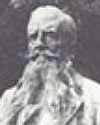
Born 7 May 1841; died 13 Dec 1931 at age 90. quotes
French social psychologist best known for his study of the psychological characteristics of crowds, The Crowd, Study of Popular Mind. In this early effort to explain group behavior, Le Bon gave two propositions: that people in groups adopt a group mind, and that groups as a collective are emotional and irrational. He theorized that in the right situations, the emotions of one person spread through the group like a cold through a schoolhouse. Control mechanisms such as values, ethics, and learned social rules are broken down and forgotten for the time. He was also the author of a number of works on social psychology, in which he expounded theories of national traits and racial superiority.
French social psychologist best known for his study of the psychological characteristics of crowds, The Crowd, Study of Popular Mind. In this early effort to explain group behavior, Le Bon gave two propositions: that people in groups adopt a group mind, and that groups as a collective are emotional and irrational. He theorized that in the right situations, the emotions of one person spread through the group like a cold through a schoolhouse. Control mechanisms such as values, ethics, and learned social rules are broken down and forgotten for the time. He was also the author of a number of works on social psychology, in which he expounded theories of national traits and racial superiority.
Born 7 May 1837; died 4 Apr 1875 at age 37.
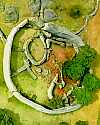
Karl Gottlieb Mauch was a German explorer and geologist who made geological and archaeological discoveries in southern Africa, notably the Tati goldfields in Hartley Hills (1867) and the Great Zimbabwe ruins of an ancient city (1871), both in modern Zimbabwe. He was the first European to investigate the massive and extensive walls of the Great Zimbabe ruins, the biggest and most significant structures erected before the modern era. He wrongly held that they could not have been constructed by black Africans. He thought it was the palace of Queen Sheeba and he called it “the city of gold.” However, he did make a detailed floor plan of monuments, describe building techniques and the religious acitivies conducted around the monument.[Image: aerial view of the Great Zimbabwe ruins.]
Karl Gottlieb Mauch was a German explorer and geologist who made geological and archaeological discoveries in southern Africa, notably the Tati goldfields in Hartley Hills (1867) and the Great Zimbabwe ruins of an ancient city (1871), both in modern Zimbabwe. He was the first European to investigate the massive and extensive walls of the Great Zimbabe ruins, the biggest and most significant structures erected before the modern era. He wrongly held that they could not have been constructed by black Africans. He thought it was the palace of Queen Sheeba and he called it “the city of gold.” However, he did make a detailed floor plan of monuments, describe building techniques and the religious acitivies conducted around the monument.[Image: aerial view of the Great Zimbabwe ruins.]
Karl Mauch: African Explorer, by Karl Mauch. - book suggestion.

Born 7 May 1774; died 17 Dec 1857 at age 83.
British inventor who created the wind force scale. In 1806, British Admiral Sir Francis Beaufort devised a simple scale that coastal observers could use to report the state of the sea to the Admiralty. Originally to describe wind effects on a fully rigged man-of-war sailing vessel, it was later extended to include descriptions of effects on land features as well. Officially adopted in 1838, it uses numbers 0 to 12, to designate calm, light air, light breeze, gentle breeze, moderate breeze, fresh breeze, strong breeze, moderate gale, fresh gale, strong gale, whole gale, storm, and hurricane. Zero (calm) is a wind velocity of less than 1 mph (0.6 kph) and 12 (hurricane) represents a velocity of over 75 mph (120kph). He was Hydrographer of the Navy from 1829-55.
British inventor who created the wind force scale. In 1806, British Admiral Sir Francis Beaufort devised a simple scale that coastal observers could use to report the state of the sea to the Admiralty. Originally to describe wind effects on a fully rigged man-of-war sailing vessel, it was later extended to include descriptions of effects on land features as well. Officially adopted in 1838, it uses numbers 0 to 12, to designate calm, light air, light breeze, gentle breeze, moderate breeze, fresh breeze, strong breeze, moderate gale, fresh gale, strong gale, whole gale, storm, and hurricane. Zero (calm) is a wind velocity of less than 1 mph (0.6 kph) and 12 (hurricane) represents a velocity of over 75 mph (120kph). He was Hydrographer of the Navy from 1829-55.
Born 7 May 1713; died 17 May 1765 at age 52. quotes
French mathematician who, as a child prodigy at age ten was studying calculus, tutored by his father. Clairaut read his first paper, Quatre problèmes sur de nouvelles courbes to the Paris Academy (1726) at the age of 13. He accompanied Maupertuis on an expedition to Lapland to measure the length of the meridian. From this experience, he began a book (1743) on the shape of the rotating earth under the influences of gravity and centrifugal forces. Further, he showed how to measure the shape by use of measurements of the effect of gravity at different location on the swing of a pendulum. He also determined the first reasonable value for the mass of Venus, an improved value for the mass of the moon, and predicted the timing of the return of Halley's Comet.
French mathematician who, as a child prodigy at age ten was studying calculus, tutored by his father. Clairaut read his first paper, Quatre problèmes sur de nouvelles courbes to the Paris Academy (1726) at the age of 13. He accompanied Maupertuis on an expedition to Lapland to measure the length of the meridian. From this experience, he began a book (1743) on the shape of the rotating earth under the influences of gravity and centrifugal forces. Further, he showed how to measure the shape by use of measurements of the effect of gravity at different location on the swing of a pendulum. He also determined the first reasonable value for the mass of Venus, an improved value for the mass of the moon, and predicted the timing of the return of Halley's Comet.

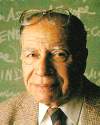
Died 7 May 2001 at age 85 (born 28 May 1915).
Joseph Harold Greenberg was an American anthropologist and linguist who specialized in African culture and in language universals. Greenberg's classification of African languages, published in papers 1949-1954, was reprinted as a book in 1955, revised in 1963 and retitled, Languages of Africa (1963). He postulated four families: Niger-Kordofanian, Afroasiatic, Nilo-Saharan, and Khoisan. In his highly controversial “Greenberg Theory,” he suggested that the first Americans arrived from Asia in at least three separate waves, each wave giving rise to one of three linguistic groups (Amerind, Eskimo-Aleut, and Na-Dene). Greenberg stated there was genetic evidence in dental records of Native Americans, which most linguists disregard as speculative.«
Joseph Harold Greenberg was an American anthropologist and linguist who specialized in African culture and in language universals. Greenberg's classification of African languages, published in papers 1949-1954, was reprinted as a book in 1955, revised in 1963 and retitled, Languages of Africa (1963). He postulated four families: Niger-Kordofanian, Afroasiatic, Nilo-Saharan, and Khoisan. In his highly controversial “Greenberg Theory,” he suggested that the first Americans arrived from Asia in at least three separate waves, each wave giving rise to one of three linguistic groups (Amerind, Eskimo-Aleut, and Na-Dene). Greenberg stated there was genetic evidence in dental records of Native Americans, which most linguists disregard as speculative.«
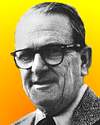
Died 7 May 1998 at age 74 (born 23 Feb 1924). quotes
South African-born American physicist who formulated the mathematical algorithms that made possible the development of a powerful new diagnostic technique, the cross-sectional X-ray imaging process known as computerized axial tomography (CAT) scanning. He first described this in two papers in 1963 and 1964. X-ray tomography is a process by which a picture of an imaginary slice through an object (or the human body) is built up from information from detectors rotating around the body. For this work, he was awarded a share (with Sir Gregory Hounsfield) of the 1979 Nobel Prize. Cormack was unusual in the field of Nobel laureates because he never earned a doctorate degree in medicine or any other field of science.
South African-born American physicist who formulated the mathematical algorithms that made possible the development of a powerful new diagnostic technique, the cross-sectional X-ray imaging process known as computerized axial tomography (CAT) scanning. He first described this in two papers in 1963 and 1964. X-ray tomography is a process by which a picture of an imaginary slice through an object (or the human body) is built up from information from detectors rotating around the body. For this work, he was awarded a share (with Sir Gregory Hounsfield) of the 1979 Nobel Prize. Cormack was unusual in the field of Nobel laureates because he never earned a doctorate degree in medicine or any other field of science.
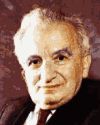
Died 7 May 1963 at age 81 (born 11 May 1881). quotes
Hungarian aeronautical engineer who designed the Bell X-1 airplane that was the first to fly faster than the speed of sound. He made scientific insights on the nature of aerodynamics, which he demonstrated through a highly intuitive style of applied mathematics. In 1911, he made an analysis of the alternating double row of vortices behind a bluff in a fluid stream, now famous as Karman's Vortex Street, which occur when the air stream that flow around a body fails to stick to the shape, but instead breaks off behind it into a wave. This wave is a form of drag that tries to keep the object from flying, or cause damage (as seen in the 1940 collapse of the Tacoma Narrows bridge caused by a 42 mph wind streaming across the deck).[DSB gives date of death 7 May 1963. EB gives 6 May 1963.]
Hungarian aeronautical engineer who designed the Bell X-1 airplane that was the first to fly faster than the speed of sound. He made scientific insights on the nature of aerodynamics, which he demonstrated through a highly intuitive style of applied mathematics. In 1911, he made an analysis of the alternating double row of vortices behind a bluff in a fluid stream, now famous as Karman's Vortex Street, which occur when the air stream that flow around a body fails to stick to the shape, but instead breaks off behind it into a wave. This wave is a form of drag that tries to keep the object from flying, or cause damage (as seen in the 1940 collapse of the Tacoma Narrows bridge caused by a 42 mph wind streaming across the deck).[DSB gives date of death 7 May 1963. EB gives 6 May 1963.]
The Wind and Beyond: Theodore von Karman, Pioneer in Aviation and Pathfinder in Space, by Thedore von Karman and Lee Edson (ed.). - book suggestion.
Died 7 May 1957 at age 79 (born 13 Sep 1877).
German scientist and explorer who led the German Antarctic expedition of 1911-12. In Tibet (1926-28) he conducted cartographic surveys and magnetic observations. He also made a magnetic survey of Nepal (1939-40)
German scientist and explorer who led the German Antarctic expedition of 1911-12. In Tibet (1926-28) he conducted cartographic surveys and magnetic observations. He also made a magnetic survey of Nepal (1939-40)
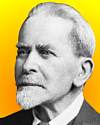
Died 7 May 1941 at age 87 (born 1 Jan 1854). quotes
Scottish anthropologist , folklorist, classical scholar, and author of The Golden Bough, a study in Comparative Religion, which traced the evolution of human behavior. This vast collection of savage and civilized beliefs and customs, myth, magic, religion, ritual, and taboo is considered among the greatest works of anthropology. It was named after the golden bough in the sacred grove at Nemi, near Rome. It began as two volumes in 1890 and became 12 volumes by 1915. He did no field work; his research was library-based. Although still considered a storehouse of ethnographic information, his theories belong in history rather than current ideas of anthropology. His notions of totemism were subsequently destroyed by Lévi-Stauss.
Scottish anthropologist , folklorist, classical scholar, and author of The Golden Bough, a study in Comparative Religion, which traced the evolution of human behavior. This vast collection of savage and civilized beliefs and customs, myth, magic, religion, ritual, and taboo is considered among the greatest works of anthropology. It was named after the golden bough in the sacred grove at Nemi, near Rome. It began as two volumes in 1890 and became 12 volumes by 1915. He did no field work; his research was library-based. Although still considered a storehouse of ethnographic information, his theories belong in history rather than current ideas of anthropology. His notions of totemism were subsequently destroyed by Lévi-Stauss.
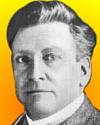
Died 7 May 1925 at age 73 (born 19 Sep 1851). quotes
William Hesketh Lever (1st Viscount Leverhulme) was a British manufacturer and philanthropist who formed the Lever Brothers soap manufacturing company (1886) with his brother James (though James was not an active participant in running the business). It was one of the first companies to manufacture soap from vegetable oils instead of tallow. From 1888, Lever established Port Sunlight, a model community providing housing and support for the company's workers, who enjoyed conditions, pay, hours, and benefits far better than found in similar industries. By 1900 the factory was producing other brands such as Lifebuoy, Lux Flakes, Monkey Brand, Vim scouring powder and Rinso. In 1914, soap production reached 60,000 tonnes.« more
William Hesketh Lever (1st Viscount Leverhulme) was a British manufacturer and philanthropist who formed the Lever Brothers soap manufacturing company (1886) with his brother James (though James was not an active participant in running the business). It was one of the first companies to manufacture soap from vegetable oils instead of tallow. From 1888, Lever established Port Sunlight, a model community providing housing and support for the company's workers, who enjoyed conditions, pay, hours, and benefits far better than found in similar industries. By 1900 the factory was producing other brands such as Lifebuoy, Lux Flakes, Monkey Brand, Vim scouring powder and Rinso. In 1914, soap production reached 60,000 tonnes.« more
The King of Sunlight: How William Lever Cleaned Up the World, by Adam Macqueen. - book suggestion.
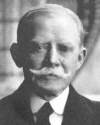
Died 7 May 1922 at age 77 (born 13 Dec 1844).
American manufacturer who founded NCR (National Cash Register Co.) and helped popularize the modern cash register by means of aggressive and innovative sales techniques. In the 1870s, when he and his brother Frank established a successful business selling coal and miner's supplies, unrecorded sales were a problem. After reading a description of the cash register designed by James Ritty and sold by the National Manufacturing Company in Dayton, John ordered two, sight unseen. In six months they reduced his debt from $16,000 to $3,000 and the books showed a profit of $5,000. These modern machines had solved the old problems of disorganization and dishonesty. Patterson "was so impressed that he bought the company."
American manufacturer who founded NCR (National Cash Register Co.) and helped popularize the modern cash register by means of aggressive and innovative sales techniques. In the 1870s, when he and his brother Frank established a successful business selling coal and miner's supplies, unrecorded sales were a problem. After reading a description of the cash register designed by James Ritty and sold by the National Manufacturing Company in Dayton, John ordered two, sight unseen. In six months they reduced his debt from $16,000 to $3,000 and the books showed a profit of $5,000. These modern machines had solved the old problems of disorganization and dishonesty. Patterson "was so impressed that he bought the company."
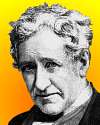
Died 7 May 1890 at age 81 (born 19 Aug 1808).
Scottish engineer who invented the steam-hammer (24 Nov 1839) which was patented in Britain on 9 Jun 1842 (No. 9382). In his early career, Nasmyth improved the design of machine tools. Power hammers had previously been driven by steam, but Nasmyth designed his steam-hammer with more precision and control. The steam functioned to lift the hammer which then dropped by gravity, and repeated the cycle. Nasmyth adapted the idea to make a steam pile-driver. With later improvements, the steam-hammer enabled forging very large guns for the British navy. He became wealthy and in 1856 was able to retire at the age of 48. After retirement, Nasmyth pursued his hobby of astronomy, in which he published minor works.«
Scottish engineer who invented the steam-hammer (24 Nov 1839) which was patented in Britain on 9 Jun 1842 (No. 9382). In his early career, Nasmyth improved the design of machine tools. Power hammers had previously been driven by steam, but Nasmyth designed his steam-hammer with more precision and control. The steam functioned to lift the hammer which then dropped by gravity, and repeated the cycle. Nasmyth adapted the idea to make a steam pile-driver. With later improvements, the steam-hammer enabled forging very large guns for the British navy. He became wealthy and in 1856 was able to retire at the age of 48. After retirement, Nasmyth pursued his hobby of astronomy, in which he published minor works.«
Died 7 May 1617 at age 53 (born 9 Mar 1564). quotes
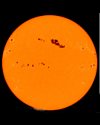
A German astronomer, friend of Tycho Brahe and Kepler, and one of the first to follow Galileo in telescope observation of the skies. He is best known for a naked-eye observation of a star in Aug 1596, subsequently named Omicron Ceti, the first variable star to be discovered, and now known as Mira. Its existence with variable brightness contradicted the Aristotelian dogma that the heavens were both perfect and constant. With his son, Johannes Fabricius, he observed the sun and noted sunspots. For further observations they invented the use of a camera obscura and recorded sun-spot motion indicating the rotation of the Sun. David Fabricius, a Protestant minister, was killed by a parishioner angered upon being accused by him as a thief.
A German astronomer, friend of Tycho Brahe and Kepler, and one of the first to follow Galileo in telescope observation of the skies. He is best known for a naked-eye observation of a star in Aug 1596, subsequently named Omicron Ceti, the first variable star to be discovered, and now known as Mira. Its existence with variable brightness contradicted the Aristotelian dogma that the heavens were both perfect and constant. With his son, Johannes Fabricius, he observed the sun and noted sunspots. For further observations they invented the use of a camera obscura and recorded sun-spot motion indicating the rotation of the Sun. David Fabricius, a Protestant minister, was killed by a parishioner angered upon being accused by him as a thief.

In 1992, the space shuttle Endeavour blasted off on its maiden voyage, a $2 billion replacement for the Challenger. The mission STS-49 included the first three-person spacewalk, which captured Intelsat VI, a private communications satellite, for repair and reboost. The 4.5 ton satellite had been stranded in an unusable orbit since it was launched on Mar 1990. After capture, it was equipped with a new perigee kick motor. When released, the satellite reached an operational geosynchronous orbit. The crew comprised Commander Daniel C. Brandenstein, Pilot Kevin P. Chilton, Mission Specialists Pierre J. Thuot, Kathryn C. Thornton, Richard J. Hieb, Thomas D. Akers and Bruce E. Melnick.«

In 1963, the United States launched the Telstar 2 communications satellite on behalf of its private owner, AT&T. On its tenth orbit, it transmitted the first transatlantic TV program seen in colour. It orbited with an apogee of 6,700 miles (10,800 km). This superceded AT&T's original Telstar satellite, which had ceased operating in 1962, due to transistor damage caused by radiation from a high-altitude nuclear test. Telstar 2 was built with shielding against such radiation.
In 1955, polio vaccinations with the Salk vaccine were suspended by the U.S. Surgeon General. Several children had acquired the disease from the vaccine. The trouble was traced to faulty production at an independent laboratory, but it is the inventor's name, Jonas Salk, which is unjustly most remembered for the vaccine's shortcomings.
2010
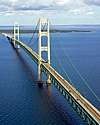
In 1954, construction began on the Mackinac Bridge including the world’s longest suspension bridge to date. It fulfilled the 70 year dream to connect 8 km (5 miles) across the Straits of Mackinac between Michigan’s upper and lower peninsulas. The architect was David B. Steinman. Ceremonial ground breakings were held on this day at the St. Ignace end, and the next day on the opposite shore at Mackinaw City. Components were already being assembled in several states. Caissons were floated into position and sunk to provide the footings. On 1 Nov 1957, the bridge was opened to traffic, the automobile ferry service ended, and travel time was cut from about 2 hours to 10 minutes. It was dedicated 28 Jun 1958.«
Miracle Bridge at Mackinac, by David B. Steinman. - book suggestion.
In 1952, the concept of the integrated circuit chip was first presented, at a Symposium on Progress in Quality Electronic Components in Washington DC., by radar scientist Geoffrey W.A. Dummer. His small team of researchers at the Royal Radar Establishment of the British Ministry of Defence, based at Malvern, Worcestershire, was working on the task of improving the reliability of the Royal Air Force's radar equipment.. He believed that it would be possible to fabricate multiple circuit elements on and into a block of silicon half an inch square. In 1956, his initial attempts to build such a circuit failed, and thereafter could get no further support for his idea. Britain lost the commercial lead. A few years later, in America, Jack Kilby of Texas Instruments was awarded a U.S. patent for essentially the same idea.«
In 1878, Joseph.R. Winters, a black American inventor, received a patent for a fire escape ladder.
The Inventive Spirit of African Americans: Patented Ingenuity, by Patricia Carter Sluby. - book suggestion.
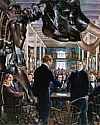
In 1847, delegates to a national medical convention in Philadelphia, Pennylvania, approved a resolution to establish the American Medical Association. Dr. Nathaniel Chapman was elected as its first president. The goals of the association were scientific advancement, standards for medical education, launching a program of medical ethics and improved public health. From 28 states, 250 delegates attended this founding meeting, seated among exhibit cases in the hall of The Academy of Natural Sciences. Dr. Nathan S. Davis is known as the founder of the AMA because of his 1845 resolution to the New York Medical Association that called for the national medical convention that led to the forming of the AMA. At its founding, he was just 30 years old.
In 1660, Isaack B Fubine of Savoy, in The Hague, patents macaroni.




