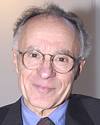
Born 26 Apr 1933. quotes
Arno Allan Penzias is a German-American astrophysicist who shared one-half of the 1978 Nobel Prize for Physics with Robert Woodrow Wilson for their discovery of a faint electromagnetic radiation throughout the universe. Their detection of this radiation lent strong support to the big-bang model of cosmic evolution. (The other half of the prize was awarded to Pyotr Kapitsa for unrelated research.)
Arno Allan Penzias is a German-American astrophysicist who shared one-half of the 1978 Nobel Prize for Physics with Robert Woodrow Wilson for their discovery of a faint electromagnetic radiation throughout the universe. Their detection of this radiation lent strong support to the big-bang model of cosmic evolution. (The other half of the prize was awarded to Pyotr Kapitsa for unrelated research.)
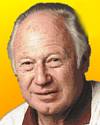
Born 26 Apr 1932; died 4 Oct 2000 at age 68. quotes
British-born Canadian biochemist who won (with Kary B. Mullis) the 1993 Nobel Prize for Chemistry for his development of a technique called oligonucleotide-based site-directed mutagenesis, which enabled researchers to introduce specific mutations into genes and, thus, to the proteins that they encode. The prize recognized his groundbreaking work in reprogramming segments of DNA, the building blocks of life. His work launched a new era in genetics research.
British-born Canadian biochemist who won (with Kary B. Mullis) the 1993 Nobel Prize for Chemistry for his development of a technique called oligonucleotide-based site-directed mutagenesis, which enabled researchers to introduce specific mutations into genes and, thus, to the proteins that they encode. The prize recognized his groundbreaking work in reprogramming segments of DNA, the building blocks of life. His work launched a new era in genetics research.
Born 26 Apr 1927; died 7 Jul 2007 at age 80.
English geneticist.
English geneticist.
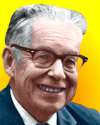
Born 26 Apr 1900; died 30 Sep 1985 at age 85. quotes
Charles Francis Richter was an American seismologist who devised the Richter Scale that measures earthquake magnitudes which he developed with his colleague, Beno Gutenberg, in the early 1930s. The scale assigns numerical ratings to the energy released by earthquakes. Richter used a seismograph to record actual earth motion during an earthquake. That is an instrument generally consisting of a constantly unwinding roll of paper, anchored to a fixed place, and a pendulum or magnet suspended with a marking device above the roll. The scale takes into account the instrument's distance from the epicenter. Gutenberg suggested that the scale be logarithmic so, for example, a quake of magnitude 7 would be ten times stronger than a 6. He wrote the article on Earthquakes for the 1974 edition of Encyclopædia Britannica.
Charles Francis Richter was an American seismologist who devised the Richter Scale that measures earthquake magnitudes which he developed with his colleague, Beno Gutenberg, in the early 1930s. The scale assigns numerical ratings to the energy released by earthquakes. Richter used a seismograph to record actual earth motion during an earthquake. That is an instrument generally consisting of a constantly unwinding roll of paper, anchored to a fixed place, and a pendulum or magnet suspended with a marking device above the roll. The scale takes into account the instrument's distance from the epicenter. Gutenberg suggested that the scale be logarithmic so, for example, a quake of magnitude 7 would be ten times stronger than a 6. He wrote the article on Earthquakes for the 1974 edition of Encyclopædia Britannica.
Richter’s Scale: Measure of an Earthquake, Measure of a Man, by Susan Hough. - book suggestion.
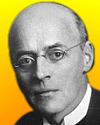
Born 26 Apr 1879; died 15 Feb 1959 at age 79. quotes
English physicist who was awarded the Nobel Prize for Physics in 1928 for “his work on the thermionic phenomenon [electron emission by hot metals] and especially for the discovery of the law named after him.” This effect is why a heated filament in a vacuum tube releases a current of electrons to travel an anode, which was essential for the development of such applications as radio amplifiers or a TV cathode ray tube. Richardson's law mathematically relates how the electron emission increases as the absolute temperature of the metal surface is raised. He also conducted research on photoelectric effects, the gyromagnetic effect, the emission of electrons by chemical reactions, soft X-rays, and the spectrum of hydrogen.«
English physicist who was awarded the Nobel Prize for Physics in 1928 for “his work on the thermionic phenomenon [electron emission by hot metals] and especially for the discovery of the law named after him.” This effect is why a heated filament in a vacuum tube releases a current of electrons to travel an anode, which was essential for the development of such applications as radio amplifiers or a TV cathode ray tube. Richardson's law mathematically relates how the electron emission increases as the absolute temperature of the metal surface is raised. He also conducted research on photoelectric effects, the gyromagnetic effect, the emission of electrons by chemical reactions, soft X-rays, and the spectrum of hydrogen.«
Born 26 Apr 1877; died 4 Jan 1958 at age 80.
English aviator who was the first in Britain to construct and fly his own airplane. Having heard of the success of the brothers Orville and Wilbur Wright, Roe set out to build his own plane. On 8 Jun 1908, he flew his biplane a distance of 75 feet (23 m).
English aviator who was the first in Britain to construct and fly his own airplane. Having heard of the success of the brothers Orville and Wilbur Wright, Roe set out to build his own plane. On 8 Jun 1908, he flew his biplane a distance of 75 feet (23 m).
Born 26 Apr 1836; died 9 Jun 1886 at age 50.
Erminnie Adele Platt Smith was an American anthropologist (née Platt) was the first woman to specialize in ethnographic field work. At first, her interest was as a geologist, studying mineralogy and crystallography. By about age 40, she founded the Aesthetic Society and held parlor meetings at her home about science, literature, and art. When these grew to a crowd of up to 500 members, she moved the meetings to a church hall. Speakers included eminent persons, such as Thomas Edison and Oscar Wilde. After hearing of the emerging field of anthropology, she took to it with a passion for documenting legends and language of the Iroquis Indians. Her work and scientific papers were of the highest quality, and she managed to preserve much information on the Iroquois culture. Of her books, the best known is Myths of the Iroquois (1883). She died when 50 years old.«
Erminnie Adele Platt Smith was an American anthropologist (née Platt) was the first woman to specialize in ethnographic field work. At first, her interest was as a geologist, studying mineralogy and crystallography. By about age 40, she founded the Aesthetic Society and held parlor meetings at her home about science, literature, and art. When these grew to a crowd of up to 500 members, she moved the meetings to a church hall. Speakers included eminent persons, such as Thomas Edison and Oscar Wilde. After hearing of the emerging field of anthropology, she took to it with a passion for documenting legends and language of the Iroquis Indians. Her work and scientific papers were of the highest quality, and she managed to preserve much information on the Iroquois culture. Of her books, the best known is Myths of the Iroquois (1883). She died when 50 years old.«
Born 26 Apr 1829; died 6 Feb 1894 at age 64. quotes
Christian Albert Theodor Billroth was a German surgeon, generally considered to be the founder of modern abdominal surgery. He was a friend and colleague of Halsted. Billroth was a pioneer abdominal surgeon, and perfected many procedures, including gastric resections still used daily in general surgery. He helped establish the foundations of academic training and university direction of surgical sciences.
Christian Albert Theodor Billroth was a German surgeon, generally considered to be the founder of modern abdominal surgery. He was a friend and colleague of Halsted. Billroth was a pioneer abdominal surgeon, and perfected many procedures, including gastric resections still used daily in general surgery. He helped establish the foundations of academic training and university direction of surgical sciences.
Born 26 Apr 1812; died 14 Jul 1887 at age 75.
German manufacturer of steel and armaments who was known as “The Cannon King.” At an early age, in 1826, he inherited his father's small cast-steel works at Essen, which he expanded by 1843 to 100 workers making steel springs and machine parts. In 1859, he won a Prussian government contract to make 312 cannon. Developing this line of business, he became the largest steel maker in Europe. In 1862, he began making steel with the Bessemer process. His cannon were used in the Franco-Prussian War of 1870. After this, he acquired control of the supply of German coal and Spanish iron-ore. His artillery business grew to 21,000 employees. His descendants continued the business and armed the Germans in WW II.«
German manufacturer of steel and armaments who was known as “The Cannon King.” At an early age, in 1826, he inherited his father's small cast-steel works at Essen, which he expanded by 1843 to 100 workers making steel springs and machine parts. In 1859, he won a Prussian government contract to make 312 cannon. Developing this line of business, he became the largest steel maker in Europe. In 1862, he began making steel with the Bessemer process. His cannon were used in the Franco-Prussian War of 1870. After this, he acquired control of the supply of German coal and Spanish iron-ore. His artillery business grew to 21,000 employees. His descendants continued the business and armed the Germans in WW II.«
The Arms of Krupp: The Rise and Fall of the Industrial Dynasty that Armed Germany at War, by William Manchester. - book suggestion.
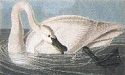
John James Laforest Audubon was a French-American ornithologist, artist and naturalist famous for his drawings and paintings of North American birds. He was born in Haiti, the illegitimate son of a successful merchant, planter, and slave dealer. He was aged 4, when they moved to France, where he had a gentleman’s education. By 15, he was drawing French birds. In 1803, age 18, Audubon went to Pennsylvania, to manage his father’s estate, and there took up serious ornithology. In 1820, he set his goal to publish an anthology of life drawings. He explored for birds following the Ohio and Mississippi Rivers and the Great Lakes. Finding no interested U.S. publisher, his engravings were made in London (1826-38). He returned to the U.S. and spent more years travelling and painting.«Image right: Trumpeter swan by Audubon (1837).
John James Audubon: The Making of an American, by Richard Rhodes. - book suggestion.
Born 26 Apr 1774; died 4 Mar 1853 at age 78. quotes
Baron Christian Leopold von Buch was a German geologist, paleontologist and geographer who took geological research trips in Europe on which he travelled as far north as Lapland. He investigated Vesuvius with his life-long friend Alexander von Humboldt, and examined the huge craters of the Canary Islands. His broad interests in geology also included the study of fossils, stratigraphy, and in particular the Jurassic system.«[EB gives birth date as 26 Apr 1774. DSB gives 25 Apr 1774.] more
Baron Christian Leopold von Buch was a German geologist, paleontologist and geographer who took geological research trips in Europe on which he travelled as far north as Lapland. He investigated Vesuvius with his life-long friend Alexander von Humboldt, and examined the huge craters of the Canary Islands. His broad interests in geology also included the study of fossils, stratigraphy, and in particular the Jurassic system.«[EB gives birth date as 26 Apr 1774. DSB gives 25 Apr 1774.] more
Travels through Norway and Lapland during the years 1806, 1807, and 1808, by Leopold Von Buch. - book suggestion.

Died 26 Apr 2006 at age 80 (born 14 May 1925). quotes
Israeli theoretical physicist, who worked independently of Gell-Mann but almost simultaneously (1961) devised a method of grouping baryons in such a way that they fell into logical families. Now known as the Eightfold Way (after Buddha's Eightfold Path to Enlightenment and bliss), the scheme grouped mesons and baryons (e.g., protons and neutrons) into multiplets of 1, 8, 10, or 27 members on the basis of various properties. He had served as the head of his Israel's atomic energy commission, and founded the country's space program.
Israeli theoretical physicist, who worked independently of Gell-Mann but almost simultaneously (1961) devised a method of grouping baryons in such a way that they fell into logical families. Now known as the Eightfold Way (after Buddha's Eightfold Path to Enlightenment and bliss), the scheme grouped mesons and baryons (e.g., protons and neutrons) into multiplets of 1, 8, 10, or 27 members on the basis of various properties. He had served as the head of his Israel's atomic energy commission, and founded the country's space program.
Died 26 Apr 2002 at age 54 (born 19 Sep 1947).
Torunn Atteraas “Teri” Garin was a Norwegian chemical engineer who helped develop aspartame sweetener as a sugar substitute while working for General Foods (1971-85), where she became a senior laboratory manager. Earlier in her career, she researched ways to minimize water pollution caused by food production. She co-patented an adsoption process to extract caffeine from coffee (12 Sep 1978, No. 4,113,887) and a method to derive food dyes from natural sources to replace possibly cancer-causing synthetic dyes (11 Oct, 1983, No. 4,409,254), for example, non-toxic betanin, a natural red pigment from red beet. These U.S. patents were assigned to General Foods Corp. After attending university in Norway, she moved to the U.S. for degrees in chemical engineering (1971) and environmental engineering (1977). She died from lung cancer, age 54.«
Torunn Atteraas “Teri” Garin was a Norwegian chemical engineer who helped develop aspartame sweetener as a sugar substitute while working for General Foods (1971-85), where she became a senior laboratory manager. Earlier in her career, she researched ways to minimize water pollution caused by food production. She co-patented an adsoption process to extract caffeine from coffee (12 Sep 1978, No. 4,113,887) and a method to derive food dyes from natural sources to replace possibly cancer-causing synthetic dyes (11 Oct, 1983, No. 4,409,254), for example, non-toxic betanin, a natural red pigment from red beet. These U.S. patents were assigned to General Foods Corp. After attending university in Norway, she moved to the U.S. for degrees in chemical engineering (1971) and environmental engineering (1977). She died from lung cancer, age 54.«
Died 26 Apr 1988 at age 75 (born 21 Mar 1913).
Guillermo Haro Barraza was a Mexican astronomer who was working as a newspaper reporter, when he interviewed (1937) Luis Erro of Tonantzintla Observatory. By 1943, Haro’s increasing interest in astronomy was rewarded with a staff position there, despite no formal training. His name remains associated with Herbig-Haro objects, that he and George Herbig discovered independently. These seemed to be stars much younger than the rest of the stars in the sky, and had distinquishing anomalies in their spectra which remained unexplained for many years. Haro’s career of contributions marked the emergence of serious astronomy in Mexico, recognized when he was elected (1959) as the first foreign associate of the Royal Astronomical Society from a developing country.«
Guillermo Haro Barraza was a Mexican astronomer who was working as a newspaper reporter, when he interviewed (1937) Luis Erro of Tonantzintla Observatory. By 1943, Haro’s increasing interest in astronomy was rewarded with a staff position there, despite no formal training. His name remains associated with Herbig-Haro objects, that he and George Herbig discovered independently. These seemed to be stars much younger than the rest of the stars in the sky, and had distinquishing anomalies in their spectra which remained unexplained for many years. Haro’s career of contributions marked the emergence of serious astronomy in Mexico, recognized when he was elected (1959) as the first foreign associate of the Royal Astronomical Society from a developing country.«
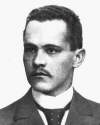
Died 26 Apr 1951 at age 82 (born 5 Dec 1868). quotes
Arnold Johannes Wilhelm Sommerfeld was a German physicist whose atomic model permitted the explanation of fine-structure spectral lines. His first work was on the theory of the gyroscope (with Klein), and then on wave spreading in wireless telegraphy. More significant was his major contribution to the development of quantum theory, generally, and in its application to spectral lines and the Bohr atomic model. He evolved also a theory of the electron in the metallic state valuable to the study of thermo-electricity.
Arnold Johannes Wilhelm Sommerfeld was a German physicist whose atomic model permitted the explanation of fine-structure spectral lines. His first work was on the theory of the gyroscope (with Klein), and then on wave spreading in wireless telegraphy. More significant was his major contribution to the development of quantum theory, generally, and in its application to spectral lines and the Bohr atomic model. He evolved also a theory of the electron in the metallic state valuable to the study of thermo-electricity.
Arnold Sommerfeld: Science, Life and Turbulent Times, by Michael Eckert. - book suggestion.
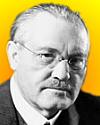
Died 26 Apr 1940 at age 65 (born 27 Aug 1874). quotes
German industrial chemist who at BASF directed development of the industrial scale process for production of ammonia from atmospheric nitrogen. In 1908, Fritz Haber, a professor of chemistry had suggested that nitrogen and hydrogen gases could be combined using high temperatures, high pressure and catalysts that resulted in the Haber-Bosch process. By 1910, Alwin Mittasch (1869-1953), head chemist of the BASF ammonia research laboratory identified activated iron as a suitable catalyst. Bosch supervised creation of new technical solutions for high pressure operations. He shared (with Friedrich Bergius) the 1931 Nobel Prize for Chemistry for devising chemical high-pressure methods.«
German industrial chemist who at BASF directed development of the industrial scale process for production of ammonia from atmospheric nitrogen. In 1908, Fritz Haber, a professor of chemistry had suggested that nitrogen and hydrogen gases could be combined using high temperatures, high pressure and catalysts that resulted in the Haber-Bosch process. By 1910, Alwin Mittasch (1869-1953), head chemist of the BASF ammonia research laboratory identified activated iron as a suitable catalyst. Bosch supervised creation of new technical solutions for high pressure operations. He shared (with Friedrich Bergius) the 1931 Nobel Prize for Chemistry for devising chemical high-pressure methods.«
Enriching the Earth: Fritz Haber, Carl Bosch, and ... World Food Production, by Vaclav Smil. - book suggestion.
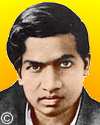
Died 26 Apr 1920 at age 32 (born 22 Dec 1887). quotes
Srinivasa Aiyangar Ramanujan was an Indian mathematician who did notable work on hypergeometric series and continued fractions. In number theory, he discovered properties of the partition function. Although self-taught, he was one of India's greatest mathematical geniuses. He worked on elliptic functions, continued fractions, and infinite series. His remarkable familiarity with numbers, was shown by the following incident. While Ramanujan was in hospital in England, his Cambridge professor, G. H. Hardy, visited and remarked that he had taken taxi number 1729, a singularly unexceptional number. Ramanujan immediately responded that this number was actually quite remarkable: it is the smallest integer that can be represented in two ways by the sum of two cubes: 1729=13+123=93+103.« more
Srinivasa Aiyangar Ramanujan was an Indian mathematician who did notable work on hypergeometric series and continued fractions. In number theory, he discovered properties of the partition function. Although self-taught, he was one of India's greatest mathematical geniuses. He worked on elliptic functions, continued fractions, and infinite series. His remarkable familiarity with numbers, was shown by the following incident. While Ramanujan was in hospital in England, his Cambridge professor, G. H. Hardy, visited and remarked that he had taken taxi number 1729, a singularly unexceptional number. Ramanujan immediately responded that this number was actually quite remarkable: it is the smallest integer that can be represented in two ways by the sum of two cubes: 1729=13+123=93+103.« more
The Man Who Knew Infinity, by Robert Kanigel. - book suggestion.
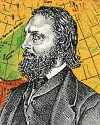
Died 26 Apr 1914 at age 82 (born 20 Aug 1831). quotes
Austrian geologist who helped lay the basis for paleogeography and tectonics (the study of the architecture and evolution of the Earth's outer rocky shell). He was an authority on structural geology, especially of mountains, and postulated the existence of the giant land mass Gondwanaland. While he was a professor (1857–1901) at the Univ. of Vienna, he also served for more than 20 years in the Austrian parliament. His Austrian-born son, Hans Suess, became a geochemist who pioneered radiocarbon dating techniques and was a founding faculty member of the University of California, San Diego.Image from Austrian commemorative stamp of 26 Apr 1989. more
Austrian geologist who helped lay the basis for paleogeography and tectonics (the study of the architecture and evolution of the Earth's outer rocky shell). He was an authority on structural geology, especially of mountains, and postulated the existence of the giant land mass Gondwanaland. While he was a professor (1857–1901) at the Univ. of Vienna, he also served for more than 20 years in the Austrian parliament. His Austrian-born son, Hans Suess, became a geochemist who pioneered radiocarbon dating techniques and was a founding faculty member of the University of California, San Diego.Image from Austrian commemorative stamp of 26 Apr 1989. more
Died 26 Apr 1908 at age 83 (born 7 Feb 1825).
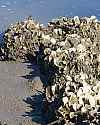
German zoologist whose work in marine biology included the formation of pearls and the anatomy of the whale. He introduced the ecosystem concept of the “life community” (“Biocönose” - life having something in common) which featured in his 1877 study of oyster culture - the order, structure and function of the oyster reef as it relates to the abiotic habitat of a river mouth and the biotic associations of plants, plankton, benthic communities and fisheries in an estuary. He cofounded the Hamburg zoo and aquarium, led expeditions in the tropics, and became director of the natural history museum in Berlin (1887-1905).«[Image: oyster reef]
German zoologist whose work in marine biology included the formation of pearls and the anatomy of the whale. He introduced the ecosystem concept of the “life community” (“Biocönose” - life having something in common) which featured in his 1877 study of oyster culture - the order, structure and function of the oyster reef as it relates to the abiotic habitat of a river mouth and the biotic associations of plants, plankton, benthic communities and fisheries in an estuary. He cofounded the Hamburg zoo and aquarium, led expeditions in the tropics, and became director of the natural history museum in Berlin (1887-1905).«[Image: oyster reef]
Died 26 Apr 1558 (born 1497). quotes
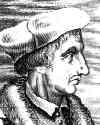
French physician who in his historic career in medicine and physiology introduced dissection to clinical practice. He coined the terms "physiology" and "pathology," and was the first to describe appendicitis, peristalsis., systole and diastole of the heart, endocarditis, and the first description of the spinal canal. He wrote general medical texts and works of the cure of syphilis and fevers.
French physician who in his historic career in medicine and physiology introduced dissection to clinical practice. He coined the terms "physiology" and "pathology," and was the first to describe appendicitis, peristalsis., systole and diastole of the heart, endocarditis, and the first description of the spinal canal. He wrote general medical texts and works of the cure of syphilis and fevers.
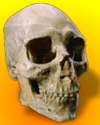
Reconstruction
In 2016, evidence for the ancestry of Kennewick Man was reviewed in a report signed by Scott A. Spellmon of the U.S. Corps of Engineers (which had custody of the prehistoric remains found 28 Jul 2009 on land they supervised). He concluded, “Kennewick Man is Native American and subject to the…Native American Graves Protection and Repatriation Act.” After years of various legal filings by scientists wanting access for research, and several Native American tribes, the merit of the tribal claim was acknowledged. But, there remained the question with no sure answer: to specifically which of several tribes should the remains should be repatriated? So the report finished with “At present, there has been no decision to transfer the remains.”«
Kennewick Man: The Scientific Investigation of an Ancient American Skeleton, by Douglas W. Owsley. - book suggestion.

In 1993, space shuttle Columbia was launched on the second German sponsored D-2 Spacelab Mission lasting until 6 May. Some 88 experiments covered materials and life sciences, technology applications, Earth observations, astronomy and atmospheric physics. Some 240 tadpoles and 240 fish larvae were flown to test how their bodies adjusted to weightlessness in space; most of the specimens died in ordit. Mission specialist Dr. Bernard Harris set up the first I.V. (intravenous) line in space, injecting payload specialist Hans Schlegel with saline as part of a study to replace body fluids lost during adaptation to weightlessness. This mission brought the shuttle program's cumulative flight time to one year.
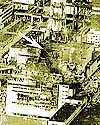
In 1986, in Pripet, Russia, one of the four reactors at the Chernobyl nuclear plant exploded in the world's worst civil nuclear catastrophe. It sent a cloud of radioactive dust over Europe. The cause was an experiment that went wrong, causing the fourth reactor to explode and melt down. It was not announced until two days later, on 28 Apr 1986. Thirty-one people, mostly firemen, were killed immediately after the explosion, and several thousand more - those involved in the clean-up and children - have since died from radiation-related illnesses. Ukraine says the health of millions of its people have been affected by the disaster. The final shutdown of the undamaged last reactor on the site took place ceremoniously on 15 Dec 2000.
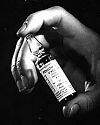
In 1954, mass testing of the Salk polio vaccine began, involving about 1.8 million children.
Jonas Salk: Beyond the Microscope, by Victoria Sherrow. - book suggestion.
In 1921, the first U.S. broadcast of the weather was made from St. Louis, Missouri, over station WEW for the federal government.
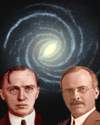
In 1920, Harlow Shapley of the Mount Wilson Observatory and Heber D. Curtis of the Lick Observatory in California, two leading astronomers, debated each other at the Smithsonian Institution on the relationship of the Milky Way Galaxy to the Universe. Shapley's position was that the Milky Way is the only galaxy in the universe,.Curtis, however, argued that the Milky Way exists as just one of many “island universes” in the cosmos. Whereas both scientists provided a stimulating debate, it was Curtis who was vindicated for his opinion when the island universe theory was validated by Edwin Hubble, whose paper was read on 1 Jan 1925 to a meeting of the American Astronomical Society.
Edwin Hubble, The Discoverer of the Big Bang Universe, by Aleksandr Sergeevich Sharov, Igor Dmitrievich Novikov. - book suggestion.
In 1899, "Life Saving Guards for Street Cars" were patented by the black American inventor, J.H. Robinson (No, 623,929), who the previous month was issued a patent for life saving guards for locomotives (14 Mar 1899, No. 621,143).
The Inventive Spirit of African Americans: Patented Ingenuity, by Patricia Carter Sluby. - book suggestion.
In 1892, a U.S. patent for a specialized “Ironing Board” was issued to the black American inventor, Sarah Boone, likely a former slave (No. 473,653). Her design featured a quite narrow padded board, curved to make it easier to iron sleeves. Numerous patents were issued before hers with similar titles. The first patent designated specifically as an “Ironing Table” was issued several decades earlier, in 1858, to W. Vandenburg and J. Harvey (No. 19,390). Unpatented styles evolved from long long before that, so no single inventor can be identified for the earliest ironing board. For example, J.H. Mallory's “Ironing Table,” patented 24 Oct 1871 (No. 120,296) more closely resembles today's adjustable-height, collapsible model.«
The Inventive Spirit of African Americans: Patented Ingenuity, by Patricia Carter Sluby. - book suggestion.
In 1884, the New York Times reported that “sending mails by electricity” was to be investigated by the Post Office Committee of the U.S. House, by providing for contracts with an existing telegraph company. The proposal was that since carriage of letters by steam locomotives was already done by contract, the delivery of mails by electricity seemed analagous. Such a method would be economical, and “might speedily make the present volume of business seem infantile.” Contracting was suggested, since in 1869, an earlier report of the House Post Office Committee had been adverse to the idea of government ownership and expense of postal telegraph lines.«
more
In 1882, a perpetual motion machine was patented by John Sutliff in the U.S. (No. 257,103).

(USPTO)
In 1882, black American inventor, W.B. Purvis was issued a patent for a "Bag Fastener" (No. 256,856). It was designed to permit packages, especially those wrapped in paper, to be "instantly sealed or bound up without the use of cord or its equivalent." The invention was a light metallic pronged fastening device, one end of which was to be secured by a paper strip held by gum or paste to the open end of a bag. The opposite end had small barbs designed to pierce and fasten to the opposite side of the seam being closed. In later years, he also patented a hand stamp, a fountain pen, an electric railway, a magnetic car balancing device, an electric railway switch and ten paper bag machines.
The Inventive Spirit of African Americans: Patented Ingenuity, by Patricia Carter Sluby. - book suggestion.
In 1882, the photophone was demonstrated by Alexander Graham Bell and Charles Sumner Tainter. In their device, a mirrored silver disc was made to vibrate by speech from a speaking tube. Light reflected off the disc was focused by a parabolic dish onto a selenium photocell. The variations in the reflected light were converted into electrical signals carried to headphones.
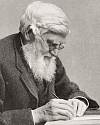
Wallace
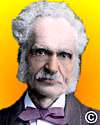
Bates
The Heretic in Darwin's Court: The Life of Alfred Russel Wallace, by Ross A. Slotten. - book suggestion.
In 1552, the first in the regular series of English Letter Patent was granted to Henry Smthe for the making of Normandy glass. These Letter Patents were open letters expressing the monarch's wishes to anyone that might read them. These were due as any right to the recipient, but rather were privileges granted by the monarch (or one of his delegated officers) primarily for what the ruler may regard as a good purpose. The good would be on behalf of the country, or the monarch (or the officer!). Earlier - by over one hundred years - a letters patent had been granted by King Henry VI to John of Utynam dated 3 Apr 1449, in connection, in part, with skills to make coloured glass John would introduce to England, and apply in the creation of stained glass windows for the King.«




