Video: What separates us from chimpanzees?
Jane Morris Goodall, Baroness Jane van Lawick-Goodall was an English primatologist, anthropologist and ethnologist who is known for her exceptionally detailed and long-term research since 1960 on the chimpanzees of Gombe Stream National Park in Tanzania. This represents the longest-running study of a non-human primate in its natural habitat. Among many other discoveries, Goodall and her associates found that chimpanzees: occasionally hunt in groups and eat meat; have a range of social customs, including group warfare; and the manufacture of tools that they use is also taught to their offspring. more
My Life With the Chimpanzees, by Jane Goodall. - book suggestion.
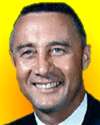
Born 3 Apr 1926; died 27 Jan 1967 at age 40. quotes
Virgil Ivan (“Gus”) Grissom was an American astronaut and pilot who was one of the original “Mercury Seven” astronaut trainees (1959), the second American in space (1961), and died in a fire that broke out while testing the grounded Apollo I capsule (1967). He first flew in space in the Liberty Bell 7, launched on 21 Jul 1961. On splashdown, the escape hatch blew prematurely. He managed to escape, but the capsule filled with water and sank. Grissom helped design and construct the spacecraft of Project Gemini. He was the first Gemini pilot, launched in Gemini 3 on 23 Mar 1965 with John W. Young for the first two-man space flight. He died with copilots Ed White and Roger Chaffee in an Apollo I simulation launch test that ended in a disastrous fire.«
Virgil Ivan (“Gus”) Grissom was an American astronaut and pilot who was one of the original “Mercury Seven” astronaut trainees (1959), the second American in space (1961), and died in a fire that broke out while testing the grounded Apollo I capsule (1967). He first flew in space in the Liberty Bell 7, launched on 21 Jul 1961. On splashdown, the escape hatch blew prematurely. He managed to escape, but the capsule filled with water and sank. Grissom helped design and construct the spacecraft of Project Gemini. He was the first Gemini pilot, launched in Gemini 3 on 23 Mar 1965 with John W. Young for the first two-man space flight. He died with copilots Ed White and Roger Chaffee in an Apollo I simulation launch test that ended in a disastrous fire.«
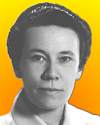
c.1930
Born 3 Apr 1898; died 4 Jun 1997 at age 99.
Russian-born American botanist who did groundbreaking work in the structure and workings of plants. She is best known for her research into the effects of viruses upon plant tissues, and her studies of plant tissue structures and physiology. Her research into plant viruses focused on how viruses effect the structure and development of a plant's phloem (its food-conducting tissue). This research enabled her to distinguish between primary and secondary viral symptoms, allowing studies of viral damage to specific plant tissues to be conducted. In addition, she clarified the development phases of plant tissues, particularly the sieve tubes which serve to move solutes throughout a plant. Her definitive work Plant Anatomy (1953, rev.1965) is a classic.
Russian-born American botanist who did groundbreaking work in the structure and workings of plants. She is best known for her research into the effects of viruses upon plant tissues, and her studies of plant tissue structures and physiology. Her research into plant viruses focused on how viruses effect the structure and development of a plant's phloem (its food-conducting tissue). This research enabled her to distinguish between primary and secondary viral symptoms, allowing studies of viral damage to specific plant tissues to be conducted. In addition, she clarified the development phases of plant tissues, particularly the sieve tubes which serve to move solutes throughout a plant. Her definitive work Plant Anatomy (1953, rev.1965) is a classic.
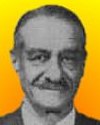
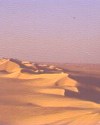
English geologist who was a leading authority on the mechanics of sediment transport and on eolian (wind-effect) processes. While a career soldier, serving in Egypt prior to WW II, he first studied sand dune formation and movement. After retiring from the army (1935), he continued his research and wrote the book Physics of Blown Sand and Desert Dunes, investigating the physics of particles moving through the atmosphere and deposited by wind. He recognized two basic dune types, the crescentic dune, which he called "barchan," and the linear dune, which he called longitudinal or "sief" (Arabic for "sword"). During WW II, his avocational interest in vehicle performance on blowing sand aided the Allies in North Africa.[Image right source ]
Physics of Blown Sand and Desert Dunes, by Ralph A. Bagnold. - book suggestion.
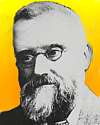
Born 3 Apr 1845; died 16 Apr 1906 at age 61.
British-born Australian agricultural researcher who developed several varieties of drought- and rust-resistant wheat that made possible a great expansion of Australia's wheat belt. Farrer believed that he could produce a new strain which would be rust-resistant, as well as being suitable for Australian conditions. From 1889, although often ill, Farrer worked hard toward this goal for many hours a day and well into the night to record his results. His variety of wheat, noted for its drought-resistant qualities, was distributed in 1900 and therefore was called Federation. As a result, the average wheat yield per acre rose by about three bushels between 1900 and 1920. His wheats were not so much rust-resistant as rust escaping because of their early maturity.
British-born Australian agricultural researcher who developed several varieties of drought- and rust-resistant wheat that made possible a great expansion of Australia's wheat belt. Farrer believed that he could produce a new strain which would be rust-resistant, as well as being suitable for Australian conditions. From 1889, although often ill, Farrer worked hard toward this goal for many hours a day and well into the night to record his results. His variety of wheat, noted for its drought-resistant qualities, was distributed in 1900 and therefore was called Federation. As a result, the average wheat yield per acre rose by about three bushels between 1900 and 1920. His wheats were not so much rust-resistant as rust escaping because of their early maturity.
Born 3 Apr 1842; died 13 Aug 1907 at age 65. quotes
German astronomer who discovered spectroscopic binaries (double-star systems that are too close for the individual stars to be discerned by any telescope but, through the analysis of their light, have been found to be two individual stars rapidly revolving around one another). He pioneered the study of light from distant stars, and introduced the use of photography in this field.
German astronomer who discovered spectroscopic binaries (double-star systems that are too close for the individual stars to be discerned by any telescope but, through the analysis of their light, have been found to be two individual stars rapidly revolving around one another). He pioneered the study of light from distant stars, and introduced the use of photography in this field.
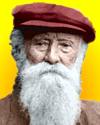
Born 3 Apr 1837; died 29 Mar 1921 at age 83. quotes
American naturalist and author who lived and wrote after the manner of Henry David Thoreau. Burroughs studied and celebrated nature in his many essays and books. Growing up on a farm in the Catskill Mountains, Burroughs absorbed much of the nature and country life that would fill his essays in later life. As a clerk in the Treasury Department in Washington, D.C. during the Civil War, he filled idle hours with writing about the outdoors he loved. This became his first book, Wake-Robin. Returning to the Hudson River Valley in 1873, he began fruit farming and continued to write, publishing a new book about every two years. He travelled extensively, camping out with such friends as the naturalist John Muir and Theodore Roosevelt. more
American naturalist and author who lived and wrote after the manner of Henry David Thoreau. Burroughs studied and celebrated nature in his many essays and books. Growing up on a farm in the Catskill Mountains, Burroughs absorbed much of the nature and country life that would fill his essays in later life. As a clerk in the Treasury Department in Washington, D.C. during the Civil War, he filled idle hours with writing about the outdoors he loved. This became his first book, Wake-Robin. Returning to the Hudson River Valley in 1873, he began fruit farming and continued to write, publishing a new book about every two years. He travelled extensively, camping out with such friends as the naturalist John Muir and Theodore Roosevelt. more
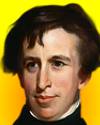
Born 3 Apr 1798; died 8 Feb 1877 at age 78.
American oceanographer, who was a U.S. naval officer and explorer distinguished for his scientific achievements. He commanded the first major ocean expedition, the global United States Exploring Expedition (1838–42). Wilkes surveyed Pacific islands, gathered vast collections of natural history specimens, and produced valuable charts. He led his ships around over 1,500 miles of the Antarctic coast, proving that the region was a continent rather than a chain of islands. His findings laid the groundwork for later Antarctic science. Many specimens collected on the voyage became part of the Smithsonian’s first scientific collections, cementing his role in advancing American exploration and research.«
American oceanographer, who was a U.S. naval officer and explorer distinguished for his scientific achievements. He commanded the first major ocean expedition, the global United States Exploring Expedition (1838–42). Wilkes surveyed Pacific islands, gathered vast collections of natural history specimens, and produced valuable charts. He led his ships around over 1,500 miles of the Antarctic coast, proving that the region was a continent rather than a chain of islands. His findings laid the groundwork for later Antarctic science. Many specimens collected on the voyage became part of the Smithsonian’s first scientific collections, cementing his role in advancing American exploration and research.«
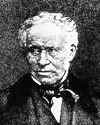
Born 3 Apr 1778; died 18 Feb 1862 at age 83. quotes
French physician and epidemiologist who performed (1825) the first successful tracheotomy to save a patient with laryngeal diphtheria from suffocating. He incised and opened the trachea through the skin and muscles of the neck. (Earlier attempts by Fabricius of Aquapendente, Sanctorius and Desault failed). Bretonneau first distinguished typhoid from typhus. He was first to clinically describe diphtheria, which name he coined (Traité de la Diphérite ,1826), as a contagious condition characterised by a false membrane in the pharynx or larynx. He derived the word from Greek meaning leather or hide. He enunciated a theory of specific causes of infectious diseases, foreshadowing the germ theory of Louis Pasteur.«
French physician and epidemiologist who performed (1825) the first successful tracheotomy to save a patient with laryngeal diphtheria from suffocating. He incised and opened the trachea through the skin and muscles of the neck. (Earlier attempts by Fabricius of Aquapendente, Sanctorius and Desault failed). Bretonneau first distinguished typhoid from typhus. He was first to clinically describe diphtheria, which name he coined (Traité de la Diphérite ,1826), as a contagious condition characterised by a false membrane in the pharynx or larynx. He derived the word from Greek meaning leather or hide. He enunciated a theory of specific causes of infectious diseases, foreshadowing the germ theory of Louis Pasteur.«
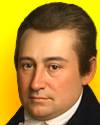
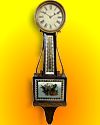
American clockmaker renowned for his precision craftsmanship and innovations in timekeeping. He was a member of a Massachusetts family of clockmakers that designed and produced brass-movement clocks from 1765 to 1850. Simon Willard designed and patented the elegant banjo clock (1802), a compact wall clock that became a hallmark of early American design. Willard also created highly accurate regulator clocks and tower clocks, prized for their mechanical reliability. His workshop’s instruments served homes, public buildings, and observatories. Blending artistry with mechanical ingenuity, Willard helped establish America’s reputation for fine horology and inspired generations of clockmakers in the developing nation.«
A History of Simon Willard: Inventor and Clockmaker, by John Ware Willard,. - book suggestion.

Died 3 Apr 1997 (born c. 1916).
American engineer whose long career with the U.S. Air Force was most notable for his development of the pilot ejection system.[Enc. Brit gives year of birth as 1916/17.]
American engineer whose long career with the U.S. Air Force was most notable for his development of the pilot ejection system.[Enc. Brit gives year of birth as 1916/17.]

Died 3 Apr 1994 at age 67 (born 13 Jun 1926).
French geneticist who made the first positive identification (1959) linking a human disorder to a chromosome aberration. The anomaly he pinpointed, the trisomy 21, causes Down syndrome, one of the most common forms of mental retardation. In Jul 1958, while examining the chromosomes of a so-called "Mongol" child, Lejeune discovered the existence of an extra chromosome on the 21st pair. On 26 Jan 1959, Jérôme Lejeune, with Marthe Gauthier and Raymond Turpin, presented their discovery to the Académie des Sciences. This began to shed light on the existence of diseases by chromosomal aberration, unsuspected until then. Lejeune continued to identify more connections between specific disorders and chromosomal anomalies.
French geneticist who made the first positive identification (1959) linking a human disorder to a chromosome aberration. The anomaly he pinpointed, the trisomy 21, causes Down syndrome, one of the most common forms of mental retardation. In Jul 1958, while examining the chromosomes of a so-called "Mongol" child, Lejeune discovered the existence of an extra chromosome on the 21st pair. On 26 Jan 1959, Jérôme Lejeune, with Marthe Gauthier and Raymond Turpin, presented their discovery to the Académie des Sciences. This began to shed light on the existence of diseases by chromosomal aberration, unsuspected until then. Lejeune continued to identify more connections between specific disorders and chromosomal anomalies.
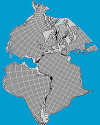
Pangea
Sir Edward Crisp Bullard was an English marine geophysicist who, with Maurice Ewing, is generally considered to have founded the discipline of marine geophysics. work in geomagnetism. Bullard made the first satisfactory measurements of geothermal heat-flow through the oceanic crust. In early work, he measured minute gravitational variations by timing the swings of an invariant pendulum, studied in the East African Rift Valley. Bullard’s computer analysis of the precise fit of the rifted continental borders on each side of the Atlantic Ocean, added support to the theory of continental drift. His “dynamo” theory of geomagnetism explained the Earth’s magnetic field as due to convection of molten material within the Earth’s core. Knighted in 1953.« more
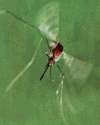
mosquito
Drell Marston Bates was an American zoologist and writer who studied mosquitoes and tropical diseases for the Rockefeller Foundation with fieldwork in Albania, Egypt and Colombia (1937-50). Rockefeller scientists reduced the problem of yellow fever in Colombia, where Bates supervised researchers who worked with local doctors in diagnoses and treatment, studied the region's forests and swamps in the area, and tested insects suspected as disease carriers. His first book, The Natural History of Mosquitoes (1949) was followed by more natural history books for laymen including The Nature of Natural History (1950) which showed his love of the tropics. As an environmental activist, he believed even the government should respect the earth's environment.«
The Nature of Natural History, by Marston Bates. - book suggestion.
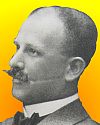
Died 3 Apr 1910 at age 41 (born 9 Jan 1869).
German physical chemist who, with Guido Bodländer, proposed an electron treatment of chemical affinity and valency in a paper Die Elektronaffinität (Electron Affinity, 1899) to explain how certain atoms can combine based on the newly discovered electrons comprising the atom. Abegg in a later paper gave a “rule of eight” whereby: “Every element possesses a positive as well as a negative maximum valence whose sum is always eight. The maximum positive valence is the same as the number of the periodic group to which the element belongs.” It had several difficulties and was not generally accepted. Abegg enjoyed travelling, ballooning, skiing and photography. He died at age 41, in the crash of his gas balloon Schlesien.«[Ref: Abegg and Bodländer, Zeit. Anorg. Chem. (1899), 20, 453.]
German physical chemist who, with Guido Bodländer, proposed an electron treatment of chemical affinity and valency in a paper Die Elektronaffinität (Electron Affinity, 1899) to explain how certain atoms can combine based on the newly discovered electrons comprising the atom. Abegg in a later paper gave a “rule of eight” whereby: “Every element possesses a positive as well as a negative maximum valence whose sum is always eight. The maximum positive valence is the same as the number of the periodic group to which the element belongs.” It had several difficulties and was not generally accepted. Abegg enjoyed travelling, ballooning, skiing and photography. He died at age 41, in the crash of his gas balloon Schlesien.«[Ref: Abegg and Bodländer, Zeit. Anorg. Chem. (1899), 20, 453.]
Died 3 Apr 1897 at age 69 (born 27 Oct 1827).
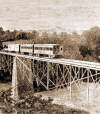
German-born American railroad engineer and executive who was the first to investigate the economics of railroad operation on a systematic basis. He was also inventor of the Fink truss, used to support the roofs of buildings and for bridges. Instead of being supported with an arch or cables, a truss bridge is held up with a latticework of rods that reinforce its stiffness, as shown (left) on the Louisville-Nashville Railroad Bridge constructed in 1857-1859 to span the Green River, Ky. (until destroyed in October 1861 during the Civil war.) His truss, patented in 1850, was one of the first intended to be built from iron instead of wood. He was involved in the construction of roundhouses for locomotives, and a courthouse in Louisville, Ky.
German-born American railroad engineer and executive who was the first to investigate the economics of railroad operation on a systematic basis. He was also inventor of the Fink truss, used to support the roofs of buildings and for bridges. Instead of being supported with an arch or cables, a truss bridge is held up with a latticework of rods that reinforce its stiffness, as shown (left) on the Louisville-Nashville Railroad Bridge constructed in 1857-1859 to span the Green River, Ky. (until destroyed in October 1861 during the Civil war.) His truss, patented in 1850, was one of the first intended to be built from iron instead of wood. He was involved in the construction of roundhouses for locomotives, and a courthouse in Louisville, Ky.
Died 3 Apr 1862 at age 61 (born 15 Apr 1800).
British naval officer who carried out important magnetic surveys in the Arctic and Antarctic and discovered the Ross Sea and the Victoria Land region of Antarctica.
British naval officer who carried out important magnetic surveys in the Arctic and Antarctic and discovered the Ross Sea and the Victoria Land region of Antarctica.
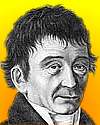
Died 3 Apr 1827 at age 70 (born 30 Nov 1756).
German physicist who is known as the “father of acoustics” for his mathematical investigations of sound waves. Chladni figures, seen when thin plates covered in sand at set in vibration, are complex patterns of vibration with nodal lines that remain stationary and retain sand. He demonstrated these to an audience of scientists in Paris in 1809. He measured the speed of sound in various gases by determining the pitch of the note of an organ pipe filled with different gases. To determine the speed of sound in solids, Chladni used analysis of the nodal pattern in standing-wave vibrations in long rods. He performed on the euphonium, an instrument he invented, made of glass and steel bars vibrated by rubbing with a moistened finger. He also investigated meteorites.
German physicist who is known as the “father of acoustics” for his mathematical investigations of sound waves. Chladni figures, seen when thin plates covered in sand at set in vibration, are complex patterns of vibration with nodal lines that remain stationary and retain sand. He demonstrated these to an audience of scientists in Paris in 1809. He measured the speed of sound in various gases by determining the pitch of the note of an organ pipe filled with different gases. To determine the speed of sound in solids, Chladni used analysis of the nodal pattern in standing-wave vibrations in long rods. He performed on the euphonium, an instrument he invented, made of glass and steel bars vibrated by rubbing with a moistened finger. He also investigated meteorites.
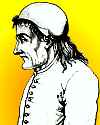
Artist’s concept 1824
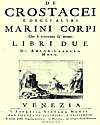
Title page
Italian geologist who suggested that islands and continents had been elevated from the bottom of the sea, by the force of volcanic fires. These fires, he believed, originated soon after the Earth was created, and burned under the bottom of the ocean then covering the entire globe. The earliest land surface to be raised had no shells as the ocean began devoid of such life. Continuing volcanic fires pushed up further strata which included shells and other evidence of marine life as they had later came into existence. The violence of the forces also resulted in the distortions and inclination of the strata. He published these ideas in 1740. Although imperfect, his plutonic theory was ground-breaking.«[Illustration of Moro may come from an artist’s imagination. Webmaster has, as yet, found no portrait made during his life on which the sketch could be based.]
In 1973, the first portable phone call was placed by inventor Martin Cooper. The phone was 10 inches in height, 3 inches deep and an inch-and-a-half wide and weighed 30-oz. Since then, cell phones have shrunk to a mere palm-size weighing 4-oz, and are used by a billion people around the world. Cooper's first ''shoebox'' phone replaced a car phone of the time that weighed more than 30 pounds and cost thousands of dollars. A car phone owner had to drill a hole in his car to install the antenna and most of the phone sat in the trunk. A control unit with a handset was placed inside the car.
In 1973, Francis W. Dorion patented a "dual razor blade assembly" (No. 3,724,070).
In 1969, Dr. Denton Cooley implanted a total artificial heart into a 2-month-old patient. Three days later, the patient received a heart transplant, but dies of respiratory insufficiency only 14 hours later.
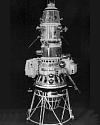
In 1966, Luna 10, the first spacecraft to orbit the moon entered lunar orbit, and completed its first orbit 3 hours later. It had been launched by the USSR from an Earth orbiting platform on 31 Mar 1966. The scientific instruments on board included a gamma-ray spectrometer, triaxial magnetometer, and a meteorite detector. Other instruments investigated the solar-plasma, infrared emissions from the Moon, radiation conditions of the lunar environment and gravitational studies. Luna 10 transmitted the Internationale during the 23rd Congress of the Communist Party of the Soviet Union. It was battery powered, operated for 460 lunar orbits and made 219 active data radio transmissions before discontinued on 30 May 1966.«
In 1965, SNAP 10A, the first nuclear reactor in space, was launched from Vanden berg Air Force Base, Calif. It was activated by a signal from scientists on earth about four hours later, and generated 500 kilowatt-hours of power during its life, providing electrical power for a 1 kgf ion engine. While its ground version lasted 10,000 hours without problems, the orbiting reactor was shut down by an electrical failure in another of the satellite's systems after 45 days in operation. It is still orbiting the earth. SNAP stands for Systems for Nuclear Auxiliary Power. Although the Soviet Union has flown many nuclear reactors in space, the SNAP-10A is the only one flown by the United States.

In 1934, a British patent application for the first catseye road marker was recorded for inventor Percy Shaw (1889-1975), described as "Improvements relating to Blocks for Road Surface." These are the familiar reflectors which mark the lines that are lit up at night by the lights of passing vehicles. The raised surface in which the reflectors are mounted have a construction that "will yield when travelled over by a vehicle wheel and sink to the level of the road surface" such as a resilient white rubber cushion mounted in a metal holder sunk below the road surface. The patent No. 436,290 was accepted 3 Oct 1935. A revised design was patented the following year as No. 457,536. Shaw started Reflecting Roadstuds Ltd. to manufacture them.
In 1933, the first human to human kidney transplant was achieved in a six-hour operation by Ukranian surgeon Yurii Voronoy. A female patient admitted with acute mercury intoxication (after a suicide attempt by taking poison) had not responded to conventional treatment. A male patient had just died from a basal skull injury. A cadaver kidney was implanted in the thigh of the woman, and connected to blood vessels at the site. It excreted urine until the second day after the operation. There was a hopeless mismatch of blood types, resulting in the rejection of the organ, and the patient died. Although medical history included some prior kidney transplant involving animals, this was the first ever human to human case.«
In 1876, Thomas Edison executed patent applications (on acoustic telegraphy) which were the first since moving to Menlo Park (his second and third applications after a year-long hiatus).
In 1866, a hat shaping machine was patented by Rudolph Eickemeyer and G. Osterheld.
In 1829, James Carrington of Wallingford, Conn, patented his coffee mill.
In 1449, the earliest English patent was granted to John of Utynam protection for introducing the making colored glass to England. In what was probably the first grant by an instrument of letters patent, King Henry VI gave this exclusive privilege for a term of 20 years during which none of his subjects could use such arts without the consent of John. This was for the benefit of the King, who directed John of Utynam to create stained-glass windows for the King's new institutions: Eton College and King's College, Cambridge. John had recently returned to England from Flanders and brought back knowledge of other subjects which the King wished John to teach his subjects, as well as tutoring some assistants in the skills of making coloured glass for the creation of his windows.«





