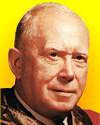
Born 30 Mar 1901; died 16 Feb 1983 at age 81. quotes
Ralph Edward Gibson was an English-American physical chemist and research director who began his career spending 17 years at the Geophysical Laboratory of Carnegie Institution of Washington. He investigated the physical chemistry of solutions at high pressure. During WW II, he directed research developing solid propellants for rockets, and the factors controlling propellant combustion. Gibson After the war, he joined the Applied Physics Laboratory of the Johns Hopkins University, and two years later became the APL director for the next 20 years. During that time, APL mission was developing technologies for guided missiles, and expanded into problems in transportation, energy, medical diagnosis and space technology. Upon retirement from APL, he remained active in biomedical engineering.«
Ralph Edward Gibson was an English-American physical chemist and research director who began his career spending 17 years at the Geophysical Laboratory of Carnegie Institution of Washington. He investigated the physical chemistry of solutions at high pressure. During WW II, he directed research developing solid propellants for rockets, and the factors controlling propellant combustion. Gibson After the war, he joined the Applied Physics Laboratory of the Johns Hopkins University, and two years later became the APL director for the next 20 years. During that time, APL mission was developing technologies for guided missiles, and expanded into problems in transportation, energy, medical diagnosis and space technology. Upon retirement from APL, he remained active in biomedical engineering.«
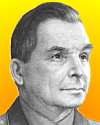
Born 30 Mar 1894; died 9 Feb 1977 at age 82.
Soviet aircraft designer who created the famous Il-2 Stormovik armoured attack aircraft, the most used and the most produced plane during WWII by the Soviet Union Air Force. After the war he worked for a short time on jet bombers and designed one of the most successful planes of that time, Il-28. In 1950's he stopped working on warplanes and concentrated his studies on turboprop and turbojet powered passenger and transport planes. The civil aircraft he designed include: the Il-12 twin-engined passenger aircraft (1946), the Il-18 Moskva four-engined turboprop transport (1957), the Il-62 turbojet passenger carrier (1962), and the Il-86 airbus, which made its first flight in 1976.
Soviet aircraft designer who created the famous Il-2 Stormovik armoured attack aircraft, the most used and the most produced plane during WWII by the Soviet Union Air Force. After the war he worked for a short time on jet bombers and designed one of the most successful planes of that time, Il-28. In 1950's he stopped working on warplanes and concentrated his studies on turboprop and turbojet powered passenger and transport planes. The civil aircraft he designed include: the Il-12 twin-engined passenger aircraft (1946), the Il-18 Moskva four-engined turboprop transport (1957), the Il-62 turbojet passenger carrier (1962), and the Il-86 airbus, which made its first flight in 1976.
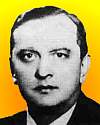
Born 30 Mar 1892; died 31 Aug 1945 at age 53. quotes
Polish mathematician who founded modern functional analysis and helped develop the theory of topological vector spaces. In addition, he contributed to measure theory, integration, the theory of sets, and orthogonal series. In his dissertation, written in 1920, he defined axiomatically what today is called a Banach space. The idea was introduced by others at about the same time (for example Wiener introduced the notion but did not develop the theory). The name 'Banach space' was coined by Fréchet. Banach algebras were also named after him. The importance of Banach's contribution is that he developed a systematic theory of functional analysis, where before there had only been isolated results which were later seen to fit into the new theory.
Polish mathematician who founded modern functional analysis and helped develop the theory of topological vector spaces. In addition, he contributed to measure theory, integration, the theory of sets, and orthogonal series. In his dissertation, written in 1920, he defined axiomatically what today is called a Banach space. The idea was introduced by others at about the same time (for example Wiener introduced the notion but did not develop the theory). The name 'Banach space' was coined by Fréchet. Banach algebras were also named after him. The importance of Banach's contribution is that he developed a systematic theory of functional analysis, where before there had only been isolated results which were later seen to fit into the new theory.

Born 30 Mar 1891; died 6 Sep 1970 at age 79.
American engineer and manufacturer who developed a series of military vehicles, the best known of which was the World War II jeep. During World War I, he started to work on a new design for military trucks for rough terrain, the smallest of which was the quarter-ton jeep with four-wheel drive that became the prototype for various models built in the 1930s and 1940s. The Jeep served in WW II as a litterbearer, machine gun firing mount, reconnaissance vehicle, pickup truck, front line limousine, ammo bearer, wire-layer and taxi.
American engineer and manufacturer who developed a series of military vehicles, the best known of which was the World War II jeep. During World War I, he started to work on a new design for military trucks for rough terrain, the smallest of which was the quarter-ton jeep with four-wheel drive that became the prototype for various models built in the 1930s and 1940s. The Jeep served in WW II as a litterbearer, machine gun firing mount, reconnaissance vehicle, pickup truck, front line limousine, ammo bearer, wire-layer and taxi.
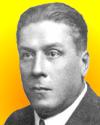
c.1910
Born 30 Mar 1886; died 13 May 1939 at age 53. quotes
Stanisław Leśniewski was a Polish logician and mathematician who co-founded the Warsaw school of logic, which flourished between the World Wars in Poland. As its leading representative, he teamed with together with Alfred Tarski (then his doctoral pupil), and Jan Łukasiewicz at the University of Warsaw, making it perhaps the world’s foremost research center for formal logic. His approach applied the utmost rigor in the formalization and execution of logic. With original ideas, he devised the three formal systems, now known as protothetic, ontology, and mereology, as a concrete alternative to set theory. Though at first less known internationally, his university teachings influenced subsequent Polish mathematicians.«
Stanisław Leśniewski was a Polish logician and mathematician who co-founded the Warsaw school of logic, which flourished between the World Wars in Poland. As its leading representative, he teamed with together with Alfred Tarski (then his doctoral pupil), and Jan Łukasiewicz at the University of Warsaw, making it perhaps the world’s foremost research center for formal logic. His approach applied the utmost rigor in the formalization and execution of logic. With original ideas, he devised the three formal systems, now known as protothetic, ontology, and mereology, as a concrete alternative to set theory. Though at first less known internationally, his university teachings influenced subsequent Polish mathematicians.«
Leśniewski's Systems of Logic and Foundations of Mathematics, by Rafal Urbaniak. - book suggestion.
Born 30 Mar 1882; died 22 Sep 1960 at age 78.
(née Reizes) Austrian-born British psychoanalyst known for her work with young children, in which observations of free play provided insights into the child's unconscious fantasy life, enabling her to psychoanalyze children as young as two or three years of age. After WW I, Klein began to develop methods of play therapy, showing that how children play with toys reveals earlier infantile fantasies and anxieties. In The Psychoanalysis of Children (1932), she showed how these anxieties affected a child's developing ego, superego, and sexuality to bring about emotional disorders. Through her methods she attempted to relieve children of disabling guilt by having them direct toward the therapist the aggressive and Oedipal feelings they could not express to their parents.
(née Reizes) Austrian-born British psychoanalyst known for her work with young children, in which observations of free play provided insights into the child's unconscious fantasy life, enabling her to psychoanalyze children as young as two or three years of age. After WW I, Klein began to develop methods of play therapy, showing that how children play with toys reveals earlier infantile fantasies and anxieties. In The Psychoanalysis of Children (1932), she showed how these anxieties affected a child's developing ego, superego, and sexuality to bring about emotional disorders. Through her methods she attempted to relieve children of disabling guilt by having them direct toward the therapist the aggressive and Oedipal feelings they could not express to their parents.
Born 30 Mar 1879; died 1 Dec 1935 at age 56.
Astronomer and optical instrument maker who invented the telescope named for him. In 1929, he devised a new mirror system for reflecting telescopes which overcame previous problems of aberration of the image. He used a vacuum to suck the glass into a mold, polishing it flat, then allowing in to spring back into shape. The Schmidt telescope is now widely used in astronomy to photograph large sections of the sky because of its large field of view and its fine image definition. He lost his arm as a child while experimenting with explosives. Schmidt spent the last year of his life in a mental hospital.
Astronomer and optical instrument maker who invented the telescope named for him. In 1929, he devised a new mirror system for reflecting telescopes which overcame previous problems of aberration of the image. He used a vacuum to suck the glass into a mold, polishing it flat, then allowing in to spring back into shape. The Schmidt telescope is now widely used in astronomy to photograph large sections of the sky because of its large field of view and its fine image definition. He lost his arm as a child while experimenting with explosives. Schmidt spent the last year of his life in a mental hospital.
Born 30 Mar 1876; died 9 Jul 1943 at age 67.
Clifford Whittingham Beers was an American author and social reformer who wrote an autobiography documenting appalling conditions and maltreatment by staff of mental patients. His classic book, A Mind That Found Itself (1908) raised public consciousness of the need for reform. He had already himself experienced treatment as a mental patient, first in 1900, diagnosed with depression and paranoia. His four siblings also suffered mental health problems and died in mental hospitals, as he also did. In 1909, Beers founded the National Committee for Mental Hygiene (since renamed as Mental Health America) with the mission to improve the treatment in mental health institutions. By 1913, he was able to establish the Clifford Beers Clinic in New Haven, an outpatient mental health clinic, the first of its kind in the U.S., which continues his legacy to the present.»
Clifford Whittingham Beers was an American author and social reformer who wrote an autobiography documenting appalling conditions and maltreatment by staff of mental patients. His classic book, A Mind That Found Itself (1908) raised public consciousness of the need for reform. He had already himself experienced treatment as a mental patient, first in 1900, diagnosed with depression and paranoia. His four siblings also suffered mental health problems and died in mental hospitals, as he also did. In 1909, Beers founded the National Committee for Mental Hygiene (since renamed as Mental Health America) with the mission to improve the treatment in mental health institutions. By 1913, he was able to establish the Clifford Beers Clinic in New Haven, an outpatient mental health clinic, the first of its kind in the U.S., which continues his legacy to the present.»
The Mind That Found Itself, by Clifford Beers. - book suggestion.
Born 30 Mar 1863; died 26 Feb 1930 at age 66.
American educator and psychologist who was the first american woman to attain distinction in these fields of study. Calkins studied psychology at Harvard as a “guest,” since women could not officially register. After completing all requirements for a doctorate at Harvard, and with the strong support of William James and her other professors, Harvard still refused to grant a degree to a woman. She established the first psychology laboratory at a women's college (Wellesley). She developed the paired-associate procedure for studying verbal memories. One of her main findings was that repeated pairings of words increased memory. Calkins was interested in a wide variety of research topics, including perception, personality, emotion, and dreaming.
American educator and psychologist who was the first american woman to attain distinction in these fields of study. Calkins studied psychology at Harvard as a “guest,” since women could not officially register. After completing all requirements for a doctorate at Harvard, and with the strong support of William James and her other professors, Harvard still refused to grant a degree to a woman. She established the first psychology laboratory at a women's college (Wellesley). She developed the paired-associate procedure for studying verbal memories. One of her main findings was that repeated pairings of words increased memory. Calkins was interested in a wide variety of research topics, including perception, personality, emotion, and dreaming.
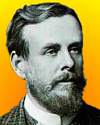
Born 30 Mar 1852; died 5 May 1897 at age 45.
British explorer and archaeologist who excavated the magnificent Iron Age ruined city named the Great Zimbabwe, an ancient site in SE Africa that inspired the name of the country Zimbabwe (formerly Rhodesia). The word Zimbabwe traces to the Bantu dzimbahwe; i.e., stone houses, or chiefs' graves. The earliest habitation is dated to about 400 AD, with inhabitation by Shona cattleherders from about 500 AD. Between the 12th to 15th centuries, stone structures still visible were built. The site lies within the Victoria region of modern state of Zimbabwe, which lies between the Zambezi and Limpopo Rivers. The outer elliptical wall measures 830-ft circumference, varied height, up to 40-ft and up to 17-ft thick.
British explorer and archaeologist who excavated the magnificent Iron Age ruined city named the Great Zimbabwe, an ancient site in SE Africa that inspired the name of the country Zimbabwe (formerly Rhodesia). The word Zimbabwe traces to the Bantu dzimbahwe; i.e., stone houses, or chiefs' graves. The earliest habitation is dated to about 400 AD, with inhabitation by Shona cattleherders from about 500 AD. Between the 12th to 15th centuries, stone structures still visible were built. The site lies within the Victoria region of modern state of Zimbabwe, which lies between the Zambezi and Limpopo Rivers. The outer elliptical wall measures 830-ft circumference, varied height, up to 40-ft and up to 17-ft thick.
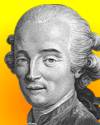
Baptized 30 Mar 1754; died 15 Jun 1785 at age 31.
French physicist and aeronaut who, with Marquis François Laurant d’Arlandes, became the first men to fly. Their hot-air balloon, built by the Montgolfier brothers, lifted off from La Muettte, a royal palace in the Bois de Boulogne, Paris. They flew nearly 6 miles in 25 mins, reaching an altitude of around 300-ft. King Louis XVI, who offered to send two prisoners for the test flight, but Pilatre wanted to deny criminals the glory of being the first men to go into the atmosphere. Pilatre died while attempting to cross the English Channel in an experimental combination of two nester balloons, one filled with hydrogen and the other with warm air. Thereby, he was also the first man to die in an air crash.«
French physicist and aeronaut who, with Marquis François Laurant d’Arlandes, became the first men to fly. Their hot-air balloon, built by the Montgolfier brothers, lifted off from La Muettte, a royal palace in the Bois de Boulogne, Paris. They flew nearly 6 miles in 25 mins, reaching an altitude of around 300-ft. King Louis XVI, who offered to send two prisoners for the test flight, but Pilatre wanted to deny criminals the glory of being the first men to go into the atmosphere. Pilatre died while attempting to cross the English Channel in an experimental combination of two nester balloons, one filled with hydrogen and the other with warm air. Thereby, he was also the first man to die in an air crash.«
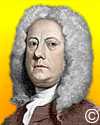
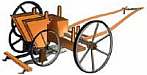
English writer and agronomist who invented a horse-drawn drill around 1701. He promoted sowing seeds in rows rather than broadcast (simply casting the seeds around), so that weeds could be controlled by hoeing regularly between the rows. For this purpose, he devised his seed drill, which could planted three rows at the same time. A blade cut a groove in the ground to receive the seed, and the soil was turned over to cover the sewn seed. A hopper distributed a regulated amount of seed. Because of the internal moving parts, it has been called the first agricultural machinery. Its rotary mechanism became part of all sowing devices that followed. Tull also invented a four-coultered plow to make vertical cuts in the soil before the plowshare.«[Image right: Tull's seed drill] more
Jethro Tull: A Berkshire Life, by George F. Tull. - book suggestion.

Died 30 Mar 1992 at age 72 (born 23 Oct 1919).
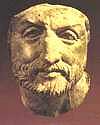
Greek archaeologist who discovered ancient royal tombs in northern Greece, possibly belonging to the Macedonian King Philip II, the father of Alexander III the Great. In autumn 1977, an Andronicos discovered the unplundered royal tomb containing works of art of astounding richness and exquisite craftsmanship at Vergina in Macedonia. His suggestion that the tomb's occupant was probably Philip, son of Amyntas, king of the Macedonians, created understandable sensation, and aroused world-wide interest.Image: Small ivory-head, portrait of Philip II, found in the royal tomb at Vergina
Greek archaeologist who discovered ancient royal tombs in northern Greece, possibly belonging to the Macedonian King Philip II, the father of Alexander III the Great. In autumn 1977, an Andronicos discovered the unplundered royal tomb containing works of art of astounding richness and exquisite craftsmanship at Vergina in Macedonia. His suggestion that the tomb's occupant was probably Philip, son of Amyntas, king of the Macedonians, created understandable sensation, and aroused world-wide interest.Image: Small ivory-head, portrait of Philip II, found in the royal tomb at Vergina
The Acropolis, by Manolis Andronicos. - book suggestion.

Died 30 Mar 1987 at age 79 (born 29 Apr 1907). quotes
Lynn Townsend White, Jr. was an American science historian who was known internationally as a medieval scholar. He wrote Medieval Technology and Social Change (1962). As a co-founder of the Society for the History of Technology, he was a leader in establishing a firm foundation for the subject. Although he specialized in technological invention in the Middle Ages, he also wrote a much-noted article on The Historical Roots of Our Ecologic Crisis, and how religion is an important, if not the only, factor in how for centuries human societies relate to, and even devastate, the natural world. White was himself a Christian, so this was a criticism limited to that strain of religious thought which replaced the pagan view of man’s place within nature.«
Lynn Townsend White, Jr. was an American science historian who was known internationally as a medieval scholar. He wrote Medieval Technology and Social Change (1962). As a co-founder of the Society for the History of Technology, he was a leader in establishing a firm foundation for the subject. Although he specialized in technological invention in the Middle Ages, he also wrote a much-noted article on The Historical Roots of Our Ecologic Crisis, and how religion is an important, if not the only, factor in how for centuries human societies relate to, and even devastate, the natural world. White was himself a Christian, so this was a criticism limited to that strain of religious thought which replaced the pagan view of man’s place within nature.«
Medieval Technology and Social Change, by Lynn White, Jr. - book suggestion.
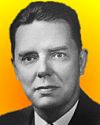
Died 30 Mar 1965 at age 69 (born 28 Feb 1896). quotes
American physician who was one of the leaders in American rheumatology. He shared the Nobel Prize for Physiology or Medicine in 1950 for discoveries relating to the hormones of the adrenal cortex, their structure and biological effects (with Edward C. Kendall and Tadeus Reichstein of Switzerland). In 1948, Hench was working at the Mayo Clinic, Rochester, Minnesota. He noticed that during pregnancy and in the presence of jaundice the severe pain of arthritis may decrease and even disappear. With Kendall, he successfully applied an adrenal hormone (later known as cortisone) in the treatment of rheumatoid arthritis.
American physician who was one of the leaders in American rheumatology. He shared the Nobel Prize for Physiology or Medicine in 1950 for discoveries relating to the hormones of the adrenal cortex, their structure and biological effects (with Edward C. Kendall and Tadeus Reichstein of Switzerland). In 1948, Hench was working at the Mayo Clinic, Rochester, Minnesota. He noticed that during pregnancy and in the presence of jaundice the severe pain of arthritis may decrease and even disappear. With Kendall, he successfully applied an adrenal hormone (later known as cortisone) in the treatment of rheumatoid arthritis.
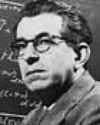
Died 30 Mar 1954 at age 54 (born 7 Mar 1900).
German-American physicist who, with Walter Heitler, devised the first quantum mechanical treatment of the hydrogen molecule, while working with Erwin Schrödinger at the University of Zurich. In a seminal paper (1927), they developed a wave equation for the hydrogen molecule with which it was possible to calculate approximate values of the molecule's ionization potential, heat of dissociation, and other constants. These predicted values were reasonably consistent with empirical values obtained by spectroscopic and chemical means. This theory of the chemical binding of homopolar molecules is considered one of the most important advances in modern chemistry. The approach is later called the valence-bond theory.
German-American physicist who, with Walter Heitler, devised the first quantum mechanical treatment of the hydrogen molecule, while working with Erwin Schrödinger at the University of Zurich. In a seminal paper (1927), they developed a wave equation for the hydrogen molecule with which it was possible to calculate approximate values of the molecule's ionization potential, heat of dissociation, and other constants. These predicted values were reasonably consistent with empirical values obtained by spectroscopic and chemical means. This theory of the chemical binding of homopolar molecules is considered one of the most important advances in modern chemistry. The approach is later called the valence-bond theory.
Fritz London: A Scientific Biography, by Kostas Gavroglu. - book suggestion.
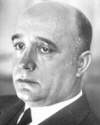
Died 30 Mar 1949 at age 64 (born 11 Oct 1884).
Friedrich Karl Rudolf Bergius was a German chemist who invented a process to convert coal dust and hydrogen directly into gasoline and lubricating oils without isolating intermediate products (Stuttgart, 25 Jun 1921). Bergius succeeded, during distillation of coal, in forcing hydrogen under high pressure to combine chemically with the coal, transforming more carbon from the coal into oils than is possible with conventional distillation. To solve heat distribution and temperature regulation problems, Bergius invented treating a mixture of pulverized coal in oil with the gas under high pressure. For his work in developing the chemical high pressure hydrogenation method necessary for this process he shared the 1931 Nobel Prize for Chemistry with Carl Bosch of Germany.
Friedrich Karl Rudolf Bergius was a German chemist who invented a process to convert coal dust and hydrogen directly into gasoline and lubricating oils without isolating intermediate products (Stuttgart, 25 Jun 1921). Bergius succeeded, during distillation of coal, in forcing hydrogen under high pressure to combine chemically with the coal, transforming more carbon from the coal into oils than is possible with conventional distillation. To solve heat distribution and temperature regulation problems, Bergius invented treating a mixture of pulverized coal in oil with the gas under high pressure. For his work in developing the chemical high pressure hydrogenation method necessary for this process he shared the 1931 Nobel Prize for Chemistry with Carl Bosch of Germany.
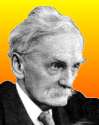
Died 30 Mar 1944 at age 89 (born 15 Mar 1855).
English physicist and inventor of sensitive instruments. His studies included in mining, metallurgy, chemistry and physics. He was also self-taught in a wide knowledge of geometrical methods. In 1881, he invented the integraph, a machine for drawing the antiderivative of a function. Boys is known particularly for his definitive book (1890) on the physics soap bubbles. He employed the torsion of quartz fibres to measure minute forces, repeating (1895) Henry Cavendish's experiment, to improve the measurement of the Newtonian gravitational constant. He also invented an improved automatic recording calorimeter for testing city coal gas (1905) and high-speed cameras to photograph rapidly moving objects, such as bullets and lightning discharges. He was knighted in 1935. Upon retirement in 1939, he grew and studied garden weeds.«
English physicist and inventor of sensitive instruments. His studies included in mining, metallurgy, chemistry and physics. He was also self-taught in a wide knowledge of geometrical methods. In 1881, he invented the integraph, a machine for drawing the antiderivative of a function. Boys is known particularly for his definitive book (1890) on the physics soap bubbles. He employed the torsion of quartz fibres to measure minute forces, repeating (1895) Henry Cavendish's experiment, to improve the measurement of the Newtonian gravitational constant. He also invented an improved automatic recording calorimeter for testing city coal gas (1905) and high-speed cameras to photograph rapidly moving objects, such as bullets and lightning discharges. He was knighted in 1935. Upon retirement in 1939, he grew and studied garden weeds.«
Soap Bubbles and the Forces Which Mould Them, by Charles Vernon Boys. - book suggestion.
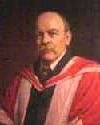
Died 30 Mar 1914 at age 61 (born 9 Sep 1852). quotes
British physicist who introduced a theorem (1884-85) that assigns a value to the rate of flow of electromagnetic energy known as the Poynting vector, introduced in his paper On the Transfer of Energy in the Electromagnetic Field (1884). In this he showed that the flow of energy at a point can be expressed by a simple formula in terms of the electric and magnetic forces at that point. He determined the mean density of the Earth (1891) and made a determination of the gravitational constant (1893) using accurate torsion balances. He was also the first to suggest, in 1903, the existence of the effect of radiation from the Sun that causes smaller particles in orbit about the Sun to spiral close and eventually plunge in.
British physicist who introduced a theorem (1884-85) that assigns a value to the rate of flow of electromagnetic energy known as the Poynting vector, introduced in his paper On the Transfer of Energy in the Electromagnetic Field (1884). In this he showed that the flow of energy at a point can be expressed by a simple formula in terms of the electric and magnetic forces at that point. He determined the mean density of the Earth (1891) and made a determination of the gravitational constant (1893) using accurate torsion balances. He was also the first to suggest, in 1903, the existence of the effect of radiation from the Sun that causes smaller particles in orbit about the Sun to spiral close and eventually plunge in.
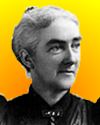
Died 30 Mar 1911 at age 68 (born 3 Dec 1842). quotes
American chemist (née Ellen Henrietta Swallow) who was the founder of the home economics movement in the United States. She was the first woman admitted to the Massachusetts Institute of Technology (MIT), graduated with a B.S. in 1873, and stayed on as a chemistry assistant. She set to work analyzing Boston's water supply. In Nov 1876, she created the Woman's Laboratory at MIT where women could learn the rudiments of science. In 1884, MIT made Richards its first woman faculty member. She helped develop a new curriculum in air, water, and sewage chemistry. However, she also saw the home and child-rearing as complex and important work, saying the women who did it should be educated. She spent thirty years developing the concept of domestic science.
American chemist (née Ellen Henrietta Swallow) who was the founder of the home economics movement in the United States. She was the first woman admitted to the Massachusetts Institute of Technology (MIT), graduated with a B.S. in 1873, and stayed on as a chemistry assistant. She set to work analyzing Boston's water supply. In Nov 1876, she created the Woman's Laboratory at MIT where women could learn the rudiments of science. In 1884, MIT made Richards its first woman faculty member. She helped develop a new curriculum in air, water, and sewage chemistry. However, she also saw the home and child-rearing as complex and important work, saying the women who did it should be educated. She spent thirty years developing the concept of domestic science.
Ellen Swallow: The Woman Who Founded Ecology, by Robert Clarke. - book suggestion.
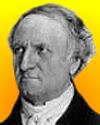
Died 30 Mar 1876 at age 73 (born 30 Sep 1802). quotes
Antoine Jérôme Balard was a French chemist who in 1826 discovered the element bromine, determined its properties, and studied some of its compounds. Later he proved the presence of bromine in sea plants and animals. This discovery was a by-product of a more general chemical investigation of the sea and its life forms. Bromine had an atomic weight that was close to the arithmetic mean of two other known halogens, chlorine and iodine, suggesting they formed a “chemical family.” He also researched the inexpensive extraction of salts from seawater. He discovered oxamic acid by using heat to decompose ammonium hydrogen oxylate. He studied and named amyl alcohol. Louis Pasteur and Marcellin erthelot were among his students.
Antoine Jérôme Balard was a French chemist who in 1826 discovered the element bromine, determined its properties, and studied some of its compounds. Later he proved the presence of bromine in sea plants and animals. This discovery was a by-product of a more general chemical investigation of the sea and its life forms. Bromine had an atomic weight that was close to the arithmetic mean of two other known halogens, chlorine and iodine, suggesting they formed a “chemical family.” He also researched the inexpensive extraction of salts from seawater. He discovered oxamic acid by using heat to decompose ammonium hydrogen oxylate. He studied and named amyl alcohol. Louis Pasteur and Marcellin erthelot were among his students.
Died 30 Mar 1873 at age 63 (born 22 Nov 1809).
Austrian-born French psychologist who introduced the term dementia praecox to refer to a mental and emotional deterioration beginning at the time of puberty. The disorder was renamed schizophrenia in 1908 by the Swiss psychologist Eugen Bleuler. Morel developed a psychiatric theory of causality based on hereditary weakness. In his 700-page magnum opus, Traité des dégenerescences physiques, intellectuelles et morales de l'espèce humaine (1857), Morel developed a detailed method of discovering the great variety of "stigmata of degeneration " to be found among the mentally sick. These were mostly physical signs - various malformations - but also various intellectual and moral deviations from the normal.
Austrian-born French psychologist who introduced the term dementia praecox to refer to a mental and emotional deterioration beginning at the time of puberty. The disorder was renamed schizophrenia in 1908 by the Swiss psychologist Eugen Bleuler. Morel developed a psychiatric theory of causality based on hereditary weakness. In his 700-page magnum opus, Traité des dégenerescences physiques, intellectuelles et morales de l'espèce humaine (1857), Morel developed a detailed method of discovering the great variety of "stigmata of degeneration " to be found among the mentally sick. These were mostly physical signs - various malformations - but also various intellectual and moral deviations from the normal.
Died 30 Mar 1863 at age 51 (born 23 Aug 1811).
French physicist and mineralogist, best remembered for his work on the lattice theory of crystals. Bravais lattices are named for him. In 1850, he showed that crystals could be divided into 14 unit cells for which: (a) the unit cell is the simplest repeating unit in the crystal; (b) opposite faces of a unit cell are parallel; and (c) the edge of the unit cell connects equivalent points. These unit cells fall into seven geometrical categories, which differ in their relative edge lengths and internal angles. In 1866, he elaborated the relationships between the ideal lattice and the material crystal. Sixty years later, Bravais' work provided the mathematical and conceptual basis for the determination of crystal structures after Laue's discovery of X-ray diffraction in 1911.
French physicist and mineralogist, best remembered for his work on the lattice theory of crystals. Bravais lattices are named for him. In 1850, he showed that crystals could be divided into 14 unit cells for which: (a) the unit cell is the simplest repeating unit in the crystal; (b) opposite faces of a unit cell are parallel; and (c) the edge of the unit cell connects equivalent points. These unit cells fall into seven geometrical categories, which differ in their relative edge lengths and internal angles. In 1866, he elaborated the relationships between the ideal lattice and the material crystal. Sixty years later, Bravais' work provided the mathematical and conceptual basis for the determination of crystal structures after Laue's discovery of X-ray diffraction in 1911.
Died 30 Mar 1832 at age 77 (born 7 Jan 1755).
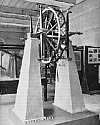
English astronomer and merchant, who compiled the Catalogue of Circumpolar Stars (corrected edition published 1838), often known as the Groombridge Catalog. For ten years, from 1806, he made observations using a transit circle, followed by another 10 years adjusting the data to correct for refraction, instrument error and clock error. He retired from the West Indian trade in 1815 to devote full time to the project. He was a founder of the Astronomical Society (1820). His work was continued by others when he was struck (1827) with a "severe attack of paralysis" from which he never fully recovered. The catalog eventually listed 4,243 stars situated within 50° of the North Pole and having apparent magnitudes greater than 9. Editions of the catalog were published posthumously. The 1833 edition was withdrawn due to errors, and corrected in 1838 by A Catalog of Circumpolar Stars, Reduced to January 1, 1810, edited by G. Biddell Airy.[Image: GroombridgeTransit Circle, London, 1806]
English astronomer and merchant, who compiled the Catalogue of Circumpolar Stars (corrected edition published 1838), often known as the Groombridge Catalog. For ten years, from 1806, he made observations using a transit circle, followed by another 10 years adjusting the data to correct for refraction, instrument error and clock error. He retired from the West Indian trade in 1815 to devote full time to the project. He was a founder of the Astronomical Society (1820). His work was continued by others when he was struck (1827) with a "severe attack of paralysis" from which he never fully recovered. The catalog eventually listed 4,243 stars situated within 50° of the North Pole and having apparent magnitudes greater than 9. Editions of the catalog were published posthumously. The 1833 edition was withdrawn due to errors, and corrected in 1838 by A Catalog of Circumpolar Stars, Reduced to January 1, 1810, edited by G. Biddell Airy.[Image: GroombridgeTransit Circle, London, 1806]
Died 30 Mar 1783 at age 64 (born 23 May 1718). quotes
British obstetrician, educator, and medical writer whose high standards of teaching and medical practice took obstetrics from the hands of the midwives and established it as an accepted branch of medicine. He built up a distinguished clientèle (including members of the Royal Family) and made a collection of anatomical and pathological specimens related to his medical work. Hunter began public lectures on anatomy in 1746 and became a member of the corporation of surgeons in 1746. With the lack of training spaces in hospitals, the demand for private anatomy schools increased rapidly. He became one of the most successful anatomy teachers of his time. Hunter was still teaching anatomy in his Great Windmill Street Institute until his death.
British obstetrician, educator, and medical writer whose high standards of teaching and medical practice took obstetrics from the hands of the midwives and established it as an accepted branch of medicine. He built up a distinguished clientèle (including members of the Royal Family) and made a collection of anatomical and pathological specimens related to his medical work. Hunter began public lectures on anatomy in 1746 and became a member of the corporation of surgeons in 1746. With the lack of training spaces in hospitals, the demand for private anatomy schools increased rapidly. He became one of the most successful anatomy teachers of his time. Hunter was still teaching anatomy in his Great Windmill Street Institute until his death.
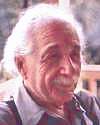
In 1953, Albert Einstein’s latest concepts for his unified field theory were included as an appendix to the 4th edition of his book, The Meaning of Relativity published on this day by Princeton University Press. The appendix heading was “Generalization of Gravitation Theory.” Although the first edition was originally published in 1922, Einstein continued a quixotic devotion to reduce the laws governing the physical universe, to a few simple fundamental concepts expressed in mathematical formulas. Yet, over 40 years since he made the synthesis of mass and energy, the synthesis of the gravitational field and the electromagentic field continued to elude him. He died on 18 Apr 1955 without succeeding.«
Subtle Is the Lord: The Science and the Life of Albert Einstein, by Abraham Pais. - book suggestion.
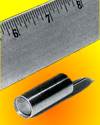
In 1950, the invention of the phototransistor was announced, operated by light rather than electric current. It was invented by Dr. John Northrup Shive of Bell Telephone Laboratories, Murray Hill, N.J. The tip of a single collector wire rests on a small dimple ground into one side of a tiny chip of germanium, a semiconductor material. At this point the germanium disk is only 0.003 inch thick. When mounted inside a tiny lens-ended cylinder, light focused on the opposite, un-dimpled side of the disk controled the flow of current in the wire. It was similar in function, but conveniently smaller than a photo-electric cell. U.S. Patent 2560606 for it was issued to John N. Shive on 17 Jul 1951.«

In 1933, Doctors Day was first celebrated in Winder, Georgia. Eudora Brown Almond, wife of Dr. Charles B. Almond, wanted to have a day to honor physicians. Greeting cards were mailed and flowers placed on the graves of deceased doctors. The anniversary day was chosen to honor Dr. Crawford Long, who first administered inhaled ether anesthetic on 30 Mar 1842, during an operation to painlessly remove a tumor from a man’s neck. From 1991, 30 Mar was proclaimed by President H.W. Bush, to be National Doctors Day, a national day of celebration (Proclamation 6253, signed 21 Feb 1991). The symbolic flower commonly used to mark National Doctors Day is the red carnation.
Picture History of the Cunard Line: 1840-1990, by Frank O. Braynard & William H. Miller Jr. (Author). - book suggestion.
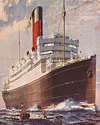
In 1923, the Cunard liner Laconia docked in New York City, becoming the first passenger ship to circumnavigate the world. Playing on the pier, the 71st Regiment band greeted the 260 passengers, who came from 32 states. The 130-day tour was a charter by the American Express Company. New York Times reported that passengers collectively “paid more than $1,000,000 in fares” and “brought back four tons of souvenirs” including “parrots, monkeys, tropical birds and chow dogs…Madeira willow furniture, prayer rugs…Egyptian relics and unusual musical instruments.” The Laconia departed on 21 Nov 1922 with about 400 passengers, or so. Some stopped off along the way.«
Picture History of the Cunard Line: 1840-1990, by Frank O. Braynard & William H. Miller Jr. - book suggestion.
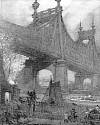
In 1909, the Queensboro Bridge, the first significant double-deck bridge in the U.S., was opened to traffic. The official ceremonial opening was on 12 Jun 1909. Architect Henry Hornbostel collaborated with famed bridge engineer Gustav Lindenthal, to design and erect the massive, silver-painted trusses that spanned the East River between 59th Street in Manhattan and Long Island City in Queens. Not only was this a landmark cantilever bridge in the history of U.S. bridge design, but the opening of the Queensboro Bridge immediately stimulated further housing development of Queens from a largely rural area, and ended Long Island City's former isolation.«Image: a period illustration which shows a steamer and a sailing ship passing under the bridge.
The Queensboro Bridge, by Greater Astoria & Roosevelt Island Historical Societies. - book suggestion.

(USPTO)
In 1899, black American inventor James Ricks was issued a patent for a patent for “Improvements in the Rough-Shoeing of Horses,” which was an overshoe or sleet shoe clamped with a wire band over the ordinary shoe (No.338,781). A V-shaped iron or steel plate was designed with sharpened downward points at the heel and toe ends for traction. At each heel end, projections lapped over the common horseshoe underneath. A screwdriver was used to tighten the screw-threaded bolt and nut on the integral metal band clamp that passed around the heel and a toe loop. Later, he held a patent for a rubber “Overshoe for Horses” (6 Jun 1899, U.S. No. 626,245).
The Inventive Spirit of African Americans: Patented Ingenuity, by Patricia Carter Sluby. - book suggestion.
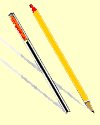
In 1858, the first U.S. patent for a combination lead pencil and eraser was issued to Hyman L. Lipman, of Philadelphia, Pa. (No. 19,783). The pencil was made in the usual manner, with one-fourth of its length reserved inside one end to carry a piece of prepared india-rubber, glued in at one edge. Thus cutting one end prepared the lead for writing, while cutting the other end would expose a small piece of india rubber. This eraser was then conveniently available whenever needed, and not subject to being mislaid. Further, the eraser could be sharpened to a finer point to make a more precise erasure of fine lines in a drawing, or cut further down if the end became soiled.
The Pencil: A History of Design and Circumstance, by Henry Petroski. - book suggestion.
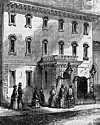
c.1854
In 1854, the Reading Room of the Boston Public Library (BPL) was opened to the public, within a schoolhouse, on Mason Street. A few weeks later, the circulation department opened (2 May 1854). BPL had been established in 1848, by an act of the Great and General Court of Massachusetts, and became the first large free municipal library in the United States. BPL also pioneered the city-wide system, when the first branch library in the U.S. was opened in East Boston in 1870, expanded with 21 more by 1900. In 1895, to house the growing need, the huge, architecturally impressive McKim Building was opened, the first outstanding U.S. example of Renaissance Beaux-Arts Classicism.«
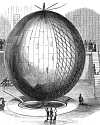
In 1844, the 30 Mar issue of the Illustrated London News reported the construction in Paris of a “vast balloon of copper, which is so far completed as to be exhibited to the public.” Some facts were given: it was about 10-yards diam., of copper sheets 1/200-inch thick, weighed 800-lb, would contain 100-lb of hydrogen, and the Parisian journals stated that a French aeronaut would ascent with it. The copper skin would retain gas better than varnished silk. The builder, M. Marey-Monge, proposed scientific investigations of electrical and magnetic phenomena. Floating in the atmosphere, as a paragréle, could it conduct electricity from the clouds (via a wire tether to the ground) and prevent hail? The article concluded: “we fear this Copper Balloon will prove another 'Aerial Machine,'—a very negative merit.”«[A web page reader can make easy high-school physics calculations to determine if an ascent is possible, and check other facts. Using the density of copper is the quoted mass realistic? (Some magazines reprinted the article using “300-lb” in their copy.) What mass of hydrogen would give a suitable pressure?]

In 1843, the first U.S. patent for an egg incubator (No. 3019) was issued to Napoleon E. Guerin of New York City. It described a “mode of distributing steam heat, purifying air, etc.” for hatching chickens by artificial heat. Pipes carrying a flow of steam from a boiler were placed above each of 24 drawers (8 adjacent stacks of 3 drawers) each containing up to about 300 eggs. He further described rearing the chicks in successive compartments by age, for 3 months after hatching. On 16 Nov 1841, another invention by Guerin was issued U.S. patent 2359 for the first life preserver made of cork. It was designed in jacket form, with two layers of fabric to hold a quantity of cork between them.«
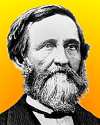
In 1842, physician Dr. Crawford W. Long of Jefferson, Georgia, first used ether as an anesthetic during a minor operation. He placed an ether-soaked towel over the face of James Venable and removed a tumour from his neck. This event predated Morton’s public demonstration of ether by four years, but was not disclosed until 1849 in the Southern Medical Journal, which was after Morton's widely publicized feat. However, Dr. Long’s accomplishment in 1842 is now widely considered to represent the discovery of surgical anesthesia. He was the subject on a U.S. two-cent stamp issued 8 Apr 1940. Doctor’s Day was named in his honor, first observed on 30 Mar 1933.
Arduino
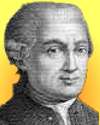
In 1759, Italian geologist Giovanni Arduino (1714-1795) dated a letter to Professor A.Vallisneri the younger, in which Arduino proposed a classification of Earth's surface rocks according to four brackets of successively younger orders: Primary, Secondary, Tertiary and Quaternary. These are the four geological eras used today. The volcanic rocks without fossils which he saw in the Atesine Alps that formed the cores of large mountains he called Primary. Overlying them, the fossil rich rocks of limestone and clay that were found on the prealpine flanks of the mountains he called Secondary. The less consolidated fossil-bearing rocks of the subalpine foothills, he named Tertiary, and the alluvial rock deposits in the plains were the Quaternary.«
more
In 239, B.C., was the first recorded perihelion passage of Halley's Comet by Chinese astronomers in the Shih Chi and Wen Hsien Thung Khao chronicles. Its highly elliptical, 75-year orbit carries it out well beyond the orbit of Neptune and well inside the orbits of Earth and Venus when it swings in around the Sun, travelling in the opposite direction from the revolution of the planets. It was the first comet that was recognized as being periodic. An Englishman, Edmond Halley predicted in 1705 that the comet that appeared over London in 1682 would reappear again in 1759, and that it was the same comet that appeared in 1607 and 1531. When the comet did in fact reappear again in 1759, as correctly predicted, it was named (posthumously) after Halley.[Image: Charcoal on board illustration published 21 May 1910 in Harper's Weekly. It was drawn by Elizabeth Shippen Green in 1909 in anticipation of the 1910 appearance of the comet.]




