Born 28 Mar 1930. quotes
American physicist who, together with Richard E. Taylor and Henry W. Kendall, received the Nobel Prize for Physics in 1990 for their joint experimental confirmation of the fundamental particles known as quarks.
American physicist who, together with Richard E. Taylor and Henry W. Kendall, received the Nobel Prize for Physics in 1990 for their joint experimental confirmation of the fundamental particles known as quarks.
Born 28 Mar 1928.
German-French mathematician who was awarded the Fields Medal in 1966 for his work in algebraic geometry.
German-French mathematician who was awarded the Fields Medal in 1966 for his work in algebraic geometry.
Born 28 Mar 1897; died 1 Nov 1997 at age 100.
American chemical engineer who invented Pampers disposable diapers. He joined Proctor& Gamble company in 1926, and soon after developed a continuous process to superheat the liquid soap and spray it in concentrated form through an extruder producing bars of Ivory soap. That cut the production time from seven days to just a couple of hours. He improved Duncan Hines cake mixes by passing ingredients through large milling drums designed to polish aluminum foil but made the finished cake less lumpy. He developed a process for preventing the oil from separating in Jif peanut butter. His invention of disposable diapers as a product was created to utilize the clean, absorbent paper available from a pulp mill acquired by the company.
American chemical engineer who invented Pampers disposable diapers. He joined Proctor& Gamble company in 1926, and soon after developed a continuous process to superheat the liquid soap and spray it in concentrated form through an extruder producing bars of Ivory soap. That cut the production time from seven days to just a couple of hours. He improved Duncan Hines cake mixes by passing ingredients through large milling drums designed to polish aluminum foil but made the finished cake less lumpy. He developed a process for preventing the oil from separating in Jif peanut butter. His invention of disposable diapers as a product was created to utilize the clean, absorbent paper available from a pulp mill acquired by the company.
Born 28 Mar 1892; died 18 Jul 1968 at age 76.
Belgian physiologist who received the Nobel Prize for Physiology or Medicine in 1938 for his discovery of the regulatory effect on respiration of sensory organs associated with the carotid artery in the neck and with the aortic arch leading from the heart (1927-29).
Belgian physiologist who received the Nobel Prize for Physiology or Medicine in 1938 for his discovery of the regulatory effect on respiration of sensory organs associated with the carotid artery in the neck and with the aortic arch leading from the heart (1927-29).
Born 28 Mar 1837; died 10 Jun 1900 at age 63.
Wilhelm Friedrich Kühne was a German physiologist known for his researches on vision and the chemical changes occurring in the retina under the influence of light. His original work falls into two main groups—the physiology of muscle and nerve, which occupied the earlier years of his life, and the chemistry of digestion, which he began to investigate while at Berlin with Virchow. He was proposed the word enzyme meaning "in yeast" (1878), and he isolated trypsin from pancreatic juice. He demonstrated usefulness of cytophysiological investigations for solving problems of general physiology. He devised an "artificial eye," discovered the light sensitive "visual purple" in the retina and was first to perceive migrating pigments in the living retina (1877-78).
Wilhelm Friedrich Kühne was a German physiologist known for his researches on vision and the chemical changes occurring in the retina under the influence of light. His original work falls into two main groups—the physiology of muscle and nerve, which occupied the earlier years of his life, and the chemistry of digestion, which he began to investigate while at Berlin with Virchow. He was proposed the word enzyme meaning "in yeast" (1878), and he isolated trypsin from pancreatic juice. He demonstrated usefulness of cytophysiological investigations for solving problems of general physiology. He devised an "artificial eye," discovered the light sensitive "visual purple" in the retina and was first to perceive migrating pigments in the living retina (1877-78).
Born 28 Mar 1819; died 15 Mar 1891 at age 71. quotes
British civil engineer and civil engineer who designed the main drainage system for London. As an engineer, he built some major bridges in London, but his greatest accomplishment was to solve a growing problem with sewage pollution in the Thames River. By the mid-1800s, so many Londoners were using the new "water closets" that theriver was horribly polluted with sewage. The "Great Stink" crisis escalated with cholera outbreaks. Bazalgette was chosen to design and build London's sewer system, a 20-year project. Some of his ideas still influence urban engineering today. more
British civil engineer and civil engineer who designed the main drainage system for London. As an engineer, he built some major bridges in London, but his greatest accomplishment was to solve a growing problem with sewage pollution in the Thames River. By the mid-1800s, so many Londoners were using the new "water closets" that theriver was horribly polluted with sewage. The "Great Stink" crisis escalated with cholera outbreaks. Bazalgette was chosen to design and build London's sewer system, a 20-year project. Some of his ideas still influence urban engineering today. more
The Great Stink of London: Sir Joseph Bazalgette and the Cleansing of the Victorian Metropolis, by Stephen Halliday. - book suggestion.
Born 28 Mar 1793; died 10 Dec 1864 at age 71.
American explorer and ethnologist noted for his discovery of the source of the Mississippi River (1832) in a lake in northern Minnesota which he named Lake Itasca, from the Latin words caput (head) and veritas (true). His early interest was rocks and minerals, which led to a geological survey expedition, then employment as a map-maker and government agent on the Northwest Frontier, near Lake Superior. He became interested in Native Americans and from these studies wrote about their history, language, mythology, hieroglyphics, picture writing, maxims, characteristics and potential, religious beliefs, and influence of Christian missionaries. Further, he addressed the past and future roles of the federal government and the Indian.
American explorer and ethnologist noted for his discovery of the source of the Mississippi River (1832) in a lake in northern Minnesota which he named Lake Itasca, from the Latin words caput (head) and veritas (true). His early interest was rocks and minerals, which led to a geological survey expedition, then employment as a map-maker and government agent on the Northwest Frontier, near Lake Superior. He became interested in Native Americans and from these studies wrote about their history, language, mythology, hieroglyphics, picture writing, maxims, characteristics and potential, religious beliefs, and influence of Christian missionaries. Further, he addressed the past and future roles of the federal government and the Indian.

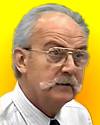

George Edward Pelham (“Pel”) Box was an English-American engineer and statistician began as a chemist. At age 19, he published his first paper, on an activated sludge process to produce clean effluent. In the army for WW II, at Porton Down Experimental Station, he taught himself statistics, to get more reliable results from his experiments on the chemistry of poison gases. Thus, he became “an accidental statistician,” (the title of his 2013 autobiography). He developed several statistical tools known with his name: the Box-Jenkins model, Box-Cox transformations, and Box-Behnken designs. Box wrote or co-authored major statistics texts: evolutionary operation, times-series, Bayesian analysis, the design of experiments, statistical control, and quality improvement.«
An Accidental Statistician: The Life and Memories of George E. P. Box, by George E.P. Box. - book suggestion.
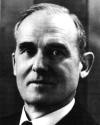
Died 28 Mar 1982 at age 86 (born 12 May 1895).
Canadian-born American physical chemist and winner of the Nobel Prize for Chemistry in 1949 for his "achievements in the field of chemical thermodynamics and especially his work on the behavior of matter at very low temperatures and his closely allied studies of entropy." He is remembered particularly for his discovery of adiabatic demagnetization as a means to reach temperatures close to absolute zero as well as for his exhaustive and meticulous thermodynamic studies, over a lifetime of research, which utilized the third law of thermodynamics while also developing a large body of evidence for its validity.
Canadian-born American physical chemist and winner of the Nobel Prize for Chemistry in 1949 for his "achievements in the field of chemical thermodynamics and especially his work on the behavior of matter at very low temperatures and his closely allied studies of entropy." He is remembered particularly for his discovery of adiabatic demagnetization as a means to reach temperatures close to absolute zero as well as for his exhaustive and meticulous thermodynamic studies, over a lifetime of research, which utilized the third law of thermodynamics while also developing a large body of evidence for its validity.
Died 28 Mar 1925 at age 85 (born 20 Apr 1839). quotes
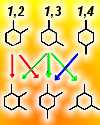
German organic chemist who established in 1874 how to determine the positions of the substituents on di- and tri-substituted isomers of the benzene ring by counting product or source isomers (five years before the Van't Hoff- Le Bel hypothesis of tetrahedral carbon.) Because the 1,2-disubstituted isomer gives two products; the 1,3 gives three; and the 1,4 gives only one, both starting compounds and products can be identified. This identifies both starting materials and products. From 1864-67, Korner worked directly with August Kekulé (who realized the ring structure of benzene). The 126 aromatic compounds he prepared included pyridine (1869) and asparagine (1887, with Angelo Menozzi). He died by suicide.«[Image: diagram showing how each disubstituted isomer (top) produces a different range of possible trisubstituted products (bottom) as listed in the text above. ] more
German organic chemist who established in 1874 how to determine the positions of the substituents on di- and tri-substituted isomers of the benzene ring by counting product or source isomers (five years before the Van't Hoff- Le Bel hypothesis of tetrahedral carbon.) Because the 1,2-disubstituted isomer gives two products; the 1,3 gives three; and the 1,4 gives only one, both starting compounds and products can be identified. This identifies both starting materials and products. From 1864-67, Korner worked directly with August Kekulé (who realized the ring structure of benzene). The 126 aromatic compounds he prepared included pyridine (1869) and asparagine (1887, with Angelo Menozzi). He died by suicide.«[Image: diagram showing how each disubstituted isomer (top) produces a different range of possible trisubstituted products (bottom) as listed in the text above. ] more
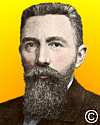
Died 28 Mar 1903 at age 57 (born 11 Sep 1845).
Jean-Maurice-Émile Baudot was a French engineer who received a patent on a telegraph code (1874) that by the mid-20th century had superceded Morse Code as the most commonly used telegraphic alphabet. He dedicated his life to the development of a fast-printing telegraph. After successively improved versions, he demonstrated at the International Exhibition of Electronics a perfected model which could transmit six simultaneous messages. The Baudot system was used throughout the world for terrestrial and undersea links for over 70 years. The baud unit of data transmission rate is named after him.
Jean-Maurice-Émile Baudot was a French engineer who received a patent on a telegraph code (1874) that by the mid-20th century had superceded Morse Code as the most commonly used telegraphic alphabet. He dedicated his life to the development of a fast-printing telegraph. After successively improved versions, he demonstrated at the International Exhibition of Electronics a perfected model which could transmit six simultaneous messages. The Baudot system was used throughout the world for terrestrial and undersea links for over 70 years. The baud unit of data transmission rate is named after him.
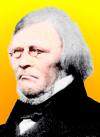
(EB)
Died 28 Mar 1874 at age 78 (born 8 Dec 1795).
Danish astronomer whose most important work was the improvement of the theories and tables of the orbits of the principal bodies in the solar system. At Altona observatory he assisted in measuring the arc of meridian (1821). He became the director (1825) of Seeberg observatory, which was removed to Gotha in a new observatory built for him (1857). He worked on theoretical geodesy, optics, and the theory of probability. The work in celestial mechanics for which he is best known are his theories of motion for comets, minor planets, moon and his lunar tables (1857) which were in use until 1923. He published his lunar theory in Fundamenta ("Foundation") in 1838, and Darlegung ("Explanation") in 1862-64.
Danish astronomer whose most important work was the improvement of the theories and tables of the orbits of the principal bodies in the solar system. At Altona observatory he assisted in measuring the arc of meridian (1821). He became the director (1825) of Seeberg observatory, which was removed to Gotha in a new observatory built for him (1857). He worked on theoretical geodesy, optics, and the theory of probability. The work in celestial mechanics for which he is best known are his theories of motion for comets, minor planets, moon and his lunar tables (1857) which were in use until 1923. He published his lunar theory in Fundamenta ("Foundation") in 1838, and Darlegung ("Explanation") in 1862-64.
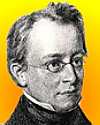
Died 28 Mar 1849 at age 44 (born 24 Jun 1804).
Austrian botanist who formulated a major system of plant classification. In 1830, he had issued his first botanical treatise, that on the flora of Pressburg. In 1836, he was curator of a museum botanical department, and in 1840, a professor of botany and director of the Botanical Garden of the University of Vienna. While a curator he united the various distinct herbaria into one scientifically arranged general herbarium, to which he contributed his own 30,000 species of plants. His classification remained until 1885. His botanical system is explained in his well-known and most important work: Genera plantarum secundum ordines naturales disposita (Vienna, 1836-50), a work regarded as one of the fundamental writings of systematized botany.
Austrian botanist who formulated a major system of plant classification. In 1830, he had issued his first botanical treatise, that on the flora of Pressburg. In 1836, he was curator of a museum botanical department, and in 1840, a professor of botany and director of the Botanical Garden of the University of Vienna. While a curator he united the various distinct herbaria into one scientifically arranged general herbarium, to which he contributed his own 30,000 species of plants. His classification remained until 1885. His botanical system is explained in his well-known and most important work: Genera plantarum secundum ordines naturales disposita (Vienna, 1836-50), a work regarded as one of the fundamental writings of systematized botany.
Died 28 Mar 1828 at age 68 (born 20 May 1759).
British-born American architect, inventor, and public official, best known as the creator of the original design for the Capitol at Washington, D.C.
British-born American architect, inventor, and public official, best known as the creator of the original design for the Capitol at Washington, D.C.
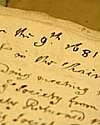
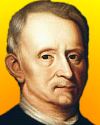
Hooke
The Curious Life of Robert Hooke: The Man Who Measured London, by Lisa Jardine. - book suggestion.

In 1979, a nuclear accident occured at Unit 2 of the Three Mile Island nuclear power plant outside Harrisburg, Pennsylvania, USA. Caused by human and mechanical errors, a cooling system malfunction permitted a partial meltdown of the reactor’s core. Efforts to re-establish cooling of the reactor took several days. No evacuation was ordered, but 100,000 people fled. President Jimmy Carter personally visited four days later (1 Apr 1979). Disaster was avoided, although some radioactivity leaked into the air. It was the worst U.S. nuclear accident to date, but no radiation injuries were identified. On 21 Jul 1982, a video camera inspected the damage to the core and revealed a large amount of uranium had spilled and melted to the bottom of the pressure vessel.«
more
Three Mile Island: A Nuclear Crisis in Historical Perspective, by J. Samuel Walker. - book suggestion.
In 1968, the Glomar Challenger geological research ship was launched. In Aug 1968 it started a 15-year Deep Sea Drilling Program exploring the Pacific, Atlantic, Indian and Arctic Oceans. The 30-ft long core samples drilled and brought up from the ocean bed in numerous locations, provided data on seafloor spreading, expanding knowledge of plate tectonics. The 120m long vessel was chartered by American science institutions: the National Science Foundation and University of California Scripps Institute of Oceanography. Its name Glomar reflected its designer and owner-operator, Global Marine Inc. (now Transocean, Inc.). The name also paid tribute to the nineteenth century HMS Challenger, the first global oceanography expedition ship. The ship ended its service in Nov 1983.«
Challenger at Sea, by Kenneth J. Hsu. - book suggestion.
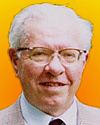
In 1949, Fred Hoyle unintentionally coined the term “Big Bang” as a household name, in a scripted radio broadcast on the BBC Third Programme. His talk was printed in the The Listener (7 Apr 1949). He compared his own belief in a “steady state” universe, saying, “earlier theories … were based on the hypothesis that all the matter in the universe was created in one big bang at a particular time in the remote past.” He repeated its use in a 1950 broadcast published in The Listener (9 Mar 1950): “One [idea] was that the Universe started its life a finite time ago in a single huge explosion… This big bang idea seemed to me to be unsatisfactory.” His critics found the “big bang” term pejorative, yet Hoyle has said his intention was to make a vivid description for the radio audience. The term stuck.«
Fred Hoyle: A Life in Science, by Simon Mitton. - book suggestion.
In 1946, the Census Bureau and the National Bureau of Standards met to discuss the purchase of a computer. The agencies agreed to buy UNIVAC, the world's first general all-purpose business computer, from Presper Eckert and John Mauchly for a mere $225,000. Unfortunately, UNIVAC cost far more than that to develop. Eckert and Mauchly's venture floundered as the company continued to build and program UNIVACs for far less than the development cost. Eventually, the company was purchased by Remington Rand.
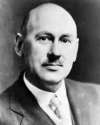
Goddard
In 1935, Robert Goddard used gyroscopes to control a rocket.
Rocket Man: Robert H. Goddard and the Birth of the Space Age, by David A. Clary. - book suggestion.
In 1922, Bradley A. Fiske of Washington, D.C., patented a microfilm reading device.
In 1910, the first seaplane took off from Martigues near Marseilles, France, designed by Frenchman Henri Fabre.
In 1905, the radio fax was patented in the U.S. by Cornelius Ehret of Rosemont, Pennsylvania. His device was called "a system for transmitting intelligence." However, faxing did not become a practical mode of communication until the 1920s, and high-speed faxes were not available until the 1940s.
In 1883, the Edison Electric Company of Boston was organized. As reported the next day (29 Mar 1883) in the New York Times, Ex-Governor A. H. Rice was made its President, and the directors were named, along with other officers. The intention was to immediately establish a central lighting station in the business portion of the city, with a capacity of 20,000 lights. Capital of $1,000,000 was specified in the newspaper article. By 25 Nov 1901, the New York Times reported that the Edison Electric Company of Boston was to take control of the street railways of Savannah, Georgia on 1 Jan 1902, and already had “recently acquired control of the street railways of Houston, Texas.”«
In 1866, the first hospital ambulance went into service.
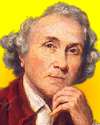
In 1859, the remains of the famous surgeon, John Hunter, were reinterred in Westminster Abbey. After a sudden heart attack caused his death (16 Oct 1793) his widow arranged a small, private funeral. His coffin was laid in the vaults of St. Martin-in-the-Fields. More than a half-century later, in 1859, when those vaults were to be cleared, Frank Buckland joined with other interested persons to urge that his remains be moved to Westminster Abbey. A memorial brass was placed in the floor of the north aisle over his new grave, provided by the Royal College of Surgeons to venerate the surgeon’s great contributions to medicine. On 14 Feb 1952, a memorial tablet to Hunter and Buckland was dedicated in St. Martins-in-the-Fields Church.«
In 1802, Heinrich Wilhelm Matthias Olbers discovered Pallas, the second asteroid to be discovered. It is the third largest asteroid in the asteroid belt and its size gives it the classification as a minor planet. The first asteroid discovered was Ceres.«
In 1797, Nathaniel Briggs of New Hampshire received a patent for a washing machine.
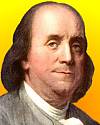
Franklin
In 1747, the fascination with electricity upon reaching the American colonies was the subject of Benjamin Franklin's first of the famous series of letters in which he described his experiments on electricity to Peter Collinson, Esq., of London. He thanked Collison for his “kind present of an electric tube with directions for using it” with which he and others did electrical experiments. “For my own part I never was before engaged in any study that so totally engrossed my attention and my time as this has lately done; for what with making experiments when I can be alone, and repeating them to my friends and acquaintances, who, from the novelty of the thing, come continually in crowds to see them, I have, during some months past, had little leisure for anything else.”«[Quoted from: "Franklin's Researches in Electricity" by Professor Edward L. Nichols in The Record of the Celebration of the Two Hundredth Anniversary of the Birth of Benjamin Franklin, published by the American Philosophical Society (1906)]
Benjamin Franklin: An American Life, by Walter Isaacson. - book suggestion.




